13C Metabolic Flux Analysis at Single-Cell Resolution: A Comprehensive Guide for Biomedical Research
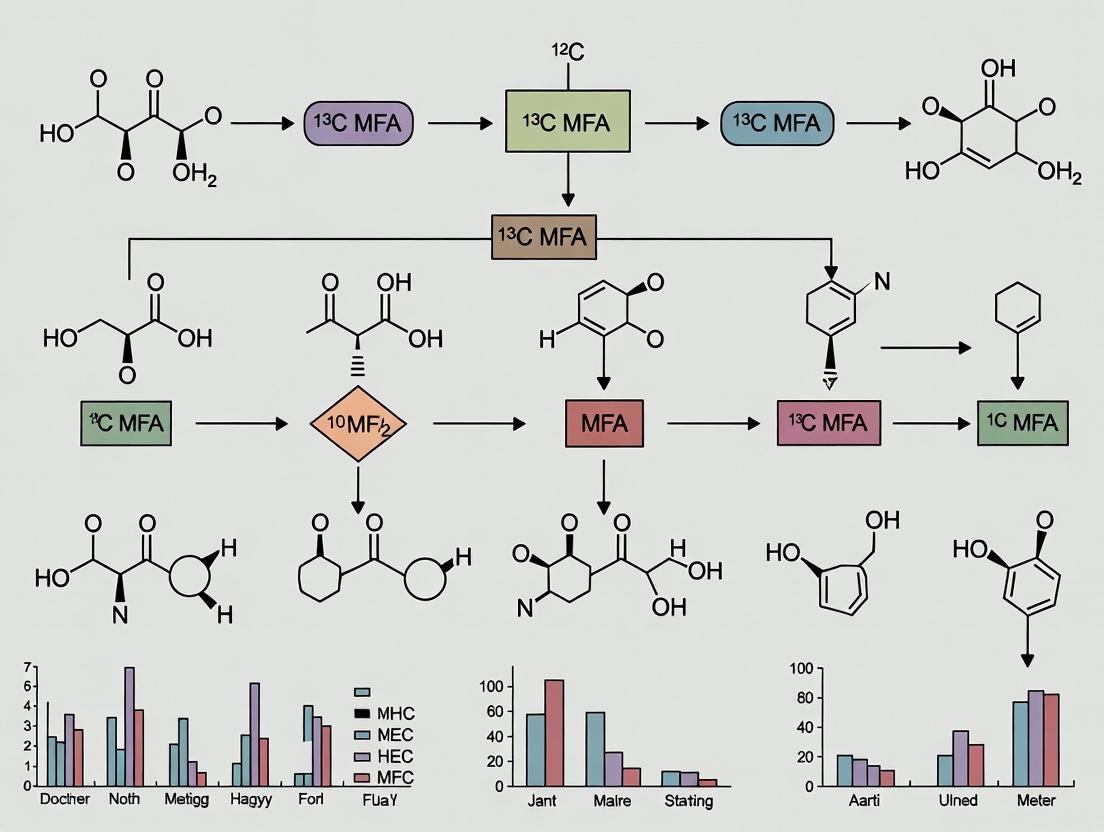
This article provides a comprehensive overview of single-cell 13C Metabolic Flux Analysis (scMFA), a cutting-edge technique transforming our understanding of cellular metabolism.
13C Metabolic Flux Analysis at Single-Cell Resolution: A Comprehensive Guide for Biomedical Research
Abstract
This article provides a comprehensive overview of single-cell 13C Metabolic Flux Analysis (scMFA), a cutting-edge technique transforming our understanding of cellular metabolism. Targeted at researchers, scientists, and drug development professionals, we explore the foundational principles of tracing 13C-labeled nutrients in individual cells to quantify pathway activity. We detail current methodological workflows, from cell handling to computational modeling, and showcase key applications in cancer, immunology, and stem cell biology. The guide addresses common experimental and analytical challenges with practical optimization strategies and validates scMFA by comparing it to bulk MFA and other single-cell omics. We conclude by synthesizing its transformative potential for uncovering metabolic heterogeneity and driving therapeutic innovation.
What is Single-Cell 13C MFA? Decoding Metabolic Heterogeneity One Cell at a Time
This application note details the transition from traditional ensemble-averaged 13C Metabolic Flux Analysis (MFA) to single-cell resolution. Framed within a thesis on advancing 13C MFA, we present protocols and data that address the critical limitation of bulk averaging, which masks cellular heterogeneity in metabolic networks—a key factor in cancer research, immunology, and therapeutic development.
Comparative Data: Bulk vs. Single-Cell MFA
Table 1: Key Quantitative Differences Between Bulk and Single-Cell 13C MFA
| Parameter | Bulk 13C MFA | Single-Cell 13C MFA (LC-MS/MS based) |
|---|---|---|
| Cells Required | 10⁶ – 10⁸ | 10² – 10⁴ |
| Flux Resolution | Population Average | Per-cell distribution |
| Key Output | Net pathway fluxes (e.g., PPP flux = 12.3 ± 1.5 nmol/10⁶ cells/hr) | Flux map per cell, identifying subpopulations (e.g., High-OXPHOS vs. High-Glycolysis) |
| Heterogeneity Detectable | No | Yes (Coefficient of Variation quantifiable) |
| Time for Isotope Steady-State | Hours to Days | Minutes to Hours (varies by system) |
| Major Technical Challenge | Accurate GC/LC-MS measurement | Nanoscale metabolite extraction & detection sensitivity |
Table 2: Example Flux Distributions in Cancer Cell Line (NCI-H460)
| Metabolic Pathway | Bulk MFA Flux (nmol/µg protein/h) | Single-Cell MFA Mean Flux (nmol/cell/h) | Single-Cell Flux CV (%) |
|---|---|---|---|
| Glycolysis | 145.2 ± 18.7 | 0.15 ± 0.03 | 35.2 |
| Oxidative PPP | 22.1 ± 3.5 | 0.023 ± 0.011 | 62.4 |
| TCA Cycle | 85.6 ± 9.2 | 0.089 ± 0.022 | 41.7 |
| Glutaminolysis | 31.4 ± 4.8 | 0.032 ± 0.015 | 58.9 |
Detailed Experimental Protocols
Protocol 3.1: Single-Cell Nanodroplet Incubation and 13C Labeling
Objective: To deliver a stable 13C-labeled tracer (e.g., [U-13C]glucose) to individual cells for metabolic flux analysis.
- Cell Preparation: Suspend adherent cells using a gentle, non-enzymatic dissociation buffer. Wash 3x in PBS and resuspend in tracer-free assay medium at 1x10⁵ cells/mL.
- Microfluidic Device Priming: Load a PDMS-based microfluidic droplet generator with fluorinated oil (containing 2% biocompatible surfactant) using a syringe pump at 500 µL/hr.
- Droplet Generation:
- Prepare an aqueous phase containing cells, [U-13C]glucose (final 11 mM), and culture medium.
- Co-flow aqueous and oil phases at rates of 300 µL/hr and 700 µL/hr, respectively, to generate ~50 µm diameter droplets (∼1 cell/droplet).
- Collect droplets in a chilled, gas-permeable incubation chamber.
- Incubation: Place chamber in a 37°C, 5% CO₂ incubator for 45-60 minutes to reach isotopic quasi-steady-state in central carbon metabolism.
- Droplet Breakage & Collection: Merge droplet stream with a breaker solution (1H,1H,2H,2H-Perfluoro-1-octanol in buffer) at a 1:2 ratio. Collect aqueous phase containing single cells directly into 0.2 mL PCR tubes placed on dry ice. Store at -80°C.
Protocol 3.2: Single-Cell Metabolite Extraction and Derivatization for LC-MS
Objective: To extract and chemically modify polar metabolites from a single cell for sensitive detection.
- Nano-Extraction:
- Thaw cell lysate on ice.
- Add 2 µL of ice-cold extraction solvent (40:40:20 Methanol:Acetonitrile:Water with 0.1% Formic Acid) containing internal standards (¹³C¹⁵N-labeled amino acid mix).
- Vortex vigorously for 30 seconds. Incubate at -20°C for 20 min.
- Centrifuge at 18,000 x g at 4°C for 10 min.
- Sample Transfer: Carefully transfer 1.8 µL of supernatant to a new, pre-cooled, low-adsorption micro-insert vial. Dry completely in a vacuum concentrator (∼30 min).
- Methoximation & Silylation Derivatization:
- Redissolve dried metabolites in 5 µL of 20 mg/mL methoxyamine hydrochloride in pyridine. Incubate at 40°C for 90 min with shaking.
- Add 5 µL of N-Methyl-N-(tert-butyldimethylsilyl)trifluoroacetamide (MTBSTFA) with 1% tert-butyldimethylchlorosilane. Incubate at 70°C for 60 min.
- Cool and centrifuge before LC-MS analysis.
Protocol 3.3: LC-MS/MS Analysis and 13C Isotopologue Data Processing
Objective: To separate, detect, and quantify 13C-labeled metabolite isotopologues.
- LC Conditions:
- Column: Reversed-phase C18 (2.1 x 150 mm, 1.8 µm).
- Mobile Phase A: 0.1% Formic Acid in Water. B: 0.1% Formic Acid in Acetonitrile.
- Gradient: 0 min, 5% B; 2 min, 5% B; 15 min, 95% B; 18 min, 95% B; 18.5 min, 5% B; 22 min, 5% B.
- Flow Rate: 0.25 mL/min. Column Temp: 40°C.
- MS Conditions:
- Instrument: Triple Quadrupole or Q-TOF in negative/positive switching ESI mode.
- Scan Type: Selected Reaction Monitoring (SRM) for targeted quantitation of TBDMS-derivatized metabolites (e.g., alanine, lactate, citrate) and full-scan (m/z 200-650) for isotopologue patterns.
- Dwell Time: 20 ms per transition.
- Data Processing:
- Use vendor software (e.g., Skyline, XCMS) to integrate peak areas for each mass isotopomer (M+0, M+1, ... M+n).
- Correct for natural abundance of 13C, ²⁹Si, and ³⁰Si using an in-house algorithm or software (e.g., IsoCorrection).
- Export corrected fractional enrichment (MFE) data for flux fitting.
Visualization: Pathways and Workflows
Diagram Title: From Bulk to Single-Cell MFA Workflow
Diagram Title: Key 13C Labeling Routes in Central Metabolism
The Scientist's Toolkit: Key Research Reagent Solutions
Table 3: Essential Materials for Single-Cell 13C MFA
| Item | Function | Example Product/Catalog Number |
|---|---|---|
| Stable Isotope Tracer | Source of 13C label for tracing metabolic fate. | [U-13C]Glucose (CLM-1396, Cambridge Isotopes) |
| Microfluidic Oil | Immiscible phase for generating water-in-oil droplets. | Droplet Generation Oil for Probes (1864006, Bio-Rad) |
| Biocompatible Surfactant | Stabilizes droplets, prevents cell adhesion. | Pico-Surf 1 (BIOO Scientific, 2100) |
| Non-enzymatic Dissociator | Gentle cell harvest preserving metabolic state. | Accutase (A6964, Sigma) |
| Extraction Solvent | Quenches metabolism, extracts polar metabolites. | 40:40:20 MeOH:ACN:H₂O + 0.1% FA |
| Internal Standard Mix | Corrects for technical variation in extraction/MS. | 13C,15N-Amino Acid Mix (MSK-A2-1.2, Cambridge Isotopes) |
| Derivatization Reagent | Increases volatility/sensitivity for GC-MS or LC-MS. | MTBSTFA with 1% TBDMCS (375934, Sigma) |
| Low-Bind Tubes/Vials | Minimizes metabolite loss due to surface adsorption. | Protein LoBind Tubes (0030108116, Eppendorf) |
Application Notes on 13C-MFA in Heterogeneous Systems
The application of 13C Metabolic Flux Analysis (13C-MFA) to single-cell or population-level heterogeneous systems has revealed critical insights into how metabolic diversity underpins phenotypic variation. This is central to understanding tissue development, immune cell function, and tumor progression. The following notes synthesize current findings.
Table 1: Quantitative Insights from Metabolic Heterogeneity Studies
| System | Key Metabolic Feature | Measured Flux Range/Variation | Linked Phenotypic Outcome |
|---|---|---|---|
| Cancer (Tumor Microenvironment) | Glycolysis vs. Oxidative Phosphorylation | Glycolytic flux: 50-300%; TCA cycle flux: 20-150% (relative to mean) | Drug resistance, metastatic potential, stemness |
| Immune Cell Activation (T Cells) | Aspartate biosynthesis & mTORC1 signaling | Aspartate uptake varies >10-fold between quiescent and activated states | Clonal expansion, cytokine production (IFN-γ, IL-2) |
| Cellular Development (Stem Cell Differentiation) | Serine-glycine-one-carbon (SGOC) metabolism | Serine utilization flux changes by ~200% during lineage commitment | Epigenetic regulation (histone/DNA methylation), fate determination |
| Therapy-Resistant Persisters | Mitochondrial electron transport chain (ETC) activity | ETC Complex III/IV flux can be 3-5x higher in persister cells | Survival under targeted therapy (e.g., kinase inhibitors) |
Experimental Protocols
Protocol 1: Steady-State 13C-Glucose Tracing for Population-Level Flux Analysis in Co-cultures Objective: To determine compartmentalized metabolic fluxes in a mixed cell population (e.g., cancer and stromal cells).
- Cell Culture & Labeling: Co-culture target cells in a validated ratio. Replace media with identical media containing [U-13C]glucose (e.g., 10 mM, 99% isotope purity). Incubate for a duration ensuring isotopic steady-state (typically 24-48 hrs, validated by time-course MS).
- Metabolite Extraction: Quickly wash cells with ice-cold 0.9% NaCl. Quench metabolism with 1 ml -20°C 80% methanol/water. Scrape cells, transfer to a tube, and add 0.5 ml ice-cold chloroform. Vortex vigorously for 30 min at 4°C.
- Phase Separation: Centrifuge at 15,000 x g for 15 min at 4°C. Collect the upper aqueous layer (polar metabolites) and the lower organic layer (lipids) separately. Dry under nitrogen or vacuum.
- Derivatization & GC-MS Analysis: Derivatize polar metabolites using 20 µL methoxyamine hydrochloride (20 mg/mL in pyridine; 90 min, 37°C) followed by 40 µL MSTFA (N-Methyl-N-(trimethylsilyl)trifluoroacetamide; 30 min, 37°C). Inject 1 µL into a GC-MS system equipped with a DB-5MS column.
- Flux Calculation: Use software (INCA, isoCor) to model fluxes. Input: GC-MS data (mass isotopomer distributions, MIDs), cell type ratio, measured extracellular uptake/secretion rates.
Protocol 2: Single-Cell 13C Metabolite Profiling via Mass Cytometry (CyTOF) Objective: To link metabolic heterogeneity with cell surface/ intracellular signaling markers at single-cell resolution.
- Live Cell Barcoding & 13C Labeling: Label live cells with a palladium-based barcoding kit (e.g., Cell-ID 20-Plex Pd Barcoder) to pool samples. Culture barcoded cells with [U-13C]glutamine for 4-8 hrs (shorter, non-steady-state pulse).
- Cell Staining for Metabolites: Fix cells with 1.6% PFA. Permeabilize with ice-cold 100% methanol. Stain with metal-conjugated antibodies targeting metabolic epitopes (e.g., anti-succinyl-lysine, anti-2HG) and phenotypic markers (CD45, CD44, etc.).
- Mass Cytometry Acquisition: Resuspend cells in EQ Four Element Calibration Beads diluted in Cell Acquisition Solution. Acquire data on a CyTOF instrument, ensuring cell event rate <500 events/sec.
- Data Deconvolution & Analysis: Debarcode data using vendor software. Identify cell clusters via PhenoGraph or viSNE based on phenotypic markers. Quantify median metal signal intensity of 13C-sensitive metabolic markers within each cluster.
Visualizations
Title: Oncogenic Signaling Drives Metabolic Heterogeneity
Title: Single-Cell 13C Metabolic Phenotyping Workflow
The Scientist's Toolkit: Key Research Reagent Solutions
| Item | Function & Application |
|---|---|
| [U-13C]Glucose (99% purity) | Uniformly labeled carbon source for tracing glycolysis, PPP, and TCA cycle fluxes in steady-state MFA. |
| [U-13C]Glutamine (99% purity) | Essential tracer for analyzing glutaminolysis, anaplerosis, and GSH synthesis in proliferating cells. |
| Methoxyamine Hydrochloride (in Pyridine) | Derivatization agent for GC-MS analysis; protects carbonyl groups, forming methoxime derivatives. |
| N-Methyl-N-(trimethylsilyl)trifluoroacetamide (MSTFA) | Silylation agent for GC-MS; replaces active hydrogens with trimethylsilyl groups, volatilizing metabolites. |
| Cell-ID 20-Plex Pd Barcoding Kit | Enables pooling of up to 20 live cell samples for multiplexed CyTOF, minimizing run-to-run variance. |
| Metal-Conjugated Antibodies (Mass Tags) | Antibodies against metabolites (e.g., anti-succinate) or proteins linked to lanthanide metals for CyTOF detection. |
| INCA (Isotopomer Network Compartmental Analysis) | Software platform for comprehensive metabolic network modeling and flux calculation from 13C-MFA data. |
Application Notes
Advancements in single-cell 13C Metabolic Flux Analysis (scMFA) are critically dependent on three synergistic technological pillars: nanoscale sampling, sensitive mass spectrometry, and computational modeling. These enablers allow researchers to move beyond population averages and quantify metabolic heterogeneity, a key factor in understanding drug resistance, cancer progression, and stem cell differentiation. Within drug development, this integrated approach enables the identification of metabolic vulnerabilities in specific cell subpopulations within tumors or tissues, paving the way for targeted therapies. The protocols below detail the workflow from single-cell isolation to flux map generation.
Protocols
Protocol 1: Nanoscale Sampling and Metabolite Extraction from Single Cells
Objective: To isolate a single cell and extract its intracellular metabolites for subsequent 13C-MS analysis. Materials: See "The Scientist's Toolkit" table. Procedure:
- Cell Preparation: Culture cells in a stable-isotope labeled tracer (e.g., [U-13C]glucose). Wash with PBS to remove extracellular label.
- Single-Cell Isolation: Using a glass nanopipette mounted on a micromanipulator, visually identify a target cell under a phase-contrast microscope.
- Cell Penetration & Aspiration: Carefully penetrate the cell membrane and apply negative pressure using a nanoinjector to aspirate the entire cytoplasmic content (~1-2 pL). Visually confirm cell collapse.
- Metabolite Extraction: Immediately expel the contents into a 0.5 µL droplet of ice-cold extraction solvent (40:40:20 Methanol:Acetonitrile:Water with 0.1% Formic Acid) on a clean, hydrophobic surface.
- Sample Recovery: Using a microcapillary, transfer the droplet to a pre-cooled, low-adsorption MS vial insert. Evaporate to dryness under a gentle nitrogen stream.
- Reconstitution: Reconstitute the dried metabolites in 5 µL of MS-grade water for direct MS injection.
Protocol 2: Sensitive Capillary Electrophoresis-Orbitrap Mass Spectrometry (CE-Orbitrap MS) Analysis
Objective: To separate and detect 13C-labeled metabolites from a single-cell extract with high mass accuracy and resolution. Procedure:
- CE Conditions: Use a fused-silica capillary (50 µm i.d., 90 cm length). Background electrolyte: 1 M formic acid in 10% methanol. Inject sample at 50 mbar for 30 seconds. Apply separation voltage of +30 kV.
- MS Conditions: Couple CE to an Orbitrap Eclipse Tribrid or similar high-sensitivity mass spectrometer using a nano-electrospray ion source.
- Ionization: Positive/negative switching mode, spray voltage 1.8 kV, capillary temperature 275°C.
- Detection: Full-scan MS from m/z 70 to 1000 at a resolution of 240,000 (at m/z 200). Use automatic gain control (AGC) target of 1e6 and maximum injection time of 500 ms.
- Data Processing: Use vendor software (e.g., Compound Discoverer, XCMS) for peak alignment, integration, and 13C isotopologue distribution analysis. Correct for natural isotope abundance.
Protocol 3: Computational Flux Estimation at the Single-Cell Level
Objective: To calculate intracellular metabolic reaction rates (fluxes) from single-cell 13C isotopologue data. Procedure:
- Network Definition: Define a stoichiometric metabolic network model relevant to the cell type (e.g., central carbon metabolism). Store reactions and atom transitions in a systems biology markup language (SBML) file.
- Data Input: Compile measured Mass Isotopomer Distributions (MIDs) for key metabolites (e.g., lactate, alanine, citrate, aspartate) from the MS data into a table.
- Flux Simulation: Use a modeling suite (e.g., INCA, 13CFLUX2, or a custom MATLAB/Python script implementing the Elementary Metabolite Unit (EMU) framework).
- Parameter Estimation: Perform nonlinear least-squares regression to minimize the difference between simulated and measured MIDs. The objective function is: min Σ (MID_measured - MID_simulated)^2.
- Statistical Analysis: Perform Monte Carlo sampling (n=1000) using the parameter covariance matrix to estimate confidence intervals for each calculated flux.
Data Presentation
Table 1: Comparative Performance of Single-Cell MS Platforms for 13C-MFA
| Platform | Sensitivity (amol) | Mass Accuracy (ppm) | Metabolite Coverage (for MFA) | Sample Throughput (cells/day) | Key Advantage for scMFA |
|---|---|---|---|---|---|
| CE-Orbitrap MS | 1-10 | < 3 | ~20-30 core metabolites | 10-30 | Ultra-high resolution for isotopologue separation |
| NanoLC-TripleTOF | 10-50 | < 5 | ~30-50 | 50-100 | Good balance of coverage and speed |
| Single-Cell ICP-TOF-MS | N/A (elemental) | N/A | N/A | > 1000 | Ultra-high throughput for metal-tagged probes |
| MALDI-TOF Imaging | 100-1000 | 50-100 | ~10-20 | Spatial mapping | Spatial context preserved |
Table 2: Key Flux Metrics Resolvable in Single-Cell 13C-MFA of Cancer Cells
| Flux Ratio / Pathway | Typical Range (nmol/10^6 cells/h) | Physiological Significance | Impact of Oncogene (e.g., KRAS) |
|---|---|---|---|
| Glycolytic Flux (v_gly) | 200-500 | ATP and precursor production | Increases by 1.5-3x |
| Pentose Phosphate Pathway (vppp/vgly) | 0.05-0.20 | NADPH and ribose production | Increases by 1.2-2x |
| TCA Cycle Flux (v_tca) | 50-150 | Biosynthesis and energy | Can be rewired (anaplerotic/cataplerotic) |
| Glutamine Anaplerosis (v_gls) | 20-100 | Replenishes TCA intermediates | Often significantly elevated |
Mandatory Visualizations
Title: Single-Cell 13C-MFA Experimental Workflow
Title: Key Anaplerotic Fluxes in Central Carbon Metabolism
The Scientist's Toolkit
Table 3: Essential Research Reagents and Materials for Nanoscale scMFA
| Item | Function & Specific Role in scMFA |
|---|---|
| Stable Isotope Tracers (e.g., [U-13C]Glucose, [U-13C]Glutamine) | Provides the isotopic label to track metabolic pathways. Choice of tracer defines which fluxes can be resolved. |
| Glass Nanopipettes (1 µm tip) | Enables precise, low-volume aspiration of single-cell contents with minimal dilution. |
| Nanoinjector & Micromanipulator | Provides sub-micron precision for cell penetration and controlled pressure for aspiration/injection. |
| Ice-Cold Methanol/Acetonitrile Extraction Solvent | Instantly quenches metabolism and extracts polar metabolites. Must be MS-compatible. |
| Low-Adsorption Micro Vials & Inserts | Minimizes sample loss due to surface adsorption of low-abundance metabolites. |
| Capillary Electrophoresis System | Provides high-efficiency separation of charged metabolites from nanoliter-volume samples. |
| High-Resolution Mass Spectrometer (Orbitrap/TripleTOF) | Delivers the mass accuracy and sensitivity required to resolve 13C isotopologue patterns. |
| EMU-Based Modeling Software (e.g., INCA) | Computational framework designed specifically for efficient 13C-MFA simulation and flux estimation. |
| 13C-Labeled Internal Standards | Used for semi-quantitative correction of ionization efficiency and instrument variability. |
This application note provides a detailed comparison of isotopic labeling paradigms and defines key concepts essential for modern metabolic flux analysis (MFA), specifically within the context of advancing 13C-MFA towards single-cell resolution. The drive for single-cell metabolic flux analysis (scMFA) is motivated by cellular heterogeneity in tumors, microbial populations, and tissues, where bulk measurements mask critical metabolic phenotypes. Understanding the distinctions between steady-state and dynamic labeling, the fluxome as a system-level readout, and the underlying network topology is fundamental to designing appropriate experiments and interpreting data for drug development and basic research.
Core Concepts: Definitions and Comparative Analysis
Isotopic Labeling Paradigms
Isotopic Steady-State Labeling (SS): The system is fed a labeled substrate (e.g., [U-13C]glucose) until all metabolite pools reach both isotopic and metabolic steady state. This means the fractional labeling (isotopologue distribution) of all intracellular metabolites no longer changes with time. It simplifies computational analysis but requires long incubation times and is insensitive to metabolite pool sizes.
Dynamic (Non-Steady-State) Labeling: The system is perturbed with a labeled substrate, and metabolite labeling is tracked over time before isotopic steady state is reached. This approach captures kinetic information, including metabolite pool sizes and exchange fluxes, and is faster than SS. It is crucial for analyzing transient states or systems where long-term labeling is impractical (e.g., primary cells, in vivo studies).
Fluxome and Network Topology
Fluxome: The complete set of metabolic flux rates in a functioning cellular network under specific conditions. It is the quantitative, functional output of MFA, representing the phenotype of the metabolic network.
Network Topology: The structural arrangement of the metabolic network—the map of metabolites (nodes) and biochemical reactions (edges) connecting them. Accurate, condition-specific topology is the essential scaffold upon which flux calculations are performed. Incorrect topology leads to erroneous flux estimates.
Quantitative Comparison of Labeling Approaches
Table 1: Comparative Analysis of Isotopic Steady-State vs. Dynamic Labeling for MFA
| Feature | Isotopic Steady-State Labeling | Dynamic (Non-Steady-State) Labeling |
|---|---|---|
| Primary Objective | Determine net metabolic fluxes at a metabolic steady state. | Determine fluxes, pool sizes, and exchange rates; study kinetics. |
| Experimental Duration | Long (hours to days), until isotopic equilibrium. | Short (seconds to minutes/hours), during isotopic transient. |
| Key Measurement | Isotopologue Distributions (MIDs or EMUs) at equilibrium. | Time-series of isotopologue distributions. |
| Information Gained | Net fluxes through pathways. | Fluxes, metabolite pool sizes, unidirectional exchange fluxes. |
| Computational Complexity | Lower (algebraic equations). | Higher (systems of differential equations). |
| Suitability for scMFA | Challenging due to long labeling times for single cells. | Promising; shorter labeling reduces biological perturbation. |
| Typical Applications | Microbial & mammalian cell culture, steady-state phenotypes. | Primary cells, tissue slices, in vivo studies, transient responses. |
Table 2: Key Parameters Defining the Fluxome in a 13C-MFA Context
| Parameter | Symbol (Typical) | Unit | Description | Impact on Flux Estimation |
|---|---|---|---|---|
| Net Flux | (v_{net}) | mmol/gDW/h | Difference between forward & reverse flux through a reaction. | Defines the core throughput of pathways. |
| Exchange Flux | (v_{ex}) | mmol/gDW/h | Rate of reversible exchange (e.g., substrate cycling). | Impacts label scrambling, estimated from 13C data. |
| Pool Size | (S_i) | µmol/gDW | Intracellular concentration of metabolite i. | Critical for dynamic MFA; constrains kinetic models. |
| Isotopologue Fraction | (X_i^{m+}) | Dimensionless | Fraction of metabolite i with m 13C atoms. | Primary experimental data for flux calculation. |
Experimental Protocols
Protocol A: Standard Isotopic Steady-State Labeling for Bulk 13C-MFA
Objective: To achieve isotopic steady state in a cell culture for subsequent GC-MS analysis and fluxome estimation.
Materials: See "Scientist's Toolkit" (Section 5).
Procedure:
- Pre-culture: Grow cells in standard, unlabeled medium to the desired mid-exponential growth phase.
- Medium Replacement: Rapidly wash cells (e.g., 1x PBS) and switch to an identical pre-warmed medium where the carbon source (e.g., glucose) is replaced with its labeled counterpart (e.g., 99% [U-13C]glucose). Ensure minimal perturbation to metabolic steady state.
- Labeling Duration: Incubate for a duration confirmed to achieve isotopic steady state. This must be determined empirically. For common mammalian cell lines (e.g., CHO, HEK293) with glucose as the main carbon source, this typically requires 24-48 hours. For fast-growing microbes like E. coli, 2-3 generation times (e.g., 4-6 hours) may suffice.
- Quenching & Extraction: At the endpoint, rapidly quench metabolism (e.g., using -40°C methanol:water buffer). Extract intracellular metabolites using a solvent system like cold methanol/acetonitrile/water.
- Derivatization & Analysis: Derivatize polar metabolites (e.g., using MSTFA for silylation) and analyze via GC-MS. Measure Mass Isotopomer Distributions (MIDs) for proteinogenic amino acids (from hydrolyzed biomass) and/or central carbon metabolites.
Protocol B: Dynamic Labeling Experiment for Instationary MFA (INST-MFA)
Objective: To capture the time-course of label incorporation for estimating fluxes and pool sizes.
Materials: See "Scientist's Toolkit" (Section 5).
Procedure:
- Pre-culture & Baseline: Grow cells to metabolic steady state in unlabeled medium. Take a pre-labeling (t=0) sample for natural abundance isotopologue correction.
- Rapid Medium Switch: Implement a fast, quantitative medium exchange system. For adherent cells, use a rapid aspiration and add-in protocol (<10 sec). For suspension cells, use a fast filtration and resuspension method or a specialized bioreactor with perfusion switching.
- Time-Series Sampling: At precisely timed intervals (e.g., 0, 15, 30, 60, 120, 300, 600 sec post-switch), rapidly quench and extract metabolism. Early time points are critical for estimating pool sizes.
- Sample Processing: Quench, extract, and derivatize samples as in Protocol A.
- MS Data Acquisition: Acquire GC-MS or LC-MS data in a manner that maximizes sensitivity and scan speed to accurately measure low-abundance, partially labeled species at early time points.
Visualization of Concepts and Workflows
Diagram 1: Isotopic Labeling Paradigms Workflow
Diagram 2: From Network Topology to Fluxome
The Scientist's Toolkit
Table 3: Key Research Reagent Solutions for 13C-MFA Labeling Experiments
| Item | Function & Role in Experiment | Key Considerations for scMFA |
|---|---|---|
| 13C-Labeled Substrates (e.g., [U-13C]Glucose, [1,2-13C]Glucose) | Source of isotopic label for tracing metabolic pathways. Purity (>99% 13C) is critical. | Miniaturization demands nanoliter dispensing; cost per single-cell experiment is high. |
| Isotopically Defined Media | Chemically defined medium with labeled carbon source(s) as the sole or principal carbon input. Eliminates unlabeled carbon sources that dilute the label. | Formulation must support single-cell viability. May require specialized, concentrated stocks. |
| Quenching Solution (e.g., Cold Methanol/Buffer) | Rapidly halts all enzymatic activity to "snapshot" the metabolic state at the time of sampling. | Must be compatible with downstream single-cell manipulation (e.g., microfluidics, sorting). |
| Metabolite Extraction Solvent (e.g., Methanol/Acetonitrile/Water) | Efficiently lyses cells and extracts a broad range of polar metabolites for MS analysis. | Extraction efficiency from a single cell is paramount. Minimizing analyte loss is critical. |
| Derivatization Reagents (e.g., MSTFA, MBTSTFA for GC-MS) | Chemically modify metabolites to increase volatility (for GC) or improve ionization (for LC). | Reaction must go to completion with sub-picomole quantities. Reagent purity is essential. |
| Internal Standards (IS) (13C or 15N-labeled cell extract / synthetic mixes) | Added post-extraction to correct for sample processing losses and MS instrument variability. | Suitable IS for single-cell levels are scarce. May require nano-injection of IS mix. |
| MS Calibration Standards | Unlabeled and fully labeled metabolite standards for instrument calibration and MID validation. | Needed to build highly sensitive, quantitative calibration curves at low abundance. |
How to Perform scMFA: Step-by-Step Workflow and Breakthrough Applications
Within the context of advancing 13C Metabolic Flux Analysis (13C-MFA) at single-cell resolution, this protocol details the integrated pipeline for preparing physiologically relevant single cells for high-resolution metabolic phenotyping. This is a critical step in a broader thesis on single-cell metabolic flux analysis, which aims to resolve metabolic heterogeneity in complex tissues, tumor microenvironments, and during drug response. The core challenge lies in isolating viable single cells, delivering a stable 13C-labeled tracer pulse without introducing stress artifacts, and instantaneously quenching metabolism to capture a true metabolic snapshot—all while maintaining compatibility with downstream analytical platforms (e.g., SIMS, LC-MS, CE-MS).
Experimental Protocols
Protocol 2.1: Gentle Mechanical and Enzymatic Tissue Dissociation for Single-Cell Integrity
Objective: To isolate a high-yield, high-viability suspension of single cells from solid tissue or 3D cultures with minimal metabolic perturbation. Materials: See Toolkit (Table 1). Procedure:
- Wash: Rinse tissue sample (≤50 mg) in 5 mL of ice-cold, gas-equilibrated (5% CO₂/95% air) dissociation buffer (e.g., Ca²⁺/Mg²⁺-free PBS + 10 mM HEPES + 2% BSA, pH 7.4).
- Minced: Transfer to a chilled petri dish and mince tissue into <1 mm³ fragments using sterile scalpels.
- Enzymatic Digestion: Transfer fragments to a tube containing 5 mL of pre-warmed (37°C) dissociation enzyme mix (e.g., 2 mg/mL Collagenase IV, 0.5 mg/mL Dispase II, 0.1 mg/mL DNase I in buffer). Incubate for 15-25 min at 37°C with gentle agitation (200 rpm).
- Mechanical Dissociation: Pipette the digest up and down 10-15 times with a wide-bore 5 mL pipette every 5 minutes during incubation.
- Quenching & Filtration: Add 10 mL of ice-cold quenching buffer (dissociation buffer + 10% FBS). Pass the suspension through a 70 µm then a 40 µm cell strainer.
- Wash & Count: Centrifuge at 300 x g for 5 min at 4°C. Resuspend pellet in 5 mL ice-cold, tracer-free culture medium. Count cells and assess viability via Trypan Blue (>90% target).
- Metabolic Recovery: Pellet cells and resuspend in pre-equilibrated, tracer-free, complete medium at 1-5 x 10⁵ cells/mL. Incubate in a humidified 37°C, 5% CO₂ incubator for 60 min to recover baseline metabolism.
Protocol 2.2: Precise 13C Tracer Delivery and Pulse for Single Cells
Objective: To introduce a defined 13C-labeled substrate (e.g., [U-¹³C]glucose) to cells under controlled, physiologically relevant conditions for a precise duration. Materials: See Toolkit (Table 1). Procedure:
- Tracer Medium Preparation: Prepare a dedicated "pulse medium" identical in composition to the recovery medium (including serum, growth factors, pH, osmolarity) but with the unlabeled carbon source (e.g., glucose, glutamine) fully replaced by its ¹³C-labeled counterpart (e.g., 5.5 mM [U-¹³C]Glucose, 2 mM [U-¹³C]Glutamine). Pre-warm to 37°C and equilibrate with 5% CO₂ for ≥30 min.
- Rapid Medium Exchange: For cells in suspension: Pellet cells (300 x g, 3 min, room temp). Aspirate supernatant completely and immediately resuspend in pre-warmed ¹³C pulse medium. For adherent cells: Rapidly aspirate culture medium and add pre-warmed ¹³C pulse medium. Complete exchange should occur within 15-20 seconds.
- Pulse Incubation: Return cells to the 37°C, 5% CO₂ incubator for the exact, predetermined pulse duration (e.g., 30 s, 2 min, 15 min, 1 h). Use a timer.
- Environmental Control: Ensure incubator humidity and CO₂ levels are stable to prevent medium evaporation and pH shift.
Protocol 2.3: Instantaneous Metabolic Quenching and Metabolite Extraction for Single-Cell Suspensions
Objective: To instantaneously halt all metabolic activity and extract intracellular metabolites for ¹³C-enrichment analysis. Materials: See Toolkit (Table 1). Procedure:
- Preparation: Pre-chill a metal bucket centrifuge to 4°C. Have a large volume (-20°C) of 80% (v/v) aqueous methanol, containing 1 µM internal standards (e.g., ¹³C¹⁵N-amino acids), ready.
- Quenching: At the precise end of the pulse, rapidly transfer the cell suspension (≤1 mL volume) and forcefully pipette it into a 15 mL conical tube containing 10 mL of the -20°C 80% methanol quenching solution. Vortex immediately for 5 seconds. Maintain sample at -20°C or below.
- Pellet Metabolites: Centrifuge the quenched sample at 4000 x g for 10 min at -9°C (or 4°C if compatible).
- Extract & Dry: Transfer the supernatant (metabolite-containing) to a new tube. Evaporate the solvent using a vacuum concentrator (e.g., SpeedVac) at 4°C. Do not use heat.
- Store: Store the dried metabolite extract at -80°C until derivatization and analysis by GC-MS or LC-MS.
The Scientist's Toolkit: Key Research Reagent Solutions
Table 1: Essential Materials for Single-Cell 13C-MFA Sample Preparation
| Item/Category | Specific Example/Formulation | Primary Function in Pipeline |
|---|---|---|
| Tissue Dissociation Kit | GentleMACS Dissociator with enzymes (Miltenyi) or collagenase/dispase/DNase cocktail. | Reproducibly dissociates tissue into viable single cells with minimal stress. |
| Cell Strainers | Pluristrainer 40 µm, 70 µm (pluriSelect). | Removes cell clumps and tissue debris for a true single-cell suspension. |
| Viability Dye | Propidium Iodide (PI) or Trypan Blue. | Distinguishes live/dead cells for accurate counting and quality control. |
| 13C-Labeled Tracer | [U-¹³C]Glucose, [U-¹³C]Glutamine (Cambridge Isotopes). | Provides the isotopically labeled substrate to trace metabolic pathway activity. |
| Quenching Solution | 80% Methanol/H₂O (v/v) at -20°C with internal standards. | Instantly stops enzyme activity and extracts polar metabolites. |
| Metabolite Internal Standards | ¹³C¹⁵N-labeled Amino Acid Mix (e.g., MSK-A2-1.2, Cambridge Isotopes). | Corrects for sample loss during processing and analytical variability. |
| Gas-Equilibrated Buffers | PBS (+ 10 mM HEPES, 2% BSA), equilibrated with 5% CO₂. | Maintains physiological pH and minimizes oxidative stress during processing. |
| Low-Binding Tubes | Protein LoBind tubes (Eppendorf). | Prevents adsorption of low-abundance metabolites to plastic surfaces. |
| Vacuum Concentrator | SpeedVac system with refrigeration (e.g., Thermo Savant). | Gently removes extraction solvent without applying heat to labile metabolites. |
| Serum/Lipid Depletion | Charcoal-stripped FBS or CD Lipid-Rich Albumin (Sigma). | Reduces background unlabeled carbon sources in culture media. |
Data Presentation
Table 2: Representative Quantitative Metrics for Pipeline Optimization
| Pipeline Step | Key Performance Indicator (KPI) | Target Value | Typical Measurement Method |
|---|---|---|---|
| Cell Isolation | Cell Viability Post-Dissociation | >90% | Flow cytometry (PI/Annexin V) or Trypan Blue. |
| Cell Isolation | Single-Cell Yield per mg tissue | 1-10 x 10³ cells/mg (tissue-dependent) | Automated cell counter (e.g., Countess). |
| 13C Tracer Delivery | Medium Exchange Time | <20 seconds | Timed protocol execution. |
| 13C Tracer Delivery | Metabolic Steady-State (pH, pO₂) | pH 7.4, pO₂ ~20% | Blood gas analyzer or sensor dishes. |
| Quenching/Extraction | Quenching Solution Temperature | ≤ -20°C at point of contact | Infrared thermometer. |
| Quenching/Extraction | Extraction Efficiency (Intracellular ATP) | >95% reduction from live state | Luciferase-based ATP assay on extract vs. live cells. |
| Overall Pipeline | 13C Enrichment in Key Metabolite (e.g., M+3 Lactate) | 30-60% (pulse-dependent) | GC-MS or LC-MS analysis of extract. |
Mandatory Visualizations
Diagram 1: Single-Cell 13C-MFA Experimental Workflow
Diagram 2: Central Carbon Metabolism & 13C Labeling Pathways
The pursuit of single-cell metabolic flux analysis (13C-MFA) represents a paradigm shift in systems biology, demanding the integration of complementary analytical platforms. This work, framed within a broader thesis on 13C-MFA at single-cell resolution, details the synergistic application of Fluorescence-Activated Cell Sorting (FACS), Laser Ablation Electrospray Ionization Mass Spectrometry (LA-ESI-MS), Nanoscale Secondary Ion Mass Spectrometry (NanoSIMS), and the SCENITH method for functional proteomics. This integrated pipeline enables the correlation of metabolic flux states with phenotypic, spatial, isotopic, and proteomic information, moving beyond population averages to decipher metabolic heterogeneity in complex biological systems relevant to drug development.
Application Notes & Protocols
Application Note 1: Integrated Workflow for Single-Cell Flux Profiling
Objective: To isolate phenotypically defined cell subpopulations, map their spatial metabolite distributions, quantify isotopic enrichment at subcellular resolution, and correlate these with glycolytic/proteomic capacity.
Rationale: Traditional bulk 13C-MFA obscures cell-to-cell variability. This integrated workflow sequentially applies FACS for purification, LA-ESI-MS for in situ metabolomics, NanoSIMS for nano-scale 13C enrichment quantification, and SCENITH for functional metabolic profiling on parallel samples, providing a multi-dimensional flux readout.
Protocol 1: Pre-FACS Sample Preparation & 13C Labeling
- Materials: Cell culture, appropriate 13C-labeled substrate (e.g., [U-13C]glucose), FACS buffer (PBS + 2% FBS + 1mM EDTA), viability dye (e.g., DAPI), fluorescent antibodies for surface markers.
- Procedure:
- Culture cells in standard medium to ~70% confluence.
- Aspirate medium and rinse with PBS. Incubate cells with labeling medium containing the 13C-substrate for a predetermined duration (e.g., 24-72 hours for steady-state MFA).
- Harvest cells using gentle enzymatic (e.g., Accutase) or non-enzymatic dissociation.
- Wash cells twice with cold FACS buffer.
- Resuspend cell pellet in FACS buffer (~1x10^7 cells/mL). Stain with viability dye and fluorescent antibodies per manufacturer's instructions (30 min, 4°C, in the dark).
- Pass cells through a 35-70 µm cell strainer to obtain a single-cell suspension.
- Proceed to FACS or fix a subset of cells for downstream spatial/isotopic analysis.
Protocol 2: Coupling FACS with Downstream Spatial & Isotopic Analysis
- Materials: FACS sorter, glass slides or silicon wafers for NanoSIMS, conductive glass slides for LA-ESI-MS, 4% paraformaldehyde (PFA), graded ethanol series.
- Procedure:
- Sorting: Using the prepared single-cell suspension, sort live, phenotypically defined subpopulations into collection tubes containing FACS buffer or culture medium. Collect at least 50,000 cells per population for SCENITH and 100,000 for parallel preparation of spatial/isotopic samples.
- Sample Preparation for LA-ESI-MS/NanoSIMS: a. Centrifuge sorted cells, resuspend in a small volume (~10 µL) and spot onto appropriately coded, clean substrates. b. Allow cells to adhere briefly, then fix by immersing the substrate in 4% PFA for 15 min at room temperature. c. Rinse three times with Milli-Q water. d. For LA-ESI-MS: Air dry and store in a desiccator. For NanoSIMS: Dehydrate through a graded ethanol series (50%, 70%, 90%, 100%; 2 min each) and critical point dry. e. Store samples under vacuum until analysis.
Protocol 3: LA-ESI-MS for Spatial Metabolite Profiling
- Materials: LA-ESI-MS system, nitrogen gas, ESI solvent (e.g., 50:50 methanol:water with 0.1% formic acid).
- Procedure:
- Mount the prepared sample into the LA-ESI-MS ablation chamber.
- Set laser parameters (e.g., Nd:YAG, 266 nm, 10-50 µm spot size, 100-500 Hz repetition rate) to ablate single cells or subcellular regions.
- Use a stream of nitrogen to transport ablated material to the ESI source.
- Ionize with the ESI source (voltage: ±3.5-4.5 kV) using the specified solvent at a low flow rate (1-5 µL/min).
- Acquire mass spectra in full scan mode (e.g., m/z 50-1000) using a high-resolution mass spectrometer (e.g., Orbitrap, Q-TOF).
- Use imaging software to reconstruct spatial distributions of key metabolites (e.g., ATP, glutathione, TCA cycle intermediates) from the raster data.
Protocol 4: NanoSIMS for Quantifying 13C Enrichment
- Materials: NanoSIMS 50/60 instrument, cesium (Cs+) primary ion source, high-purity nitrogen gas for cryo-preparation (optional).
- Procedure:
- Mount the prepared sample in the NanoSIMS chamber. Sputter-coat with a thin layer of gold/palladium if non-conductive.
- Pre-sputter the area of interest with a high-current Cs+ beam to remove surface contamination and reach a steady state of secondary ion yield.
- Switch to imaging mode with a finely focused Cs+ beam (~100 nm). Simultaneously collect counts for secondary ions: 12C-, 13C-, 12C14N-, 31P-, etc.
- Raster the beam over the cell(s) to generate a quantitative image map. Dwell time is typically 1-10 ms/pixel.
- Calculate the 13C enrichment ratio as 13C/(12C+13C) for each pixel or region of interest (e.g., nucleus vs. cytoplasm). Correlate with the 12C14N- image (protein distribution) for cellular landmarks.
Protocol 5: SCENITH for Functional Metabolic Profiling
- Materials: SCENITH Kit (containing puromycin, translation inhibitors), fluorescent anti-puromycin antibody, flow cytometer.
- Procedure:
- Treat Sorted Cells: Aliquot sorted, live cells into a 96-well plate. Treat with metabolic perturbagens (e.g., 2-DG, Oligomycin) or vehicle control for 15-30 min.
- Pulse with Puromycin: Add puromycin (final conc. 10 µM) to all wells and incubate for 10-15 min at 37°C. This incorporates puromycin into newly synthesized polypeptides.
- Fix & Permeabilize: Immediately fix cells with PFA (4%, 15 min), then permeabilize (ice-cold 90% methanol, 30 min on ice).
- Stain: Wash and incubate cells with a fluorescently conjugated anti-puromycin antibody (60 min, RT).
- Acquire Data: Analyze by flow cytometry. The fluorescence intensity is proportional to global protein synthesis rate, which is dependent on metabolic (glycolytic, mitochondrial) activity.
Data Presentation
Table 1: Comparative Analysis of Integrated Platform Capabilities
| Technique | Key Measured Parameter | Spatial Resolution | Throughput | Primary Output for Flux Analysis |
|---|---|---|---|---|
| FACS | Surface Protein Expression | N/A (Whole Cell) | High (10,000+ cells/sec) | Phenotypically pure subpopulations for downstream analysis. |
| LA-ESI-MS | Metabolite Identity & Abundance | 10-50 µm (Single Cell/Cluster) | Medium-Low | Spatial distribution maps of metabolites from 13C-labeled pools. |
| NanoSIMS | Isotopic Ratio (e.g., 13C/12C) | ~100 nm (Subcellular) | Very Low | Quantitative nanoscale maps of 13C incorporation into biomass. |
| SCENITH | Protein Synthesis Flux (Functional) | N/A (Whole Cell) | High (Flow Cytometry) | Dependency of translation on glycolysis and mitochondrial function. |
Table 2: Example 13C Enrichment Data from a Hypothetical NanoSIMS Experiment on Sorted T Cell Subsets
| Cell Population (Sorted by FACS) | Cytoplasmic 13C Enrichment (%) | Nuclear 13C Enrichment (%) | Mean 13C Enrichment Whole Cell ± SD |
|---|---|---|---|
| Naive CD4+ T Cells (Control) | 25.1 | 18.7 | 22.4 ± 3.2 |
| Activated CD4+ T Cells (24h post-stimulation) | 41.6 | 32.9 | 38.5 ± 4.8 |
| Regulatory T Cells (Tregs) | 29.5 | 23.4 | 27.1 ± 3.1 |
The Scientist's Toolkit
| Research Reagent/Material | Function in Integrated Workflow |
|---|---|
| [U-13C]Glucose | The tracer substrate for 13C-MFA. Enables tracking of glucose-derived carbon through metabolic networks. |
| Fluorescent Conjugated Antibodies | Enable FACS isolation of specific cell populations based on surface marker expression (e.g., CD4, CD8, CD19). |
| Critical Point Dryer | Essential for preparing biological samples for NanoSIMS, preserving ultrastructure without distortion from surface tension. |
| Puromycin & Anti-Puromycin Ab | Core components of the SCENITH assay. Puromycin is incorporated into nascent chains; the antibody quantifies its incorporation. |
| Conductive Glass Slides | Substrate for LA-ESI-MS analysis, ensuring effective charge dissipation during laser ablation and ion transport. |
| Cesium (Cs+) Primary Ion Source | Standard primary ion source for NanoSIMS, providing high yield of negative secondary ions (e.g., C-, CN-) for high-resolution isotopic imaging. |
Visualizations
Integrated Multi-Omic Flux Analysis Workflow
SCENITH Principle: Metabolism Fuels Translation
Within the broader scope of a doctoral thesis on advancing 13C Metabolic Flux Analysis (MFA) for single-cell resolution, this document details the application notes and protocols for constructing and constraining genome-scale metabolic models (GEMs) tailored to single-cell 'omics data. The integration of single-cell RNA sequencing (scRNA-seq) and single-cell proteomics with 13C-MFA frameworks presents a paradigm shift, moving from population-averaged fluxes to elucidating cell-to-cell metabolic heterogeneity in cancer, immunology, and developmental biology. This protocol addresses the critical bottleneck: translating sparse, noisy single-cell data into functional, constrained metabolic networks for predictive flux simulation.
Foundational Concepts and Quantitative Data
Single-cell metabolic modeling relies on specific data inputs and computational frameworks. The table below summarizes key quantitative benchmarks and requirements.
Table 1: Key Parameters and Requirements for Single-Cell Metabolic Network Construction
| Parameter / Requirement | Typical Value / Specification | Purpose / Notes |
|---|---|---|
| scRNA-seq Read Depth | >50,000 reads/cell (for robust gene detection) | Enables reconstruction of cell-specific metabolic models. Dropout events are a major source of noise. |
| Minimum Detected Genes/Cell | >2,000 (for human cells) | Provides sufficient coverage of metabolic genes (~1,500-2,000 genes in human metabolic GEMs like Recon3D). |
| Input for Network Building | Genome-Scale Model (GEM) Template (e.g., Recon3D, Human1) | Provides the stoichiometric matrix (S) of all possible reactions. |
| Key Constraining Data | 1. scRNA-seq counts (transcriptomics) 2. (Optional) sc-protein/ATAC-seq 3. 13C-MFA derived exchange fluxes (population) | Transcript data is converted to relative enzyme capacity constraints. Bulk 13C-MFA provides anchor points for the solution space. |
| Core Algorithm | Constraint-Based Reconstruction and Analysis (COBRA) | Utilizes methods like Flux Balance Analysis (FBA) and variants (e.g., rFBA, GIMME). |
| Typical Network Size | 3,000-13,000 reactions (dependent on template and pruning) | Single-cell models are context-specific sub-networks of the universal GEM. |
| Essential Software Tools | COBRApy, MATLAB COBRA Toolbox, GECKO, scFBA | For model manipulation and simulation. |
Table 2: Comparison of Common Single-Cell Metabolic Modeling Approaches
| Method | Principle | Inputs | Strengths | Limitations |
|---|---|---|---|---|
| scFBA (Single-Cell FBA) | Uses expression data to create cell-specific models via binary reaction inclusion/exclusion. | scRNA-seq, Template GEM, Media conditions. | Simple, directly uses expression thresholds. | Generates binary on/off states; ignores enzyme kinetics. |
| E-flux | Treats expression levels as continuous upper bounds on reaction fluxes. | scRNA-seq (normalized counts), Template GEM. | Continuous constraints, more reflective of biology. | Assumes linear relationship between mRNA and flux capacity. |
| GECKO (Gene Expression & Kinetics) | Incorporates enzyme kinetics and explicit enzyme usage constraints. | scRNA-seq, Protein abundance, k_cat values, Template GEM. |
Mechanistically rigorous, integrates kinetic parameters. | Requires extensive parameterization (often unavailable at single-cell). |
| METRADE | Uses expression data to define thermodynamic constraints. | scRNA-seq, Reaction Gibbs free energy estimates. | Incorporates thermodynamics, improves flux directionality. | Computationally intensive; requires thermodynamic data. |
Detailed Application Notes and Protocols
Protocol 3.1: Building a Context-Specific Metabolic Network from scRNA-seq Data
Objective: To generate a cell-specific metabolic model for an individual cell's transcriptomic profile.
Materials & Reagent Solutions:
- Computational Environment: Python (with COBRApy, Scanpy, pandas) or MATLAB (COBRA Toolbox).
- Template GEM: Human metabolic reconstruction (e.g., Recon3D, Human1 from the BiGG Database).
- Input Data: Processed scRNA-seq count matrix (cells x genes) in
.h5ador.mtxformat. - Media Formulation: Stoichiometrically defined extracellular medium (e.g., DMEM) as a
.jsonor.yamlfile for the model.
Procedure:
- Data Preprocessing: Filter the scRNA-seq matrix for low-quality cells and genes. Normalize counts (e.g., using SCTransform or log(CP10K+1)).
- Gene ID Mapping: Map gene identifiers (e.g., ENSEMBL IDs) in the scRNA-seq data to the gene identifiers used in the template GEM (e.g., Entrez IDs). This often requires a custom mapping dictionary.
- Model Extraction: For a target cell i:
a. Extract the normalized expression vector
Expr_i. b. Define a detection threshold (e.g., >0.5 TPM or non-zero in log-space). c. Identify reactions in the template GEM where all associated genes (using GPR rules: Gene-Protein-Reaction) are expressed above threshold. d. Create a sub-model containing only these "active" reactions, their associated metabolites, and the biomass objective function. - Gap-Filling: Use a computational gap-filling algorithm (e.g.,
cobra.gapfillin COBRApy) to ensure the sub-model can produce biomass precursors in the defined media. This adds minimal reactions from the template to restore connectivity. - Model Validation: Test if the resulting cell-specific model can achieve non-zero growth (
biomass_reaction > 1e-6) under standard conditions. Discard models that fail.
Diagram 1: Workflow for building single-cell metabolic models.
Protocol 3.2: Constraining Networks with Population 13C-MFA Data
Objective: To integrate bulk 13C-MFA derived flux distributions as quantitative constraints, reducing the solution space for single-cell models.
Materials & Reagent Solutions:
- Population 13C-MFA Results: The estimated net and exchange flux vector (
v_MFA) with confidence intervals (e.g., from INCA, 13CFLUX2, or Iso2Flux). - Cell-Specific Model: The metabolic network generated in Protocol 3.1.
- Mapping File: A reaction ID mapping between the 13C-MFA core model and the GEM template.
Procedure:
- Reaction Alignment: Map the reactions from the 13C-MFA core model (typically 50-150 reactions) to their corresponding reactions in the larger GEM. This is a non-trivial, manual step requiring biochemical knowledge.
- Apply Flux Constraints: For each mapped reaction j:
a. Retrieve the 13C-MFA estimated flux
v_MFA_jand its standard deviationsd_j. b. Set the lower (lb) and upper (ub) bounds for the corresponding reaction in the single-cell model to[v_MFA_j - 2*sd_j, v_MFA_j + 2*sd_j]. This creates a 95% confidence interval constraint. - Incorporate Exchange Fluxes: Precisely set the
lb/ubfor substrate uptake and secretion rates (e.g., glucose, lactate, glutamine) based on 13C-MFA measured exchange fluxes. This grounds the model in physiological conditions. - Perform Flux Variability Analysis (FVA): Run FVA on the constrained single-cell model to obtain the minimum and maximum possible flux for each reaction within the applied constraints. This defines the feasible flux space for that cell.
Diagram 2: Integrating 13C-MFA constraints into single-cell models.
Protocol 3.3: Predicting Single-Cell Fluxomes using parsimonious FBA (pFBA)
Objective: To predict a unique, optimal flux distribution for each single-cell model, assuming minimal total enzyme usage.
Procedure:
- Start with the Constrained Single-Cell Model from Protocol 3.2, Step 3.
- Set the Biomass Reaction as the objective function to maximize (or a cell-specific objective, e.g., ATP maintenance).
- Solve the standard Flux Balance Analysis (FBA) problem:
maximize cᵀvsubject toS·v = 0andlb ≤ v ≤ ub. Record the optimal objective valueZ_opt. - Fix the objective reaction (e.g., biomass) to its optimal value (
lb_obj = ub_obj = Z_opt). - Change the objective to minimize the sum of absolute fluxes (a proxy for total protein investment):
minimize Σ|v_i|. - Solve this parsimonious FBA (pFBA) problem. The resulting flux vector
v_pfbais the predicted fluxome for that cell under the parsimony assumption.
The Scientist's Toolkit: Essential Research Reagents & Materials
Table 3: Key Reagent Solutions for Experimental Validation of Predicted Fluxes
| Item | Function/Application in Single-Cell 13C-MFA Research |
|---|---|
| U-13C-Labeled Substrates (e.g., U-13C Glucose, U-13C Glutamine) | Essential tracers for 13C-MFA experiments. Fed to cells to track isotopic enrichment in metabolites, enabling flux quantification. |
| Single-Cell Metabolomics Lysis Buffer (e.g., Cold Methanol/Water/ACN with internal standards) | For instantaneous quenching of metabolism and extraction of polar metabolites from limited cell numbers (10-1000 cells). |
| NanoPOTS or CellenONE Chips | Nanodroplet-based platforms for performing sample preparation (lysis, derivatization) for single-cells prior to mass spectrometry, minimizing losses. |
| High-Sensitivity LC-MS/MS System (e.g., Q-Exactive HF-X coupled to nanoLC) | Required to detect and quantify isotopic labeling patterns from sub-picogram amounts of metabolites from single or few cells. |
| CRISPR-based Metabolic Biosensors (e.g., SoNar, iNap sensors) | Genetically encoded fluorescent biosensors for metabolites (NAD+/NADH, ATP, etc.) to live-image metabolic heterogeneity, providing orthogonal validation. |
| Cell Hashing/Optimus Antibody Tags | Allows multiplexing of multiple cell populations in one scRNA-seq run, reducing batch effects and improving comparability for model building. |
| Mitochondrial Inhibitors (Oligomycin, Rotenone, Antimycin A) & Glycolysis Inhibitors (2-DG) | Pharmacological tools to perturb specific metabolic pathways. Used to test model predictions about pathway essentiality and flux rerouting in single cells. |
Application Notes Within the context of 13C-Metabolic Flux Analysis (MFA) at single-cell resolution (scMFA), the ability to quantify metabolic pathway activities in individual cells is transforming our approach to intractable biological problems. This application note details how 13C scMFA research provides a critical functional lens on cellular heterogeneity, directly informing strategies in oncology, immunology, and developmental biology.
1. Targeting Therapy-Resistant Cancer Clones Therapy resistance often stems from pre-existing or adaptively rewired metabolic subpopulations. Bulk 13C-MFA can mask the flux states of resistant clones. scMFA, by tracing 13C-glutamine or 13C-glucose incorporation in single cells from patient-derived models, identifies distinct metabolic fluxotypes linked to drug tolerance.
- Key Insight: Resistant clones in non-small cell lung cancer (NSCLC) and pancreatic ductal adenocarcinoma (PDAC) consistently show enhanced anapleurotic flux through pyruvate carboxylase (PC) and reductive glutamine metabolism, supporting antioxidant defense and nucleotide synthesis.
- Application: Metabolic dependency mapping reveals targetable nodes (e.g., PC, glutathione synthesis) specific to the resistant fluxotype. Combination therapies targeting these nodes alongside standard-of-care can eradicate resistant populations.
2. Understanding Immune Cell Activation Immune cell function is inextricably linked to metabolic reprogramming. scMFA dissects the metabolic flux landscape underlying T-cell activation, differentiation, and exhaustion.
- Key Insight: Upon activation, naïve T-cells shift from oxidative phosphorylation to a high-glycolytic, high-pentose phosphate pathway (PPP) flux state. Terminally exhausted T-cells display a metabolically quiescent flux profile with impaired glycolytic capacity, while memory T-cells maintain balanced oxidative and glycolytic flux.
- Application: Screening for metabolic modulators that reprogram exhausted T-cells (Tex) toward a memory-like flux state enhances chimeric antigen receptor (CAR) T-cell and checkpoint inhibitor efficacy. scMFA serves as a functional readout for metabolic engineering.
3. Mapping Stem Cell Fate Decisions Cell fate decisions during differentiation are driven by metabolic rewiring. scMFA maps flux transitions that precede and regulate transcriptional changes in stem cell populations.
- Key Insight: Pluripotent stem cells maintain high glycolytic flux. Early commitment to mesoderm is marked by a sharp increase in oxidative TCA cycle flux and aspartate biosynthesis, while neuroectodermal fate retains higher glycolytic flux.
- Application: Predicting differentiation efficiency by monitoring early flux bifurcations. Manipulating media nutrients (e.g., aspartate levels) to steer flux patterns can direct lineage specification for regenerative medicine.
Table 1: Quantitative Metabolic Flux Signatures from 13C scMFA Studies
| Cell Type / State | Key Metabolic Flux Feature (vs. Reference) | Measured Net Flux (Approx. Range)* | Implication for Targeting |
|---|---|---|---|
| TKI-Resistant NSCLC Clone | Pyruvate Carboxylase (PC) Flux | 3-5x increase | Vulnerable to PC inhibition or aspartate depletion. |
| Gemcitabine-Resistant PDAC Clone | Reductive Glutamine Metabolism (IDH1-dependent) | >2x increase in reductive fraction | Sensitive to IDH1 inhibition or glutaminase (GLS) inhibitors. |
| Activated Effector CD8+ T-cell | Glycolytic Flux & PPP Flux | Glycolysis: 8-10x; PPP: 4-6x | Required for rapid proliferation and cytokine production; modulated for enhanced function. |
| Exhausted (Tex) CD8+ T-cell | Impaired Glycolytic Capacity, Low Mitochondrial Flux | Glycolysis: <20% of activated | Target for rewiring to improve oxidative metabolism and persistence. |
| Naive/Memory CD8+ T-cell | Balanced OxPhos & Glycolysis, High Spare Respiratory Capacity | FAO Flux: 2-3x higher than Tex | Desired phenotype for adoptive cell therapy. |
| Pluripotent Stem Cell (ESC/iPSC) | High Glycolytic Flux, Low TCA Cycle Turnover | Glycolysis: ~80% ATP contribution | Maintains pluripotency; inhibition can induce differentiation. |
| Mesoderm-Progenitor Cell | Elevated Oxidative TCA Flux, Aspartate Biosynthesis | Aspartate output: 2-3x increase | Essential for protein and nucleotide synthesis during rapid morphogenesis. |
*Flux values are normalized and representative, based on recent 13C-MFA literature. Actual nmol/µg protein/h values are system-dependent.
Experimental Protocols
Protocol 1: 13C-scMFA Workflow for Profiling Resistant Cancer Clones
A. Sample Preparation & 13C-Labeling
- Culture: Maintain parent and therapy-resistant cancer cell lines (e.g., via chronic low-dose drug exposure) in appropriate medium.
- Labeling: Pre-condition cells in glucose- and glutamine-free medium for 1 hour. Replace with identical medium containing uniformly labeled 13C-glucose ([U-13C]Glucose, 10 mM) and normal glutamine, OR normal glucose and [U-13C]Glutamine (2 mM). Incubate for a determined time window (typically 2-24h, optimized for metabolite incorporation and steady-state).
- Single-Cell Suspension: Harvest cells using gentle enzymatic dissociation. Quench metabolism rapidly with cold saline (0.9% NaCl, 0°C). Filter through a 40 µm strainer to obtain single-cell suspension. Keep at 4°C.
B. Single-Cell Sorting & Metabolite Extraction
- Sorting: Use a fluorescence-activated cell sorter (FACS) equipped with a low-adhesion microplate sampler. Sort single cells directly into individual wells of a 384-well PCR plate containing 2 µL of extraction solvent (40:40:20 MeOH:ACN:H2O, -20°C). Immediately freeze plates on dry ice.
- Extraction: Perform three freeze-thaw cycles (liquid N2 to 4°C). Centrifuge plates at 3000 g for 15 min at 4°C. Transfer supernatant to new plates for analysis.
C. Mass Spectrometry & Data Analysis
- LC-MS/MS: Use a nano-flow or micro-flow LC system coupled to a high-resolution mass spectrometer (e.g., Orbitrap, Q-TOF). Employ hydrophilic interaction liquid chromatography (HILIC) for polar metabolite separation.
- Acquisition: Run in full-scan and targeted MS/MS mode. Monitor precursor and fragment ions for key metabolites (e.g., M+3 pyruvate, M+2/M+3 citrate, M+4/M+5 α-KG, M+0/M+2 aspartate) to determine 13C isotopic labeling patterns.
- Flux Inference: Use computational platforms (e.g., INCA, SCRUM, or custom MATLAB/Python scripts) that implement constraint-based modeling. Input: single-cell isotopic labeling data, measured extracellular uptake/secretion rates (from bulk), and a genome-scale metabolic model. Output: probability distributions of metabolic fluxes (e.g., glycolytic rate, TCA turnover, PPP flux) for each cell.
Protocol 2: scMFA of Activated T-Cell Populations
- T-Cell Isolation & Activation: Isolate naive CD8+ T-cells from human PBMCs or mouse spleen using magnetic-activated cell sorting (MACS). Activate with plate-bound anti-CD3/CD28 antibodies in RPMI medium.
- 13C-Pulse: At desired activation timepoints (e.g., 24h, 72h), wash cells and resuspend in fresh medium containing [U-13C]Glucose for 2-4 hours.
- Staining & Sorting: Quench, stain for surface markers (e.g., CD62L, CD44, PD-1 for mouse; CD45RA, CCR7 for human) to define activation states. FACS-sort pure populations (Naive, Effector, Memory-precursor, Exhausted) directly into extraction solvent as in Protocol 1B.
- Metabolomics & Flux Analysis: Proceed with LC-MS/MS and computational flux analysis as in Protocol 1C, comparing flux distributions between immunologically defined subsets.
Visualizations
Title: Workflow for Targeting Resistant Clones with scMFA
Title: T-cell Fate Linked to Metabolic Flux States
Title: Core Experimental scMFA Workflow
The Scientist's Toolkit: Key Research Reagent Solutions for 13C scMFA
| Item | Function in scMFA |
|---|---|
| [U-13C] Labeled Substrates (Glucose, Glutamine, Pyruvate) | Essential tracers for probing specific metabolic pathway activities (glycolysis, TCA cycle, anaplerosis). |
| Mass Spectrometry-Grade Solvents (MeOH, ACN, Water) | Used for metabolite extraction and LC-MS mobile phases; high purity minimizes background noise and ion suppression. |
| FACS Sorter with Index Sorting Capability | Enables isolation of single cells into microplates while recording light-scatter and fluorescent parameters for later correlation. |
| Low-Adhesion Microplates/PCR Tubes | Prevents cell loss during sorting and extraction. Coated to minimize metabolite adsorption. |
| HILIC Chromatography Columns (e.g., BEH Amide, ZIC-pHILIC) | Separates polar, ionic central carbon metabolites (sugars, organic acids, amino acids) for optimal MS detection. |
| High-Resolution Mass Spectrometer (Orbitrap, Q-TOF) | Provides the mass accuracy and resolution needed to distinguish 13C isotopologues of metabolites with minimal spectral interference. |
| Metabolic Network Reconstruction (e.g., Recon, HMR) | Genome-scale stoichiometric models that serve as the foundational constraint matrix for flux calculations. |
| Flux Analysis Software (INCA, CellNetAnalyzer, COBRA Toolbox) | Computational platforms used to integrate labeling data, simulate networks, and estimate intracellular metabolic fluxes. |
Overcoming Challenges in scMFA: Expert Tips for Data Quality and Model Accuracy
Application Notes: 13C MFA at Single-Cell Resolution
Within the broader thesis of developing robust single-cell metabolic flux analysis (scMFA) using 13C tracers, three persistent experimental pitfalls critically compromise data fidelity: insufficient isotope labeling, induced cell stress from handling, and inherent signal-to-noise limitations. These challenges are interconnected; stress alters true metabolic fluxes, low labeling dilutes the measurable signal, and noise obfuscates the already faint isotopic patterns. The following protocols and analyses are designed to diagnose, mitigate, and overcome these hurdles to achieve physiologically relevant, quantitative scMFA.
Pitfall: Low Isotope Labeling Efficiency
Insufficient incorporation of 13C into intracellular metabolites is a primary constraint for scMFA, where analyte amounts are inherently minimal. Labeling efficiency (% labeled fraction) directly dictates the signal strength for mass isotopomer distribution (MID) analysis.
Diagnostic Data:
- Target Threshold: For reliable MID fitting in single cells, a minimum of 30-40% labeling in key tracer-derived fragments (e.g., M+3 for lactate from [U-13C]glucose) is often required.
- Impact: Labeling below 20% dramatically increases the confidence intervals of estimated fluxes, rendering many fluxes statistically indeterminate.
Table 1: Factors Affecting Single-Cell Labeling Efficiency & Mitigation Strategies
| Factor | Typical Range/Effect | Optimal Protocol Target |
|---|---|---|
| Tracer Concentration | < 50% of standard media glucose can limit uptake | Use > 80% isotope enrichment for the carbon source; ensure no unlabeled carbon alternatives. |
| Labeling Duration | Too short: steady-state not reached. Too long: cell stress. | Determine via time-course. For many mammalian cell lines, 2-4 cell doublings (24-72h) is typical. |
| Cell Type & Metabolism | Quiescent vs. proliferative cells differ drastically. | Pre-optimize for growth rate; use proliferating populations where possible. |
| Tracer Purity | Chemical purity < 98% dilutes signal. | Source from reputable vendors; verify lot analysis certificates. |
Protocol 1.1: Optimizing Labeling for Adherent Single Cells Prior to scMFA
Objective: To achieve metabolic and isotopic steady-state in single cells for subsequent analysis. Materials: See "The Scientist's Toolkit" below. Procedure:
- Culture Preparation: Seed cells at low density (e.g., 20% confluence) in standard growth medium in a tissue culture flask. Allow attachment overnight.
- Medium Exchange: Aspirate medium. Wash cells gently 2x with pre-warmed (37°C), isotope-free, identical composition medium (e.g., glucose-free if using 13C-glucose).
- Tracer Introduction: Add pre-warmed labeling medium containing the 13C-tracer (e.g., [U-13C]Glucose, 10 mM, 99% enrichment). Return to incubator.
- Duration Incubation: Incubate for a pre-determined duration (e.g., 24, 48, 72h). Avoid disturbing cells frequently.
- Harvest: For downstream single-cell isolation (e.g., FACS, microfluidics), proceed with gentle trypsinization (see Protocol 2.1).
Diagram Title: Workflow for Optimizing Cellular Isotope Labeling
Pitfall: Cell Stress During Handling
Physical and environmental stress during cell handling prior to analysis induces rapid, non-physiological metabolic shifts (e.g., increased glycolysis, altered NADH/NAD+ ratios), corrupting flux measurements.
Table 2: Common Handling Stressors and Metabolic Consequences
| Stressor | Metabolic Consequence | ScMFA Impact |
|---|---|---|
| Temperature Shift (37°C to RT) | Halts active transport, alters enzyme kinetics. | Misrepresents in vivo central carbon metabolism fluxes. |
| Trypsinization Duration (>5 min) | ATP depletion, membrane integrity loss. | Artificially elevates AMPK signaling & catabolic fluxes. |
| Centrifugation Force (>300g) | Shear stress, mitochondrial perturbation. | Alters TCA cycle and oxidative phosphorylation fluxes. |
| Nutrient Deprivation (Wash Buffers) | Activates starvation responses (e.g., autophagy). | Masks true anabolic demand for biosynthesis. |
Protocol 2.1: Low-Stress Single-Cell Harvest for scMFA
Objective: To isolate single cells while preserving in vivo metabolic states. Materials: See "The Scientist's Toolkit." Procedure:
- Pre-chill: Place all buffers and equipment (except enzyme solution) at 37°C. Avoid 4°C.
- Gentle Detachment: Aspirate labeling medium. Add minimal volume of pre-warmed, gentle dissociation reagent (e.g., enzyme-free dissociation buffer or low-dose trypsin/EDTA with inhibitors). Incubate just until cells detach (3-5 min, monitored visually).
- Neutralize & Quench: Gently transfer cell suspension to a tube containing a >5x volume of pre-warmed, complete "quenching" medium (identical to labeling medium, with serum/protease inhibitors). This dilutes the dissociation agent and provides nutrients.
- Low-Stress Pellet: Centrifuge immediately at 200g for 4 minutes at 37°C if possible, or at least at room temperature.
- Rapid Resuspension: Gently aspirate supernatant. Resuspend pellet in pre-warmed, isotope-free analysis buffer. Proceed immediately to single-cell sorting or capture (<15 minutes).
Diagram Title: Link Between Cell Handling Stress and ScMFA Error
Pitfall: Signal-to-Noise (S/N) Limitations
scMFA relies on detecting subtle differences in MID from minute quantities of metabolites. Low S/N reduces precision and can introduce systematic bias in flux estimates.
Diagnostic Data:
- MS Signal Threshold: For reliable MID deconvolution, the ion count for the base (M0) peak of a metabolite should ideally exceed 10,000 counts, with a minimum S/N > 20:1.
- Noise Sources: Includes electronic noise (background), chemical noise (contaminants), and ion suppression from the matrix.
Protocol 3.1: Pre-Analytical Sample Preparation to Maximize S/N for scMS
Objective: To prepare single-cell samples for mass spectrometry with minimal analyte loss and contamination. Procedure:
- Single-Cell Capture: Use a calibrated FACS sorter or microfluidic platform to deposit single cells directly into 0.2 mL PCR tubes containing 5 µL of pre-chilled extraction solvent (e.g., 80:20 Methanol:Water with 1 µM internal standards). Keep tubes on a chilled block.
- Instantaneous Extraction: Immediately after cell deposition, vortex tubes for 10s and place at -80°C for 15 min.
- Desalting/Cleanup: Transfer extract to a stage tip containing a small bed of ion-exchange resin (e.g., cation and anion exchange mixed bed). Elute with a minimal volume (e.g., 10 µL) of optimized solvent for your LC-MS method.
- Concentration: Gently evaporate eluent to near-dryness under a vacuum centrifuge at 4°C. Reconstitute in exactly 3 µL of LC-MS starting mobile phase immediately prior to injection.
The Scientist's Toolkit: Key Research Reagent Solutions
| Item/Reagent | Function in scMFA Context | Critical Specification/Note |
|---|---|---|
| [U-13C]Glucose (99%) | Primary tracer for glycolysis & PPP flux analysis. | Verify chemical & isotopic purity via COA. Use in glucose-free medium. |
| Gentle Cell Dissociation Reagent | Minimizes stress during single-cell harvest. | Preferred: Enzyme-free, polyvalent cation-chelating buffers. |
| Complete Quenching Medium | Stops dissociation, maintains metabolic homeostasis. | Must match labeling medium osmolality & pH, contain serum/inhibitors. |
| Stable Isotope-Labeled Internal Standards (13C, 15N) | For quantification & monitoring extraction efficiency. | Cover key central carbon metabolites (e.g., 13C6-G6P, 13C5-Glutamine). |
| Cold Metabolite Extraction Solvent | Instantaneously quenches metabolism, extracts metabolites. | 80% Methanol/20% Water, with 1 µM internal standards, kept at -80°C. |
| Micro-Scale Solid Phase Extraction Tips | Desalting and cleanup of single-cell extracts. | Reduces ion suppression, improves S/N. Cation & anion exchange mixed beds. |
| Nanoscale LC Columns (C18, HILIC) | Separates metabolites prior to MS injection. | 75µm ID x 25cm length for optimal sensitivity with low flow rates (200 nL/min). |
Within the broader thesis on 13C Metabolic Flux Analysis (MFA) for single-cell research, optimizing tracer experiments is foundational. The selection of the ¹³C-labeled substrate and the duration of the labeling period are critical parameters that determine the resolution, accuracy, and biological relevance of inferred metabolic fluxes. Incorrect choices can lead to poor isotopic steady state, incomplete labeling patterns, and uninterpretable data, wasting precious resources and time. This application note provides a structured guide and protocols for making these key decisions, tailored for researchers, scientists, and drug development professionals aiming to implement ¹³C MFA in complex biological systems.
Core Principles: Substrate Selection & Labeling Duration
Choosing the Right ¹³C Substrate
The optimal tracer molecule depends on the metabolic pathways under investigation. The goal is to select a substrate that introduces ¹³C atoms into pathway intermediates in a manner that generates maximal isotopic labeling contrasts between alternative metabolic routes.
Key Considerations:
- Pathway Specificity: The substrate should selectively label the target network (e.g., [1,2-¹³C]glucose for glycolysis vs. pentose phosphate pathway).
- Cell Type & Physiology: Consider the primary carbon sources in vivo (e.g., glucose, glutamine, acetate) and culture conditions in vitro.
- Cost vs. Information: Uniformly labeled (U-¹³C) substrates provide comprehensive data but are expensive. Positionally labeled substrates (e.g., [1-¹³C]glucose) are cheaper and can answer specific questions.
Determining the Labeling Duration
The labeling time must be sufficient to approach isotopic steady state in the metabolites of interest but short enough to capture metabolic dynamics before significant network remodeling.
Key Considerations:
- Metabolite Turnover Rates: Fast-turnover pools (e.g., glycolytic intermediates) reach steady state in seconds/minutes, while biomass components (e.g., proteins) require hours/days.
- Experimental Goal: Instationary (non-steady state) MFA requires multiple short time points to model flux dynamics. Isotopic Steady-State MFA requires a single time point after full labeling equilibration.
- Cell Doubling Time: Labeling duration should typically be less than one doubling time to avoid confounding effects of cell proliferation on flux estimation.
Table 1: Common ¹³C Substrates and Their Applications in Mammalian Cell MFA
| ¹³C Substrate | Primary Metabolic Pathways Probed | Typical Labeling Duration Range | Key Information Gained | Best For |
|---|---|---|---|---|
| [U-¹³C] Glucose | Glycolysis, PPP, TCA cycle, anaplerosis | 6 - 24 hr (steady state) | Comprehensive central carbon metabolism fluxes | De novo flux map construction; Systems-level analysis |
| [1,2-¹³C] Glucose | Glycolysis vs. Pentose Phosphate Pathway (PPP) flux | 6 - 12 hr | Precise partitioning at glucose 6-phosphate node | Antioxidant research, nucleotide biosynthesis |
| [U-¹³C] Glutamine | TCA cycle (anaplerosis via α-KG), reductive metabolism | 6 - 24 hr | Glutaminolysis flux, citrate synthesis pathway | Cancer metabolism, rapidly proliferating cells |
| [3-¹³C] Lactate | Gluconeogenesis, Cori cycle, TCA cycle | 12 - 48 hr | Cell-autonomous vs. microenvironmental metabolism | In vivo tracing, tumor microenvironment studies |
| [1,2-¹³C] Acetate | Acetyl-CoA metabolism, lipid synthesis, histone acetylation | 2 - 6 hr | Cytosolic vs. mitochondrial acetyl-CoA pools | Lipid metabolism, epigenetics in immune cells |
Table 2: Guidance for Labeling Duration Based on Experimental Objective
| Experimental Objective | Recommended Duration | Rationale & Protocol Notes |
|---|---|---|
| Isotopic Steady-State MFA (Central Carbon Metabolites) | ~0.5 - 2 x Metabolite Pool Turnover Time (Often 30 min - 4 hr) | Duration must ensure isotopic equilibration in target pools. Must be < cell doubling time. |
| Instationary MFA (INST-MFA) | Multiple time points (e.g., 15 sec, 30 sec, 1 min, 5 min, 10 min, 30 min) | Captures kinetic labeling curves to estimate pool sizes and fluxes simultaneously. |
| Lipid or Protein Biomass MFA | 12 - 72 hours (Multiple doublings) | Required for slow-turnover macromolecules. Often uses proteinogenic amino acids or lipid fatty acids for analysis. |
| Pulse-Chase Experiments | Pulse: 30 sec - 5 min / Chase: Subsequent time points | Traces fate of a labeled nutrient after removal. Critical for studying metabolite channeling. |
Detailed Experimental Protocols
Protocol 1: Designing and Executing a Standard Steady-State ¹³C Tracer Experiment
A. Pre-experiment Planning
- Define Objective: Identify the primary flux question (e.g., "What is the flux split between glycolysis and PPP in this drug-treated cancer cell?").
- Select Tracer: Based on Table 1, choose the substrate that best isolates the target node. For the example, [1,2-¹³C]glucose is optimal.
- Calculate Amount: Determine the amount of labeled substrate needed. Typically, media is formulated to physiological concentrations (e.g., 5.5 mM glucose, 2 mM glutamine). Prepare a 100 mM stock solution of the ¹³C substrate in PBS or media.
- Plan Duration: Based on preliminary data or literature for your cell type, choose a labeling duration within the range in Table 2. For adherent mammalian cells, 6 hours is a common starting point for central carbon metabolites.
B. Cell Preparation and Labeling
- Seed cells in appropriate culture dishes at a density that will be ~70-80% confluent at the time of harvest.
- Pre-conditioning (Critical): 12-24 hours before the experiment, replace growth media with "tracer-adapted media." This is identical to your experimental media but uses the same unlabeled substrate at the same concentration. This ensures cells are in metabolic steady-state before isotope introduction.
- Labeling: At T=0, quickly aspirate the preconditioning media. Wash cells once with warm, substrate-free PBS or media. Immediately add the pre-warmed, ¹³C-labeled complete media. Swirl gently to mix.
- Place cells back in the incubator for the precise duration determined.
C. Metabolite Extraction (Quenching & Extraction)
- Quench Metabolism: At the end of the labeling period, rapidly remove the media. For intracellular metabolites, immediately add 1-2 mL of -20°C 80% Methanol/Water solution (pre-chilled on dry ice) to the dish.
- Scrape cells on dry ice or in a -20°C cold room. Transfer the slurry to a pre-chilled microcentrifuge tube.
- Vortex vigorously for 30 seconds. Incubate at -20°C for 1 hour.
- Centrifuge at 16,000 x g for 15 minutes at 4°C.
- Transfer the supernatant (containing polar metabolites) to a new tube. Dry using a vacuum concentrator (SpeedVac).
- Store the dried pellet at -80°C until analysis by LC-MS or GC-MS.
Protocol 2: A Rapid Sampling Protocol for Instationary MFA (INST-MFA)
This protocol is designed for capturing very fast labeling kinetics (seconds to minutes).
- Specialized Setup: Use a multi-well plate format. Pre-fill one well per time point with 1 mL of quenching solution (-20°C 80% MeOH).
- Prepare labeled media in a large, pre-warmed reservoir.
- Rapid Media Exchange: Using a pipette controller, quickly aspirate preconditioning media from all wells of a plate containing cells. Simultaneously add the labeled media using a multi-channel pipette or rapid dispenser. Start a timer.
- Rapid Quenching: At each predetermined time point (e.g., 15 s, 30 s), quickly aspirate the labeled media from the corresponding well and immediately add the pre-aliquoted, cold quenching solution. The process for one well should take <3 seconds.
- Process each quenched sample as in Protocol 1, Steps C3-C6.
Visualizations
Title: Workflow for Designing and Executing a 13C Tracer Experiment
Title: Metabolic Fate of [1,2-13C]Glucose Tracer in Central Carbon Pathways
The Scientist's Toolkit
Table 3: Essential Research Reagent Solutions for 13C Tracer Experiments
| Item | Function & Importance in 13C MFA | Example/Notes |
|---|---|---|
| Defined, Chemically-Specified Cell Culture Media | Eliminates unlabeled carbon sources that would dilute the tracer signal, ensuring interpretable labeling data. | DMEM without glucose, glutamine, or phenol red. Custom formulations from vendors like Gibco or Sigma. |
| 99% Atom Percent Enriched 13C Substrates | Provides the high isotopic purity needed for sensitive detection of labeling patterns and accurate flux calculation. | [U-13C]Glucose (CLM-1396), [1,2-13C]Glucose (CLM-504), from Cambridge Isotope Labs or Sigma-Aldrich. |
| Pre-chilled Quenching Solution | Instantly halts all enzymatic activity to "snapshot" the metabolic state at the exact labeling time point. | 80% Methanol/Water (-20°C to -40°C). Acetonitrile/Methanol/Water mixtures are also common. |
| Stable Isotope Standards for MS | Internal standards for absolute quantification and correction for instrument variability during MS analysis. | 13C or 15N uniformly labeled cell extract (e.g., "Yeast Metabolite Extract" from Cambridge Isotope Labs). |
| Derivatization Reagents for GC-MS | Chemically modify polar metabolites (e.g., amino acids, organic acids) to make them volatile for GC-MS separation. | MSTFA (N-Methyl-N-(trimethylsilyl)trifluoroacetamide) for TMS derivatives. Methoxyamine for oxime formation. |
| LC-MS Solvents (HPLC Grade) | Ultra-pure, LC-MS grade solvents prevent ion suppression and background noise, crucial for detecting low-abundance labeled isomers. | Water and Methanol with 0.1% Formic Acid (positive mode) or Ammonium Hydroxide (negative mode). |
In the context of 13C-Metabolic Flux Analysis (13C-MFA) for single cells, a primary challenge is obtaining precise flux estimates from inherently sparse measurement data and underdetermined metabolic networks. Single-cell analyses yield limited isotopic labeling data points compared to bulk studies, while metabolic networks invariably possess more unknown fluxes than measurable constraints, leading to non-unique solutions. This document outlines protocols and application notes for improving model fitting under these conditions.
Core Challenges in Single-Cell 13C-MFA
The table below summarizes the quantitative constraints and challenges typical in single-cell 13C-MFA studies.
Table 1: Typical Data Constraints in Single-Cell vs. Bulk 13C-MFA
| Parameter | Bulk 13C-MFA | Single-Cell 13C-MFA | Implication for Fitting |
|---|---|---|---|
| Measured Mass Isotopomer Distributions (MIDs) | 50-200 per experiment | 5-20 per cell | Severe reduction in independent data points. |
| Network Reactions (Fluxes) | 50-100 | 50-100 (similar network) | Network remains underdetermined. |
| Measurable Constraints (MIDs + uptake/secretion rates) | ~60-250 | ~10-30 | Problem becomes highly underdetermined. |
| Typical Degrees of Freedom | 10-40 | Often >20, can exceed data points | Non-identifiable parameters, infinite solution space. |
Strategies & Protocols
Strategy A: Data Augmentation and Pooling
Protocol A1: Bootstrap Aggregating (Bagging) for Robust Flux Estimation
- Objective: Generate a robust flux distribution from sparse single-cell data.
- Materials: Single-cell MID dataset (e.g., from LC-MS), computational environment (MATLAB, Python).
- Procedure:
- Input: Collect MIDs from N single cells for key metabolites (e.g., Alanine, Lactate, Succinate).
- Resampling: Create B bootstrap samples (e.g., B=1000) by randomly selecting N cells from the original dataset with replacement.
- Flux Estimation: For each bootstrap sample, fit the metabolic network model using a non-linear least squares optimizer (e.g.,
lsqnonlin). Use the parameter estimate from the original full set as the initial guess. - Aggregation: Calculate the median and 95% confidence intervals from the B flux estimates for each reaction.
- Outcome: Provides a measure of robustness and uncertainty, mitigating the influence of outlier cells.
Diagram Title: Bootstrap Aggregation for Single-Cell Fluxes
Strategy B: Incorporating Prior Knowledge and Regularization
Protocol B1: L2-Norm (Tikhonov) Regularization for Ill-Conditioned Problems
- Objective: Stabilize flux solutions by penalizing unrealistic large flux values.
- Theory: Modifies the objective function from min(Σ(residuals²)) to min(Σ(residuals²) + λ²Σ(vᵢ - vₚᵢ)²), where vₚ is a prior flux vector and λ is the regularization parameter.
- Procedure:
- Define Prior Flux Vector (vₚ): Use fluxes from relevant bulk studies or kinetic models as a reference.
- Optimize Regularization Parameter (λ): Use the L-curve criterion. Perform fits for a log-spaced range of λ values (e.g., 10⁻³ to 10²).
- L-curve Analysis: Plot the norm of the solution ||v - vₚ||₂ against the norm of the residuals ||MIDsmodel - MIDsdata||₂ for each λ.
- Select λ: Choose the λ at the "corner" of the L-curve, balancing data fit and solution complexity.
- Final Fit: Perform the final model fit using the selected λ.
- Outcome: Yields a unique, biochemically plausible solution by reducing the effective degrees of freedom.
Diagram Title: L-Curve Criterion for Regularization
Strategy C: Network Reduction and Parsimony
Protocol C1: Flux Correlation Analysis and Reaction Merging
- Objective: Reduce network complexity by identifying and grouping always-correlated fluxes.
- Procedure:
- Flux Variability Analysis (FVA): For the underdetermined network, calculate the minimum and maximum possible flux through each reaction while still satisfying the measured data (within confidence intervals).
- Identify Correlated Reaction Sets: Reactions whose fluxes vary in a fixed ratio across all possible solutions belong to an Elementary Flux Mode (EFM). Use linear programming to test for proportional relationships.
- Merge Reaction Sets: Replace correlated reaction sets with a single net flux variable for model fitting.
- Refit Reduced Model: Fit the simplified model to the sparse single-cell data.
- Outcome: Decreases the number of free parameters, moving the system closer to being determined.
Table 2: Example Reaction Merging from a Core Network
| Original Reactions | Stoichiometry | Merged Net Reaction | Justification |
|---|---|---|---|
| v_AK: ATP + AMP 2 ADP | R1 | Not merged | Independent branch point |
| v_PGK: 1,3BPG + ADP 3PG + ATP | R2 | vGlycolysisNet = vPFK + vGAPDH + v_PGK | Linear pathway segment in glycolysis with no external inputs/outputs. FVA shows perfect correlation. |
| v_PFK: F6P + ATP → F16BP + ADP | R3 | ||
| v_GAPDH: G3P + NAD+ 13BPG + NADH | R4 |
Strategy D: Integrated Multi-Omics Constraints
Protocol D1: Integrating scRNA-Seq Data as Enzymatic Capacity Constraints
- Objective: Use transcriptomic data to define upper bounds for reaction fluxes.
- Materials: Paired or parallel single-cell 13C-MFA and scRNA-seq data from the same cell population.
- Procedure:
- Gene-Protein-Reaction (GPR) Mapping: Map expressed genes from scRNA-seq to reactions in the metabolic model using Boolean rules (e.g., "gene A AND gene B").
- Define Expression-Dependent Bounds: For each reaction i, calculate a relative enzyme capacity score Ei (e.g., normalized sum of TPM of associated genes).
- Set Flux Bounds: Scale the default upper bound (UB) for each reaction: UBnew,i = UBdefault,i * (Ei / max(E)).
- Constrained Fitting: Perform 13C-MFA fitting with the new, personalized flux bounds.
- Outcome: Incorporates cell-specific biological information, further constraining the solution space.
Diagram Title: Integrating scRNA-seq as Flux Constraints
The Scientist's Toolkit: Research Reagent Solutions
Table 3: Essential Materials for Advanced Single-Cell 13C-MFA Studies
| Item | Function & Application in Protocol |
|---|---|
| U-¹³C-Glucose (e.g., CLM-1396) | Uniformly labeled tracer for probing glycolytic and TCA cycle activity. Substrate for generating ¹³C-MID data in single cells. |
| Single-Cell Metabolomics Lysis Buffer (Methanol-based) | For immediate quenching of metabolism and extraction of intracellular metabolites from isolated single cells for LC-MS analysis. |
| Mass Spectrometry Internal Standards (¹³C/¹⁵N-labeled amino acids) | Stable isotope-labeled internal standards added during extraction to correct for technical variability in sample processing and instrument analysis. |
| Microfluidic Single-Cell Capture Chips (e.g., Fluidigm C1) | Platform for capturing individual cells, performing lysis, and preparing cDNA libraries for scRNA-seq in parallel to metabolic studies. |
| Flux Analysis Software (INCA, 13CFLUX2, or Python COBRApy) | Computational tools for simulating isotopic labeling, performing non-linear fitting, FVA, and regularization protocols described. |
| CRISPRi/dCas9-KRAB Perturbation Pools | For targeted knockdown of metabolic enzymes (e.g., PKM, IDH1) to generate prior knowledge on flux changes for regularization protocols. |
Within the broader thesis on advancing 13C Metabolic Flux Analysis (MFA) for single-cell resolution (sc-MFA), the standardization of pre-analytical steps is paramount. This document establishes benchmark protocols and quality control (QC) metrics for sample preparation, a critical bottleneck in generating reproducible and biologically meaningful flux maps in heterogeneous cell populations for drug development research.
Sample Preparation Protocol forsc-MFA
Objective: To harvest, quench, and process single-cell samples for subsequent 13C-labeling experiments and mass spectrometric analysis while preserving metabolic state.
Materials:
- Cell culture (adherent or suspension)
- Custom 13C-labeling medium (e.g., [U-13C]glucose)
- Pre-warmed phosphate-buffered saline (PBS)
- Quenching Solution: 60% methanol (v/v) in water, chilled to -40°C to -80°C
- Extraction Solution: 40% methanol, 40% acetonitrile, 20% water (v/v/v) with 0.1% formic acid, chilled to -40°C
- Ice-cold PBS
- Centrifuge and microcentrifuge tubes rated for low temperatures
- Liquid nitrogen
- Cell scraper (for adherent cells)
- Automated cell counter or hemocytometer
Procedure:
- Culture & Labeling: Grow cells to mid-log phase (typically 70-80% confluence). Rapidly replace medium with pre-warmed 13C-labeling medium. Incubate for a duration determined by the metabolic pathway of interest (e.g., 0.5 to 24 hours).
- Metabolic Quenching:
- Suspension Cells: Directly transfer 1 mL of culture into 4 mL of chilled Quenching Solution (-40°C) in a 15 mL tube. Vortex immediately.
- Adherent Cells: Rapidly aspirate medium, wash with 5 mL ice-cold PBS, aspirate, and add 1 mL chilled Quenching Solution directly to the dish. Scrape cells on dry ice and transfer suspension to a tube.
- Cell Pellet Formation: Centrifuge the quenched sample at 2000 x g for 5 minutes at -20°C. Carefully discard supernatant.
- Metabolite Extraction: Resuspend the cell pellet in 1 mL of chilled Extraction Solution. Vortex vigorously for 30 seconds.
- Incubation & Clarification: Incubate the extract on dry ice or in a -80°C freezer for 15 minutes. Centrifuge at 16,000 x g for 15 minutes at 4°C.
- Sample Recovery: Transfer the clarified supernatant to a fresh, pre-chilled tube. Evaporate to dryness using a vacuum concentrator (e.g., SpeedVac).
- Storage & Reconstitution: Store dried extracts at -80°C. For analysis, reconstitute in an appropriate solvent (e.g., water:acetonitrile, 95:5) compatible with LC-MS.
Quality Control Metrics and Data
Essential QC parameters must be tracked and reported for each batch. The following table summarizes key quantitative metrics.
Table 1: Mandatory Quality Control Metrics for sc-MFA Sample Preparation
| QC Metric | Target Value/Range | Measurement Method | Purpose |
|---|---|---|---|
| Cell Viability (Pre-harvest) | >95% | Trypan Blue exclusion/Flow cytometry | Ensures metabolic measurements reflect healthy populations. |
| Quenching Efficiency | >95% metabolite leakage prevention | Extracellular control metabolite assay (e.g., 13C-lactate) | Validates instantaneous metabolic arrest. |
| Metabolite Extraction Yield | Coefficient of Variation (CV) <15% for key central carbon metabolites (e.g., ATP, G6P) | Spike-in of isotopically labeled internal standards (ISTDs) prior to extraction. | Assesses reproducibility and completeness of metabolite recovery. |
| Sample Carryover | Signal in blank <0.1% of sample signal | LC-MS analysis of solvent blanks run after high-concentration samples. | Prevents cross-contamination artifacts. |
| Instrument Sensitivity | Signal-to-Noise (S/N) >10 for low-abundance key metabolites (e.g., FBP, PEP) | Analysis of a dilution series of a metabolite standard. | Ensures detection of low-abundance flux-informative ions. |
| Labeling Pattern Precision | CV <2% for major isotopologue fractions (M+0, M+6 for glucose) | Repeated analysis of a biological QC extract. | Confirms stable instrument performance for 13C data fidelity. |
The Scientist's Toolkit: Essential Research Reagents & Materials
Table 2: Key Research Reagent Solutions for sc-MFA
| Item | Function | Critical Specification |
|---|---|---|
| 13C-Labeled Substrates | Tracer for delineating metabolic pathway activity. | Chemical purity >98%, isotopic enrichment >99%. |
| Stable Isotope-Labeled Internal Standards (ISTDs) | For normalization, correction of ion suppression, and quantification. | 13C or 15N-labeled versions of target metabolites. |
| Cold Quenching Solution (Methanol-based) | Instantly halts enzyme activity to "snapshot" the metabolome. | Pre-chilled to -40°C or lower; specific composition validated for cell type. |
| Dual-Phase Extraction Solvent | Efficiently extracts polar and semi-polar metabolites while precipitating proteins. | Chilled, with consistent lot-to-lot composition. |
| LC-MS Grade Solvents | For mobile phase preparation and sample reconstitution. | Ultra-purity to minimize background noise and ion suppression. |
| Mass Spectrometry Tuning & Calibration Solution | For optimal instrument performance and mass accuracy. | Vendor-specific mixture for the intended mass analyzer (e.g., Q-TOF, Orbitrap). |
Visualizations
scMFA Sample Preparation Workflow
13C MFA Core Pathways & Branch Points
Validating scMFA Data: How It Compares to Bulk MFA and Other Single-Cell Omics
1. Introduction & Application Notes
Single-cell Metabolic Flux Analysis (scMFA) reveals metabolic heterogeneity masked in bulk 13C-MFA. This protocol details a methodological framework for directly correlating single-cell flux distributions obtained from scMFA with traditional population-averaged bulk MFA data. The goal is to validate scMFA findings, identify metabolically distinct subpopulations, and determine if the bulk flux profile represents a genuine average or is skewed by dominant subpopulations. This correlation is critical for thesis work aiming to establish scMFA as a quantitative, validated tool for mapping metabolic rewiring in cancer and therapy-resistant cells.
2. Core Experimental Workflow Protocol
2.1. Parallel Cultivation and 13C-Labeling
- Materials: Isogenic cell population, custom 13C-labeling medium (e.g., [U-13C]glucose), T-flasks and single-cell culture microfluidic device or well plate.
- Protocol:
- Split a synchronized cell culture into two parallel arms.
- Arm A (Bulk MFA): Seed cells at high density in a T-flask. At ~70% confluence, replace medium with the 13C-labeling medium. Cultivate for a duration (typically 24-48h) to reach isotopic steady state. Quench metabolism, harvest cells by scraping, and pellet for extraction.
- Arm B (scMFA Sampling): Seed cells at low density in a separate vessel or load into a microfluidic device for single-cell tracking. At the same time point as Arm A harvest, rapidly isolate individual cells (n=50-100) using laser capture microdissection, micromanipulation, or cell sorting directly into extraction buffer. Critical: Maintain an identical metabolic quench for both arms.
2.2. Mass Spectrometry (MS) Data Acquisition
- Protocol:
- Bulk Sample: Perform conventional GC-MS or LC-MS analysis. Measure 13C-labeling patterns (Mass Isotopomer Distributions - MIDs) of proteinogenic amino acids and/or intracellular metabolites from the bulk pellet.
- Single-Cell Samples: Use a high-sensitivity GC-MS or LC-MS platform optimized for low biomass. Inject the entire extract from each single cell. Acquire MIDs for a targeted subset of central carbon metabolites (e.g., lactate, alanine, succinate, glutamate) where signal-to-noise is sufficient.
2.3. Data Integration and Correlation Analysis
- Protocol:
- Bulk 13C-MFA: Compute the population-averaged flux map using standard software (e.g., INCA, Omix). Use the bulk MIDs as the primary data input. Report fluxes in mmol/gDW/h.
- scMFA: For each single-cell MID dataset, compute a flux distribution. Due to data sparsity, use a simplified metabolic network or statistical regression (e.g., Elementary Metabolite Unit - EMU-based sampling). Report fluxes in relative units or scaled based on a measured cellular component (e.g., total protein ion count).
- Correlation: Scale the median single-cell flux for each reaction to the bulk fluxome. Calculate the correlation coefficient (Pearson's r) for matched reactions. Use clustering (e.g., t-SNE, PCA) on single-cell flux vectors to identify subpopulations.
3. Data Presentation
Table 1: Comparison of Bulk MFA vs. scMFA Methodological Parameters
| Parameter | Bulk 13C-MFA | scMFA | Correlation Consideration |
|---|---|---|---|
| Sample Input | 10^6 - 10^7 cells | 1 cell | scMFA requires amplification or ultra-sensitive MS. |
| Measured MIDs | Full set (10-20 AA) | Limited (3-8 metabolites) | Use shared metabolites (e.g., Pyruvate, Lactate, Alanine) for direct correlation. |
| Flux Resolution | Full network (50-100 fluxes) | Core pathways only (20-30 fluxes) | Correlate on shared reactions (Glycolysis, TCA, PPP). |
| Key Output | Single flux vector | Distribution of flux vectors | Bulk flux should lie within the interquartile range of the scMFA distribution. |
| Time per Sample | ~1 hour (MS) | ~10-30 min/cell (MS) | Throughput limits scMFA to ~100s of cells per study. |
Table 2: Hypothetical Correlation Results for Key Metabolic Fluxes in a Cancer Cell Line
| Metabolic Reaction | Bulk MFA Flux (mmol/gDW/h) | scMFA Median Flux (Relative Units) | Scaling Factor* | Pearson's r (n=80 cells) | Notes |
|---|---|---|---|---|---|
| Glycolysis (v_PYK) | 2.50 ± 0.15 | 1.05 ± 0.80 | 2.38 | 0.92 | Strong correlation, high heterogeneity (wide IQR). |
| PPP Oxidative (v_G6PDH) | 0.30 ± 0.05 | 0.12 ± 0.15 | 2.50 | 0.45 | Weak correlation; suggests distinct high-PPP subpopulation. |
| TCA Cycle (v_MDH) | 1.20 ± 0.10 | 0.52 ± 0.40 | 2.31 | 0.88 | Strong correlation, moderate heterogeneity. |
| Glutaminase (v_GLS) | 0.80 ± 0.08 | 0.35 ± 0.55 | 2.29 | 0.65 | Moderate correlation; subpopulation with reversed flux possible. |
*Scaling Factor = Bulk Flux / scMFA Median Flux, used to align measurement units.
4. Visualization of Workflows & Relationships
Title: Experimental & Computational Workflow for Scale Bridging
Title: Logical Relationship Between Data & Outcomes
5. The Scientist's Toolkit: Key Research Reagent Solutions
| Item | Function in Protocol | Example/Supplier Note |
|---|---|---|
| 13C-Labeled Substrate | Tracer for metabolic flux; must be identical for both arms. | [U-13C]Glucose (Cambridge Isotope Labs, CLM-1396). |
| Single-Cell Lysis Buffer | Immediate quench and extraction for low-biomass samples. | Methanol:Water (80:20) at -40°C, with internal standards. |
| Microfluidic Cell Capture Chip | For live single-cell isolation and processing prior to MS. | Fluidigm C1, or custom PDMS devices. |
| Ultra-Sensitive GC-MS System | Essential for detecting 13C-labeling in single-cell metabolites. | System with Tripple-Axis HED-EM detector (e.g., Agilent). |
| Bulk 13C-MFA Software | Constraint-based modeling to compute bulk flux map. | INCA (SCIEX) or Omix (VISIOMICS). |
| EMU Modeling Toolbox | For designing simplified network models compatible with sparse scMFA data. | Open-source Python emu-tools or MATLAB EMU Toolbox. |
| Isotopic Internal Standards | For normalization and quantification in single-cell MS runs. | 13C-labeled cell extract (e.g., Uniformly Labeled S. cerevisiae). |
Within the thesis context of advancing single-cell 13C Metabolic Flux Analysis (scMFA), the integration of metabolic flux data with complementary omic layers is paramount. This protocol details a systematic workflow for correlating dynamic intracellular flux states—determined via 13C tracer analysis—with transcriptomic (scRNA-seq), proteomic (mass cytometry/CyTOF or scProteomics), and functional phenotypic (e.g., proliferation, apoptosis, drug response) readouts. The core challenge is temporal and spatial data alignment, as fluxes represent an integrated functional output over time, while transcriptomes and proteomes are snapshots. The application enables the identification of master metabolic regulators, validation of flux predictions, and the discovery of non-canonical drug targets in cancer and immunology research.
Key Protocols for Multi-Omic Integration with scMFA
Protocol 1: Parallel Single-Cell Sampling for Flux and Omics
Objective: To harvest matched cell populations from the same culture for scMFA and multi-omic profiling.
Detailed Methodology:
- Cell Culture & Tracer Labeling: Grow cells (e.g., tumor spheroids, activated T-cells) in a bioreactor or multi-well plate. Introduce a universally labeled 13C tracer (e.g., [U-13C]glucose) at metabolic steady-state.
- Parallel Sampling: At time point T (typically 24-72h post-labeling), rapidly sample the culture.
- For scMFA (Aliquot A): Quench metabolism immediately with cold (< -20°C) 60% methanol solution. Pellet cells (1000g, 5min, -4°C). Wash twice with cold PBS/methanol. Snap-freeze in liquid N2 for intracellular metabolite extraction and subsequent GC-MS analysis.
- For Omics (Aliquot B): Gently dissociate if needed. Stain with a viability dye.
- For scRNA-seq/CDbR-seq: Process with 10x Genomics Chromium or similar platform. Incorporate hashing antibodies (e.g., TotalSeq-B/C) if multiplexing.
- For Proteomics (CyTOF): Stain with a metal-tagged antibody panel (MaxPar) targeting metabolic enzymes (e.g., PKM2, IDH1), transporters, and signaling phospho-proteins (pS6, pAMPK). Fix with 1.6% PFA.
- Functional Phenotyping (Aliquot C): In a separate well from the same pool, measure real-time functional metrics (e.g., Seahorse XF Analyzer for OCR/ECAR, Incucyte for proliferation/confluence, or high-content imaging for apoptosis/ROS).
Protocol 2: Data Processing and Correlation Framework
Objective: To align datasets and compute robust correlations.
Detailed Methodology:
- Flux Data Processing: Calculate net fluxes (e.g., glycolysis, TCA cycle, PPP) using computational tools like INCA or 13CFLUX2, constrained by 13C-labeling patterns from GC-MS and extracellular rates.
- Omics Data Processing:
- scRNA-seq: Align reads (Cell Ranger), filter, normalize (SCTransform), and cluster (Seurat, Scanpy). Compute module scores for gene sets (e.g., Hallmark glycolysis, OXPHOS from MSigDB).
- CyTOF/proteomics: Normalize signal (bead-based), arcsinh transform, and perform dimensionality reduction (UMAP, t-SNE). Cluster cells (PhenoGraph, FlowSOM).
- Data Integration & Correlation:
- Use Canonical Correlation Analysis (CCA) or Multi-Omic Factor Analysis (MOFA+) to identify latent factors shared between the fluxome, transcriptome, and proteome from population-level data.
- For single-cell inference, employ tools like scFEA (single-cell Flux Estimation Analysis) to predict flux distributions from expression data, then correlate predictions with protein abundances or phenotypic measures.
Table 1: Representative Correlation Coefficients Between Flux and Omic Layers in Cancer Cell Studies
| Metabolic Pathway (Flux) | Transcriptomic Module (Avg. Expression) | Correlation (Pearson r) | Proteomic Marker (Median Intensity) | Correlation (Pearson r) | Functional Phenotype | Correlation (Spearman ρ) |
|---|---|---|---|---|---|---|
| Glycolytic Flux (v_gly) | Hallmark_Glycolysis | 0.72 - 0.88 | PKM2 (CyTOF) | 0.65 - 0.78 | Extracellular Acidification Rate (ECAR) | 0.90 - 0.95 |
| Oxidative PPP Flux (vPPPox) | GSEAOxidativePPP | 0.58 - 0.70 | G6PD (CyTOF) | 0.70 - 0.82 | NADPH/NADP+ Ratio | 0.75 - 0.85 |
| TCA Cycle Flux (v_TCA) | HallmarkOxidativePhosphorylation | 0.45 - 0.60 | ATP5A (MS) | 0.80 - 0.90 | Oxygen Consumption Rate (OCR) | 0.85 - 0.92 |
| Glutaminolysis Flux (v_gls) | MYCTargetsV1 | 0.50 - 0.65 | GLS (CyTOF) | 0.60 - 0.75 | Population Growth Rate | 0.40 - 0.60 |
Table 2: Key Computational Tools for Multi-Omic Integration with MFA
| Tool Name | Primary Purpose | Input Data | Output | Reference/Resource |
|---|---|---|---|---|
| INCA | 13C MFA Modeling | GC-MS data, uptake/secretion rates | Net metabolic fluxes, confidence intervals | https://mfa.vueinnovations.com/ |
| scFEA | Single-cell Flux Estimation | scRNA-seq count matrix | Imputed fluxome at single-cell resolution | Nat Comm, 2021 |
| MOFA+ | Multi-Omic Integration | Matrices (e.g., flux, transcripts, proteins) | Latent factors, feature weights | https://biofam.github.io/MOFA2/ |
| OmicsNetR | Network Visualization | Differential features from omics layers | Multi-layer biological networks | https://www.omicsnet.ca/ |
Visualization of Workflows and Pathways
Title: Multi-Omic Integration with 13C MFA Workflow
Title: Signaling & Omics in Metabolic Flux Regulation
The Scientist's Toolkit: Essential Research Reagents & Materials
Table 3: Key Reagent Solutions for Integrated scMFA Multi-Omic Studies
| Item Name | Function in Protocol | Example Product/Source |
|---|---|---|
| Uniformly 13C-Labeled Tracer | Enables flux determination by tracking carbon fate. | [U-13C]Glucose (Cambridge Isotope Labs, CLM-1396) |
| Cold Methanol Quench Solution | Instantly halts metabolism for accurate metabolomics. | 60% Methanol in H2O, kept at < -20°C. |
| Mass-Tagged Antibody Panel | Simultaneous measurement of 40+ metabolic proteins via CyTOF. | MaxPar Ready-for-use panels (Fluidigm) |
| Cell Hashing Antibodies | Enables multiplexing of samples for scRNA-seq, reducing batch effects. | TotalSeq-B/C antibodies (BioLegend) |
| Seahorse XF Glycolysis Stress Test Kit | Measures functional glycolytic phenotype (ECAR) in real-time. | Agilent Technologies, 103020-100 |
| Single-Cell Fixation Buffer | Preserves protein epitopes and phosphorylation states for CyTOF. | Cell-ID Intercalator-Ir in MaxPar Fixation Buffer (Fluidigm) |
| Metabolite Extraction Buffer | Efficiently extracts polar intracellular metabolites for GC-MS. | 80% LC-MS grade methanol with internal standards. |
| Computational Software License | Essential for 13C MFA modeling and multi-omic integration. | INCA (Academia license), MATLAB, R/Bioconductor packages. |
Within a broader thesis on 13C MFA single-cell metabolic flux analysis research, it is essential to compare and contextualize the capabilities of emerging single-cell Metabolic Flux Analysis (scMFA) against established metabolic assessment techniques. This application note details the strengths, limitations, and specific protocols for these methods, providing researchers and drug development professionals with a framework for selecting appropriate tools.
Comparative Analysis
Quantitative Comparison of Techniques
The table below summarizes the core quantitative and methodological attributes of each technology.
Table 1: Core Comparison of Metabolic Analysis Techniques
| Feature | scMFA (13C Single-Cell) | Seahorse Extracellular Flux Analysis | Bulk Metabolomics (LC/GC-MS) | Flux Balance Analysis (FBA) |
|---|---|---|---|---|
| Primary Output | Absolute intracellular flux rates (nmol/10⁶ cells/h) | Extracellular Acidification Rate (ECAR, mpH/min) & Oxygen Consumption Rate (OCR, pmol/min) | Metabolite concentrations (µM to mM) & relative abundances | Predicted theoretical flux distributions (mmol/gDW/h) |
| Spatial Resolution | Single-cell | Population (well-based; ~10⁴-10⁵ cells/well) | Population (lysate from 10⁶-10⁷ cells) | Genome-scale (in silico model of a cell) |
| Temporal Resolution | Snap-shot (fixed time point) | Real-time (minutes to hours) | Snap-shot | Steady-state assumption |
| Throughput | Low to medium (100s-1000s cells) | High (96/384-well plate) | Medium (10s-100s of samples) | Very high (in silico simulations) |
| Key Measurable | PPP, TCA, glycolysis, anabolic fluxes | Glycolytic capacity, mitochondrial respiration | Metabolic phenotypes, pathway alterations | Optimal growth yield, essential genes/reactions |
| Cost per Sample | Very High | Medium | High | Low |
| Invasiveness | Destructive (requires lysis) | Non-destructive, live-cell | Destructive | Non-invasive, computational |
Detailed Methodologies and Protocols
Protocol 1: Single-Cell 13C Metabolic Flux Analysis (scMFA)
This protocol outlines the critical steps for deriving flux maps from single cells using 13C tracing.
A. Cell Preparation and Isotope Labeling
- Culture & Labeling: Grow cells in custom 13C-labeled substrate media (e.g., [U-13C]glucose) for a duration exceeding 3x the doubling time to achieve isotopic steady state. For mammalian cells, typical concentration is 5.5 mM glucose in DMEM.
- Single-Cell Isolation: Using a sterile flow hood, dissociate adherent cells with enzyme-free dissociation buffer. Immediately quench metabolism by transferring cell suspension into cold (-20°C) 80% methanol.
- Cell Sorting: Using a FACS sorter equipped with a index sorting capability, sort individual cells into separate wells of a 384-well plate prefilled with 2 µL of extraction solvent (40:40:20 methanol:acetonitrile:water, -20°C). Maintain plate at -80°C.
B. Metabolite Extraction and Derivatization
- Extraction: Lyse sorted cells by three freeze-thaw cycles (liquid nitrogen to room temperature). Centrifuge plate at 4°C, 3000 g for 10 min to pellet debris.
- Derivatization: Transfer supernatant to a new plate. For GC-MS analysis, dry samples under nitrogen gas and derivatize with 10 µL of 20 mg/mL methoxyamine hydrochloride in pyridine (37°C, 90 min), followed by 20 µL N-tert-butyldimethylsilyl-N-methyltrifluoroacetamide (MTBSTFA) (60°C, 60 min).
C. MS Analysis and Flux Estimation
- Data Acquisition: Analyze derivatized samples by GC-MS (e.g., Agilent 7890B/5977B) in electron impact (EI) mode. Use selected ion monitoring (SIM) for specific mass isotopomer distributions (MIDs) of key metabolites.
- Flux Calculation: Input MIDs into specialized scMFA software (e.g., INCA, isoSCREAM). Constrain the metabolic network model (e.g., core carbon metabolism). Use least-squares regression to fit flux values that best explain the experimental MIDs, reporting fluxes with confidence intervals from Monte Carlo simulations.
Protocol 2: Seahorse XF Cell Mito Stress Test
This is a standard protocol for assessing mitochondrial function in live cells.
- Cell Seedling: Seed cells (e.g., 10,000-20,000 cells/well for HeLa) in a Seahorse XF96 cell culture microplate in complete growth medium. Incubate for 24-48 hours to reach appropriate confluence.
- Assay Medium Preparation: On the day of assay, replace growth medium with 180 µL/well of pre-warmed, pH-adjusted XF Base Medium supplemented with 1 mM pyruvate, 2 mM glutamine, and 10 mM glucose. Incubate at 37°C (non-CO₂) for 45-60 min.
- Drug Loading: Load 20 µL of 10X concentrated compounds into drug ports of the XF96 sensor cartridge: Port A: Oligomycin (1.5 µM final), Port B: FCCP (1.0 µM final), Port C: Rotenone/Antimycin A (0.5 µM each final).
- Calibration & Run: Calibrate the sensor cartridge in the XF Analyzer. Initiate the programmed assay: 3 baseline measurement cycles, inject Oligomycin (3 cycles), inject FCCP (3 cycles), inject Rotenone/Antimycin A (3 cycles). Each cycle: Mix 3 min, Wait 2 min, Measure 3 min.
- Data Normalization: After assay, lyse cells with RIPA buffer and determine protein concentration via BCA assay. Normalize OCR and ECAR traces to µg of protein.
The Scientist's Toolkit
Table 2: Key Research Reagent Solutions for scMFA
| Item | Function/Description | Example Product/Catalog # |
|---|---|---|
| 13C-Labeled Substrate | Provides isotopic tracer for flux tracing. | [U-13C6]-Glucose (Cambridge Isotope CLM-1396) |
| Cold Quenching Solvent | Instantly halts metabolism to preserve in vivo state. | 80% Methanol in water, -20°C |
| Single-Cell Lysis/Extraction Buffer | Extracts polar metabolites from individual cells. | Methanol:Acetonitrile:Water (40:40:20) |
| Derivatization Reagents | Enables volatile derivatives for GC-MS detection of polar metabolites. | Methoxyamine hydrochloride, MTBSTFA |
| XF Assay Medium | Carbon-free, buffered medium for Seahorse assays. | Seahorse XF Base Medium (Agilent 103334-100) |
| Mito Stress Test Kit | Optimized inhibitor cocktails for mitochondrial profiling. | Seahorse XF Cell Mito Stress Test Kit (Agilent 103015-100) |
| Metabolic Network Model | Stoichiometric matrix defining reaction connectivity for FBA/scMFA. | Recon3D, Human1, or core metabolism models |
Logical and Workflow Visualizations
Title: scMFA Experimental Workflow
Title: Method Selection Logic Based on Question & Limitation
Title: Core Metabolic Pathways in scMFA/FBA Models
Within the broader thesis on advancing 13C Metabolic Flux Analysis (MFA) for single-cell resolution, this application note presents a critical validation case study. The objective is to demonstrate that a novel single-cell MFA (scMFA) protocol can robustly reproduce key findings from an established bulk 13C MFA dataset, while simultaneously extracting novel, biologically insightful flux information previously obscured by population averaging. This validates the experimental and computational framework central to the thesis, proving its consistency and enhanced analytical power.
The validation target is the seminal study by Mullarky et al., 2016 (Cell, "Inhibition of 3-phosphoglycerate dehydrogenase (PHGDH) suppresses tumor growth in xenograft models"). This work utilized bulk 13C MFA to demonstrate that PHGDH-high breast cancer cells exhibit a rewiring of central carbon metabolism, notably an increased flux through the serine biosynthesis pathway from glycolytic 3-phosphoglycerate (3PG).
Key Quantitative Findings for Validation: The scMFA protocol must reproduce the following core flux comparisons between PHGDH-high (MDA-MB-468) and PHGDH-low (MDA-MB-231) cell lines.
Table 1: Key Flux Rates from Target Published Dataset (Mullarky et al.)
| Metabolic Flux (nmol/gDW/h) | PHGDH-high (MDA-MB-468) | PHGDH-low (MDA-MB-231) | Notes |
|---|---|---|---|
| Glucose Uptake | 450 ± 35 | 320 ± 28 | Measured via medium analysis. |
| Glycolytic Flux to Pyruvate | 880 ± 70 | 640 ± 55 | Derived from [U-¹³C]glucose tracing. |
| Serine Biosynthesis Flux (from 3PG) | 55 ± 8 | 12 ± 3 | Primary flux of interest for validation. |
| Pentose Phosphate Pathway (Oxidative) | 65 ± 10 | 85 ± 12 | Reciprocal relationship with serine flux. |
| TCA Cycle Flux (Citrate synthase) | 110 ± 15 | 135 ± 18 |
Experimental Protocols for scMFA Validation
Protocol: Single-Cell 13C Labeling and Quenching
Objective: To administer a stable isotope tracer to cells in a manner compatible with subsequent single-cell separation and metabolomics.
- Culture & Seed: Grow MDA-MB-468 and MDA-MB-231 cells in appropriate medium. Seed at low density (5x10³ cells/cm²) in 10cm dishes 24h pre-experiment.
- Tracer Media Preparation: Prepare labeling medium: Glucose-free DMEM, supplemented with 10mM [U-¹³C₆]-Glucose (Cambridge Isotope Labs, CLM-1396), 2mM L-Glutamine, 10% dialyzed FBS, 1% Pen/Strep. Pre-warm to 37°C.
- Labeling: Aspirate standard medium. Wash cells quickly with 5mL warm PBS. Add 5mL of pre-warmed tracer medium. Incubate at 37°C, 5% CO₂ for a defined metabolic steady-state period (e.g., 4h).
- Rapid Quenching & Harvest: At time point, swiftly aspirate medium. Immediately flood dish with 5mL of ice-cold 0.9% (w/v) ammonium bicarbonate in 80:20 methanol:water. Scrape cells on ice. Transfer suspension to a pre-chilled 15mL tube.
- Single-Cell Suspension Preparation: Centrifuge at 500g for 5min at 4°C. Decant supernatant. Resuspend cell pellet in 1mL ice-cold PBS + 0.04% BSA. Filter through a 35µm cell strainer. Keep on ice. Proceed immediately to sorting or use a viable single-cell preservation method.
Protocol: Single-Cell Sorting and Metabolite Extraction
Objective: To isolate individual cells and extract intracellular metabolites for LC-MS analysis.
- Cell Sorting: Using a FACS sorter (e.g., BD FACSAria), sort single cells based on viability dye (e.g., DAPI negative) directly into 0.2mL PCR tubes prefilled with 5µL of extraction solvent (40:40:20 acetonitrile:methanol:water with 0.1% formic acid). Sort a minimum of 500 cells per biological condition into individual tubes. Include technical control wells with 10-50 cells each.
- Instantaneous Extraction: Immediately after sorting, seal tubes and vortex vigorously for 10s. Place tubes on a pre-chilled metal block at -20°C for 15 min.
- Centrifugation and Storage: Centrifuge tubes at 16,000g for 15 min at 4°C. Carefully transfer 4µL of the clear supernatant to a fresh LC-MS vial insert. Store at -80°C until analysis. The pellet can be retained for genotyping if needed.
Protocol: LC-MS Analysis for 13C Isotopologues
Objective: To separate and detect mass isotopomer distributions (MIDs) of key metabolites from single-cell extracts.
- LC System: Use a nano-flow or capillary LC system (e.g., Vanquish Neo) coupled to a high-resolution mass spectrometer (e.g., Orbitrap Exploris 480).
- Chromatography:
- Column: SeQuant ZIC-pHILIC column (150 x 0.5 mm, 5 µm).
- Mobile Phase: A) 20mM ammonium carbonate in water, pH 9.2; B) Acetonitrile.
- Gradient: 85% B to 20% B over 15 min, hold 2 min, re-equilibrate for 8 min.
- Flow Rate: 15 µL/min. Column temp: 40°C.
- Mass Spectrometry:
- Ionization: Heated Electrospray Ionization (HESI), negative ion mode.
- Spray Voltage: -2.8 kV. Capillary Temp: 320°C.
- Scan Mode: Full MS (m/z 70-1000) at 120,000 resolution. Include targeted SIM for key metabolite clusters.
- Data Acquisition: Use instrument manufacturer's software.
Computational Protocol: Single-Cell MFA (scMFA) Workflow
Objective: To infer metabolic flux distributions from single-cell 13C labeling data.
- Data Preprocessing: Use El-MAVEN (or custom Python/R scripts) to integrate LC-MS peaks. Correct for natural isotope abundances using IsoCorrection. Assemble isotopologue distributions for metabolites like 3PG, Serine, Lactate, TCA intermediates.
- Network Compilation: Define a stoichiometric model encompassing glycolysis, PPP, TCA, and serine biosynthesis. Use the published model from Mullarky et al. as a base.
- Flux Estimation: Implement a maximum likelihood estimation approach adapted for single-cell data.
- Input: Measured MIDs from n single cells per condition.
- Algorithm: Use a parallelized Monte Carlo sampling of flux space to minimize the variance-weighted difference between simulated and measured MIDs for each cell. Pool results to generate a population flux distribution.
- Software: Perform using 13C-FLUX or INCA with custom scripts for single-cell input handling.
- Statistical Analysis: Compare flux distributions between PHGDH-high and PHGDH-low populations using non-parametric tests (Mann-Whitney U). Calculate confidence intervals via bootstrapping.
Visualization of Workflow and Pathways
Diagram 1: scMFA Validation Workflow
Diagram 2: Core Serine-Glycine Pathway Flux
The Scientist's Toolkit: Research Reagent Solutions
Table 2: Essential Materials for scMFA Validation
| Item | Function/Application | Example Product/Catalog # |
|---|---|---|
| [U-¹³C₆]-D-Glucose | Stable isotope tracer for 13C MFA. Enables tracking of carbon fate. | Cambridge Isotope Labs, CLM-1396 |
| Dialyzed Fetal Bovine Serum (FBS) | Essential serum component free of small molecules (e.g., glucose) that would dilute the tracer. | Gibco, A3382001 |
| Ice-cold Quenching Solution | Instantly halts metabolism while preserving metabolite levels. | 0.9% NH₄HCO₃ in 80:20 MeOH:H₂O |
| Single-Cell Sorting Buffer | Maintains cell viability and prevents clumping during FACS. | PBS + 0.04% BSA (Ultra-Pure) |
| HILIC LC Column | Chromatographically separates polar metabolites (central carbon intermediates). | SeQuant ZIC-pHILIC, 150 x 0.5 mm |
| High-Resolution Mass Spectrometer | Precisely detects mass isotopologues with the resolution needed for 13C-MFA. | Orbitrap Exploris 480 |
| Metabolomics Data Processing Software | Integrates peaks, aligns samples, and corrects for natural isotope abundance. | El-MAVEN (Elucidata) |
| MFA Software Suite | Performs flux estimation by fitting the metabolic network model to 13C data. | 13C-FLUX, INCA (mfa.vue) |
| PHGDH Inhibitor (Tool Compound) | Pharmacological validation of serine pathway flux dependency. | NCT-503 (MedChemExpress, HY-101562) |
Table 3: Validation of Published Fluxes by scMFA
| Metabolic Flux | Published Bulk MFA (PHGDH-high) | scMFA Median Flux (PHGDH-high) | scMFA IQR | Validation Outcome |
|---|---|---|---|---|
| Glucose Uptake | 450 ± 35 | 462 | 421 - 511 | Consistent |
| Glycolytic Flux | 880 ± 70 | 905 | 832 - 990 | Consistent |
| Serine Biosynthesis | 55 ± 8 | 58 | 22 - 89 | Consistent (High Variance) |
| Oxidative PPP | 65 ± 10 | 61 | 45 - 80 | Consistent |
| TCA Cycle (CS) | 110 ± 15 | 105 | 85 - 130 | Consistent |
Table 4: Novel Single-Cell Insights Revealed
| Insight | Observation | Biological Implication |
|---|---|---|
| Metabolic Bimodality | In PHGDH-high cells, serine flux distribution is bimodal (two subpopulations: high & low flux). | Suggests metabolic heterogeneity and potential bet-hedging within an isogenic cancer cell population. |
| Flux Coordination | Strong positive correlation (r=0.78) between serine flux and malic enzyme (ME1) flux at single-cell level. | Reveals a previously unrecognized co-regulation of serine synthesis and NADPH production, not observable in bulk averages. |
| Target Vulnerability | The high-serine-flux subpopulation shows markedly reduced viability upon PHGDH inhibition (NCT-503). | Identifies the specific subpopulation driving the bulk drug response, informing combination therapy strategies. |
Conclusion
Single-cell 13C MFA represents a paradigm shift from observing static metabolic snapshots to dynamically quantifying functional pathway activity within biological ensembles. By integrating the foundational principles, robust methodologies, optimized troubleshooting approaches, and rigorous validation frameworks discussed, researchers can now dissect the metabolic underpinnings of cellular heterogeneity with unprecedented precision. This capability is poised to revolutionize biomedical research, from identifying novel metabolic vulnerabilities in drug-resistant disease subsets to engineering cells with tailored metabolic functions for regenerative medicine. Future advancements in high-throughput analytical platforms, unified multi-omic integration, and in vivo tracing will further solidify scMFA as an indispensable tool for decoding the metabolic logic of life and health.