GC-MS Analysis of VOCs in Exhaled Breath: A Comprehensive Guide for Biomarker Discovery and Clinical Translation
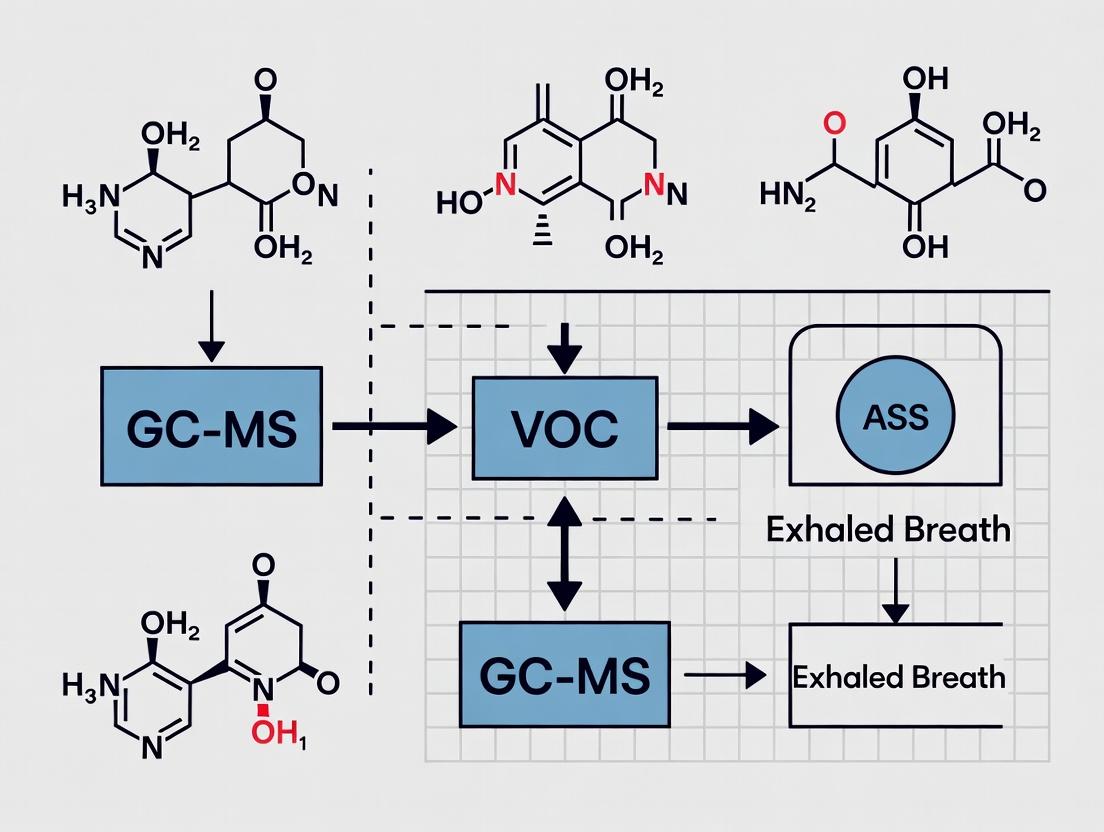
This comprehensive guide details the process of Gas Chromatography-Mass Spectrometry (GC-MS) analysis for volatile organic compounds (VOCs) in exhaled breath, a rapidly advancing frontier in non-invasive diagnostics and biomarker discovery.
GC-MS Analysis of VOCs in Exhaled Breath: A Comprehensive Guide for Biomarker Discovery and Clinical Translation
Abstract
This comprehensive guide details the process of Gas Chromatography-Mass Spectrometry (GC-MS) analysis for volatile organic compounds (VOCs) in exhaled breath, a rapidly advancing frontier in non-invasive diagnostics and biomarker discovery. Targeted at researchers and drug development professionals, it explores the biological origins of breath VOCs, provides a step-by-step methodological workflow from sample collection to data interpretation, addresses critical troubleshooting and optimization strategies to enhance sensitivity and reproducibility, and validates the technique through comparative analysis with established diagnostic methods. The article synthesizes current research to present a robust framework for implementing breath VOC analysis in biomedical research, highlighting its potential for early disease detection, therapeutic monitoring, and personalized medicine.
Breath VOCs as Biomarkers: Understanding the Source, Significance, and Research Landscape
The analysis of volatile organic compounds (VOCs) in exhaled breath, known as the exhaled breath volatilome, has emerged as a pivotal frontier in non-invasive diagnostics and biomarker discovery. Framed within the broader context of a thesis on Gas Chromatography-Mass Spectrometry (GC-MS) analysis of breath VOCs, this guide provides a technical foundation on the composition and biological origins of these compounds. Exhaled breath contains a complex mixture of hundreds of VOCs, present at parts-per-billion (ppb) to parts-per-trillion (ppt) concentrations, which originate from both endogenous metabolic processes and exogenous exposures. This whitepaper details the core concepts, methodologies, and analytical frameworks essential for researchers, scientists, and drug development professionals engaged in this field.
Core Composition of the Exhaled Breath Volatilome
Exhaled breath is a heterogeneous matrix consisting primarily of nitrogen, oxygen, carbon dioxide, water vapor, and inert gases. Embedded within this matrix are trace-level VOCs. The volatilome can be categorized by chemical class and biological origin.
Table 1: Major Chemical Classes of Endogenous VOCs in Exhaled Breath
| Chemical Class | Example Compounds | Typical Concentration Range (in breath) | Primary Biological Origin |
|---|---|---|---|
| Alkanes | Ethane (C₂H₆), Pentane (C₅H₁₂) | 1-50 ppb | Lipid peroxidation (oxidative stress) |
| Aldehydes | Acetaldehyde (C₂H₄O), Hexanal (C₆H₁₂O) | 0.5-100 ppb | Lipid peroxidation, alcohol metabolism |
| Ketones | Acetone (C₃H₆O), 2-Butanone | 100-5000 ppb (Acetone) | Fatty acid β-oxidation, ketogenesis |
| Alcohols | Methanol (CH₃OH), Ethanol (C₂H₅OH) | 10-200 ppb (Methanol) | Gut microbiome, oxidative metabolism |
| Sulfur Compounds | Dimethyl sulfide (C₂H₆S), Carbonyl sulfide (COS) | 0.1-10 ppb | Methionine pathway, gut bacteria |
| Nitrogen Compounds | Ammonia (NH₃), Dimethylamine | 50-2000 ppb (NH₃) | Amino acid deamination, urease activity |
Table 2: Key Exogenous Sources of VOCs in Breath
| Source | Example Compounds | Impact on Analysis |
|---|---|---|
| Environmental Air (Inhaled) | Benzene, Toluene, Xylenes (BTX) | Confounding factor; requires ambient air sampling. |
| Diet (e.g., Garlic, Coffee) | Allyl methyl sulfide, 2-Furanmethanethiol | Time-dependent concentration; requires fasting protocols. |
| Smoking/Vaping | Acetonitrile, Benzene, Toluene | Significant elevation; requires stringent participant exclusion/history. |
| Medications/Volatiles | Isopropyl alcohol, Acetone (from excipients) | Can mask or mimic endogenous signals. |
Biological Origins and Metabolic Pathways
Endogenous VOCs are produced through fundamental biochemical processes within the body. Their presence and concentration in exhaled breath reflect real-time physiological and pathophysiological status.
Lipid Peroxidation
A major source of alkanes and aldehydes. Reactive oxygen species (ROS) attack polyunsaturated fatty acids (PUFAs) in cell membranes, leading to a cascade that produces volatile fragments.
Experimental Protocol for Lipid Peroxidation VOC Analysis (in vitro/in vivo):
- Cell/Tissue Model: Treat cultured cells (e.g., A549) with a pro-oxidant (e.g., H₂O₂, Fe²⁺/ascorbate).
- Headspace Sampling: Place the culture flask in a thermostated bath (37°C). Flush the headspace with purified air or nitrogen.
- Trap Volatiles: Draw the headspace air through a sorbent tube (e.g., Tenax TA) for 30-60 minutes at a flow rate of 50-200 mL/min.
- Analysis: Desorb sorbent tube thermally onto a GC-MS system.
- Key Analytes: Quantify pentane, ethane, hexanal, and nonanal.
Diagram Title: VOC Generation via Lipid Peroxidation Pathway
Energy Metabolism (Ketogenesis & Fermentation)
Acetone, a dominant breath VOC, is primarily produced in the liver via decarboxylation of acetoacetate, a ketone body. Its concentration correlates with fat metabolism states (fasting, diabetes).
Experimental Protocol for Breath Acetone Monitoring:
- Participant Preparation: Overnight fasting (≥12 hours) to elevate ketogenesis. Control diet 24h prior.
- Breath Sampling: Use a standardized method (e.g., Bio-VOC sampler or Tedlar bag). The participant takes a deep breath, holds for 5 seconds, and exhales fully. The end-tidal (alveolar) portion is captured.
- On-line or Off-line Analysis:
- On-line: Direct connection of breath sampler to Proton-Transfer-Reaction Mass Spectrometer (PTR-MS) or Selected Ion Flow Tube Mass Spectrometer (SIFT-MS) for real-time acetone (m/z 59) measurement.
- Off-line: Transfer breath from bag to sorbent tube for subsequent GC-MS analysis. Use a thermal desorption unit.
- Calibration: Generate standard atmospheres of acetone using a permeation tube or gas standard for quantitative calibration.
Diagram Title: Acetone Generation via Ketogenesis Pathway
Microbial Metabolism (Gut & Airways)
The human microbiome produces a diverse range of VOCs. Gut bacteria ferment undigested carbohydrates to produce short-chain fatty acids (SCFAs), alcohols, and gases. Oral and airway microbiomes also contribute.
Table 3: Microbial Origins of Select Breath VOCs
| VOC | Likely Microbial Process | Primary Site |
|---|---|---|
| Hydrogen (H₂) | Fermentation of carbohydrates by anaerobes (e.g., Clostridium) | Colon |
| Methane (CH₄) | Reduction of CO₂ or fermentation by Methanobrevibacter smithii | Colon |
| Dimethyl sulfide (DMS) | Metabolism of methionine by anaerobic bacteria | Colon, Oral |
| Trimethylamine (TMA) | Metabolism of choline/carnitine (e.g., by Anaerococcus hydrogenalis) | Colon |
The Scientist's Toolkit: Research Reagent Solutions
Table 4: Essential Materials for GC-MS-based Breath VOC Research
| Item | Function & Explanation |
|---|---|
| Sorbent Tubes (e.g., Tenax TA, Tenax GR, Carbograph) | Traps and concentrates trace VOCs from large volumes of breath or headspace air for subsequent thermal desorption. Different sorbents target different volatility ranges. |
| Thermal Desorber (e.g., TD-100, Unity-xr) | An automated instrument that heats the sorbent tube to release trapped VOCs onto the GC column in a focused, reproducible band. Essential for sensitivity. |
| GC-MS System with Cryo-Trap/Focuser | The core analytical instrument. A cryogenic trap (often part of the thermal desorber) re-focuses the desorbed analytes at the head of the GC column for sharp peaks. |
| Gas Standards & Permeation Tubes (e.g., for acetone, isoprene, limonene) | Certified gas mixtures or devices that emit a constant, low-level VOC flux. Critical for creating calibration curves and ensuring quantitative accuracy. |
| Breath Samplers (e.g., BioVOC, ReCIVA) | Devices designed to capture the alveolar (end-tidal) portion of breath, minimizing contamination from dead space and the upper airways. |
| Inert Sample Bags (e.g., Tedlar, Nalophan) | For whole breath collection when direct sorbent sampling isn't feasible. Must be pre-cleaned and tested for analyte background. |
| Mass Spectral Libraries (e.g., NIST, Wiley) | Databases containing electron ionization (EI) mass spectra of hundreds of thousands of compounds. Used for tentative identification of unknown peaks. |
| Internal Standards (deuterated, e.g., Acetone-d6, Toluene-d8) | Added in known quantities to breath samples before analysis. Correct for variability in sample recovery, injection, and instrument response. |
Standardized Experimental Workflow
A robust, reproducible workflow is critical for generating comparable data in breath research.
Experimental Protocol: Comprehensive Off-line Breath VOC Analysis via TD-GC-MS
- Pre-Sampling Protocol: Participants fast (water only) for at least 8 hours, refrain from smoking/vaping for 24h, and avoid using scented products. Ambient room air is sampled concurrently.
- Breath Collection:
- Participant rinses mouth with water.
- Wears a nose clip. Inhales deeply through a VOC-filter to clean inspired air.
- Exhales at a steady flow (controlled by a flow meter, ~100 mL/s) through a one-way valve into a BioVOC sampler or a Teflon mouthpiece.
- The initial 500 mL (dead space) is discarded or directed to a separate bag. The subsequent alveolar breath (≈750 mL) is drawn directly through a sorbent tube (e.g., Tenax TA/Carbograph 5TD) using a calibrated pump (flow: 50-200 mL/min, time: 2-5 min).
- Sample Storage: Immediately seal sorbent tubes with Swagelok caps. Store at 4°C and analyze within 48 hours.
- TD-GC-MS Analysis:
- Load tube into Thermal Desorber.
- Primary Desorption: Heat tube (e.g., 280°C for 10 min) under helium flow. Volatiles are trapped on a cold trap (-30°C).
- Secondary Desorption: Rapidly heat cold trap (e.g., 300°C) to inject analytes onto the GC column in a narrow band.
- GC Separation: Use a mid-polarity column (e.g., DB-624, 60m x 0.32mm ID, 1.8µm film). Apply a temperature program (e.g., 40°C hold 5min, ramp 10°C/min to 240°C).
- MS Detection: Use Electron Ionization (EI) at 70 eV. Scan mode (e.g., m/z 35-300) for discovery, Selected Ion Monitoring (SIM) for targeted quantitation.
- Data Processing: Use instrument software (e.g., Chromeleon, MassHunter) for peak integration, library searching (NIST), and quantification against calibration curves.
Diagram Title: Standard Off-line Breath Analysis Workflow
Breath analysis, focusing on volatile organic compound (VOC) profiling via Gas Chromatography-Mass Spectrometry (GC-MS), represents a paradigm shift in non-invasive diagnostics. This whitepaper details the technical foundations, current experimental protocols, and key advancements driving its adoption in clinical research and drug development. The core thesis posits that exhaled breath VOCs provide a real-time, rich matrix of systemic physiological and pathological information, enabling early disease detection and therapeutic monitoring with unprecedented convenience.
Exhaled breath contains over 1,000 VOCs, originating from endogenous metabolic processes, host-pathogen interactions, and environmental exposure. These compounds, present in parts-per-billion (ppb) to parts-per-trillion (ppt) concentrations, serve as volatile biomarkers. The analytical challenge lies in their reliable detection, identification, and quantification against a complex background.
Core Analytical Technology: GC-MS
GC-MS is the gold-standard technology for untargeted breath VOC analysis due to its high sensitivity, robustness, and powerful compound identification capabilities via mass spectral libraries.
Key System Components & Research Reagent Solutions
| Component/Reagent | Function & Specification |
|---|---|
| Thermal Desorption Unit | Pre-concentrates VOCs from breath samples onto sorbent tubes (e.g., Tenax TA, Carbograph). Essential for achieving ppt-level detection limits. |
| Gas Chromatograph | Separates complex VOC mixtures. Capillary columns (e.g., DB-5ms, 60m x 0.32mm, 1.0µm film) are standard for optimal resolution. |
| Mass Spectrometer | Electron Impact (EI) ionization at 70eV is standard. Quadrupole or Time-of-Flight (TOF) detectors provide identification and quantification. |
| Internal Standards | Deuterated VOCs (e.g., d8-toluene, d5-styrene). Added pre-sampling for quantification control and correction for analytical variability. |
| Breath Collection Apparatus | Standardized devices (e.g., BioVOC, ReCIVA) with inert materials and one-way valves to control sampling of alveolar breath and exclude dead-space air. |
| Calibration Gas Mixtures | Certified traceable VOC standards in nitrogen at known ppb/ppt concentrations. Critical for instrument calibration and method validation. |
| Sorbent Tubes | Multi-bed tubes (e.g., Tenax GR, Carbopack X). For trapping and retaining a broad range of VOCs (C3-C30). |
Standardized Experimental Protocol for Breath VOC Research
Pre-Analytical Phase: Sample Collection
Protocol: Participants breathe tidally through a mouthpiece connected to a heated (40°C) inlet line and a CO2 sensor. After a washout period, alveolar breath is captured at the end of a normal exhalation. A defined volume (e.g., 500mL) is drawn onto a sorbent tube using a calibrated pump. Room air is sampled simultaneously for background subtraction. Samples are sealed and stored at 4°C prior to analysis (<24h).
Analytical Phase: TD-GC-MS Analysis
Protocol:
- Thermal Desorption: Sorbent tube is heated (e.g., 300°C for 10 min) in a stream of inert carrier gas. VOCs are re-focused onto a cold trap.
- GC Separation: The trap is rapidly heated, injecting analytes onto the GC column. Oven temperature is ramped (e.g., 40°C for 2 min, then 10°C/min to 250°C).
- MS Detection: Eluting compounds are ionized by EI (70eV). Mass spectra are acquired in full scan mode (e.g., m/z 35-350).
Data Processing & Analysis
Raw data undergoes peak picking, deconvolution, and alignment using software (e.g., AMDIS, ChromaTOF). Compounds are identified by matching against mass spectral libraries (NIST, Wiley) and linear retention indices. Multivariate statistics (PCA, PLS-DA) are applied to identify discriminatory VOC patterns.
Recent studies highlight the diagnostic potential of breath VOC profiling.
Table 1: Selected Clinical Studies in Breath VOC Analysis (2022-2024)
| Disease Target | Key Discriminatory VOCs (Examples) | Performance Metrics | Study Reference |
|---|---|---|---|
| Non-Small Cell Lung Cancer (NSCLC) | 2-Butanone, 3-Hydroxy-2-butanone, Hexanal | Sensitivity: 93%, Specificity: 90%, AUC: 0.96 | Liu et al., Lung Cancer, 2023 |
| COVID-19 & Variants | Methanethiol, Isopropanol, 2,4-Octadiene | Accuracy: 94% vs. PCR; Distinguishes Omicron/Delta | Ruszkiewicz et al., J. Breath Res., 2024 |
| Parkinson's Disease | Perillic aldehyde, Eucalyptol, p-Cymene | Sensitivity: 95%, Specificity: 86% | van der Schee et al., ACS Chem. Neurosci., 2023 |
| Drug Efficacy (Asthma) | Decreased aldehydes (hexanal, heptanal) post-treatment | Correlation (r=0.79) with FEV1 improvement | Smith et al., Eur. Respir. J., 2022 |
| NAFLD/NASH | Pentane, Limonene, 2-Pentylfuran | Distinguishes Steatosis vs. NASH (AUC: 0.89) | Bannier et al., Hepatology, 2023 |
Biological Pathways Captured in Breath
VOCs reflect core metabolic processes. Key pathways are illustrated below.
(Diagram 1: VOC Origins in Key Metabolic Pathways)
End-to-End Experimental Workflow
A comprehensive breathomics study involves multiple critical steps.
(Diagram 2: Breathomics Research Workflow)
Advantages in Drug Development
Breath analysis offers unique advantages across the drug development pipeline:
- Phase I: Assess metabolic perturbation and early safety signals via real-time VOC changes.
- Phase II/III: Stratify patients (breath phenotyping) and monitor treatment response objectively.
- Post-Marketing: Facilitate therapeutic drug monitoring and adherence checks non-invasively.
Challenges and Future Directions
Key challenges include standardization of collection, inter-individual variability, and robust biomarker validation. Future trends point toward real-time Point-of-Care (POC) devices using selected ion flow tube mass spectrometry (SIFT-MS) or sensor arrays, integrated with artificial intelligence for pattern recognition. The convergence of high-resolution GC-MS with machine learning solidifies breath analysis as a cornerstone of next-generation, non-invasive precision medicine.
Key Disease Areas with Established VOC Biomarkers (e.g., Lung Cancer, COPD, Infections)
Within the expanding field of breathomics, the analysis of volatile organic compounds (VOCs) in exhaled breath via Gas Chromatography-Mass Spectrometry (GC-MS) has emerged as a powerful, non-invasive diagnostic and monitoring tool. This technical guide details key disease areas where VOC biomarkers are well-established, focusing on lung cancer, chronic obstructive pulmonary disease (COPD), and infectious diseases. The context assumes integration into a broader thesis on GC-MS methodological frameworks for breath research, providing actionable protocols and data synthesis for research and clinical translation professionals.
Lung Cancer VOC Biomarkers
Lung cancer remains a leading cause of cancer mortality, driving intensive research into early detection. Exhaled breath VOCs reflect altered metabolic pathways in tumor cells, such as increased oxidative stress, deregulated fatty acid oxidation, and perturbed amino acid metabolism.
Key Biomarkers and Metabolic Origins
Established lung cancer VOC biomarkers originate from distinct biochemical pathways:
- Alkanes and Methylated Alkanes (e.g., pentane, isoprene): Products of lipid peroxidation due to reactive oxygen species (ROS).
- Carbonyl Compounds (e.g., aldehydes like hexanal, heptanal): Secondary products of lipid peroxidation.
- Benzene Derivatives (e.g., styrene, toluene): Associated with cytochrome P450 mixed-function oxidase activity.
- Specific Compounds: Ethylbenzene, styrene, and decane are consistently reported.
Table 1: Key VOC Biomarkers in Lung Cancer
| VOC Compound | Typical Concentration in Patients | Typical Concentration in Controls | Putative Metabolic Origin | Key References |
|---|---|---|---|---|
| Isoprene | 118-145 ppb | 80-112 ppb | Mevalonate pathway (cholesterol synthesis) | Bajtarevic et al., 2009 |
| Pentane | 12-18 ppb | 5-9 ppb | Lipid peroxidation (ω-6 fatty acids) | Phillips et al., 1999 |
| Hexanal | 23-35 ppb | 8-15 ppb | Lipid peroxidation | Fuchs et al., 2010 |
| Heptanal | 8-12 ppb | 2-5 ppb | Lipid peroxidation | Fuchs et al., 2010 |
| Styrene | 5-9 ppb | 1-3 ppb | CYP450 metabolism, environmental | Poli et al., 2005 |
| Benzene | 6-10 ppb | 2-5 ppb | Oxidative stress, environmental | Peng et al., 2010 |
Experimental Protocol: GC-MS Analysis for Lung Cancer VOC Profiling
Objective: To collect, pre-concentrate, and analyze VOCs from exhaled breath of lung cancer patients and matched controls.
Materials:
- Breath Collection: Tedlar bags or commercially available breath samplers (e.g., Bio-VOC).
- Pre-concentration: Thermal Desorption (TD) tubes with multi-bed sorbent (e.g., Tenax TA, Carbograph 5TD).
- GC-MS System: High-resolution GC coupled with quadrupole or time-of-flight (TOF) MS.
- Standards: Internal standard mixture (e.g., deuterated toluene-d8, benzene-d6) for quantification.
Procedure:
- Patient Preparation: Subjects fast and abstain from smoking for 12 hours. Mouth rinsing with water is performed before sampling.
- Breath Collection: Exhaled breath is collected following a standardized protocol (e.g., American Thoracic Society guidelines). The subject exhales fully, then inhales deeply through a VOC filter and exhales into the collection device, capturing the alveolar portion of breath.
- Sample Transfer & Trapping: A defined volume (500-1000 mL) of breath sample is drawn from the bag at a controlled flow rate (50-200 mL/min) through the sorbent tube using a calibrated pump. Volatiles are adsorbed onto the sorbent material.
- Thermal Desorption-GC-MS Analysis:
- The TD tube is placed in a thermal desorption unit.
- VOCs are desorbed at 250-300°C for 5-10 minutes under helium flow and cryo-focused at the head of the GC column.
- GC: Separation on a mid-polarity column (e.g., DB-624, 60m x 0.32mm ID, 1.8µm film). Oven program: 40°C (hold 5 min), ramp at 10°C/min to 250°C (hold 5 min).
- MS: Electron impact ionization (70 eV), scan mode m/z 35-350.
- Data Analysis: Peak identification using NIST library and authentic standards. Multivariate statistical analysis (PCA, PLS-DA) is applied to identify discriminatory biomarker patterns.
Figure 1: Workflow for Lung Cancer Breath VOC Analysis & Pathway Link.
Chronic Obstructive Pulmonary Disease (COPD)
COPD, characterized by persistent respiratory symptoms and airflow limitation, involves chronic inflammation and oxidative stress in the airways, which generate distinctive VOC patterns useful for phenotyping and monitoring exacerbations.
Key Biomarkers and Pathophysiological Correlates
- Oxidative Stress Markers: Ethane, pentane.
- Airway Inflammation Markers: Nitric oxide-related VOCs (e.g., nitrated alkanes), acetone (linked to metabolic shift).
- Microbial Activity: Compounds like hydrogen sulfide, methyl mercaptan in cases of infection or microbiome shift.
Table 2: Key VOC Biomarkers in COPD and Exacerbations
| VOC Compound | Association with COPD Stage | Correlation with Clinical Parameters | Putative Origin | Key References |
|---|---|---|---|---|
| Ethane | ↑ with severity (GOLD stage) | Negative correlation with FEV₁ | Lipid peroxidation (ω-3 fatty acids) | Paredi et al., 2000 |
| Pentane | ↑ in stable COPD & exacerbations | Correlates with sputum neutrophils | Lipid peroxidation (ω-6) | Van Hoydonck et al., 2011 |
| Acetone | Variable (often ↑) | Linked to body weight loss, metabolism | Ketone body metabolism | Poli et al., 2010 |
| Hydrogen Sulfide (H₂S) | ↑ during bacterial exacerbation | Correlates with P. aeruginosa load | Bacterial metabolism (e.g., Pseudomonas) | Shafiek et al., 2015 |
| Isoprene | May be decreased | Possible inverse link to inflammation | Cholesterol synthesis | Basanta et al., 2012 |
Experimental Protocol: Tracking COPD Exacerbations via VOCs
Objective: To longitudinally monitor VOC profiles in COPD patients to discriminate between stable state and infectious exacerbations.
Materials:
- Breath Collection: Reusable breath collection systems (e.g., ReCIVA) that allow simultaneous sampling onto multiple sorbent tubes.
- Sorbent Tubes: Carboxen-based sorbents for very volatile compounds (e.g., ethane).
- GC-MS with SPME option: Solid-Phase Microextraction fibers for alternative sampling.
- Calibration: Dynamic gas standards for light alkanes (ethane, propane).
Procedure:
- Longitudinal Cohort Design: Patients provide breath samples at monthly stable visits and during suspected exacerbation events.
- Sample Acquisition: Breath is collected using a controlled apparatus that discards dead-space air and captures alveolar breath directly onto pre-conditioned sorbent tubes.
- Analysis for Very Volatile Compounds: Specialized GC columns (e.g., PLOT columns) are used for separating C2-C6 alkanes (ethane, pentane). Two-stage thermal desorption improves sensitivity.
- Microbiome-Linked Analysis: For sulfur compounds, use of selective detectors (e.g., Sulfur Chemiluminescence Detector) or high-sensitivity MS in Selected Ion Monitoring (SIM) mode.
- Statistical Modeling: Mixed-effect models to account for within-patient correlation. ROC analysis for biomarker panels predicting exacerbation onset.
Infectious Diseases (Respiratory & Systemic)
VOC analysis offers potential for rapid, non-invasive pathogen identification and antibiotic stewardship. Pathogens produce unique volatile metabolites through fermentation, substrate utilization, and toxin production.
Key Biomarkers for Bacterial and Viral Identification
- Bacterial Infections: Pseudomonas aeruginosa (hydrogen cyanide, 2-aminoacetophenone), Staphylococcus aureus (ethyl esters, certain alcohols), Mycobacterium tuberculosis (nitroalkanes, cyclopentane derivatives).
- Viral Infections: Often induce host-based VOC changes (inflammation markers, e.g., aldehydes) rather than pathogen-specific VOCs.
- Sepsis: Broad shifts in ketones (acetone), sulfur compounds, and alkanes.
Table 3: VOC Biomarkers Associated with Specific Infections
| Pathogen/Disease | Characteristic VOC Biomarkers | Potential for Diagnostics | Key References |
|---|---|---|---|
| Pseudomonas aeruginosa | Hydrogen Cyanide (HCN), 2-Aminoacetophenone, Methyl Thiocyanate | High (discrimination in CF, pneumonia) | Labows et al., 1979; Neerincx et al., 2015 |
| Staphylococcus aureus | Ethyl 2-Methylbutyrate, Ethyl 3-Methylbutyrate, Ethyl Acetate | Moderate (specificity in wounds) | Allardyce et al., 2006 |
| Mycobacterium tuberculosis | Nitroalkanes (e.g., 2-methyl-1-nitropropane), Cyclopentane derivatives | High (active vs. latent TB) | Phillips et al., 2007 |
| Influenza Virus | ↑ Pentane, ↑ Isopentane, ↑ Acetaldehyde | Moderate (distinguish viral/bacterial) | Traxler et al., 2018 |
| Sepsis (General) | ↑ Acetone, ↑ Dimethyl sulfide, Altered alkane profiles | High (early detection) | Bos et al., 2013 |
Experimental Protocol: Discriminating Bacterial Respiratory Infections
Objective: To differentiate between common bacterial causes of ventilator-associated pneumonia (VAP) using breath VOCs.
Materials:
- In-vitro Headspace Sampling: Culture flasks with septa for in-vitro validation.
- Sorbent Tubes: Tenax GR/Carbopack B/Carboxen 1000 multi-bed tubes for broad range.
- GC-MS with High Mass Accuracy: Time-of-Flight (TOF) or Orbitrap MS for unknown identification.
- Chemostat Cultures: For controlled bacterial VOC production under defined nutrient conditions.
Procedure:
- In-vitro Reference Library Creation: Reference bacterial strains are grown in standardized broth. Headspace air is sampled at defined growth phases (log, stationary) and analyzed by TD-GC-MS to create pathogen-specific VOC profiles.
- Clinical Breath Sampling: Intubated patients undergo breath sampling from the expiratory limb of the ventilator circuit, using a bacterial filter and moisture trap.
- Targeted and Untargeted Analysis:
- Targeted: SIM methods for known markers (e.g., m/z 27 for HCN).
- Untargeted: Full-scan acquisition followed by deconvolution and alignment software (e.g., AMDIS, ChromaTOF).
- Pattern Recognition: Machine learning algorithms (e.g., Random Forest, SVM) are trained on in-vitro data and applied to clinical breath patterns to predict pathogen identity.
Figure 2: Pathways Generating VOCs in Infectious Diseases.
The Scientist's Toolkit: Key Research Reagent Solutions
Table 4: Essential Materials for VOC Breath Research
| Item | Function & Rationale | Example Product/Chemical |
|---|---|---|
| Inert Breath Bags | Collection and short-term storage of whole breath samples. Must be chemically inert to prevent VOC adsorption/formation. | Tedlar PVF bags, Nalophan bags |
| Sorbent Tubes for TD | Pre-concentration of VOCs from large air volumes. Sorbent choice (polymer, carbon) determines the volatility range captured. | Tenax TA tubes, Markes International's Carbopack-packed tubes |
| Thermal Desorber | Automated, quantitative transfer of VOCs from sorbent tubes to the GC-MS inlet without solvent. Essential for sensitivity. | Markes Unity Series, PerkinElmer TurboMatrix TD |
| Internal Standards (Deuterated) | Added pre- or post-sampling to correct for analytical variability, tube conditioning differences, and sample losses. | Toluene-d8, Benzene-d6, Chlorobenzene-d5 mixture |
| Dynamic Gas Calibrator | Generation of precise, low-concentration VOC standards in air/nitrogen for creating calibration curves. | Environics Series 4000, Kin-Tek Permeation Oven systems |
| GC Column (Mid-Polarity) | Workhorse column for separating complex breath VOC mixtures containing diverse chemical functionalities. | Agilent DB-624, Restek Rtx-Volatiles |
| NIST/AMDIS Library | Software and database for tentative identification of unknown chromatographic peaks by mass spectrum matching. | NIST Mass Spectral Library (NIST/EPA/NIH) |
| VOC-Free Air Supply | Critical for instrument zeroing, sample dilution, and as carrier gas in calibration. Generated via high-purity scrubbers. | Air Liquide Alphagaz 1, Parker Balston Zero Air Generators |
Current Challenges and Gaps in Foundational Breath VOC Research
Exhaled breath analysis for volatile organic compounds (VOCs) via Gas Chromatography-Mass Spectrometry (GC-MS) presents a non-invasive frontier for disease diagnostics and therapeutic monitoring. This whitepaper delineates the current methodological and translational challenges within this nascent field, framed within a broader thesis on advancing analytical rigor and biological relevance.
Core Analytical Challenges
Pre-Analytical Variability & Standardization Gaps
The lack of standardized protocols for breath collection, storage, and pre-concentration introduces significant inter-study variability, confounding biomarker discovery.
Detailed Collection Protocol (Standardized Breath Sampling):
- Subject Preparation: Subjects must fast for at least 8 hours and abstain from smoking, tooth brushing, and using mouthwash for 12 hours prior to sampling. Water intake is permitted.
- Oral Cavity Rinsing: Rinse mouth with deionized water immediately before sampling to reduce oral microbiome confounding.
- Sample Collection: Use a commercial breath sampler (e.g., Bio-VOC or ReCIVA) with disposable mouthpieces and sterile Teflon tubing. The subject inhales to total lung capacity through a VOC-filter and exhales against a slight resistance (typically 5-20 cm H₂O) to close the velum, ensuring alveolar gas sampling.
- Collection Medium: Exhaled breath is directed into:
- Tedlar Bags: For immediate analysis (<2 hours). Flush bag 3x with sample prior to final collection.
- Sorbent Tubes: For storage and pre-concentration. Use multi-bed tubes (e.g., Tenax TA, Carbograph 5TD). Sample at a controlled flow rate (50-200 mL/min) for 10-20 minutes to capture 1-2L of breath. Immediately cap tubes with brass storage caps.
- Storage: Sorbent tubes must be stored at 4°C and analyzed within 14 days. Tedlar bags must be analyzed immediately.
Instrumental & Data Processing Limitations
GC-MS remains the gold standard but suffers from limitations in sensitivity, throughput, and data harmonization.
Workflow Title: Key Steps in GC-MS Breath VOC Analysis
Biological Validation & Pathway Mapping
A major gap is linking detected VOCs to specific enzymatic or metabolic pathways, distinguishing endogenous production from exogenous exposure or microbial metabolism.
Diagram Title: Biological Sources and Pathways for Breath VOCs
Table 1: Key Sources of Pre-Analytical Variability in Breath VOC Studies
| Variability Factor | Impact Range/Description | Common Mitigation Strategy |
|---|---|---|
| Breath Fraction | Alveolar vs. dead space can vary VOC conc. by 10-1000x. | Use controlled exhalation pressure. |
| Storage Time | 20-50% signal loss for reactive VOCs in 24h (Tedlar). | Use sorbent tubes; analyze <14 days. |
| Sorbent Material | Recovery rates vary from 60% to 95% by compound. | Use multi-bed tubes (Tenax/Carbopack). |
| Subject Diet | >100 VOCs affected; some persist >8 hrs. | Standardize fasting (>8h). |
| Oral Microbiome | Can produce confounding VOCs (e.g., sulfur compounds). | Pre-collection mouth rinse protocol. |
Table 2: Performance Metrics of Common Analytical Platforms
| Platform | Typical Sensitivity (ppb) | Analysis Time | Key Limitation for Breath |
|---|---|---|---|
| GC-MS (Quadrupole) | 1 - 50 | 30 - 60 min | Low throughput; requires pre-concentration. |
| GC-TOF-MS | 0.1 - 10 | 20 - 40 min | High cost; complex data handling. |
| PTR-MS | 0.1 - 1 | Seconds | Limited isomer separation; no offline analysis. |
| SIFT-MS | 0.1 - 1 | Seconds | Requires prior chemical knowledge for setup. |
| E-Nose | 10 - 1000 | Minutes | Poor specificity; sensor drift. |
The Scientist's Toolkit: Key Research Reagent Solutions
Table 3: Essential Materials for Foundational Breath VOC Experiments
| Item | Function & Rationale |
|---|---|
| Multi-bed Sorbent Tubes (e.g., Tenax TA/Carbograph 5TD) | For reliable capture and stabilization of VOCs across a wide range of volatilities (C3-C30). |
| Certified Breath Sampling Bags (e.g., Tedlar PVF) | For initial collection and short-term storage; inert interior coating minimizes adsorption. |
| Thermal Desorber Unit | Interfaces sorbent tubes with GC-MS; essential for concentrating trace analytes. |
| Internal Standard Mix (e.g., deuterated VOCs like acetone-d6, isoprene-d5) | Added pre-collection to correct for sample loss, instrument drift, and quantify recovery. |
| NIST/EPA/NIH Mass Spectrometry Library | Critical for tentative identification of unknown chromatographic peaks. |
| Standardized Calibration Gas (e.g., Apel-Riemer ENH-1) | Contains known VOC mixtures at ppb-ppm levels for instrument calibration and method validation. |
| VOC-Free Air Generator | Produces air purified of hydrocarbons for instrument zeroing, bag/tube cleaning, and as dilution gas. |
| Bioinformatics Pipeline (e.g., AMDIS, XCMS, MetaboAnalyst) | For raw data processing, peak alignment, and multivariate statistical analysis. |
Critical Research Gaps and Future Directions
- Lack of a Universal Standard Matrix: No consensus on synthetic "artificial breath" for inter-laboratory calibration.
- Incomplete Volatilome Mapping: The human volatilome is poorly cataloged, with many detected peaks remaining unidentified.
- Longitudinal Data Scarcity: Insufficient studies on intra-individual VOC variation over time (diurnal, hormonal, lifestyle).
- Microbiome Contribution Quantification: Difficulty in apportioning VOCs to human vs. microbial metabolic origins.
- Clinical Translation Bottleneck: Most studies are case-control; rigorous prospective validation studies are rare.
From Breath to Data: A Step-by-Step GC-MS Workflow for VOC Analysis
Within the broader thesis on the Gas Chromatography-Mass Spectrometry (GC-MS) analysis of Volatile Organic Compounds (VOCs) in exhaled breath research, the pre-analysis phase is the most critical determinant of data validity and reproducibility. This guide details the standardized protocols required to minimize biological and technical variance, ensuring that the downstream analytical results are a true reflection of the physiological or pathological state under investigation, rather than artifacts of uncontrolled confounding factors.
Standardized Subject Preparation Protocol
A rigorous subject preparation protocol is essential to control for exogenous and endogenous VOC confounders.
2.1 Pre-Sampling Controls (Minimum 12-hour adherence)
- Dietary Fasting: A 12-hour overnight fast is mandatory to minimize VOCs from digestive processes and recent food consumption.
- Fluid Intake: Only still, mineral water is permitted. No coffee, tea, juice, or alcohol.
- Oral Hygiene: No tooth brushing, mouthwash, or chewing gum for at least 2 hours prior to sampling to avoid interference from hygiene product volatiles.
- Medication & Supplements: Withhold non-essential medications and all dietary supplements for 24-48 hours, as approved by an ethics committee.
- Behavioral Restrictions: No smoking, vaping, or exposure to secondhand smoke for a minimum of 12 hours. Avoid strenuous exercise for 8 hours prior.
2.2 Environmental Controls (During the 1-hour pre-sampling period) Subjects must rest in a clean, temperature-controlled (21-23°C) preparation room with a filtered air supply (e.g., HEPA/activated carbon) to standardize inhaled air VOC background. This environment should be maintained throughout the sampling procedure.
Standardized Breath Sampling Methodology
The choice of sampling interface and parameters directly impacts the quality and quantity of the captured breath matrix.
3.1 Sampling Interface: The Breath Collection Apparatus (BCA) The use of a commercially available or custom-built BCA is recommended. It typically consists of:
- A one-way mouthpiece with a viral/bacterial filter.
- A desiccant module (e.g., Na₂SO₄, Mg(ClO₄)₂) to remove water vapor.
- A sorbent trap (e.g., Tenax TA, Carbograph 5TD) for VOC concentration.
- A flow sensor and pump for controlled volumetric sampling.
3.2 The Exhalation Maneuver: Alveolar Sampling To target systemic, blood-borne VOCs (the "alveolar gradient"), sampling must capture the late fraction of exhaled breath (alveolar air).
- Protocol: The subject inhales filtered room air to total lung capacity, then exhales at a steady flow rate (typically 50-500 mL/s) against slight resistance. The initial 150-200 mL of dead space air is discarded via a bypass; the subsequent alveolar air is diverted to the sorbent trap.
- Key Parameter: Sampling is volume-controlled, not time-controlled.
Quantitative Data on Key Confounding Factors
Table 1: Impact of Key Confounding Variables on Exhaled Breath VOC Profiles
| Confounding Variable | Effect on Exhaled VOCs | Recommended Control Protocol | Effect Magnitude (Reported Change) |
|---|---|---|---|
| Recent Food Intake | Introduces dietary VOCs (e.g., sulfur compounds, terpenes), alters metabolic state. | Overnight fasting (≥12h). | Up to 10x increase in specific dietary markers (e.g., limonene). |
| Smoking (Recent) | Introduces exogenous compounds (e.g., benzene, acetonitrile). | Abstinence ≥12h; verify with CO monitor (<10 ppm). | Acetonitrile levels remain elevated 2-3x baseline for >12h. |
| Oral Microbiome | Produces local VOCs (e.g., hydrogen sulfide, acetone) not of systemic origin. | Standardized mouth rinse (water), no hygiene 2h prior, discard dead space air. | Can account for >30% of total VOC signal variability. |
| Inhaled Ambient Air | Background VOCs (e.g., isoprene, toluene) mask endogenous production. | Breath sampling in clean air environment; analyze ambient air in parallel. | Alveolar gradient (exhaled - inhaled) is critical for true endogenous levels. |
| Exercise | Increases isoprene, acetone, ammonia; alters hemodynamics. | Rest in seated position for ≥30 min prior to sampling. | Isoprene can increase by 100-200% post-exercise. |
Experimental Protocol: Standardized Breath Sampling with Sorbent Tubes
This is a detailed workflow for a typical offline (batch) sampling method compatible with thermal desorption (TD)-GC-MS.
Protocol Title: Offline Alveolar Breath Sampling onto Sorbent Tubes for TD-GC-MS Analysis
5.1 Materials & Preparation
- Sorbent Tubes: Pre-conditioned Tenax TA/Carbograph 5TD tubes.
- Breath Collection Apparatus (BCA): Commercially available system (e.g., ReCIVA, Bio-VOC) or validated custom build.
- Calibration: Daily calibration of the BCA flow sensor.
- Ambient Air Sampling: Simultaneous collection of room air using identical sorbent tubes as a background control.
5.2 Procedure
- Subject Preparation: Verify adherence to preparation protocol. Record subject metadata (age, BMI, medication, time since last meal).
- Equipment Setup: Connect a clean, preconditioned sorbent tube to the BCA's sample port. Install a new viral filter and mouthpiece.
- Environmental Baseline: Activate the BCA to collect a sample of the filtered room air in the preparation room (e.g., 1L at 200 mL/s) onto a separate sorbent tube. Label as "Ambient Blank."
- Subject Sampling: a. Instruct the subject to wear a nose clip. b. The subject inhales deeply to total lung capacity from the filtered air inlet of the BCA. c. The subject immediately exhales at a steady, controlled rate. The BCA automatically discards the first 200 mL (dead space) and then directs the subsequent alveolar air through the sorbent trap. d. Collect a defined volume (typically 500-1000 mL) of alveolar breath.
- Sample Storage: Immediately seal the sorbent tube with certified brass storage caps. Label and store at 4°C if analysis is within 24 hours, or at -20°C for longer-term storage (up to 30 days).
- Replication: Collect at least two technical replicates per subject.
5.3 Quality Control Steps
- Blank Controls: Run system blanks (empty BCA) and ambient air samples with each batch.
- Sample Integrity: Check flow sensor logs to ensure consistent exhalation flow rates and volumes.
- Documentation: Meticulously log all parameters (subject ID, volume, flow rate, date/time, operator).
Visualization of Protocols and Pathways
Diagram 1: Standardized Breath Sampling Workflow (100 chars)
Diagram 2: Sources of VOCs in Exhaled Breath (99 chars)
The Scientist's Toolkit: Essential Research Reagents & Materials
Table 2: Key Research Reagent Solutions for Breath VOC Sampling
| Item | Function & Rationale |
|---|---|
| Tenax TA Sorbent Tubes | Robust hydrophobic polymer for trapping a wide range of VOCs (C6-C30). Low affinity for water, making it ideal for humid breath samples. The standard for offline breath collection. |
| Carbograph 5TD Sorbent Tubes | A graphitized carbon black sorbent. Often used in multi-bed traps with Tenax to broaden the volatility range captured, including very volatile compounds (C2-C5). |
| Thermal Desorption (TD) Tubes | Specifically designed, inert metal/glass tubes that hold the sorbent and are compatible with automated TD units for direct introduction to the GC-MS. |
| Certified Tube Sealing Caps | Brass or pressure-tight caps with PTFE ferrules to ensure an airtight seal post-sampling, preventing sample loss or contamination during transport/storage. |
| Breath Collection Apparatus (BCA) | A calibrated device (e.g., ReCIVA) that standardizes the exhalation maneuver, provides visual feedback, controls flow/volume, and integrates sorbent traps for reproducible sampling. |
| Viral/Bacterial Filters (ISO 18184) | Protects the sampling equipment and operator from potential pathogens in exhaled breath. Must be low in VOCs to avoid artifact introduction. |
| Chemical Desiccants (e.g., Mg(ClO₄)₂, Na₂SO₄) | Integrated into the sampling line to remove water vapor from breath prior to the sorbent trap, preventing ice formation in GC systems and protecting the sorbent/column. |
| Calibrated Gas Standards (TO-14, TO-15) | Custom or certified mixtures of VOCs in inert gas at known concentrations (ppb-ppm level). Essential for method development, sorbent tube desorption efficiency testing, and system calibration. |
| Internal Standard Solution (e.g., d8-Toluene, 13C2-Acetone) | A deuterated or 13C-labeled VOC standard spiked onto the sorbent tube prior to sampling or immediately after. Corrects for variability in desorption and instrument response. |
| High-Purity Zero Air Generator | Produces VOC-free air for subject inhalation during sampling and for purging/conditioning equipment, ensuring a consistent and clean baseline. |
Context within GC-MS Analysis of VOCs in Exhaled Breath Research The analysis of volatile organic compounds (VOCs) in exhaled breath presents a non-invasive window into human metabolism and disease states, holding significant promise for clinical diagnostics and drug development. A critical challenge lies in the reliable collection, pre-concentration, and introduction of these low-concentration, labile analytes into a Gas Chromatography-Mass Spectrometry (GC-MS) system. This guide provides an in-depth technical comparison of the three primary methodologies for this purpose: sorbent tubes, sampling bags, and integrated thermal desorption (TD) systems, framed within the experimental workflow of breath research.
Core Methodologies & Experimental Protocols
A. Sorbent Tubes (Passive/Active Trapping)
Principle: Breath VOCs are trapped onto a packed bed of solid sorbent material (e.g., Tenax TA, Carbograph) via active pumping or diffusion. Detailed Protocol:
- Tube Preparation: Condition sorbent tubes (typically stainless steel or glass) in a thermal desorber at 320-330°C for 60-120 minutes under a purified helium flow (50-100 mL/min).
- Sample Collection: The subject exhales through a mouthpiece connected to a bacterial filter and a spirometry guide (e.g., a T-piece with a one-way valve) to capture end-tidal (alveolar) breath.
- Trapping: Exhaled breath is drawn through the sorbent tube at a controlled flow rate (50-200 mL/min) for 2-10 minutes using a calibrated pump. Total volume is recorded.
- Sealing & Storage: Tube ends are sealed with airtight caps (Swagelok, brass/Teflon) and stored at 4°C or lower for ≤14 days to minimize artifacts.
- Analysis: Tube is placed in a TD unit, desorbed at 250-300°C for 5-10 minutes, and analytes are cryofocused (-30°C to -150°C) before GC-MS injection.
B. Sampling Bags (Whole Breath Collection)
Principle: Whole or alveolar breath is collected into an inert, non-adsorptive bag for later transfer to a pre-concentration system. Detailed Protocol:
- Bag Preparation: Bags (e.g., Tedlar, Nalophan, FlexFoil) are flushed 3-5 times with pure nitrogen or synthetic air and evacuated using a pump.
- Sample Collection: Subject exhales through a disposable mouthpiece into a T-valve system, directing the latter part of the exhalation into the bag until full (typically 0.5-1 L).
- Transfer & Pre-concentration: Within 2-4 hours of collection, bag contents are pumped through a sorbent tube (as described in A.3) at a fixed flow rate for a set time. Alternatively, the bag can be connected directly to an autosampler for dynamic headspace extraction.
- Analysis: The sorbent tube is desorbed and analyzed as above.
C. Integrated Thermal Desorption (TD) Systems (On-line/Off-line)
Principle: Samples are collected directly onto sorbent tubes or into bags, then processed by a fully automated TD unit that manages desorption, trapping, and transfer to the GC. Detailed Protocol:
- Collection: Samples are collected onto TD-compatible sorbent tubes (as in A) or into bags (as in B).
- Automated Processing: The tube/bag headspace is loaded onto the TD autosampler. The system executes a pre-programmed sequence:
- Primary Desorption: Tube is heated (e.g., 280°C, 10 min) in a carrier gas stream (He). Volatiles are transferred and re-focused in a cold trap (packed with Tenax/Carbopack) held at -10°C to -30°C.
- Secondary Desorption: The cold trap is rapidly heated (e.g., 300°C, 3 min) to inject a narrow analyte band into the GC column via a heated transfer line.
- Analysis: GC-MS run commences simultaneously with secondary desorption.
Table 1: Quantitative & Qualitative Comparison of Pre-Concentration Methods
| Feature | Sorbent Tubes (Direct) | Sampling Bags | Integrated TD Systems |
|---|---|---|---|
| Typical Sample Volume | 100 mL - 5 L | 0.5 L - 2 L | 100 mL - 2 L |
| Primary Pre-concentration | On-sorbent trapping | Requires secondary trapping onto sorbent | Two-stage (tube + cold trap) |
| Limit of Detection (LOD) | Very Low (ppt-ppb) | Moderate (ppb) | Very Low (ppt-ppb) |
| Analyte Stability | Good (weeks if sealed/cold) | Poor (hours, risk of degradation/perm.) | Good (tube storage) |
| Water Management | Requires drying trap (e.g., Nafion) | Significant issue, can swamp trap | Excellent (built-in dry purge/gas) |
| Throughput Potential | Moderate (manual handling) | Low (manual transfer) | High (full automation) |
| Reusability | Tubes are reusable after recond. | Bags are typically single-use | Tubes are reusable |
| Key Strength | Sensitivity, quant. accuracy | Ease of collection, spot sampling | Sensitivity, automation, reprod. |
| Key Limitation | Pump required, semi-automated | Sample degradation, water vapor | High capital cost |
Table 2: Common Sorbent Materials for Breath VOC Analysis
| Sorbent | Key Compounds Targeted | Max Temp (°C) | Weaknesses |
|---|---|---|---|
| Tenax TA (PPO) | C7-C26 hydrocarbons, aromatics, halocarbons | 350 | Low retentivity for VVOCs ( |
| Carbograph 1TD | C5-C12 VOCs, polar compounds | 400 | Hydrophilic, retains water |
| Carboxen 1000 | C2-C5 VVOCs (ethane, acetaldehyde) | 400 | Very strong, can cause artifact formation |
| Multi-bed (Tenax/Carbograph/Carboxen) | Broadest range (C2-C30) | Varies | Complex optimization required |
The Scientist's Toolkit: Essential Research Reagents & Materials
Table 3: Key Research Reagent Solutions & Materials
| Item | Function/Application |
|---|---|
| Tenax TA 60/80 mesh | Primary sorbent for trapping mid-range VOCs (e.g., hydrocarbons). |
| Carbograph 1TD/2TD | Graphitized carbon black for trapping polar VOCs and complementing Tenax. |
| Carboxen 1003 | Carbon molecular sieve for retaining very volatile compounds (C2-C5). |
| Thermal Desorption Tubes (Stainless Steel) | Reusable tubes for packing sorbents; inert and durable. |
| TD Tube Sealing Caps (Brass/Teflon) | Ensure airtight storage of collected samples. |
| Tedlar PVF Sampling Bags | Inert bag material for whole breath collection; must be pre-conditioned. |
| Nafion DRYER Permeation Tubes | Selectively removes water vapor from breath samples pre-concentration. |
| Certified Calibration Gases (e.g., TO-14, TO-15 mix) | For instrument calibration and quantification of target VOCs. |
| Internal Standard Solution (e.g., d8-toluene, bromofluorobenzene) | Spiked pre- or post-sampling to correct for analyte loss/prep variability. |
| Breath Collection Mouthpieces with One-Way Valves | Standardizes end-tidal breath collection and prevents backflow. |
Visualized Workflows & Relationships
Title: Workflow Comparison of Three Breath Sampling Methods
Title: Core Challenges & Technical Solutions in Breath VOC Analysis
Within the broader thesis on GC-MS analysis of volatile organic compounds (VOCs) in exhaled breath for disease biomarker discovery, method development is a critical foundation. Breath represents one of the most complex matrices, containing hundreds of VOCs across a wide range of chemical classes (e.g., alkanes, aldehydes, ketones, sulfur compounds) at trace (ppb to ppt) concentrations, superimposed on high background levels of water, carbon dioxide, and oxygen. This guide details a systematic approach to developing a robust, high-resolution GC method for separating and analyzing these challenging samples.
Core Challenges in Breath Analysis
- Complexity: Up to 1000+ VOCs reported in human breath.
- Concentration Range: VOCs span from high-percentage (CO₂) to sub-ppb levels (potential biomarkers).
- Matrix Effects: High water vapor (~95% relative humidity) can degrade column performance and affect detector sensitivity.
- Sample Stability: Many VOCs are reactive and/or adsorb to surfaces.
- Instrument Carryover: Requires meticulous inlet and column conditioning.
Systematic Method Development Workflow
GC Method Development Workflow
Protocol: Thermal Desorption (TD) Tube Sampling
- Sample Collection: Exhaled breath is drawn through a multi-bed sorbent tube (e.g., Tenax TA/Carbograph 5TD) for a defined volume (e.g., 500 mL).
- Dry Purge: Inert gas purges the tube to remove excess water vapor.
- Thermal Desorption: The tube is heated (250-350°C) in a TD unit, and volatiles are transferred via inert carrier gas to the GC inlet.
- Cold Trap Focus: Desorbed analytes are focused on a secondary cold trap (-30°C) within the TD unit.
- Rapid Injection: The cold trap is rapidly heated (≥40°C/s) to inject a narrow, focused band of analytes onto the GC column.
GC Inlet and Liner Optimization
Protocol: Liner Deactivation and Selection Test
- Test three liner types: deactivated straight, deactivated baffled, and wool-packed.
- Spike a standard mix of C5-C20 n-alkanes and polar VOCs (e.g., acetone, ethanol) onto each liner type.
- Run identical GC-MS methods.
- Compare peak areas, shapes (tailing factors), and reproducibility (RSD% for 5 replicates).
Column Selection and Temperature Programming
Objective: Achieve baseline separation of critical peak pairs from a breath VOC standard mix.
Protocol: Column Screening
- Install three columns with different stationary phases:
- Low-polarity: 5%-Phenyl equivalent (e.g., DB-5MS)
- Mid-polarity: 50%-Phenyl equivalent (e.g., DB-624)
- High-polarity: Polyethylene Glycol (e.g., DB-WAX)
- Use the same standard mix and inlet conditions.
- Start with a generic temperature program: 40°C (hold 2 min), ramp at 10°C/min to 250°C.
- Record retention times and calculate resolution (Rs) for target analyte pairs (e.g., isoprene/acetone, benzene/toluene).
Table 1: Column Phase Comparison for Key Breath VOC Pairs
| Target VOC Pair | Low-Polarity (DB-5MS) | Mid-Polarity (DB-624) | High-Polarity (DB-WAX) |
|---|---|---|---|
| Isoprene / Acetone (Resolution, Rs) | 1.2 | 4.5 | 6.8 |
| Benzene / Toluene (Rs) | 8.5 | 6.2 | 3.1 |
| Ethanol / 2-Propanol (Rs) | 0.8 | 2.1 | 5.7 |
| Average Theoretical Plates (per m) | 5200 | 4800 | 5000 |
Carrier Gas and Flow Rate Optimization
Protocol: Van Deemter Plot Generation for Optimal Linear Velocity
- Set column temperature isothermal at 80°C.
- Inject an unretained compound (e.g., methane) and a mid-retained breath VOC (e.g., isoprene).
- Measure height equivalent to a theoretical plate (HETP) at 5 different carrier gas (Helium) linear velocities (e.g., 20, 30, 40, 50, 60 cm/s).
- Plot HETP vs. linear velocity to identify the optimum for the chosen column.
Table 2: Effect of Flow Rate on Efficiency and Run Time
| Carrier Flow (He, mL/min) | Linear Velocity (cm/s) | HETP (mm) for Isoprene | Resolution (Isoprene/Acetone) | Runtime (min) |
|---|---|---|---|---|
| 0.8 | 22 | 0.18 | 5.5 | 45.2 |
| 1.2 | 33 | 0.12 | 5.2 | 31.5 |
| 1.6 | 44 | 0.15 | 4.8 | 24.8 |
MS Detection Parameters for Breath
Protocol: SIM Method Development for Enhanced Sensitivity
- Perform full scan (e.g., m/z 35-300) analysis of a breath sample to identify target VOC retention times and characteristic ions.
- For each target, select 2-3 primary quantifier ions and 1-2 qualifier ions.
- Group ions into SIM time windows, allocating 20-50 ms dwell time per ion to ensure sufficient data points across the peak.
The Scientist's Toolkit: Research Reagent Solutions
Table 3: Essential Materials for Breath VOC GC-MS Analysis
| Item Name | Function/Benefit |
|---|---|
| Multi-bed Sorbent Tubes (e.g., Tenax TA/Carbograph) | Broad-range capture of VOCs; water-resistant. |
| Thermal Desorption Unit | Solventless pre-concentration; quantitative transfer of analytes to GC. |
| Deactivated Inlet Liners (with Wool) | Promotes homogeneous vaporization; traps non-volatiles; reduces degradation. |
| Mid-Polarity GC Column (e.g., 624, VF-1701ms) | Optimal balance for separating mixed chemical classes (hydrocarbons & polar VOCs). |
| High-Grade Helium Carrier Gas (>99.9995%) | Minimizes baseline noise and detector contamination. |
| Custom Breath VOC Calibration Standard | Traceable quantification of key target compounds at ppb levels. |
| Humidity Controller (Nafion Dryer) | Selectively removes water vapor from sample stream, protecting column and MS. |
| Inert Coated Canisters or Sample Bags | For stable storage and transport of breath/gas standards. |
Comprehensive Method Validation Protocol
Accuracy/Recovery: Spike known amounts of VOCs into humidified synthetic air across expected concentration range. Calculate recovery % (mean: 85-115%). Precision: Analyze 6 replicates of the same breath sample. Calculate RSD% for target VOCs (target ≤15% at ppb level). Linearity: Analyze 5-point calibration curve for each target. Acceptable linear regression R² ≥ 0.990. LOD/LOQ: Based on signal-to-noise ratio of 3:1 and 10:1, respectively, from low-level standards. Carryover: Run a blank (humidified zero air) after a high-concentration sample. Verify target peaks are absent.
GC Method Validation Steps
Optimizing GC separation for breath matrices requires a holistic approach addressing pre-concentration, inlet configuration, column chemistry, carrier flow, and MS detection in an integrated manner. A method centered on thermal desorption, a mid-polarity column (e.g., 6%-cyanopropylphenyl), optimized linear velocity (~35 cm/s), and SIM detection provides the necessary resolution, sensitivity, and robustness for exploratory breath VOC research within a larger thesis framework, enabling reliable data for subsequent multivariate statistical analysis and biomarker identification.
Within the broader thesis on Gas Chromatography-Mass Spectrometry (GC-MS) analysis of volatile organic compounds (VOCs) in exhaled breath, the precise identification and quantification of target VOCs stand as critical objectives. This guide details the technical protocols for detecting specific biomarkers, interpreting complex spectral data, and deriving quantitative results that can inform research in disease diagnostics and therapeutic development.
Core Experimental Protocols
Sample Collection and Pre-concentration
Method: Exhaled breath is collected using standardized inert polymer bags (e.g., Tedlar) or sorbent tubes. For low-concentration VOCs, pre-concentration is mandatory.
- Protocol: Subjects perform a single vital capacity exhalation through a disposable mouthpiece with a one-way valve into a 1L Tedlar bag. Immediately, the sample is drawn through a thermal desorption tube packed with Tenax TA/Carbograph 5TD at a flow rate of 50 mL/min for 20 minutes. Tubes are sealed with Swagelok caps and stored at 4°C until analysis (max 48 hours).
GC-MS Analysis with Thermal Desorption (TD)
Method: The concentrated VOCs are introduced into the GC-MS via thermal desorption.
- Protocol:
- Tube Desorption: The sorbent tube is placed in the TD unit (e.g., Markes International) and purged with carrier gas (Helium, 99.999% purity) for 2 minutes to remove water vapor and oxygen.
- Primary Desorption: The tube is heated to 280°C for 10 minutes while the analytes are transferred via a heated transfer line (150°C) to a cold trap (e.g., General Purpose -30°C).
- Secondary (Flash) Desorption: The cold trap is rapidly heated to 300°C for 5 minutes, injecting the analytes onto the GC column in a narrow band.
- GC Separation: Capillary column (e.g., DB-5MS, 30m x 0.25mm x 1.0µm). Oven program: 40°C (hold 3 min), ramp at 10°C/min to 150°C, then 20°C/min to 250°C (hold 2 min).
- MS Detection: Electron Ionization (EI) source at 70 eV, ion source temperature 230°C, quadrupole mass analyzer scanning m/z 35-300 at 2.9 scans/sec.
Targeted Quantification using Selected Ion Monitoring (SIM)
Method: For high-sensitivity quantification of known target VOCs, SIM is used.
- Protocol: Following full scan (m/z 35-300) analysis for compound identification, a SIM method is developed. For each target compound, 2-3 characteristic quantifier and qualifier ions are selected (e.g., for benzene: m/z 78 [quantifier], 77, 52 [qualifiers]). Dwell times are optimized to achieve ≥10 data points across the chromatographic peak.
Spectral Interpretation and VOC Identification
Deconvolution and Library Matching
Complex breath chromatograms require deconvolution software (e.g., AMDIS, MassHunter) to separate co-eluting peaks. Deconvoluted spectra are cross-referenced against the National Institute of Standards and Technology (NIST) mass spectral library (current version: NIST 2023). A match factor >800/1000 is considered a positive identification.
Confirmation with Calibrated Standards
Protocol: Positive identification is confirmed by analyzing a pure external standard of the suspected compound under identical GC-MS conditions. The confirmation criteria are: i) Retention Index (RI) match within ±5 units (calculated using an alkane series), and ii) spectral match factor >900.
Quantitative Data Framework
Calibration and Linear Dynamic Range
Quantification is performed using external calibration curves or standard addition methods. Internal standards (isotopically labeled analogs of target VOCs, e.g., benzene-d6) are added prior to pre-concentration to correct for procedural losses.
Table 1: Example Calibration Data for Target Breath VOCs
| Target VOC | Internal Standard | Linear Range (ppbv) | Calibration Curve (R²) | Limit of Detection (LOD, ppbv) | Limit of Quantification (LOQ, ppbv) |
|---|---|---|---|---|---|
| Acetone | Acetone-d6 | 10 - 1000 | y = 1.542x + 0.021 (0.9987) | 1.5 | 5.0 |
| Isoprene | Isoprene-d6 | 5 - 500 | y = 0.876x - 0.005 (0.9991) | 0.8 | 2.5 |
| Ethanol | Ethanol-d6 | 50 - 5000 | y = 0.345x + 0.112 (0.9975) | 10.0 | 33.3 |
| Benzene | Benzene-d6 | 0.1 - 50 | y = 2.115x + 0.003 (0.9995) | 0.03 | 0.1 |
Representative Quantitative Findings in Breath Research
Table 2: Reported Concentrations of Key VOCs in Human Exhaled Breath
| VOC | Typical Concentration Range in Healthy Breath (ppbv) | Reported Change in Disease State (Example) | Associated Metabolic Pathway |
|---|---|---|---|
| Acetone | 300 - 900 | Elevated in Type 1 Diabetes (≥1800 ppbv) | Ketogenesis (fatty acid oxidation) |
| Isoprene | 50 - 150 | Elevated in Cirrhosis; Fluctuates with cholesterol synthesis | Mevalonate pathway (cholesterol synthesis) |
| Pentane | 1 - 10 | Elevated in Oxidative Stress (e.g., COPD) | Lipid peroxidation (omega-6 fatty acids) |
| Limonene | 1 - 50 | Elevated in certain cancers (e.g., breast) | Dietary absorption, putative cytochrome P450 metabolism |
The Scientist's Toolkit: Essential Research Reagent Solutions
Table 3: Key Reagents and Materials for VOC Analysis in Breath
| Item | Function/Application | Example Product/Catalog Number |
|---|---|---|
| Tenax TA Sorbent Tubes | Adsorption and thermal desorption of mid-polarity VOCs (C7-C26) | Markes International, C2-AXXX-5000 |
| Carbograph 5TD Sorbent | Complementary adsorbent for very volatile organics (C3-C12) | Sigma-Aldrich, 10187 |
| NIST 2023 Mass Spectral Library | Gold-standard reference for EI mass spectrum matching | NIST, SRD 2023 |
| TO-14A Calibration Mix | Certified gas standard for quantifying 39 target VOCs at ppbv levels | Restek, 34498 |
| Isotopically Labeled Internal Standards (d6, 13C) | Correct for analyte loss during sample prep; enable precise quantification | Cambridge Isotope Laboratories (e.g., CLM-1832 for acetone-d6) |
| High-Purity Helium Carrier Gas | GC carrier gas (>99.999% purity) to minimize background interference | Multiple suppliers (e.g., Airgas, HE 5.0) |
| Zero-Grade Air (for MS Source) | Required for operation of the EI source in some instruments | Multiple suppliers |
| SilcoNert-coated Canisters/Conditioning | For grab sampling where sorbent tubes are not applicable; prevents analyte loss | Restek, 26328 |
| Deactivated Silica Liner (for GC inlet) | Inert surface to prevent thermal degradation of analytes | Agilent, 5190-2295 |
Visualization of Core Concepts
GC-MS Breath Analysis Workflow
Biochemical Pathways to Breath VOCs
Targeted Quantification via SIM Logic
1. Introduction: Within the Context of GC-MS VOC Breath Analysis The analysis of volatile organic compounds (VOCs) in exhaled breath via Gas Chromatography-Mass Spectrometry (GC-MS) holds immense promise for non-invasive disease diagnosis and therapeutic monitoring. The central thesis of this research domain posits that specific VOC profiles are reliable biomarkers for physiological and pathological states. However, the validity of this thesis is critically dependent on the robustness of the data processing pipeline that transforms complex, raw instrumental data into a reliable, quantitative analyte peak table suitable for statistical analysis and biological interpretation.
2. Pipeline Architecture: A Multi-Stage Technical Guide The pipeline is a sequential workflow designed to maximize data fidelity, reproducibility, and information extraction.
2.1. Raw Data Acquisition and Pre-Processing Experimental Protocol (Typical GC-MS Parameters):
- GC Column: Mid-polarity stationary phase (e.g., 5%-Phenyl-95%-dimethylpolysiloxane), 30m x 0.25mm ID, 0.25µm film thickness.
- Oven Program: 40°C (hold 2 min), ramp at 10°C/min to 250°C (hold 5 min). Total run time: 29 min.
- Ion Source: Electron Impact (EI) at 70 eV.
- Mass Analyzer: Quadrupole, scanning m/z 35-350 at ~5 spectra/sec.
- Sample Introduction: 1:1 split ratio for breath samples concentrated on thermal desorption tubes.
2.2. Core Processing Stages Stage 1: Peak Picking & Deconvolution
- Methodology: Algorithms (e.g., AnalyzerPro, AMDIS, XCMS) differentiate co-eluting compounds by isolating pure mass spectra. The key is modeling the chromatographic peak shape and iteratively subtracting ion profiles to resolve overlaps.
- Key Parameters: Peak width, signal-to-noise threshold (typically >5:1), and deconvolution sensitivity settings.
Stage 2: Compound Identification
- Methodology: Two-tiered approach:
- Spectral Library Matching: Compare deconvoluted mass spectrum against reference libraries (NIST, Wiley). Match factor thresholds (e.g., >800/1000 for forward match, >700/1000 for reverse match) are critical.
- Retention Index (RI) Confirmation: Analyze a homologous series of n-alkanes (C6-C30) under identical conditions. Calculate the Linear Retention Index (LRI) for each unknown peak and compare against literature/standard RI databases for the specific GC phase.
Stage 3: Peak Alignment & Integration
- Methodology: Correct for retention time shifts (<0.5% is acceptable) across multiple samples using landmark peaks or statistical warping algorithms. Integrate the area under the curve (AUC) for the quantifier ion (characteristic, high-abundance ion) of each aligned peak.
Stage 4: Quantification & Data Cleaning
- Methodology: Use internal standards (ISTDs), typically deuterated or 13C-labeled analogs of target VOCs, spiked at a known concentration before sampling. Response factors are calculated. Peaks are filtered based on quality criteria: presence in blank samples (contamination check), relative standard deviation (RSD) across replicates (<20-30%), and consistent detection in biological replicates.
3. The Scientist's Toolkit: Research Reagent Solutions Table 1: Essential Materials for GC-MS Breath VOC Analysis
| Item | Function | Example / Specification |
|---|---|---|
| Thermal Desorption Tubes | Adsorbent bed for trapping and concentrating breath VOCs. | Tenax TA/Carbograph 5TD; glass or stainless steel. |
| Internal Standard Mix | Corrects for analyte losses during sample prep and instrumental variability. | Deuterated toluene-d8, hexanal-d12, decane-d22. |
| n-Alkane Calibration Mix | Enables calculation of Linear Retention Indices (LRI) for compound identification. | C6-C30 n-alkanes in methanol or carbon disulfide. |
| Breath Sampling Apparatus | Standardizes collection of alveolar breath. | BIO-VOC sampler or 3L Tedlar bags with controlled flow. |
| High-Purity Calibration Gases | Creates standard atmospheres for instrument calibration and method validation. | Certified VOC mixtures in nitrogen at ppb-ppm levels. |
| NIST Mass Spectral Library | Primary reference for compound identification via EI mass spectrum matching. | NIST 2023 or later version. |
4. Quantitative Data Summary Table 2: Typical Performance Metrics for a Validated GC-MS Breath VOC Pipeline
| Parameter | Target Value | Justification / Note |
|---|---|---|
| Retention Time Repeatability | RSD < 0.5% | Essential for reliable peak alignment. |
| Limit of Detection (LOD) | Low ppb (part-per-billion) to ppt range | Requires pre-concentration; compound-dependent. |
| Linear Dynamic Range | ≥ 3 orders of magnitude | Evaluated using internal standard calibration. |
| Inter-Day Precision (Peak Area) | RSD < 25% (for low abundance VOCs) | Assessed using pooled quality control samples. |
| Deconvolution Success Rate | >90% for resolved peaks | Critical in complex breath matrices. |
| Positive Identification Rate | ~60-80% of total detected features | Limited by library coverage and RI confirmation. |
5. Visualizing the Pipeline: Workflow and Data Relationships
5.1. Overall GC-MS Data Processing Workflow
Diagram Title: GC-MS Data Processing Pipeline Stages
5.2. Compound Identification & Validation Logic
Diagram Title: VOC Identification Decision Tree
Optimizing Sensitivity and Reproducibility: Troubleshooting Common GC-MS Pitfalls in Breath Analysis
1. Introduction and Context within Breath Research
The analysis of volatile organic compounds (VOCs) in exhaled breath via Gas Chromatography-Mass Spectrometry (GC-MS) holds transformative potential for non-invasive disease diagnosis and therapeutic monitoring. However, the core thesis of achieving clinically relevant, reproducible results is fundamentally undermined by two pervasive challenges: ambient background VOCs and system carryover. The former introduces exogenous compounds from the sampling environment, while the latter perpetuates memory effects from previous analyses within the instrumentation itself. This guide provides a technical framework for identifying, quantifying, and mitigating these sources of contamination to ensure data integrity in breath biomarker discovery and validation.
2. Sources and Characterization of Contaminants
Contamination can be systematically categorized by its origin. Quantitative data on common culprits is summarized below.
Table 1: Common Ambient VOC Contaminants in Breath Research Labs
| Source Category | Example Compounds (Quantitative Range Reported) | Typical Concentrations (in lab air) | Primary Impact |
|---|---|---|---|
| Building Materials | Toluene, Xylenes, Ethylbenzene, Formaldehyde | Toluene: 5-50 µg/m³; Formaldehyde: 10-100 µg/m³ | Masks endogenous disease biomarkers (e.g., aromatic compounds). |
| Cleaning Agents | Terpenes (d-Limonene, α-Pinene), Ethanol, Acetone | d-Limonene: Spikes up to 200 µg/m³ post-cleaning | Overwhelms chromatographic front, co-elutes with biogenic VOCs. |
| Personal Care Products | Siloxanes (D5, D6), Phthalates, Acetone | D5 Cyclomethicone: 10-100 µg/m³ near source | Introduces high-abundance siloxanes that adsorb onto surfaces. |
| Human Presence | Acetone, Isoprene, Methanol | Acetone: 500-2000 ppbv; Isoprene: 50-200 ppbv | Contributes to baseline metabolic signal, complicating quantification. |
| Compressed Gases | Alkanes (C6-C10), Benzene, Moisture | Varies by purity grade; can be >1 ppbv for individual VOCs in ultra-pure grades | Directly injected into system, creating false positives. |
Table 2: Common System Carryover Compounds in GC-MS
| Compound Class | Example Compounds | Typical Source | Persistence Mechanism |
|---|---|---|---|
| Siloxanes | Octamethylcyclotetrasiloxane (D4), Decamethylcyclopentasiloxane (D5) | Septa, tubing, sealants, personal care products | Adsorb strongly to active sites in flow path and column; bleed over many runs. |
| Phthalates | Di(2-ethylhexyl) phthalate (DEHP), Dibutyl phthalate (DBP) | Plasticized tubing, gloves, labware | High molecular weight leads to slow elution and tailing peaks in subsequent runs. |
| Hydrocarbons | C20-C40 Alkanes | Column bleed, fingerprints, vacuum pump oils | Accumulate in ion source, causing elevated baseline and spectral interference. |
| Polar Solvents | N,N-Dimethylformamide (DMF), Dimethyl sulfoxide (DMSO) | Previous liquid samples, solvent impurities | Adsorb on metal surfaces and polymer parts, described slowly. |
3. Experimental Protocols for Contamination Assessment
Protocol 3.1: Ambient Background Profiling
- Objective: To establish a baseline VOC fingerprint of the sampling environment.
- Materials: Clean Tenax TA/Carbograph 5TD sorbent tube, calibrated air sampling pump, thermal desorption unit coupled to GC-MS.
- Method:
- Condition sorbent tube at 330°C for 60 min under inert gas flow.
- In the designated breath sampling area (empty), attach tube to pump.
- Sample ambient air at a flow rate of 50 mL/min for 30 minutes (total 1.5L).
- Analyze immediately via TD-GC-MS using a standard temperature program (e.g., 40°C (hold 3 min) to 280°C at 12°C/min).
- Repeat in different locations (reception, lab, clinic) and times.
- Data Analysis: Compare chromatograms to a database of known contaminants (e.g., NIST). Quantify key contaminants using external calibration curves.
Protocol 3.2: System Carryover and Blank Analysis
- Objective: To characterize memory effects from the analytical system itself.
- Materials: High-purity nitrogen or helium, clean sorbent tube (for TD systems) or solvent vial (for liquid injection).
- Method:
- Perform a system bake-out (e.g., bake GC oven at 280°C, maintain MS source and transfer line at operational temperatures overnight).
- The next day, run a method blank. For TD: analyze a clean, conditioned sorbent tube. For liquid injection: inject 1 µL of high-purity solvent (e.g., methanol).
- Run the full analytical method.
- Repeat the blank analysis 2-3 times consecutively.
- Data Analysis: Identify all peaks in the blank chromatogram with signal-to-noise (S/N) > 3. Track their peak areas over consecutive blanks. Compounds whose area decreases progressively are carryover. Persistent, stable peaks indicate constant background.
4. Mitigation Strategies and the Scientist's Toolkit
Table 3: Research Reagent Solutions & Essential Materials for Contamination Control
| Item | Function & Rationale |
|---|---|
| High-Purity Inert Sampling Bags (e.g., Nalophan, Tedlar with laminate) | For breath collection; minimal off-gassing and low VOC permeability compared to standard polymers. |
| Metal-Bodied Thermal Desorption Tubes (Stainless Steel, SilcoNert coated) | Inert surfaces reduce adsorption and catalytic decomposition of reactive VOCs during sample trapping and transfer. |
| Carbotrap, Tenax TA, Carbograph 5TD Sorbents | Multi-bed sorbent packs for broad-spectrum trapping of VOCs (C2-C30) with minimal artifact formation and high desorption efficiency. |
| High-Purity Carrier & Zero Air Generators | On-site generation of ultra-pure gas (hydrocarbon & moisture filtered) for instrument operation and blank collection, eliminating cylinder contaminants. |
| Bespoke Breath Sampling Inlets (e.g., CO₂-controlled, real-time flow) | Standardize sampled alveolar air, reduce dead volume, and often incorporate particulate/moisture filters to protect downstream components. |
| Inert Chromatographic Supplies | Fused silica columns with inert stationary phases, gold-plated seals, and high-temperature septa (e.g., PTFE/silicone) to reduce column bleed and active sites. |
| Advanced Ion Source Cleaning Kits | For regular, in-house maintenance of the MS ion source to remove accumulated hydrocarbons and siloxanes, restoring sensitivity and reducing background noise. |
Strategic Mitigation Workflow:
- Control the Environment: Use HEPA/activated carbon-filtered air in sampling rooms. Implement strict protocols banning perfumes and cleaning during sampling periods.
- Validate Materials: Pre-bake all sorbent tubes, bags, and consumables prior to use (Protocol 3.2).
- Implement Rigorous Blanking Regime: Run method blanks before, during, and after every sample batch. Subtract blank spectra from sample spectra.
- Schedule Maintenance: Regular bake-out of the entire GC-MS flow path, including the injection port, column, and transfer line. Clean the ion source monthly or as needed based on blank levels.
- Data Processing: Employ background subtraction algorithms and maintain a "laboratory contamination database" to automatically flag known contaminants.
5. Diagrams of Workflows and Relationships
Title: Breath VOC Analysis Contamination Control Strategy
Title: TD-GC-MS Workflow with Contamination Risk Points
Addressing Sample Degradation and Stability Issues during Storage
Within the broader thesis on the application of Gas Chromatography-Mass Spectrometry (GC-MS) for the analysis of volatile organic compounds (VOCs) in exhaled breath, sample integrity is paramount. Exhaled breath condensate (EBC) and gaseous breath samples are complex matrices containing labile biomarkers indicative of disease states, metabolic processes, or drug pharmacokinetics. This technical guide addresses the critical pre-analytical challenge of sample degradation and instability during storage, which directly compromises the accuracy, reproducibility, and clinical validity of VOC profiling research and subsequent drug development pipelines.
Primary Degradation Mechanisms for Breath VOC Samples
The stability of VOCs in stored breath samples is threatened by multiple physicochemical processes.
Chemical Degradation Pathways
- Oxidation: Reactive VOCs (e.g., aldehydes, thiols, unsaturated hydrocarbons) are susceptible to oxidation upon exposure to residual oxygen in sample vials, leading to the formation of acids, alcohols, or other secondary products.
- Hydrolysis: Certain esters or reactive compounds can degrade in the presence of water, a major component of EBC.
- Adsorption/Interaction: Polar and reactive compounds can adsorb onto the surfaces of storage containers (glass, polymer) or septa, effectively reducing their concentration in the headspace.
Physical Loss Mechanisms
- Permeation: VOCs, especially low molecular weight species, can permeate through polymer-based storage materials (e.g., Tedlar bags, certain septa).
- Leakage: Improper sealing of vials or bags leads to sample loss and contamination.
- Phase Partitioning: The distribution of VOCs between the gaseous headspace, aqueous condensate phase (in EBC), and the container walls is temperature-dependent. Temperature fluctuations shift this equilibrium, altering measured headspace concentrations.
Quantitative Stability Data: Key Findings from Recent Studies
The following table summarizes empirical data on the stability of representative breath VOCs under different storage conditions, as reported in recent literature (2021-2024).
Table 1: Stability of Select VOCs under Various Storage Conditions
| VOC Class & Example | Sample Matrix | Storage Temp. | Container | Key Stability Finding (% Recovery) | Critical Time Point |
|---|---|---|---|---|---|
| Aldehydes (Hexanal) | EBC | -80°C | Silanized Glass Vial | ~95% recovery after 1 month; drops to ~78% after 4 months. | 4 months |
| Ketones (Acetone) | Gaseous Breath | -20°C | Tedlar Bag | >90% recovery at 24 hours; <70% after 72 hours. | 72 hours |
| Hydrocarbons (Isoprene) | Gaseous Breath | 4°C | Nalophan Bag | >92% recovery at 6 hours; ~60% after 24 hours. | 24 hours |
| Sulfur Compounds (H2S) | Gaseous Breath | 25°C (RT) | SUMMA Canister | >98% recovery after 2 weeks (with proper passivation). | 2 weeks |
| Alcohols (Ethanol) | EBC | -80°C | Polypropylene Tube | ~85% recovery after 1 week; significant adsorption to tube walls noted. | 1 week |
Detailed Experimental Protocols for Stability Assessment
To generate data as shown in Table 1, standardized protocols are employed.
Protocol: Longitudinal Stability Study for EBC VOCs
Objective: To determine the degradation kinetics of target VOCs in exhaled breath condensate over time at recommended storage temperatures.
Materials:
- EBC samples collected under standardized conditions.
- Internal standard mix (deuterated or 13C-labeled analogs of target VOCs).
- Silanized glass vials with PTFE/silicone septa.
- -80°C, -20°C, and 4°C storage freezers.
- GC-MS system with headspace autosampler (HS) or solid-phase microextraction (SPME).
Methodology:
- Sample Preparation: Immediately after collection, aliquot a homogeneous EBC sample into multiple silanized glass vials. Spike each vial with a known concentration of internal standard mix.
- Baseline Measurement (T0): Analyze a subset of vials immediately using the optimized GC-MS method.
- Storage: Place the remaining vials into pre-defined storage conditions (-80°C, -20°C, 4°C). For each condition, store replicates.
- Time-Point Analysis: Remove replicate vials from storage at predetermined intervals (e.g., 1 day, 1 week, 1 month, 3 months, 6 months). Thaw on ice (if frozen) and analyze immediately under identical GC-MS conditions as T0.
- Data Analysis: Quantify target VOCs by relating their peak area to the internal standard peak area. Calculate percentage recovery relative to the T0 measurement for each storage condition and time point. Plot recovery vs. time to model degradation kinetics.
Protocol: Permeation/Loss Test for Gaseous Breath Bags
Objective: To evaluate the physical loss of VOCs from different polymeric sampling bags over time.
Materials:
- Tedlar, Nalophan, and FlexFoil bags.
- Standard gas mixture containing VOCs of interest at physiologically relevant concentrations (e.g., in nitrogen or synthetic air).
- GC-MS with gas-tight syringe or automated gas sampling loop.
Methodology:
- Bag Preparation: Flush each bag type with ultra-zero air or nitrogen 3 times.
- Standard Loading: Fill each bag with a known volume of the standard gas mixture. Record precise filling pressure/time.
- Initial Measurement (T0): Immediately after filling, withdraw a known volume from the bag and inject into the GC-MS for quantification.
- Ambient Storage: Store bags at room temperature, protected from light.
- Time-Point Analysis: At set intervals (1h, 6h, 24h, 48h), gently mix the bag content and withdraw a sample for GC-MS analysis, ensuring consistent sampling volume.
- Data Analysis: Plot concentration (or peak area) against time for each VOC and bag material. Calculate the rate of loss (%/hour). Compare materials to identify the most inert option for the target analyte class.
Visualizing Workflows and Degradation Pathways
Title: Breath VOC Analysis Workflow & Storage Risks
Title: Key Chemical Degradation Pathways for VOCs
The Scientist's Toolkit: Essential Research Reagent Solutions
Table 2: Key Materials and Reagents for Enhancing Sample Stability
| Item | Function in VOC Stability | Technical Notes |
|---|---|---|
| Deuterated/Synthetically 13C-Labeled Internal Standards | Acts as a chemical mimic for target analytes, correcting for losses during storage and processing via isotope dilution mass spectrometry. | Must be added as early as possible (ideally at point of collection). Choose compounds that degrade analogously to the target VOC. |
| Chemical Stabilizers (e.g., Ascorbic Acid, Butylated Hydroxytoluene - BHT) | Antioxidants added to EBC to inhibit oxidative degradation of reactive VOCs (e.g., aldehydes). | Concentration must be optimized to avoid interference with GC-MS analysis or creating new artifacts. |
| Silanized Glass Vials | Inert container for EBC or liquid samples. Silanization deactivates active silanol groups on glass, reducing adsorption of polar compounds. | Preferable to plastic for long-term storage. Septa must be PTFE-faced to prevent VOC absorption into the silicone septum bulk. |
| SUMMA Canisters (Passivated Stainless Steel) | Inert, non-permeable, vacuum-sealed containers for gaseous breath sampling. Excellent for long-term storage of reactive gases. | Require rigorous passivation (silanization) of interior surface. Expensive but highly reliable for certain applications. |
| Multi-Bed Sorbent Tubes (e.g., Tenax TA, Carbograph) | Traps and concentrates VOCs from breath gas immediately upon collection. Tubes can be sealed and stored with minimal loss. | Storage stability is analyte and sorbent dependent. Requires thermal desorption equipment for analysis. |
| High-Purity Inert Gases (N2, Argon) | Used to flush and fill headspace of sample vials/bags, displacing oxygen to minimize oxidation. | Critical step before sealing samples for storage. |
| Cryogenic Storage Freezers (-80°C) | Slows down all chemical and biological degradation kinetics dramatically. Standard for long-term preservation of EBC. | Power failure contingencies are essential. Avoid repeated freeze-thaw cycles by aliquoting. |
Within the rapidly advancing field of exhaled breath research, gas chromatography-mass spectrometry (GC-MS) stands as the gold standard for volatile organic compound (VOC) analysis. The overarching thesis of this work posits that comprehensive pre-concentration and instrument optimization are not merely incremental improvements but foundational requirements for advancing breath-based diagnostics, particularly for the detection of low-abundance disease biomarkers. This technical guide details the critical strategies for enhancing sensitivity through targeted trap design and systematic GC-MS parameter optimization.
Pre-Concentration Trap Technology and Optimization
The analysis of trace VOCs in breath requires effective pre-concentration, as target analytes often exist at parts-per-trillion (ppt) to parts-per-billion (ppb) levels amidst a complex matrix.
Sorbent Trap Design and Selection
Trap performance is governed by sorbent chemistry, bed configuration, and thermal desorption efficiency. The choice of sorbent is analyte-dependent.
Table 1: Common Sorbent Materials for Breath VOC Trapping
| Sorbent Material | Typical Analyte Polarity | Key Strength | Common Weakness |
|---|---|---|---|
| Tenax TA/GR | Medium-high MW, non-polar (C6-C30) | Excellent for hydrocarbons; low water retention | Limited capacity for VVOCs (C2-C5) |
| Carbopack B/C/X | Broad range, esp. polar compounds | High specific surface area; good for diverse polarities | Can retain water; requires careful conditioning |
| Carboxen 1000 | Very volatile compounds (C2-C5) | High microporosity for small molecules | Strong retention can cause broad peaks |
| Silica Gel | Highly polar compounds (alcohols, ketones) | Excellent for hydrophilic VOCs | Irreversible adsorption for some compounds |
| Multi-bed (e.g., Tenax/Carbopack/Carboxen) | Comprehensive from C2-C30 | Widest possible analyte range | Complex optimization and desorption profiles |
Experimental Protocol: Breakthrough Volume Testing for Sorbent Selection
Objective: Determine the safe sampling volume for a target analyte on a specific sorbent to avoid breakthrough and quantitative loss.
Methodology:
- Setup: Connect a sorbent tube (e.g., 1/4" OD, containing 200 mg of sorbent) in-line with a calibrated permeation or diffusion source generating a constant, known concentration of target VOC in humidified zero air (~90% RH to simulate breath).
- Sampling: Draw the standard gas through the tube at a typical sampling flow rate (e.g., 50 mL/min) using a calibrated pump.
- Monitoring: Place a second, identical sorbent tube in series immediately after the first. Periodically (e.g., after every 0.5L of sampled volume), analyze the second tube via thermal desorption GC-MS.
- Analysis: The breakthrough volume is defined as the volume sampled when 5% of the analyte mass is detected on the second tube. The safe sampling volume is typically 50-70% of the breakthrough volume.
- Data Application: This volume, combined with the expected analyte concentration, dictates the maximum sample volume that can be collected without loss.
GC-MS Instrument Parameter Optimization
Following effective trapping and desorption, GC-MS parameters must be fine-tuned to maximize signal-to-noise (S/N) for low-abundance peaks.
Inlet and Chromatographic Optimization
Focus: Minimize peak broadening and degradation.
- Liner Selection: Use a baffled or fritted liner for thermal desorption (TD) injections to ensure complete vaporization and mixing. Deactivated, straight liners are suitable for some liquid applications.
- Inlet Temperature: Must be high enough to instantly vaporize all desorbed analytes (typically 250-300°C for TD). Ensure it is above the final oven temperature.
- Carrier Gas Flow: Optimize for the column used. Constant linear velocity mode (e.g., 35-40 cm/sec for He) often provides better efficiency than constant flow.
- Oven Program: A slow, shallow initial ramp (e.g., 3-5°C/min) around the expected elution temperature of targets can dramatically improve separation of co-eluting compounds, reducing ion suppression in the MS.
Mass Spectrometer Tuning for Sensitivity
Focus: Maximize ion generation, transmission, and detection.
- Ion Source Temperature: Higher temperatures (e.g., 250-300°C) reduce contamination buildup but may promote thermal degradation for labile compounds. A balance must be struck.
- Electron Energy: Standard 70 eV provides reproducible libraries. Slightly lower energy (e.g., 25-40 eV) can reduce fragmentation and increase the abundance of the molecular ion for certain compounds, potentially improving S/N for quantification.
- Lens Voltages: Perform autotune followed by emission current optimization and lens voltage fine-tuning using a target compound at low concentration. Manually adjust repeller, extractor, and focus lenses in small increments while monitoring the S/N of a target ion.
- Detector Voltage: Operate within the linear range specified by the manufacturer. Increasing the voltage beyond this point increases noise more than signal. For SEM detectors, a gain of 1-2 x 10⁵ is typical.
Table 2: Summary of Key GC-MS Optimization Parameters and Their Impact on Sensitivity
| System Component | Parameter | Typical Optimal Range for Breath | Primary Impact on Sensitivity |
|---|---|---|---|
| Inlet | Temperature | 250-300°C | Complete vaporization, reduces degradation. |
| Column | Initial Flow/Linear Velocity | 1-2 mL/min (He), 35-40 cm/sec | Optimal peak shape and resolution. |
| Oven | Initial Ramp Rate (near elution) | 3-5°C/min | Improves separation, reduces ion suppression. |
| MS Source | Temperature | 230-280°C | Reduces contamination, maintains analyte stability. |
| MS Source | Electron Energy | 70 eV (std), 25-40 eV (soft) | Soft ionization can boost molecular ion for S/N gain. |
| MS Detector | Voltage/Gain | Manufacturer's linear range (e.g., 1.2-1.5 kV) | Directly impacts signal amplification vs. noise. |
Experimental Protocol: Systematic SIM/MT Method Development
Objective: Create a selected ion monitoring (SIM) or multiple reaction monitoring (MRM) method that maximizes dwell time and minimizes cycles to improve S/N for target compounds.
Methodology:
- Full Scan Analysis: First, analyze a standard containing all targets in full scan mode (e.g., m/z 35-350) to identify primary quantifier and qualifier ions for each analyte and its retention time.
- Grouping: Group target compounds into time windows based on their elution (typically 0.2-0.5 minute windows). Each group will be monitored only as it elutes.
- Dwell Time Calculation: Aim for a minimum of 20-30 data points across a peak. For a typical 3-5 second peak width, this requires a cycle time of ~0.15-0.25 seconds per cycle.
- Formula: Cycle Time = Sum of all dwell times in a window + overhead time.
- Allocate dwell time proportionally: assign longer dwell times to lower-abundance or critical target ions (e.g., 50-100 ms) and shorter times to abundant or qualifier ions (e.g., 20-50 ms).
- Validation: Run the optimized SIM/MRM method with a low-concentration standard and compare the S/N to the full scan analysis at the same concentration. A 10-50x improvement is typical.
Integrated Workflow and Data Analysis
The entire process from sample collection to data interpretation must be cohesive.
Diagram 1: Integrated workflow for sensitive breath VOC analysis.
The Scientist's Toolkit: Essential Research Reagents & Materials
Table 3: Key Reagents and Materials for Low-Abundance Breath VOC Research
| Item | Function & Importance |
|---|---|
| Multisorbent Tubes (e.g., Tenax TA/Carbopack/Carboxen) | Gold-standard for exhaustive pre-concentration of a broad volatility range of VOCs from large breath volumes. |
| Certified VOC Standard Gas Mixtures (ppm in N2) | Critical for preparing on-site calibration curves (via dynamic dilution) and testing trap breakthrough volumes. |
| Internal Standard Mix (deuterated or ¹³C-labeled VOCs e.g., d8-toluene, ¹³C2-acetone) | Added pre- or post-sampling to correct for losses during sampling, storage, and analysis; essential for quantification. |
| Humidified Zero Air Generator | Produces synthetic "blank" air with controllable humidity (~90% RH) for system conditioning, blank runs, and dynamic dilution of standards. |
| Permeation/Diffusion Oven | Generates traceable, stable, low-concentration VOC standards (ppb-ppt) for daily instrument calibration and sensitivity checks. |
| Deactivated SilcoSteel or Inert-Coated Canisters | For whole breath collection when offline pre-concentration is not feasible; requires careful cleaning and humidification control. |
| High-Grade Helium or Hydrogen Carrier Gas | Equipped with additional moisture/hydrocarbon traps to maintain low background and consistent column performance. |
| Performance Check Solution (e.g., 4-Bromofluorobenzene, DFTPP) | Used for routine system performance verification (injection integrity, column condition, MS tuning/calibration). |
In the context of GC-MS analysis of Volatile Organic Compounds (VOCs) in exhaled breath, data reproducibility is the cornerstone of valid biomarker discovery and clinical translation. This guide details the SOPs and Quality Control (QC) measures essential for generating reliable, comparable data across laboratories and studies.
Foundational SOPs for Breath VOC Analysis
2.1. Sample Collection & Storage
- Protocol: Use approved, inert polymer breath collection bags or thermal desorption tubes. Subjects should follow a pre-defined protocol (fasting, oral hygiene, controlled breathing). Bags should be analyzed within 8 hours; sorbent tubes should be sealed and stored at -20°C.
- SOP: Sample collection must be performed using a consistent, timed protocol. The first 500 mL of exhaled breath (dead space) is discarded; the subsequent 1.0 L of alveolar breath is collected. All samples must be logged with a unique ID, timestamp, and patient metadata.
2.2. Instrument Calibration & Tuning
- Protocol: Daily performance checks using a standard tune solution (e.g., perfluorotributylamine - PFTBA). Key parameters (mass accuracy, resolution, relative abundance) must meet manufacturer specifications before sample analysis.
2.3. Analytical Run Sequence SOP A standardized sequence is mandatory to monitor system performance.
- System blank (empty TD tube or clean bag).
- Instrument QC standard (see Section 3.1).
- Calibration curve standards (optional for daily runs, but weekly).
- Patient samples (randomized).
- Mid-sequence QC standard (every 5-10 samples).
- End-sequence QC standard.
Quantitative QC Measures & Metrics
These measures track system stability and data quality. Failure thresholds must be defined a priori.
Table 1: Essential QC Metrics for Breath VOC GC-MS
| QC Measure | Purpose | Target/Threshold | Corrective Action |
|---|---|---|---|
| Retention Time (RT) Shift | Monitor chromatographic stability | ≤ 0.1 min drift for internal standards | Re-equilibrate column, check gas flows. |
| MS Response (Peak Area) | Monitor detector sensitivity | ≤ 20% RSD for QC standard peaks | Clean ion source, check calibration. |
| Signal-to-Noise (S/N) Ratio | Ensure detection limit adequacy | S/N ≥ 10 for lowest calibrant | Increase sample volume, maintain source. |
| Background Contaminants | Control carryover & system noise | System blank peaks < 30% of LOD | Perform bake-out, replace liners/septa. |
| Internal Standard Recovery | Account for sample prep variability | 70-130% of expected response | Check internal standard addition step. |
Experimental Protocols for Method Validation
4.1. Protocol: Limit of Detection (LOD) & Quantification (LOQ) Determination
- Prepare a dilution series of a target VOC (e.g., isoprene, acetone) in a simulated breath matrix (humidified nitrogen).
- Analyze 7 replicates of the lowest concentration sample.
- Calculate LOD as (Mean of blank) + 3*(Standard Deviation of blank).
- Calculate LOQ as (Mean of blank) + 10*(Standard Deviation of blank).
4.2. Protocol: Intra- and Inter-day Precision Assessment
- Prepare QC samples at Low, Mid, and High concentrations.
- For intra-day precision, analyze 6 replicates of each QC level in one sequence. Calculate %RSD.
- For inter-day precision, analyze 3 replicates of each QC level over 5 separate days. Calculate %RSD.
The Scientist's Toolkit: Key Research Reagent Solutions
Table 2: Essential Materials for Breath VOC Research
| Item | Function | Example/Notes |
|---|---|---|
| Inert Breath Sampler | Collects exhaled breath without contamination | Bio-VOC or Tedlar bags; Tenax TA/Carbograph TD tubes. |
| Internal Standard Mix | Corrects for variability in sample prep & analysis | Deuterated VOCs (e.g., Acetone-d6, Toluene-d8) added pre-analysis. |
| Instrument QC Standard | Monitors GC-MS performance daily | Custom mix of 5-10 VOCs at known concentration in gas cylinder or on sorbent tube. |
| Calibration Standards | Quantifies target analytes | Dynamic dilution of certified gas standards (e.g., NIST-traceable) onto sorbent tubes. |
| System Suitability Mix | Verifies column resolution & system setup | Co-eluting compound pair (e.g., m-/p-xylene) to check separation. |
| High-Purity Gases | Carrier and reagent gases | Helium (≥99.9995%) or Hydrogen as carrier; Nitrogen (≥99.999%) for purging. |
Workflow and Data Analysis Logic
GC-MS Breath Analysis QC Workflow
Post-Run Data Processing Decision Tree
Implementing rigorous, documented SOPs for sample handling, instrument operation, and data processing, coupled with continuous monitoring via a comprehensive QC system, is non-negotiable for reproducible exhaled breath VOC research. This structured approach mitigates variability and builds the foundational integrity required for meaningful scientific and clinical outcomes.
Deconvoluting Co-eluting Peaks and Managing Complex Chromatographic Data
In the context of exhaled breath research for disease biomarker discovery, gas chromatography-mass spectrometry (GC-MS) analysis of volatile organic compounds (VOCs) routinely generates highly complex chromatograms. The inherent challenge of co-elution—where two or more analytes exit the chromatographic column at nearly the same time—obfuscates spectral purity, compromises accurate quantification, and can lead to the misidentification of critical biomarkers. This technical guide addresses the methodologies for deconvoluting these co-eluting peaks and managing the resultant complex data, a cornerstone for ensuring the fidelity of conclusions drawn within a broader thesis on VOC profiling.
The Co-elution Challenge in Breath VOC Analysis
Exhaled breath contains VOCs across a wide range of concentrations and chemical properties. Despite advanced column chemistries, co-elution is frequent due to the sample's complexity.
Table 1: Common Co-eluting VOC Pairs in Breath Analysis
| Retention Index Range | Potential Co-eluting Compounds | Biomarker Relevance |
|---|---|---|
| 650-750 | Acetone, Propionaldehyde | Diabetes, Oxidative Stress |
| 850-950 | Isoprene, 2-Methylpentane | Cholesterol synthesis, Environmental exposure |
| 1000-1100 | Limonene, Eucalyptol | Dietary, Microbial activity |
| 1200-1300 | p-Cymene, Cymene isomers | Inflammation, Pathogen metabolism |
Core Deconvolution Methodologies
Mathematical Deconvolution Algorithms
These algorithms separate overlapping signals by leveraging differences in mass spectral profiles.
Experimental Protocol: Automated Mass Spectral Deconvolution and Identification System (AMDIS)
- Data Input: Load the GC-MS data file (.CDF, .D format).
- Parameter Setting:
- Component Width: Set based on chromatographic peak width (e.g., 12-20 seconds).
- Adjacent Peak Subtraction: Enable, with a factor of 2.
- Resolution: Set to 'High'.
- Shape Requirements: Set to 'Medium'.
- Deconvolution: Execute the analysis. AMDIS iteratively compares extracted ion chromatograms (EICs) of target m/z values against a pure reference spectrum in the background.
- Output: A list of deconvoluted "components" with pure spectra, retention times, and amplitudes. Each component is matched against a user-defined library (e.g., NIST).
- Validation: Manually inspect the deconvolution of key peaks by reviewing the EICs and the purity of the resultant spectrum.
Two-Dimensional Gas Chromatography (GC×GC)
GC×GC employs two columns with orthogonal separation mechanisms, dramatically increasing peak capacity.
Experimental Protocol: Comprehensive GC×GC-TOFMS Setup for Breath
- System Configuration: A primary non-polar column (e.g., Rxi-5Sil MS, 30 m × 0.25 mm × 0.25 µm) is coupled via a modulator to a secondary polar column (e.g., Rxi-17Sil MS, 1.5 m × 0.15 mm × 0.15 µm).
- Modulation: A cryogenic modulator focuses and reinjects effluent from the first column onto the second column at a fixed period (4-8 s).
- Data Acquisition: Use a high acquisition rate time-of-flight mass spectrometer (>100 Hz) to capture the fast peaks from the second dimension.
- Data Processing: Specialized software creates a 2D contour plot (1st RT vs. 2nd RT). Co-eluting peaks from the first dimension are separated in the second dimension.
Data Management and Analysis Workflow
A structured pipeline is essential for handling data from deconvolution.
Diagram 1: Data analysis workflow from raw GC-MS to biomarkers.
The Scientist's Toolkit: Research Reagent Solutions
Table 2: Essential Materials for Breath VOC Deconvolution Studies
| Item | Function |
|---|---|
| Tenax TA Sorbent Tubes | For standardized collection and concentration of exhaled breath VOCs; minimizes artifacts. |
| Internal Standard Mix | Deuterated VOCs (e.g., Acetone-d6, Toluene-d8) for retention time locking and quantitative correction. |
| NIST Mass Spectral Library | Reference database containing pure spectra for compound identification via spectral matching. |
| Standard Gas Mixtures | Calibrants containing known concentrations of target VOCs for building quantitative calibration curves. |
| Deconvolution Software | e.g., AMDIS, ChromaTOF, MassHunter for applying mathematical algorithms to raw data. |
| GC×GC Modulator | Thermal or cryogenic device essential for implementing comprehensive two-dimensional separation. |
Advanced Quantitative Data Handling
After deconvolution, managing quantitative results is critical.
Table 3: Comparison of Deconvolution Performance Metrics
| Method | Peak Capacity | Limit of Detection Improvement | Software Dependency | Best For |
|---|---|---|---|---|
| Mathematical (AMDIS) | Unchanged | 2-5x for trace co-eluters | High | Targeted analysis, batch processing |
| GC×GC-TOFMS | 5-10x increase | 10-50x due to focusing | Very High | Untargeted discovery, extreme complexity |
Diagram 2: Deconvolution separates a mixed peak into pure components.
Effective deconvolution of co-eluting peaks is non-negotiable for advancing exhaled breath VOC research. By integrating robust mathematical algorithms, sophisticated instrumentation like GC×GC, and a rigorous data management pipeline, researchers can transform complex, ambiguous chromatographic data into reliable, actionable biological insights. This process is fundamental to identifying true disease-specific biomarkers and moving breath analysis from research into clinical and diagnostic applications.
Benchmarking Breath VOC Analysis: Validation Strategies and Comparative Performance Metrics
1. Introduction In the burgeoning field of metabolomics, the analysis of volatile organic compounds (VOCs) in exhaled breath via Gas Chromatography-Mass Spectrometry (GC-MS) presents a non-invasive avenue for biomarker discovery in respiratory diseases, metabolic disorders, and oncology. For such research to yield clinically translatable results, rigorous analytical validation of the GC-MS method is paramount. This guide details the core validation parameters—Linearity, Limits of Detection/Quantification (LOD/LOQ), Precision, and Accuracy—within the specific context of exhaled breath VOC analysis, providing a technical framework for researchers and drug development professionals.
2. Core Validation Parameters: Theory and Practice
2.1 Linearity Linearity assesses the ability of the method to obtain test results directly proportional to the concentration of the analyte within a given range. For breath VOC analysis, this is challenging due to the low (ppt-ppb) endogenous concentrations.
- Experimental Protocol: Prepare a minimum of five calibration standard solutions containing target VOCs (e.g., acetone, isoprene, aldehydes) at concentrations spanning the expected physiological range. Spike these into a simulated breath matrix (e.g., humidified synthetic air or collected breath from a "blank" donor). Analyze each concentration in triplicate. Plot the mean analyte response (peak area) against concentration.
- Data Analysis: Perform linear regression (y = mx + c). The correlation coefficient (R²) should be ≥0.990. Residual plots should show random scatter.
Table 1: Example Linearity Data for Key Breath VOCs
| Analyte | Calibration Range (ppbv) | Slope (m) | Intercept (c) | R² Value |
|---|---|---|---|---|
| Acetone | 50 - 2000 | 12540.5 | 850.2 | 0.9987 |
| Isoprene | 10 - 500 | 9850.2 | 120.5 | 0.9975 |
| Ethanol | 100 - 5000 | 7560.8 | 1050.7 | 0.9991 |
2.2 Limits of Detection (LOD) and Quantification (LOQ) LOD and LOQ define the lowest concentration that can be reliably detected and quantified, respectively, which is critical for trace-level breath biomarkers.
- Experimental Protocol (Signal-to-Noise Method): Analyze a minimum of 5 replicates of a blank matrix (humified air) and a low-concentration standard. For each target VOC, measure the peak-to-peak noise (N) around the analyte's retention time and the analyte signal height (S) from the low-concentration standard.
- Calculation:
- LOD = 3.3 * (Standard Deviation of Blank Response / Slope of Calibration Curve) OR S/N ≥ 3.
- LOQ = 10 * (Standard Deviation of Blank Response / Slope of Calibration Curve) OR S/N ≥ 10.
Table 2: Example LOD and LOQ for Key Breath VOCs
| Analyte | LOD (ppbv) | LOQ (ppbv) | Basis of Calculation |
|---|---|---|---|
| Acetone | 1.5 | 4.5 | S/N Ratio |
| Isoprene | 0.3 | 1.0 | Calibration Curve SD |
| Hexanal | 0.05 | 0.15 | S/N Ratio |
2.3 Precision Precision, the closeness of agreement between independent test results, is evaluated as repeatability (intra-day) and intermediate precision (inter-day, inter-operator).
- Experimental Protocol:
- Repeatability: Prepare QC samples at low, mid, and high concentrations within the calibration range. Analyze six replicates of each QC level within a single analytical sequence (same day, operator, and instrument).
- Intermediate Precision: Repeat the repeatability experiment over three different days, with different analysts if possible.
- Data Analysis: Express precision as the percent relative standard deviation (%RSD) of the measured concentrations for each QC level. Acceptance criteria are typically ≤15% RSD (≤20% at LOQ).
Table 3: Precision Data for a Mid-Level QC Sample (200 ppbv Acetone)
| Precision Type | Mean Concentration (ppbv) | Standard Deviation (ppbv) | %RSD |
|---|---|---|---|
| Repeatability (n=6) | 205.3 | 8.7 | 4.2% |
| Intermediate Precision (n=18 over 3 days) | 198.5 | 12.1 | 6.1% |
2.4 Accuracy Accuracy expresses the closeness of agreement between the measured value and an accepted reference value. For breath VOCs, where true reference materials are scarce, accuracy is typically established via spike/recovery experiments.
- Experimental Protocol: Spike known amounts of target VOCs at three concentrations (low, mid, high) into a pooled exhaled breath sample or a validated surrogate matrix. Analyze these samples (n=3 per level). Compare the measured concentration to the theoretical (spiked) concentration.
- Data Analysis: Calculate percent recovery. Recovery = (Measured Concentration / Theoretical Concentration) x 100%. Acceptable recovery ranges are typically 85-115%.
Table 4: Accuracy/Recovery Data for Spiked Breath Samples
| Analyte | Spike Level (ppbv) | Mean Measured (ppbv) | % Recovery |
|---|---|---|---|
| Isoprene | 50 (Low) | 46.5 | 93.0% |
| Isoprene | 200 (Mid) | 210.2 | 105.1% |
| Isoprene | 450 (High) | 428.6 | 95.2% |
3. The Scientist's Toolkit: Research Reagent Solutions
Table 5: Essential Materials for GC-MS Breath VOC Analysis Validation
| Item | Function/Application |
|---|---|
| Standard Gas Cylinders (e.g., NIST-traceable VOC mixes) | Primary calibration standards for establishing linearity and instrument response. |
| Permeation Tubes / Dynamic Dilution Systems (e.g., Olfactometer) | For generating precise, low-concentration (ppbv) gas standards from liquid or solid VOC sources. |
| Thermal Desorption Tubes (e.g., Tenax TA/Carbograph) | Sorbent tubes for trapping and pre-concentrating VOCs from breath samples prior to GC-MS analysis. |
| Certified Breath Sampling Bags (e.g., Nalophan, Tedlar) | Inert containers for collecting and storing exhaled breath aliquots. |
| Internal Standard Solution (e.g., deuterated VOCs like Acetone-d6, Toluene-d8) | Added to all samples and standards to correct for instrumental variability and sample preparation losses. |
| Simulated Breath Matrix (Humidified Zero Air) | A consistent, VOC-free background matrix for preparing calibration standards and validation QCs. |
| Quality Control (QC) Reference Material | A stable, characterized sample (e.g., commercial QC standard or in-house pooled breath extract) run in every batch to monitor system performance. |
4. Experimental Workflow and Logical Relationships
Diagram Title: Workflow for GC-MS Method Validation in Breath Analysis
Diagram Title: Internal Standard Normalization Logic
Clinical validation frameworks are fundamental to translating research findings into clinically actionable tools. In the context of Gas Chromatography-Mass Spectrometry (GC-MS) analysis of Volatile Organic Compounds (VOCs) in exhaled breath for disease diagnosis (e.g., lung cancer, infections, metabolic disorders), these frameworks quantitatively assess a test's ability to discriminate between health and disease states. Sensitivity and Specificity form the bedrock of diagnostic accuracy, while Receiver Operating Characteristic (ROC) analysis provides a robust method for evaluating and comparing biomarker panels, optimizing diagnostic thresholds, and understanding the trade-offs inherent in any clinical test.
Core Definitions and Calculations
Sensitivity (True Positive Rate, Recall): The proportion of individuals with the target condition (e.g., lung cancer confirmed by biopsy) who test positive.
Sensitivity = TP / (TP + FN)
Specificity (True Negative Rate): The proportion of individuals without the target condition who test negative.
Specificity = TN / (TN + FP)
ROC Curve: A graphical plot illustrating the diagnostic ability of a binary classifier system as its discrimination threshold is varied. It plots Sensitivity (TPR) against 1-Specificity (FPR) across all possible thresholds.
Area Under the Curve (AUC): A single scalar value summarizing the overall performance of a test. An AUC of 1.0 represents a perfect test; 0.5 represents a test no better than chance.
Table 1: Core Metrics for Diagnostic Test Evaluation
| Metric | Formula | Interpretation in VOC Breath Testing |
|---|---|---|
| True Positive (TP) | - | VOC profile correctly identifies a diseased patient. |
| True Negative (TN) | - | VOC profile correctly identifies a healthy subject. |
| False Positive (FP) | - | VOC profile falsely indicates disease in a healthy subject. |
| False Negative (FN) | - | VOC profile fails to detect disease in a diseased patient. |
| Sensitivity | TP/(TP+FN) | Ability to correctly identify patients with the disease. |
| Specificity | TN/(TN+FP) | Ability to correctly identify healthy subjects. |
| Positive Predictive Value (PPV) | TP/(TP+FP) | Probability disease is present given a positive test. |
| Negative Predictive Value (NPV) | TN/(TN+FN) | Probability disease is absent given a negative test. |
| Accuracy | (TP+TN)/(TP+TN+FP+FN) | Overall proportion of correct classifications. |
Experimental Protocol for VOC Biomarker Panel Validation
A typical workflow for establishing a clinical validation framework in exhaled breath VOC research involves the following key phases:
Phase 1: Discovery and Training Cohort Study
- Subject Recruitment: Enroll two well-characterized groups: patients with confirmed target disease (Cases) and control subjects (healthy or with confounding conditions). Sample size must be calculated a priori based on expected effect size.
- Sample Collection: Use standardized breath collection apparatus (e.g., Bio-VOC, Tedlar bags, sorbent tubes) under controlled conditions (fasting, room air, cleaned mouth).
- GC-MS Analysis:
- Pre-concentration: Thermal desorption or solid-phase microextraction (SPME).
- Separation: Use a non-polar/polar capillary GC column with optimized temperature gradient.
- Detection/Quantification: Electron impact ionization MS in full scan or Selected Ion Monitoring (SIM) mode. Use internal standards (e.g., deuterated compounds) for quantification.
- Data Processing: Peak alignment, deconvolution, and normalization (to total VOC signal or internal standard).
- Statistical Modeling: Apply multivariate analysis (e.g., Partial Least Squares-Discriminant Analysis [PLS-DA], Random Forest) on the training cohort to identify a discriminatory VOC panel.
Phase 2: Validation and ROC Analysis
- Blinded Testing: Apply the model derived from the training cohort to a completely independent validation cohort.
- Generate Prediction Scores: For each subject in the validation cohort, the model outputs a continuous probability score of having the disease.
- Construct ROC Curve: Systematically vary the probability score threshold used to classify a subject as "positive." For each threshold, calculate the corresponding Sensitivity and 1-Specificity. Plot these points.
- Calculate AUC: Determine the area under the ROC curve using the trapezoidal rule or non-parametric methods. Report 95% confidence intervals.
- Determine Optimal Cut-off: Identify the threshold that maximizes both Sensitivity and Specificity, often using the Youden Index (J = Sensitivity + Specificity - 1).
Table 2: Example ROC Analysis of Hypothetical VOC Panels for Lung Cancer Detection
| VOC Biomarker Panel | AUC (95% CI) | Optimal Cut-off Sensitivity | Optimal Cut-off Specificity | Youden Index (J) |
|---|---|---|---|---|
| Single Marker: Limonene | 0.72 (0.65-0.79) | 0.75 | 0.68 | 0.43 |
| 3-VOC Panel (Limonene, Hexanal, Decane) | 0.88 (0.83-0.93) | 0.84 | 0.82 | 0.66 |
| 10-VOC Panel (Complex Signature) | 0.94 (0.91-0.97) | 0.90 | 0.87 | 0.77 |
| PLS-DA Model Score (15 VOCs) | 0.91 (0.88-0.95) | 0.87 | 0.85 | 0.72 |
The Scientist's Toolkit: Key Reagents & Materials for VOC Breath Analysis
Table 3: Essential Research Reagent Solutions for GC-MS Breath VOC Analysis
| Item | Function & Rationale |
|---|---|
| Thermal Desorption Tubes (e.g., Tenax TA) | Adsorbent tubes for capturing and pre-concentrating breath VOCs; allows for sample storage and transport. |
| Internal Standards (Deuterated, e.g., d8-Toluene, d5-Benzene) | Added in known quantities prior to analysis to correct for variability in sample collection, pre-concentration, and instrument response. |
| Calibration Gas Standards (e.g., TO-14/15 Mix) | Certified gas mixtures of known VOC concentrations for instrument calibration, ensuring accurate quantification. |
| High-Purity Helium Carrier Gas (≥99.999%) | Inert mobile phase for GC separation; impurities can cause baseline noise and artifact peaks. |
| NIST/AMDIS Mass Spectral Library | Reference library for compound identification by matching experimental mass spectra to known spectra. |
| Certified Breath Collection Bags (e.g., Bio-VOC, Tedlar) | Biologically inert bags for immediate breath sample collection, minimizing VOC adsorption or release. |
| SPME Fibers (e.g., DVB/CAR/PDMS coating) | Needle-based extraction device for headspace sampling, combining sampling and pre-concentration in one step. |
| Column Performance Mixture (e.g., Grob Test Mix) | Standard solution to evaluate GC column resolution, inertness, and overall system performance. |
Visualizing the Validation Workflow and ROC Decision Logic
Diagram 1: VOC Biomarker Validation Workflow (760px)
Diagram 2: ROC Decision Logic & Clinical Application (760px)
This whitepaper provides a technical comparison of four analytical platforms used for volatile organic compound (VOC) analysis in exhaled breath research: Gas Chromatography-Mass Spectrometry (GC-MS), Proton Transfer Reaction-Mass Spectrometry (PTR-MS), Selected Ion Flow Tube-Mass Spectrometry (SIFT-MS), and Electronic Nose (eNose) systems. The analysis is framed within the thesis that GC-MS remains the gold standard for definitive identification and quantification, but emerging technologies offer complementary advantages in speed and real-time monitoring for clinical and drug development applications.
Core Technology Principles & Comparison
- GC-MS: A two-dimensional technique combining gas chromatography for high-resolution separation of VOCs with mass spectrometry for identification and quantification. It requires sample collection (e.g., onto sorbent tubes) and pre-concentration.
- PTR-MS: A chemical ionization technique using H3O+ ions to protonate most VOCs (proton affinity > water) in a flow reactor. It provides real-time, quantitative data without chromatography, offering high sensitivity but limited isomeric separation.
- SIFT-MS: A variant of flow tube MS that uses multiple precursor ions (e.g., H3O+, NO+, O2+) for soft chemical ionization. This allows for broader compound class detection and enhanced discrimination of isomers compared to PTR-MS, while maintaining real-time analysis.
- eNose: An array of non-specific chemical sensors (e.g., metal oxide, conducting polymer, optical) that produce a composite "smell-print" response to a complex mixture. It uses pattern recognition algorithms (e.g., PCA, LDA) for classification but does not identify individual VOCs.
Quantitative Performance Comparison
Table 1: Technical Specifications & Performance Metrics
| Parameter | GC-MS | PTR-MS | SIFT-MS | eNose |
|---|---|---|---|---|
| Analysis Mode | Offline / Batch | Real-time | Real-time | Near Real-time |
| Sample Prep | Required (Adsorption/Desorption) | Minimal (Direct Injection) | Minimal (Direct Injection) | Minimal (Direct Injection) |
| Analysis Time | 30 mins - 2 hours | 1 - 5 seconds per ion | 1 - 5 seconds per ion | 1 - 5 minutes |
| LOD (Typical) | pptv - ppbv | ppbv - pptv | ppbv - pptv | Arbitrary Units |
| Identification | Definitive (Library matching) | Tentative (m/z only) | Tentative (m/z & kinetics) | Pattern Only |
| Quantification | Absolute (with standards) | Absolute (with known k) | Absolute (with known k) | Relative (Class-based) |
| Isomer Separation | Excellent (via GC) | Poor | Moderate (via multiple ions) | None |
| Throughput | Low | High | High | Very High |
| Key Advantage | Specificity, Gold Standard | Speed, Sensitivity | Specificity in real-time | Speed, Cost, Portability |
Data synthesized from recent review literature (2022-2024) and manufacturer specifications. LOD = Limit of Detection; k = reaction rate constant.
Table 2: Suitability for Breath Research Applications
| Application | GC-MS | PTR-MS | SIFT-MS | eNose |
|---|---|---|---|---|
| Discovery & Biomarker ID | Excellent | Good | Very Good | Poor |
| Large Cohort Screening | Poor | Good | Good | Excellent |
| Real-time Monitoring | Poor | Excellent | Excellent | Good |
| Point-of-Care Potential | Poor | Moderate (Portable) | Moderate (Portable) | Excellent |
| Method Development Cost | High | Medium-High | Medium-High | Low |
Experimental Protocols for Key Studies
Protocol: Comprehensive VOC Profiling with GC-MS (TD-GC-MS)
This protocol is cited as the benchmark method for exhaled breath biomarker discovery.
- Sample Collection: Exhaled breath is collected into inert bags (e.g., Tedlar) or directly onto sorbent tubes (Tenax TA/Carbograph) using approved breath sampling apparatus, following standardized breath maneuver guidelines.
- Pre-concentration: VOCs are thermally desorbed from the sorbent tube (e.g., at 250-300°C) and cryo-focused onto the head of the GC column using a secondary cold trap.
- Chromatographic Separation: Separation is achieved using a mid-polarity capillary column (e.g., DB-624, 60m x 0.32mm ID, 1.8µm film) with a programmed temperature ramp (e.g., 40°C hold, then 10°C/min to 240°C).
- Mass Spectrometric Detection: Eluting compounds are ionized by Electron Impact (EI, 70 eV) and analyzed by a quadrupole or Time-of-Flight (TOF) mass spectrometer scanning a mass range of m/z 35-350.
- Data Analysis: Compounds are identified by matching mass spectra to reference libraries (NIST, Wiley) and confirmed with authentic standards. Quantification is performed using calibration curves from external or internal standards (e.g., deuterated toluene).
Protocol: Real-time Breath Monitoring with PTR-MS/SIFT-MS
Protocol for dynamic studies, such as pharmacokinetic monitoring or stress tests.
- Instrument Calibration: The instrument is calibrated daily using a standard gas mixture containing known concentrations of VOCs (e.g., apiezon mix) to verify sensitivity and mass accuracy.
- Direct Breath Inlet: Participants exhale directly into a heated inlet (typically 70-80°C to prevent condensation) via a mouthpiece with a side-port for controlling pressure and excluding dead-space air.
- Data Acquisition: The instrument is set to monitor a pre-selected list of product ions (e.g., m/z 21 for H318O+, m/z 33 for methanol, m/z 59 for acetone) in multiple ion monitoring (MIM) or full-scan mode. Data points are acquired every 100-200 ms.
- Quantitative Analysis: Concentrations are calculated in real-time using known reaction rate constants (k) for the precursor ion with the target compound, accounting for drift tube conditions (pressure, temperature, field strength).
Protocol: Disease Classification with eNose
Protocol for diagnostic pattern recognition studies.
- Sensor Array Exposure: Exhaled breath is passed over the sensor array (e.g., 32 polymer composite sensors) at a constant flow rate for a fixed time (e.g., 60 seconds).
- Response Recording: The change in electrical resistance (or other property) of each sensor is recorded throughout the exposure and a subsequent clean air purge cycle.
- Feature Extraction: Key features (e.g., maximum relative change, integral of response, time constants) are extracted from the response curve of each sensor.
- Pattern Recognition: The multi-dimensional feature vector is analyzed using machine learning algorithms (e.g., Support Vector Machines, Random Forest) trained on known patient cohorts to build a diagnostic classification model.
Visualization of Methodologies and Data Flow
Title: Comparative Workflows for Breath Analysis Technologies
Title: Technology Roles Within the GC-MS-Centric Thesis
The Scientist's Toolkit: Essential Research Reagents & Materials
Table 3: Key Reagents and Materials for VOC Breath Analysis
| Item | Function | Typical Example(s) |
|---|---|---|
| Sorbent Tubes | Adsorption and stabilization of VOCs during breath sample collection and storage. | Tenax TA, Carbograph 1TD, Multi-bed (Tenax/Carbopack). |
| Gas Standards | Calibration of instrument response for absolute quantification. | Certified compressed gas mixtures (e.g., 1 ppmv each of 5-10 VOCs in nitrogen). |
| Internal Standards | Correction for sample loss and analytical variability in GC-MS. | Deuterated VOCs (e.g., Toluene-d8, Benzene-d6) spiked into sample. |
| Breath Collection Apparatus | Standardized collection of alveolar breath, excluding dead space. | BioVOC sampler, ReCIVA breath sampler, 3L Tedlar bags. |
| Inert Sampling Bags | Temporary storage of whole breath samples. | Tedlar PVF, Nalophan, or FlexFoil bags. |
| Mass Spectrometry Libraries | Reference spectra for compound identification in GC-MS. | NIST Mass Spectral Library, Wiley Registry. |
| Reaction Rate Constant (k) Databases | Essential for quantifying concentrations in PTR/SIFT-MS. | Published kinetic data tables for H3O+, NO+, O2+ reactions. |
| Zero Air Generator | Provides ultra-pure, VOC-free air for instrument background and dilution. | Heated catalyst or purified compressed air systems. |
This technical guide presents a case study on the correlation of Volatile Organic Compound (VOC) profiles from exhaled breath with established clinical diagnostics. Within the broader thesis on GC-MS analysis of breath VOCs, this case study addresses the critical validation phase, where breath-based findings must be anchored against gold-standard diagnostic results. The objective is to establish breath VOC profiling as a reliable, non-invasive tool for disease detection and monitoring, with direct applications in clinical research and drug development.
Core Methodological Framework
The experimental workflow integrates breath sampling, analytical chemistry, and clinical validation. The core hypothesis is that specific VOC signatures, detectable by Gas Chromatography-Mass Spectrometry (GC-MS), are statistically correlated with disease states confirmed by traditional diagnostics (e.g., histopathology, imaging, serum biomarkers).
Detailed Experimental Protocols
Protocol A: Breath Sample Collection and Pre-concentration
- Subject Preparation: Participants fast and abstain from smoking for at least 8 hours. Oral hygiene is maintained 1 hour prior to sampling.
- Sample Collection: Exhaled breath is collected using a standardized apparatus (e.g., ReCIVA Breath Sampler or Bio-VOC tube). Alveolar breath is selectively sampled via CO2-controlled cutoff.
- Pre-concentration: VOCs are trapped onto sorbent tubes (e.g., Tenax TA/Carbograph 5TD). Sampling flow rate is 50-200 mL/min, capturing 0.5-2.0 L of breath volume.
- Storage: Sorbent tubes are sealed and stored at 4°C if analyzed within 24 hours, or at -80°C for longer-term storage.
Protocol B: Thermal Desorption-GC-MS Analysis
- Thermal Desorption: Sorbent tubes are heated (typically 250-330°C for 5-15 min) in a TD unit (e.g., Markes International UNITY-XR). Desorbed VOCs are refocused on a cold trap.
- GC Separation: The trap is rapidly heated, injecting VOCs onto a capillary GC column (e.g., DB-5ms, 60m x 0.25mm x 1.0µm). A programmed oven temperature ramp (e.g., 40°C hold 2min, ramp 10°C/min to 250°C) separates compounds.
- MS Detection: Eluting compounds are ionized by Electron Ionization (EI, 70 eV) and detected by a quadrupole mass spectrometer scanning m/z 35-350.
- Quality Control: Daily system blanks, internal standard addition (e.g., deuterated toluene-d8), and calibration with external standards (e.g., TO-14/15 mix) are mandatory.
Protocol C: Clinical Correlation Study Design
- Cohort Definition: Recruit matched cohorts (e.g., disease-positive confirmed by gold standard, and healthy controls). Sample size calculation based on expected effect size is performed a priori.
- Blinded Analysis: Breath samples are coded and analyzed by GC-MS operators blinded to the clinical diagnosis.
- Data Integration: GC-MS VOC profiles are statistically compared against the definitive clinical endpoint (e.g., biopsy result, CT scan score, ELISA-based serum marker concentration).
Table 1: Summary of Recent Studies Correlating Breath VOCs with Gold-Standard Diagnostics
| Disease Target | Gold-Standard Diagnostic | Key Identified VOC Biomarkers (Example) | Cohort Size (Case/Control) | Reported Statistical Performance (AUC / Sensitivity/Specificity) | Reference Year |
|---|---|---|---|---|---|
| Lung Cancer | Histopathological biopsy | Styrene, hexanal, decane | 120 / 150 | AUC: 0.89, Sens: 83%, Spec: 85% | 2023 |
| COVID-19 | RT-PCR | Ethanol, octanal, nonanal | 75 / 150 | AUC: 0.94, Sens: 90%, Spec: 92% | 2024 |
| Alzheimer's Disease | CSF Aβ42/Tau & PET | 2-Nonanone, isopentane, acetaldehyde | 60 / 80 | AUC: 0.82, Sens: 78%, Spec: 80% | 2023 |
| Inflammatory Bowel Disease | Colonoscopy & Biopsy | Hydrogen sulfide, limonene, benzeneacetaldehyde | 95 / 70 | AUC: 0.87, Sens: 81%, Spec: 83% | 2022 |
| Liver Cirrhosis | Transient Elastography (FibroScan) | Dimethyl sulfide, acetone, pentane | 110 / 90 | AUC: 0.91, Sens: 86%, Spec: 88% | 2023 |
Table 2: Typical GC-MS Operational Parameters for Breath VOC Analysis
| Parameter | Setting / Specification |
|---|---|
| Pre-concentration | Thermal Desorber with Tenax TA sorbent |
| GC Column | Mid-polarity stationary phase (e.g., DB-624, 60m x 0.25mm x 1.4µm) |
| Oven Program | 40°C (2 min) → 10°C/min → 250°C (5 min) |
| Carrier Gas | Helium, constant flow 1.5 mL/min |
| Ionization Mode | Electron Impact (EI), 70 eV |
| Mass Scan Range | m/z 35 – 350 |
| Data Processing | AMDIS for deconvolution, NIST library for identification |
Visualized Workflows and Pathways
Breath VOC Correlation Study Workflow
Biological Origin of Breath VOCs & Detection
The Scientist's Toolkit: Essential Research Reagents & Materials
Table 3: Key Research Reagent Solutions for Breath VOC Analysis
| Item | Function & Rationale | Example Product / Specification |
|---|---|---|
| Sorbent Tubes | Traps and concentrates VOCs from large breath volumes for sensitive downstream GC-MS analysis. Choice depends on VOC polarity/volatility. | Tenax TA (for C7-C26), Carbograph 5TD, Multi-bed (Tenax/Carbopack). |
| Internal Standards (Deuterated) | Added pre- or post-sampling to correct for variability in sample recovery, desorption, and instrument response. Essential for quantification. | Toluene-d8, Chlorobenzene-d5, Bromobenzene-d5 (from certified gas standards). |
| Calibration Standard Mixtures | Contains known concentrations of target VOCs in inert gas or on sorbent tube. Used to create calibration curves for absolute quantification. | NIST-traceable TO-14 (air toxics) or TO-15 (VOCs) gas mixtures. Custom mixes for specific biomarkers. |
| Breath Collection Apparatus | Standardizes the collection of alveolar breath, controls for dead-space air, and interfaces with sorbent tubes. | ReCIVA Breath Sampler (Owlstone), Bio-VOC tube (Markes), 3D-printed mouthpieces with one-way valves. |
| Thermal Desorber | Automatically desorbs VOCs from sorbent tubes into the GC-MS system. Includes a secondary cold trap for re-focusing bands. | Markes International UNITY/ULTRA, PerkinElmer TurboMatrix, GERSTEL TDS. |
| GC-MS System | The core analytical instrument for separating (GC) and identifying/quantifying (MS) complex VOC mixtures. | Agilent 8890/5977B, Thermo Scientific TRACE 1600/ISQ 7610, Shimadzu GCMS-QP2020 NX. |
| Data Analysis Software | Performs critical steps: peak picking, deconvolution of co-eluting compounds, library search (NIST/Wiley), and statistical analysis. | AMDIS (free from NIST), ChromaTOF (LECO), MassHunter (Agilent), plus R/Python for statistics. |
Within the expanding field of exhaled breath research, the analysis of Volatile Organic Compounds (VOCs) by Gas Chromatography-Mass Spectrometry (GC-MS) holds significant promise for non-invasive disease diagnosis and therapeutic monitoring. However, the translation of research findings into clinically or industrially applicable tools is hampered by a lack of standardization. This whitepaper reviews current initiatives and consensus guidelines aimed at standardizing pre-analytical, analytical, and post-analytical phases of GC-MS-based breath VOC research, framing the discussion within the broader thesis that rigorous standardization is the critical path to reproducible, comparable, and valid results.
Key Standardization Initiatives and Their Focus Areas
The following table summarizes major ongoing standardization initiatives and their primary scopes.
Table 1: Major Standardization Initiatives in Breath VOC Research
| Initiative / Guideline | Leading Body | Primary Focus Area | Key Output/Status |
|---|---|---|---|
| ERS/ATS Technical Standard (2017) | European Respiratory Society / American Thoracic Society | Clinical application of exhaled biomarkers, including VOCs. | Provides recommendations for breath sampling, analysis, and data reporting. |
| ABSI Standardization Committee | International Association of Breath Research (IABR) | Harmonization of breath sampling and analysis protocols. | Development of standard operating procedures (SOPs) for breath collection devices. |
| METABOLOMICS-STANDARDS Initiative | Metabolomics Standards Initiative (MSI) | Reporting standards for metabolomics experiments. | Defines minimum reporting standards for chemical analysis, including GC-MS. |
| ISO 23196:2022 | International Organization for Standardization (ISO) | Sampling and analysis of VOCs in exhaled breath using sorbent tubes and TD-GC-MS. | Published international standard for basic methodology. |
| Breath Biopsy Guidelines | Owlstone Medical et al. | Standardization for large-scale breath studies, particularly in clinical trials. | Detailed protocols for breath collection, storage, shipment, and batch analysis. |
Detailed Methodologies for Key Experimental Phases
Standardized Exhaled Breath Sampling Protocol (Based on ISO 23196:2022 & ERS/ATS)
- Objective: To collect end-tidal (alveolar) breath samples reproducibly, minimizing contamination and variability.
- Materials: Biocompatible mouthpiece with one-way valve, VOC filter (for inhaled air), sorbent tube (e.g., Tenax TA/Carbograph), portable pump with flow control, nose clip, timer.
- Procedure:
- The subject rests in a seated position, breathing normally through the mouthpiece for 5 minutes to acclimatize.
- Inhaled air is purified by passing through a VOC filter and, optionally, a CO2 scrubber.
- After a normal exhalation, the subject is instructed to inhale deeply to total lung capacity through the filter, then exhale immediately and fully at a steady flow rate (recommended 50-100 mL/s) into the sampling interface.
- The initial dead-space volume (first ~150 mL) is diverted to waste. The subsequent end-tidal breath is directed onto the sorbent tube via a pump drawing at a defined flow rate (e.g., 50 mL/min) for a set time (e.g., 5 min), collecting a defined volume (e.g., 250 mL).
- The sorbent tube is immediately capped with airtight seals, logged, and stored in a dark, cool place (<4°C) if not analyzed immediately.
Standardized TD-GC-MS Analysis Protocol
- Objective: To consistently desorb, separate, detect, and identify VOCs from breath samples.
- Materials: Thermal Desorber (TD), GC-MS system, analytical column (e.g., mid-polarity 5%-phenyl polysiloxane), certified calibration standards (e.g., alkanes mix), internal standard solution (e.g., deuterated toluene-d8).
- Procedure:
- Sample Preparation: A known amount of internal standard (e.g., 1 µL of 1 ppm solution) is spiked onto a clean, blank sorbent tube prior to sample analysis to monitor process performance.
- Thermal Desorption: The sample tube is placed in the TD. Primary desorption occurs at high temperature (e.g., 280-320°C for Tenax) for 5-10 minutes with an inert carrier gas flow (He). Volatiles are refocused on a cold trap (-30°C). The trap is then rapidly heated (e.g., 300°C) for secondary desorption, injecting the sample into the GC column in a narrow band.
- Gas Chromatography: A programmable temperature ramp is used (common example: 40°C hold for 2 min, ramp at 10°C/min to 250°C, hold for 5 min). Constant column flow (e.g., 1.0 mL/min He) is maintained.
- Mass Spectrometry: Electron Impact (EI) ionization at 70 eV. Full scan mode (e.g., m/z 35-350) is recommended for untargeted analysis. Solvent delay is set to prevent detector saturation.
- System Suitability: A daily alkane standard mixture (C7-C30) is run to verify retention index stability, column performance, and MS tuning.
Standard Breath VOC GC-MS Workflow
Standardized Data Processing and Reporting
A critical component of standardization is the consistent processing and reporting of data. The Metabolomics Standards Initiative (MSI) provides a foundational framework.
Table 2: Minimum Reporting Requirements for Breath VOC Studies (Based on MSI)
| Category | Required Information |
|---|---|
| Study Design | Subject cohort description, inclusion/exclusion criteria, clinical metadata, sampling protocol ID, randomization. |
| Sample Collection | Sampling device/geometry, sorbent material, collected volume, flow rate, storage conditions/time, ambient air controls. |
| Analytical Protocol | GC make/model, column details, TD parameters, temperature program, MS ionization mode, scan range, internal standards used. |
| Data Processing | Software used, peak picking/integration parameters, deconvolution settings, retention index calculation method, normalization approach. |
| Compound ID | Identification confidence level (1-4), matching criteria (MS similarity, RI tolerance), database/library used. |
| Data | Final annotated feature table (with RT, RI, m/z, intensity) in public repository (e.g., MetaboLights). |
MSI Identification Confidence Levels
The Scientist's Toolkit: Essential Research Reagent Solutions
Table 3: Key Reagents and Materials for Standardized Breath Research
| Item | Function & Importance |
|---|---|
| Certified Sorbent Tubes (e.g., Tenax TA, Tenax GR, Carbograph) | Chemically inert tubes packed with specific polymers for reproducible VOC adsorption and desorption. Choice depends on target analyte polarity/volatility. |
| Deuterated Internal Standards (e.g., Toluene-d8, Styrene-d8, Isoprene-d5) | Spiked at sample collection or pre-analysis to correct for losses during sampling, storage, desorption, and instrument variability. |
| Calibration Standard Mixtures (e.g., n-Alkane mix (C7-C30), TO-14/15 mix) | Essential for establishing retention indices (RIs) for compound identification and for quantitative calibration curves. |
| Breath Sampling Equipment (VOC filters, one-way valves, bio-collars) | Ensures collection of clean, end-tidal breath by filtering inhaled air and preventing backflow/saliva contamination. |
| High-Purity Carrier & Make-up Gases (Helium, Nitrogen 5.0/6.0 grade) | Maintains GC-MS system integrity and prevents column degradation and background contamination. |
| Quality Control Pooled Breath Samples | Generated from multiple donors and aliquoted for long-term use to monitor inter-batch analytical performance and system stability. |
| NIST/Commercial MS Libraries with RI | Reference spectral databases coupled with retention index information for reliable Level 2 compound identification. |
Conclusion
GC-MS analysis of exhaled breath VOCs represents a powerful and evolving tool for non-invasive biomarker discovery with significant implications for biomedical research and clinical practice. This guide has synthesized the foundational knowledge, methodological rigor, troubleshooting insights, and validation frameworks necessary for robust implementation. The future of this field hinges on overcoming standardization hurdles, establishing large-scale validated spectral libraries, and conducting longitudinal clinical trials. For researchers and drug developers, integrating breath VOC profiling offers a unique window into metabolic phenotypes, potentially revolutionizing early disease detection, enabling real-time therapeutic drug monitoring, and paving the way for truly personalized medicine strategies. Continued interdisciplinary collaboration is essential to translate this promising analytical technique from the research bench to the clinical bedside.