GC-MS vs. LC-MS: Choosing the Right Platform for Metabolomics and Network Pharmacology
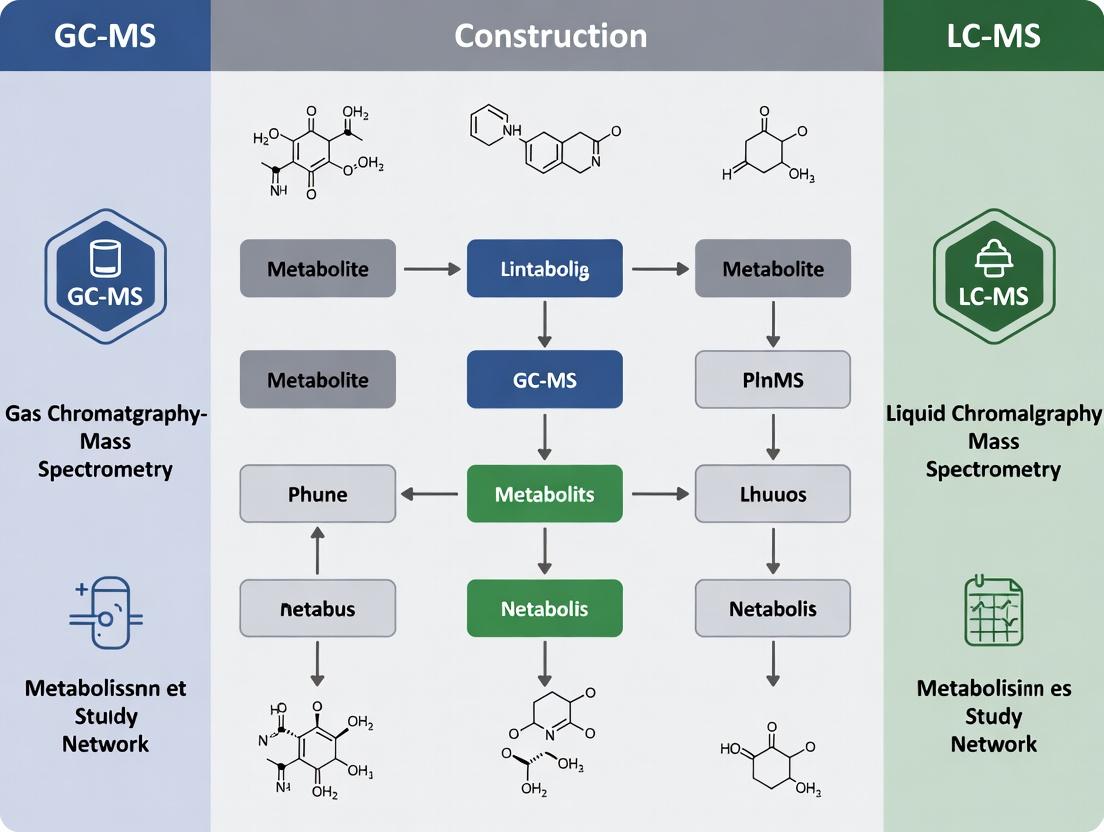
This article provides a comprehensive comparative analysis of Gas Chromatography-Mass Spectrometry (GC-MS) and Liquid Chromatography-Mass Spectrometry (LC-MS) for constructing metabolite interaction networks, a cornerstone of modern systems biology and drug...
GC-MS vs. LC-MS: Choosing the Right Platform for Metabolomics and Network Pharmacology
Abstract
This article provides a comprehensive comparative analysis of Gas Chromatography-Mass Spectrometry (GC-MS) and Liquid Chromatography-Mass Spectrometry (LC-MS) for constructing metabolite interaction networks, a cornerstone of modern systems biology and drug discovery. We begin by exploring the fundamental principles and inherent strengths of each technique for metabolite coverage. The methodological section details practical workflows for network construction, from sample preparation to data integration. We then address common challenges and optimization strategies for both platforms. Finally, we present a rigorous, evidence-based comparison of their performance in network validation and biological interpretation. This guide is designed to help researchers and drug developers select and optimize the most appropriate analytical platform for their specific metabolomics and network pharmacology projects.
Metabolite Mapping 101: Core Principles of GC-MS and LC-MS for Network Biology
This Application Note details protocols for constructing metabolite interaction networks (MINs), a core systems biology approach for mapping the chemical interactome. The methodologies are framed within a comparative research thesis investigating the complementary roles of Gas Chromatography-Mass Spectrometry (GC-MS) and Liquid Chromatography-Mass Spectrometry (LC-MS) in MIN construction. GC-MS excels at profiling primary metabolites (e.g., sugars, organic acids, amino acids), while LC-MS, particularly reversed-phase and HILIC modes, is indispensable for capturing secondary metabolites, lipids, and complex polar compounds. Integrating data from both platforms is crucial for a comprehensive MIN.
Application Notes & Quantitative Comparison
Table 1: Platform Selection Guide for Metabolite Coverage
| Analytical Platform | Optimal Metabolite Classes | Key Derivatization Requirement | Typical Analytical Range | Throughput (Samples/Day) |
|---|---|---|---|---|
| GC-MS (Quadrupole) | Primary metabolites, Organic acids, Sugars, Fatty acids | Mandatory (e.g., MSTFA, Methoxyamination) | 50-650 m/z | 20-40 |
| LC-MS (RP, ESI+) | Lipids, Non-polar secondary metabolites, Steroids | Not required | 100-2000 m/z | 15-30 |
| LC-MS (HILIC, ESI+/-) | Polar metabolites (e.g., nucleotides, amino acids, sugars) | Not required | 50-1000 m/z | 15-30 |
Table 2: Key Software for Network Construction & Analysis
| Software/Tool | Primary Function | Input Data Format | Key Output |
|---|---|---|---|
| MS-DIAL | Peak picking, alignment, identification (GC/LC) | .raw, .d, .mzML | Peak table, Identifications |
| Cytoscape | Network visualization & analysis | .cys, .sif, .graphml | Interaction Networks |
| MetaboAnalyst 5.0 | Statistical analysis & pathway mapping (web-based) | Peak intensity table | PCA plots, Pathway maps |
| GNPS | Molecular networking via MS/MS spectral similarity | .mzML, .mzXML | Molecular Families |
| MZmine 3 | Flexible LC/GC-MS data processing pipeline | .raw, .d, .mzML | Feature table |
Experimental Protocols
Protocol 1: Integrated Sample Preparation for GC-MS and LC-MS Analysis Objective: To prepare a single biological sample (e.g., plasma, tissue extract) for parallel analysis on GC-MS and LC-MS platforms.
- Homogenization & Extraction: Weigh 50 mg of snap-frozen tissue. Add 1 mL of cold extraction solvent (Methanol:Water:Chloroform, 2.5:1:1, v/v/v, -20°C). Homogenize on ice using a bead mill (3 x 30 sec cycles).
- Partitioning: Centrifuge at 14,000 g for 15 min at 4°C. Transfer the upper polar phase (methanol/water) to a new tube. This phase is split for GC-MS and LC-MS analysis. The lower organic phase is reserved for lipidomics (LC-MS).
- Derivatization for GC-MS (Polar Phase Aliquot):
- Dry 100 µL of polar phase under a gentle nitrogen stream.
- Add 20 µL of 20 mg/mL methoxyamine hydrochloride in pyridine. Vortex and incubate at 37°C for 90 min with shaking.
- Add 80 µL of MSTFA (N-Methyl-N-(trimethylsilyl)trifluoroacetamide). Vortex and incubate at 37°C for 30 min.
- Centrifuge and transfer to a GC vial.
- Preparation for LC-MS (Polar & Organic Phases):
- Polar Phase (HILIC-MS): Dry 200 µL aliquot. Reconstitute in 100 µL of acetonitrile:water (1:1). Centrifuge and transfer to LC vial.
- Organic Phase (RP-MS): Dry 200 µL aliquot. Reconstitute in 100 µL of isopropanol:acetonitrile (9:1). Centrifuge and transfer to LC vial.
Protocol 2: Constructing a Correlation-Based Metabolite Interaction Network Objective: To create an undirected MIN from quantified metabolite levels across multiple samples.
- Data Preprocessing: Use MZmine 3 to process raw GC/LC-MS data. Align peaks, perform gap filling, and annotate using the Golm Metabolome Database (GC-MS) or HMDB (LC-MS). Export a consolidated peak intensity table.
- Statistical Filtering: Import table into MetaboAnalyst. Apply interquartile range (IQR) filtering to remove low variance features. Normalize using Pareto scaling.
- Correlation Calculation: Calculate all pairwise Spearman rank correlation coefficients (ρ) for filtered metabolites using R (
cor()function). Generate a p-value matrix. - Adjacency Matrix Creation: Apply dual thresholds: |ρ| > 0.7 and adjusted p-value (Benjamini-Hochberg) < 0.05. Create a binary adjacency matrix where 1 signifies a significant correlation (edge) and 0 signifies no edge.
- Network Construction & Visualization: Import the adjacency matrix into Cytoscape (via
.csv). Use thePrefuse Force Directed Layout. Color nodes by analytical platform origin (e.g., GC-MS in blue, LC-MS in red). Size nodes by betweenness centrality.
Research Reagent Solutions
Table 3: Essential Materials for MIN Construction
| Item | Function/Application | Example Product/Catalog Number |
|---|---|---|
| MSTFA with 1% TMCS | Silylation derivatizing agent for GC-MS; adds TMS groups to polar functional groups. | Thermo Scientific, TS-48910 |
| Methoxyamine Hydrochloride | Protects carbonyl groups (aldehydes, ketones) by forming methoximes prior to silylation. | Sigma-Aldrich, 226904 |
| HybridSPE-Phospholipid 96-well Plate | Removal of phospholipids from biological extracts for LC-MS to reduce ion suppression. | Sigma-Aldrich, 56921-U |
| HILIC Column (e.g., BEH Amide) | Stationary phase for separating highly polar, hydrophilic metabolites in LC-MS. | Waters, 186004742 |
| C18 Column (e.g., Kinetex C18) | Stationary phase for reversed-phase separation of lipids and non-polar metabolites. | Phenomenex, 00D-4462-AN |
| Retention Time Index Standards (Alkanes for GC-MS) | Calibration of retention times for robust metabolite identification in GC-MS. | Restek, 31614 |
| Mass Spectrometry Metabolite Library | Reference spectral libraries for metabolite identification. | IROA Technologies, MSMLS 400 |
Visualizations
Title: Integrated GC-MS/LC-MS Workflow for MINs
Title: MIN with Biochemical & Statistical Edges
Application Notes and Protocols
Thesis Context: Within the broader thesis evaluating GC-MS versus LC-MS for constructing metabolite interaction networks, a deep understanding of GC-MS fundamentals is critical. While LC-MS excels at polar, non-volatile, and thermally labile metabolites, GC-MS offers superior chromatographic resolution, highly reproducible fragmentation patterns from Electron Impact (EI), and robust spectral libraries. This positions GC-MS as the preferred tool for analyzing volatile metabolites, fatty acids, organic acids, sugars, and steroids, provided they are made amenable to gas-phase analysis. These notes detail the core principles and protocols that enable GC-MS's specific contribution to network mapping.
1. Volatility and Derivatization
Volatility is the fundamental requirement for Gas Chromatography (GC). Most metabolites of interest are polar, contain acidic/basic functional groups, or are thermally unstable, rendering them non-volatile. Derivatization chemically modifies these analytes to increase volatility, thermal stability, and improve chromatographic behavior (reduced tailing, increased separation efficiency).
Key Derivatization Protocols:
Methoxylamination and Trimethylsilylation (MOX-TMS): The gold standard for comprehensive metabolomics.
- Protocol:
- Dryness: Completely dry the metabolite extract under a gentle stream of nitrogen or in a vacuum concentrator.
- Methoxylamination: Add 50 µL of 20 mg/mL methoxyamine hydrochloride in pyridine. Vortex thoroughly. Incubate at 30°C for 90 minutes with agitation. This step protects carbonyl groups (aldehydes, ketones) by converting them to methoximes, preventing enolization and yielding single peaks.
- Trimethylsilylation: Add 100 µL of N-Methyl-N-(trimethylsilyl)trifluoroacetamide (MSTFA) with 1% trimethylchlorosilane (TMCS) as a catalyst. Vortex thoroughly. Incubate at 37°C for 30 minutes or 70°C for 60 minutes.
- Analysis: Transfer the derivatized solution to a GC vial with insert. Analyze by GC-MS within 24-48 hours for best results.
- Protocol:
Methylation (with BF₃ or TMS-Diazomethane): Specific for fatty acid analysis.
- Protocol (BF₃/Methanol):
- Add 1 mL of BF₃-methanol complex (10-14% w/w) to the dried fatty acid extract in a sealed vial.
- Heat at 60°C for 15 minutes.
- Cool, add 1 mL of water and 1 mL of hexane, then vortex vigorously.
- Centrifuge to separate phases. The upper hexane layer contains the fatty acid methyl esters (FAMEs) for GC-MS injection.
- Protocol (BF₃/Methanol):
Table 1: Common Derivatization Reagents and Applications
| Reagent Class | Example | Target Functional Groups | Key Application in Metabolite Networks |
|---|---|---|---|
| Silylation | MSTFA, BSTFA | -OH, -COOH, -NH, -SH | Broad-spectrum metabolomics (sugars, organic acids, steroids) |
| Alkylation | BF₃/MeOH, TMS-Diazomethane | -COOH (Fatty acids) | Fatty acid profiling and lipid network mapping |
| Acylation | Acetic Anhydride, PFPA | -OH, -NH₂ | Amine-containing metabolites (e.g., neurotransmitters) |
| Methoxylamination | Methoxyamine HCl | C=O (aldehydes, ketones) | Stabilization of sugars and keto-acids prior to silylation |
2. Electron Impact (EI) Ionization
EI is the cornerstone ionization technique for GC-MS. It occurs in a high-vacuum ion source where analytes are bombarded with 70 eV electrons. This high-energy interaction typically results in the ejection of an electron, forming a radical cation molecular ion (M⁺•), followed by extensive, reproducible fragmentation.
- Advantage for Network Research: The high reproducibility of 70 eV EI mass spectra across instruments allows for matching against extensive commercial spectral libraries (e.g., NIST, Wiley). This enables high-confidence annotation of unknown metabolites, a crucial step for populating interaction networks.
- Limitation: The high energy often causes the molecular ion to fragment completely, making its detection difficult for some compounds. This complicates molecular weight determination.
Protocol for Tuning and Mass Calibration for EI:
- Perform autotune using the standard calibrant perfluorotributylamine (PFTBA).
- Verify key tuning parameters: the ratio of masses 69, 219, and 502 must meet manufacturer specifications for relative abundance.
- Ensure the resolution (peak width at 50% height for mass 502) is within the acceptable range (typically ~0.6-0.7 amu for quadrupole MS).
- Calibrate the mass axis using the prominent ions of PFTBA (m/z 69, 131, 219, 264, 414, 464, 502).
Table 2: Quantitative Performance Characteristics of GC-EI-MS vs. LC-ESI-MS
| Parameter | GC-EI-MS (Post-Derivatization) | LC-ESI-MS (Typical RPLC) | Relevance to Metabolite Networks |
|---|---|---|---|
| Linear Dynamic Range | 3-4 orders of magnitude | 4-6 orders of magnitude | GC-MS may require more dilution points for broad coverage. |
| Detection Limits | Low picogram to femtogram on-column | Low picogram to femtogram on-column | Both are highly sensitive for targeted analysis. |
| Reproducibility of Fragmentation | Very High (Library-searchable) | Moderate (Instrument/condition dependent) | GC-EI-MS enables higher-confidence metabolite annotation for network nodes. |
| Chromatographic Peak Capacity | Very High (Capillary columns) | High (UPLC columns) | GC offers superior separation of complex volatile mixtures. |
The Scientist's Toolkit: Key Research Reagent Solutions
| Item | Function in GC-MS Metabolomics |
|---|---|
| MSTFA (+1% TMCS) | Primary silylation reagent; replaces active hydrogens with a -Si(CH₃)₃ group, imparting volatility. |
| Methoxyamine Hydrochloride | Protects keto- and aldo-groups, preventing multiple peak formation and decomposition during silylation. |
| Pyridine (Anhydrous) | Solvent for methoxylamination; must be dry to prevent hydrolysis of derivatizing agents. |
| Retention Index Markers (n-Alkanes) | A series of straight-chain hydrocarbons (e.g., C8-C40) injected alongside samples to calculate Retention Indices for improved metabolite identification. |
| PFTBA (Perfluorotributylamine) | Standard calibrant gas for tuning and mass calibration of the EI ion source. |
| NIST/EPA/NIH Mass Spectral Library | Commercial database containing >300,000 EI spectra; essential for identifying unknown metabolite peaks. |
Diagrams
Diagram Title: GC-MS Metabolomics Workflow for Network Analysis
Diagram Title: EI Ionization vs ESI Ionization Pathways
Application Notes: Core Principles and Comparative Context
This document outlines the fundamental principles of Liquid Chromatography-Mass Spectrometry (LC-MS) with a focus on ionization polarity, Electrospray Ionization (ESI), and direct analysis techniques. The context is a comparative thesis evaluating GC-MS versus LC-MS for constructing comprehensive metabolite interaction networks, where LC-MS is favored for its ability to analyze thermally labile, non-volatile, and polar metabolites without derivatization.
The Polarity Decision in LC-MS
Ionization polarity is a critical first step in method development, determining which subset of the metabolome will be detected.
Table 1: Positive vs. Negative Ion Mode Selection Guide
| Aspect | Positive Ion Mode (+) | Negative Ion Mode (-) |
|---|---|---|
| Mechanism | Proton (H+) or cation (Na+, K+) addition | Proton removal or anion (Cl-, acetate) addition |
| Optimal For | Basic compounds (amines, pyridines) | Acidic compounds (carboxylic acids, phenols, sulfates) |
| Typical Adducts | [M+H]+, [M+Na]+, [M+K]+ | [M-H]-, [M+Cl]-, [M+acetate]- |
| Key in Metabolomics | Amino acids, nucleosides, catecholamines | Fatty acids, organic acids, phosphorylated sugars |
| Signal Response | Often 10-1000x higher for basic molecules | Often 10-1000x higher for acidic molecules |
| Recommendation | Run first for general unknown screening | Essential for comprehensive lipid/acid profiling |
Protocol 1.1: Rapid Polarity Switching for Untargeted Metabolomics Objective: To maximize metabolite coverage in a single LC-MS run.
- Instrument Setup: Configure MS for fast polarity switching (e.g., one scan in positive mode followed by one scan in negative mode).
- LC Conditions: Use a C18 column (2.1 x 100 mm, 1.7 µm) with a 15-minute gradient from 5% to 95% organic phase (MeCN or MeOH with 0.1% formic acid).
- MS Parameters: Set scan range to m/z 70-1200. Dwell time per polarity: 0.1-0.3 sec. Capillary voltage: ±3.0 kV (positive/negative). Desolvation temperature: 450°C.
- Data Processing: Process positive and negative data files separately, then merge feature lists using alignment software, noting polarity of detection for each molecular feature.
Electrospray Ionization (ESI): The Cornerstone
ESI is a soft ionization technique that produces ions directly from solution by creating a fine aerosol in a strong electric field. It is ideal for metabolites due to minimal fragmentation.
Protocol 1.2: Optimizing ESI Source for Maximum Sensitivity Objective: Tune ESI parameters for a broad range of metabolites.
- Nebulizer Gas Flow: Start at 40-60 psi. Increase if signal is low, but excessive flow can cool droplets and reduce ionization.
- Drying Gas Flow & Temperature: Set to 10-15 L/min and 300-350°C. Optimize to ensure droplets are fully desolvated before entering the vacuum.
- Capillary Voltage: Optimize between ±2.5 to ±4.5 kV. Monitor signal intensity of a standard (e.g., leucine enkephalin at m/z 556.2771 for positive mode).
- Source Offset: Adjust cone voltage or fragmentor voltage (typically 50-150 V). Lower values preserve molecular ions; higher values induce in-source fragmentation for structural clues.
- Validation: Inject a standard mixture containing metabolites of varying polarity (e.g., caffeine, acetaminophen, palmitic acid). Tune for balanced signal across all compounds.
Table 2: ESI Source Parameter Ranges for Q-TOF and Orbitrap Systems
| Parameter | Typical Range (Small Molecules) | Function | Impact of High Setting |
|---|---|---|---|
| Capillary Voltage (kV) | ±2.5 - ±4.5 | Creates charged droplets | May cause arcing; increased sensitivity up to a point |
| Nebulizer Gas (psi) | 30 - 60 | Breaks liquid into fine droplets | Increased signal, but can cool spray |
| Drying Gas Temp (°C) | 250 - 350 | Evaporates solvent from droplets | Prevents solvent clusters; too high can degrade thermolabile compounds |
| Drying Gas Flow (L/min) | 8 - 15 | Removes vaporized solvent | Improves desolvation; excessive flow can deflect ions |
| Sheath Gas Flow (L/min) | 10 - 12 (if available) | Stabilizes spray, aids desolvation | Similar to drying gas |
| Fragmentor/Cone Voltage (V) | 50 - 200 | Controls ion transfer energy | High setting causes in-source CID; Low setting preserves molecular ion |
Direct Analysis Techniques: Bypassing Chromatography
Direct analysis methods like Direct Infusion (DI) or Direct Analysis in Real Time (DART) enable rapid sample introduction for high-throughput screening or when chromatography is impractical.
Protocol 1.3: High-Throughput Metabolite Fingerprinting via Direct Infusion Objective: Rapidly screen large numbers of samples (e.g., cell lysates) for metabolic differences.
- Sample Prep: Dilute 10 µL of biofluid or cell extract with 90 µL of 50:50 MeOH:H2O with 0.1% formic acid (for +mode) or 0.1% NH4OH (for -mode). Centrifuge at 14,000 g for 10 min.
- Infusion Setup: Use a syringe pump connected to the ESI source via low-dead-volume tubing. Set flow rate to 5-15 µL/min.
- MS Acquisition: Operate in full-scan mode (m/z 100-1200). Acquire data for 1-2 minutes per sample. Use a lock-mass compound for internal mass calibration.
- Data Analysis: Perform peak picking, alignment, and normalization across all directly infused samples. Use multivariate statistics (PCA, PLS-DA) to identify discriminatory m/z features.
The Scientist's Toolkit: Key Research Reagent Solutions
Table 3: Essential Materials for LC-MS Metabolite Profiling
| Item | Function & Rationale |
|---|---|
| LC-MS Grade Solvents (Water, MeCN, MeOH) | Minimize background ions and system contamination, ensuring high sensitivity. |
| Ammonium Formate / Ammonium Acetate (10-20 mM) | Volatile buffers for mobile phase to control pH and improve ionization, compatible with MS. |
| Formic Acid (0.1%) | Common mobile phase additive for positive ion mode; promotes protonation. |
| Ammonium Hydroxide (0.1%) | Common additive for negative ion mode; promotes deprotonation. |
| C18 Reverse-Phase Column (e.g., 2.1 x 100 mm, 1.7 µm) | Standard workhorse column for separating a wide range of metabolites by hydrophobicity. |
| HILIC Column (e.g., bare silica or amide) | Essential for retaining and separating highly polar metabolites that elute in the void on C18. |
| Mass Calibration Solution | Contains known ions (e.g., ESI Tuning Mix) for accurate mass calibration pre-run. |
| Internal Standard Mix (Isotope-Labeled) | Compounds like 13C-glucose, D4-succinate; corrects for ionization suppression and variability. |
| QC Pool Sample | A pooled aliquot of all study samples; injected periodically to monitor system stability. |
| SPE Cartridges (C18, HLB) | For solid-phase extraction to clean up complex samples (e.g., plasma) and pre-concentrate analytes. |
Visualizations
1. Introduction Metabolomics is pivotal for constructing interaction networks that elucidate disease mechanisms and drug action. The choice between Gas Chromatography-Mass Spectrometry (GC-MS) and Liquid Chromatography-Mass Spectrometry (LC-MS) fundamentally dictates which metabolites are detected, creating an inherent bias in network coverage. This application note details protocols and comparative data for researchers aiming to build comprehensive metabolite interaction networks, emphasizing the complementary nature of these platforms.
2. Quantitative Platform Comparison Table 1: Inherent Coverage Bias of GC-MS vs. LC-MS in Metabolomics
| Feature | GC-MS (Derivatized) | LC-MS (RP & HILIC) |
|---|---|---|
| Optimal Compound Class | Polar, volatile, or volatilizable metabolites (amines, organic acids, sugars, amino acids). | Semi- to non-polar, thermally labile, high molecular weight compounds. |
| Central Carbon Metabolism Coverage | Excellent. Quantifies key intermediates (TCA cycle, glycolysis, amino acids). | Moderate (Polar via HILIC). |
| Complex Lipid Coverage | Very Poor. Requires specific transesterification protocols (e.g., FAME analysis for fatty acids only). | Excellent. Profiling of phospholipids, sphingolipids, glycerolipids, etc. |
| Specialized Metabolite Coverage | Limited to volatile organic compounds (VOCs), some phytohormones. | Excellent. Phenolics, alkaloids, terpenoids, steroids, bile acids. |
| Typical # of Detectable Features | 200 - 500 | 1,000 - 10,000+ |
| Throughput | High for targeted panels. | High for untargeted. |
| Sample Prep Complexity | Medium-High (Requires chemical derivatization). | Medium (Extraction & reconstitution). |
| Reproducibility (CV%) | Excellent (<10% for targeted) | Good to Moderate (10-20%, matrix-dependent) |
3. Experimental Protocols
Protocol 3.1: GC-MS for Central Carbon Metabolites Objective: Targeted quantification of polar intermediates in glycolysis, TCA cycle, and amino acid pathways. Workflow:
- Extraction: Homogenize 50 mg tissue/10⁶ cells in 1 mL -20°C 80% methanol/H₂O with internal standards (e.g., ¹³C-succinate).
- Derivatization: Dry extract under N₂. Add 20 µL methoxyamine hydrochloride (20 mg/mL in pyridine), incubate 90 min at 30°C with shaking. Then add 80 µL MSTFA (N-Methyl-N-(trimethylsilyl)trifluoroacetamide), incubate 30 min at 37°C.
- GC-MS Analysis:
- Column: DB-5MS (30m x 0.25mm, 0.25µm).
- Oven: 60°C (1 min) → 325°C at 10°C/min.
- Carrier: He, 1.2 mL/min.
- MS: Electron Impact (EI) at 70 eV, scan range m/z 50-600.
- Data Processing: Use AMDIS for deconvolution and align with an in-house retention index library for metabolite identification. Quantify against calibration curves of derivatized standards.
Protocol 3.2: LC-MS for Complex Lipids & Specialized Metabolites Objective: Untargeted profiling of lipids and semi-polar metabolites. Workflow:
- Dual Extraction: For lipids: Use modified Folch (CHCl₃:MeOH, 2:1). For polar/semi-polar: Use 80% methanol. Include internal standards (e.g., SPLASH LIPIDOMIX, deuterated polyphenols).
- LC-MS Analysis (Reversed Phase for Lipids):
- Column: C18 (100 x 2.1mm, 1.7µm).
- Mobile Phase: A= H₂O + 10mM Ammonium Formate, B= IPA:ACN (9:1) + 10mM Ammonium Formate.
- Gradient: 30% B to 100% B over 20 min.
- MS: High-resolution Q-TOF, ESI+ & ESI-, data-dependent acquisition (DDA).
- LC-MS Analysis (HILIC for Polar Specialized Metabolites):
- Column: BEH Amide (150 x 2.1mm, 1.7µm).
- Mobile Phase: A= 95:5 ACN:H₂O (25mM Ammonium Acetate), B= H₂O (25mM Ammonium Acetate).
- Gradient: 100% A to 70% A over 18 min.
- Data Processing: Use MS-DIAL for peak picking, alignment, and identification against public MS/MS libraries (GNPS, HMDB, LipidBlast).
4. Visualizing Platform Bias & Integration
Diagram 1: Metabolomics Platform Coverage Bias & Network Integration (99 chars)
Diagram 2: Integrated GC-MS and LC-MS Metabolomics Workflow (99 chars)
5. The Scientist's Toolkit: Research Reagent Solutions Table 2: Essential Materials for Comprehensive Metabolite Coverage
| Item | Function & Rationale |
|---|---|
| Methoxyamine Hydrochloride | Protects carbonyl groups (aldehydes, ketones) during GC-MS derivatization, preventing multiple peak formation. |
| N-Methyl-N-(trimethylsilyl)trifluoroacetamide (MSTFA) | Silylation reagent for GC-MS; adds trimethylsilyl groups to -OH, -COOH, -NH, making metabolites volatile and thermally stable. |
| SPLASH LIPIDOMIX Mass Spec Standard | A quantified mixture of stable isotope-labeled lipids across multiple classes; essential for LC-MS lipidomics quality control and semi-quantitation. |
| Deuterated Internal Standards (e.g., d4-Succinate, d9-Cholic Acid) | Account for extraction efficiency and matrix effects in both GC-MS and LC-MS; critical for accurate quantification. |
| Ammonium Formate / Ammonium Acetate | Common LC-MS mobile phase additives; improve ionization efficiency and aid in adduct formation for complex lipids and polar metabolites. |
| Bond Elut PPL Solid-Phase Extraction Cartridges | For clean-up and concentration of complex lipid and specialized metabolite extracts; removes salts and highly polar matrix interferents. |
| Retention Index Calibration Mix (Alkanes for GC) | Allows for precise metabolite identification in GC-MS by normalizing retention times across runs. |
Metabolomics, the comprehensive analysis of small molecules, is crucial for constructing metabolic interaction networks in systems biology and drug discovery. Gas Chromatography-Mass Spectrometry (GC-MS) and Liquid Chromatography-Mass Spectrometry (LC-MS) are the two predominant analytical platforms. Each platform has inherent biases in metabolite coverage based on physicochemical properties. This application note details why a multi-platform approach is non-negotiable for holistic metabolome coverage, framed within a thesis comparing GC-MS and LC-MS for network construction.
Platform-Specific Metabolite Coverage: A Quantitative Comparison
Table 1: Comparative Analytical Characteristics of GC-MS and LC-MS
| Characteristic | GC-MS | LC-MS (Reversed-Phase) | LC-MS (HILIC) |
|---|---|---|---|
| Ideal Molecular Weight Range | Low to Medium (< 650 Da) | Broad (50 - 1500 Da) | Broad (50 - 1500 Da) |
| Polarity Coverage | Volatile, non-polar to semi-polar | Non-polar to mid-polar | Polar to highly polar |
| Key Requirement | Volatility (often requires derivatization) | No volatility requirement; solubility in mobile phase | No volatility requirement |
| Typical # of Detected Features | 200-400 (targeted) | 5,000-10,000+ (untargeted) | 3,000-7,000+ (untargeted) |
| Reproducibility (CV%) | 5-15% (excellent chromatographic resolution) | 10-25% (can be matrix-dependent) | 15-30% (can be challenging) |
| Compound Classes (Examples) | Organic acids, sugars, fatty acids, amino acids | Lipids, steroids, flavonoids, bile acids | Amino acids, sugars, nucleotides, organic acids, amines |
| Throughput | High (after derivatization) | Medium to High | Medium |
Table 2: Complementarity in Coverage of Major Metabolic Pathways
| Metabolic Pathway | GC-MS Coverage | LC-MS (RP) Coverage | LC-MS (HILIC) Coverage | Ideal Platform Combination |
|---|---|---|---|---|
| Glycolysis / TCA Cycle | Excellent (Organic acids, sugars) | Poor | Good (phosphorylated intermediates) | GC-MS + HILIC-MS |
| Amino Acid Metabolism | Good (Derivatized amino acids) | Moderate (Aromatic AA) | Excellent (Free amino acids) | GC-MS + HILIC-MS |
| Lipid Metabolism | Limited (FAs, cholesterol) | Excellent (Complex lipids, TG, PL) | Poor | LC-MS (RP) |
| Nucleotide Metabolism | Poor | Moderate (Bases) | Excellent (Nucleotides, nucleosides) | HILIC-MS |
| Secondary Metabolism | Moderate (Volatile organics) | Excellent (Alkaloids, polyphenols) | Good (Polar glycosides) | LC-MS (RP + HILIC) |
Experimental Protocols for a Multi-Platform Metabolomics Workflow
Protocol 3.1: Sample Preparation for Parallel GC-MS and LC-MS Analysis
Objective: To prepare a single biological sample (e.g., plasma, tissue homogenate) for comprehensive analysis on both platforms. Materials: See "The Scientist's Toolkit" (Section 6). Procedure:
- Extraction: Weigh or aliquot sample. Add cold extraction solvent (e.g., 80% methanol/water, -20°C) at a 3:1 solvent-to-sample ratio.
- Homogenization: Homogenize using a bead beater or probe sonicator on ice for 1-2 minutes.
- Incubation: Incubate at -20°C for 1 hour to precipitate proteins.
- Centrifugation: Centrifuge at 14,000 x g for 15 minutes at 4°C.
- Splitting Aliquot: Split the clarified supernatant into two equal volumes in clean microcentrifuge tubes.
- GC-MS Aliquot Processing: a. Dry completely using a vacuum concentrator. b. Add 20 µL of methoxyamine hydrochloride (20 mg/mL in pyridine). Vortex and incubate at 30°C for 90 minutes with shaking. c. Add 80 µL of MSTFA (N-Methyl-N-(trimethylsilyl)trifluoroacetamide). Vortex and incubate at 37°C for 30 minutes. d. Centrifuge briefly and transfer to a GC vial.
- LC-MS Aliquot Processing: a. Dry completely using a vacuum concentrator. b. Reconstitute in 100 µL of appropriate starting mobile phase for either RP (e.g., 98% Water/2% ACN + 0.1% Formic Acid) or HILIC (e.g., 90% ACN/10% Water + 10mM Ammonium Acetate). c. Vortex thoroughly, centrifuge at 14,000 x g for 10 minutes. d. Transfer supernatant to an LC vial.
Protocol 3.2: Data Acquisition and Pre-processing
GC-MS Parameters (Example):
- Column: DB-5MS (30m x 0.25mm, 0.25µm)
- Inlet: 250°C, Splitless mode
- Oven Program: 60°C (1 min), ramp 10°C/min to 325°C, hold 5 min.
- MS: Electron Impact (EI) at 70 eV, scan range m/z 50-600.
- Processing: Use software (e.g., AMDIS, ChromaTOF) for peak picking, deconvolution, and library matching (NIST, FiehnLib).
LC-MS Parameters (Reversed-Phase, Example):
- Column: C18 column (e.g., 2.1x100mm, 1.7µm)
- Mobile Phase: A = Water + 0.1% Formic Acid; B = Acetonitrile + 0.1% Formic Acid
- Gradient: 2% B to 98% B over 15-20 minutes.
- MS: Electrospray Ionization (ESI), positive/negative switching, full scan m/z 70-1050.
- Processing: Use software (e.g., XCMS, MZmine, Progenesis QI) for feature detection, alignment, and annotation via accurate mass and MS/MS libraries (e.g., HMDB, METLIN).
Integrated Data Analysis for Network Construction
Workflow:
- Platform-Specific Processing: Process GC-MS and LC-MS data independently through their optimal pipelines.
- Consolidation: Merge compound lists using a universal identifier (e.g., InChIKey, KEGG ID). Handle redundancy where the same compound is detected on multiple platforms (prioritize higher confidence ID).
- Statistical Integration: Use multivariate statistics (PCA, PLS-DA) on the combined dataset to identify discriminating metabolites.
- Pathway Mapping: Input the consolidated metabolite list into pathway analysis tools (MetaboAnalyst, KEGG Mapper).
- Network Construction: Use correlation-based measures (e.g., Weighted Correlation Network Analysis - WGCNA) or isotopic tracer data to infer metabolic interactions and fluxes from the multi-platform dataset.
Multi-Platform Metabolomics Workflow for Network Analysis
Platform Complementarity in Metabolite Coverage
Case Study: Uncovering a Drug-Induced Metabolic Shift
Background: Investigation of hepatotoxicity mechanism for a novel drug candidate. Single-Platform (LC-MS RP) Finding: Identified significant accumulation of triacylglycerides, suggesting lipid metabolism disruption. Multi-Platform (GC-MS + LC-MS HILIC) Finding: Revealed additional depletion of TCA cycle intermediates (via GC-MS) and glutathione (via HILIC). This integrated picture pointed to mitochondrial dysfunction and oxidative stress as the primary upstream event, preceding lipid accumulation. Conclusion: The multi-platform approach was essential for identifying the root cause mechanism, guiding the development of a safer analog.
The Scientist's Toolkit
Table 3: Essential Reagents and Materials for Multi-Platform Metabolomics
| Item | Function | Key Consideration |
|---|---|---|
| Cold Methanol/Water Mixtures | Primary extraction solvent; precipitates proteins while solubilizing metabolites. | Use LC-MS grade, pre-chilled to -20°C for quenching metabolism. |
| Methoxyamine Hydrochloride | Derivatization agent for GC-MS; protects carbonyl groups by forming methoximes. | Must be prepared fresh in anhydrous pyridine to avoid hydrolysis. |
| MSTFA (N-Methyl-N-(trimethylsilyl)trifluoroacetamide) | Silylation agent for GC-MS; replaces active hydrogens with TMS groups, increasing volatility. | Highly moisture-sensitive. Use anhydrous conditions. |
| Ammonium Acetate / Formic Acid | Buffering agents and ion-pair modifiers for LC-MS mobile phases. | Formic acid for RP in positive mode; ammonium acetate for HILIC and negative mode. |
| Retention Time Index Standards (Alkanes for GC, etc.) | Allows for alignment and reproducible identification across runs. | Must be added consistently to every sample. |
| Quality Control (QC) Pool Sample | Created by combining small aliquots of all study samples. Used to monitor system stability. | Run repeatedly throughout the analytical sequence. |
| Silica-based HILIC Column (e.g., BEH Amide) | Stationary phase for separating highly polar, hydrophilic metabolites. | Requires high organic starting mobile phase (e.g., 90% ACN). |
| C18 Reversed-Phase Column | Stationary phase for separating non-polar to mid-polar metabolites (lipids, etc.). | Core-shell particles offer a good balance of speed and resolution. |
From Raw Data to Biological Networks: Step-by-Step Workflows for GC-MS and LC-MS
Application Note: Fundamental Principles and Divergences
Within the context of constructing metabolite interaction networks, the choice between Gas Chromatography (GC) and Liquid Chromatography (LC) coupled to mass spectrometry dictates fundamentally incompatible sample preparation pathways. The core divergence stems from the analytical requirement: GC requires volatile, thermally stable analytes, while LC accommodates a broader range of polar, thermolabile, and high molecular weight compounds. This note details the critical procedural bifurcations.
Table 1: Core Divergences in Sample Preparation Objectives
| Parameter | Target for GC-MS Analysis | Target for LC-MS Analysis | Rationale for Divergence |
|---|---|---|---|
| Analyte State | Volatile or derivatized to volatile species. | Native, solubilized in LC-compatible solvent. | GC relies on vaporization in inlet; LC relies on solubility in mobile phase. |
| Thermal Stability | Must be stable at GC inlet (often >250°C). | Not required; often analyzed at ambient column temps. | Prevents on-column degradation and artefact formation in GC. |
| Chemical Derivatization | Frequently mandatory (e.g., MSTFA for -OH, -COOH). | Seldom used; may be used for detection enhancement. | Increases volatility and reduces polarity for GC analysis. |
| Sample Solvent | Non-aqueous, volatile (e.g., hexane, ethyl acetate). | Often aqueous/organic mixtures (e.g., water/acetonitrile). | Aqueous solvents degrade GC column performance; LC systems are optimized for them. |
| Extraction Chemistry | Leans towards non-polar solvents (Folch, Bligh-Dyer). | Leans towards polar solvents (MeOH/Water, ACN/Water). | Aligns with final solvent requirement and analyte polarity target. |
| In-Line Filtration | Critical post-derivatization to remove non-volatile salts. | Critical post-extraction to remove particulates. | Non-volatiles accumulate in GC inlet, causing activity and drift. |
Detailed Experimental Protocols
Protocol 1: Targeted Preparation for GC-MS Metabolomics (e.g., Organic Acids, Sugars)
Objective: Extract and derivative polar metabolites for robust GC-MS analysis in network construction.
Materials:
- Internal Standard Solution: 10 µg/mL Succinic-d6 acid in pyridine.
- Derivatization Reagents: 20 mg/mL Methoxyamine hydrochloride in pyridine; N-Methyl-N-(trimethylsilyl)trifluoroacetamide (MSTFA) with 1% TMCS.
- Extraction Solvent: Cold Chloroform/Methanol/Water (2.5:5:2 v/v/v).
- Sample: 50 µL of quenched cell culture or 20 mg of frozen tissue.
Procedure:
- Quenching & Extraction: To sample, add 500 µL of cold extraction solvent and the internal standard solution (50 µL). Homogenize (ball mill for tissue). Vortex for 10 min at 4°C.
- Phase Separation: Add 250 µL each of chloroform and water. Vortex, centrifuge at 14,000 x g for 10 min at 4°C.
- Polar Phase Collection: Collect the upper aqueous-methanol layer (~500 µL) into a clean glass vial. Dry completely in a vacuum concentrator (no heat).
- Methoximation: Reconstitute the dry residue in 50 µL of methoxyamine solution. Incubate at 30°C for 90 min with shaking.
- Silylation: Add 100 µL of MSTFA reagent. Incubate at 37°C for 60 min.
- Filtration: Transfer the reaction mixture to a glass GC insert with a micro-insert filter (pore size 0.22 µm). Centrifuge briefly to pass liquid.
- Analysis: Inject 1 µL into GC-MS (split or splitless mode, injector temp: 270°C).
Protocol 2: Targeted Preparation for LC-MS Metabolomics (e.g., Phospholipids, Amino Acids)
Objective: Extract a broad range of metabolites with minimal modification for LC-MS analysis.
Materials:
- Internal Standard Solution: Multi-component mix in MeOH (e.g., amino acid-d, lipid-d standards).
- Extraction Solvent: Cold Methanol/Acetonitrile/Water (2:2:1 v/v/v).
- Reconstitution Solvent: Water/Acetonitrile (95:5 v/v) for HILIC or 60/40 Water/Acetonitrile for RP-LC.
- Sample: 50 µL of quenched cell culture or 20 mg of frozen tissue.
Procedure:
- Quenching & Extraction: To sample, add 500 µL of cold extraction solvent and the internal standard solution (50 µL). Homogenize. Vortex vigorously for 10 min at 4°C.
- Protein Precipitation: Incubate at -20°C for 60 min to precipitate proteins.
- Clarification: Centrifuge at 14,000 x g for 15 min at 4°C.
- Supernatant Collection: Transfer the clear supernatant (~550 µL) to a clean polypropylene tube. Dry in a vacuum concentrator.
- Reconstitution: Reconstitute the dried extract in 100 µL of appropriate LC-MS compatible reconstitution solvent. Vortex thoroughly for 2 min.
- Filtration: Transfer to a polypropylene HPLC vial with a built-in 0.22 µm PTFE filter cap. Centrifuge briefly.
- Analysis: Inject 5-10 µL onto LC-MS system.
Visualizing the Diverging Pathways
Title: Divergent Sample Prep Workflows for GC-MS vs. LC-MS
The Scientist's Toolkit: Essential Reagents & Materials
| Item | Function in Sample Prep | Critical Note for GC vs. LC |
|---|---|---|
| MSTFA (with 1% TMCS) | Silylation agent for GC; replaces active H with -Si(CH3)3. | GC-Critical. Creates volatile derivatives. Never used in LC prep. Highly moisture-sensitive. |
| Methoxyamine HCl | Methoximation agent for GC; protects carbonyls (ketones, aldehydes). | GC-Critical. Reduces tautomerization and creates single derivative peaks. Not standard for LC. |
| Deuterated Internal Standards (e.g., Succinic-d6 acid, L-Leucine-d10) | Corrects for losses during extraction and derivatization, matrix effects. | Universal. Must be added at the very beginning of extraction for both GC and LC protocols. |
| Pyridine (Anhydrous) | Solvent for methoximation reaction. | GC-Critical. Must be anhydrous to prevent derivatization failure. Not typically used in LC prep. |
| Water (LC-MS Grade) | Primary aqueous component for LC mobile phases and extractions. | LC-Critical. High purity prevents ion source contamination. In GC, used only in extraction, then removed. |
| Acetonitrile/Methanol (HPLC Grade) | Organic solvents for LC mobile phases and polar metabolite extraction. | LC-Critical/Primary. Primary extraction solvents for LC. For GC, used in initial quenching but must be removed before derivatization. |
| Chloroform (HPLC Grade) | Organic solvent for lipid-phase separation in Folch extraction. | Common but Different Use. Used in LLE for both, but the collected phase differs (organic for lipids in LC, aqueous for polar in GC). |
| Glass Vials with Inserts | Sample vessels for final extract. | GC-Imperative. Must use glass for derivatized samples to prevent adsorption. Polypropylene may be used for LC. |
| 0.22 µm Syringe Filters (PTFE & Nylon) | Final filtration to protect instrument. | Type is Critical. GC: Use glass microfiber or non-volatile compatible filters. LC: Use PTFE or nylon for compatibility. |
This application note is framed within a doctoral thesis investigating the comparative utility of GC-MS and LC-MS for constructing comprehensive metabolite interaction networks in mammalian systems. The choice and optimization of the chromatographic front-end are critical, as they directly dictate the coverage, resolution, and quantitative accuracy of the metabolomic profile, thereby influencing the fidelity of the inferred biological networks. While GC excels at resolving volatile and thermally stable metabolites, LC is indispensable for polar, thermally labile, and high-molecular-weight compounds. This document provides detailed protocols and optimization strategies for both capillary columns in GC and stationary phases in LC, tailored for metabolite profiling.
Core Principles & Optimization Parameters
Gas Chromatography: Capillary Column Optimization
The separation is governed by the column's stationary phase chemistry, dimensions (inner diameter, length, film thickness), and the temperature program.
Column Chemistry: Choice depends on analyte polarity.
- Non-polar (e.g., 100% dimethylpolysiloxane): Excellent for hydrocarbons, separation primarily by boiling point.
- Mid-polarity (e.g., 5% diphenyl / 95% dimethylpolysiloxane): General-purpose workhorse for a broad metabolomics range.
- Polar (e.g., polyethylene glycol): Essential for alcohols, free fatty acids, and other polar metabolites.
Dimensions:
- Length: Longer columns (30-60 m) increase resolution but extend run time.
- Inner Diameter (ID): Narrower ID (0.18-0.25 mm) increases efficiency (theoretical plates) but reduces sample capacity.
- Film Thickness (dₓ): Thicker films (0.25-1.0 µm) increase capacity and retention for volatile analytes but can cause peak broadening for heavier compounds.
Liquid Chromatography: Stationary Phase Optimization
The separation is governed by the chemical nature of the stationary phase, particle size, pore size, and the mobile phase gradient.
- Stationary Phase Chemistry:
- Reversed-Phase (C18, C8): The most common mode. Separates by hydrophobicity. Ideal for mid- to non-polar metabolites.
- Hydrophilic Interaction Liquid Chromatography (HILIC): Crucial for polar metabolite retention, complementary to RPLC.
- Ion-Pairing/RP: Used for charged species like nucleotides, but can suppress MS ionization and contaminate systems.
- Physical Parameters:
- Particle Size: Smaller particles (1.7-2.7 µm) increase efficiency and resolution but require higher pressure.
- Pore Size: 80-120 Å is standard for small molecule metabolites.
- Column Dimensions: 2.1 x 100-150 mm is standard for LC-MS.
Quantitative Comparison of Key Parameters
Table 1: Optimization Parameters for GC Capillary Columns vs. LC Stationary Phases
| Parameter | GC Capillary Column | LC Stationary Phase | Impact on Metabolite Profiling |
|---|---|---|---|
| Primary Selectivity Driver | Stationary phase polarity | Stationary phase chemistry & mobile phase | Dictates metabolite coverage in network |
| Typical Dimensions | 30 m x 0.25 mm ID x 0.25 µm | 150 mm x 2.1 mm, 2.7 µm | Affects peak capacity and run time |
| Efficiency Metric | Theoretical plates (>100,000/m) | Theoretical plates (~15,000-25,000/column) | Directly impacts peak resolution |
| Key Operational Variable | Oven temperature ramp rate | Mobile phase gradient slope | Optimizes separation speed vs. resolution |
| Optimal Flow Rate | 1-2 mL/min (He/H₂ carrier) | 0.2-0.6 mL/min (for 2.1 mm ID) | Affects ESI-MS sensitivity & peak shape |
| Max Operating Pressure | Low (≤100 psi) | High (6,000-18,000 psi) | Limits column coupling options |
| Typical Analysis Time | 15-60 minutes | 10-30 minutes | Throughput for large sample cohorts |
| Derivatization Required | Often (for polar metabolites) | Rarely | Additional sample prep step for GC |
Table 2: Metabolite Class Suitability for Network Construction
| Metabolite Class | Recommended Platform | Optimal Column/Phase | Rationale |
|---|---|---|---|
| Fatty Acids, Sterols | GC-MS | Mid-polarity capillary (e.g., 5%-phenyl) | Excellent volatility, high resolution of isomers |
| Sugars & Sugar Alcohols | GC-MS (after derivatization) | Polar capillary (e.g., Wax) | Achieves separation of complex isomers |
| Organic Acids (TCA cycle) | Either | GC: Polar / LC: HILIC or RP | Choice depends on specific acids and sample prep |
| Amino Acids | LC-MS | HILIC or derivatized RP | Avoids need for derivatization, better for labile ones |
| Polar Phosphates (ATP, etc.) | LC-MS | HILIC or Ion-Pairing RP | Thermally degrade in GC; LC preserves structure |
| Complex Lipids | LC-MS | C8 or C18 with specific modifiers | Provides intact molecular species data |
Detailed Experimental Protocols
Protocol 4.1: Optimizing a GC-MS Method for Polar Metabolite Profiling (e.g., Urine/Sera)
Objective: To separate and detect polar organic acids, sugars, and amino acids after derivatization for network analysis. Workflow Diagram Title: GC-MS Metabolomics Workflow
Reagents & Materials:
- Methoxyamine hydrochloride in pyridine (20 mg/mL): Protects carbonyl groups (aldehydes/ketones).
- N-Methyl-N-(trimethylsilyl)trifluoroacetamide (MSTFA): Silylation agent for -OH, -COOH, -NH groups.
- Retention Index Markers (Alkane series, C8-C40): Essential for peak identification.
- GC Column: Mid-polar, 30m x 0.25mm x 0.25µm (e.g., DB-35ms equivalent).
- Internal Standards: Stable isotope-labeled analogs of key metabolites (e.g., ¹³C-glucose, D₄-succinate).
Procedure:
- Extraction: Mix 50 µL of biofluid with 200 µL of cold 80% methanol containing internal standards. Vortex, incubate at -20°C for 1h, centrifuge at 16,000 x g for 15 min at 4°C. Transfer supernatant to a GC vial.
- Derivatization: a. Dry the supernatant completely under a gentle stream of nitrogen at 30°C. b. Add 50 µL of methoxyamine solution, vortex, incubate at 37°C for 90 min with shaking. c. Add 100 µL of MSTFA, vortex, incubate at 37°C for 30 min. d. Let cool to room temp, centrifuge briefly before injection.
- GC-MS Analysis:
- Injection: 1 µL, splitless mode at 250°C.
- Carrier Gas: Helium, constant flow at 1.0 mL/min.
- Oven Program: Hold at 60°C for 1 min, ramp at 10°C/min to 325°C, hold for 5 min.
- MS: Electron Impact (EI) at 70 eV, scan range m/z 50-600, source at 230°C.
Protocol 4.2: Optimizing an LC-MS Method for Comprehensive Polar/Ionic Metabolomics
Objective: To profile central carbon metabolites (TCA, glycolysis) and amino acids without derivatization using HILIC-MS. Workflow Diagram Title: HILIC-MS Metabolomics Workflow
Reagents & Materials:
- Mobile Phase A: 20 mM ammonium acetate, pH 9.0 (with ammonium hydroxide) in 95:5 water:acetonitrile. (For positive mode, pH ~5-6 is used).
- Mobile Phase B: Acetonitrile.
- Extraction Solvent: Cold 40:40:20 Acetonitrile:Methanol:Water with isotope-labeled internal standards.
- LC Column: Amide-based HILIC column (e.g., 150 x 2.1 mm, 2.7 µm).
- MS Tuning & Calibration Solution: Specific to instrument manufacturer.
Procedure:
- Extraction: Mix 50 µL of biofluid/cell extract with 200 µL of cold extraction solvent. Vortex, incubate at -20°C for 1h, centrifuge at 16,000 x g for 15 min at 4°C. Transfer supernatant for analysis.
- HILIC-MS/MS Analysis:
- Column Temp: 40°C.
- Flow Rate: 0.3 mL/min.
- Gradient:
Time (min) %B (Acetonitrile) %A (Aqueous Buffer) 0 85 15 10 70 30 13 40 60 14 40 60 14.1 85 15 20 85 15 - MS Detection: Electrospray Ionization (ESI), polarity switching. Use scheduled Multiple Reaction Monitoring (MRM) for targeted quantitation or full-scan/dd-MS² for untargeted profiling.
The Scientist's Toolkit: Essential Research Reagent Solutions
Table 3: Key Reagents & Materials for Chromatography Optimization in Metabolomics
| Item | Function in GC-MS | Function in LC-MS |
|---|---|---|
| Stable Isotope Internal Standards (¹³C, ¹⁵N, D-labeled) | Corrects for losses in derivatization & matrix effects; enables absolute quantitation. | Compensates for ionization suppression/enhancement in ESI; critical for accurate quantitation. |
| Derivatization Reagents (MSTFA, MOX, etc.) | Increases volatility & thermal stability of polar metabolites for GC analysis. | Rarely used. Some applications for enhancing sensitivity or separation of specific classes. |
| Retention Index Calibrants (Alkane series) | Allows conversion of retention time to system-independent RI for robust library matching. | Not applicable. Retention time is more variable and system-dependent in LC. |
| High-Purity Mobile Phase Modifiers (Ammonium acetate, formic acid) | Not used in the column. May be used in sample prep. | Critical for controlling ionization efficiency in ESI and modulating selectivity in HILIC/RP. |
| Quality Control (QC) Pool Sample | Monitors system stability, column performance, and data reproducibility over long batches. | Identical function: essential for monitoring LC-MS system stability and data normalization. |
| In-Line Filter or Guard Column | Protects the capillary column from non-volatile contaminants. | Protects the expensive analytical column from particulates and matrix buildup. |
The orthogonal separation mechanisms of GC (volatility/polarity) and LC (polarity/hydrophobicity) are complementary for constructing holistic metabolite interaction networks. GC-MS optimization centers on selecting the appropriate capillary column chemistry and a robust derivatization protocol to expand metabolite coverage. In contrast, LC-MS optimization hinges on the strategic selection of stationary phase chemistry (RP vs. HILIC) and mobile phase conditions to retain and ionize the diverse metabolome. For a robust thesis, a combined platform approach is recommended, where GC-MS targets volatile metabolites, organic acids, and sugars, while LC-MS (utilizing both RP and HILIC) targets lipids, amino acids, nucleotides, and highly polar ionic compounds. The protocols and optimization tables provided herein serve as a foundational guide for implementing this dual-platform strategy to generate high-quality chromatographic data for subsequent multivariate statistics and network inference.
Within the context of constructing comprehensive metabolite interaction networks to elucidate systems biology, the choice of analytical platform—GC-MS or LC-MS—is pivotal. This selection is fundamentally intertwined with the data acquisition strategy employed in mass spectrometry. The three primary modes—Full Scan, Selected Ion Monitoring (SIM), and Tandem Mass Spectrometry (MS/MS)—offer distinct trade-offs between sensitivity, specificity, and information richness. This application note details these modes, providing protocols and comparisons to guide researchers in metabolomics and drug development in selecting the optimal approach for their network construction research.
Data Acquisition Modes: Principles and Comparative Analysis
Full Scan Mode
Principle: The mass analyzer detects all ions across a predefined m/z range. This generates a complete mass spectrum for each scan, enabling untargeted analysis and retrospective investigation of data.
- Primary Use: Untargeted metabolomics, discovery-phase profiling, and compound identification via library matching.
- Key Limitation: Lower sensitivity and dynamic range compared to other modes due to duty cycle dispersion across many ions.
Selected Ion Monitoring (SIM)
Principle: The mass analyzer is set to monitor only a few specific m/z values of interest, dwelling on each for a longer period per cycle.
- Primary Use: Targeted quantitative analysis of known metabolites, especially where high sensitivity is required.
- Key Limitation: Provides no structural information (no fragment pattern) and is restricted to pre-defined ions.
Tandem Mass Spectrometry (MS/MS)
Principle: Involves two stages of mass analysis. Precursor ions of a specific m/z are selected (MS1), fragmented (commonly via collision-induced dissociation, CID), and the resulting product ions are analyzed (MS2).
- Primary Use: Targeted quantification with high specificity (SRM/MRM modes), structural elucidation, and identification of isomers in complex matrices.
- Key Limitation: Throughput can be lower than Full Scan or SIM when monitoring many transitions, and it requires prior knowledge for targeted methods.
Quantitative Comparison Table
Table 1: Operational Comparison of MS Data Acquisition Modes in Metabolomics.
| Parameter | Full Scan | SIM | MS/MS (SRM/MRM) |
|---|---|---|---|
| Information Type | Full spectrum, untargeted | Targeted, specific ions | Targeted, structural fragments |
| Sensitivity | Lowest (pmol-fmol) | High (fmol-amol) | Highest (amol-zmol) |
| Selectivity | Low | Medium (chromatographic + m/z) | Very High (chromatographic + m/z + fragment m/z) |
| Dynamic Range | ~10³ | ~10⁴ - 10⁵ | ~10⁵ - 10⁶ |
| Quantitation Quality | Moderate (matrix interference likely) | Good | Excellent (reduced background) |
| Best For | Discovery, unknown ID, retrospective analysis | High-sensitivity quant of known targets | High-specificity quant & confirmation in complex matrices |
| Compatibility | LC-MS: Ideal for broad profiling. GC-MS: Standard for library matching. | GC-MS: Highly effective. LC-MS: Less common than MS/MS. | LC-MS: Quintessential for targeted quant (MRM). GC-MS: Possible but less routine. |
Experimental Protocols
Protocol 2.1: Untargeted Metabolite Profiling Using Full Scan LC-MS
Objective: To acquire comprehensive spectral data for metabolite network construction.
- Sample Prep: Extract metabolites from biological matrix (e.g., cells, plasma) using 80% methanol (-20°C). Centrifuge, dry supernatant under N₂, reconstitute in LC-MS starting solvent.
- Chromatography (HILIC): Column: BEH Amide (2.1 x 100 mm, 1.7 µm). Mobile Phase: A= 95:5 H₂O:ACN, 10mM NH₄OAc; B= 95:5 ACN:H₂O, 10mM NH₄OAc. Gradient: 95% B to 60% B over 12 min. Flow: 0.4 mL/min.
- MS Acquisition (Full Scan): Instrument: Q-TOF or Orbitrap. Polarity: ESI⁺ and ESI⁻ in separate runs. m/z Range: 70-1050. Resolution: >35,000 (FWHM). Scan Rate: 5 Hz. Source Conditions: Gas Temp 250°C, Drying Gas 10 L/min, Nebulizer 35 psi.
- Data Processing: Use software (e.g., MS-DIAL, XCMS) for peak picking, alignment, and deconvolution. Annotate features using accurate mass (±5 ppm) and MS/MS libraries (if available).
Protocol 2.2: Targeted Quantification of Bile Acids Using SIM GC-MS
Objective: To achieve high-sensitivity quantification of a panel of known bile acids.
- Derivatization: Dry 50 µL of plasma extract. Add 50 µL of MSTFA + 1% TMCS. Heat at 60°C for 45 min.
- Chromatography: Column: DB-5MS (30m x 0.25mm, 0.25µm). Oven: 60°C (1 min) to 325°C @ 10°C/min. Carrier: He, constant flow 1.2 mL/min.
- MS Acquisition (SIM): Instrument: Single Quadrupole GC-MS. For each analyte, define a retention time window and 2-3 characteristic ions (e.g., for cholic acid-TMS, monitor m/z 253, 368, 458). Dwell time: 50-100 ms per ion.
- Quantification: Generate calibration curves using deuterated internal standards for each analyte. Quantify based on peak area ratio (analyte ion / internal standard ion).
Protocol 2.3: Phospholipid Quantification via MS/MS (MRM) on a Triple Quadrupole LC-MS
Objective: Specific, robust quantification of phosphatidylcholines (PC) in tissue homogenates.
- Lipid Extraction: Perform modified Bligh & Dyer extraction. Add internal standards (e.g., PC(14:0/14:0)-d54).
- Chromatography (Reversed Phase): Column: C8 (2.1 x 50 mm, 1.7 µm). Mobile Phase: A= H₂O:MeOH:ACN (1:1:1) with 5mM NH₄OAc; B= IPA with 5mM NH₄OAc. Gradient: 40% B to 100% B over 8 min.
- MS Acquisition (MRM): Instrument: Triple Quadrupole. Polarity: ESI⁺. For each PC species, define precursor ion ([M+H]⁺) and a common product ion (e.g., m/z 184 for phosphocholine head group). Optimize collision energy per transition.
- Data Analysis: Use MRM peak areas. Calculate concentrations relative to internal standard response, correcting for extraction efficiency.
Diagrams
Diagram 1: Decision Workflow for MS Mode Selection
Diagram 2: Comparative Information Yield of MS Modes
The Scientist's Toolkit: Essential Research Reagents & Materials
Table 2: Key Reagents and Materials for Metabolite MS Analysis.
| Item | Function & Application | Example Product/Chemical |
|---|---|---|
| LC-MS Grade Solvents | Minimize background noise and ion suppression; essential for mobile phases and extraction. | Water, Methanol, Acetonitrile, Isopropanol (e.g., Fisher Optima, Honeywell LC-MS) |
| Volatile Buffering Salts | Provide pH control and ion-pairing in LC mobile phases without MS signal suppression. | Ammonium Acetate, Ammonium Formate, Formic Acid |
| Derivatization Reagents | Increase volatility and thermal stability of metabolites for GC-MS analysis. | MSTFA (N-Methyl-N-(trimethylsilyl)trifluoroacetamide), MOX (Methoxyamine hydrochloride) |
| Stable Isotope Internal Standards | Correct for matrix effects and extraction losses; enable precise quantification. | ¹³C, ²H (Deuterated), ¹⁵N-labeled metabolite analogs (e.g., Cambridge Isotopes) |
| Solid Phase Extraction (SPE) Kits | Clean-up complex samples, remove interfering salts and proteins, pre-concentrate analytes. | Reverse-phase (C18), Mixed-mode, HILIC cartridges (e.g., Waters Oasis, Phenomenex Strata) |
| Quality Control Pools | Monitor instrument stability and data reproducibility in long metabolomics runs. | Pooled sample from all study groups or commercial quality control serum/plasma |
| MS Calibration Solutions | Ensure mass accuracy, especially critical for high-resolution instruments (Q-TOF, Orbitrap). | Sodium Formate, ESI Tuning Mix (Agilent), Pierce FlexMix (Thermo) |
Application Notes
This document details the data processing workflows critical for constructing metabolite interaction networks in mass spectrometry (MS)-based metabolomics. The choice of Gas Chromatography-MS (GC-MS) versus Liquid Chromatography-MS (LC-MS) fundamentally dictates pipeline parameters, impacting downstream network reliability.
GC-MS Pipelines: Characterized by high chromatographic resolution and reproducible, library-matchable electron ionization (EI) spectra. Peak picking is performed on Total Ion Chromatograms (TICs) with well-defined baseline noise. Compound identification relies heavily on curated spectral libraries (e.g., NIST, Fiehn). The higher consistency of GC-MS data simplifies peak alignment across large sample sets.
LC-MS Pipelines: Deal with greater chemical diversity and lower chromatographic reproducibility. Peak picking often uses extracted ion chromatograms (XICs) for specific m/z values, requiring sophisticated algorithms to distinguish signal from complex baselines. Identification depends on accurate mass (often with high-resolution MS), MS/MS spectral matching, and retention time prediction, presenting a greater challenge than GC-MS.
The resultant peak-intensity tables from both platforms form the foundational data matrix for statistical analysis and metabolite interaction network construction, where precision in peak picking and alignment directly influences network edge confidence.
Key Quantitative Comparisons: GC-MS vs. LC-MS Pipelines
Table 1: Comparative Metrics for Data Processing in GC-MS and LC-MS Metabolomics
| Processing Stage | Typical GC-MS Parameters | Typical LC-MS Parameters | Primary Implication for Network Construction |
|---|---|---|---|
| Chromatographic Peak Width | 2-10 seconds | 5-30 seconds | Impacts peak picking sensitivity and alignment tolerance windows. |
| Mass Accuracy | ~0.1 Da (Unit-mass Quadrupole) | < 5 ppm (High-Res MS) | HR-MS enables precise formula prediction, enriching node annotation. |
| Spectral Reference Libraries | > 1,000,000 EI spectra (NIST) | < 100,000 MS/MS spectra (e.g., MassBank) | GC-MS has superior identification rates for known metabolites. |
| Typical Features Detected per Sample | 200 - 500 | 2,000 - 10,000+ | LC-MS generates larger, noisier datasets requiring robust filtering. |
| Retention Time Shift | Low (0.05-0.2 min) | High (0.1-2.0 min) | LC-MS alignment is computationally more intensive. |
Experimental Protocols
Protocol 1: Untargeted LC-MS Data Processing for Network-Reable Feature Tables
Objective: To convert raw LC-HRMS data into a cleaned, aligned feature-intensity table suitable for correlation network analysis.
Materials & Software: LC-HRMS system (e.g., Q-Exactive series); Solvents (LC-MS grade); Quality Control (QC) pooled sample; Processing software (e.g., MS-DIAL, XCMS Online, or proprietary vendor software).
Procedure:
- Data Conversion: Convert raw vendor files (.raw, .d) to open formats (.mzML, .mzXML) using tools like ProteoWizard MSConvert.
- Peak Picking (Feature Detection):
- Load files into processing software (e.g., XCMS).
- Set parameters: m/z tolerance = 5-15 ppm, peak width = c(5,30) seconds, signal-to-noise threshold = 6-10.
- Perform on all samples and QC injections.
- Retention Time Alignment:
- Use a robust method (e.g., Obiwarp or LOESS regression).
- Select a high-quality QC sample or a representative study sample as the reference.
- Set alignment bandwidth (e.g., 10-20 seconds).
- Correspondence (Feature Grouping):
- Group peaks across samples that represent the same m/z and aligned RT.
- Set bandwidth for m/z (e.g., 0.015 Da) and RT (e.g., 30 seconds).
- Gap Filling: Fill in missing peak intensities using raw data interrogation to recover low-abundance signals missed in initial detection.
- QC-Based Filtering: Remove features with high relative standard deviation (>30%) in the QC samples to mitigate technical noise.
- Output: Export final feature table (CSV format): Rows = Features (definable by m/z-RT pair), Columns = Samples, Cells = Intensity.
Protocol 2: GC-MS Data Processing with Library Identification
Objective: To process GC-MS data for the identification and quantification of known metabolites.
Materials & Software: GC-MS system with EI source; Derivatization reagents (e.g., MSTFA); Alkane series for RI calibration; NIST/Fiehn library; Processing software (e.g., AMDIS, ChromaTOF, MetAlign).
Procedure:
- Deconvolution: Use Automated Mass Spectral Deconvolution and Identification System (AMDIS) or similar.
- Set deconvolution parameters: component width, adjacent peak subtraction, sensitivity.
- This step separates co-eluting compounds by isolating pure mass spectra.
- Peak Integration & Quantification:
- Integrate deconvoluted peaks using a baseline offset method.
- Use a target m/z (quantifier ion) and qualifier ions for each compound.
- Retention Index (RI) Calculation: Calculate RI for each peak using the alkane standard ladder analyzed under identical conditions.
- Compound Identification:
- Match deconvoluted spectra against reference library (e.g., NIST).
- Apply dual filters: Similarity threshold (e.g., >700) and RI match tolerance (e.g., ±10 units).
- Peak Table Alignment: Use retention index as the primary anchor for aligning compounds across samples. Tools like MetAlign perform robust cross-sample alignment.
- Normalization: Apply internal standard normalization (e.g., to added ribitol or deuterated standards) followed by sample weight or total sum normalization.
- Output: Export a compound table with columns for compound name, retention time, RI, quantifier ion, and normalized intensity per sample.
The Scientist's Toolkit
Table 2: Essential Research Reagent Solutions & Materials
| Item | Function in Pipeline |
|---|---|
| LC-MS Grade Solvents (Water, Acetonitrile, Methanol) | Minimize background noise and ion suppression during LC-MS analysis, ensuring clean baselines for peak detection. |
| Derivatization Reagents (e.g., MSTFA, Methoxyamine) | For GC-MS: Volatilize and thermostabilize metabolites for reproducible chromatography and EI fragmentation. |
| Retention Index Calibration Mix (Alkane Series, C8-C40) | For GC-MS: Provides anchor points for reproducible retention time conversion to non-polar RI, critical for alignment and identification. |
| Quality Control (QC) Pooled Sample | An equi-volume mix of all study samples; injected repeatedly to monitor system stability and guide data filtering/alignment. |
| Internal Standards (Isotope-Labeled, e.g., 13C, 2H) | Correct for variability in extraction, derivatization, and instrument response. Essential for quantitative accuracy. |
| Reference Spectral Libraries (NIST, MassBank, MoNA) | Databases for compound identification via spectral matching (GC-MS EI or LC-MS/MS). |
| Open Data Format Conversion Software (ProteoWizard) | Converts vendor-specific raw files to open formats (.mzML) for platform-independent data processing. |
Visualizations
Untargeted MS Data Processing Workflow Comparison
From Raw Data to Biological Insight
Within the comparative framework of a thesis investigating GC-MS versus LC-MS for metabolite interaction network research, the choice of analytical platform directly influences the type, quality, and quantity of metabolite data available for network construction. GC-MS excels in profiling volatile compounds and primary metabolites (e.g., sugars, organic acids, amino acids), offering robust libraries for identification. LC-MS is superior for analyzing non-volatile, thermally labile, and high molecular weight metabolites, such as lipids, secondary metabolites, and complex carbohydrates. This divergence necessitates tailored bioinformatics pipelines for integrating these distinct datasets into biological interaction graphs using tools like Cytoscape to visualize and interpret complex metabolic interactions.
Key Quantitative Comparison: GC-MS vs. LC-MS in Network-Relevant Metabolomics
Table 1: Comparative Analysis of GC-MS and LC-MS for Metabolite Network Construction
| Feature | GC-MS | LC-MS (RP/UHPLC) | Relevance to Network Construction |
|---|---|---|---|
| Typical Metabolite Coverage | Primary metabolism (~100-300 compounds) | Broad, including secondary metabolism (~1000s of compounds) | LC-MS data produces larger, more diverse node sets. |
| Derivatization Required | Yes (e.g., MSTFA, Methoxyamination) | No | GC-MS adds preprocessing steps, potentially introducing variation. |
| Reproducibility (CV) | High (5-15% for annotated compounds) | Moderate to High (10-20%, matrix-dependent) | Lower CV improves edge weight reliability in correlation networks. |
| Dynamic Range | ~4-5 orders of magnitude | ~5-6 orders of magnitude | LC-MS better captures low-abundance regulatory metabolites. |
| Identification Confidence | High (Standardized EI spectra libraries) | Moderate (Varied fragmentation, requires standards) | GC-MS provides higher-confidence node annotations. |
| Sample Throughput | High (after derivatization) | Moderate | Affects cohort size for robust network inference. |
| Best for Network Nodes | Central carbon & Energy metabolites | Lipids, Plant/fungal toxins, Drug metabolites | Determines network biological context (e.g., energy vs. signaling). |
Application Notes: From MS Data to Cytoscape Network
The core workflow involves: 1) Peak Processing & Identification (Platform-specific), 2) Data Matrix Assembly, 3) Statistical & Interaction Inference, and 4) Cytoscape Integration & Visualization.
Protocol: Building a Correlation-Based Metabolic Interaction Network from LC-MS/GC-MS Data
A. Materials & Reagent Solutions Table 2: Research Reagent Solutions & Essential Materials
| Item | Function | Example/Supplier |
|---|---|---|
| MSTFA with 1% TMCS | Derivatization agent for GC-MS; silanizes polar groups. | Thermo Scientific, Pierce |
| Methoxyamine hydrochloride in pyridine | Protects carbonyl groups prior to silylation for GC-MS. | Sigma-Aldrich |
| Internal Standard Mix (ISTD) | Normalizes MS signal drift; critical for cross-sample comparison. | e.g., CAMEO isotopes (for LC-MS) or 13C-sugars (GC-MS) |
| Metabolomics Standards | Confirms metabolite identity; used to build platform-specific libraries. | IROA Technologies, Metabolon |
| Solvents (HPLC-grade) | Extraction & mobile phases: Methanol, Acetonitrile, Water, Chloroform. | Fisher Chemical, Honeywell |
| Cytoscape Software | Open-source platform for network visualization & analysis. | cytoscape.org |
| CytoHubba, clusterMaker Apps | Cytoscape plugins for network topology analysis & module detection. | Cytoscape App Store |
R packages: igraph, WGCNA |
Statistical computing for network inference & weighted correlation analysis. | CRAN, Bioconductor |
B. Detailed Protocol
- Sample Preparation & MS Acquisition:
- Follow validated extraction protocols (e.g., 80% methanol for LC-MS, two-phase for lipids). For GC-MS, dry extracts and derivative with methoxyamine (2h, 37°C) followed by MSTFA (1h, 37°C).
- Run randomized, balanced batches on your MS platform. Include pooled QC samples every 4-6 injections.
Data Processing & Identification (Platform-Specific):
- GC-MS: Use AMDIS or LECO ChromaTOF for peak deconvolution. Identify compounds via NIST or Fiehn libraries (Match factor >700).
- LC-MS: Use XCMS, MS-DIAL, or Compound Discoverer for peak picking, alignment, and gap filling. Annotate using m/z, RT, and MS/MS against databases like HMDB, GNPS.
Data Matrix Curation:
- Export a consolidated matrix: rows = metabolites (features), columns = samples, cells = normalized intensity (e.g., by ISTD and sum).
- Apply rigorous filtering: Remove features with >30% missingness in QCs or high CV (>30% in QCs). Impute remaining missing values (e.g., k-nearest neighbors).
Interaction Inference & Network File Generation:
- Perform correlation analysis (Spearman/Pearson) on the filtered, normalized matrix. Use R script:
- Generate a network file (e.g.,
.sifor.csv). Format:MetaboliteA (pp) MetaboliteBfor each significant correlation (|r| > 0.8, p < 0.01). Optionally, include edge weights (r value).
Cytoscape Import & Visualization:
- Import network file via
File > Import > Network from File. - Import attribute file (metabolite properties: class, pathway, fold change) via
File > Import > Table from File. Map to nodes. - Use
Stylepanel to visually encode node color by metabolite class (e.g., lipids=#EA4335, amino acids=#34A853), node size by fold change, and edge color/width by correlation strength/direction. - Apply layout (Prefuse Force Directed, edge-weighted) and use
clusterMaker(MCL) to detect functional modules.
- Import network file via
Visualizing the Workflow & Pathway Integration
Title: From MS Platform to Network Visualization Workflow
Title: Example Integrated Metabolic Network & Signaling Pathway
Solving Analytical Challenges: Optimization Strategies for Robust Metabolite Networks
Troubleshooting Sensitivity and Dynamic Range Issues in Both Platforms.
1. Introduction Within the broader research on constructing metabolite interaction networks for drug target discovery, the choice and optimization of mass spectrometry platforms are critical. This application note addresses the distinct and shared challenges related to sensitivity (the ability to detect low-abundance metabolites) and dynamic range (the ability to quantify both low and high-abundance metabolites simultaneously) in GC-MS and LC-MS. Effective troubleshooting of these issues is fundamental to generating robust, quantitative data for network modeling.
2. Platform-Specific Challenges: A Quantitative Comparison The inherent differences in ionization and separation mechanisms of GC-MS and LC-MS lead to distinct performance profiles and failure modes.
Table 1: Comparison of Sensitivity & Dynamic Range Challenges in GC-MS vs. LC-MS
| Aspect | GC-MS (EI) | LC-MS (ESI) |
|---|---|---|
| Primary Ionization | Electron Impact (EI), hard, standardized. | Electrospray Ionization (ESI), soft, compound-dependent. |
| Typical Sensitivity | High for volatile, thermally stable compounds (fg-on column). | High for polar, non-volatile compounds (pg-fg on column). |
| Typical Dynamic Range | 3-4 orders of magnitude. | 4-6 orders of magnitude (with SRM/MRM). |
| Major Sensitivity Limiter | Derivatization efficiency; sample carryover in inlet; ion source contamination. | Ion suppression/enhancement in ESI; poor droplet formation; adduct formation. |
| Major Dynamic Range Limiter | Detector saturation from highly abundant analytes; column overloading. | Space-charge effects in ion traps; detector saturation; ion suppression of low-abundance ions by high-abundance ones. |
| Key Diagnostic | Tuning report; baseline rise in blanks; peak tailing. | Continuous post-column infusion signal drop during injection; inconsistent internal standard response. |
3. Experimental Protocols for Diagnostic and Remediation
Protocol 3.1: Diagnosing Ion Suppression in LC-ESI-MS Objective: To identify and localize chromatographic regions of ion suppression. Materials: Syringe pump, T-connector, analytical column, standard solution (e.g., 50 ng/mL reserpine or caffeine in mobile phase). Procedure:
- Connect the syringe pump loaded with the standard solution via a T-connector between the HPLC column outlet and the ESI source.
- Start a constant infusion of the standard (e.g., 5-10 µL/min) to establish a stable baseline signal.
- Inject a neat solvent blank and the prepared biological sample extract using the standard LC method.
- Monitor the signal of the infused standard. A decrease in its signal intensity corresponds to the retention time region where co-eluting matrix components cause ion suppression. Analysis: Regions with >20% signal attenuation indicate significant suppression requiring sample clean-up or chromatographic method adjustment.
Protocol 3.2: Assessing and Cleaning the GC-MS Ion Source Objective: To restore sensitivity by removing non-volatile contaminants from the ion source. Materials: GC-MS system, source cleaning kit (ceramic insulator, tweezers, sandpaper (600 grit), methanol, lint-free wipes), tuning compound (e.g., PFTBA). Procedure:
- After cooling, vent the system and remove the ion source housing.
- Carefully disassemble components (drawout plate, repeller, lenses). Visually inspect for black, crystalline, or discolored deposits.
- Gently abrasive-clean metal parts with fine sandpaper. Wipe all parts thoroughly with methanol-soaked lint-free wipes.
- Reassemble and install the source. Pump down the system and perform autotune.
- Compare the absolute abundance of key tuning ions (e.g., m/z 69, 219, 502 for PFTBA) and the ratio of m/z 502/503 to pre-maintenance values. A >50% increase in abundance indicates successful cleaning.
Protocol 3.3: Extended Dynamic Range Calibration for GC-MS Objective: To quantify metabolites across a wide concentration range without detector saturation. Materials: Calibration standard mixture, internal standard, derivatization agent (if needed, e.g., MSTFA), GC-MS with quadrupole or TOF detector. Procedure:
- Prepare a calibration series spanning 5-6 orders of magnitude (e.g., 0.01 µM to 1000 µM). Include a constant concentration of internal standard in all samples.
- For very high concentrations, prepare a separate, diluted injection (e.g., 1:100) to avoid saturation of abundant analytes.
- Acquire data in full-scan mode. For quadrupole MS, use a detector gain setting appropriate for the expected concentration.
- Integrate peaks for the target analyte and internal standard in both the standard and diluted injections.
- Construct a composite calibration curve: use data from the standard injection for low-to-mid concentrations and data from the diluted injection for high concentrations, applying the appropriate dilution factor.
4. Visualizing Diagnostic Workflows
Diagnostic Decision Tree for MS Sensitivity Issues
Mechanisms of Ion Suppression and Enhancement in ESI
5. The Scientist's Toolkit: Key Research Reagent Solutions
Table 2: Essential Materials for Troubleshooting Metabolomics MS Assays
| Item | Function & Rationale |
|---|---|
| Stable Isotope-Labeled Internal Standards (SIL-IS) | Corrects for variability in sample preparation, ionization efficiency (matrix effects), and instrument drift. Essential for accurate quantification. |
| Post-Column Infusion Syringe Pump & T-connector | Enables diagnosis of ion suppression/enhancement in LC-ESI-MS by monitoring signal perturbations during sample elution (Protocol 3.1). |
| Quality Control (QC) Pool Sample | A homogeneous mixture of all study samples run repeatedly throughout the batch. Monitors system stability, reproducibility, and aids in batch-effect correction. |
| Derivatization Reagents (e.g., MSTFA, MOX) | For GC-MS: Increases volatility and thermal stability of polar metabolites, improving sensitivity, peak shape, and identification via standardized fragmentation. |
| Solid-Phase Extraction (SPE) Kits (e.g., HybridSPE, μElution Plates) | Removes phospholipids and proteins from biological extracts, the primary cause of ion suppression in LC-ESI-MS, improving sensitivity and robustness. |
| Tuning/Calibration Solution (e.g., PFTBA for GC, API tune mix for LC) | Verifies mass accuracy, resolution, and sensitivity of the MS system. Regular tuning is critical for maintaining performance. |
| Retention Time Index Standards (Alkanes for GC, Hydrophobic Kit for LC) | Aids in compound identification by providing a standardized retention time scale, compensating for run-to-run chromatographic drift. |
| Instrument Cleaning Kits & Solvents (MS-Grade) | Includes tools and high-purity solvents for routine ion source and inlet maintenance to prevent sensitivity loss due to contamination. |
Within a comprehensive thesis comparing GC-MS and LC-MS for constructing metabolite interaction networks, optimizing derivatization for GC-MS is a critical methodological pillar. While LC-MS excels for non-volatile and thermally labile compounds, GC-MS offers superior separation efficiency, robustness, and lower operational costs for volatile and semi-volatile analytes. A key limitation of GC-MS is its requirement for metabolites to be volatile and thermally stable. Most polar metabolites (e.g., organic acids, sugars, amino acids) do not meet these criteria in their native form. Derivatization—the chemical modification of functional groups—addresses this by increasing volatility, thermal stability, and improving chromatographic behavior and detection sensitivity. This protocol details optimized strategies to maximize the breadth and accuracy of volatile metabolite detection, directly impacting the quality of the resulting metabolic network data.
Key Derivatization Reagents & Mechanisms
Selecting the appropriate derivatizing agent depends on the target functional groups. Common reagents include:
- Silylation (e.g., MSTFA, BSTFA + 1% TMCS): Replaces active hydrogens (in -OH, -COOH, -NH, -SH) with an alkylsilyl group, yielding highly volatile, thermally stable derivatives.
- Alkylation/Acylation (e.g., MCF, PFBBr): Targets carboxylic acids and phenols (alkylation) or amines and phenols (acylation) to reduce polarity.
- Methoximation (using MOX): The first critical step for protecting carbonyl groups (aldehydes, ketones) in sugars and keto acids by converting them to methoximes, preventing cyclization and multiple peak formation during subsequent silylation.
The Scientist's Toolkit: Key Research Reagent Solutions
| Reagent/Chemical | Function & Rationale |
|---|---|
| Methoxyamine Hydrochloride (MOX) | Protects carbonyl groups by forming methoximes, crucial for accurate profiling of sugars and ketoacids. |
| N-Methyl-N-(trimethylsilyl)trifluoroacetamide (MSTFA) | A powerful silylation agent; yields trimethylsilyl (TMS) derivatives. Less hazardous by-products than BSTFA. |
| N,O-Bis(trimethylsilyl)trifluoroacetamide (BSTFA) + 1% TMCS | Common silylation mixture. TMCS acts as a catalyst. Highly effective but forms corrosive by-products. |
| Pyridine (anhydrous) | Common solvent for derivatization. Acts as a basic catalyst and scavenges acids produced during silylation. |
| Alkane Standard Mix (e.g., C7-C30) | Provides retention index markers for consistent compound identification across different GC-MS systems and runs. |
| Fatty Acid Methyl Ester (FAME) Mix | Secondary retention index standard for improved identification confidence in complex matrices. |
| Ribitol or Succinic-d4 Acid | Common internal standards added at extraction to monitor and correct for variability in derivatization efficiency. |
| Methyl Chloroformate (MCF) | Used for esterification of acids in aqueous samples (e.g., for microbial metabolomics). |
Optimized Two-Step Derivatization Protocol
Principle: Methoximation followed by silylation provides the broadest coverage for polar metabolites.
Materials: Methoxyamine hydrochloride (20 mg/mL in pyridine), MSTFA (or BSTFA+1%TMCS), anhydrous pyridine, internal standard mix, 2 mL GC-MS vial with crimp cap.
Detailed Workflow:
- Sample Preparation: Dry 50-100 µL of extracted metabolite sample (in water or solvent) completely in a vacuum concentrator.
- Methoximation: Add 50 µL of methoxyamine solution to the dried residue. Vortex vigorously for 2 minutes. Incubate at 37°C for 90 minutes with gentle shaking (600 rpm).
- Silylation: Add 100 µL of MSTFA to the mixture. Vortex vigorously for 2 minutes. Incubate at 37°C for 30 minutes.
- Post-Reaction & Transfer: Let the vial cool to room temperature. Centrifuge briefly. Transfer 80-100 µL of the clear supernatant to a fresh GC-MS vial with insert. Seal immediately.
- GC-MS Analysis: Analyze within 24-48 hours. Recommended injection: 1 µL, split mode (10:1 to 25:1), injector temp: 250°C.
Optimization Notes:
- Moisture Control: Absolutely anhydrous conditions are vital. Use dry solvents and sealed vials. Traces of water quench silylation.
- Incubation Time/Temp: Overly aggressive conditions (e.g., >40°C) can degrade labile metabolites. The 37°C/90 min MOX step is a robust compromise.
- Reagent Ratios: A 2:1 (MSTFA:MOX reagent) volume ratio typically ensures complete derivatization.
Quantitative Data on Derivatization Impact
Table 1: Impact of Derivatization on Detection Parameters for Key Metabolite Classes
| Metabolite Class (Example) | Native Form | Derivative (Agent) | Approx. Increase in Signal-to-Noise | Typical LOD Improvement | Notes on Chromatography |
|---|---|---|---|---|---|
| Sugar (Glucose) | Non-volatile | Methoxime-TMS (MOX+MSTFA) | 100-1000 fold | 10-100 fold | Converts single sugar to 2-3 isomers; quantitate sum. |
| Organic Acid (Citrate) | Polar, low volatility | TMS ester (MSTFA) | 50-200 fold | 10-50 fold | Single, sharp peak. High derivatization efficiency. |
| Amino Acid (Alanine) | Zwitterionic, non-volatile | TMS (MSTFA) | 200-500 fold | 50-100 fold | Forms N,O-bis-TMS derivative. Moisture sensitive. |
| Fatty Acid (Palmitate) | Moderately volatile | Methyl ester (BF3/MeOH) or TMS | 20-100 fold | 5-20 fold | Esterification preferred for quantitation. |
| Amine (Putrescine) | Polar, volatile | TMS or acyl derivative | 100-300 fold | 20-100 fold | Multiple active hydrogens; ensure excess reagent. |
Table 2: Comparison of Common Derivatization Strategies
| Strategy | Primary Reagents | Target Metabolites | Advantages | Disadvantages |
|---|---|---|---|---|
| MSTFA-only | MSTFA | Hydroxyl groups, some acids | Simple, fast, fewer by-products. | Poor for carbonyl-containing sugars (creates multiple peaks). |
| MOX + MSTFA | MOX, then MSTFA | Comprehensive: Acids, sugars, alcohols, amines | Gold standard for untargeted profiling. Broad coverage. | Two-step, longer protocol. MOX can form syn/anti isomers. |
| Alkylation/Esterification | MCF, BF3/MeOH | Carboxylic acids, fatty acids | Excellent for aqueous acids (MCF). Robust derivatives. | Harsh conditions may degrade some metabolites. Additional steps. |
Workflow & Context Diagram
Managing Ion Suppression and Matrix Effects in LC-MS Analysis
Within a comparative thesis investigating GC-MS versus LC-MS for constructing metabolite interaction networks, the management of matrix effects is a pivotal differentiator. While GC-MS, with its derivatization and gas-phase separation, is susceptible to different interferences, LC-MS excels in analyzing thermally labile and polar metabolites without derivatization. However, its direct interface with complex biological matrices (e.g., plasma, urine, tissue homogenates) makes it profoundly vulnerable to ion suppression/enhancement—a phenomenon where co-eluting matrix components alter the ionization efficiency of target analytes. This compromises quantitative accuracy, a non-negotiable requirement for building reliable, data-driven metabolic networks. These application notes detail protocols to identify, quantify, and mitigate these effects to ensure the robustness of LC-MS-based metabolomics data.
Identification and Quantification of Matrix Effects
Protocol 2.1: Post-Infusion & Post-Extraction Addition for Effect Visualization
- Objective: To identify chromatographic regions susceptible to ion suppression/enhancement.
- Materials: LC-MS system (Q-TOF or Triple Quadrupole), syringe pump, neat analyte standard, blank matrix (e.g., charcoal-stripped plasma), solvent (mobile phase A).
- Procedure:
- Post-Infusion: Prepare a solution of a representative analyte (e.g., propranolol, ~100 ng/mL) in mobile phase A. Infuse it continuously via a syringe pump into the MS ion source at a constant flow rate (e.g., 10 µL/min).
- Chromatographic Run: Inject a blank matrix extract onto the LC column. Start the gradient elution method.
- Data Acquisition: Monitor the ion trace of the infused analyte in MRM or high-resolution SIM mode throughout the LC run. A dip in the stable signal indicates a region of ion suppression; a rise indicates enhancement.
- Post-Extraction Addition: To quantify the effect, prepare three sets of samples in triplicate:
- Set A (Neat): Analyte in reconstitution solvent.
- Set B (Extracted): Analyte spiked into blank matrix before extraction.
- Set C (Post-Extract): Analyte spiked into the processed blank matrix extract after extraction.
- Calculate the Matrix Effect (ME) and Extraction Recovery (ER):
- ME (%) = (Peak Area of Set C / Peak Area of Set A) × 100
- ER (%) = (Peak Area of Set B / Peak Area of Set C) × 100
- Process Efficiency (PE%) = (ME% × ER%) / 100
Table 1: Quantification of Matrix Effects and Recovery for Representative Metabolites
| Metabolite Class | Example Analyte | Matrix Effect (ME%) | Extraction Recovery (ER%) | Process Efficiency (PE%) | Recommended Mitigation Strategy |
|---|---|---|---|---|---|
| Polar Organic Acid | Succinic Acid | 45% (Severe Suppression) | 85% | 38% | Ion-pairing, HILIC, derivatization |
| Basic Amine | Acetylcarnitine | 65% (Moderate Suppression) | 92% | 60% | Improved SPE, stable isotope IS |
| Lipid | Phosphatidylcholine (16:0/18:1) | 115% (Enhancement) | 78% | 90% | Modified extraction, matrix-matched calibration |
| Xenobiotic | Paracetamol-glucuronide | 30% (Severe Suppression) | 88% | 26% | Enzymatic hydrolysis, LC method shift |
Mitigation Strategies: Detailed Protocols
Protocol 3.1: Enhanced Sample Cleanup via Mixed-Mode Solid-Phase Extraction (SPE)
- Objective: Selectively remove phospholipids and ionic interferences.
- Materials: Mixed-mode SPE cartridges (e.g., Oasis MCX [cation-exchange], MAX [anion-exchange]), vacuum manifold, solvents (methanol, water, 2% formic acid, 5% ammonia in methanol).
- Procedure for MCX (for basic/polar metabolites):
- Condition: 1 mL methanol, then 1 mL 2% formic acid in water.
- Load: Acidified (pH <2) biological sample (e.g., plasma supernatant).
- Wash 1: 1 mL 2% formic acid in water to remove neutrals and acids.
- Wash 2: 1 mL methanol to remove non-ionic interferences.
- Elute: 1 mL 5% NH₄OH in methanol. Collect eluent, evaporate, and reconstitute.
Protocol 3.2: Chromatographic Method Optimization to Resolve Matrix Interferences
- Objective: Increase analyte retention (k) and separate from early-eluting salts and polar matrix.
- Materials: LC system, analytical columns (e.g., C18, phenyl-hexyl, HILIC), mobile phases (e.g., 0.1% formic acid, ammonium acetate/acetonitrile).
- Procedure:
- Analyte Retention: Test columns with different selectivities. Use a starting gradient that holds at 2-5% organic for 1-2 minutes to wash very polar matrix, then ramp.
- Peak Shape Optimization: For acidic metabolites, add 5-10 mM ammonium acetate to the aqueous phase to improve peak shape and reproducibility.
- Flow Rate & Column Dimension: Use narrower bore columns (2.1 mm ID) and lower flow rates (0.2-0.4 mL/min) for increased sensitivity and reduced matrix load.
Protocol 3.3: Standard Addition & Isotope Dilution as the Gold Standard
- Objective: To compensate for remaining, analyte-specific matrix effects.
- Materials: Authentic analyte standards, stable isotope-labeled internal standards (SIL-IS), matrix samples.
- Procedure for Standard Addition:
- Aliquot equal volumes of the unknown sample into 5 tubes.
- Spike with increasing, known amounts of the native analyte standard (e.g., 0, 10, 20, 40, 80 ng).
- Spike a constant amount of SIL-IS into all tubes to monitor precision.
- Process and analyze. Plot added amount vs. (Analyte Peak Area / IS Peak Area).
- The x-intercept (negative value) equals the original analyte concentration in the sample.
The Scientist's Toolkit: Key Reagent Solutions
Table 2: Essential Research Reagents for Managing LC-MS Matrix Effects
| Reagent / Material | Primary Function | Key Consideration |
|---|---|---|
| Stable Isotope-Labeled Internal Standards (SIL-IS) | Compensates for analyte-specific ion suppression and losses during sample prep. Ideally, ( ^{13}C ) or ( ^{15}N )-labeled. | Must co-elute precisely with the native analyte. Use one-per-analyte for highest accuracy. |
| Phospholipid Removal Plates (e.g., HybridSPE-PPT) | Selective precipitation of phosphatidylcholines and lysophospholipids, major sources of ion suppression. | Superior to generic protein precipitation for lipid-rich matrices like plasma. |
| Mixed-Mode SPE Sorbents (MCX, MAX, WAX, WCX) | Provide orthogonal selectivity (reversed-phase + ion-exchange) for cleaner extracts. | pH control during loading and washing is critical for optimal retention of ionic analytes. |
| High-Purity MS-Grade Solvents & Additives | Minimize chemical noise and background ions that contribute to baseline suppression. | Use formic acid, ammonium acetate, and ammonia specifically labeled for LC-MS. |
| Charcoal/Dextran-Stripped Biological Matrix | Provides a consistent, analyte-free matrix for preparing calibration standards and validation QCs. | Verify absence of target analytes; may still contain non-adsorbed matrix components. |
Visualizations of Workflows and Relationships
Diagram 1: LC-MS Workflow for Mitigating Matrix Effects
Diagram 2: Error Sources in GC-MS vs LC-MS Metabolomics
Within the comparative framework of a thesis investigating GC-MS and LC-MS for constructing metabolite interaction networks, confident metabolite annotation is the foundational bottleneck. The choice of platform dictates the available strategies for improving confidence. GC-MS, following derivatization, offers highly reproducible, electron-impact (EI) spectra, enabling robust matching against standardized commercial libraries. LC-MS, while analyzing a broader range of underivatized metabolites, produces variable tandem mass spectra (MS/MS) that are platform-dependent. This application note details protocols for leveraging spectral libraries and in-silico tools to maximize annotation confidence on both platforms, directly impacting the reliability of downstream network analysis.
Table 1: Comparison of Spectral Library & In-Silico Tools for GC-MS vs. LC-MS
| Feature | GC-MS (EI) | LC-MS/MS (ESI) | |
|---|---|---|---|
| Primary Library Type | Commercial/Public EI Libraries | Experimental MS/MS Libraries | In-Silico Prediction Tools |
| Exemplary Resources | NIST, Wiley, Fiehn, Golm | NIST, MoNA, MassBank, GNPS, HMDB | CFM-ID, MetFrag, SIRIUS, CSI:FingerID |
| Spectral Reproducibility | High (Standardized 70eV EI) | Moderate to Low (Platform-dependent) | Not Applicable |
| Typical Match Metric | Similarity Index (0-1000) | Dot Product Score (0-1) | Consensus Ranking Score |
| Coverage (Estimated Unique Compounds) | ~1,000,000 (NIST 2023) | ~1,200,000 (GNPS 2024) | Theoretical coverage >100M |
| Key Strength | Universal, reproducible identification | Experimental evidence for specific ions | Ability to propose novel annotations |
| Major Limitation | Requires derivatization; limited to volatile compounds | Library bias; incomplete coverage | Computational false positives |
Experimental Protocols
Protocol 3.1: Creating & Curating an In-House LC-MS/MS Spectral Library
Objective: Build a platform-specific library to improve confidence for recurrent analyses in network studies.
Materials:
- LC-MS/MS system (Q-TOF or Orbitrap preferred).
- Pure analytical standards of expected metabolites.
- Data acquisition software (e.g., Xcalibur, MassHunter).
- Library building software (e.g., NIST MS Search, Skyline, vendor-specific).
Procedure:
- Standard Preparation: Prepare a 10 µM solution of each metabolite standard in appropriate LC-MS solvent.
- Data-Dependent Acquisition (DDA):
- Inject standard via LC-MS/MS.
- Use full MS scan (m/z 50-1500) for precursor selection.
- Isolate top 5-10 precursors per cycle with a 1.2 m/z isolation width.
- Fragment using stepped normalized collision energies (e.g., 20, 40, 60 eV).
- Acquire MS/MS spectra with high resolution (>15,000).
- Spectral Curation:
- Process raw files: filter spectra, remove background noise.
- For each metabolite, select the 3-5 most intense and consistent MS/MS spectra.
- Enter metadata: Compound name, formula, structure (SMILES), precursor m/z, retention time, collision energy.
- Library Compilation: Export curated spectra in standard format (.msp, .mgf). Import into library management software. Validate by searching known QC sample data against the new library.
Protocol 3.2: Integrated Annotation Workflow Using Public Libraries and In-Silico Tools
Objective: Employ a multi-tool strategy to annotate unknowns from a non-targeted LC-MS/MS network study.
Materials:
- MS/MS data file (.mzML format).
- Access to GNPS platform (https://gnps.ucsd.edu).
- SIRIUS software suite (v5.x).
- Computer with ≥16 GB RAM.
Procedure:
- Preprocessing: Convert raw data to .mzML using MSConvert (ProteoWizard). Perform feature detection and MS/MS deconvolution using MZmine3 or similar.
- GNPS Molecular Networking:
- Upload .mzML file to GNPS.
- Run "Molecular Networking" job with default parameters.
- Annotate nodes by matching against GNPS' public libraries (MassBank, NIST) using a minimum cosine score of 0.7.
- In-Silico Prediction with SIRIUS:
- Export MS/MS spectra for unannotated features of interest from MZmine.
- Input into SIRIUS. Compute molecular formula from isotopic pattern.
- Run CSI:FingerID to predict structural fingerprints and search against PubChem.
- Accept annotations with a confidence score >80% and consensus across top 5 predictions.
- Confidence Level Assignment: Assign final confidence levels per Schymanski et al. (2014): Level 1 (Confirmed by standard), Level 2a (Library spectrum match), Level 3 (Tentative candidate via in-silico), etc.
Visualization
Title: Annotation Confidence Workflow for LC-MS Metabolite Networks
Title: Platform-Specific Annotation Strategies for Metabolomics
The Scientist's Toolkit: Key Research Reagent Solutions
Table 2: Essential Materials for High-Confidence Metabolite Annotation
| Item | Function & Relevance |
|---|---|
| Certified Metabolite Standards | Essential for creating in-house spectral libraries (LC-MS/MS) and for retention index calibration (GC-MS). Provides Level 1 identification. |
| Derivatization Reagents (e.g., MSTFA, MOX) | For GC-MS analysis, converts polar metabolites to volatile, stable derivatives compatible with EI ionization. |
| Retention Index Marker Kits (e.g., Alkanes, FAME) | For GC-MS, allows calculation of retention index, a second orthogonal identifier to spectral match. |
| Quality Control (QC) Pooled Sample | Represents all study samples; used to monitor instrument stability and for MS/MS spectral acquisition in DDA. |
| Commercial Spectral Libraries (NIST, Wiley for GC-MS) | Gold-standard for GC-MS annotation. High-quality, curated EI spectra for hundreds of thousands of compounds. |
| Cloud Platform Access (GNPS) | Provides computational infrastructure and curated public MS/MS libraries for collaborative annotation and networking. |
| In-Silico Software Suite (SIRIUS/CSI:FingerID) | Predicts molecular formula and structure from MS/MS data, crucial for proposing annotations beyond libraries. |
| Column Performance Standards | Mixture of metabolites to assess LC column separation and MS sensitivity at study start, ensuring data quality. |
1. Introduction Within a broader thesis comparing GC-MS and LC-MS for metabolite interaction network construction, managing longitudinal data integrity is paramount. Batch effects—systematic technical variations introduced during sample preparation, instrument runs, or operator shifts—can confound biological signals, especially in studies spanning months or years. This document provides application notes and standardized protocols for batch effect correction and quality control (QC) tailored to longitudinal network analyses.
2. Key Sources of Batch Effects in MS-Based Longitudinal Studies
| Source | GC-MS Specific Concerns | LC-MS Specific Concerns | Impact on Networks |
|---|---|---|---|
| Instrument Performance Drift | Column degradation, detector sensitivity shift. | Pump pressure changes, ESI source contamination. | Alters node intensities, disrupts edge weights. |
| Reagent/Lot Variability | Derivatization reagent efficiency. | Mobile phase pH/quality, column lot. | Introduces non-biological correlation structures. |
| Sample Preparation | Inconsistent derivatization time/temperature. | Protein precipitation efficiency, extraction recovery. | Increases technical variance, masks true interactions. |
| Calibration | Retention index marker variability. | Mass accuracy drift of calibrants. | Misalignment of features across batches. |
3. Experimental Protocols for Integrated QC
Protocol 3.1: Inter-Batch QC Sample Strategy
- Objective: Monitor and correct for inter-batch variation.
- Materials: Pooled QC sample from all study samples, commercial standard reference material (e.g., NIST SRM 1950), solvent blanks.
- Procedure:
- Generate a homogeneous pooled QC sample by combining equal aliquots from all study samples.
- For each analytical batch, include: a) 3-5 injections of pooled QC at batch start for column conditioning, b) 1 pooled QC injection after every 4-8 study samples, c) 1 solvent blank after every 10 samples, d) 1 reference material injection per batch.
- Acquire data in randomized sample order within batch, but with fixed QC positions.
- Data Use: QC data is used for batch effect modeling (see Protocol 4.1) and for calculating precision metrics (e.g., %RSD of features in QCs < 30%).
Protocol 3.2: Intra-Batch Sequence Randomization
- Objective: Minimize confounding of time-dependent drift with biological groups.
- Procedure:
- Assign a unique random number to each sample within a batch.
- Sort samples by this random number to determine injection order.
- Ensure QC samples and blanks are inserted at fixed intervals as per Protocol 3.1, maintaining the randomized order for biological samples between them.
4. Protocols for Batch Effect Correction
Protocol 4.1: QC-Based Signal Correction Using LOESS/SVR
- Objective: Normalize systematic intensity drift within and between batches.
- Method: Quality Control-Robust LOESS (Locally Estimated Scatterplot Smoothing) or Support Vector Regression (SVR).
- Procedure:
- Feature Alignment: Use reference QC injections to align retention time and mass accuracy across batches.
- Model Drift: For each feature, model its response in the sequentially injected pooled QCs (x=injection order, y=feature intensity) using a LOESS or SVR function.
- Apply Correction: Adjust the intensity of each biological sample's feature based on the predicted drift model at its injection position.
- Scale Correction: Apply a between-batch scaling factor (e.g., based on median of all features in a reference QC) to align batch medians.
Protocol 4.2: ComBat or ANN-Based Batch Adjustment
- Objective: Remove batch effects while preserving longitudinal biological variation.
- Method: Parametric ComBat (Empirical Bayes) or Artificial Neural Network (ANN) approaches.
- Procedure:
- Prepare Data Matrix: Create a feature (e.g., metabolite peak area) x sample matrix. Log-transform if necessary.
- Define Model: For ComBat, specify
Y = batch + biological group + timepoint. For ANN, use batch labels as input for a domain adaptation network. - Execute Correction: Run ComBat to estimate and subtract additive and multiplicative batch effects. For ANN, train the network to learn batch-invariant feature representations.
- Validation: Assess correction by PCA plots colored by batch (should show mixing) and by biological group/time (should show separation).
5. Post-Correction Quality Assessment Metrics
| Metric | Calculation/Description | Acceptance Criterion for Network Studies |
|---|---|---|
| Pooled QC %RSD | (Std Dev / Mean) * 100 for each feature in QCs. | >70% of detected features have %RSD < 20-30%. |
| Distance Between Batches | Median PCA distance between batch centroids. | Post-correction distance < pre-correction distance by >50%. |
| Biological Variance Preservation | ANOVA F-statistic for group/time effect pre- vs post-correction. | Should not decrease significantly post-correction. |
| Network Topology Stability | Correlation stability of key network parameters (e.g., degree distribution) across bootstrap resamples. | High stability (Jaccard index > 0.8) after correction. |
6. The Scientist's Toolkit: Key Research Reagent Solutions
| Item | Function in Longitudinal MS Network Studies |
|---|---|
| Stable Isotope Labeled Internal Standards (SIL IS) | Spiked into every sample pre-extraction to correct for matrix effects and recovery variability during sample prep. |
| Reference Material (e.g., NIST SRM 1950) | Provides an inter-laboratory benchmark for assessing system performance and long-term data comparability. |
| Derivatization Kit (for GC-MS, e.g., MSTFA) | Standardizes the chemical modification of metabolites for consistent volatility and detection. Lot-to-lot comparison is critical. |
| QC Pool from Study Samples | The most relevant monitor for total system (prep + instrument) performance specific to the study matrix. |
| Retention Index Markers (GC-MS, e.g., Alkane Series) | Allows precise alignment of retention times across batches and columns, essential for feature matching. |
| Column Regeneration/Storage Solvents | Maintains column performance consistency over hundreds of injections in longitudinal sequences. |
7. Visualization of Workflows
Longitudinal MS Network Analysis Workflow
Signal Decomposition and Correction Model
Head-to-Head Comparison: Validating Network Robustness with GC-MS and LC-MS Data
This application note is framed within a broader thesis investigating the relative merits of Gas Chromatography-Mass Spectrometry (GC-MS) and Liquid Chromatography-Mass Spectrometry (LC-MS) for constructing comprehensive metabolite interaction networks. Such networks are foundational for systems biology, biomarker discovery, and drug development. A critical, quantifiable comparison of the metabolite coverage and overlap provided by these two premier analytical platforms is essential to inform experimental design and data integration strategies in metabolomics research.
Table 1: Benchmarking Metabolite Coverage from Representative Studies
| Platform | Typical Coverage Range (# of Metabolites) | Chemical Class Bias | Key Strengths |
|---|---|---|---|
| GC-MS | 200 - 500 confidently annotated | Volatile, thermally stable, derivatized polar compounds (e.g., organic acids, sugars, amino acids). | Excellent separation, highly reproducible fragmentation libraries, robust quantification. |
| LC-MS (RP) | 1,000 - 5,000+ features | Medium to non-polar compounds (e.g., lipids, secondary metabolites, steroids). | Broad untargeted coverage, high sensitivity, handles thermally labile compounds. |
| LC-MS (HILIC) | 500 - 1,500 features | Polar, hydrophilic compounds (e.g., nucleotides, central carbon metabolites, acyl-CoAs). | Complementary to RP, excellent for polar ionic metabolites. |
Table 2: Quantitative Overlap Analysis (Hypothetical Composite Study)
| Metric | Value | Interpretation |
|---|---|---|
| Unique to GC-MS | ~18% of total combined IDs | Primarily small, polar, derivatizable metabolites. |
| Unique to LC-MS (RP+HILIC) | ~65% of total combined IDs | Primarily lipids, complex secondary metabolites, larger polar ions. |
| Overlap (Detected by Both) | ~17% of total combined IDs | Core metabolites (e.g., TCA cycle intermediates, some amino acids) detectable via derivatization (GC) or ionic forms (LC). |
| Estimated Combined Coverage | 115-150% of single-platform coverage | Significant complementarity; integration is non-additive but greatly expands network nodes. |
Experimental Protocols
Protocol 3.1: Sample Preparation for Comparative GC-MS/LC-MS Analysis
Objective: To prepare a single biological sample extract (e.g., from plasma, tissue, or cells) suitable for parallel analysis on GC-MS and LC-MS platforms.
Materials: See "The Scientist's Toolkit" below. Procedure:
- Extraction: Homogenize sample in a 2:2:1 (v/v/v) mixture of cold methanol, acetonitrile, and water. Use 1 mL per 10 mg tissue or 100 µL biofluid.
- Partitioning: Vortex for 30 seconds, incubate at -20°C for 60 min, then centrifuge at 14,000 x g for 15 min at 4°C.
- Aliquot: Split the clarified supernatant into two equal-volume aliquots in clean microtubes.
- Drying: Dry both aliquots completely in a vacuum concentrator without heat.
- Derivatization (GC-MS Aliquot): a. Redissolve dried pellet in 20 µL of 20 mg/mL methoxyamine hydrochloride in pyruvate. Incubate at 30°C for 90 min with shaking. b. Add 40 µL of MSTFA (N-Methyl-N-(trimethylsilyl)trifluoroacetamide). Incubate at 37°C for 60 min.
- Reconstitution (LC-MS Aliquot): a. Redissolve dried pellet in 100 µL of solvent matching the initial LC mobile phase conditions (e.g., 98% Buffer A, 2% Buffer B). b. Vortex thoroughly and centrifuge at 14,000 x g for 10 min. Transfer supernatant to LC vial.
Protocol 3.2: Instrumental Data Acquisition for Benchmarking
Objective: To acquire metabolomic data from the prepared aliquots using standard GC-MS and LC-MS methods.
GC-MS Protocol:
- Chromatography: Use a 30m DB-5MS column. Inject 1 µL in split or splitless mode. Oven gradient: 60°C (hold 1 min), ramp at 10°C/min to 325°C, hold 5 min.
- Mass Spectrometry: Operate EI source at 70 eV. Acquire full-scan data from m/z 50-600 at >5 spectra/sec.
LC-MS (RP/HILIC) Protocol:
- Chromatography (RP): Use a C18 column (e.g., 2.1 x 100 mm, 1.7 µm). Buffers: A=0.1% FA in H2O, B=0.1% FA in ACN. Gradient: 2% B to 98% B over 18 min.
- Chromatography (HILIC): Use an amide or silica column. Buffers: A=95:5 H2O:ACN, 10mM Ammonium Acetate pH 9, B=ACN. Gradient: High B to high A.
- Mass Spectrometry: Operate ESI source in positive and negative polarity switching mode. Acquire data-dependent (DDA) or data-independent (DIA) MS/MS scans.
Protocol 3.3: Data Processing & Overlap Analysis
Objective: To process raw data, annotate metabolites, and quantify platform coverage/overlap.
Procedure:
- Feature Processing: Use platform-specific software (e.g., AMDIS for GC-MS, XCMS or MS-DIAL for LC-MS) for peak picking, alignment, and deconvolution.
- Annotation: Match GC-MS spectra to Fiehn or NIST libraries. Match LC-MS MS/MS spectra to public libraries (e.g., MassBank, GNPS, or in-house).
- Confidence Level Assignment: Assign confidence per Metabolomics Standards Initiative (MSI) levels (1-4).
- Overlap Determination: Create a master list of annotated metabolites (MSI Level 1-2). Use unique identifiers (InChIKey, HMDB ID) to match entries between GC-MS and LC-MS results. Calculate unique and shared percentages.
Visualizations
Title: Parallel GC-MS and LC-MS Metabolomics Workflow
Title: Platform Coverage and Overlap Venn Concept
Title: Data Integration and Overlap Analysis Protocol
The Scientist's Toolkit
Table 3: Essential Research Reagents & Materials
| Item | Function in Protocol | Key Consideration |
|---|---|---|
| Methanol, Acetonitrile, Water (LC-MS Grade) | Single-phase solvent extraction. Minimizes ion suppression and background noise in MS. | Purity is critical for sensitivity. |
| Methoxyamine Hydrochloride | First-step derivatization for GC-MS; protects carbonyl groups. | Must be fresh, prepared in dry pyridine. |
| MSTFA (N-Methyl-N-trimethylsilyl-trifluoroacetamide) | Second-step silylation derivatization for GC-MS; adds TMS groups to -OH, -COOH, -NH. | Highly moisture-sensitive; must be stored sealed under inert gas. |
| Ammonium Acetate / Formic Acid (Optima Grade) | Buffers and mobile phase additives for LC-MS to control pH and improve ionization. | Volatile salts compatible with MS detection. |
| DB-5MS or Equivalent GC Column | Separation of volatile, derivatized metabolites by boiling point/polarity. | Standard non-polar phase for metabolomics. |
| C18 & HILIC LC Columns | Complementary LC separation (RP for hydrophobic, HILIC for hydrophilic compounds). | Column chemistry defines metabolite coverage. |
| NIST / Fiehn GC-MS Library | Reference spectral library for annotating GC-EI-MS spectra. | Must be instrument-type matched. |
| GNPS / MassBank / mzCloud | Public MS/MS spectral libraries for annotating LC-ESI-MS/MS data. | Community-standard resources. |
| Vacuum Concentrator (e.g., SpeedVac) | Gentle removal of solvents from samples prior to derivatization or LC-MS reconstitution. | Avoids heat degradation of metabolites. |
Assessing Reproducibility and Technical Variance in Network Topology
1. Introduction and Context Within the broader thesis comparing GC-MS and LC-MS platforms for metabolite interaction network construction, assessing network reproducibility is paramount. The inherent technical variance of each analytical platform (e.g., retention time shifts, ionization efficiency in LC-MS vs. derivatization efficiency in GC-MS) propagates into the derived correlation matrices and inferred network topologies. This document provides application notes and protocols to systematically quantify this variance and its impact on key network metrics.
2. Experimental Protocols for Network Reproducibility Assessment
Protocol 2.1: Replicate Analysis for Technical Variance Estimation
- Objective: To quantify platform-specific technical variance at the data acquisition level.
- Procedure:
- Prepare a pooled quality control (QC) sample representative of the study's biological matrix.
- Analyze the same QC sample repeatedly (n ≥ 5) in a single batch (intra-batch) and across multiple batches (inter-batch) using both GC-MS and LC-MS platforms.
- For each detected metabolite feature, calculate the coefficient of variation (CV% = [Standard Deviation / Mean] * 100).
- Summarize feature-level CV% distributions for each platform (see Table 1).
Protocol 2.2: Correlation Stability and Network Inference
- Objective: To evaluate the stability of pairwise correlations—the building blocks of networks—across technical replicates.
- Procedure:
- Using the replicate data from Protocol 2.1, calculate all possible pairwise Pearson or Spearman correlations between metabolite features.
- For each unique metabolite pair, compute the mean correlation coefficient and its standard deviation across the replicate measurements.
- Construct a correlation matrix using the mean correlation coefficients from the QC replicates.
- Apply a correlation threshold (e.g., |r| > 0.8) and a statistical threshold (e.g., p-value < 0.01 after false discovery rate correction) to generate an adjacency matrix for network construction.
Protocol 2.3: Network Topology Metric Calculation
- Objective: To compute and compare global and local network metrics from replicate-derived networks.
- Procedure:
- From each replicate correlation matrix (thresholded), construct an undirected graph G = (V, E), where vertices (V) are metabolites and edges (E) are significant correlations.
- For each graph G, calculate the following metrics:
- Global Metrics: Number of nodes, number of edges, graph density, average path length, average clustering coefficient, and network diameter.
- Local Metric: Degree centrality for each node.
- Repeat for networks inferred from GC-MS and LC-MS replicate sets independently.
3. Data Presentation: Quantitative Summary
Table 1: Comparative Technical Variance and Network Metrics from GC-MS vs. LC-MS Replicate Analyses
| Metric | GC-MS Platform (Mean ± SD) | LC-MS Platform (Mean ± SD) | Notes |
|---|---|---|---|
| Median Feature CV% (Intra-batch) | 8.5 ± 2.1% | 12.3 ± 3.4% | Lower CV indicates higher precision for GC-MS in this context. |
| Median Feature CV% (Inter-batch) | 15.7 ± 4.8% | 18.2 ± 5.1% | Derivatization stability impacts GC-MS inter-batch variance. |
| Stable Correlations (SD of r < 0.1) | 78% of all edges | 72% of all edges | Proportion of edges robust to technical noise. |
| Average Network Density | 0.15 ± 0.03 | 0.21 ± 0.05 | LC-MS tends to produce denser networks in this study. |
| Average Clustering Coefficient | 0.45 ± 0.07 | 0.38 ± 0.09 | GC-MS networks show more modular structure. |
| Node Degree Variance | 120.5 ± 25.3 | 185.7 ± 41.6 | Higher variance in LC-MS indicates more hub-dominated topology. |
4. Visualization of Methodologies and Relationships
Workflow for Assessing Network Topology Reproducibility
Network Showing Stable and Variable Topological Regions
5. The Scientist's Toolkit: Key Research Reagent Solutions
Table 2: Essential Materials for Reproducible Metabolomic Network Analysis
| Item | Function in Protocol | Example/Criteria |
|---|---|---|
| Pooled QC Sample | Serves as a technical replicate to quantify platform-specific variance. | Pool of equal aliquots from all experimental samples. |
| Derivatization Reagent (GC-MS) | Chemically modifies metabolites for volatility and thermal stability. | N-Methyl-N-(trimethylsilyl)trifluoroacetamide (MSTFA). |
| Internal Standard Mix | Corrects for instrument response drift and extraction variances. | Stable isotope-labeled compounds spanning chemical classes. |
| Retention Index Markers (GC-MS) | Enables alignment and compound identification across runs. | n-Alkane series (C8-C40). |
| Mobile Phase Additives (LC-MS) | Modifies separation and ionization efficiency in LC-MS. | Ammonium acetate, formic acid, for positive/negative mode. |
| Correlation/Network Analysis Software | Performs statistical correlation and graph metric calculation. | R packages WGCNA, igraph, MetaboAnalystR. |
| Graph Visualization Tool | Renders and explores network topology. | Cytoscape, Gephi, or R package visNetwork. |
Application Notes: GC-MS vs. LC-MS in TCA Cycle Metabolite Profiling
Constructing accurate metabolite interaction networks for core pathways like the TCA cycle requires careful consideration of analytical platform strengths. The choice between Gas Chromatography-Mass Spectrometry (GC-MS) and Liquid Chromatography-Mass Spectrometry (LC-MS) fundamentally shapes data acquisition, coverage, and network inference.
Key Comparative Insights:
- GC-MS excels in the robust, reproducible separation and detection of volatile, thermally stable metabolites. For the TCA cycle, this includes organic acids (citrate, α-ketoglutarate, succinate, fumarate, malate) following chemical derivatization (e.g., methoximation and silylation). Its strength lies in its high chromatographic resolution and extensive, reproducible electron impact (EI) spectral libraries, allowing for confident metabolite identification crucial for network node annotation.
- LC-MS (especially HILIC or RPLC coupled to high-resolution MS) enables the direct analysis of a broader range of polar intermediates without derivatization, capturing chemically labile or non-volatile compounds. It is superior for detecting phosphorylated intermediates (e.g., metabolic node regulators) and coenzyme A derivatives that are inaccessible to GC-MS. This provides a more immediate snapshot of cellular metabolic states for dynamic network modeling.
The integrated use of both platforms offers the most comprehensive network coverage, with GC-MS providing robust quantification of core cycle acids and LC-MS expanding the network to include precursor, regulatory, and downstream metabolites.
Quantitative Comparison Table: GC-MS vs. LC-MS for TCA Cycle Analysis
| Feature | GC-MS | LC-MS (HILIC/Q-TOF) |
|---|---|---|
| Sample Preparation | Requires derivatization (methoximation, silylation) | Minimal; often protein precipitation only |
| Analytical Time per Sample | ~20-30 min chromatography | ~10-20 min chromatography |
| Typical Coverage of Core TCA Acids | High (Citrate, Isocitrate, α-KG, Succinate, Fumarate, Malate) | High (Same, but may suffer from peak tailing for some acids) |
| Coverage of Labile/Phosphorylated Intermediates | Low/Poor | High (e.g., Succinyl-CoA, Phosphoenolpyruvate) |
| Primary Identification Method | EI spectral library matching | Accurate mass, MS/MS fragmentation, reference standards |
| Reproducibility (RSD for Intermediates) | <10% (excellent chromatographic stability) | 5-15% (subject to matrix effects) |
| Dynamic Range | 3-4 orders of magnitude | 4-5+ orders of magnitude |
| Suitability for Flux Analysis (¹³C) | Excellent for ¹³C positional enrichment | Excellent for ¹³C isotopic pattern (MIDA) |
Experimental Protocols
Protocol 1: GC-MS Based Profiling of TCA Cycle Metabolites from Cultured Cells
Objective: To extract, derivative, and quantify key TCA cycle organic acids from mammalian cell pellets using GC-MS.
Materials: See "The Scientist's Toolkit" below.
Procedure:
- Quenching & Extraction: Rapidly aspirate media from a 6-well plate (≈2x10⁶ cells). Add 1 mL of -20°C 80% methanol (with 2 µM d27-myristic acid as internal standard). Scrape cells on dry ice. Transfer suspension to a pre-chilled 2 mL microcentrifuge tube.
- Phase Separation: Vortex for 10 min at 4°C. Add 500 µL ice-cold water and 500 µL ice-cold chloroform. Vortex for 10 min. Centrifuge at 14,000 x g for 10 min at 4°C.
- Derivatization: Transfer 500 µL of the upper polar phase to a GC-MS vial. Dry completely in a vacuum concentrator. Add 20 µL of 20 mg/mL methoxyamine hydrochloride in pyridine, vortex, and incubate at 37°C for 90 min with shaking.
- Silylation: Add 80 µL of MSTFA (with 1% TMCS), vortex, and incubate at 37°C for 30 min.
- GC-MS Analysis: Inject 1 µL in splitless mode. Use a DB-5MS capillary column (30m x 0.25mm, 0.25µm). Oven program: 70°C for 5 min, ramp 5°C/min to 130°C, then 10°C/min to 320°C, hold 5 min. Use electron impact ionization at 70 eV, scanning m/z 50-600. Quantify against calibration curves of derivatized standards.
Protocol 2: HILIC LC-MS/MS Based Profiling of Polar Metabolites Including TCA Intermediates
Objective: To perform a global polar metabolomic analysis capturing TCA cycle and related glycolytic/pentose phosphate pathway intermediates.
Materials: See "The Scientist's Toolkit" below.
Procedure:
- Extraction: To a cell pellet (≈1x10⁶ cells) in a chilled 2 mL tube, add 400 µL of -20°C 80% methanol containing isotopically labeled internal standards (e.g., ¹³C₆-isoleucine, ¹³C₃-lactate). Vortex 30s, sonicate in ice bath for 5 min, incubate at -20°C for 1 hour.
- Clearance: Centrifuge at 14,000 x g for 15 min at 4°C. Transfer 350 µL of supernatant to a fresh tube. Dry under vacuum or nitrogen stream.
- Reconstitution: Reconstitute the dried extract in 50 µL of 50% acetonitrile. Vortex thoroughly for 30s, centrifuge at 14,000 x g for 10 min.
- LC-MS/MS Analysis: Inject 5 µL onto a ZIC-pHILIC column (150 x 2.1 mm, 5µm) maintained at 40°C. Mobile phase: (A) 20 mM ammonium carbonate, 0.1% ammonium hydroxide, (B) acetonitrile. Gradient: 90% B to 40% B over 20 min, hold 2 min, re-equilibrate. Flow rate: 0.2 mL/min.
- MS Detection: Use a high-resolution Q-TOF mass spectrometer in negative electrospray ionization mode. Data-dependent acquisition (DDA): full scan m/z 70-1000 at 4 Hz, top 5 MS/MS scans per cycle at 8 Hz. Use internal standard peaks for retention time alignment and quality control.
Visualizations
The Scientist's Toolkit: Key Research Reagent Solutions
| Item/Category | Example Product/Brand | Function in Pathway Mapping |
|---|---|---|
| Stable Isotope Tracers | [¹³C₆]-Glucose, [U-¹³C]-Glutamine (Cambridge Isotopes) | Enables metabolic flux analysis (MFA) to track carbon flow through the TCA cycle and connected pathways. |
| Derivatization Reagents | N-Methyl-N-(trimethylsilyl)trifluoroacetamide (MSTFA) with 1% TMCS (Pierce) | Silanizes polar functional groups (-OH, -COOH) for volatility and thermal stability in GC-MS analysis. |
| HILIC Chromatography Columns | ZIC-pHILIC (Merck SeQuant) | Stationary phase for retaining and separating highly polar metabolites (TCA intermediates, sugars) in LC-MS. |
| Internal Standard Mix | Mass Spectrometry Metabolite Library (IROA Technologies) | Isotopically labeled internal standards for normalization and quantification across multiple metabolite classes. |
| Metabolite Extraction Solvent | 80% Methanol (-20°C) | Quenches metabolism and precipitates proteins while solubilizing polar intracellular metabolites. |
| MS Calibration Solution | ESI-L Low Concentration Tuning Mix (Agilent) | Calibrates mass accuracy and ensures optimal instrument performance for high-resolution LC-MS. |
| Metabolomics Software Suite | Compound Discoverer (Thermo), XCMS Online (Scripps) | Performs peak picking, alignment, compound identification, and statistical analysis of complex GC/LC-MS data. |
| Pathway Analysis Database | MetaboAnalyst, KEGG PATHWAY | Provides reference maps for visualizing identified metabolites within the TCA cycle and broader networks. |
Application Notes
Within the framework of comparative research on GC-MS versus LC-MS for constructing metabolite interaction networks, the reliance on a single analytical platform is a significant source of bias and false discoveries. Orthogonal validation using Nuclear Magnetic Resonance (NMR), Capillary Electrophoresis-Mass Spectrometry (CE-MS), and Stable Isotope Tracing is critical to confirm metabolite identities, concentrations, and, most importantly, their dynamic interconversions.
1. NMR Spectroscopy: Provides unambiguous structural identification for abundant metabolites, detecting all hydrogen or carbon atoms irrespective of ionization efficiency. It validates the chemical identity of key network nodes (e.g., TCA cycle intermediates, amino acids) initially quantified by LC/GC-MS, overcoming challenges with isomers that MS alone may misidentify.
2. CE-MS: Offers exceptional separation for polar and ionic metabolites (e.g., glycolysis intermediates, nucleotides) that may be poorly retained or resolved by reversed-phase LC-MS or require derivatization for GC-MS. It orthogonally validates the quantitative trends observed for these critical species in interaction networks.
3. Stable Isotope Tracing (e.g., ¹³C, ¹⁵N): Moves beyond static concentration validation to confirm the functional activity of inferred network edges. By tracing the incorporation of labeled atoms, it provides direct experimental evidence for metabolic fluxes and pathway connections hypothesized from MS-based correlation networks.
Comparative Table of Orthogonal Method Performance
| Metric | LC-MS / GC-MS (Primary) | NMR (Orthogonal) | CE-MS (Orthogonal) | Stable Isotope Tracing (Functional) |
|---|---|---|---|---|
| Primary Role | Broad, sensitive profiling & quantification | Structural validation & absolute quantitation | Polar metabolite separation & validation | Flux validation & pathway confirmation |
| LOD (Typical) | pM-nM range | µM-mM range | nM-µM range | Dependent on MS detection |
| Throughput | High | Low-Medium | Medium | Low (complex data analysis) |
| Key Advantage | Sensitivity, coverage | Structural detail, non-destructive | Separation of charged species | Reveals dynamic network activity |
| Validates Network | Node identity & level | Node identity (definitive) | Node identity & level (polar species) | Edge connectivity & direction |
Detailed Experimental Protocols
Protocol 1: NMR Validation of Central Carbon Metabolites Identified by LC-MS Objective: To unequivocally confirm the identity and concentration of TCA cycle and glycolytic intermediates. Materials: Deuterated phosphate buffer (pH 7.0), D₂O containing 0.05% w/w TSP-d₄ (sodium 3-trimethylsilylpropionate-2,2,3,3-d₄) as chemical shift and quantitation reference, 5 mm NMR tube. Procedure:
- Lyophilize the polar extract from cell culture or tissue (used for LC-MS).
- Reconstitute the dried extract in 600 µL of deuterated phosphate buffer.
- Transfer to an NMR tube and acquire ¹H NMR spectra on a 600 MHz spectrometer equipped with a cryoprobe.
- Use a 1D NOESY-presat pulse sequence for water suppression. Acquire 128-256 transients.
- Process spectra: Apply 0.3 Hz line-broadening, reference to TSP-d₄ (0.0 ppm).
- Identify metabolites by comparing chemical shifts to reference databases (e.g., HMDB, BMRB). Integrate characteristic, non-overlapping peaks and quantify against the known concentration of the TSP-d₄ reference.
Protocol 2: CE-MS Analysis for Polar Metabolite Validation Objective: To validate the quantitative changes in charged metabolites (e.g., ATP, UDP-GlcNAc, phospho-sugars). Materials: Fused silica capillary (50 µm i.d., 80 cm length), 1 M formic acid background electrolyte, sheath liquid (5 mM ammonium acetate in 50% methanol/isopropanol). Procedure:
- Capillary Conditioning: Flush new capillary with 1 M NaOH (30 min), H₂O (15 min), and 1 M formic acid (15 min). Between runs, flush with background electrolyte for 3 min.
- Sample Preparation: Reconstitute samples in 20 µL of ultrapure water. For cationic analysis, acidify with 0.1 M HCl.
- Injection: Hydrodynamic injection (50 mbar for 30 s).
- Separation: Apply +30 kV for cationic mode (or -30 kV for anionic). Maintain capillary temperature at 20°C.
- MS Detection: Use a TOF or Orbitrap MS with ESI source in positive/negative ion mode. Sheath liquid flow rate: 10 µL/min.
- Data Analysis: Align electropherograms using internal standards. Quantify via peak area relative to spiked, non-biological internal standards (e.g., methionine sulfone for cationic mode).
Protocol 3: ¹³C-Glucose Tracing for Glycolysis/TCA Flux Validation Objective: To confirm the functional connectivity between glycolysis and TCA cycle proposed by the interaction network. Materials: Stable isotope-labeled [U-¹³C]-Glucose, glucose/serum-free cell culture medium, quenching solution (60% methanol, -40°C), extraction solvent (80% methanol). Procedure:
- Pulse Labeling: Grow cells to ~70% confluence. Replace medium with identical medium containing [U-¹³C]-Glucose (e.g., 11 mM) as the sole carbon source.
- Time-Course Harvest: Quench metabolism at time points (e.g., 0, 15 min, 1, 4, 24 h) by rapid aspiration and addition of cold quenching solution (-40°C).
- Metabolite Extraction: Scrape cells, vortex, and centrifuge. Transfer supernatant. Dry under nitrogen or vacuum.
- LC-MS Analysis: Reconstitute in appropriate solvent for LC-MS (e.g., HILIC). Use high-resolution MS to detect mass isotopologue distributions (MIDs).
- Data Interpretation: Calculate ¹³C enrichment in key metabolites (e.g., lactate M+3, citrate M+2). The pattern of label incorporation validates the activity and connectivity of pathways inferred from the primary network analysis.
Diagrams
Title: Orthogonal Validation Workflow for Metabolite Networks
Title: ¹³C-Glucose Tracing Validates Glycolytic Flux
The Scientist's Toolkit: Essential Research Reagents & Materials
| Item | Function |
|---|---|
| Deuterated Solvents (D₂O, CD₃OD) | Provides lock signal for NMR; minimizes interfering proton signals from solvent. |
| Chemical Shift Reference (TSP-d₄) | Provides 0.0 ppm reference point in NMR spectra and enables absolute quantification. |
| [U-¹³C]-Glucose / ¹³C₆-Glucose | Uniformly labeled tracer for stable isotope flux experiments, mapping carbon fate. |
| MS-Compatible Ion-Pairing Reagents (e.g., TRIB) | Essential for CE-MS to facilitate separation of charged, polar metabolites. |
| Quenching Solution (Cold 60% Methanol) | Rapidly halts metabolism at harvest, preserving in vivo metabolic state. |
| Deconvolution Software (e.g., Chenomx NMR Suite) | Fits NMR spectra to reference libraries for metabolite identification & quantification. |
| Isotopologue Analysis Software (e.g., MAVEN, MetaboAnalyst) | Processes complex LC/GC-MS data to calculate mass isotopologue distributions (MIDs). |
| HILIC Chromatography Columns | Critical for LC-MS separation of polar metabolites (validated by CE-MS). |
| Derivatization Reagents (for GC-MS) | MSTFA, MOX: Increase volatility & detectability of metabolites for GC-MS analysis. |
Application Notes for Metabolite Interaction Network Construction
The selection between Gas Chromatography-Mass Spectrometry (GC-MS) and Liquid Chromatography-Mass Spectrometry (LC-MS) for constructing metabolite interaction networks involves a critical trade-off between chemical coverage, throughput, operational cost, and data accessibility. The choice dictates the scale, reproducibility, and biological relevance of the resultant network models, which are foundational for drug target identification and understanding metabolic perturbations.
Quantitative Comparison of GC-MS vs. LC-MS
Table 1: Operational & Performance Metrics for Network-Scale Metabolomics
| Parameter | GC-MS (EI) | LC-MS (ESI, Q-TOF) | Implications for Network Research |
|---|---|---|---|
| Sample Throughput (injections/day) | 80-120 | 40-80 | GC-MS enables faster data acquisition for large sample cohorts, improving network statistical power. |
| Metabolite Coverage (per run) | ~200-300 primary metabolites | ~500-1000+ (inc. lipids, secondary metabolites) | LC-MS provides broader chemical space, yielding denser, more comprehensive interaction networks. |
| Derivatization Required | Yes (e.g., MSTFA, Methoxyamination) | No | GC-MS sample prep adds 1-2 hours, increases variability, and can obscure labile interactions. |
| Capital Equipment Cost | $$ (Lower) | $$$$ (Higher) | GC-MS is more accessible for academic labs, affecting the democratization of network data generation. |
| Operational Cost / Sample | $15-$30 | $20-$40 | LC-MS costs are higher due to solvent consumption and column wear. GC-MS costs are driven by derivatization reagents. |
| Library Match Confidence | High (Standardized EI libraries) | Moderate (Platform-dependent spectra) | GC-MS enables more reliable node (metabolite) identification, crucial for accurate network annotation. |
| Data Accessibility (Open Databases) | Extensive (NIST, FiehnLib) | Growing (GNPS, MassBank) | GC-MS benefits from mature, public libraries, facilitating data sharing and collaborative network construction. |
Table 2: Suitability for Network Analysis Phases
| Research Phase | Recommended Platform | Rationale |
|---|---|---|
| High-Throughput Screening (1000+ samples) | GC-MS | Superior throughput and lower per-sample cost ideal for population-scale studies to identify variable nodes. |
| Untargeted Discovery | LC-MS (RP/HILIC) | Maximum coverage to map unknown network regions and novel interactions in disease states. |
| Targeted Pathway Interrogation (e.g., TCA cycle, amino acids) | GC-MS | High precision and quantitative robustness for validating sub-network dynamics. |
| Lipid Interaction Networks | LC-MS (RP) | Essential for incorporating lipid species, key mediators in cellular signaling networks. |
Experimental Protocols
Protocol 1: GC-MS-Based Metabolite Extraction and Derivatization for Network Analysis
Objective: To reproducibly prepare polar metabolite extracts from tissue/cells for GC-MS analysis, enabling high-throughput generation of data for correlation network construction.
Materials:
- Tissue homogenizer or bead mill
- Vacuum concentrator (e.g., SpeedVac)
- GC-MS system with autosampler
- Reagent Kit: See "Research Reagent Solutions" below.
Procedure:
- Extraction: Homogenize 20-50 mg tissue (or 10^7 cells) in 1 mL ice-cold methanol:water (8:2, v/v) with 10 µL internal standard mix (e.g., ribitol, deuterated amino acids).
- Centrifugation: Centrifuge at 14,000 x g, 15 min, 4°C. Transfer 800 µL supernatant to a fresh tube.
- Drying: Dry completely in a vacuum concentrator (approx. 2 hours).
- Methoxyamination: Add 50 µL of 20 mg/mL methoxyamine hydrochloride in pyridine. Vortex. Incubate 90 min at 30°C with shaking.
- Silylation: Add 100 µL N-Methyl-N-(trimethylsilyl)trifluoroacetamide (MSTFA) with 1% TMCS. Vortex. Incubate 60 min at 70°C.
- GC-MS Analysis: Transfer to autosampler vial. Inject 1 µL in split mode (e.g., 1:10) onto a DB-5MS column. Use helium carrier gas. Temperature gradient: 60°C (1 min) to 330°C at 10°C/min.
Protocol 2: LC-MS Untargeted Metabolomics Workflow for Network Discovery
Objective: To perform a broad, untargeted metabolomic profiling of biological samples using LC-MS for the discovery of novel metabolite interactions.
Materials:
- UHPLC system coupled to high-resolution mass spectrometer (e.g., Q-TOF)
- C18 column (e.g., 2.1 x 100 mm, 1.7 µm) and HILIC column (e.g., 2.1 x 150 mm, 1.7 µm)
- Reagent Kit: See "Research Reagent Solutions" below.
Procedure:
- Extraction: Homogenize sample in 1 mL ice-cold acetonitrile:methanol:water (2:2:1, v/v/v) with isotope-labeled internal standards.
- Protein Precipitation: Centrifuge at 14,000 x g, 20 min, 4°C. Transfer supernatant.
- Drying & Reconstitution: Dry under vacuum. Reconstitute in 100 µL of starting mobile phase compatible with the chromatographic mode (e.g., water for RP, high-ACN for HILIC).
- LC-MS Analysis (RP Mode):
- Column: C18.
- Mobile Phase A: Water + 0.1% Formic Acid.
- Mobile Phase B: Acetonitrile + 0.1% Formic Acid.
- Gradient: 2% B to 98% B over 18 min, hold 3 min.
- MS: ESI+ and ESI- modes, data-independent acquisition (DIA) or full scan (m/z 50-1200).
- LC-MS Analysis (HILIC Mode):
- Column: HILIC (e.g., Amide).
- Mobile Phase A: 95% Acetonitrile, 5% 10mM Ammonium Acetate (pH 5).
- Mobile Phase B: 50% Acetonitrile, 50% 10mM Ammonium Acetate (pH 5).
- Gradient: 100% A to 100% B over 20 min.
Visualizations
Workflow for GC-MS Metabolite Node Identification
LC-MS-Based Correlation Network Construction
The Scientist's Toolkit: Research Reagent Solutions
Table 3: Essential Reagents for Metabolomic Network Construction
| Item | Function in Context | Example (Supplier) |
|---|---|---|
| Methoxyamine Hydrochloride | Protects carbonyl groups (ketones, aldehydes) during GC-MS derivatization, preventing multiple peaks and enabling accurate node quantification. | Sigma-Aldrich (226904) |
| N-Methyl-N-(trimethylsilyl)trifluoroacetamide (MSTFA) | Silylation agent for GC-MS; adds TMS groups to -OH, -COOH, -NH, making metabolites volatile and thermally stable. | Pierce (TS-48910) |
| Stable Isotope-Labeled Internal Standard Mix | For LC-MS/GC-MS; corrects for matrix effects and extraction losses, ensuring data robustness for reliable correlation calculations. | Cambridge Isotopes (MSK-CA-1) |
| Mass Spectrometry Metabolite Library | Reference spectra for metabolite identification (node labeling). GC-MS: NIST; LC-MS: IROA or in-house built from authentic standards. | Agilent (FiehnLib) |
| Biphasic Extraction Solvent (e.g., MTBE/MeOH/Water) | For LC-MS lipidomics; enables simultaneous extraction of polar and non-polar metabolites, expanding network coverage. | Chloroform:MeOH (2:1) or MTBE-based kits |
| Quality Control (QC) Pool Sample | Created by combining aliquots of all study samples; run intermittently to monitor LC-MS/GC-MS system stability, critical for batch-effect correction in large studies. | Prepared in-house |
Conclusion
GC-MS and LC-MS are not mutually exclusive but are complementary pillars in the construction of robust metabolite interaction networks. GC-MS excels in providing highly reproducible, library-matchable data for volatile and derivatized central metabolites, offering strong structural confidence. LC-MS, with its direct analysis of complex, non-volatile, and polar molecules, is indispensable for expanding network coverage to lipids, secondary metabolites, and signaling molecules. The optimal choice depends on the biological question: GC-MS for energy metabolism and small polar metabolite networks, and LC-MS for lipidomics, xenobiotic metabolism, and broader exploratory studies. Future directions point towards integrated multi-platform approaches, advanced tandem MS libraries, and the incorporation of AI-driven data fusion techniques to create more comprehensive, predictive, and clinically actionable metabolic network models for precision medicine and drug development.