NMR Lipoprotein Analysis: A Comprehensive Guide for Biomarker Discovery and Cardiovascular Risk Assessment
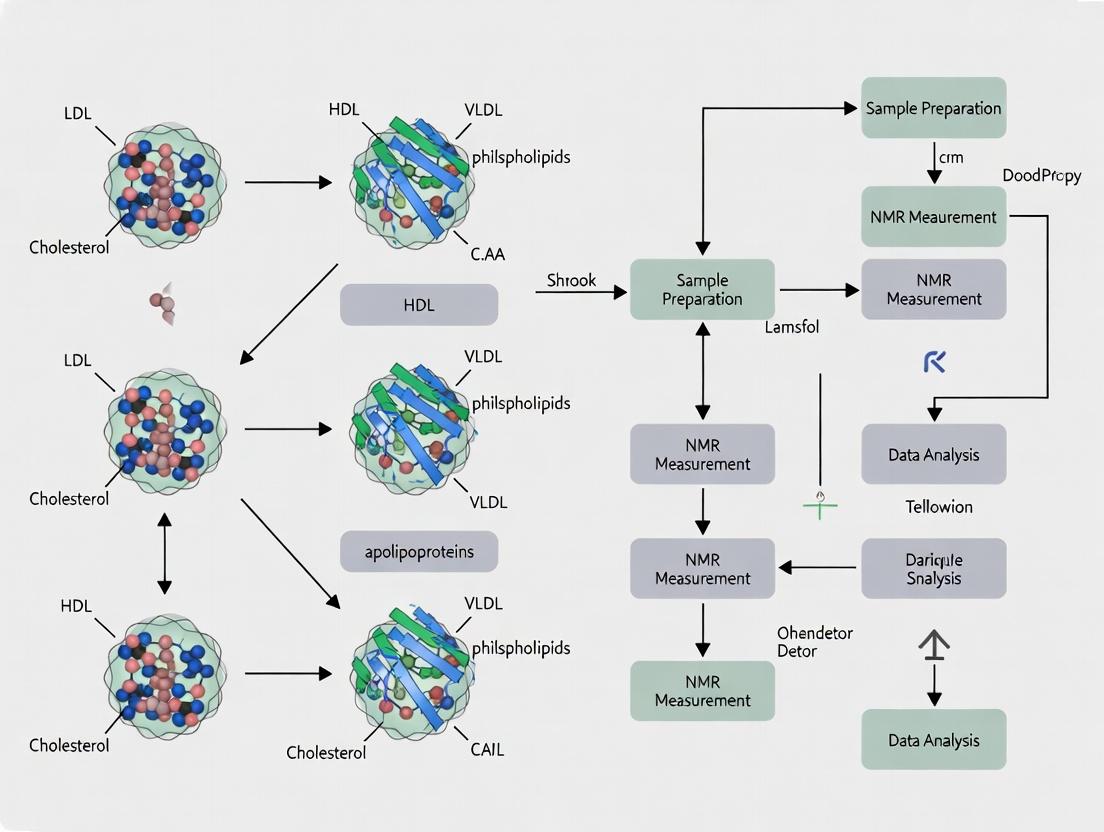
This article provides a detailed exploration of Nuclear Magnetic Resonance (NMR) spectroscopy for lipoprotein particle analysis, a critical tool in modern metabolic and cardiovascular research.
NMR Lipoprotein Analysis: A Comprehensive Guide for Biomarker Discovery and Cardiovascular Risk Assessment
Abstract
This article provides a detailed exploration of Nuclear Magnetic Resonance (NMR) spectroscopy for lipoprotein particle analysis, a critical tool in modern metabolic and cardiovascular research. We begin by establishing the fundamental principles of lipoprotein physiology and the unique advantages of NMR over traditional lipid panels. The core of the article presents the methodological workflow, from sample preparation to spectral deconvolution and data interpretation, highlighting applications in drug development and clinical trials. We address common analytical challenges and optimization strategies for enhanced precision and throughput. Finally, we compare NMR to alternative techniques like ultracentrifugation and gradient gel electrophoresis, reviewing its clinical validation and growing role in precision medicine. This guide is tailored for researchers, scientists, and drug development professionals seeking to implement or interpret NMR-based lipoprotein phenotyping.
Understanding NMR Lipoprotein Profiling: Principles, Particles, and Clinical Significance
Traditional lipid panels measuring low-density lipoprotein cholesterol (LDL-C) and high-density lipoprotein cholesterol (HDL-C) provide limited information. Advanced lipoprotein particle analysis via NMR spectroscopy reveals heterogeneous subclasses with distinct metabolic and pathological roles. This Application Note details protocols for comprehensive profiling within a thesis research context focused on cardiometabolic disease and drug development.
Table 1: Key Lipoprotein Subclasses and Their Characteristics (NMR-Derived)
| Lipoprotein Class | Diameter Range (nm) | Key Apolipoproteins | Primary Metabolic Role | Association with CVD Risk |
|---|---|---|---|---|
| Large VLDL | 45-200 | B-100, E, C-I, C-II, C-III | Triglyceride transport to peripheral tissues | Positive (Atherogenic) |
| Small VLDL | 35-45 | B-100, E, C-III | Remnant formation | Strongly Positive |
| IDL | 28-35 | B-100, E | VLDL remnant, precursor to LDL | Positive |
| Large LDL | 21.3-23.0 | B-100 | Cholesterol delivery | Neutral or Weakly Positive |
| Small, Dense LDL | 18.0-21.2 | B-100 | High endothelial permeability, easily oxidized | Strongly Positive |
| Large HDL | 9.4-14.0 | A-I, A-II | Macrophage cholesterol efflux, anti-inflammatory | Negative (Protective) |
| Small HDL | 7.3-9.4 | A-I | Antioxidant, endothelial function | Protective role under investigation |
Experimental Protocols
Protocol 2.1: Serum/Plasma Sample Preparation for NMR Lipoprotein Analysis
Objective: To prepare biofluid samples for high-throughput, quantitative NMR spectroscopy. Materials: See Scientist's Toolkit. Procedure:
- Collection: Draw venous blood into serum separator tubes (for serum) or EDTA/K2EDTA tubes (for plasma). Process within 2 hours.
- Processing: Centrifuge at 1,500-2,000 x g for 15 minutes at 4°C. Aliquot supernatant (serum/plasma) into cryovials.
- Storage: Store immediately at -80°C. Avoid freeze-thaw cycles (>2 cycles degrade signal).
- Thawing: Thaw frozen samples overnight at 4°C. Mix gently by inversion before analysis.
- Aliquoting for NMR: Transfer 300 µL of sample to a 5-mm NMR tube. Add 300 µL of deuterated phosphate buffer (100 mM Na2HPO4, pH 7.4, in D2O, with 0.9% NaCl and 0.08% sodium azide). Cap and mix by inversion.
- Quality Control: Visually inspect for hemolysis or lipemia. Record and flag severely affected samples.
Protocol 2.2: NMR Spectroscopy Acquisition for Lipoprotein Particle Concentration
Objective: To acquire proton NMR spectra for deconvolution and quantification of lipoprotein subclasses. Instrument: 400 MHz or higher NMR spectrometer equipped with a cooled autosampler. Method:
- Temperature Equilibration: Insert sample tube and allow to equilibrate to the spectrometer temperature (47°C ± 0.2°C) for 5 minutes.
- Tuning and Matching: Automatically tune and match the probe for each sample.
- Pulse Sequence: Employ a standard 1D NOESY-presat pulse sequence to suppress the water signal. Key parameters:
- Spectral Width: 5396.6 Hz
- Acquisition Time: 3.0 s
- Relaxation Delay: 2.0 s
- Mixing Time: 100 ms
- Number of Scans: 32
- Receiver Gain: Set automatically.
- Data Collection: Acquire the free induction decay (FID).
- Processing: Apply an exponential line broadening of 0.5 Hz to the FID prior to Fourier transformation. Manually phase and baseline correct the spectrum (region -0.5 to 10.0 ppm). Reference the methyl peak of lipoprotein lipids to 0.85 ppm.
- Quantification: Utilize proprietary deconvolution software (e.g., LP4 algorithm, LipoProfile) to fit the composite methyl and methylene NMR signals (0.6-1.4 ppm). The algorithm uses a library of basis spectra from purified lipoprotein subfractions to calculate particle concentrations (nmol/L for VLDL, LDL; μmol/L for HDL) and sizes.
Signaling Pathways in Lipoprotein Metabolism
NMR Analysis Context for Lipoprotein Metabolism
Experimental Workflow for NMR-Based Lipidomics
NMR Lipoprotein Profiling Workflow
The Scientist's Toolkit: Research Reagent Solutions
Table 2: Essential Materials for NMR Lipoprotein Analysis Research
| Item | Function/Description | Key Supplier Examples |
|---|---|---|
| EDTA Plasma Tubes (e.g., K2EDTA) | Anticoagulant for plasma collection; preserves sample integrity for NMR. | BD Vacutainer, Greiner Bio-One |
| Deuterated NMR Buffer (D2O-based, pH 7.4) | Provides a field-frequency lock for the NMR spectrometer; maintains constant pH and ionic strength. | Cambridge Isotope Labs, Sigma-Aldrich |
| Standard 5 mm NMR Tubes | High-quality, matched tubes for consistent spectral acquisition. | Norell, Bruker |
| NMR Calibration Standard (e.g., 3-(Trimethylsilyl)-1-propanesulfonic acid, DSS) | Chemical shift reference for spectral alignment and quantification. | Sigma-Aldrich |
| Proprietary Deconvolution Software (e.g., LP4, LipoProfile) | Analyzes composite lipid methyl signal to quantify lipoprotein subclasses. | LabCorp (NMR LipoProfile), Nightingale Health |
| Quality Control Serum Pools (High, Normal, Low Lipids) | Monitors inter- and intra-assay precision and accuracy of the NMR platform. | UTAK Laboratories, Solomon Park |
| Automated Liquid Handler | Ensures precise and reproducible sample aliquoting into NMR tubes. | Hamilton Company, Tecan |
| Cryogenic Vials & Storage | For long-term, stable sample preservation at -80°C. | Thermo Scientific, Corning |
1. Introduction and Thesis Context
This application note details the core experimental methodologies underpinning a broader research thesis on Nuclear Magnetic Resonance (NMR) spectroscopy for lipoprotein particle analysis. The central thesis posits that the quantitative, subclass-specific data provided by NMR—encompassing particle concentration (NMR-P) and size for very-low-density (VLDL), intermediate-density (IDL), low-density (LDL), and high-density (HDL) lipoprotein particles—offers superior cardiovascular risk stratification and mechanistic insights into therapeutic interventions compared to conventional lipid panels. The protocols herein are designed for researchers and drug development professionals seeking to implement or interpret advanced lipoprotein phenotyping.
2. Core Principle: The Lipoprotein NMR Spectrum
The quantification principle relies on the unique NMR signal emitted by the terminal methyl groups in the lipid acyl chains within the lipoprotein particle core. As subclasses differ in size, the diffusion rate of these lipids varies, affecting the observed NMR signal. Larger particles (e.g., VLDL) exhibit slower diffusion and narrower spectral line widths, while smaller particles (e.g., HDL) diffuse faster, producing broader line widths. The composite plasma NMR spectrum is a weighted sum of these subclass-specific spectral signatures.
Table 1: Characteristic NMR Parameters for Major Lipoprotein Subclasses
| Subclass | Diameter Range (nm) | Primary Lipid Components | Characteristic NMR Signal Chemical Shift (ppm) | Spectral Line Width Relation |
|---|---|---|---|---|
| VLDL | 35-120 | Triglycerides, Cholesteryl Esters | ~0.8 - 1.0 | Narrowest |
| IDL | 23-35 | Cholesteryl Esters, Triglycerides | ~0.8 - 1.0 | Intermediate |
| LDL | 18-23 | Cholesteryl Esters | ~0.8 - 1.0 | Intermediate |
| HDL | 7.3-13 | Cholesteryl Esters, Phospholipids | ~0.8 - 1.0 | Broadest |
3. Experimental Protocol: Standardized Plasma Sample Preparation for Lipoprotein NMR Analysis
- Objective: To prepare EDTA-plasma samples for NMR analysis, minimizing pre-analytical variability.
- Materials: See "Research Reagent Solutions" below.
- Procedure:
- Blood Collection: Draw venous blood into EDTA-containing vacuum tubes (e.g., 1.5 mg EDTA per mL blood).
- Plasma Separation: Centrifuge tubes at 1,500-2,000 x g for 15 minutes at 4°C within 2 hours of collection.
- Aliquoting: Carefully transfer the top plasma layer to pre-labeled cryovials using a sterile pipette, avoiding the buffy coat.
- Storage: Store aliquots at -80°C. Avoid repeated freeze-thaw cycles. Ship samples on dry ice.
- Pre-Analysis Thawing: Thaw frozen plasma samples overnight at 4°C. Mix gently by inversion before analysis.
4. Experimental Protocol: NMR Data Acquisition and Deconvolution
- Objective: To acquire the plasma NMR spectrum and deconvolute it into subclass-specific concentrations.
- Materials: High-field NMR spectrometer (≥400 MHz), automated sampler, buffer solution (see below).
- Procedure:
- Sample Preparation: Mix 300 µL of thawed plasma with 300 µL of standardized NMR buffer (pH 7.4, containing D₂O for lock signal).
- Data Acquisition: Transfer the mixture to a 5mm NMR tube. Load into the spectrometer. Key acquisition parameters:
- Pulse Sequence: 1D Carr-Purcell-Meiboom-Gill (CPMG) to suppress broad signals from proteins and lipoproteins.
- Spectral Width: -2 to 10 ppm.
- Number of Scans: 32-64.
- Temperature: 47°C (standardized for consistent diffusion).
- Relaxation Delay: 2 seconds.
- Spectral Processing: Apply exponential line broadening (typically 0.5-1.0 Hz), Fourier transformation, and baseline correction.
- Lineshape Deconvolution: Fit the processed methyl signal region (typically ~0.8-1.0 ppm) using a proprietary or published lineshape model library. This library contains the predefined spectral signatures for up to 15 lipoprotein subclasses (e.g., VLDL-1 to VLDL-6, LDL-1 to LDL-4, HDL-1 to HDL-4). The fitting algorithm iteratively adjusts the amplitude of each subclass signal to minimize the difference between the composite experimental spectrum and the sum of the library signals.
- Quantification: The fitted amplitude for each subclass signal is converted to particle concentration (nmol/L or µmol/L for VLDL/LDL; µmol/L for HDL) using a calibration curve derived from standards of known concentration and size.
Table 2: Representative Quantitative NMR Lipoprotein Output (Sample Data)
| Lipoprotein Subclass | Particle Concentration (nmol/L) | Mean Diameter (nm) | Cholesterol Content (mg/dL) Calculated |
|---|---|---|---|
| VLDL Total | 75.2 | 48.5 | 32.1 |
| VLDL-1 (Large) | 12.5 | 62.1 | 12.5 |
| VLDL-2 (Medium) | 25.8 | 41.3 | 14.2 |
| VLDL-3 (Small) | 36.9 | 31.7 | 5.4 |
| IDL | 45.6 | 28.2 | 18.9 |
| LDL Total | 1250.4 | 21.0 | 112.5 |
| LDL-1 (Large) | 380.2 | 22.5 | 45.6 |
| LDL-2 (Medium) | 520.1 | 20.7 | 44.2 |
| LDL-3 (Small) | 350.1 | 19.2 | 22.7 |
| HDL Total | 18500.2 | 9.2 | 48.5 |
| HDL-2 (Large) | 5200.5 | 10.5 | 25.1 |
| HDL-3 (Small) | 13299.7 | 8.5 | 23.4 |
NMR Lipoprotein Analysis Workflow
5. Research Reagent Solutions & Essential Materials
| Item | Function/Benefit |
|---|---|
| K2-EDTA Vacutainer Tubes | Anticoagulant for plasma collection; preserves lipoprotein integrity. |
| Deuterium Oxide (D₂O, 99.9%) | Provides a stable lock signal for the NMR spectrometer frequency. |
| NMR Phosphate Buffer (pH 7.4) | Standardizes sample ionic strength and pH, ensuring reproducible chemical shifts. Contains sodium azide as preservative. |
| 5 mm NMR Tubes (Borosilicate) | High-quality tubes for consistent sample presentation in the NMR magnet. |
| Lipoprotein Calibration Standards | Characterized pools of human serum or synthetic standards with known lipoprotein concentrations for assay calibration. |
| Automated Liquid Handler | For precise, high-throughput mixing of plasma and buffer, reducing manual error. |
NMR Data Drives Mechanistic Insights
Within the broader thesis on NMR spectroscopy for lipoprotein particle analysis, quantifying particle number, size distribution, and glycoprotein signatures is paramount. These metrics move beyond classical cholesterol concentration to provide a nuanced view of cardiovascular disease, metabolic syndrome, and drug response phenotypes. This application note details protocols for deriving these key metrics using NMR, integrating recent methodological advances.
Table 1: Representative NMR-Derived Lipoprotein Particle Concentrations (nmol/L) in Clinical Phenotypes
| Lipoprotein Class | Subclass (Size, nm) | Healthy Control (Mean ± SD) | Atherogenic Dyslipidemia (Mean ± SD) | T2 Diabetes (Mean ± SD) |
|---|---|---|---|---|
| VLDL | Large (>60) | 0.8 ± 0.4 | 4.2 ± 1.8 | 3.5 ± 1.5 |
| VLDL | Medium (35-60) | 2.1 ± 0.9 | 7.8 ± 2.5 | 6.9 ± 2.1 |
| LDL | Small (<20.5) | 332 ± 150 | 980 ± 310 | 870 ± 290 |
| LDL | Large (20.5-23.0) | 450 ± 180 | 220 ± 90 | 300 ± 110 |
| HDL | Large (9.4-14.0) | 5.2 ± 1.7 | 3.1 ± 1.2 | 2.8 ± 1.0 |
| HDL | Small (7.3-8.2) | 9.8 ± 3.1 | 15.2 ± 4.5 | 16.5 ± 4.8 |
Table 2: Glycoprotein Acetylation (GlycA) Signatures in Inflammatory States
| Biomarker | NMR Signal Origin | Normal Range (μmol/L) | Acute Inflammation (μmol/L) | Chronic Metabolic Disease (μmol/L) |
|---|---|---|---|---|
| GlycA | N-acetyl glucosamine residues on acute-phase proteins (α1-acid glycoprotein, haptoglobin, etc.) | 350 - 450 | 550 - 750 | 450 - 600 |
Experimental Protocols
Protocol 3.1: NMR Sample Preparation for Lipoprotein Particle Analysis
Objective: Prepare plasma/serum samples for high-throughput NMR spectroscopy to ensure stability and reproducibility.
- Sample Collection: Collect blood in EDTA tubes. Centrifuge at 1500 × g for 15 minutes at 4°C within 2 hours of collection.
- Aliquoting & Storage: Aliquot plasma into cryovials. Store at -80°C. Avoid repeated freeze-thaw cycles (>2).
- Thawing: Thaw samples on ice or at 4°C for 2-4 hours prior to analysis.
- Mixing: Gently vortex samples for 10 seconds.
- Loading: Transfer 200 μL of plasma to a 3 mm NMR tube. For robotic systems, use 96-well plates with 40 μL per well, diluted 1:1 with PBS in 1.7 mm tubes.
Protocol 3.2: NMR Spectroscopy Acquisition for Particle Number and Size
Objective: Acquire proton NMR spectra to deconvolute lipoprotein subclass signals.
- Instrument Setup: Use a 400 MHz or higher NMR spectrometer equipped with a cryoprobe. Set temperature to 310 K (37°C).
- Pulse Sequence: Employ a standard 1D NOESY presaturation pulse sequence (RD–90°–t1–90°–tm–90°–ACQ) to suppress the water signal. Set mixing time (tm) to 100 ms.
- Acquisition Parameters: Spectral width: 20 ppm (approx. -1 to 19 ppm). Number of scans: 32-64. Relaxation delay: 2-4 s. Total acquisition time: ~2-3 minutes per sample.
- Calibration: Include a calibrant sample (containing known concentrations of lactate, glucose, and lipoprotein subfractions) daily.
- Automation: Utilize sample changers for high-throughput analysis (up to 960 samples/24h).
Protocol 3.3: Spectral Deconvolution and Data Analysis
Objective: Derive particle concentration (nmol/L) and size (nm) metrics from the NMR spectral profile.
- Preprocessing: Apply line broadening (0.5 Hz). Fourier transform. Phase and baseline correct automatically using vendor or custom software.
- Lipoprotein Deconvolution: Fit the methyl (-CH3) and methylene (-CH2-) signal region (0.6 - 1.4 ppm) using a proprietary or published lineshape library of >100 individual lipoprotein subclasses. The algorithm (e.g., LIPOSCALE, LP4) uses constrained regularization to solve for particle concentrations.
- Particle Diameter: The derived signal amplitudes for each subclass are associated with a mean particle diameter from an established library (e.g., VLDL: 35-120 nm, LDL: 18-25 nm, HDL: 7-14 nm). Weighted average size for each class is calculated.
- Glycoprotein Analysis: Integrate the composite signal in the 2.00 - 2.08 ppm region (N-acetyl methyl group resonances from glycoproteins). Report as GlycA in μmol/L, calibrated against a glycoprotein standard mix.
Protocol 3.4: Validation by Cross-Platform Analysis (e.g., Ion Mobility)
Objective: Validate NMR-derived particle size and number via orthogonal technique.
- Sample Prep: Use the same plasma aliquot analyzed by NMR.
- Ion Mobility Protocol: Dilute plasma 1:40 in ammonium acetate buffer. Inject into gas-phase electrophoretic mobility molecular analyzer (GEMMA) or differential mobility analyzer (DMA).
- Data Correlation: Compare the particle size distribution profile from ion mobility with the weighted average size from NMR for VLDL, LDL, and HDL classes. Correlation (r) should exceed 0.85.
Visualizations
Title: NMR Lipoprotein Analysis Workflow
Title: Inflammation to GlycA Signaling Pathway
The Scientist's Toolkit
Table 3: Essential Research Reagent Solutions for NMR Lipoprotein Analysis
| Item | Function & Specification |
|---|---|
| EDTA Plasma Collection Tubes | Anticoagulant for stable lipoprotein preservation prior to NMR. Use spray-coated K2EDTA tubes. |
| PBS Buffer (pH 7.4), Isotonic | For sample dilution in high-throughput, low-volume NMR systems to maintain ionic strength. |
| NMR Reference Standard (DSS-d6) | 2,2-dimethyl-2-silapentane-5-sulfonate-d6; provides chemical shift (0 ppm) and quantitation reference. |
| Glycoprotein Calibrant Mix | Contains known concentrations of α1-acid glycoprotein, haptoglobin, and transferrin for GlycA signal calibration. |
| Lipoprotein Calibration Kit | Commercially available kit of isolated, characterized VLDL, LDL, and HDL subfractions for spectral library validation. |
| Cryopreservation Vials | Low-protein-binding, sterile vials for long-term plasma storage at -80°C. |
| 3 mm and 1.7 mm NMR Tubes | High-quality, matched NMR tubes (e.g., Wilmad) to ensure spectral line shape consistency. |
| Automated Liquid Handler | Robotic pipetting system (e.g., Hamilton STAR) for precise, high-throughput sample transfer to NMR tubes/plates. |
Application Note: Advanced Lipoprotein Particle Profiling via NMR Spectroscopy
Cardiovascular disease (CVD) risk stratification has evolved beyond standard lipid panels (total cholesterol, LDL-C, HDL-C, triglycerides). Nuclear Magnetic Resonance (NMR) spectroscopy enables the quantification of lipoprotein particle number, size, and subclass distribution, offering superior predictive power for atherosclerotic CVD (ASCVD) events. This application note details the clinical relevance of particle characteristics and protocols for their analysis.
Quantitative Data on Particle Characteristics and CVD Risk
Table 1: Association of NMR-Derived Lipoprotein Parameters with Incident CVD Events
| Lipoprotein Parameter | Hazard Ratio (95% CI) | Population Study | Key Implication |
|---|---|---|---|
| LDL Particle Number (LDL-P) | 1.25 (1.15–1.36) per 1-SD increase | MESA (Multi-Ethnic Study of Atherosclerosis) | Stronger predictor of events than LDL-C. |
| Small LDL-P | 1.44 (1.23–1.67) (High vs. Low Quartile) | PREVEND (Prevention of Renal and Vascular Endstage Disease) | Highly atherogenic; associated with insulin resistance. |
| HDL Particle Number (HDL-P) | 0.80 (0.70–0.91) per 1-SD increase | MESA | Inverse association; protective effect linked to particle number more than cholesterol content. |
| Large HDL-P | Clinical significance debated | Various | May not be as strongly protective as total HDL-P. |
| Triglyceride-Rich Lipoproteins (TRL-P) | 1.26 (1.10–1.44) per 1-SD increase | JUPITER (Justification for the Use of Statins in Prevention) | Residual risk marker post-statin therapy. |
Table 2: Comparative Performance of Lipid Metrics for Risk Prediction (C-Statistic Increase)
| Base Model (Standard Risk Factors) | Model Adding LDL-C | Model Adding LDL-P | Model Adding LDL-P & Small LDL-P |
|---|---|---|---|
| 0.732 | +0.009 | +0.016 | +0.022 |
Experimental Protocols
Protocol 1: Serum/Plasma Sample Preparation for NMR Lipoprotein Analysis
- Collection: Collect blood samples in serum separator tubes or EDTA plasma tubes.
- Processing: Centrifuge at 1,500–2,000 x g for 15 minutes at 4°C within 2 hours of collection.
- Aliquoting: Transfer supernatant to cryovials, avoiding hemolyzed or lipemic samples.
- Storage: Store aliquots at -80°C. Avoid repeated freeze-thaw cycles (>2 cycles degrade signal).
- Thawing: Thaw frozen samples at 4°C overnight or at room temperature for 30 minutes. Mix gently by inversion before analysis.
Protocol 2: NMR Spectroscopic Acquisition and Deconvolution (Based on LP4 Algorithm)
- Instrument: 400 MHz or 600 MHz NMR spectrometer equipped with a cooled autosampler.
- Temperature Control: Maintain sample temperature at 47°C during analysis for consistent diffusion coefficients.
- Pulse Sequence: Apply a standard 1D NMR presaturation sequence (e.g., NOESY-presat) to suppress the water signal.
- Acquisition Parameters:
- Spectral Width: 20–30 ppm
- Number of Scans: 32–64
- Relaxation Delay: 2 seconds
- Acquisition Time: ~3 seconds
- Data Processing: Apply automated line-broadening (0.5–1.0 Hz), Fourier transformation, and phasing. Use proprietary deconvolution algorithms (e.g., LP4, Vantera Analyzer) to fit the measured methyl signal lineshape to a library of subclass-specific lineshapes from purified lipoprotein fractions.
- Output: The deconvolution yields concentrations (nmol/L for particles, mg/dL for lipids) for up to 14 subclasses: 6 VLDL, 1 IDL, 3 LDL, and 4 HDL subclasses, plus total particles and average sizes.
Protocol 3: In Vitro Functional Assay for HDL Cholesterol Efflux Capacity (Correlative Metric)
- Cell Culture: Maintain J774 or THP-1 macrophages. Differentiate THP-1 cells with PMA.
- Labeling: Load cells with radioactive cholesterol (³H-cholesterol) in media containing an ACAT inhibitor to promote cholesterol accumulation.
- Efflux Phase: Wash cells and incubate with 2% v/v patient serum or isolated HDL as the cholesterol acceptor in serum-free media for 4–6 hours.
- Quantification: Collect media and lyse cells. Measure radioactivity in both fractions by scintillation counting.
- Calculation: Calculate % Efflux = (Radioactivity in Media) / (Radioactivity in Media + Radioactivity in Cells) x 100%. This functional metric often correlates better with CVD outcomes than HDL-C.
Visualizations
Lipoprotein Atherogenesis Pathway
NMR Lipoprotein Profiling Workflow
The Scientist's Toolkit: Key Research Reagent Solutions
Table 3: Essential Materials for NMR Lipoprotein and Functional Studies
| Item / Reagent Solution | Function / Application |
|---|---|
| Deuterium Oxide (D₂O) with Internal Standard | NMR solvent; contains known concentration of TSP (trimethylsilylpropanoic acid) or DSS (4,4-dimethyl-4-silapentane-1-sulfonic acid) for chemical shift referencing and quantitative calibration. |
| NMR Tube with Cap | Holds sample within the NMR spectrometer's magnetic field. Precision tubes (e.g., 5mm) ensure spectral quality. |
| Lipoprotein Subclass Lineshape Library | Proprietary database of spectral signatures from physically isolated lipoprotein subclasses. Critical for deconvolution software. |
| ³H-Cholesterol (Radioactive) | Tracer for measuring cellular cholesterol efflux capacity, a key functional assay for HDL. |
| ACAT Inhibitor (e.g., Sandoz 58-035) | Used during macrophage cholesterol loading to prevent esterification, keeping cholesterol in an efflux-accessible pool. |
| Recombinant CETP & HL Enzymes | For in vitro studies modifying lipoprotein particle composition and size to model dyslipidemias. |
| Stable Isotope-Labeled Precursors (¹³C-acetate, ¹⁵N-choline) | Enables NMR-based metabolic flux studies to track lipoprotein synthesis and remodeling in cell culture. |
| PMA (Phorbol 12-myristate 13-acetate) | Induces differentiation of monocytic cell lines (e.g., THP-1) into macrophage-like cells for functional assays. |
Within the context of NMR spectroscopy lipoprotein research, the clinical and therapeutic assessment of cardiovascular disease (CVD) is undergoing a fundamental shift. The traditional lipid panel (total cholesterol, LDL-C, HDL-C, triglycerides) provides a limited, static snapshot of lipid concentration. Advanced lipoprotein phenotyping via NMR quantifies distinct lipoprotein particle subclasses, providing a dynamic profile of particle number, size, and composition. This application note details the protocols and analytical framework for implementing NMR-based advanced lipoprotein testing in research and drug development.
Table 1: Comparative Risk Assessment - Standard Lipids vs. Advanced Lipoprotein Phenotypes
| Metric Category | Specific Analyte | Association with CVD Risk | Typical Reference Range* |
|---|---|---|---|
| Standard Lipids | LDL Cholesterol (LDL-C) | Positive, but misses residual risk | <100 mg/dL (Optimal) |
| HDL Cholesterol (HDL-C) | Inverse | >40 mg/dL (M), >50 mg/dL (F) | |
| Triglycerides (TG) | Positive | <150 mg/dL | |
| Advanced NMR Phenotypes | LDL Particle Number (LDL-P) | Stronger positive correlation than LDL-C | <1000 nmol/L (Optimal) |
| Small LDL Particle Number | Highly atherogenic; independent risk factor | Lower values preferred | |
| HDL Particle Number (HDL-P) | Stronger inverse correlation than HDL-C | >30 μmol/L (M), >35 μmol/L (F) | |
| Lipoprotein(a) Particle Number | Genetic, independent causal risk factor | <75 nmol/L (Moderate Risk) | |
| Mean VLDL, LDL, HDL Particle Sizes | Small LDL/HDL size is pro-atherogenic | LDL Size >20.5 nm; HDL Size >8.8 nm |
*Ranges are instrument/lab-specific and population-dependent.
Table 2: NMR-Derived Lipoprotein Subclass Distribution
| Lipoprotein Class | Subclass (by Size) | Key NMR Signal Region (Chemical Shift) | Primary Information Conveyed |
|---|---|---|---|
| VLDL & Chylomicrons | Very Large, Large, Medium | Methyl lipid signal (δ ~0.8-1.0 ppm) | Triglyceride-rich transport; remnant risk. |
| LDL | Large, Medium, Small | Methyl lipid signal, deconvolution algorithms | Small, dense LDL is highly atherogenic. |
| HDL | Large, Medium, Small | Methyl lipid signal, distinct phospholipid components | Large HDL is associated with reverse cholesterol transport efficacy. |
Experimental Protocols
Protocol 1: Sample Preparation for Serum/Plasma NMR Lipoprotein Analysis
- Collection: Collect blood into serum separator tubes or EDTA plasma tubes.
- Processing: Allow clots to form (serum, 30 min, RT). Centrifuge at 1500-2000 x g for 15 minutes at 4°C.
- Aliquoting: Pipette 150-200 μL of clear supernatant into pre-labeled cryovials.
- Storage: Store immediately at -80°C. Avoid repeated freeze-thaw cycles (>2 cycles degrades signals).
- Shipping: Ship on dry ice for analysis at core NMR facility.
Protocol 2: High-Throughput NMR Lipoprotein Profiling (Bruker IVDr Platform Example)
- Instrument Setup: Standardized 600 MHz NMR spectrometer equipped with a cooled SampleJet autosampler and a triple-resonance (TXI) cryoprobe.
- Temperature Equilibration: Thaw samples at 4°C overnight. Centrifuge briefly before analysis.
- Loading: Transfer 200 μL of sample to a 3 mm NMR tube. Load into the SampleJet.
- Data Acquisition (Noesypr1d pulse sequence):
- Temperature: 310 K
- Number of Scans: 32
- Relaxation Delay: 4s
- Acquisition Time: ~3.5 minutes per sample.
- Automated Processing & Deconvolution: Spectra are processed (Fourier transformation, phase, baseline correction) and analyzed by proprietary software (e.g., Bruker B.I.-LISA). The methyl lipid signal (δ 0.8-1.0 ppm) is deconvoluted using a library of lipoprotein subclass spectra.
- Quality Control: Monitor line width (≤1.1 Hz for CHD3 signal of EDTA) and plasma glucose doublet (δ 5.22 ppm) for proper phasing.
Visualizations
Title: The Paradigm Shift from Lipids to Lipoproteins
Title: NMR Lipoprotein Profiling Workflow
The Scientist's Toolkit: Key Research Reagent Solutions
| Item | Function in NMR Lipoprotein Analysis |
|---|---|
| Deuterated NMR Solvent (D₂O) | Contains a field-frequency lock signal for stable NMR acquisition. |
| Sodium Azide | Added to buffer/solvent to prevent microbial growth in samples. |
| EDTA Plasma Tubes | Preferred collection tube; chelates metals for stable lipoproteins. |
| NMR Reference Standard (e.g., TSP-d4) | Provides chemical shift reference (0.0 ppm) and quantification calibrant. |
| Cryopreservation Tubes | For stable, long-term storage of serum/plasma aliquots at -80°C. |
| Automated Liquid Handler | Ensures precise, reproducible sample transfer to NMR tubes. |
| Proprietary Deconvolution Software (e.g., B.I.-LISA, LP4) | Translates raw NMR spectra into quantitative lipoprotein particle data. |
| Certified Calibrator & Control Plasmas | For daily instrument calibration and assay validation. |
NMR Lipoprotein Analysis in Practice: Protocol, Data Analysis, and Research Applications
Application Notes
This protocol, framed within a thesis on NMR spectroscopy for lipoprotein particle analysis, establishes a standardized pipeline to ensure the reproducibility and accuracy of metabolomic and lipoprotein profiling in clinical and pharmaceutical research. The workflow minimizes pre-analytical variability, a critical factor in biomarker discovery and drug efficacy studies, by controlling factors from biofluid collection to spectral acquisition.
Detailed Protocol
Pre-Collection Phase: Patient Preparation & Kit Assembly
- Patient Fasting: Subjects must fast for 10-12 hours (water permitted) prior to collection to standardize metabolic and lipoprotein profiles.
- Kit Preparation: Assemble a collection kit containing:
- Serum: Serum separator tubes (SST, e.g., BD Vacutainer) or plain tubes.
- Plasma: EDTA or citrate anticoagulant tubes (e.g., BD Vacutainer K2E).
- Cold packs or insulated container for immediate transport.
- Pre-printed labels with unique sample IDs.
Blood Collection & Initial Processing
- Venipuncture: Perform standard phlebotomy. For lipoprotein analysis, a tourniquet time of <1 minute is recommended to avoid hemoconcentration.
- Tube Handling: Gently invert tubes 5-10 times (for additive tubes) and keep upright at room temperature.
- Clotting & Separation (Serum): Allow blood to clot for 30 minutes at room temperature. Centrifuge at 1,500-2,000 x g for 10 minutes at 4°C.
- Plasma Separation: Centrifuge anticoagulant tubes at 1,500-2,000 x g for 10 minutes at 4°C within 30 minutes of collection.
- Aliquoting: Using a sterile pipette, immediately transfer the supernatant (serum/plasma) into pre-labeled cryovials. A typical NMR analysis requires a minimum of 150 µL per aliquot. Create multiple aliquots to avoid freeze-thaw cycles.
- Initial Storage: Place aliquots on wet ice or at 4°C if processing is within 2 hours. Otherwise, flash-freeze in liquid nitrogen and transfer to -80°C for long-term storage.
Sample Preparation for NMR Analysis
- Thawing: Thaw frozen samples overnight at 4°C. Vortex mix gently for 5 seconds after complete thawing.
- Buffer Preparation: Prepare a 75 mM Sodium Phosphate buffer (pH 7.4 ± 0.1) in D2O. Include 0.08% (w/v) sodium azide as a preservative and 0.5 mM TSP-d4 (3-(trimethylsilyl)propionic-2,2,3,3-d4 acid) as a chemical shift reference (δ 0.0 ppm).
- Sample-Buffer Mixing: Combine 150 µL of serum/plasma with 350 µL of the prepared buffer in a clean 5 mm NMR tube. Final sample-to-buffer ratio is 3:7. Alternatively, use a 96-well plate format for high-throughput robotic sample handlers.
- Vortex & Centrifuge: Vortex the mixture for 10 seconds and centrifuge briefly (~1 min at low speed) to eliminate air bubbles.
NMR Spectrometer Setup & Spectral Acquisition
- Instrument: 600 MHz or higher field strength NMR spectrometer equipped with a cooled autosampler and a triple-resonance (e.g., TCI) cryoprobe for optimal sensitivity.
- Temperature Regulation: Allow the sample to thermally equilibrate in the spectrometer to 310 K (37°C) for 5 minutes.
- Lock & Shim: Engage the deuterium lock on the D2O signal and perform automated gradient shimming.
- Pulse Sequence Selection:
- 1D NOESY-presat: Primary choice for metabolomics. Uses pre-saturation for water suppression (low power irradiation at the water frequency during relaxation delay and mixing time).
- CPMG-presat: Incorporates a Carr-Purcell-Meiboom-Gill (CPMG) filter to attenuate broad signals from proteins and lipoproteins, highlighting small molecule metabolites.
- Diffusion-Edited: Uses pulsed field gradients to suppress small molecule signals, thereby enhancing the signals from macromolecules like lipoproteins.
- Acquisition Parameters (Typical for 1D NOESY-presat):
- Spectral Width: 20 ppm (or 12 ppm centered on water resonance)
- Number of Scans (NS): 64-128
- Relaxation Delay (d1): 4 seconds
- Mixing Time (d8): 10 ms
- Acquisition Time: ~3 seconds
- Total Scan Time: ~10-15 minutes per sample.
Data Processing (Pre-Formatting for Analysis)
- Fourier Transformation: Apply an exponential line broadening function (0.3-1.0 Hz) prior to FFT.
- Phase & Baseline Correction: Perform automatic then manual phase correction. Apply a polynomial or spline function for baseline correction.
- Referencing: Calibrate the spectrum to the internal standard TSP-d4 at 0.0 ppm.
- Spectral Regions: Exclude the water region (δ 4.7-5.0 ppm) and urea region (δ 5.5-6.0 ppm) if urine-contaminated. The region δ 0.5-9.0 ppm is typically used for metabolomics; δ 0.6-1.5 ppm is critical for lipoprotein methyl group signals.
Table 1: Critical Pre-Analytical Variables & Standards
| Variable | Recommended Standard | Rationale for Lipoprotein NMR |
|---|---|---|
| Fasting Time | 10-12 hours | Stabilizes triglyceride-rich lipoprotein levels. |
| Clotting Time (Serum) | 30 min @ RT | Complete fibrin clot formation; longer times increase metabolite shifts. |
| Initial Centrifugation | 2,000 x g, 10 min, 4°C | Complete cell separation without hemolysis. |
| Processing Delay | ≤2 hours (4°C) | Minimizes glycolysis and lipoprotein degradation. |
| Aliquot Volume | ≥150 µL | Ensures sufficient volume for NMR prep & replicates. |
| Long-term Storage | -80°C | Preserves lipid and metabolic profile integrity. |
| Freeze-Thaw Cycles | ≤2 | Prevents lipoprotein particle denaturation and metabolite decay. |
Table 2: Key NMR Acquisition Parameters for Lipoprotein/Serum Profiling
| Parameter | 1D NOESY-presat | 1D CPMG-presat | Diffusion-Edited (LEDbpgp2s1d) |
|---|---|---|---|
| Primary Use | Full metabolite profile | Small molecule focus | Lipoprotein particle profiling |
| Water Suppression | Pre-saturation | Pre-saturation | Pre-saturation |
| Echo Time (CPMG) | N/A | 80-400 ms total | N/A |
| Diffusion Delay | N/A | N/A | 100-200 ms |
| Scans (NS) | 64-128 | 128-256 | 128-256 |
| Key Spectral Region | δ 0.5-9.0 ppm | δ 0.5-9.0 ppm | δ 0.6-1.5 ppm (methyl signals) |
Experimental Protocol Detail: 1D NOESY-presat with CPMG Filter
Objective: Acquire a high-resolution 1H NMR spectrum of serum/plasma with suppressed water and protein/lipoprotein signals to enhance small molecule visibility.
Materials:
- Prepared NMR sample in buffer (as per Section 3).
- 600 MHz NMR spectrometer with cryoprobe.
Method:
- Load sample into the spectrometer and allow temperature equilibration at 310 K for 5 min.
- Lock, tune, match, and shim the magnet.
- Find the water resonance frequency and set the transmitter offset (O1P) to this frequency.
- Load the
cpmgpr1dor equivalent pulse sequence. - Set parameters: Pulse (p1): 14 µs (≈90°), Spectral Width (sw): 20 ppm, Relaxation Delay (d1): 4 s, Number of Scans (ns): 128.
- CPMG specific: Set the total echo time (2τn): e.g., 80 ms (for τ=200 µs, n=200 loops).
- Set the pre-saturation power (pl9) low (e.g., 50 dB) for water suppression during d1 and the mixing time.
- Acquire the data.
- Process the FID with 0.3 Hz line broadening, Fourier transform, phase, and baseline correct.
- Reference spectrum to TSP at 0.0 ppm.
Visualization
Diagram 1: Standardized Serum NMR Workflow
Diagram 2: NMR Pulse Sequence Decision Logic
The Scientist's Toolkit
Table 3: Essential Research Reagent Solutions for NMR-based Lipoprotein Analysis
| Item | Function / Description |
|---|---|
| EDTA or Serum Separator Tubes | Anticoagulant (EDTA) for plasma or clot activator/gel for serum. Standardizes collection matrix. |
| D2O (Deuterium Oxide) | NMR solvent; provides a deuterium lock signal for field/frequency stabilization. |
| Sodium Phosphate Buffer | Maintains physiological pH (7.4) in sample, ensuring chemical shift reproducibility. |
| TSP-d4 (Sodium Salt) | Internal chemical shift reference (δ 0.0 ppm) and quantitation standard. Deuterated to avoid 1H signal. |
| Sodium Azide (NaN3) | Bacteriostatic agent added to buffer to prevent microbial growth in prepared NMR samples. |
| 5 mm NMR Tubes | High-quality (e.g., Wilmad 528-PP) tubes with precise specifications for consistent spinning/shimming. |
| Cryogenic Vials | For safe long-term storage of serum/plasma aliquots at -80°C. |
| pH Meter | Calibrated meter to verify buffer pH (7.4 ± 0.1), critical for chemical shift alignment. |
Spectral Deconvolution and the Lipoprotein Particle Library
Nuclear Magnetic Resonance (NMR) spectroscopy has become a cornerstone for the quantitative and qualitative analysis of lipoprotein particles in clinical and pharmaceutical research. The broader thesis of this field posits that the precise characterization of lipoprotein subclasses—defined by size, density, and lipid/apolipoprotein composition—provides superior cardiovascular and metabolic disease risk stratification compared to standard lipid panels. Spectral deconvolution, powered by a curated Lipoprotein Particle Library (LPL), is the computational methodology that transforms complex NMR spectra into actionable, particle-specific data. This protocol details the application of this technique for advanced metabolic phenotyping in drug development and translational research.
Core Principles: The Lipoprotein Particle Library
The Lipoprotein Particle Library is a foundational reference dataset containing the characteristic NMR spectral signatures of purified lipoprotein subclasses. Each entry corresponds to a specific particle type, with its unique spectral profile derived from the methyl group signals of lipid constituents within a defined particle size range.
Table 1: Standard Lipoprotein Subclasses in a Reference Library
| Subclass | Diameter Range (nm) | Density Range (g/mL) | Primary Lipid Components | Key Apolipoproteins |
|---|---|---|---|---|
| Chylomicrons & Remnants | >75 | <0.95 | Triglycerides, Cholesteryl Esters | ApoB-48, ApoE |
| VLDL (Very Large) | 64.0-75.0 | 0.95-1.006 | Triglycerides | ApoB-100, ApoE |
| VLDL (Large) | 48.0-64.0 | 0.95-1.006 | Triglycerides | ApoB-100, ApoE |
| VLDL (Medium) | 36.0-48.0 | 0.95-1.006 | Triglycerides | ApoB-100 |
| VLDL (Small) | 29.0-36.0 | 0.95-1.006 | Triglycerides | ApoB-100 |
| IDL (Intermediate) | 23.0-29.0 | 1.006-1.019 | Cholesteryl Esters, Triglycerides | ApoB-100 |
| LDL (Large) | 21.2-23.0 | 1.019-1.063 | Cholesteryl Esters | ApoB-100 |
| LDL (Medium) | 19.8-21.2 | 1.019-1.063 | Cholesteryl Esters | ApoB-100 |
| LDL (Small) | 18.3-19.8 | 1.019-1.063 | Cholesteryl Esters | ApoB-100 |
| HDL (Very Large) | 12.9-14.5 | 1.063-1.100 | Phospholipids, Cholesteryl Esters | ApoA-I, ApoA-II |
| HDL (Large) | 11.7-12.9 | 1.063-1.100 | Phospholipids, Cholesteryl Esters | ApoA-I, ApoA-II |
| HDL (Medium) | 10.7-11.7 | 1.100-1.21 | Phospholipids | ApoA-I |
| HDL (Small) | 8.2-10.7 | 1.100-1.21 | Phospholipids | ApoA-I |
Protocol: NMR-Based Lipoprotein Profiling via Spectral Deconvolution
Sample Preparation
- Reagent: Plasma or serum (fasted, typically 12-14 hours).
- Procedure: Collect blood in EDTA tubes. Centrifuge at 1,500-2,000 x g for 15 minutes at 4°C. Aliquot plasma/serum and store at -80°C. Avoid repeated freeze-thaw cycles.
- Buffer: 10 mM phosphate-buffered saline in D₂O, pH 7.4 ± 0.1. Contains 0.9% NaCl and 0.01% sodium azide (preservative). D₂O provides a field-frequency lock for the NMR spectrometer.
- Mixing: Combine 300 µL of plasma with 300 µL of PBS/D₂O buffer. Vortex gently.
- Loading: Transfer 550 µL of the mixture to a standardized 5 mm NMR tube.
NMR Data Acquisition
- Instrument: High-field (≥400 MHz, typically 500-600 MHz) NMR spectrometer equipped with a cryogenically cooled probe for enhanced sensitivity.
- Pulse Sequence: Standard one-dimensional (1D) NOESY-presat sequence. The pre-saturation pulse suppresses the residual water signal.
- Key Parameters:
- Spectral Width: 20 ppm (centered on water resonance at ~4.7 ppm).
- Acquisition Time: ~3 seconds.
- Relaxation Delay: 2 seconds.
- Number of Scans: 32-64 (depending on desired signal-to-noise).
- Temperature: 47°C (constant, for spectral consistency).
- Calibration: A defined lactate doublet (at 1.33 ppm) or an internal chemical shift reference (e.g., TSP) is used for automated spectral alignment.
Spectral Deconvolution & Data Processing
- Input: The acquired 1D NMR spectrum (primarily the methyl signal region, 0.5-1.1 ppm).
- Algorithm: Proprietary or open-source linear least-squares fitting algorithms (e.g., NNLS - Non-Negative Least Squares) are employed.
- Process: The algorithm iteratively fits the composite experimental spectrum as a weighted sum of the pure spectra from the Lipoprotein Particle Library.
- Output: The fitting procedure yields a set of amplitudes (coefficients) for each library component. These coefficients are directly proportional to the concentration of each lipoprotein subclass.
- Validation: The deconvolution is validated by the spectral fit residual (difference between experimental and reconstructed spectrum), which should show only random noise.
Table 2: Key Quantitative Outputs from Deconvolution Analysis
| Output Metric | Unit | Description | Clinical/Drug Development Relevance |
|---|---|---|---|
| Particle Concentration | nmol/L (LDL-P, HDL-P) | Absolute number of particles per volume for each subclass. | Primary endpoint for cardiovascular risk; tracks drug effects on particle number. |
| Lipid Concentrations | mg/dL | Calculated cholesterol (LDL-C, HDL-C, etc.) and triglyceride content per subclass. | Correlates with traditional metrics; assesses lipid-modifying therapy efficacy. |
| Mean Particle Sizes | nm | Intensity-weighted average diameter for VLDL, LDL, and HDL fractions. | Indicator of metabolic health (small, dense LDL is atherogenic). |
| GlycA Signal | μmol/L | A composite inflammatory glycoprotein signal from the NMR spectrum. | Biomarker of systemic inflammation; monitors anti-inflammatory drug effects. |
The Scientist's Toolkit: Research Reagent Solutions
Table 3: Essential Materials for NMR Lipoprotein Analysis
| Item | Function | Example/Notes |
|---|---|---|
| Standardized NMR Buffer (PBS/D₂O) | Provides consistent ionic strength, pH, and a deuterium lock signal for stable NMR acquisition. | Must be prepared with high-purity D₂O (99.9% D). Sodium azide requires safe handling. |
| Quantified Calibrator | A human serum-based calibrator with values assigned for key lipoprotein parameters. Essential for converting spectral amplitudes to absolute concentrations (nmol/L, mg/dL). | Used daily to calibrate the deconvolution engine. Traceable to reference methods. |
| Lipoprotein Particle Library | The digital reference database containing the pure spectral profiles of all lipoprotein subclasses. The core intellectual property of the method. | Must be specific to the NMR platform and acquisition parameters. Requires periodic validation. |
| Automated Sample Handler | Enables high-throughput, unattended analysis of dozens to hundreds of samples with precise temperature control. | Critical for clinical trials and large epidemiological studies. |
| Spectral Processing & Deconvolution Software | Performs automated phasing, baseline correction, chemical shift alignment, and the final least-squares fitting against the library. | Can be vendor-provided or third-party (e.g., Matlab, Python-based tools). |
| Cryogenically Cooled Probes | Increases signal-to-noise ratio by >4x compared to standard probes, allowing for higher throughput or lower sample volume requirements. | Major hardware investment but essential for state-of-the-art labs. |
Visualizations
NMR Lipoprotein Analysis Workflow
Spectral Deconvolution to Quantitative Data
Within the broader thesis on NMR spectroscopy for advanced lipoprotein particle analysis, this document serves as a critical guide to interpreting the most salient NMR-derived parameters. Moving beyond traditional lipid panels, NMR provides a direct, simultaneous quantification of lipoprotein particle concentrations, sizes, and associated glycemic markers, offering a mechanistic window into cardiometabolic risk and therapeutic response. This application note details the interpretation of key parameters, including the Lipoprotein Insulin Resistance Index (LP-IR) and ApoB-containing particle profiles, essential for researchers and drug development professionals.
Key NMR-Derived Parameters: Interpretation and Clinical Relevance
Lipoprotein Insulin Resistance Index (LP-IR)
LP-IR is a composite score derived from six NMR-measured lipoprotein parameters: large VLDL, small LDL, large HDL particles, VLDL size, LDL size, and HDL size. It is scaled from 0-100, with higher scores indicating greater insulin resistance. LP-IR is validated against hyperinsulinemic-euglycemic clamp measurements and predicts progression to type 2 diabetes.
Apolipoprotein B (ApoB)-Containing Lipoprotein Particles
NMR directly quantifies the particle number (nmol/L) of ApoB-containing atherogenic lipoproteins across multiple subclasses without immunoassay. This includes:
- VLDL-P: Very-low-density lipoprotein particles (Total, Large, Medium, Small).
- IDL-P: Intermediate-density lipoprotein particles.
- LDL-P: Low-density lipoprotein particles (Total, Large, Small).
- Total ApoB-Particles: The sum of VLDL-P + IDL-P + LDL-P.
Elevated concentrations, particularly of small LDL-P, are strongly associated with atherosclerotic cardiovascular disease (ASCVD) risk, independent of traditional LDL-C.
Lipoprotein Particle Sizes
NMR reports mean particle diameters (nm) for VLDL, LDL, and HDL subfractions. An atherogenic profile is characterized by larger VLDL, smaller LDL, and smaller HDL particles.
GlycA
GlycA is an NMR signal derived from glycosylated acute-phase proteins (e.g., α1-acid glycoprotein, haptoglobin). It is a marker of chronic, low-grade inflammation and systemic inflammation, predicting long-term risk of diabetes, heart failure, and all-cause mortality.
Table 1: Core NMR-Derived Lipoprotein and Metabolic Parameters
| Parameter | Abbreviation | Units | Typical Reference Range* | Primary Clinical/Research Interpretation |
|---|---|---|---|---|
| Insulin Resistance | LP-IR Score | Unitless | 0-45 | Composite marker of insulin resistance; higher score = worse insulin sensitivity. |
| Atherogenic Particle Number | Total LDL-P | nmol/L | <1000-1400 | Primary driver of ASCVD risk; superior to LDL-C. |
| Small LDL-P | nmol/L | <600-700 | Highly atherogenic, dense LDL subfraction. | |
| Total ApoB-P | nmol/L | <900-1100 | Integrated count of all atherogenic particles (VLDL+IDL+LDL). | |
| Lipoprotein Sizes | LDL Size | nm | >20.5 | Pattern A (larger, buoyant) vs. Pattern B (small, dense, atherogenic). |
| HDL Size | nm | >8.8 | Larger HDL size is generally associated with cardioprotection. | |
| Inflammation Marker | GlycA | μmol/L | <400 | Marker of chronic, systemic inflammation. |
*Ranges are method/lab-dependent and should be interpreted in context.
Experimental Protocols for NMR Lipoprotein Profiling
Protocol 1: Standard Serum/Plasma Sample Preparation for NMR Analysis
Objective: To prepare biological samples for NMR lipoprotein particle analysis. Materials: See "The Scientist's Toolkit" below. Procedure:
- Sample Collection: Collect blood into serum separator or EDTA plasma tubes. Process within 2 hours of collection.
- Clotting & Separation: For serum, allow blood to clot at room temperature for 30 min. Centrifuge all tubes at 1500-2000 x g for 15 min at 4°C.
- Aliquoting: Carefully pipette the supernatant (serum/plasma) into pre-labeled cryovials, avoiding the buffy coat or gel separator.
- Storage: Freeze aliquots at -80°C immediately. Avoid repeated freeze-thaw cycles.
- Shipment: Ship frozen samples on dry ice to the NMR spectroscopy facility.
Protocol 2: NMR Data Acquisition and Spectral Deconvolution (Representative Workflow)
Objective: To acquire NMR spectra and deconvolute signals to quantify lipoprotein subclasses. Procedure:
- Thawing: Thaw frozen serum/plasma samples on ice or at 4°C.
- Mixing: Gently vortex samples to ensure homogeneity.
- Loading: Transfer a precise volume (typically ~300 μL) of sample into a standardized NMR tube or a 96-well plate format for automated systems.
- NMR Acquisition: Insert the sample into a high-throughput, automated 400 MHz NMR spectrometer. The acquisition is performed at 47°C.
- Pulse Sequence: Employ a specialized diffusion-edited pulse sequence to suppress signals from proteins and lipoproteins above a certain size, enhancing the signals from small-molecule metabolites and the methyl signal envelope from lipoproteins.
- Spectral Processing: Apply automated Fourier transformation, phase, and baseline correction to the acquired free induction decay (FID) signal.
- Line-Shape Analysis & Deconvolution: The measured plasma lipoprotein spectrum is fitted as a linear combination of the basis spectra of individual lipoprotein subclasses. This proprietary lineshape fitting algorithm quantifies the amplitude of the methyl NMR signal for each subclass, which is directly proportional to particle concentration.
- Calculation of Derived Indices: Parameters like LP-IR and mean particle sizes are calculated via proprietary algorithms using the quantified subclass data.
Visualizations
Diagram 1: NMR Lipoprotein Analysis Workflow
Diagram 2: Composition of LP-IR Score
Diagram 3: ApoB-Containing Particle Spectrum
The Scientist's Toolkit: Research Reagent Solutions
Table 2: Essential Materials for NMR Lipoprotein Profiling Research
| Item | Function/Brief Explanation |
|---|---|
| EDTA Plasma Tubes | Standard anticoagulant tube for plasma collection; minimizes lipoprotein degradation. |
| Serum Separator Tubes (SST) | Standard tube for serum collection; contains gel for clean separation. |
| Cryogenic Vials | For stable, long-term storage of serum/plasma aliquots at -80°C. |
| Automated Liquid Handler | For precise, high-throughput transfer of samples into NMR plates/tubes. |
| 384-Well NMR Plates | Standardized format for high-throughput, automated NMR spectrometers. |
| Deuterated Solvent (D₂O) | Contains a lock signal for the NMR spectrometer to maintain field stability during acquisition. |
| Buffer Solution | Standardized phosphate buffer for pH consistency in the NMR sample. |
| Proprietary NMR Calibrator | Quality control material for daily calibration of the lipoprotein deconvolution algorithm. |
| Bruker IVDr or LabCorp LP4 Algorithms | Proprietary software packages for spectral deconvolution and calculation of research parameters. |
Within the broader thesis on advancing NMR spectroscopy for lipoprotein particle analysis, this document details its application in the preclinical and clinical development of lipid-modifying therapies. Quantitative, particle-specific NMR data provides critical insights into the mechanistic effects and efficacy of novel drug classes like PCSK9 inhibitors and CETP modulators, surpassing traditional lipid panel measurements.
Application Notes
Mechanistic Profiling of PCSK9 Inhibitors
PCSK9 inhibitors (e.g., alirocumab, evolocumab) increase hepatic LDL receptor recycling, enhancing clearance of apolipoprotein B-containing lipoproteins. NMR analysis reveals the specific particle subclasses affected.
Key NMR Observations:
- LDL Particle Concentration (LDL-P): Significant reduction, often greater than the % reduction in LDL-C.
- Particle Size Shift: A shift towards larger, more buoyant LDL particles, potentially associated with reduced atherogenicity.
- Lipoprotein(a) [Lp(a)]: Quantification of Lp(a) particle concentration, a parameter modestly reduced by PCSK9 inhibition.
Efficacy Assessment of CETP Modulators
CETP (Cholesteryl Ester Transfer Protein) facilitates the exchange of triglycerides and cholesteryl esters between lipoproteins. Inhibitors/modulators (e.g., anacetrapib, obicetrapib) raise HDL-C and lower LDL-C. NMR spectroscopy is essential for deconvoluting these complex lipid transfers.
Key NMR Observations:
- HDL Particle Concentration (HDL-P): Measures the actual number of HDL particles, a potentially more relevant metric than HDL-C alone.
- HDL Subclass Distribution: Tracks increases in large, cholesterol-rich HDL particles.
- LDL & VLDL Particle Changes: Quantifies reductions in LDL-P and VLDL-P, providing a complete atherogenic particle profile.
Comparative Drug Efficacy Data
The following table summarizes quantitative NMR lipoprotein particle data from key clinical trials for representative therapies.
Table 1: NMR Lipoprotein Particle Changes with Lipid-Modifying Therapies
| Therapy (Trial) | LDL-P Reduction | HDL-P Increase | LDL Size Shift | Lp(a) Change | Key NMR Insight |
|---|---|---|---|---|---|
| Evolocumab (FOURIER) | ~60% | Minimal | To larger buoyant | ~25% reduction | LDL-P reduction correlates strongly with CVD risk reduction. |
| Anacetrapib (REVEAL) | ~40% | ~140% (HDL-C) | Modest increase | Not significant | Massive HDL-C rise driven by large, cholesteryl ester-enriched HDL particles. |
| Obicetrapib (Phase 2b) | ~50% | ~180% (HDL-C) | Increase reported | Data pending | Profound dual effect on atherogenic and atheroprotective particle profiles. |
| Bempedoic Acid (CLEAR) | ~25% | Minimal | Neutral | Minimal | Confirms LDL-C lowering translates directly to LDL-P reduction. |
Experimental Protocols
Protocol 1: NMR Lipoprotein Subclass Profiling for Clinical Samples
Objective: To quantify lipoprotein particle concentrations and sizes from human serum/plasma in a drug intervention study.
Materials: (See Scientist's Toolkit below) Procedure:
- Sample Collection & Preparation: Collect fasting blood samples into serum separator tubes. Centrifuge at 1,500-2,000 x g for 15 minutes at 4°C. Aliquot serum into cryovials and store at -80°C. Avoid repeated freeze-thaw cycles.
- NMR Sample Preparation: Thaw samples on ice. Piper 300 µL of serum into a standardized 5mm NMR tube. Add 300 µL of deuterated phosphate-buffered saline (PBS, pD 7.4) containing a defined concentration of sodium azide (0.05% w/v) and a TSP (trimethylsilylpropanoic acid) or DSS (4,4-dimethyl-4-silapentane-1-sulfonic acid) internal chemical shift reference (0.5 mM final).
- NMR Data Acquisition: Insert sample into a high-field NMR spectrometer (e.g., 600 MHz). Maintain sample temperature at 47°C (310 K). Acquire a standard 1D proton NMR spectrum using a Carr-Purcell-Meiboom-Gill (CPMG) pulse sequence to suppress broad signals from proteins and lipoproteins. Typical parameters: spectral width 20 ppm, relaxation delay 2 s, 64 scans, total acquisition time ~5 minutes.
- Spectral Deconvolution & Quantification: Process spectra (Fourier transformation, phase, baseline correction). Input the spectrum into a proprietary or validated deconvolution algorithm (e.g., LP4 algorithm from LabCorp/Nightingale Health). The algorithm fits the composite methyl and methylene lipid signals to a library of subclass-specific spectra to report:
- Concentrations of VLDL, IDL, LDL, and HDL subclasses (in nmol/L or µmol/L).
- Average particle sizes for LDL and HDL (in nm).
- Total lipid concentrations (TG, PC, CE) within main fractions.
- Statistical Analysis: Perform paired t-tests or non-parametric equivalents to compare pre- and post-treatment particle concentrations within treatment arms. Use ANOVA to compare changes between drug and placebo groups.
Protocol 2: In Vitro CETP Activity Modulation Assay with NMR Readout
Objective: To assess the functional impact of a CETP modulator on lipid exchange between donor (HDL) and acceptor (LDL/VLDL) lipoproteins.
Materials: (See Scientist's Toolkit below) Procedure:
- Lipoprotein Isolation: Isolate HDL and LDL/VLDL from pooled human plasma via sequential ultracentrifugation (density cuts: HDL at 1.063-1.21 g/mL, LDL at 1.019-1.063 g/mL).
- Fluorescent Labeling (Optional): Label the cholesteryl ester (CE) pool in donor HDL with a fluorescent probe (e.g., Bodipy-CE) via incubation with recombinant CETP.
- Assay Setup: In assay buffer, mix donor HDL (containing labeled or native CE) with acceptor LDL/VLDL. Add recombinant human CETP protein. Incubate with the test compound (CETP modulator) or vehicle control (DMSO) at 37°C for 3-6 hours.
- Reaction Termination & Separation: Stop the reaction by cooling on ice. Re-isolate HDL and LDL fractions using rapid gel filtration chromatography (e.g., fast protein liquid chromatography, FPLC) or a density-gradient quick spin method.
- NMR Analysis of Lipoprotein Composition: Subject the isolated post-incubation HDL and LDL fractions to NMR analysis as in Protocol 1. Key endpoints:
- Chemical Shift Analysis: Monitor changes in the methylene (-CH2-) proton signal position, sensitive to lipid core composition.
- Spectral Deconvolution: Quantify changes in the estimated TG and CE content within the HDL and LDL particle subclasses.
- Particle Size: Calculate changes in average HDL and LDL particle diameter.
- Data Interpretation: Effective CETP inhibition will be evidenced by reduced transfer of CE from HDL to LDL (maintaining high HDL CE, low LDL CE) and reduced TG transfer into HDL, resulting in larger, CE-rich HDL and larger LDL.
Diagrams
The Scientist's Toolkit
Table 2: Essential Research Reagents & Materials for NMR Lipoprotein Analysis
| Item | Function & Specification | Example/Note |
|---|---|---|
| High-Field NMR Spectrometer | Core instrument for data acquisition. Requires high spectral resolution (>600 MHz proton frequency recommended). | Bruker Avance NEO, Jeol ECZ series. Must be equipped with a cryoprobe for enhanced sensitivity. |
| Quantification Software/Algorithm | Deconvolutes the composite NMR spectrum into lipoprotein subclass concentrations. | Nightingale Health platform, LabCorp NMR LipoProfile (LP4 algorithm). Proprietary but essential. |
| Deuterated Solvent | Provides a field-frequency lock for the NMR spectrometer. Used for sample dilution. | Deuterium Oxide (D2O) or Deuterated Phosphate Buffer (pD 7.4). |
| Chemical Shift Reference | Provides a known internal standard (0 ppm) for spectral calibration. | TSP (Trimethylsilylpropanoic acid) or DSS (4,4-dimethyl-4-silapentane-1-sulfonic acid), sodium salt. |
| Standardized NMR Tubes | Ensure consistent sample presentation and spectral quality. | 5mm precision NMR tubes (e.g., from Norell or Bruker). |
| Sequential Ultracentrifugation System | For protocol 2: Isolation of pure HDL and LDL/VLDL fractions from plasma. | Ultracentrifuge with fixed-angle or swinging-bucket rotor (e.g., Beckman Coulter Optima). Requires precise salt density solutions (KBr/NaCl). |
| Recombinant Human CETP | For protocol 2: Provides the core transfer activity for in vitro functional assays. | Commercially available from multiple biotech suppliers (e.g., R&D Systems, Abcam). |
| Fast Protein Liquid Chromatography (FPLC) System | For protocol 2: Rapid post-assay separation of lipoprotein fractions. | ÄKTA pure system with size-exclusion (SEC) or gel filtration columns. |
Nuclear Magnetic Resonance (NMR) spectroscopy has emerged as a pivotal tool for quantifying and characterizing lipoprotein subclasses in large-scale studies. This application note details protocols for utilizing NMR-derived lipoprotein particle data to identify novel biomarkers within epidemiological cohorts and clinical trials, a core methodology supporting advanced theses in metabolic and cardiovascular disease research.
Table 1: Primary Applications of NMR Lipoprotein Profiling in Biomarker Discovery
| Study Type | Primary Objective | Typical Cohort Size | Key NMR Metrics | Common Endpoints |
|---|---|---|---|---|
| Large Cohort Epidemiology | Identify lipid-related risk predictors | 5,000 - 100,000+ | Particle concentrations (LDL-P, HDL-P, VLDL-P), size, GlycA, ketone bodies | Incident CVD, T2D, mortality |
| Phase II/III Clinical Trials | Assess drug mechanism & efficacy | 100 - 10,000 | LDL-P reduction, HDL-P increase, LP-IR score | LDL-C lowering, MACE reduction, glycemic improvement |
| Nested Case-Control Studies | Validate predictive biomarkers | 500 - 5,000 | Targeted lipoprotein subspecies, fatty acids | Association with disease severity or progression |
Table 2: Quantitative Comparison of NMR vs. Conventional Lipid Measures for Risk Prediction
| Biomarker | Hazard Ratio (Typical Range) | Population Attributable Risk (%) | Net Reclassification Index (NRI) Improvement | Reference |
|---|---|---|---|---|
| LDL-P | 1.50 - 2.10 | 25-40 | 0.15 - 0.25 | (Mora et al., NEJM, 2022) |
| sdLDL-P | 1.80 - 2.50 | 15-25 | 0.10 - 0.20 | (Hoogeveen et al., JACC, 2023) |
| GlycA | 1.30 - 1.80 | 10-20 | 0.08 - 0.12 | (Connolly et al., Clin Chem, 2023) |
| Standard LDL-C | 1.40 - 1.70 | 20-30 | Reference | - |
Detailed Experimental Protocols
Protocol 3.1: High-Throughput NMR Serum/Plasma Profiling for Epidemiological Biobanks
Objective: To generate quantitative lipoprotein and metabolite data from frozen biospecimens. Materials: Pre-processed EDTA plasma or serum samples (stored at -80°C), automated liquid handler, Bruker or Nightingale Health NMR platform, internal standardization cocktail.
Procedure:
- Sample Thawing & Preparation:
- Thaw samples at 4°C overnight.
- Centrifuge at 2000 x g for 10 minutes at 4°C to remove any precipitates.
- Pipette 300 µL of plasma/serum into a standardized 5 mm NMR tube. For automated systems, use 96-well format plates with 150 µL aliquots.
NMR Data Acquisition:
- Insert samples into a calibrated 600 MHz NMR spectrometer equipped with a cryoprobe.
- Use a standard 1D NOESY-presaturation pulse sequence (noesypr1d) for water suppression. Acquire 64 scans at 310 K.
- Acquire 2D J-resolved spectra for lipoprotein subclass deconvolution (32 increments in F1).
Data Processing & Quantification:
- Apply an exponential line-broadening of 0.3 Hz to FIDs before Fourier transformation.
- Use proprietary or open-source deconvolution algorithms (e.g., LP4 algorithm) to quantify >200 measures including:
- Lipoprotein subclasses (by size: VLDL, IDL, LDL, HDL; 14 subclasses total).
- Apolipoprotein B (ApoB) and A1 (ApoA1) equivalents.
- Inflammation biomarker GlycA.
- Small metabolic molecules (citrate, pyruvate, ketone bodies).
Quality Control:
- Include three pooled plasma QC samples per 96-sample plate.
- Apply batch correction if coefficient of variation (CV) for QC peaks exceeds 5%.
Protocol 3.2: Protocol for Nested Case-Control Analysis within a Clinical Trial
Objective: To identify NMR biomarkers associated with treatment response or adverse events.
Procedure:
- Sample Selection: From the main trial, select all cases (e.g., patients with a pre-defined endpoint) and match 1:2 with controls (no endpoint) based on age, sex, and treatment arm.
- Blinded Profiling: Run Protocol 3.1 for all selected samples in a single, randomized batch to minimize technical variability.
- Statistical Analysis:
- Perform principal component analysis (PCA) on the full NMR dataset to identify outliers.
- Use conditional logistic regression, adjusting for additional confounders (BMI, baseline lipids), to test associations between each NMR biomarker and the endpoint.
- Apply false discovery rate (FDR) correction (Benjamini-Hochberg, Q < 0.05).
- Validation: Validate significant hits in an independent cohort using the same NMR protocol.
Visualizations
Title: NMR Biomarker Discovery Workflow
Title: Drug Mechanism & NMR Biomarker Pathways
The Scientist's Toolkit
Table 3: Essential Research Reagent Solutions for NMR Lipoprotein Studies
| Item | Supplier Examples | Function in Protocol |
|---|---|---|
| Deuterium Oxide (D₂O) with TSP | Cambridge Isotope Labs, Sigma-Aldrich | Provides lock signal and chemical shift reference (TSP at 0.0 ppm) for spectral calibration. |
| Precision NMR Tubes (5mm) | Bruker, Norell | Standardized sample containers for high-resolution data acquisition; low background impurities. |
| Automated Sample Handler (SampleJet) | Bruker | Enables continuous, high-throughput (500+ samples/day) analysis for large cohort studies. |
| Quantification Software Suite (LP4/MQ) | Nightingale Health, Bruker TopSpin | Proprietary algorithms for deconvoluting complex NMR spectra into quantitative lipoprotein and metabolite concentrations. |
| Pooled Human Plasma QC Material | Bio-Rad, in-house preparation | Monitors inter- and intra-batch precision, ensuring data consistency across long-term studies. |
| EDTA Plasma Collection Tubes | BD Vacutainer | Standardized blood collection to minimize lipoprotein degradation prior to freezing. |
| Internal Standard Cocktail | Custom formulation (e.g., DSS, NaN3) | Added to samples for absolute quantification and signal normalization. |
Optimizing NMR Lipoprotein Assays: Solving Precision, Throughput, and Sample Challenges
Application Notes and Protocols for NMR Spectroscopy Lipoprotein Particle Analysis
This document provides detailed protocols to address pre-analytical variability within a thesis research program focused on NMR-derived lipoprotein particle analysis for cardiometabolic disease biomarker discovery and drug development. Standardization is critical for generating robust, reproducible data suitable for high-dimensional statistical modeling and clinical translation.
Sample Handling: Protocols & Variables
Blood Collection Protocol for NMR Lipoprotein Profiling
Objective: To standardize plasma/serum collection for NMR spectroscopy to minimize lipoprotein composition alterations.
Detailed Methodology:
- Patient Preparation: Maintain a 12-hour fast (water permitted). Standardize time of day for collection (recommended: 7:00-10:00 AM) to minimize circadian effects.
- Phlebotomy: Perform venipuncture with minimal stasis (< 1 minute). Use a 21-gauge needle or larger.
- Tube Selection:
- For Plasma: Collect into K₂EDTA tubes (lavender top). Invert gently 8-10 times. Avoid heparin tubes (signal interference) and citrate (sample dilution).
- For Serum: Collect into serum separator tubes (SST). Allow to clot upright for 30 minutes at room temperature.
- Processing: Centrifuge at 1500-2000 x g for 15 minutes at 4°C within 1 hour of collection. Aliquot supernatant into cryovials, avoiding the buffy coat or separator gel.
- Initial Storage: Flash-freeze aliquots in liquid nitrogen or a dry ice/ethanol bath. Transfer to long-term storage at -80°C. Avoid -20°C storage for >30 days.
Quantitative Impact of Handling Delays on NMR Metrics
Table 1: Effects of Pre-Centrifugation Delay Time at Room Temperature on Key NMR Lipoprotein Parameters (Mean % Change from Baseline, n=20 healthy donors).
| NMR Parameter | 1-Hour Delay | 3-Hour Delay | 6-Hour Delay | Primary Interferent Mechanism |
|---|---|---|---|---|
| VLDL-P (Total Particles) | +2.1% | +8.7% | +15.3% | Lipolysis, particle remodeling |
| LDL-P (Total Particles) | -0.5% | -1.2% | -4.8% | Exchange with VLDL/HDL |
| HDL-P (Total Particles) | +1.3% | +3.1% | +5.9% | Lecithin–cholesterol acyltransferase (LCAT) activity |
| GlycA Signal (Inflammation Marker) | +0.8% | +2.5% | +6.2% | Ex vivo glycoprotein release/degradation |
Sample Storage: Stability Studies & Protocols
Long-Term Stability Testing Protocol
Objective: To determine the maximum allowable storage duration at -80°C for archived samples in a longitudinal study.
Detailed Methodology:
- Sample Pooling: Create a large, homogenous pool of human EDTA plasma from 5 donors.
- Aliquoting: Aliquot into 100 µL volumes in low-binding cryovials (n=100).
- Storage Conditions: Store all aliquots at -80°C in a non-frost-free freezer with continuous temperature monitoring.
- Testing Schedule: Thaw one aliquot on ice and analyze in triplicate at baseline (Day 0), then at 1, 3, 6, 12, 24, and 36 months.
- NMR Analysis: Analyze using a certified high-throughput NMR lipoprotein platform (e.g., Nightingale Health). Include three quality control (QC) plasma samples in each run.
- Acceptance Criteria: Stability is defined as a <5% mean change from baseline and a coefficient of variation (CV) <10% for major lipoprotein particle classes (VLDL-P, LDL-P, HDL-P).
Freeze-Thaw Cycle Experiment Protocol
Objective: To establish the maximum number of freeze-thaw cycles permitted for NMR samples.
Detailed Methodology:
- Prepare 20 aliquots of a QC plasma pool.
- Subject groups of 4 aliquots to 0, 1, 2, 3, or 4 complete freeze-thaw cycles.
- Thawing: Thaw samples on ice for 2 hours or in a 4°C refrigerator overnight.
- Refreezing: Re-freeze at -80°C for a minimum of 24 hours between cycles.
- Analyze all samples in a single NMR run to eliminate inter-assay variation.
- Plot particle concentration versus cycle number; determine the point where significant deviation (>5%) from baseline occurs.
Table 2: Stability of NMR Lipoprotein Metrics Under Different Storage Conditions.
| Storage Condition | VLDL-P Stability Limit | LDL-P Stability Limit | HDL-P Stability Limit | Recommended Action |
|---|---|---|---|---|
| Whole Blood, Room Temp | 1 hour | 2 hours | 2 hours | Process immediately. |
| Plasma/Serum, 4°C | 3 days | 5 days | 5 days | For short-term holding pre-analysis. |
| Plasma/Serum, -20°C | 30 days | 60 days | 60 days | Interim storage only. |
| Plasma/Serum, -80°C | 36 months | 60 months* | 60 months* | Primary long-term storage. *Data supporting up to 5y. |
| Freeze-Thaw Cycles (Max) | 2 cycles | 2 cycles | 3 cycles | Aliquot minimally; avoid re-use. |
Interferents: Identification and Mitigation
Common Interferents and Mitigation Strategies
Table 3: Common Interfering Substances in NMR Lipoprotein Analysis and Mitigation Protocols.
| Interferent Class | Example | Effect on NMR Spectrum & Lipoprotein Metrics | Mitigation Protocol |
|---|---|---|---|
| Hemolysis | Free Hemoglobin | Broadens protein/lipid signals; falsely elevates GlycA. | Visual inspection; reject samples with >0.5 g/L hemoglobin. Use hemolysis index from clinical chemistry analyzer. |
| Lipemia | Chylomicrons (non-fasting) | Massive TG signal can obscure lipoprotein deconvolution. | Enforce 12-hour fasting. Ultracentrifugation (remnant removal) pre-analysis if critical. |
| Icterus | High Bilirubin | May affect baseline in specific chemical shift regions. | Most commercial NMR algorithms correct for mild icterus. Flag samples with extreme bilirubin. |
| Drugs/Metabolites | Ethanol, Paracetamol | Sharp metabolite peaks can overlap with GlycA/LDL-P regions. | Document medication history. NMR spectral deconvolution software with drug peak libraries. |
| Storage Degradants | Oxidized Lipids | Alters phospholipid signals, may affect particle sizing. | Add antioxidants (e.g., butylated hydroxytoluene) sparingly if validated; primary control is rapid processing/storage. |
Visualizations
Title: Pre-Analytical Workflow for NMR Lipoprotein Analysis
Title: Interferent Impact on NMR Data Pipeline
The Scientist's Toolkit: Research Reagent Solutions
Table 4: Essential Materials for Standardized NMR Lipoprotein Sample Management.
| Item & Vendor Example | Function & Critical Specification |
|---|---|
| K₂EDTA Blood Collection Tubes (e.g., BD Vacutainer) | Preserves plasma for lipoprotein analysis; ensures correct fill volume for 1.8 mg EDTA/mL blood. |
| Serum Separator Tubes (SST) (e.g., Greiner Vacuette) | For serum-based protocols; gel barrier must be inert and not interfere with NMR. |
| Low-Protein-Bind Microtubes/Cryovials (e.g., Eppendorf Protein LoBind) | Minimizes analyte adhesion to tube walls during aliquoting and storage. |
| Automated Aliquotter (e.g., Hamilton STAR) | Enables rapid, precise, and consistent aliquoting post-centrifugation to minimize processing delay. |
| Temperature-Monitored -80°C Freezer (e.g., Thermo Scientific) | Ensures stable long-term storage; continuous logging required for audit trail. |
| Liquid Nitrogen or Dry Ice/Ethanol Bath | For rapid, uniform flash-freezing of plasma/serum aliquots to prevent cryoconcentration. |
| Validated NMR Lipoprotein Profiling Assay (e.g., Nightingale Health, LabCorp NMRI) | The analytical endpoint; must include QC pools and standard operating procedures for calibration. |
| Antioxidant Cocktail (e.g., 0.01% BHT in Ethanol) | Optional, research-use-only additive to inhibit lipid oxidation; must be validated for NMR. |
| Hemolysis Index Calibrator | Used with clinical chemistry analyzer to quantify and reject hemolyzed samples objectively. |
1. Introduction Within the broader thesis on advancing quantitative Nuclear Magnetic Resonance (NMR) spectroscopy for lipoprotein subclass analysis, ensuring assay precision is paramount. This analytical foundation is critical for generating reliable data on cardiovascular disease biomarkers, evaluating therapeutic interventions, and supporting drug development. These Application Notes detail the essential protocols for calibration, quality control (QC), and standardization required for robust high-throughput NMR lipoprotein profiling.
2. Calibration Protocol for NMR Lipoprotein Analysis Calibration establishes the quantitative relationship between the measured NMR signal (spectral amplitudes) and the concentration of lipoprotein particles or their lipid components (e.g., cholesterol, triglycerides).
2.1. Primary Calibration with Authentic Standards
- Objective: To generate a master calibration curve using chemically defined primary standards.
- Materials: Purified lipoprotein subclasses (VLDL, LDL, HDL) isolated via ultracentrifugation or commercial calibrators with values assigned by reference methods. Phosphate-buffered saline (PBS, 50 mM, pH 7.4) in deuterium oxide (D₂O).
- Protocol:
- Prepare a dilution series of each purified lipoprotein subclass in D₂O-based PBS to cover the physiologically relevant concentration range (e.g., 0-500 mg/dL for total cholesterol).
- Acquire ¹H NMR spectra on the calibrated spectrometer (e.g., 500 MHz) using the standard experimental parameters: Carr-Purcell-Meiboom-Gill (CPMG) pulse sequence for broad lipid signal detection, 3-4 s relaxation delay, 298 K.
- Integrate the characteristic methyl group signal regions: δ 0.80-0.90 ppm (mainly LDL & HDL) and δ 0.90-1.00 ppm (mainly VLDL). For particle number, use the amplitudes of the composite methyl signal deconvoluted via line-fitting algorithms.
- Perform linear regression analysis of the integrated signal area (y-axis) versus the reference method concentration (x-axis) for each analyte to establish the calibration function.
2.2. Secondary Calibration Using a Master Calibrator
- Objective: To transfer the master calibration to routine daily operation using a stable, multi-analyte secondary calibrant.
- Protocol:
- Designate a commercial frozen human serum pool or a synthetic matrix with validated lipoprotein concentrations as the secondary calibrator.
- Analyze this secondary calibrator repeatedly (n=10) in a single run to establish its mean target NMR signal amplitudes.
- Apply a signal adjustment factor (calculated as Target Signal / Observed Signal) to all subsequent patient sample data to maintain calibration continuity. This is typically performed automatically by the lipoprotein analysis software (e.g., deconvolution algorithms from providers like Numares or Bruker).
3. Quality Control (QC) Procedures QC procedures monitor the stability and precision of the analytical process over time.
3.1. QC Material and Frequency
- Use at least two levels of QC materials (e.g., normal and abnormal lipid level human serum pools) commercially available or prepared in-house. Include a system suitability test (SST) sample containing known chemical shift references.
- Analyze QC samples at the beginning of each run and after every 40-50 patient samples.
3.2. Acceptance Criteria and Data Tracking
- Establish means and standard deviations (SD) for each measured lipoprotein parameter (e.g., LDL-P, HDL-P, VLDL-TG) from at least 20 independent runs.
- Apply multi-rules QC (e.g., Westgard rules: 1₂₅, 2₂₅, R₄₅) to evaluate run validity. A run is accepted only if QC results fall within ±2SD of the established mean.
- Maintain a Levey-Jennings chart for each key parameter to visualize long-term trends and detect systematic shifts.
4. Standardization Protocol Standardization ensures consistency of results across different instruments, laboratories, and time, which is crucial for multi-center clinical trials.
4.1. Standard Operating Procedure (SOP)
- Document all pre-analytical (sample collection, handling, storage at -80°C), analytical (spectrometer tuning, shimming, pulse sequence, temperature control), and post-analytical (data processing, deconvolution algorithm version) steps in a detailed SOP.
4.2. Inter-Laboratory Harmonization
- Participate in external quality assurance (EQA) programs specific for NMR lipoproteins (e.g., those offered by the CDC’s Cholesterol Reference Method Laboratory Network).
- Perform periodic method comparison studies using a panel of 40-50 fresh-frozen serum samples exchanged with a reference laboratory.
5. Data Summary Tables
Table 1: Example QC Acceptance Ranges for Key Lipoprotein Parameters
| Parameter | QC Level 1 (Normal) Mean ± SD | QC Level 2 (Abnormal) Mean ± SD | Acceptance Rule (Westgard) |
|---|---|---|---|
| LDL-P (nmol/L) | 1200 ± 60 | 2100 ± 105 | 1₂₅, 2₂₅ |
| HDL-P (μmol/L) | 34.0 ± 1.7 | 18.0 ± 0.9 | 1₂₅, R₄₅ |
| VLDL-TG (mg/dL) | 95 ± 9.5 | 250 ± 25 | 1₂₅, 2₂₅ |
| Total Cholesterol | 175 ± 8.8 | 290 ± 14.5 | 1₂₅ |
Table 2: Essential Calibration and QC Schedule
| Activity | Material | Frequency | Primary Goal |
|---|---|---|---|
| Primary Calibration | Purified Lipoproteins | Biannually or after major service | Establish fundamental signal-concentration relationship |
| Calibration Transfer | Secondary Master Calibrator | Daily | Adjust daily instrument response |
| Precision Monitoring | Two-Level QC Pools | Each run | Monitor within- & between-run precision |
| Standardization Check | EQA Panel Samples | Quarterly | Ensure alignment with external consensus values |
6. Visualized Workflows and Relationships
Title: Daily NMR Lipoprotein Analysis QC Workflow
Title: Pillars of NMR Lipoprotein Standardization
7. The Scientist's Toolkit: Research Reagent Solutions
| Item | Function in NMR Lipoprotein Analysis |
|---|---|
| Deuterium Oxide (D₂O) Buffer | Provides a field-frequency lock signal for the NMR spectrometer, replacing H₂O to avoid overwhelming the solvent signal. |
| Sodium 3-(Trimethylsilyl)propionate (TSP) | Internal chemical shift reference (δ 0.0 ppm) for spectrum alignment and, when quantified, as a linewidth/SNR check. |
| Purified Lipoprotein Subclasses | Primary calibrants for establishing quantitative relationships between NMR signal and concentration for each particle type. |
| Characterized Human Serum Pools | Serve as secondary calibrators and multi-level QC materials to monitor assay precision and accuracy. |
| Commercial NMR Lipoprotein Calibrators/Kits | Integrated solutions (e.g., from Bruker, Numares) containing pre-characterized calibrators and QC materials with vendor-specific algorithms. |
| Stable Isotope Labeled Lipids | Potential internal standards for specialized research applications tracking lipid metabolism. |
Application Notes This document details protocols and considerations for automating nuclear magnetic resonance (NMR) spectroscopy-based lipoprotein subclass analysis for large-scale epidemiological and clinical studies. Within the broader thesis on NMR spectroscopy lipoprotein particle analysis, high-throughput (HT) automation is critical for achieving statistically robust, reproducible data in cohort sizes numbering in the thousands to tens of thousands. The transition from manual, low-throughput profiling to an automated pipeline addresses key bottlenecks: sample preparation variability, lengthy acquisition times, and complex data processing. The following notes and protocols are designed for integration into a robust, scalable workflow suitable for drug development and biomarker discovery.
Recent advancements, as evidenced by current vendor literature and research publications, highlight a shift towards integrated, flow-injection NMR systems with automated sample handling. A primary quantitative advantage of HT-NMR is the significant reduction in per-sample analysis time. Key performance metrics from current implementations are summarized below:
Table 1: Comparison of Manual vs. High-Throughput Automated NMR Lipoprotein Analysis
| Parameter | Manual/Semi-Automated NMR | Automated High-Throughput NMR |
|---|---|---|
| Sample Preparation | Manual pipetting, individual tube handling | 96-well plate-based, liquid handler assisted |
| Acquisition Time per Sample | ~10-15 minutes (incl. calibration) | 2-4 minutes (standardized, no manual intervention) |
| Daily Throughput (24h) | ~100-120 samples | ~360-720 samples |
| Primary Data Processing | Manual referencing, peak alignment, batch scripting | Fully automated, from signal acquisition to concentration output |
| Key Reproducibility Metric (CV for Total LDL-P) | 3-5% | <2.5% |
| Typical Cohort Size Feasibility | Hundreds | Tens of thousands |
Experimental Protocols
Protocol 1: High-Throughput Sample Preparation for Serum/Plasma Lipoprotein Profiling Objective: To standardize the transfer of biological samples from storage tubes into NMR-compatible consumables with appropriate dilution and addition of a calibration standard. Materials: See "The Scientist's Toolkit" below. Procedure:
- Sample Thawing: Thaw frozen EDTA-plasma or serum samples overnight at 4°C. Centrifuge at 2,000 x g for 10 minutes at 4°C to pellet any precipitate.
- Plate Setup: Using a liquid handling robot, pipette 300 µL of NMR Buffer (PBS in D₂O, pH 7.4) into each well of a 96-well NMR plate.
- Sample & Standard Addition: Add 50 µL of the clarified plasma/serum sample to the designated well. Subsequently, add 50 µL of the internal standard solution (e.g., 0.8 mM TSP-d₄ in D₂O) to the same well. The final dilution is 1:8 (sample:total volume).
- Mixing: Seal the plate with a pierceable plate seal. Mix thoroughly by inverting the plate 5-10 times or using a plate shaker for 2 minutes at medium speed.
- Loading: Centrifuge the sealed plate briefly (500 x g, 1 min) to eliminate bubbles. The plate is now ready for automated loading into the NMR spectrometer.
Protocol 2: Automated NMR Data Acquisition and Primary Processing Objective: To acquire standardized 1D ¹H-NMR spectra and perform initial processing without user intervention. Materials: Automated liquid handling NMR spectrometer (e.g., Bruker IVDr or equivalent), HT sample changer, vendor-provided or custom automated processing software. Procedure:
- System Initialization: Power on the NMR system and allow magnets to stabilize. Load the HT sample changer with the prepared 96-well plate.
- Automated Acquisition Method: Execute a pre-configured, standardized pulse sequence (e.g., NOESYGPPR1D for water suppression). Typical parameters: 298K, 4-6 scans, acquisition time ~3 seconds, relaxation delay ~1 second. Total experiment time is typically under 4 minutes/sample.
- Automated Processing: The system automatically executes:
- Fourier Transformation of the Free Induction Decay (FID).
- Referencing of the spectrum chemical shift scale to the internal standard (TSP at 0.0 ppm).
- Baseline Correction and phase correction using vendor algorithms.
- Spectral Alignment (if necessary) across the entire batch.
- Data Transfer: Processed spectra are automatically saved and transferred to a dedicated server for quantitative deconvolution analysis.
Protocol 3: Quantitative Deconvolution and Lipoprotein Particle Number Calculation Objective: To deconvolute the composite methyl signal region (0.6 - 1.0 ppm) into individual lipoprotein subclass contributions. Materials: Proprietary or open-source deconvolution software (e.g., Bruker B.I.-LISA, Liposcale, or custom MATLAB/Python scripts using NNLS algorithms). Procedure:
- Spectral Region Selection: Isolate the -CH₃ lipid region (0.60 - 1.04 ppm) from the processed spectrum.
- Linear Combination Modeling: Fit the experimental spectrum as a weighted sum of basis spectra (the "lipid methyl NMR signature") for each predefined lipoprotein subclass (e.g., VLDL, IDL, LDL-1 to LDL-6, HDL-1 to HDL-4).
- Concentration Derivation: The weighting factors from the fit, in conjunction with the known internal standard concentration, are used to calculate the particle concentration (nmol/L) for each subclass. Total particle numbers (e.g., LDL-P, HDL-P) are derived by summation.
- Quality Control: Automated flagging of samples based on spectral quality metrics (e.g., linewidth, signal-to-noise ratio, fit error). Flagged samples are routed for manual review.
Visualizations
Title: HT-NMR Lipoprotein Analysis Workflow
Title: NMR Signal Deconvolution Logic
The Scientist's Toolkit: Research Reagent Solutions for HT-NMR Lipoprotein Analysis
| Item | Function/Benefit |
|---|---|
| 96-Well NMR Plates | Polypropylene plates compatible with automated sample changers; enables parallel processing of up to 96 samples. |
| Robotic Liquid Handler | Automates pipetting of sample, buffer, and internal standard; essential for reproducibility and throughput. |
| Deuterated NMR Buffer (PBS in D₂O) | Provides a locked signal for the spectrometer, maintains physiological pH, and minimizes the water signal. |
| Internal Standard (e.g., TSP-d₄) | Provides a chemical shift reference (0.0 ppm) and a quantitative concentration standard for calculating absolute particle numbers. |
| Automated Sample Changer | Robotic arm that loads/unloads samples from the NMR magnet 24/7 without operator intervention. |
| Lipoprotein Basis Spectra Set | The calibrated spectral profiles for each lipoprotein subclass; the core "library" for deconvolution algorithms. |
| Automated Processing Software | Scripted pipeline for consistent spectral referencing, baseline correction, and quality control checks. |
Application Notes
Within the broader thesis on NMR spectroscopy for lipoprotein particle analysis, a central challenge is the deconvolution of heavily overlapped spectral signatures from lipoprotein subclasses (e.g., VLDL, LDL, HDL, and their subtractions). Advanced spectral analysis techniques are critical for improving subclass resolution, which directly impacts the correlation of lipoprotein profiles with cardiometabolic disease risk and drug efficacy.
Core Challenge: The NMR spectra of lipoproteins, particularly within the methyl and methylene lipid resonance regions, exhibit significant overlap due to the similar chemical environments across particles of differing size and composition. This overlap obscures the quantification of metabolically distinct subclasses.
Solutions & Advancements:
- Lineshape Deconvolution: Utilizing modeled lineshapes or basis sets derived from purified subpopulations to iteratively fit the composite spectrum.
- Diffusion-Ordered Spectroscopy (DOSY): Applying pulsed field gradients to separate signals based on the diffusion coefficients of particles, correlating directly with hydrodynamic size. This provides a second dimension of separation orthogonal to chemical shift.
- Two-Dimensional (2D) NMR: Implementing homonuclear experiments like COSY or TOCSY to resolve overlapped peaks through J-coupling connectivity, though sensitivity remains a constraint for lower-concentration subclasses.
- Multivariate Curve Resolution (MCR): A chemometric approach that iteratively resolves the spectral profile and concentration of contributing components without a priori knowledge, suitable for discovering novel spectral signatures.
- Machine Learning-Assisted Deconvolution: Training algorithms (e.g., neural networks) on large datasets of paired NMR spectra and orthogonal analytical data (e.g., ion mobility) to predict subclass distributions directly from complex spectra.
Quantitative Data Summary:
Table 1: Comparison of Advanced Spectral Analysis Techniques for Lipoprotein Subclass Resolution
| Technique | Principle Advantage | Typical Resolution Gain | Key Limitation | Suitability for High-Throughput |
|---|---|---|---|---|
| Lineshape Fitting | High precision with known basis sets | Distinguishes 2-3 LDL & 4-5 HDL subclasses | Requires high-quality basis spectra; overfitting risk | Excellent |
| DOSY-NMR | Direct size-based separation | Separates VLDL, LDL, HDL classes clearly | Lower sensitivity; long experiment times | Poor |
| 2D NMR (TOCSY) | Resolves via J-coupling networks | Can isolate specific lipid moieties | Very low sensitivity for particles; complex analysis | Poor |
| Multivariate Curve Resolution | No prior basis set required | Discovers unknown spectral components | Solutions may not be physiologically intuitive | Moderate |
| Machine Learning | Handles extreme non-linearity | Potentially superior to linear methods | Requires massive, curated training datasets | Excellent after training |
Table 2: Impact of Improved Resolution on Key Lipoprotein Metrics
| Analyte | Standard NMR Resolution | Advanced Resolution (e.g., MCR + ML) | Clinical/Biological Relevance |
|---|---|---|---|
| LDL Particle Number | Single bulk value | Partitioned into large, medium, small LDL-P | Small, dense LDL-P is strongly atherogenic |
| HDL Subclasses | HDL-C, maybe 2 subclasses | HDL-C across 5+ subclasses (HDL2b, 2a, 3a, 3b, 3c) | HDL2b associated with cardioprotection |
| VLDL Remnants | Often included in LDL signal | Quantified separately via distinct diffusion coeff. | Key emerging risk factor |
| Lipoprotein(a) | Severely overlapped with LDL | Potentially resolved via unique spectral signature | Independent genetic risk factor |
Experimental Protocols
Protocol 1: DOSY-NMR for Size-Based Lipoprotein Separation
Objective: To separate and identify lipoprotein class signals (VLDL, LDL, HDL) based on their diffusion rates.
Materials: Purified plasma or serum sample in phosphate-buffered saline (PBS) in D2O (for field lock), 5 mm NMR tube.
Method:
- Sample Preparation: Filter plasma sample (0.22 µm). Mix 180 µL plasma with 240 µL PBS/D2O buffer. Transfer to a 5 mm NMR tube.
- NMR Instrument Setup: Insert sample into a 600 MHz NMR spectrometer equipped with a triple-resonance cryoprobe and z-axis gradient system.
- Pulse Sequence: Use the stimulated echo pulse sequence with bipolar gradient pulses and a longitudinal eddy current delay (ledbpgp2s).
- Parameter Optimization: Set diffusion delay (Δ) to 150 ms and gradient pulse duration (δ) to 3 ms. Perform a gradient ramp from 2% to 95% of maximum gradient strength in 32 increments. Acquire 16 scans per increment.
- Data Processing: Process data with standard software (e.g., TopSpin, MestReNova). Apply Fourier transformation and phased baseline correction. Use the DOSY processing module to perform inverse Laplace transform or fitting to the Stejskal-Tanner equation along the gradient dimension to generate the diffusion coefficient (D) axis.
- Analysis: Identify bands in the 2D DOSY spectrum. Lipoproteins will appear as distinct horizontal bands at ~0.8-1.0 ppm with different D values: VLDL (D ~ 1-3 x 10⁻¹² m²/s), LDL (D ~ 3-5 x 10⁻¹² m²/s), HDL (D ~ 5-8 x 10⁻¹² m²/s).
Protocol 2: Multivariate Curve Resolution-Alternating Least Squares (MCR-ALS) for Spectral Deconvolution
Objective: To resolve pure spectral profiles and concentrations of contributing lipoprotein components from a set of 1D ¹H NMR spectra from multiple patient samples.
Materials: A cohort of plasma NMR spectra (.fid or .1r files), MATLAB or Python with MCR-ALS toolbox.
Method:
- Spectral Data Matrix Assembly: Pre-process all spectra identically (baseline correction, referencing to TSP at 0.0 ppm, solvent region exclusion). Align spectra if necessary. Select the region of interest (e.g., 0.5-1.5 ppm). Assemble data into matrix D (samples x chemical shifts).
- Initial Estimate: Determine the number of components (n) using Principal Component Analysis (PCA) scree plot or prior knowledge. Provide initial spectral estimates Sᵀ (n components x chemical shifts) either from EFA (Evolving Factor Analysis) or from reference spectra of known subclasses.
- ALS Optimization: Apply the MCR-ALS algorithm with non-negativity constraints on both concentration (C) and spectra (Sᵀ) profiles. Optionally apply closure constraint (sum of subclass concentrations equals total lipoprotein signal). Iterate until convergence.
- Validation: Assess lack-of-fit and percent of explained variance. Compare resolved spectral profiles Sᵀ to known library spectra for physiological interpretation.
- Correlation Analysis: Correlate the resolved concentration profiles C with clinical endpoints (e.g., atherosclerosis scores) to assign biological relevance to new spectral components.
Mandatory Visualization
Diagram Title: NMR Lipoprotein Deconvolution Workflow
The Scientist's Toolkit: Research Reagent Solutions
Table 3: Essential Materials for Advanced NMR Lipoprotein Analysis
| Item | Function in Research |
|---|---|
| Deuterated Phosphate Buffered Saline (PBS/D2O) | Provides a stable pH and ionic strength environment for lipoproteins while supplying a deuterium lock signal for the NMR spectrometer. |
| Sodium 3-trimethylsilyl-2,2,3,3-d4-propionate (TSP-d4) | Chemical shift reference compound (0.0 ppm); also used as an internal concentration standard in quantitative experiments. |
| Lipoprotein Standard Kits (e.g., purified VLDL, LDL, HDL) | Provide basis spectra for lineshape fitting algorithms and validation of deconvolution methods. |
| Ultrafiltration Devices (3kDa or 100kDa MWCO) | For sample preparation to remove small molecules or concentrate lipoprotein fractions prior to analysis. |
| Chelex Resin or EDTA | Used to rigorously remove paramagnetic metal ions (e.g., Fe²⁺, Cu²⁺) that cause signal broadening and loss of resolution. |
| Specialized NMR Tubes (5mm, 3mm, or 1.7mm) | Capillary-style or Shigemi tubes minimize sample volume, increasing effective concentration for 2D or DOSY experiments. |
| NMR Processing Software with Advanced Modules (e.g., TopSpin, MestReNova, NMRPipe) | Essential for performing Fourier transformation, baseline correction, and specialized processing like DOSY or lineshape fitting. |
| Chemometric Software (e.g., MATLAB with PLS_Toolbox, Python SciPy, R) | Required for implementing MCR-ALS, PCA, and other multivariate analysis techniques. |
Data Management and Integration with Other Omics Datasets
Within the broader thesis on NMR spectroscopy for lipoprotein particle analysis, this document outlines essential application notes and protocols for managing the complex, high-dimensional data generated and integrating it with other omics datasets. Effective data handling is critical for translating spectral data into biologically and clinically actionable insights, particularly in drug development contexts.
Core Data Management Framework for NMR Lipoprotein Data
Recent advancements highlight the volume and complexity of data generated in modern lipoprotein phenotyping studies.
Table 1: Representative Scale of Data in Contemporary NMR Lipoprotein Studies
| Study Component | Typical Data Volume per Sample | Key Metrics/Outputs |
|---|---|---|
| 1D 1H NMR Spectrum | ~64-256 kB (raw FID) | Chemical shifts (ppm), signal intensities, line widths |
| Lipoprotein Subclass Concentrations | 10-15 lipoprotein measures | Concentrations of VLDL, LDL, HDL subclasses (nmol/L or mg/dL) |
| Derived Metabolic Biomarkers | 50-200 calculated measures | Particle sizes, lipid compositions, glycoprotein acetylation, ketone bodies |
| Clinical Covariates | 10-50 variables per subject | Age, BMI, disease status, medication use |
Essential Data Management Protocols
Protocol 2.2.1: Raw NMR Data Archiving and Pre-processing Objective: To ensure raw spectral data integrity and enable reproducible quantitative lipoprotein analysis.
- Acquisition: Acquire 1H NMR spectra at 500-800 MHz using standardized serum/plasma protocols (CPMG or NOESY presat).
- Archiving: Store raw Free Induction Decay (FID) files in a structured directory (e.g.,
/[Study_ID]/Raw_NMR/) with immutable naming conventions (e.g.,SampleID_Date_Instrument.FID). Use institutional repositories or cloud storage with version control. - Pre-processing: Process FIDs using vendor software (Bruker TopSpin, Varian VnmrJ) or open-source tools (NMRPipe). Apply consistent:
- Exponential line broadening (0.3-1.0 Hz).
- Fourier transformation.
- Phase and baseline correction.
- Referencing to an internal standard (e.g., TSP-d4 at 0.0 ppm).
- Metadata Capture: Create a companion
.csvfile for each batch, documenting sample preparation details, instrument parameters, and operator.
Protocol 2.2.2: Quantification and Data Curation Pipeline
- Automated Quantification: Use proprietary (Nightingale Health, Liposcale) or open-source algorithms to deconvolute lipoprotein subclasses from pre-processed spectra.
- Quality Control (QC): Implement a multi-tier QC:
- Technical QC: Monitor line width, signal-to-noise ratio, and reference compound chemical shift.
- Biological QC: Include pooled reference samples in each batch; apply median absolute deviation (MAD) based outlier detection on quantified parameters.
- Curation Database: Populate a SQL database (e.g., PostgreSQL) with tables for
Subject_Information,Raw_Spectra_Metadata,Quantified_Lipoproteins, andQC_Flags. Use unique keys to link tables.
Integration with Other Omics Datasets
Data Integration Strategies
Integration of NMR lipoprotein data with genomics, transcriptomics, and proteomics requires addressing heterogeneity in data types, scales, and batch effects.
Table 2: Omics Data Types for Integration with NMR Lipoprotein Profiles
| Omics Layer | Typical Data Format | Primary Integration Challenge | Common Integration Goal |
|---|---|---|---|
| Genomics (GWAS) | Single Nucleotide Polymorphism (SNP) genotypes (.vcf) | High dimensionality; polygenic signals | Identify genetic regulators of lipoprotein traits (e.g., via Mendelian Randomization) |
| Transcriptomics (RNA-seq) | Gene expression counts matrix (.csv) | Different scale (counts vs. concentrations); cell-type specificity | Correlate hepatic/inflammatory gene modules with lipoprotein particle numbers |
| Proteomics (LC-MS/MS) | Protein/peptide intensity matrices (.csv) | Missing data; dynamic range | Map lipoprotein-associated proteins (e.g., apolipoproteins, enzymes) to NMR profiles |
| Metabolomics (LC-MS) | Metabolite concentration matrix (.csv) | Complementary vs. overlapping coverage with NMR | Build comprehensive metabolic networks incorporating lipids and lipoproteins |
Experimental Protocols for Multi-Omics Studies
Protocol 3.2.1: Design and Sample Handling for Multi-Omics Integration Objective: To generate matched, high-quality multi-omics data from the same cohort.
- Sample Aliquotting: From a single blood draw, immediately aliquot plasma/serum into pre-labeled cryovials:
- For NMR: 100-200 µL, store at -80°C. Avoid repeated freeze-thaw cycles.
- For Proteomics/MS-Metabolomics: 50-100 µL, snap-freeze in liquid N₂.
- For Biobanking (DNA/RNA): Use PAXgene or Tempus tubes per manufacturer protocol.
- Batch Alignment: Process all samples for different omics assays in matched, randomized batch orders to minimize technical confounding.
- Common Metadata: Develop a unified sample manifest capturing fasting status, time of collection, processing delays, and storage history for all aliquots.
Protocol 3.2.2: Computational Integration Workflow
- Data Harmonization:
- Normalize each omics dataset separately (e.g., probabilistic quotient for NMR, DESeq2 for RNA-seq, median centering for proteomics).
- Apply ComBat or SVA to remove dataset-specific batch effects.
- Scale all datasets to mean = 0, variance = 1 for multivariate analyses.
- Concatenation-Based Integration: For supervised prediction (e.g., disease status), merge scaled features from all omics layers into a single matrix, using missing data imputation (e.g., k-nearest neighbors) if necessary.
- Model-Based Integration: Use multi-omics factor analysis (MOFA) or similar dimensionality reduction tools to identify latent factors driving variation across all data types.
- Pathway/Network Integration: Feed NMR lipoprotein measures (as phenotypes) and molecular features from other omics into pathway analysis tools (e.g., MetaboAnalyst, Ingenuity Pathway Analysis) to construct unified biological narratives.
Diagram 1: Multi-Omics Data Integration Workflow
Title: From Raw Omics Data to Integrated Insights
The Scientist's Toolkit: Research Reagent Solutions
Table 3: Essential Reagents and Materials for NMR Lipoprotein Analysis and Integration
| Item Name | Supplier Examples | Function in Protocol |
|---|---|---|
| Deuterated Solvent (D₂O) with TSP-d4 | Cambridge Isotope Laboratories, Sigma-Aldrich | Provides lock signal for NMR spectrometer; TSP-d4 serves as chemical shift reference (0.0 ppm) and quantitative internal standard. |
| Phosphate Buffered Saline (PBS), Deuterated | Sigma-Aldrich, Merck | Maintains constant pH and ionic strength in serum/plasma samples, ensuring reproducible lipoprotein chemical shifts. |
| Standardized Serum Calibrator & Quality Control Pools | Nightingale Health, CDC Lipid Standardization Program | Enables absolute quantification and cross-laboratory comparability of lipoprotein subclass concentrations. |
| PAXgene Blood RNA Tubes or Tempus Blood RNA Tubes | Qiagen, Thermo Fisher Scientific | Stabilizes RNA from whole blood at collection for downstream transcriptomics, enabling matched gene expression and lipoprotein data. |
| EDTA or Heparin Plasma Collection Tubes | BD Vacutainer, Greiner Bio-One | Standardized blood collection for plasma, the preferred matrix for many NMR and proteomics assays. |
| Multi-Omics Sample Aliquotting Cryovials (Pre-labeled) | Thermo Fisher, Corning | Ensures traceable, matched aliquots for different omics assays from a single subject visit. |
| Protease and Phosphatase Inhibitor Cocktails | Roche, Thermo Fisher | Added immediately to plasma aliquots destined for proteomics to preserve the native proteome. |
| DNA Extraction Kits (e.g., DNeasy Blood & Tissue) | Qiagen | High-yield, high-purity DNA extraction for GWAS or whole-genome sequencing from buffy coats. |
Diagram 2: Signaling Pathway Linking Omics Layers to Lipoprotein Metabolism
Title: Genetic to Phenotypic Pathway in Lipoprotein Metabolism
Application Notes for Drug Development
Protocol 5.1: Utilizing Integrated Data for Target Discovery & Validation
- Pharmaco-NMR Profiling: In Phase I/II trials, collect serial NMR lipoprotein profiles pre- and post-drug administration. Integrate with proteomics (target engagement) and transcriptomics (PD markers) from PBMCs or tissue biopsies.
- Mendelian Randomization (MR) Analysis: Use integrated genomics (GWAS summary statistics) and population-based NMR data to assess if a drug target's genetically proxied modulation affects CVD risk, supporting causal inference.
- Multi-Omics Biomarker Panels: Combine changes in specific lipoprotein subclasses (e.g., small dense LDL) with proteomic and metabolic shifts to develop composite biomarker panels for stratified response prediction.
Table 4: Example Output from an Integrated Drug Mechanism Study
| Data Layer | Measured Feature | Change with Drug X vs. Placebo | Proposed Biological Interpretation |
|---|---|---|---|
| NMR Lipoprotein | Large HDL-P (µmol/L) | +15.2% (p<0.001) | Enhanced reverse cholesterol transport capacity |
| Proteomics (LC-MS) | LCAT protein abundance | +2.1-fold (p<0.01) | Target engagement; increased cholesterol esterification |
| Transcriptomics (PBMC RNA-seq) | PPARG gene expression | +1.8-fold (p<0.05) | Upstream regulatory effect via nuclear receptor |
| Clinical Chemistry | HDL-C (mg/dL) | +8.5% (p<0.05) | Functional confirmation of lipoprotein remodeling |
NMR vs. Other Methods: Analytical Validation, Clinical Correlations, and Future Directions
Within the context of advancing NMR spectroscopy for lipoprotein particle analysis, it is critical to benchmark its performance against established gold-standard methodologies: Ultracentrifugation (UC) and Gradient Gel Electrophoresis (GGE). This analysis is foundational for validating NMR-derived particle concentrations and subfraction distributions, a core requirement for applications in cardiovascular risk assessment and therapeutic development.
Quantitative Comparison of Analytical Platforms
Table 1: Core Methodological Comparison for Lipoprotein Analysis
| Parameter | NMR Spectroscopy | Ultracentrifugation (Sequential) | Gradient Gel Electrophoresis (GGE) |
|---|---|---|---|
| Primary Output | Particle concentration (nmol/L) by size; lipid components | Mass concentration (mg/dL) by density class | Particle size distribution (nm) by mobility |
| Sample Volume | 40-300 µL | 0.5-2.0 mL | 5-20 µL (post-isolation) |
| Throughput | High (100s/day, automated) | Very Low (4-6 samples/day) | Low (10-20 gels/day) |
| Analysis Time | ~1-2 minutes/sample | 48-72 hours (incl. rotor equilibration) | 24-48 hours (run + staining) |
| Resolution | ~15-20 subclasses (model-dependent) | 5-7 major density classes (VLDL, IDL, LDL, HDL) | High size resolution (up to 11 HDL bands) |
| Key Measurands | LDL-P, HDL-P, sdLDL-P, GlycA | Cholesterol, Triglyceride mass per fraction | Peak particle diameter (PPD), % distribution |
| Sample Perturbation | Minimal (native serum/plasma) | High (salt stress, long run times) | Moderate (non-denaturing conditions) |
Table 2: Correlation and Analytical Performance Data
| Comparison Metric | Typical Correlation (R²) | Key Limitation/Note | |
|---|---|---|---|
| NMR LDL-P vs. UC LDL-C | 0.75 - 0.85 | Discordance high in hypertriglyceridemia, low LDL-C | |
| NMR HDL-P vs. UC HDL-C | 0.65 - 0.80 | Poor correlation in subjects with large/small HDL disparity | |
| NMR sdLDL-P vs. GGE sdLDL % | 0.70 - 0.78 | NMR estimates total sdLDL particles; GGE provides relative % | |
| Inter-assay CV | <2% (for key parameters) | 5-15% (density cut-off variability) | 5-10% (band staining/densitometry) |
Experimental Protocols
Protocol 1: NMR Spectroscopy Lipoprotein Subfraction Analysis Objective: To quantify lipoprotein particle concentrations and sizes from native human serum.
- Sample Preparation: Thaw frozen EDTA-plasma or serum at 4°C. Centrifuge at 10,000 x g for 10 min at 4°C to remove any precipitate.
- Calibration: Load a system suitability calibrator (e.g., containing known quantities of lactate, acetate, and glucose) to verify spectrometer performance.
- NMR Acquisition: Transfer 300 µL of sample to a 5-mm NMR tube. Insert into a 400-600 MHz spectrometer equipped with a room temperature or cryogenic probe. Acquire a standard 1D proton NMR spectrum using the CPMG (Carr-Purcell-Meiboom-Gill) pulse sequence to suppress broad signals from proteins and lipoproteins. Typical parameters: 90° pulse, 300 ms total echo time, 4s relaxation delay, 32-64 transients, 26°C.
- Spectral Deconvolution: Process the spectra (exponential line broadening = 1 Hz, Fourier transform, phasing, baseline correction). Feed the methyl (-CH3) and methylene (-CH2-) signal region (δ 0.6 - 1.1 ppm) into a proprietary lineshape fitting algorithm (e.g., LP4 algorithm from LabCorp, deconvolution models from Numares). The algorithm matches the composite spectrum to a library of spectra from isolated lipoprotein subfractions of known size.
- Data Output: The software reports particle concentrations (nmol/L or μmol/L) for up to 20 subclasses (e.g., VLDL, IDL, LDL1-4, HDL1-7) and average particle sizes.
Protocol 2: Sequential Ultracentrifugation for Lipoprotein Isolation Objective: To isolate major lipoprotein classes by density for subsequent mass or compositional analysis.
- Density Adjustment: To 2.0 mL of serum, add 0.1083 g of solid KBr. Dissolve gently to achieve a density (d) of 1.225 g/mL (bottom fraction).
- Ultracentrifugation - Run 1 (VLDL/Remnant Isolation): Carefully overlay 1.8 mL of saline (d=1.006 g/mL) into a 4.2 mL ultracentrifuge tube. Gently layer 2.0 mL of the adjusted serum underneath using a syringe with a long needle. Seal tube. Centrifuge in a preparative ultracentrifuge (e.g., Beckman Optima XE) with a fixed-angle rotor (e.g., Type 70.1 Ti) at 105,000 x g, 10°C, for 18 hours.
- Fraction Collection -1: Using a tube slicer or careful aspiration, collect the top 1.0 mL (VLDL/remnants, d <1.006 g/mL).
- Density Adjustment - LDL/HDL: Adjust the density of the infranatant (remaining solution) to 1.063 g/mL by adding solid KBr (0.2763 g/mL of solution). Mix gently.
- Ultracentrifugation - Run 2 (LDL Isolation): Transfer the solution to a new tube, overlay with a d=1.063 g/mL KBr solution. Centrifuge as above for 24 hours. Collect the top 1.0 mL (LDL, 1.006 < d < 1.063 g/mL).
- HDL Isolation: Adjust the infranatant density to 1.21 g/mL. Centrifuge for 48 hours. Collect the top fraction (HDL, 1.063 < d < 1.21 g/mL). All fractions should be dialyzed against saline/EDTA before further analysis.
Protocol 3: Non-Denaturing Gradient Gel Electrophoresis (GGE) Objective: To separate lipoprotein subpopulations by hydrodynamic size.
- Gel Preparation: Use pre-cast 3-13% or 4-30% polyacrylamide gradient gels (e.g., JULE or CBS Scientific). Equilibrate gels in Tris-Glycine buffer (25 mM Tris, 192 mM Glycine, pH 8.3) for 30 min at 4°C.
- Sample Preparation: Pre-stain isolated lipoprotein fractions (from Protocol 2) or native plasma (2-5 µL) with a non-covalent fluorescent lipid dye (e.g., 0.01% LipiBlot or NBD C6-Ceramide) for 30 min.
- Electrophoresis: Load samples alongside size standards (e.g., thyroglobulin (17.0 nm), apoferritin (12.2 nm), catalase (10.4 nm)). Run at constant voltage (125V) for 18-24 hours at 4°C.
- Imaging & Analysis: Image gels using a fluorescent scanner (e.g., Typhoon). Analyze lane profiles with densitometry software (e.g., ImageJ). Convert migration distance to particle diameter (nm) using a calibration curve from the standards. Report results as % distribution across size intervals or peak particle diameter.
Visualizations
Title: Method Validation Workflow
Title: NMR Lipoprotein Analysis Protocol
The Scientist's Toolkit: Essential Research Reagent Solutions
Table 3: Key Materials for Lipoprotein Methodology Comparisons
| Item | Function | Application Note |
|---|---|---|
| Deuterium Oxide (D₂O) with TSP | NMR field-frequency lock & chemical shift reference. | Use 10% D₂O in sample. TSP (trimethylsilylpropanoic acid) provides δ 0.0 ppm reference. |
| NMR Calibrator/ Suitability Standard | Verifies spectrometer lineshape, sensitivity, and chemical shift accuracy. | Run daily; critical for ensuring consistent deconvolution library matching. |
| Potassium Bromide (KBr), Ultra Pure | Adjusts serum density for sequential ultracentrifugation. | Weigh precisely. Handle in low-humidity conditions. |
| Density Solution Kits (NaCl/KBr) | Pre-mixed solutions for accurate density layering in UC. | Reduces variability vs. in-lab preparation. |
| Non-Denaturing Polyacrylamide Gradient Gels (3-13% or 4-30%) | Matrix for separating lipoproteins by size via GGE. | Store at 4°C. Pre-equilibrate in running buffer. |
| Lipid-Specific Fluorescent Dye (e.g., LipiBlot) | Non-covalent staining of lipoproteins for GGE detection. | More specific and sensitive than traditional Coomassie protein staining. |
| Protein Size Standards (Thyroglobulin, Apoferritin) | Calibrates migration distance to particle size (nm) in GGE. | Must be run on every gel for accurate size conversion. |
| EDTA Plasma Collection Tubes | Sample collection; chelates divalent cations to inhibit lipolysis. | Preferred matrix for lipoprotein stability. Centrifuge at 4°C within 2 hours. |
Within the context of NMR spectroscopy for lipoprotein particle analysis, rigorous analytical validation is foundational for translating research findings into clinically or preclinically relevant insights. This document details application notes and protocols for establishing the reproducibility, accuracy, and linearity of an NMR-based lipoprotein profiling assay, a critical component for metabolic and cardiovascular disease research and drug development.
Reproducibility (Precision) Study
Objective: To assess the repeatability (intra-assay) and intermediate precision (inter-assay) of lipoprotein particle concentration and size measurements. Thesis Context: High reproducibility is essential for longitudinal studies tracking lipoprotein changes in response to therapeutic interventions.
Protocol: Intra- and Inter-Assay Precision
Materials: Three pooled human serum quality control (QC) samples (low, medium, high lipid concentrations). NMR instrument (e.g., 400 MHz or higher). Proprietary or published lipoprotein deconvolution software. Procedure:
- Sample Preparation: Thaw QC pools at 4°C, vortex gently. Prepare a buffered solution (typically phosphate buffer in D2O with EDTA).
- Intra-Assay (Repeatability):
- Load the same sample preparation of each QC pool into 10 sequential positions on the NMR autosampler.
- Acquire NMR spectra using a standardized 1D NOESY-presat pulse sequence for lipoprotein analysis.
- Process all spectra identically (exponential line broadening, Fourier transformation, phasing, baseline correction).
- Deconvolute spectra to report concentrations of lipoprotein subclasses (e.g., VLDL, LDL, HDL particles by size).
- Inter-Assay (Intermediate Precision):
- Analyze each QC pool once per day, by two different analysts, over five non-consecutive days.
- Use different reagent batches and perform routine instrument calibrations between runs.
Data Presentation: Reproducibility Metrics
Table 1: Precision of NMR Lipoprotein Analysis (Concentration Measurements)
| Lipoprotein Parameter (mg/dL) | QC Level | Intra-Assay Mean | Intra-Assay %CV | Inter-Assay Mean | Inter-Assay %CV |
|---|---|---|---|---|---|
| Total LDL-P (nmol/L) | Low | 1050 | 2.1% | 1045 | 3.8% |
| Medium | 1450 | 1.7% | 1465 | 3.2% | |
| High | 1850 | 1.5% | 1830 | 2.9% | |
| Small HDL-P (μmol/L) | Low | 18.5 | 3.5% | 18.2 | 5.1% |
| Medium | 25.2 | 2.8% | 25.5 | 4.4% | |
| High | 32.1 | 2.5% | 31.8 | 4.0% | |
| VLDL Size (nm) | All Levels | - | 0.4% | - | 0.9% |
Acceptance Criteria: CV <5% for concentration, <1% for size measurements, based on current industry standards for high-complexity tests.
Accuracy Study
Objective: To determine the closeness of agreement between the NMR-measured value and a reference value. Thesis Context: Accuracy validation ensures that observed changes in lipoprotein profiles (e.g., HDL-C increase from a novel drug) reflect true biological changes.
Protocol: Method Comparison against Reference Chemistry
Materials: 40 individual human serum specimens spanning the assay range. Reference laboratory results from CDC-standardized lipid panel (Beta-quantification for LDL-C, HDL-C; enzymatic for TG). Procedure:
- Reference Method Analysis: Ship split aliquots to a CLIA-certified laboratory performing CDC-standardized lipid analyses.
- Test Method Analysis: Analyze the same specimens via NMR lipoprotein profiling as described in Section 1.
- Data Analysis: Perform Passing-Bablok regression and Bland-Altman analysis comparing NMR-derived cholesterol concentrations (e.g., HDL-C, LDL-C) with reference method values.
Data Presentation: Accuracy Metrics
Table 2: Method Comparison: NMR vs. Reference Chemistry
| Analytic | Passing-Bablok Slope (95% CI) | Passing-Bablok Intercept (95% CI) | Bland-Altman Mean Bias | Bias 95% Limits of Agreement |
|---|---|---|---|---|
| Calculated LDL-C | 1.02 (0.99, 1.05) | -2.1 (-4.5, 0.3) | -1.2 mg/dL | (-8.5, +6.1) mg/dL |
| HDL-C | 0.98 (0.95, 1.01) | 1.5 (0.2, 2.8) | +0.8 mg/dL | (-4.2, +5.8) mg/dL |
| Triglycerides | 1.01 (0.98, 1.04) | 0.0 (-2.1, 2.1) | +0.5 mg/dL | (-12.0, +13.0) mg/dL |
Acceptance Criteria: Slope confidence interval includes 1.0, intercept CI includes 0.0, and mean bias is within established biological variability limits.
Linearity Study
Objective: To verify that the assay provides results directly proportional to the analyte concentration in the sample across the claimed analytical measurement range (AMR). Thesis Context: Ensures quantitative reliability across diverse patient populations, from normolipidemic to severely dyslipidemic.
Protocol: Spiked Sample Dilution Series
Materials: A high-concentration serum pool (H) and a low-concentration/blank serum pool (L). Phosphate buffer. Procedure:
- Prepare a series of 5-7 samples by mixing H and L pools to create linear proportions (e.g., 100%H, 80%H/20%L, 60%H/40%L,... 0%H/100%L).
- Analyze each sample in triplicate using the standard NMR protocol.
- For each lipoprotein parameter, plot the observed mean concentration against the expected concentration (based on the dilution proportion).
- Perform linear regression and assess deviation from linearity.
Data Presentation: Linearity Metrics
Table 3: Linearity of Key NMR Lipoprotein Parameters
| Parameter | AMR (mg/dL) | R² | Linear Regression Slope | % Deviation from Linear at AMR Midpoint |
|---|---|---|---|---|
| LDL-P Concentration | 200 - 3000 nmol/L | 0.999 | 1.003 | +1.2% |
| HDL-P Concentration | 10 - 50 μmol/L | 0.998 | 0.995 | -0.8% |
| VLDL Triglyceride | 20 - 500 mg/dL | 0.997 | 1.010 | +2.1% |
Acceptance Criteria: R² ≥ 0.995, slope between 0.97-1.03, and deviations ≤ 5% across the AMR.
The Scientist's Toolkit: Research Reagent Solutions
Table 4: Essential Materials for NMR Lipoprotein Validation Studies
| Item | Function |
|---|---|
| Pooled Human Serum QC Materials | Provides consistent, commutable matrices for precision and longitudinal monitoring. |
| CDC-Standardized Reference Sera | Sera with values assigned by reference methods for accuracy assessment. |
| D2O-based Phosphate Buffer (with EDTA) | Provides a locking signal for NMR, controls pH, and chelates metals to stabilize lipoproteins. |
| NMR Tube Cleaning Solution & Drier | Ensures no sample carryover or contamination between runs. |
| Proprietary Lipoprotein Deconvolution Software/Algorithm | Translates NMR spectral data into quantitative lipoprotein subclass concentrations. |
| Automated Liquid Handler | Standardizes sample preparation (buffer addition, mixing) to minimize pre-analytical variability. |
Experimental Workflow & Pathway Diagrams
NMR Validation Study Workflow
NMR Data to Lipoprotein Output Pathway
1. Introduction and Context Within the broader thesis exploring the superior predictive power of Nuclear Magnetic Resonance (NMR) spectroscopy-derived lipoprotein particle profiles over conventional lipid panels, this document details the application notes and protocols for clinically validating these biomarkers against hard cardiovascular endpoints. This validation is critical for translating research findings into actionable clinical tools and for supporting their use as surrogate endpoints in cardiovascular drug development.
2. Summary of Key Validation Studies and Data The following table summarizes seminal and recent studies correlating NMR-measured lipoprotein parameters with incident cardiovascular disease (CVD) events.
Table 1: Key Studies on NMR Lipoprotein Associations with Cardiovascular Events
| Study / Cohort (Year) | Population | Key NMR Parameter(s) | Adjusted Hazard Ratio (HR) per 1-SD Increase | Primary Endpoint |
|---|---|---|---|---|
| MESA (2016) | N=6,814; Multi-ethnic, no baseline CVD | LDL Particle Number (LDL-P) | HR: 1.21 (1.09–1.35) | Hard CHD (MI, resuscitated cardiac arrest, CHD death) |
| JUPITER Trial (2014) | N=11,186; Statin-treated, high CRP | LDL-P & Small LDL-P | LDL-P HR: 1.14 (0.99–1.31); Small LDL-P HR: 1.21 (1.06–1.38) | First Major CV Event (MI, stroke, UA, CV death, arterial revasc.) |
| Women's Health Study (2009) | N=27,673 initially healthy women | LDL-P | HR: 1.27 (1.07–1.50) | Incident CVD (MI, stroke, CV death) |
| PREDIMED Trial (2019) | N=1,291; High CVD risk, Mediterranean diet | Total Triglyceride-Rich Lipoproteins (TRL-P) | HR: 1.84 (1.08–3.15) for top vs bottom quintile | Composite MI, stroke, CV death |
| UK Biobank (Recent Analysis) | > 380,000 individuals | VLDL Particle Size (inverse association) | HR: 0.83 (0.80–0.86) | Fatal/Non-fatal MI |
3. Detailed Experimental Protocol: Prospective Cohort Validation Study This protocol outlines the core methodology for establishing the association between NMR lipoprotein profiles and incident cardiovascular events in a longitudinal cohort.
Protocol Title: Prospective NMR Lipoprotein Analysis for Incident Cardiovascular Event Association.
3.1. Sample Collection & Biobanking:
- Collect baseline EDTA plasma/serum samples from enrolled cohort participants.
- Process samples within 2 hours of collection (centrifuge at 1500–2000 x g for 15 min at 4°C).
- Aliquot supernatant into cryovials and store immediately at -80°C. Avoid freeze-thaw cycles.
3.2. NMR Spectroscopy Analysis (Lipoprotein Subclass Profile):
- Instrument: 400 MHz or 600 MHz NMR spectrometer equipped with a robotic sample handler.
- Sample Preparation: Thaw frozen plasma aliquots at 4°C. Mix 300 μL plasma with 300 μL of pH 7.4 saline buffer in a 5mm NMR tube. Include two levels of QC pools per run.
- Data Acquisition: Use the CPMG pulse sequence to suppress broad signals from proteins and lipoproteins. Standard parameters: Number of echoes = 80, total echo time = 65 ms. Acquire 64 scans at 47°C.
- Spectral Deconvolution & Quantification: Employ proprietary or published lineshape fitting algorithms (e.g., LIPO algorithm, Nightingale Health platform) to deconvolute the composite methyl signal. Quantify concentrations (nmol/L) of total and subclasses of VLDL, LDL, HDL particles, and particle sizes. GlycA, a systemic inflammation marker, is also derived from the spectra.
3.3. Endpoint Adjudication & Covariate Data:
- Establish an independent clinical endpoints committee blinded to NMR data.
- Systematically collect and adjudicate incident cardiovascular events (MI, stroke, coronary revascularization, CVD death) using standardized definitions (e.g., ACC/AHA criteria).
- Obtain detailed covariate data: demographics, anthropometrics, blood pressure, smoking, diabetes status, medication use (esp. statins), and standard clinical lipids.
3.4. Statistical Analysis Plan:
- Cohort Description: Summarize baseline characteristics stratified by future event status.
- Correlation: Assess correlations between NMR parameters and standard lipids.
- Cox Proportional Hazards Models:
- Model 1: Adjust for age and sex.
- Model 2: Adjust for Model 1 + traditional risk factors (smoking, diabetes, hypertension, HDL-C, total cholesterol).
- Model 3: Adjust for Model 2 + statin use and high-sensitivity CRP.
- Evaluate discrimination improvement via change in C-statistic.
- Perform reclassification analysis (NRI, IDI).
4. Visualizations of Key Concepts
Diagram Title: Protocol Workflow for Clinical Validation Study
Diagram Title: Atherogenic Pathway of NMR Lipoprotein Traits
5. The Scientist's Toolkit: Essential Research Reagents & Materials
Table 2: Key Research Reagent Solutions for NMR Lipoprotein Clinical Validation
| Item | Function / Description | Critical Notes |
|---|---|---|
| K2-EDTA Blood Collection Tubes | Standardized plasma collection for lipid/lipoprotein analysis. | Prevents coagulation; consistent tube type is mandatory for comparability. |
| Pre-characterized Biobank QC Plasma Pools | High, mid, low concentration pools for intra- & inter-assay precision monitoring across the analytical batch. | Essential for long-term study integrity and detecting assay drift. |
| NMR Buffer (pH 7.4 Saline with D2O) | Provides a locking signal for the NMR spectrometer and controls pH/ionic strength. | Consistency is key for spectral alignment and quantitative accuracy. |
| Calibrator Set (Primary Reference) | A set of gravimetrically prepared master calibrators with defined lipoprotein concentrations. | Ties the deconvolution algorithm to absolute concentration units (nmol/L). |
| Automated Deconvolution Software | Proprietary or open-source algorithm to convert NMR spectra into lipoprotein particle concentrations. | The core "translator" of spectral data into biological variables. |
| Adjudicated Endpoint Database | Structured database containing rigorously defined and verified clinical outcome events. | The gold-standard dependent variable for all association analyses. |
Within the broader thesis on advancing NMR spectroscopy for lipoprotein particle analysis, a critical operational question arises: when does NMR present a superior cost-benefit profile and practical accessibility compared to established alternative assays? This application note provides a structured, data-driven framework to guide researchers, scientists, and drug development professionals in making this strategic decision, supported by current protocols and quantitative comparisons.
The choice between NMR and alternative methods hinges on specific performance and operational parameters. The following tables synthesize current data.
Table 1: Performance Characteristics of Lipoprotein Analysis Platforms
| Assay Parameter | NMR Spectroscopy (LP4 Deconvolution) | Ion Mobility (IM) | Gradient Gel Electrophoresis (GGE) | Ultracentrifugation (UC) | Enzymatic/Clinical Chemistry Panels |
|---|---|---|---|---|---|
| Primary Output | Particle concentration (nmol/L) & size (nm) for up to 14 subclasses | Particle size distribution, limited subclass resolution | Size-based fractionation, qualitative to semi-quantitative | Density-based fractionation (HDL, LDL, etc.) | Bulk cholesterol/protein content (mg/dL) |
| Throughput | High (500-1000 samples/day) | Medium (100-200 samples/day) | Low (10-50 samples/day) | Very Low (batches over days) | Very High (>1000 samples/day) |
| Sample Volume | Low (≈ 200-300 µL) | Low (≈ 10-50 µL) | Medium (≈ 50-100 µL) | High (mLs required) | Very Low (≈ 10-50 µL) |
| Sample Prep | Minimal (no separation, native plasma/serum) | Moderate (often requires dilution) | Extensive (staining, destaining) | Extensive (multi-step density gradients) | Minimal (often direct) |
| Information Richness | Very High (size, concentration, glycoprotein, lipid signals) | High (size, limited composition) | Medium (size-based bands) | Medium (density fractions) | Low (bulk cholesterol) |
Table 2: Cost-Benefit and Accessibility Analysis (Model: 10,000-sample study)
| Factor | NMR Spectroscopy | Alternative Assays (Representative: IM & GGE) |
|---|---|---|
| Capital Investment | Very High (>$500k for dedicated system) | Medium-High ($150k-$300k for IM) / Low for GGE |
| Consumable Cost/Sample | Low ($5-$15) | Medium ($20-$50 for IM) / Low ($5-$10 for GGE) |
| Labor Cost/Sample | Very Low (automated, minimal prep) | Low-Medium (hands-on prep & analysis time) |
| Turnaround Time | Fast (batch results in hours) | Slow (days to weeks for large cohorts) |
| Access Model | Core Facility, CRO Service, Purchase | Purchase (IM, GGE), Service (specialized CROs) |
| Key Benefit | Scalability & rich particle data for large cohorts | Lower capital barrier; proven, specific applications |
Decision Framework: When to Choose NMR
NMR is the optimal choice when the research or development program requires:
- High-Throughput Particle-Specific Data: Large-scale epidemiological studies (e.g., >1000 samples) or Phase III clinical trials where lipoprotein particle number (especially LDL-P) is a key endpoint.
- Native Sample Analysis with Minimal Artifact: Studies demanding analysis in native serum/plasma without separation, preserving particle integrity.
- Multi-Parametric Data from a Single Assay: Projects benefiting from concurrent measurement of lipoprotein subclasses, glycoprotein acetylation (GlycA), and small molecule metabolites.
- Longitudinal Stability: Studies where sample re-analysis over many years requires exceptional assay CVs (<2%) and instrument stability.
Alternative assays (IM, GGE, UC) are preferable when:
- Capital is the Primary Constraint and sample volume is low.
- The Research Question is Focused on a specific, well-defined separation (e.g., LDL buoyancy via UC) not requiring full particle deconvolution.
- Methodological Orthogonality is needed for validation purposes.
Experimental Protocols
Protocol 1: Standard NMR Lipoprotein Particle Analysis (Serum/Plasma)
- Principle: Exploit the differential NMR signals from lipoprotein subfraction lipid methyl groups, deconvoluted via linear regression against a proprietary spectral library (e.g., LP4 algorithm).
- Materials: See "The Scientist's Toolkit" below.
- Procedure:
- Sample Preparation: Thaw frozen EDTA-plasma or serum at 4°C. Centrifuge at 10,000 x g for 10 minutes at 4°C to remove any precipitates.
- Loading: Pipette 300 µL of sample into a 5 mm NMR tube. For automated systems, use 96-well format compatible sample strips with 200 µL aliquots.
- Instrument Setup: Insert tube into a 400 MHz or higher NMR spectrometer equipped with a cooled autosampler (e.g., 4°C). Set probe temperature to 47°C (310 K) for consistent viscosity.
- Acquisition: Use a standard one-dimensional NOESY-presat pulse sequence (RD-90°-t1-90°-tm-90°-ACQ) to suppress the water signal. Parameters: Spectral width = 5396 Hz, Acquisition time = 3.0 s, Relaxation delay (RD) = 2.0 s, Mixing time (tm) = 100 ms, Number of transients = 4 (≈ 3 min total acquisition time).
- Processing: Apply 0.5 Hz line broadening. Fourier transform, phase, and baseline correct automatically.
- Deconvolution: Submit the processed spectrum (region δ 0.5-1.5) to the LP4 deconvolution software. The algorithm quantifies 14 lipoprotein subclasses (VLDL, IDL, LDL, HDL by size), total lipids, and GlycA.
- Quality Control: Monitor linewidth (<1.1 Hz for EDTA plasma) and chemical shift of the lactate doublet (δ 1.33) to ensure consistency. Include three levels of QC pools per batch.
Protocol 2: Orthogonal Validation Using Ion Mobility (IM)
- Principle: Separate gas-phase lipoprotein complexes based on their collision cross-section (size) after electrospray ionization.
- Procedure:
- Lipoprotein Isolation: Dilute 20 µL of serum 1:50 with 150 mM ammonium acetate, pH 7.4.
- Direct Infusion: Inject sample via nano-electrospray source into the IM spectrometer.
- Separation & Detection: Apply a drift voltage (e.g., 3500 V) in a nitrogen-filled drift tube. Measure time-of-flight to derive particle size distribution, focusing on the LDL region (18-22 nm).
- Analysis: Compare the LDL peak modal size and relative abundance from IM with the NMR-derived LDL particle concentration (LDL-P) and mean LDL size.
Visualization: Decision and Workflow Pathways
Diagram Title: NMR vs. Alternative Assay Decision Tree
Diagram Title: High-Throughput NMR Lipoprotein Analysis Workflow
The Scientist's Toolkit: Essential Research Reagents & Materials
| Item | Function in NMR Lipoprotein Analysis |
|---|---|
| EDTA Plasma Collection Tubes | Standardized sample matrix; minimizes post-collection lipid oxidation and provides consistent linewidth. |
| Internal Chemical Shift Reference (e.g., 0.8% D2O with TSP-d4) | Provides deuterium lock signal and chemical shift reference (δ 0.00 ppm) for spectral alignment. |
| Certified QC Plasma Pools (Low, Normal, High Lipid) | Batch-to-bassay quality control; monitors instrument and algorithm performance stability. |
| 5 mm NMR Tubes (or 96-Well Plates for Autosamplers) | Holds sample in the magnetic field. High-quality tubes ensure consistent spectral linewidth. |
| LP4 or Equivalent Deconvolution Software | Proprietary algorithm essential for converting spectral data into quantitative lipoprotein particle concentrations. |
| Buffered Saline (e.g., 150 mM NaCl, pH 7.4) | Used for system cleaning and dilution checks in some protocols. |
| Automated Liquid Handler | Critical for high-throughput sample preparation and transfer to NMR tubes/plates, minimizing human error. |
This application note is framed within the broader thesis that nuclear magnetic resonance (NMR) spectroscopy-derived lipoprotein particle analysis is a foundational pillar for a new era of cardiovascular and metabolic disease research. Moving beyond static cholesterol measures, NMR provides quantitative data on lipoprotein subclass particle concentrations, size, and glycation. The integration of this rich phenotypic data with genomics and metabolomics creates a powerful multi-omics platform for discovering novel biomarkers, elucidating disease mechanisms, and identifying therapeutic targets. This document provides current protocols and frameworks for this integrated approach.
Table 1: Representative Genetic Loci Associated with NMR Lipoprotein Subclasses (Recent GWAS Meta-Analysis)
| Locus / Gene | Lipoprotein Trait (NMR-Derived) | Effect Size (β) | P-value | Associated Metabolite(s) |
|---|---|---|---|---|
| APOE | Very Small VLDL Particle Concentration | +0.35 SD | 4.2e-128 | Branched-Chain Amino Acids |
| LPL | Large HDL Particle Concentration | +0.28 SD | 1.8e-75 | Glycerol, Free Fatty Acids |
| CETP | HDL Particle Size | -0.41 SD | 3.5e-102 | Cholesteryl Esters |
| GCKR | Total Triglycerides in VLDL | +0.31 SD | 8.9e-56 | Glucose, Lactate |
| FADS1 | Omega-6 Fatty Acids in Lipoproteins | +0.45 SD | 2.1e-89 | Arachidonic Acid, Linoleic Acid |
Table 2: Changes in NMR Lipoprotein Parameters in Response to Dietary Intervention (6-Month Trial)
| Lipoprotein Parameter | Control Group (Δ) | Intervention Group (Δ) | P-value (Group x Time) |
|---|---|---|---|
| Large VLDL Particles (nmol/L) | +1.2 | -4.8 | 0.003 |
| Small LDL Particles (μmol/L) | +45.3 | -122.7 | <0.001 |
| HDL Particle Size (nm) | -0.05 | +0.18 | 0.012 |
| GlycA (Inflammation Marker, μmol/L) | +5.1 | -22.4 | 0.001 |
| Total IDL Particles (nmol/L) | +3.5 | -15.2 | 0.008 |
Protocols and Methodologies
Protocol A: Integrated Sample Preparation for NMR Lipoprotein, Metabolomics, and Genomics
Objective: To prepare a single plasma/serum aliquot for downstream NMR lipoprotein profiling, LC-MS metabolomics, and DNA extraction.
Materials: See "The Scientist's Toolkit" below. Procedure:
- Venipuncture & Collection: Draw blood into serum separator and EDTA plasma tubes. Process within 2 hours.
- Aliquoting: Centrifuge at 2000 x g for 15 min at 4°C. Aliquot supernatant into:
- NMR Aliquot: 150 μL plasma into a 3mm NMR tube or a 96-well plate designed for clinical NMR analyzers. Store at -80°C. Avoid freeze-thaw cycles.
- Metabolomics Aliquot: 100 μL plasma into a cryovial. Add 10 μL of internal standard mix (e.g., stable isotope-labeled amino acids, fatty acids). Snap-freeze in liquid N₂, store at -80°C.
- Genomics Aliquot: 200 μL plasma for cell pellet DNA extraction or a dedicated whole blood tube for buffy coat isolation.
- DNA Extraction: Use a magnetic bead-based automated extraction kit. Elute in 50 μL TE buffer. Quantify via fluorometry.
Protocol B: NMR Lipoprotein Profiling and Data Preprocessing
Objective: To acquire and process the NMR spectrum for quantification of lipoprotein subclasses and GlycA.
Instrument: High-throughput clinical NMR analyzer (e.g., Nightingale's platform, Bruker IVDr). Procedure:
- Thawing: Thaw samples on ice or in a refrigerated autosampler.
- Data Acquisition: Insert tube/plate. Acquire proton NMR spectrum using a standard 1D NOESY presat pulse sequence for water suppression. Typical parameters: 298 K, 28.8 sec total scan time, 4 sec relaxation delay, 64 scans.
- Quantification: Use proprietary software (e.g., LP4 deconvolution algorithm) that fits the measured spectral line shapes to a library of lipoprotein subclass spectra. Output includes concentrations of 14+ subclasses (VLDL, IDL, LDL, HDL by size), particle sizes, and GlycA.
- Data Curation: Log-transform non-normally distributed variables. Remove outliers (>4 SD from mean). Apply batch correction if needed.
Protocol C: Integrative Statistical Analysis Workflow
Objective: To perform multi-omics integration linking genetic variants, lipoprotein phenotypes, and metabolic pathways.
Software: R (packages: pls, MixOmics, MetaboAnalystR), Python. Procedure:
- Genome-Wide Association Study (GWAS): Regress each NMR lipoprotein trait against imputed genetic dosages using linear mixed models (e.g., BOLT-LMM) adjusted for age, sex, PCs.
- Mendelian Randomization (MR): Use significant genetic variants from step 1 as instrumental variables to infer causal relationships between lipoproteins and clinical endpoints.
- Metabolite Integration: Perform pairwise correlation or partial least squares-discriminant analysis (PLS-DA) between lipoprotein parameters and LC-MS metabolomics data.
- Pathway Enrichment: Input significant metabolites and lipoprotein traits into pathway analysis tools (e.g., Mummichog, MetaboAnalyst) to identify perturbed biological pathways.
Visualizations: Workflows and Pathways
Diagram 1: Multi-Omics Integration Workflow
Diagram 2: Lipoprotein Metabolism Signaling Network
The Scientist's Toolkit: Research Reagent Solutions
Table 3: Essential Materials for Integrated Lipoprotein Multi-Omics Research
| Item | Function & Application | Example Product / Specification |
|---|---|---|
| EDTA Plasma Collection Tubes | Standardized sample matrix for NMR and metabolomics; minimizes ex vivo changes. | K2EDTA tubes, 10mL. |
| Deuterated NMR Solvent | Provides a field frequency lock for stable NMR acquisition. | D₂O with 0.75% w/w NaCl, 5.0 mM TSP-d4. |
| Stable Isotope Internal Standards | Enables absolute quantification in LC-MS metabolomics; corrects for variability. | Mix of 13C/15N-labeled amino acids, fatty acids, acyl-carnitines. |
| Magnetic Bead DNA/RNA Kit | High-yield, automated nucleic acid extraction from blood or cell pellets. | Silica-coated magnetic bead-based kits for 96-well formats. |
| Lipoprotein Calibrator | Validates and calibrates the NMR lipoprotein deconvolution algorithm. | Certified human serum with assigned values for lipoprotein subclasses. |
| LC-MS Mobile Phase Additives | Critical for chromatographic separation and ionization efficiency in metabolomics. | LC-MS grade ammonium acetate, acetic acid, acetonitrile. |
| Quality Control Pooled Plasma | Long-term, large-volume pool from study population; monitors batch performance. | In-house prepared, aliquoted, and stored at -80°C. |
Conclusion
NMR spectroscopy has revolutionized lipoprotein analysis by providing a detailed, quantitative profile of particle subclasses that is orthogonal to conventional cholesterol measurements. This guide has elucidated its foundational principles, robust methodology, optimization strategies, and strong clinical validation. For researchers and drug developers, NMR offers a powerful tool for uncovering novel metabolic biomarkers, elucidating drug mechanisms, and refining cardiovascular risk prediction. The future lies in the deeper integration of NMR lipoprotein data with other omics layers, paving the way for truly personalized diagnostic and therapeutic strategies in cardiometabolic disease. As standardization improves and databases grow, NMR is poised to move further from research into routine clinical stratification.