Redundancy in Metabolic Flux Analysis: From Core Concepts to Cutting-Edge Applications in Biomedical Research
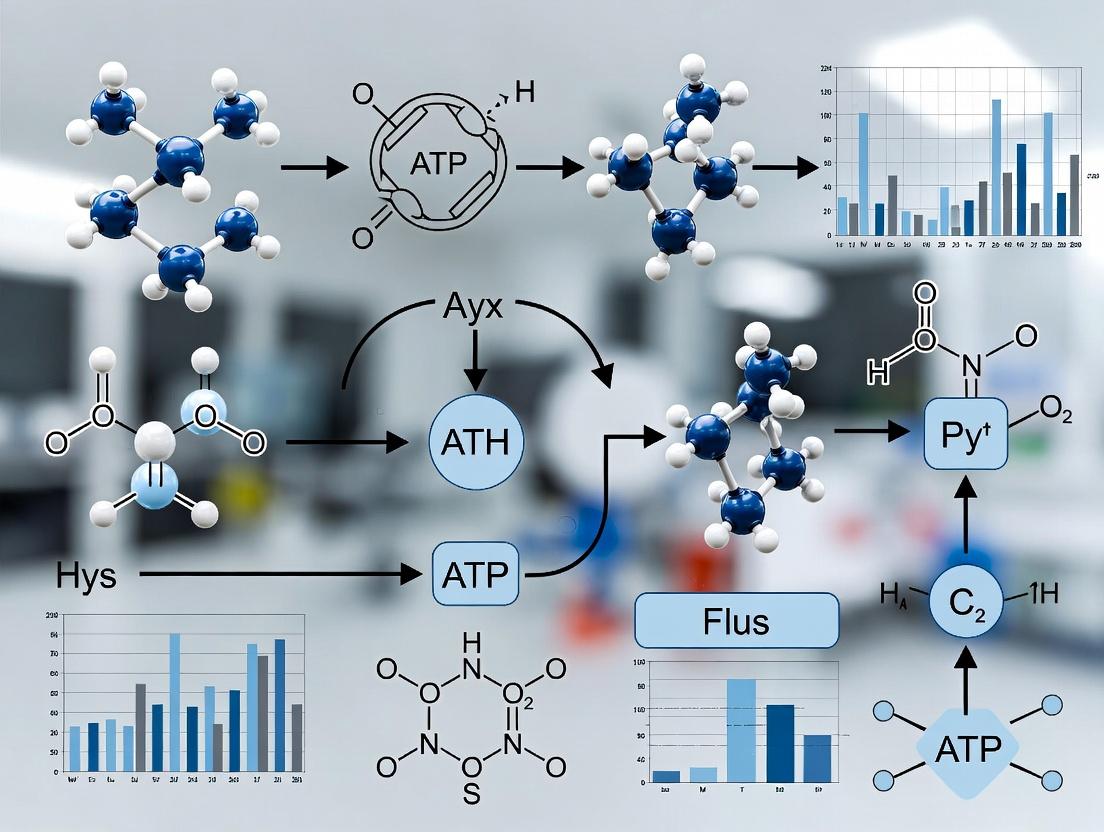
This article provides a comprehensive overview of redundancy in metabolic flux analysis (MFA) for researchers and drug development professionals.
Redundancy in Metabolic Flux Analysis: From Core Concepts to Cutting-Edge Applications in Biomedical Research
Abstract
This article provides a comprehensive overview of redundancy in metabolic flux analysis (MFA) for researchers and drug development professionals. We first establish the foundational concepts of network redundancy and degrees of freedom, explaining their necessity in underdetermined biochemical systems. We then detail the core mathematical framework and methodologies for leveraging redundancy, including recent software and 13C-MFA techniques. The troubleshooting section addresses common pitfalls like gross measurement errors and network incompleteness, offering optimization strategies to enhance robustness. Finally, we explore validation methods and comparative analyses, demonstrating how redundancy concepts are applied in cancer, microbial engineering, and clinical research. This guide synthesizes current literature to equip scientists with the tools to design, execute, and validate more reliable metabolic studies.
Understanding Metabolic Redundancy: Why Your Metabolic Network is Underdetermined and What That Means
Defining Degrees of Freedom and Redundancy in Stoichiometric Networks
Within the broader thesis on degrees of redundancy in metabolic flux analysis (MFA) research, the precise definition of degrees of freedom and redundancy is paramount. These concepts form the mathematical foundation for determining the determinacy of flux networks, identifying optimal measurement sets, and quantifying the robustness and flexibility of metabolic systems. This technical guide provides an in-depth analysis of these core concepts, their calculation, and their implications for drug development targeting metabolic pathways.
Fundamental Concepts and Mathematical Framework
A stoichiometric network for m metabolites and n reactions is described by the stoichiometric matrix S (dimensions m × n). Under steady-state assumptions, the flux vector v satisfies: S ∙ v = 0
The network's properties are analyzed through the null and left null spaces of S.
Degrees of Freedom (Network Flexibility)
The degrees of freedom (DoF) represent the number of independent flux variables that can be freely assigned while still satisfying the stoichiometric constraints. It is the dimension of the null space of S (also called the solution space).
Calculation: DoF = n - rank(S)
Where n is the number of reactions (fluxes) and rank(S) is the number of linearly independent metabolite balances.
Redundancy (Measurement Solvability)
Redundancy refers to the number of measurable fluxes that, if determined, would allow for the calculation of all other fluxes via the stoichiometric constraints. It is related to the concept of observability. A redundant measurement set provides more information than the minimum required, allowing for consistency checks and error analysis.
Calculation: The rank deficiency of the augmented matrix when combining S with measurement equations determines solvability. For a set of k measured fluxes, the system is solvable if: rank([S; Ik]) = *n* where Ik is a selection matrix for the measured fluxes. Redundancy exists if more than DoF fluxes are measured.
Table 1: Key Quantitative Metrics for Stoichiometric Network Analysis
| Metric | Symbol | Formula | Interpretation |
|---|---|---|---|
| Total Reactions | n | -- | Number of fluxes in the network. |
| Total Metabolites | m | -- | Number of balanced species. |
| Rank of S | rank(S) | Matrix rank | Number of independent metabolite balances. |
| Degrees of Freedom | DoF | n - rank(S) | Dimension of null space; independent variables. |
| Redundancy Degree | R | k - DoF | Excess measurements beyond minimal required (k = # measured fluxes). |
| Null Space Dimension | dim(N(S)) | DoF | Basis set for feasible flux distributions. |
| Left Null Space Dim. | dim(LN(S)) | m - rank(S) | Number of conserved metabolic pools. |
Table 2: Example Network Analysis (Simplified Central Carbon Metabolism)
| Network Component | Count | Calculated Value |
|---|---|---|
| Reactions (n) | 12 | 12 |
| Metabolites (m) | 8 | 8 |
| Rank(S) | 6 | 6 |
| Degrees of Freedom (DoF) | 12 - 6 | 6 |
| Minimal Measurements for MFA | = DoF | 6 |
| With 8 Measured Fluxes | Redundancy (R) = 8 - 6 | 2 |
Methodologies for Determining DoF and Redundancy
Protocol: Singular Value Decomposition (SVD) for Null Space Analysis
This protocol calculates the DoF and obtains an orthonormal basis for the null space.
- Input: Stoichiometric matrix S (m × n).
- Perform SVD: Compute S = U𝚺V^T.
- U (m × m): Left singular vectors (left null space basis in columns corresponding to zero singular values).
- 𝚺 (m × n): Diagonal matrix of singular values σi.
- V^T (n × n): Right singular vectors (null space basis in rows corresponding to zero σi).
- Identify Rank: Count of non-zero singular values (tolerance: σ_i > 1e-10). This is rank(S).
- Calculate DoF: DoF = n - rank(S).
- Extract Null Space Basis: The last DoF columns of matrix V form an orthonormal basis for the null space of S.
Protocol: Monte Carlo Sampling for Redundancy and Error Detection
This protocol assesses the impact of redundant measurements on flux solution confidence.
- Define Network: S, v (with k measured fluxes, where k > DoF).
- Generate Synthetic Data: For each measured flux v_i^meas, create a simulated dataset: v_i^sim = v_i^true + ε_i, where ε_i ~ N(0, σ_i^2) represents experimental error.
- Solve for Unknown Fluxes: Use a least-squares approach to solve the overdetermined system: Minimize || S ∙ v ||^2 subject to constraints on measured fluxes.
- Iterate: Repeat steps 2-3 for >1000 iterations.
- Analyze Results: Calculate confidence intervals (e.g., 95%) for each calculated flux. Redundancy reduces the width of these intervals and allows for statistical tests of measurement consistency (gross error detection).
Visualization of Core Concepts
Title: Relationships Between S Matrix, Rank, Null Space, and DoF
Title: System Determinacy Based on Number of Measured Fluxes (k)
The Scientist's Toolkit: Research Reagent Solutions
Table 3: Essential Materials for Metabolic Flux Analysis Experiments
| Reagent / Material | Function in MFA / Network Analysis |
|---|---|
| 13C-Labeled Substrates (e.g., [1-13C]Glucose, [U-13C]Glutamine) | Tracers that introduce isotopically labeled atoms into metabolism, enabling measurement of intracellular flux distributions via mass spectrometry or NMR. |
| Gas Chromatography-Mass Spectrometry (GC-MS) System | Analytical platform for separating and detecting the mass isotopomer distributions (MIDs) of metabolites, the primary data for 13C-MFA. |
| Stoichiometric Modeling Software (e.g., COBRA Toolbox, CellNetAnalyzer) | Computational environment for constructing S matrix, calculating null spaces, performing flux balance analysis (FBA), and designing flux experiments. |
| Isotopomer Spectral Analysis (ISA) Standards | Commercially available, chemically defined unlabeled and uniformly labeled internal standards for absolute quantification and correction of instrumental noise in MS data. |
| Quenching Solution (e.g., Cold Methanol, -40°C) | Rapidly halts metabolic activity at the precise moment of sampling to provide an accurate "snapshot" of the metabolic state for flux analysis. |
| Genome-Scale Metabolic Model (GEM) (e.g., Recon, iJO1366) | Curated community resource providing the full S matrix for an organism, serving as the foundational network for DoF and redundancy analysis at a systems level. |
| Nonlinear Parameter Estimation Software (e.g., INCA, 13CFLUX2) | Specialized suite for fitting experimental MIDs to the network model, estimating flux values with confidence intervals, and leveraging measurement redundancy. |
Metabolic Flux Analysis (MFA) aims to quantify the in vivo flow of metabolites through biochemical reaction networks, providing a direct functional readout of cellular physiology. A central, persistent challenge in the field is the inherent mathematical underdetermination of these systems. An underdetermined system is one where the number of unknown variables (fluxes) exceeds the number of independent constraints (e.g., mass-balance equations, measured extracellular fluxes, isotopic labeling data). This results in a solution space of infinite possible flux distributions that satisfy all constraints, complicating the quest for a unique biological answer. This whitepaper examines the nature of underdetermined systems in biochemistry, contextualized within the broader thesis that strategic degrees of redundancy—in measurements, experimental design, and network topology—are the principal means to overcome this core challenge.
Mathematical Foundation and the Null Space
The stoichiometric matrix S (m x n), representing m metabolites and n reactions, forms the core of constraint-based modeling. The steady-state mass balance is given by S · v = 0, where v is the flux vector. Typically, n > m, making the system underdetermined. The solution can be expressed as:
v = vₚ + N · λ
Where vₚ is a particular solution, N is the null space matrix of S (containing basis vectors for all feasible steady-state cycles), and λ is a vector of weights. The infinite solutions lie within the null space. Reducing this space requires adding constraints.
Table 1: Types of Constraints in MFA and Their Impact on System Determination
| Constraint Type | Mathematical Form | Role in Reducing Null Space | Typical Redundancy Introduced |
|---|---|---|---|
| Irreversibility | vᵢ ≥ 0 for certain i | Eliminates solutions with thermodynamically infeasible directions. | Adds inequality constraints, narrowing the feasible cone. |
| Exchange Flux Bounds | αᵢ ≤ vᵢ ≤ βᵢ | Incorporates uptake/secretion rate measurements. | Provides upper/lower bounds, truncating the null space. |
| ¹³C Labeling Data | f(M, v) = y (meas.) | Relates net fluxes to isotopic label distribution (M) via complex mapping. | Adds non-linear equality constraints, often making system overdetermined locally. |
| Omics-Derived Bounds | vᵢ = 0 if enzyme absent | Uses transcriptomic/proteomic data to prune network. | Adds equality (v=0) or tight inequality constraints. |
Introducing Redundancy: The Path to Resolution
The key to solving underdetermined systems is the deliberate introduction of redundant information. This concept aligns with the broader thesis that degrees of redundancy are a critical design parameter in MFA research.
a. Measurement Redundancy: Utilizing more isotopic labeling measurements than strictly necessary allows the application of statistical fitting (e.g., weighted least squares) to find a unique flux solution that best fits all data, even when the network is underdetermined by stoichiometry alone. This creates a locally overdetermined system.
b. Network Topology Redundancy: Parallel pathways (e.g., multiple routes to synthesize an amino acid) contribute to underdetermination. However, the presence of reactions with known fixed fluxes (e.g., ATP maintenance) or highly characterized branch points can act as intrinsic constraints, reducing effective null space dimensions.
c. Multi-Conditional Redundancy: Integrating flux data from multiple, related physiological conditions (e.g., different nutrient sources) under the assumption of a shared core network creates a coupled, larger system that is more determined than any single condition alone.
Key Experimental Protocol: ¹³C-MFA for Resolving Underdetermined Networks
The gold standard for resolving underdetermination is ¹³C-Metabolic Flux Analysis.
Protocol Overview:
- Tracer Design: Cells are fed a specifically ¹³C-labeled substrate (e.g., [1-¹³C]glucose, [U-¹³C]glutamine). The choice of tracer is critical for introducing measurable isotopic patterns at key branch points.
- Steady-State Cultivation: Cells are cultured until isotopic and metabolic steady-state is achieved (typically 3-5 generations).
- Quenching & Extraction: Metabolism is rapidly quenched (cold methanol), and intracellular metabolites are extracted.
- Mass Spectrometry (GC-MS or LC-MS): Metabolites are derivatized (if needed) and analyzed. Mass isotopomer distributions (MIDs) or tandem mass isotopomer fragments are measured for key metabolites (e.g., alanine, serine, glutamate).
- Computational Flux Estimation:
- A stoichiometric model incorporating atom transitions is constructed.
- The model simulates MIDs based on an assumed flux vector v.
- An optimization algorithm (e.g., elementary mode-based, or gradient descent) iteratively adjusts v to minimize the difference between simulated and measured MIDs, subject to stoichiometric and bound constraints.
Diagram 1: ¹³C-MFA workflow for flux resolution.
The Scientist's Toolkit: Essential Reagents & Materials for ¹³C-MFA
Table 2: Key Research Reagent Solutions for Resolving Underdetermined Systems via ¹³C-MFA
| Item | Function & Relevance to Underdetermination |
|---|---|
| ¹³C-Labeled Tracers (e.g., [U-¹³C]Glucose, [1,2-¹³C]Glucose) | Introduce measurable isotopic patterns at metabolic branch points. Different tracer designs provide redundant labeling constraints on the same fluxes, enhancing system determinacy. |
| Quenching Solution (e.g., Cold Aqueous Methanol, -40°C) | Instantly halts metabolism to preserve the in vivo isotopic and metabolite state, ensuring data reflects the true steady-state network. |
| Derivatization Reagents (e.g., MSTFA for GC-MS, TMS) | Chemically modify polar metabolites for volatility (GC-MS) or improve ionization (LC-MS), enabling accurate MID measurement. |
| Internal Standards (¹³C/¹⁵N-labeled cell extracts or synthetic mixes) | Correct for technical variation in extraction and MS analysis, improving quantitation precision essential for fitting complex models. |
| Flux Estimation Software (e.g., INCA, ¹³C-FLUX, OpenFLUX) | Implements computational algorithms to solve the underdetermined system by minimizing the difference between simulated and experimental MIDs. |
Advanced Strategies: Integrating Multi-Omics for Additional Constraints
Contemporary research addresses underdetermination by integrating additional omics layers as soft constraints.
Diagram 2: Multi-omics data integration narrows flux solution space.
Protocol for Integrative Omics-Constrained MFA:
- Parallel Omics Acquisition: Perform ¹³C-MFA experiment alongside RNA-seq and/or quantitative proteomics on the same biological samples.
- Enzyme Abundance to Capacity Constraint: Convert protein abundance (Protᵢ) to a maximum flux constraint:
vᵢ ≤ kcatᵢ · Protᵢ. This requires a curated database of enzyme turnover numbers (kcat). - Thermodynamic Feasibility: Use metabolite concentration data (from LC-MS) to estimate reaction Gibbs free energy (ΔG). Apply constraints to eliminate flux directions that are thermodynamically infeasible (ΔG > 0 for putative irreversible reactions).
- Parsimonious Flux Balance Analysis (pFBA): Solve the constrained optimization problem by seeking the flux distribution that minimizes total enzyme usage, consistent with all data layers.
Quantitative Impact: How Redundancy Changes System Determinacy
Table 3: Impact of Adding Sequential Constraints on Solution Space Dimensionality in a Model Network (E. coli Central Carbon Metabolism)
| Scenario | Constraints Applied | Size of Null Space (Dimensions) | Feasible Flux Range (Example Rxn: PGI) | Primary Source of Redundancy |
|---|---|---|---|---|
| Base Stoichiometry | S·v = 0 | 12 | -10.0 to +15.0 | None (Core Underdetermination) |
| + Irreversibility & Bounds | vᵢ ≥ 0, uptake rates | 8 | 0.0 to 12.5 | Physiological Knowledge |
| + ¹³C Labeling Data (Single Tracer) | MIDs of 5 key metabolites | 2 (Net resolved, cycles remain) | 4.2 to 5.8 | Measurement (Isotopic) |
| + ¹³C Data (Dual Tracer) | MIDs from 2 tracer expts | 0 (Unique solution) | 5.1 | Enhanced Measurement Redundancy |
| + Proteomic Constraints | vᵢ ≤ kcat·Protᵢ for 30 enzymes | 0 (Tighter confidence intervals) | 5.1 ± 0.1 | Multi-Omics Integration |
The core challenge of underdetermined systems in biochemistry is not an insurmountable barrier but a defining feature that dictates experimental and computational strategy. As detailed in this guide, resolution is achieved not by seeking a minimal set of measurements, but by strategically maximizing degrees of redundancy across multiple axes: in isotopic labeling patterns, in parallel physiological perturbations, and in integrated multi-omics datasets. The future of precise metabolic flux analysis in both basic research and drug development—where understanding pathway redundancies is key to targeting metabolic vulnerabilities—lies in the intelligent design of these redundant constraint systems to shrink the null space and reveal the unambiguous functional state of the cell.
In metabolic flux analysis (MFA), understanding the degrees of redundancy in a metabolic network is fundamental for determining which fluxes can be uniquely solved and which remain undetermined. This capability is critical for researchers, scientists, and drug development professionals aiming to elucidate metabolic phenotypes, identify drug targets, and optimize bioproduction. The core mathematical concepts that govern this solvability—Rank, Null Space, and their implications—form the essential bridge between the stoichiometric model of a biochemical network and the feasible flux solutions. This guide establishes these preliminaries as the foundation for analyzing redundancy and determining solvable systems.
Fundamental Concepts: Rank and Null Space
For a stoichiometric matrix S with m metabolites and n reactions, the steady-state assumption leads to the equation: S · v = 0, where v is the flux vector.
Rank (r): The rank of S is the number of linearly independent rows (or columns). It represents the maximum number of independent metabolite balances in the system. In MFA, it defines the number of fluxes that can be uniquely determined from the mass balance constraints alone.
Null Space (N): The null space of S is the set of all vectors v that satisfy S · v = 0. It defines the subspace of all thermodynamically feasible steady-state flux distributions. The dimension of the null space is the degrees of freedom (d) of the network: d = n - r.
Solvability: A system is determined if d = 0 (unique solution). It is overdetermined if more independent measurements than degrees of freedom exist. It is underdetermined if d > 0, which is typical in large-scale metabolic networks, leading to a space of possible solutions. Degrees of redundancy are directly related to the ability to overdetermine parts of the system via measurements.
Table 1: Quantitative Relationship Between Matrix Properties and System Characteristics
| Property | Symbol | Formula | Interpretation in MFA |
|---|---|---|---|
| Number of Reactions | n | - | Total fluxes in the network |
| Number of Metabolites | m | - | Metabolites with mass balances |
| Rank of S | r | rank(S) | # of independent metabolite balances |
| Degrees of Freedom | d | n - r | # of free variables in solution |
| Nullity | dim(N(S)) | n - r | Dimension of the null space (same as d) |
| Redundancy | - | m - r | # of linearly dependent metabolite balances |
Methodologies for Determining Rank and Null Space
Experimental Protocol 1: Computational Determination of Rank and Null Space (Using Python/SciPy)
- Stoichiometric Matrix Construction: Assemble the m x n matrix S from the metabolic network, where rows are metabolites and columns are reactions. Entries are stoichiometric coefficients (negative for substrates, positive for products).
Rank Calculation: Perform Singular Value Decomposition (SVD) or rank calculation via linear algebra libraries. In Python:
Null Space Calculation: Compute an orthonormal basis for the null space.
Validation: Verify that S · K ≈ 0 within numerical tolerance.
Experimental Protocol 2: Experimental Determination via Isotopic Steady-State MFA (¹³C-MFA)
This protocol reduces the degrees of freedom by introducing measurable constraints.
- Tracer Design: Select a ¹³C-labeled substrate (e.g., [1-¹³C]glucose).
- Cultivation: Grow cells in a chemostat or batch culture with the labeled substrate until isotopic steady state is achieved.
- Mass Spectrometry (MS) Analysis: Quench metabolism, extract metabolites, and measure mass isotopomer distributions (MIDs) of intracellular metabolites via GC-MS or LC-MS.
- Flux Estimation: Solve the optimization problem: Minimize (difference between simulated and measured MIDs) subject to S · v = 0 and capacity constraints. This effectively uses the isotopic labeling data to reduce the dimension of the null space for the core network.
Diagram 1: Relating S, v, and Null Space in MFA
The Scientist's Toolkit: Research Reagent Solutions
Table 2: Essential Materials for Key MFA Experiments
| Item | Function in MFA Context |
|---|---|
| ¹³C-Labeled Substrates (e.g., [U-¹³C]glucose) | Tracer compounds used to introduce isotopic labels into metabolism for flux elucidation via ¹³C-MFA. |
| Mass Spectrometry (GC-MS, LC-MS) | Analytical instrument for measuring mass isotopomer distributions (MIDs) of metabolites, the primary data for ¹³C-MFA. |
| Stoichiometric Model Database (e.g., BiGG, MetaCyc) | Curated, genome-scale metabolic reconstruction providing the S matrix for an organism. |
| Flux Analysis Software (e.g., COBRApy, INCA, 13CFLUX2) | Computational tools to calculate null space, simulate labeling patterns, and perform flux estimation. |
| Chemostat Bioreactor | Enables cultivation of cells at a steady, defined growth rate, a prerequisite for isotopic steady-state MFA. |
| Quenching Solution (e.g., cold methanol) | Rapidly halts metabolic activity to capture an accurate snapshot of intracellular metabolite labeling. |
Application to Degrees of Redundancy and Solvability
The solvability of fluxes is determined by the interplay between the network's null space (theoretical degrees of freedom) and available measurements (experimental constraints).
Diagram 2: Flux Solvability Decision Framework
Table 3: Impact of Measurements on Degrees of Redundancy and Solvability
| Scenario | Degrees of Freedom (d) | Available Measurements (k) | System Status | Implication for Flux Solvability |
|---|---|---|---|---|
| Basic Stoichiometry | n - r | 0 | Underdetermined | Infinite solutions within null space. |
| With Exchange Flux Data | n - r | k < d | Underdetermined | Solution space reduced but not unique. Requires flux variability analysis. |
| Full ¹³C-MFA | n - r | k >> d | Overdetermined | Redundant measurements allow for statistical validation and precise flux estimation. |
| Ideal Determined Case | 0 | 0 | Determined | Unique solution from balances alone (rare in large networks). |
Conclusion: Mastery of rank and null space is non-negotiable for quantifying the inherent redundancy and solvability in metabolic networks. These concepts enable the design of informative ¹³C-MFA experiments, guide the selection of measurable fluxes, and underpin computational tools that transform labeling data into actionable biological insight—a critical pipeline in modern metabolic engineering and drug discovery.
Within metabolic flux analysis (MFA) research, the concept of "degrees of redundancy" is critical for understanding network robustness, flexibility, and regulation. Redundancy is not a singular phenomenon but arises from specific, identifiable biological architectures. This guide delineates three core biological sources—parallel pathways, metabolic cycles, and reversible reactions—that contribute to flux redundancy, enabling metabolic networks to maintain function against genetic, environmental, and pharmacological perturbations. Quantifying these sources is essential for accurate MFA, targeting metabolic diseases, and designing effective therapeutic interventions.
Parallel Pathways: Divergent Routes to a Common Product
Parallel or alternative pathways are distinct enzyme sequences that convert the same substrate(s) to the same product(s). They provide functional backup and allow flux modulation in response to effector concentrations.
Key Examples & Quantitative Data
Table 1: Quantified Examples of Parallel Pathways in Central Metabolism
| Pathway Name | Organism/Tissue | Key Isoenzymes/Parallel Routes | Measured Flux Split (Condition) | Reference (Year) |
|---|---|---|---|---|
| Glycolysis vs. Pentose Phosphate Pathway | Mammalian Liver | Glucose → G6P → (PFK1 route) vs. G6P → (G6PDH route) | ~70% Glycolysis / ~30% PPP (Fed state) | Antoniewicz, 2018 |
| Anaplerotic pathways for OAA replenishment | E. coli | PEP → OAA (Ppc) vs. Pyr → OAA (Pyc) | Ppc: 80%; Pyc: 20% (Glucose, aerobic) | Crown et al., 2016 |
| Gluconeogenic parallel pathways | Murine Hepatocytes | Lactate → Pyr → OAA → PEP (via PC) vs. Glycerol → DHAP → PEP | PC route: 65%; Glycerol route: 35% (Fast + Lactate infusion) | Hui et al., 2020 |
Experimental Protocol: Quantifying Parallel Pathway Flux
Title: Determining Flux Partitioning in Parallel Pathways Using Stable Isotope Tracers and GC-MS
Methodology:
- Tracer Design: Prepare culture media with a universally labeled ( ^{13}C ) substrate (e.g., [U-( ^{13}C )]glucose). The labeling pattern in downstream metabolites will differ based on the pathway used.
- Culturing & Harvest: Grow cells (e.g., hepatocytes, cancer cell lines) in the tracer medium until isotopic steady state is achieved (typically 24-48 hrs). Quench metabolism rapidly with cold methanol.
- Metabolite Extraction: Perform a biphasic chloroform/methanol/water extraction. Derivatize polar metabolites (from the aqueous phase) for GC-MS analysis (common derivatives: methoximation and silylation).
- Mass Spectrometry: Analyze derivatized samples via GC-MS. Measure mass isotopomer distributions (MIDs) of key intermediates (e.g., ribose-5-phosphate from PPP, alanine from glycolysis).
- Flux Calculation: Input MIDs into computational MFA software (e.g., INCA, Escher-Trace). The model includes both parallel routes. The software iteratively adjusts flux values until the simulated MIDs match the experimental data, yielding the quantitative flux split.
Metabolic Cycles: Futile and Substrate Cycles
Cycles involve two opposing, non-identical pathways that can operate simultaneously, resulting in net ATP hydrolysis (futile) or precise net flux control (substrate cycling).
Key Examples & Quantitative Data
Table 2: Quantified Activity of Key Metabolic Cycles
| Cycle Name | Enzymes (Forward vs. Reverse) | Physiological Role | Measured Cycle Rate (vs. Net Flux) | Reference (Year) |
|---|---|---|---|---|
| Fructose 6-P / Fructose 1,6-BP Substrate Cycle | PFK1 (F6P→F1,6BP) vs. FBPase1 (F1,6BP→F6P) | Amplifies metabolic sensitivity, thermogenesis. | Cycling flux can be 20-50% of glycolytic flux (Liver, rat) | Zhang et al., 2019 |
| Glucose/Glucose-6-Phosphate Cycle | Glucokinase (Glc→G6P) vs. Glucose-6-phosphatase (G6P→Glc) | Maintains blood glucose, provides metabolic sensing. | ~0.3 µmol/min/g liver (Post-absorptive human) | Bock et al., 2021 |
| TAG/FA Cycle (Lipolysis/Re-esterification) | Adipose Triglyceride Lipase (TAG→FA) vs. Glycerol-3-phosphate acyltransferase (FA→TAG) | Fine-tunes FA release, contributes to energy inefficiency. | Accounts for ~75% of released FA being re-esterified (Human adipose, fasted) | Nielsen et al., 2022 |
Experimental Protocol: Measuring Substrate Cycling Flux
Title: Isotopomer Network Analysis of a Futile Cycle Using [³H]/[¹⁴C] Dual Tracers
Methodology:
- Dual-Tracer Infusion: In a perfused liver system or in vivo, co-infuse trace amounts of [2-( ^{3}H )]glucose (labels the product of the forward reaction) and [U-( ^{14}C )]glucose (labels the substrate pool).
- Steady-State Sampling: After reaching isotopic and physiological steady state, collect multiple plasma/time-point samples. Isolate metabolites of interest (glucose, lactate).
- Radiolabel Detection: Use liquid scintillation counting with appropriate channels to separate ( ^{3}H ) and ( ^{14}C ) signals in the purified metabolites.
- Flux Calculation: The rate of the forward (e.g., glucokinase) and reverse (e.g., G6Pase) reactions are calculated using steady-state equations based on the dilution of specific radioactivity of the tracers in the product and substrate pools. The difference is net flux; the lower of the two rates is the absolute cycling flux.
Reversible Reactions and Equilibrium Pools
Many enzymatic reactions are thermodynamically reversible, creating large metabolite pools that can buffer flux and rapidly switch direction.
Key Examples & Quantitative Data
Table 3: Thermodynamic and Flux Data for Key Reversible Reactions
| Reaction (Enzyme) | ΔG'° (kJ/mol) | Near-Equilibrium? | Pool Size (Intracellular) | Impact on Flux Redundancy |
|---|---|---|---|---|
| Lactate Pyruvate (LDH) | -6.2 | Yes | [Lac]: 0.5-5 mM; [Pyr]: 0.1-0.2 mM | Rapid interconversion buffers redox (NADH/NAD⁺), allows lactate to be a carbon source. |
| Alanine Pyruvate (ALT) | 0.0 | Yes | [Ala]: 1-5 mM | Links nitrogen and carbon metabolism, provides anaplerosis. |
| Malate Oxaloacetate (MDH) | +29.7 | No (driven by [OAA]) | [Mal]: 0.1-1 mM | Critical for TCA cycle function and mitochondrial redox shuttling (Malate-Aspartate). |
| G6P F6P (PGI) | +2.5 | Yes | [G6P]:~0.1 mM | Allows rapid exchange between glycolytic and pentose phosphate pathways. |
Experimental Protocol: Assessing Reversibility via ( ^{13}C )-Isotopomer Scrambling
Title: GC-MS Based Analysis of Isotopomer Scrambling to Determine Reaction Reversibility
Methodology:
- Position-Specific Tracer: Use a tracer with a label in a specific position that will be scrambled if the reaction is reversible. Example: Feed [1-( ^{13}C )]glutamine.
- Metabolite Tracking: In the TCA cycle, glutamine enters as α-ketoglutarate (α-KG). If the succinate dehydrogenase/fumarase/malate dehydrogenase steps are reversible, the ( ^{13}C ) label will scramble into other carbon positions of malate/aspartate.
- Sample Analysis: Extract metabolites and analyze via GC-MS or NMR. For GC-MS, examine the MID of aspartate (derived from OAA).
- Data Interpretation: Detection of ( ^{13}C ) in aspartate's C2 or C3 positions (not just C1 from the first turn of the cycle) provides direct evidence of reversibility through symmetric intermediates (fumarate) and quantifies the extent of backward flux.
The Scientist's Toolkit: Key Reagent Solutions
Table 4: Essential Research Reagents for Redundancy Analysis in MFA
| Reagent / Material | Function / Application |
|---|---|
| Stable Isotope Tracers | Core tool for flux tracing. ( ^{13}C )-glucose, ( ^{13}C )-glutamine, ( ^{2}H )-water are used to label metabolic networks for MFA. |
| GC-MS or LC-MS/MS System | Essential analytical platforms for separating and quantifying the mass isotopomer distributions of intracellular metabolites. |
| INCA (Isotopomer Network Compartmental Analysis) Software | Industry-standard software suite for designing ( ^{13}C ) MFA experiments, simulating labeling patterns, and computing intracellular flux maps. |
| Seahorse XF Analyzer | Measures real-time extracellular acidification (ECAR) and oxygen consumption (OCR) rates, providing indirect, dynamic readouts of pathway activity. |
| Specific Enzyme Inhibitors (e.g., BPTES for GLS, Oxamate for LDH) | Pharmacologically blocks specific pathway nodes to probe redundancy by forcing flux through alternative routes. |
| CRISPR-Cas9 Knockout/Knockdown Kits | Enables genetic elimination of specific isozymes or cycle enzymes to assess the capacity of parallel or redundant pathways to compensate. |
| Quenching Solution (Cold Methanol/Saline) | Rapidly halts cellular metabolism at the time of sampling to preserve in vivo metabolite levels and labeling patterns for accurate MFA. |
Visualization of Concepts and Workflows
Diagram 1: Parallel Pathways: Glycolysis vs. PPP
Diagram 2: Futile Cycle: F6P/F1,6BP
Diagram 3: Reversible Reaction Scrambling
Diagram 4: MFA Workflow for Redundancy
The Critical Role of Redundancy for Robustness and Metabolic Flexibility
Within metabolic flux analysis (MFA) research, the concept of degrees of redundancy is central to understanding network robustness. Redundancy—the existence of multiple pathways or enzymes catalyzing similar functions—is not metabolic inefficiency but a fundamental design principle. It confers robustness against genetic, environmental, and pharmacological perturbations and enables metabolic flexibility, allowing cells to adapt to varying nutrient conditions. This whitepaper examines the critical role of pathway and enzyme redundancy from a systems biology perspective, detailing its quantification, experimental analysis, and implications for drug development.
Quantifying Degrees of Redundancy in Metabolic Networks
Redundancy can be systematically quantified using constraint-based modeling, primarily Flux Balance Analysis (FBA) and its derivatives. Key metrics are derived from network topology and flux states.
Table 1: Quantitative Metrics for Assessing Metabolic Redundancy
| Metric | Formula/Description | Interpretation | Typical Value Range in E. coli Core Model |
|---|---|---|---|
| Pathway Redundancy Index (PRI) | ( PRI = \frac{N{alt}}{N{ess}} ) where (N{alt}) is # of alternative pathways for a given output, (N{ess}) is # of essential single-reaction deletions. | Higher PRI indicates greater functional backup. | 1.5 - 3.2 |
| Flux Redundancy (FR) | FR = 1 - (∥v∥₁ / ∥v∥₂)²; calculated from flux vector v of parsimonious FBA. | Measures flux dispersion; 0=no redundancy, ~1=high redundancy. | 0.15 - 0.85 |
| Genetic Redundancy Score | % of single gene knockouts that do not affect growth (viable knockouts). | Direct measure of robustness from gene essentiality screens. | ~25-40% |
| Effective Pathway Multiplicity (EPM) | Derived from elementary flux mode analysis; counts independent routes to produce a metabolite. | Structural measure of alternative pathways. | Varies by metabolite |
Experimental Protocols for Probing Redundancy
Parallel Flux Route Identification via Isotopic Tracers
Protocol: 13C-Metabolic Flux Analysis (13C-MFA) with Parallel Labeling Experiments.
- Cell Cultivation: Grow cells (e.g., HEK293, S. cerevisiae) in parallel bioreactors with differently labeled carbon sources (e.g., [1-13C]glucose, [U-13C]glucose, [1,2-13C]glucose).
- Quenching & Extraction: Rapidly quench metabolism (cold methanol), extract intracellular metabolites.
- MS Analysis: Analyze metabolite isotopologue distributions via GC-MS or LC-MS.
- Flux Estimation: Use software (INCA, SUMO) to fit network model to all labeling datasets simultaneously. The fit identifies flux distributions that are consistent across conditions, revealing active parallel pathways.
Genetic Perturbation for Robustness Profiling
Protocol: CRISPRi/kO Screens with Sequential Gene Targeting.
- Library Design: Create a CRISPRi library targeting pairs of genes from putative redundant pathways (e.g., LDHA and LDHB in lactate production).
- Sequential Perturbation: Transduce cells and apply selection. First, assay single-gene knockdowns. Subsequently, knockdown the second gene in the single-knockdown background.
- Phenotyping: Measure growth rate, ATP yield, and product secretion (via extracellular flux analyzers).
- Analysis: Synergistic lethality (synthetic sickness/lethality) indicates functional redundancy, where only the double knockdown impairs function.
Visualizing Redundant Network Architectures
Title: Redundant Pathways from Glucose to Pyruvate and Beyond
Title: Logic of Redundancy in Network Robustness
The Scientist's Toolkit: Key Research Reagent Solutions
Table 2: Essential Reagents for Redundancy and Flux Analysis Research
| Reagent / Kit | Vendor Examples | Function in Research |
|---|---|---|
| U-13C-Labeled Carbon Sources (Glucose, Glutamine) | Cambridge Isotope Labs, Sigma-Aldrich | Enables precise 13C-MFA to quantify active parallel pathways. |
| Seahorse XF Kits (Glycolysis, Mito Stress) | Agilent Technologies | Measures real-time extracellular acidification and oxygen consumption, profiling metabolic flexibility. |
| CRISPRi/a Pooled Libraries (kinase, metabolic) | Addgene, Horizon Discovery | For high-throughput genetic perturbation screens to identify redundant gene pairs. |
| Metabolomics Kits (Polar metabolite extraction) | Biocrates, Metabolon | Standardized quantification of metabolite pools for flux inference. |
| Stable Isotope Data Analysis Software (INCA, SUMO) | MFA Solutions, | Computational fitting of isotopomer data to metabolic network models. |
| Constraint-Based Modeling Suites (COBRApy, CellNetAnalyzer) | Open Source | In silico simulation of gene knockouts and identification of redundant routes. |
Implications for Drug Development
Targeting redundant metabolic pathways in oncology or antimicrobial therapy requires a dual-hit strategy. For example, inhibiting both PDH and the redundant glutaminase-anaplerotic route may be necessary to block TCA cycle flux in some cancers. MFA-driven redundancy analysis identifies these co-targets, moving beyond single enzyme inhibition to combat adaptive resistance.
The degrees of redundancy in a metabolic network are quantifiable determinants of its robustness and flexibility. Through integrated computational and experimental approaches—specifically 13C-MFA and systematic genetic perturbation—researchers can map redundant fluxes. This understanding is critical for developing therapies that disrupt metabolic adaptability in disease.
The concept of redundancy in metabolic networks has evolved from a theoretical curiosity to a cornerstone of constraint-based modeling and Metabolic Flux Analysis (MFA). This evolution is framed within the broader thesis of "Degrees of Redundancy," which quantifies the multiplicity of metabolic routes achieving the same biochemical function, from isozymes to fully independent pathways.
Defining Degrees of Redundancy: From Genetic to Network Levels
The operational definition of redundancy has expanded across scales, as summarized in Table 1.
Table 1: Quantitative Framework for Degrees of Redundancy in Metabolic Networks
| Redundancy Level | Defining Characteristic | Key Quantitative Measure(s) | Typical Value Range (in Model Organisms) |
|---|---|---|---|
| Genetic (Isozyme) | Multiple genes encoding identical or similar enzymatic functions. | Number of isozymes per reaction (K.O. count). | 1.1 - 1.8 isozymes/reaction (E. coli to Human) |
| Stoichiometric | Linearly dependent rows in the Stoichiometric Matrix (S). | Nullity of S (dimension of null space). | 100s to 1000s of degrees of freedom in genome-scale models (GEMs) |
| Flux (Pathway) | Alternative pathways yielding same net conversion. | Number of elementary flux modes (EFMs) or minimal cut sets (MCSs) for an objective. | 10^4 - 10^8 EFMs in central metabolism of microbes |
| Regulatory | Independent regulatory mechanisms controlling redundant routes. | Logic clauses in Boolean regulatory models. | Context-dependent; increases with organism complexity |
| Robustness-Centric | Ability to maintain flux after knockouts. | Flux sum of alternative pathways / Optimal flux. | 0 (non-redundant) to 1 (fully redundant) |
Key Methodological Developments and Experimental Protocols
The analysis of redundancy relies on specific computational and experimental techniques.
Protocol: Computational Identification of Stoichiometric Redundancy
Objective: Determine the null space of the stoichiometric matrix (S) to identify all feasible steady-state flux distributions.
- Model Curation: Obtain a genome-scale metabolic reconstruction (e.g., from BiGG or MetaNetX). Extract the S matrix (m metabolites x n reactions).
- Constraint Application: Apply physiological constraints (e.g., ATP maintenance, growth-associated requirements) to define the feasible solution space: S · v = 0, with vmin ≤ v ≤ vmax.
- Null Space Calculation: Perform numerical linear algebra (e.g., Singular Value Decomposition in MATLAB/Python) to compute the null space basis vectors of S. The number of basis vectors is the degrees of freedom (nullity).
- Interpretation: Each basis vector represents a thermodynamically feasible steady-state flux loop (internal cycle) or alternative pathway.
Protocol: Experimental Determination of Flux Redundancy via 13C-MFA
Objective: Quantify in vivo flux distributions to empirically identify active redundant pathways.
- Tracer Design: Choose a 13C-labeled substrate (e.g., [1-13C]glucose). The labeling pattern is crucial for resolving parallel pathways.
- Cultivation: Grow cells in a controlled bioreactor under defined conditions with the tracer substrate until isotopic steady state is achieved.
- Sampling & Analytics: Quench metabolism, extract intracellular metabolites, and derive mass isotopomer distributions (MIDs) via GC-MS or LC-MS.
- Flux Estimation: Use computational software (INCA, 13CFLUX2) to fit a metabolic network model to the MID data, performing non-linear least-squares regression to estimate net and exchange fluxes.
- Redundancy Inference: Identify reactions where flux is split between multiple pathways (e.g., parallel pentose phosphate pathway and glycolysis) or where alternative routes are active under different conditions.
Diagram: Evolution of Redundancy Analysis Concepts
The Scientist's Toolkit: Key Research Reagent Solutions
Table 2: Essential Materials and Reagents for Redundancy Research
| Item / Solution | Function / Application | Key Provider Examples |
|---|---|---|
| Stable Isotope Tracers (e.g., [U-13C]Glucose, [1,2-13C]Glucose) | Enable precise tracing of metabolic flux through parallel, redundant pathways for 13C-MFA. | Cambridge Isotope Laboratories; Sigma-Aldrich (Isotec) |
| Genome-Scale Metabolic Models (GEMs) | Structured knowledgebases (stoichiometric matrices) for computational analysis of network redundancy. | BiGG Models; MetaNetX; AGORA (for microbes) |
| Flux Analysis Software Suites (INCA, 13CFLUX2, COBRA Toolbox) | Perform computational flux estimation, FBA, and pathway analysis (EFM/MCS) to quantify redundancy. | Open-Source (GitHub); MATLAB/Python packages |
| High-Resolution Mass Spectrometry Systems (GC-MS, LC-MS) | Measure mass isotopomer distributions (MIDs) of metabolites with high precision for flux determination. | Thermo Fisher Scientific; Agilent Technologies; Sciex |
| CRISPR-Cas9 Gene Editing Tools | Experimentally probe genetic redundancy by creating single and multiple knockout strains. | Integrated DNA Technologies (IDT); ToolGen; Synthego |
| Flux-Predictive Machine Learning Models | Integrate omics data to predict condition-specific flux distributions and identify active redundant routes. | Custom models (TensorFlow/PyTorch); DL4Microbiome |
Leveraging Redundancy: Methodologies and Practical Applications in Modern MFA
This whitepaper details the core mathematical and computational framework of Metabolic Flux Analysis (MFA), positioned within the broader thesis on Degrees of Redundancy in Metabolic Flux Analysis Research. Redundancy—embodied in the stoichiometric matrix and formalized by the redundancy matrix—is the cornerstone that enables the resolution of intracellular metabolic fluxes from extracellular measurements. The degree of this redundancy directly dictates the determinacy, statistical quality, and practical applicability of flux solutions in systems biology and drug development.
The Foundational Mathematical Framework
The Stoichiometric Matrix and Mass Balance
At steady state, intracellular metabolite concentrations are constant. The metabolic network with m metabolites and n reactions is described by: [ \mathbf{S} \cdot \mathbf{v} = \mathbf{0} ] where (\mathbf{S} ) (m × n) is the stoichiometric matrix and (\mathbf{v} ) (n × 1) is the vector of net reaction rates (fluxes).
The Flux Balance Equation
The system is underdetermined (n > rank(S)). To solve for fluxes, we partition (\mathbf{v} ) into independent ((\mathbf{v}i)) and dependent ((\mathbf{v}d)) fluxes, and (\mathbf{S} ) accordingly: [ \mathbf{S}d \cdot \mathbf{v}d + \mathbf{S}i \cdot \mathbf{v}i = \mathbf{0} ] Assuming (\mathbf{S}d ) is square and invertible, we obtain the Flux Balance Equation: [ \mathbf{v}d = -\mathbf{S}d^{-1} \mathbf{S}i \cdot \mathbf{v}_i ] This defines the solution space for all feasible steady-state fluxes.
Measurement Integration and the Redundancy Matrix
Experimental measurements ((\mathbf{v}m)) of a subset of fluxes, with associated errors ((\mathbf{\sigma})), are incorporated. These measured fluxes are linked to the full vector (\mathbf{v} ) via a measurement matrix (\mathbf{M} ): (\mathbf{v}m = \mathbf{M} \cdot \mathbf{v} + \mathbf{\sigma} ).
The key to leveraging redundancy is recognizing that the measurements must satisfy the stoichiometric constraints. Combining the balance equation with the measurements leads to the formulation of the Redundancy Matrix ((\mathbf{R})). This matrix is derived from the null space of the stoichiometric matrix and defines the linear dependencies between the measured fluxes. The system is overdetermined when redundant measurements exist, enabling statistical validation and error analysis.
The redundancy relations are given by: [ \mathbf{R} \cdot \mathbf{v}_m = \mathbf{0} ] Deviations from zero indicate measurement errors or network inconsistencies. The degree of redundancy is quantified by the rank of (\mathbf{R}).
Table 1: Impact of Redundancy Degree on Flux Solution Quality
| Degree of Redundancy | System Determinacy | Key Capability Enabled | Common Statistical Metric (χ²) | Primary Limitation |
|---|---|---|---|---|
| Redundancy = 0 | Determinate | Unique flux solution. No error assessment. | Not applicable | No validation of measurements. |
| Redundancy > 0 | Overdetermined | Gross error detection; Precision estimation. | Used for consistency test. | Requires careful measurement weighting. |
| Redundancy < 0 | Underdetermined | Solution space is a subspace. | Not applicable alone. | Requires optimization (e.g., FBA). |
Table 2: Typical Experimental Flux Measurements and Precision
| Measurement Type | Example Technique | Typical Relative Precision (σ/v) | Redundancy Contribution | Cost & Complexity |
|---|---|---|---|---|
| Extracellular Rate | HPLC, MFA | 1-5% | High | Low |
| Intracellular Flux | 13C-MFA | 3-10% | Very High | Very High |
| Enzyme Activity | In vitro assays | 10-20% | Low/Medium | Medium |
| Transcript Level | RNA-seq | 15-25% | Indirect (Low) | Medium |
Experimental Protocols for Core MFA
Protocol 4.1: Establishing Network Stoichiometry (S-Matrix)
- Reconstruction: Compile a comprehensive list of intracellular metabolites and biochemical reactions from databases (e.g., KEGG, MetaCyc, BiGG).
- Compartmentalization: Assign reactions to specific cellular compartments (cytosol, mitochondria).
- Balancing: Ensure mass and charge balance for each reaction. Use tools like COBRApy.
- Matrix Assembly: Construct the m × n stoichiometric matrix (\mathbf{S}), where rows are metabolites and columns are reactions. S[i,j] is the coefficient of metabolite i in reaction j (negative for substrate, positive for product).
Protocol 4.2: Isotopic Steady-State 13C-MFA for Flux Determination
- Tracer Design: Choose a 13C-labeled substrate (e.g., [1-13C]glucose, [U-13C]glucose).
- Cultivation: Grow cells in a controlled bioreactor with the labeled substrate until isotopic steady state is reached (typically 3-5 generations).
- Quenching & Extraction: Rapidly quench metabolism (cold methanol). Extract intracellular metabolites.
- Mass Spectrometry (MS) Analysis: Derivatize metabolites (e.g., TBDMS) and analyze via GC-MS. Measure mass isotopomer distributions (MIDs) of proteinogenic amino acids or central carbon metabolites.
- Computational Flux Estimation: a. Simulation: Use an atom mapping model to simulate MIDs from a trial flux vector (\mathbf{v}). b. Fitting: Iteratively adjust (\mathbf{v}) to minimize the difference between simulated and measured MIDs (nonlinear least-squares regression). c. Statistical Analysis: Evaluate the χ² goodness-of-fit and perform Monte Carlo sampling to estimate confidence intervals for each flux.
Protocol 4.3: Calculating the Redundancy Matrix and Consistency Check
- Define Measured Fluxes: Identify k measured fluxes (e.g., glucose uptake, lactate secretion, growth rate).
- Formulate Balance Equation: Partition (\mathbf{S}) and (\mathbf{v}) based on the chosen independent/dependent set. Ensure (\mathbf{S}_d) is non-singular.
- Construct Redundancy Relations: a. Calculate the link matrix (\mathbf{L} = -\mathbf{S}d^{-1} \mathbf{S}i). b. The redundancy matrix (\mathbf{R}) is derived from the null space of the combined system incorporating (\mathbf{M}). A direct computational method is: (\mathbf{R} = \mathbf{K}^T \cdot \mathbf{M}), where (\mathbf{K}) is the null space of (\mathbf{S}^T) (i.e., (\mathbf{S}^T \cdot \mathbf{K} = \mathbf{0})).
- Perform Consistency Analysis: Calculate the residual (\mathbf{r} = \mathbf{R} \cdot \mathbf{v}_m). Perform a χ² test: ( h = \mathbf{r}^T \cdot (\mathbf{R} \cdot \mathbf{\Sigma} \cdot \mathbf{R}^T)^{-1} \cdot \mathbf{r} ), where (\mathbf{\Sigma}) is the measurement covariance matrix. Compare h to the χ² distribution with rank((\mathbf{R})) degrees of freedom.
Mandatory Visualizations
Title: Computational Workflow for Redundant Flux Analysis
Title: Simplified Network Showing Measured Fluxes
The Scientist's Toolkit: Research Reagent Solutions
Table 3: Essential Materials for 13C-MFA and Flux Analysis
| Item | Function & Explanation |
|---|---|
| 13C-Labeled Substrates ([1-13C]Glucose, [U-13C]Glutamine) | Carbon tracers that enable tracking of atom transitions through metabolic pathways, generating the isotopic data required for flux estimation. |
| Quenching Solution (Cold Methanol, -40°C) | Rapidly halts all enzymatic activity upon contact with cells, "freezing" the metabolic state for accurate snapshot analysis. |
| Derivatization Reagents (MTBSTFA, BSTFA) | For GC-MS analysis: Chemically modify polar metabolites (e.g., amino acids) into volatile tert-butyldimethylsilyl (TBDMS) or trimethylsilyl (TMS) derivatives. |
| Internal Standards (13C/15N-labeled cell extract) | Added during metabolite extraction to correct for losses during sample preparation and matrix effects during MS analysis. |
| Stoichiometric Modeling Software (COBRApy, 13CFLUX2) | Open-source computational toolkits for constraint-based reconstruction and analysis. 13CFLUX2 is specialized for designing 13C-tracer experiments and estimating fluxes. |
| Metabolite Standards (Unlabeled & Fully Labeled) | Used to create calibration curves for absolute quantification and to identify retention times and fragmentation patterns in GC-MS/MS. |
| Anaerobic Chamber / Controlled Bioreactor | Provides a tightly regulated environment (O2, pH, temperature) to achieve metabolic and isotopic steady state, a prerequisite for the flux balance equation. |
This technical guide details the core methodologies of 13C Metabolic Flux Analysis (13C-MFA) and isotopic labeling, framed within the broader thesis of understanding and quantifying degrees of redundancy in metabolic networks. Redundancy refers to the presence of multiple pathways leading to the same metabolite, a fundamental challenge in flux analysis as it creates an underdetermined system. 13C-MFA overcomes this by using isotopic tracers to provide additional constraints, resolving net and exchange fluxes that are otherwise indistinguishable. This document serves as an in-depth resource for researchers and drug development professionals aiming to elucidate metabolic phenotypes in health, disease, and bioproduction.
Fundamental Principles
Metabolic flux is the rate of turnover of molecules through a metabolic pathway. Traditional flux balance analysis (FBA) relies on stoichiometric models and optimization principles but cannot uniquely determine fluxes in redundant networks. 13C-MFA introduces isotopic labels (typically 13C-glucose or 13C-glutamine) into the system. The propagation and redistribution of these labels through metabolic networks are measured via mass spectrometry (MS) or nuclear magnetic resonance (NMR). The observed isotopomer or mass isotopomer distributions (MIDs) of intracellular metabolites provide a unique fingerprint of intracellular flux states, resolving redundancies.
Core Workflow and Methodologies
Experimental Protocol: Tracer Experiment & Quenching
- Objective: To introduce a stable isotopic label into the metabolic system and rapidly halt metabolism for accurate snapshot.
- Procedure:
- Cell Cultivation: Grow cells (e.g., mammalian, microbial) in controlled bioreactors or culture plates to a desired metabolic steady state.
- Tracer Introduction: Replace the natural-abundance carbon source (e.g., glucose) with an isotopically labeled version (e.g., [1,2-13C]glucose). The choice of tracer is critical for probing specific pathway redundancies.
- Steady-State Achievement: Allow cells to grow for multiple generations (typically 3-5 doubling times) until isotopic steady state is reached, where MIDs no longer change.
- Rapid Metabolite Quenching: At the harvest time point, rapidly extrude culture medium into a cold (-40°C to -70°C) quenching solution (e.g., 60% aqueous methanol). This instantly halts all enzymatic activity.
- Metabolite Extraction: Use a cold extraction solvent (e.g., 80% methanol/water) to lyse cells and extract intracellular metabolites. The extract is clarified by centrifugation, and the supernatant is dried under nitrogen or vacuum.
- Derivatization: Derivatize metabolites (e.g., using tert-butyldimethylsilyl [TBDMS] or methoxime [MOX] groups) to improve volatility and detection for GC-MS analysis.
Experimental Protocol: Mass Spectrometry Measurement
- Objective: To quantify the mass isotopomer distribution (MID) of target metabolites.
- Procedure:
- Sample Reconstitution: Reconstitute dried extracts in appropriate solvent for instrument injection (e.g., water/acetonitrile for LC-MS, pyridine for GC-MS).
- Chromatographic Separation: Use Gas Chromatography (GC) or Liquid Chromatography (LC) to separate metabolites prior to MS detection to reduce ion suppression and interference.
- Mass Spectrometric Detection: Operate the MS (e.g., Quadrupole, Time-of-Flight, Orbitrap) in appropriate ionization mode (EI for GC-MS, ESI for LC-MS). For GC-MS, selected ion monitoring (SIM) is often used for sensitivity.
- Data Acquisition: Record chromatograms and mass spectra for each metabolite fragment of interest. The fragment should contain the carbon backbone of the metabolite to retain labeling information.
Computational Flux Estimation Protocol
- Objective: To calculate intracellular metabolic fluxes that best fit the measured MIDs.
- Procedure:
- Model Definition: Construct a stoichiometric model of the central carbon metabolism (glycolysis, PPP, TCA, etc.) including atom transitions (atom mapping network).
- Data Input: Input the measured extracellular flux rates (e.g., substrate uptake, product secretion, growth rate) and the corrected MIDs for key metabolites.
- Simulation: Use a simulation software (e.g., INCA, 13C-FLUX2, OpenFLUX) to simulate MIDs for a given set of trial fluxes.
- Parameter Fitting: Employ an iterative non-linear least-squares algorithm to minimize the difference between simulated and measured MIDs. The cost function is typically a weighted sum of squared residuals.
- Statistical Analysis: Perform chi-square statistical tests to assess goodness-of-fit. Use sensitivity analysis and Monte Carlo sampling to estimate confidence intervals for each calculated flux, evaluating the resolvability of redundant pathways.
Table 1: Common Isotopic Tracers and Their Application to Resolving Network Redundancy
| Tracer Compound | Labeling Pattern | Primary Pathways Probed | Redundancy Resolved (Example) |
|---|---|---|---|
| Glucose | [1-13C] | PPP, Glycolysis, TCA | Oxidative vs. non-oxidative PPP pentose cycling |
| Glucose | [U-13C] (Uniformly Labeled) | Entire Network | General network redundancy, parallel pathways |
| Glucose | [1,2-13C] | Glycolysis, PPP, Anaplerosis | Pyruvate carboxylase (PC) vs. pyruvate dehydrogenase (PDH) entry into TCA |
| Glutamine | [U-13C] | TCA, Anaplerosis, Glutaminolysis | Glutaminolytic flux contribution to TCA vs. standard turnover |
Table 2: Typical Flux Confidence Intervals from 13C-MFA (Hypothetical Mammalian Cell Culture)
| Metabolic Reaction | Estimated Flux (mmol/gDW/h) | 95% Confidence Interval (±) | Redundancy Annotation |
|---|---|---|---|
| Glucose Uptake | 2.50 | 0.10 | Measured input |
| Pyruvate Dehydrogenase (PDH) | 1.20 | 0.25 | Distinguished from PC by [1,2-13C]glucose |
| Pyruvate Carboxylase (PC) | 0.40 | 0.15 | Distinguished from PDH by [1,2-13C]glucose |
| Oxidative PPP Flux | 0.30 | 0.08 | Resolved from total PPP flux by [1-13C]glucose |
| Malic Enzyme (ME) | 0.05 | 0.10 | Poorly resolved (high redundancy with other NADPH sources) |
Visualization of Workflows and Pathways
13C-MFA Core Workflow from Experiment to Fluxes
Atom Transitions from [1,2-13C]Glucose into Early TCA Cycle
The Scientist's Toolkit: Key Research Reagent Solutions
Table 3: Essential Materials for 13C-MFA Experiments
| Item | Function / Explanation |
|---|---|
| 13C-Labeled Substrates (e.g., [U-13C]Glucose, [1,2-13C]Glutamine) | The core tracer molecule. Isotopic purity (>99%) is critical for accurate MID measurement and modeling. |
| Quenching Solution (e.g., 60% Methanol, -70°C) | Instantly stops all metabolic activity to capture a true snapshot of intracellular metabolite labeling states. |
| Metabolite Extraction Solvent (e.g., 80% Methanol/Water, Acetonitrile/Methanol/Water) | Efficiently lyses cells and extracts a broad range of polar, intracellular metabolites while inactivating enzymes. |
| Derivatization Reagents (e.g., MSTFA [N-Methyl-N-(trimethylsilyl)trifluoroacetamide] for GC-MS, Chloroformates for LC-MS) | Chemically modifies metabolites to enhance their volatility (for GC) or ionization efficiency and chromatography (for LC). |
| Internal Standard Mix (Isotopically Labeled) (e.g., 13C/15N-labeled cell extract or synthetic compounds) | Added at the quenching/extraction step to correct for sample loss during processing and matrix effects during MS analysis. |
| Stable Isotope Analysis Software (e.g., INCA, 13C-FLUX2, IsoCor) | Specialized computational platforms that integrate stoichiometric models, simulate isotopomer distributions, and perform statistical flux fitting. |
| Cell Culture Media (Custom, Chemically Defined) | Essential for eliminating background carbon sources that would dilute the label and complicate flux calculations. |
Calculating Redundancy Matrices and Identifying Measurable Fluxes
This guide details a core computational procedure within the broader thesis on Degrees of Redundancy in Metabolic Flux Analysis (MFA). In Metabolic Network Analysis, the mathematical representation of a stoichiometric system often contains more reactions than independent mass balances, leading to redundancy. Quantifying this redundancy is paramount for determining which fluxes can be uniquely resolved from isotopic labeling data, a critical step in ( ^{13}\text{C} )-MFA and for drug development targeting metabolic pathways.
Stoichiometric Framework and Redundancy Matrix
The biochemical network is defined by the stoichiometric matrix S (m x n), where m is metabolites and n is reactions. The steady-state mass balance is S · v = 0, with v as the flux vector. The redundancy matrix R is derived from the Left Null Space of S. If S has full row rank m, its left null space has dimension l = m - rank(S). A basis for this space, L, satisfies L · S = 0. The redundancy matrix R is then R = L^T · L, an n x n symmetric matrix.
Quantitative Interpretation of R: The diagonal elements ( R_{ii} ) indicate the degree of redundancy for reaction i. A value of 0 means the flux is non-redundant (identifiable from mass balances alone). A higher value indicates greater coupling to other fluxes.
Table 1: Hypothetical Redundancy Matrix (R) for a Core Network
| Reaction (v_i) | v1 | v2 | v3 | v4 | v5 | R_ii (Redundancy Degree) |
|---|---|---|---|---|---|---|
| v1 (GlucoT) | 2.1 | 0.5 | 0.0 | -0.3 | 0.0 | 2.1 |
| v2 (PGI) | 0.5 | 1.8 | 0.7 | 0.2 | 0.1 | 1.8 |
| v3 (PFK) | 0.0 | 0.7 | 1.2 | 0.0 | 0.4 | 1.2 |
| v4 (G6PDH) | -0.3 | 0.2 | 0.0 | 0.9 | 0.0 | 0.9 |
| v5 (TKT) | 0.0 | 0.1 | 0.4 | 0.0 | 0.5 | 0.5 |
Identifying Measurable Fluxes via Isotopomer Balances
In ( ^{13}\text{C} )-MFA, measurable fluxes are those for which sufficient independent isotopic labeling constraints exist. This is determined by analyzing the cumomer or EMU network's redundancy.
Experimental Protocol: Simulating ( ^{13}\text{C} )-Labeling Experiments
- Network Compartmentalization: Define the stoichiometric model (S) including cytosolic and mitochondrial compartments.
- Isotopomer Mapping: Generate the atom transition map for each reaction.
- EMU Decomposition: Decompose metabolites into Elementary Metabolite Units (EMUs) to reduce computational complexity.
- Simulation: Input a candidate flux vector (v) and labeling input (e.g., [1-( ^{13}\text{C} )]glucose). Solve the EMU balance equations to simulate Mass Isotopomer Distribution (MID) data for target metabolites (e.g., Ala, Ser, Glu).
- Parameter Estimation: Use nonlinear optimization to iteratively adjust v to minimize the difference between simulated and experimental MIDs.
Workflow for Redundancy Analysis and Flux Identifiability
Diagram 1: Core Workflow for Redundancy & Identifiability Analysis (100/100)
The Scientist's Toolkit: Key Research Reagent Solutions
Table 2: Essential Materials for Redundancy & Flux Analysis Experiments
| Item / Reagent | Function in Research |
|---|---|
| ( ^{13}\text{C} )-Labeled Substrates (e.g., [U-( ^{13}\text{C} )]Glucose) | Provides the isotopic tracer for generating measurable mass isotopomer patterns in intracellular metabolites. |
| LC-MS/MS System (Q-Exactive Orbitrap, Triple Quad) | High-resolution mass spectrometry for precise quantification of metabolite labeling enrichments (MIDs). |
| Metabolite Extraction Kit (e.g., Methanol/Water/Chloroform) | Quenches metabolism and extracts polar intracellular metabolites for downstream MS analysis. |
| COBRA Toolbox (MATLAB) | Open-source suite containing functions for calculating null spaces, redundancy matrices, and constraint-based modeling. |
| INCA (Isotopomer Network Compartmental Analysis) | Software platform specifically designed for ( ^{13}\text{C} )-MFA, enabling EMU simulation, flux estimation, and identifiability analysis. |
| Python (SciPy, SymPy) | For custom scripts to compute redundancy matrices (R) and perform numerical linear algebra on large-scale models. |
| Stable Isotope-Labeled Amino Acids (e.g., ( ^{15}\text{N} )-Gln) | Used in parallel labeling experiments to increase flux identifiability and resolve network redundancy. |
Advanced Protocol: Singular Value Decomposition (SVD) for Identifiability
A robust method to classify fluxes uses SVD of the sensitivity matrix of measured MIDs with respect to fluxes (∂MID/∂v).
- Compute the sensitivity matrix J at the optimal flux estimate.
- Perform SVD: J = U · Σ · V^T.
- Analyze the right-singular vectors in V corresponding to near-zero singular values in Σ. Non-zero elements in these vectors indicate linearly coupled, unidentifiable flux subsets.
- Fluxes with significant projection only onto singular vectors with large singular values are independently measurable.
Table 3: SVD-Based Flux Identifiability Classification
| Flux | Singular Value 1 (σ₁=12.5) | σ₂ (8.7) | σ₃ (0.04) ~ 0 | Classification |
|---|---|---|---|---|
| v_net (Growth) | 0.01 | 0.02 | 0.99 | Unidentifiable |
| v_ATPase | 0.05 | 0.10 | 0.85 | Unidentifiable |
| v_Glycolysis | 0.89 | 0.12 | 0.01 | Measurable |
| v_PPP | 0.15 | 0.92 | 0.05 | Measurable |
| v_TCA | 0.90 | 0.10 | 0.02 | Measurable |
Conclusion: The systematic calculation of redundancy matrices (R) and integration with ( ^{13}\text{C} )-MFA identifiability techniques provides a rigorous framework for quantifying the degrees of redundancy in metabolic networks. This directly informs experimental design, dictating which tracer combinations are necessary to resolve pharmacologically relevant fluxes for targeted drug development.
Within the broader thesis on "Degrees of redundancy in metabolic flux analysis research," the quantification and interpretation of metabolic network redundancy are paramount. Redundancy—the presence of multiple pathways to achieve the same metabolic function—confers robustness and flexibility to biological systems but complicates the precise determination of intracellular fluxes. This whitepaper provides an in-depth technical guide to three essential software tools—COBRApy, Metran, and INCA—each addressing redundancy analysis from complementary angles: constraint-based modeling, isotopic tracer simulations, and instationary metabolic flux analysis (INST-MFA).
Conceptual Framework: Redundancy in Metabolic Networks
Metabolic redundancy can be classified into three degrees:
- Structural Redundancy: Multiple parallel reactions or pathways exist in the network topology (e.g., isozymes).
- Flux Redundancy: Under given constraints, multiple flux distributions yield identical phenotypic states (a null space of solutions).
- Labeling Redundancy: Different flux maps produce identical or highly similar isotopic labeling patterns in INST-MFA.
The following tools are designed to dissect these layers.
Tool-Specific Technical Guide
COBRApy: Structural and Flux Space Analysis
Core Function: COBRApy is a Python implementation of Constraint-Based Reconstruction and Analysis. It enables the interrogation of structural network properties and the exploration of the space of feasible flux distributions.
Key Methods for Redundancy Analysis:
- Flux Variability Analysis (FVA): Determines the minimum and maximum possible flux through each reaction while satisfying optimality (e.g., maximal growth). A wide range indicates high local redundancy.
- Elementary Flux Mode (EFM) / Minimal Cut Set Analysis: Identifies all non-decomposable steady-state pathways and critical reaction sets. The number of EFMs is a direct measure of structural redundancy.
Experimental Protocol for Redundancy Quantification:
- Load Model:
model = cobra.io.load_json_model('model.json') - Set Constraints: Apply physiological bounds (e.g., substrate uptake).
- Perform FVA:
- Analyze Results: Reactions with a
redundancy_indexclose to 1 are highly redundant within the defined objective.
Metran: Tracer Simulation and Data Consistency Checks
Core Function: Metran (METabolic flux analysis and simulation with RANDOM walk) is a MATLAB-based tool for designing INST-MFA experiments and simulating isotopic labeling data. It directly addresses labeling redundancy.
Key Methods for Redundancy Analysis:
- Monte Carlo Simulation: Generates synthetic mass isotopomer distribution (MID) data from a known flux map.
- Parameter Identifiability Analysis: Assesses whether unique flux values can be inferred from simulated labeling data.
Experimental Protocol for Identifiability Assessment:
- Define Network: Specify metabolic reactions, atom transitions, and measured MIDs.
- Set "True" Fluxes (
v_true): Define a reference flux map. - Generate Synthetic Data: Use Metran's random walk algorithm to simulate noisy MIDs from
v_true. - Parameter Estimation: Attempt to recover
v_trueby fitting the model to the synthetic data. - Evaluate: Large confidence intervals or convergence to alternative flux maps indicate significant labeling redundancy.
INCA: Comprehensive INST-MFA Flux Estimation
Core Function: INCA (Isotopomer Network Compartmental Analysis) is the industry-standard software for performing INST-MFA. It estimates net and exchange fluxes by fitting simulated labeling data to experimental time-course MIDs.
Key Methods for Redundancy Analysis:
- Statistical Goodness-of-Fit (χ²-test): Determines if the model adequately explains the data. A poor fit may suggest missing pathways (hidden redundancy).
- Monte Carlo Flux Confidence Intervals: Provides statistical ranges for estimated fluxes. Overlapping intervals for alternative pathways indicate flux redundancy.
- Parallel Fitting from Multiple Start Points: Checks for the existence of local minima—different flux maps with similar goodness-of-fit, a hallmark of redundancy.
Experimental Protocol for INST-MFA Flux Estimation:
- Experiment: Conduct a tracer pulse-chase experiment, collecting extracellular fluxes and intracellular MIDs over time.
- Model Specification in INCA: Define compartments, reactions, atom transitions, and free flux parameters.
- Flux Estimation: Use the "Estimator" to find flux values (
v_opt) that minimize the residual sum of squares between simulated and measured MIDs. - Statistical Evaluation: Generate confidence intervals for all fluxes via the "Monte Carlo" module.
- Redundancy Report: Identify reactions where the confidence interval includes zero (non-essential) or where alternative flux loops are statistically indistinguishable.
Quantitative Comparison of Tool Capabilities
Table 1: Comparative Analysis of COBRApy, Metran, and INCA for Redundancy Analysis
| Feature | COBRApy | Metran | INCA |
|---|---|---|---|
| Primary Analysis Type | Structural & Flux Space | Tracer Simulation & Identifiability | Comprehensive Flux Estimation |
| Redundancy Dimension Addressed | Structural & Flux | Labeling | Labeling & Flux |
| Key Output for Redundancy | Flux ranges (FVA), EFM counts | Parameter sensitivity matrices | Flux confidence intervals, χ² fit |
| Requires Experimental Data? | No | Optional (for design) | Yes (mandatory) |
| Language/Platform | Python | MATLAB | MATLAB |
| Strengths | Genome-scale models, fast FVA | Optimal experiment design, identifiability | Gold-standard for INST-MFA, robust statistics |
| Limitations | No direct tracer modeling | Does not perform final flux fit | Steep learning curve, computationally intensive |
Table 2: Typical Redundancy Metrics Output from Each Tool (Hypothetical Data)
| Tool | Metric | Low Redundancy Example | High Redundancy Example | Interpretation |
|---|---|---|---|---|
| COBRApy | Flux Range (from FVA) | [0.9, 1.1] mmol/gDW/h | [-10, 10] mmol/gDW/h | Wide range = high flux redundancy |
| Metran | Normalized Sensitivity Coefficient | < 0.1 | > 0.9 | High sensitivity = low labeling redundancy |
| INCA | 95% Confidence Interval Width | ±0.05 mmol/gDW/h | ±5.0 mmol/gDW/h | Wide interval = flux not well-identified (redundant) |
Integrated Workflow for Systematic Redundancy Analysis
The following diagram illustrates a recommended sequential workflow using these tools to dissect different degrees of redundancy in a metabolic network.
Diagram Title: Integrated Workflow for Metabolic Redundancy Analysis
The Scientist's Toolkit: Essential Research Reagents & Solutions
Table 3: Key Research Reagents and Materials for INST-MFA-Based Redundancy Studies
| Item | Function & Role in Redundancy Analysis |
|---|---|
| U-¹³C or 1,2-¹³C Glucose/Glutamine | Tracer substrate for INST-MFA. Choice of tracer directly impacts ability to resolve redundant pathways (e.g., [1,2-¹³C] glucose is better for resolving PPP vs. glycolysis). |
| Quenching Solution (Cold < -40°C Methanol/Buffer) | Rapidly halts metabolism to capture a snapshot of isotopic labeling, essential for accurate time-course data. |
| Derivatization Agents (e.g., MTBSTFA, Methoxyamine) | Chemically modify metabolites (e.g., organic acids, amino acids) for analysis by GC-MS, enabling MID measurement. |
| Internal Standard Mix (¹³C/¹⁵N-labeled cell extract) | Added before extraction to correct for losses during sample processing, ensuring quantitative MID accuracy. |
| GC-MS System with High Mass Resolution | Primary instrument for measuring mass isotopomer distributions (MIDs) of proteinogenic amino acids or other metabolites. |
| Cell Culture Media (Custom, Chemically Defined) | Essential for controlling nutrient inputs and ensuring tracer purity. Background natural isotope abundance must be accounted for. |
| COBRApy-Compatible Genome-Scale Model (e.g., from BiGG) | Digital starting point for in silico redundancy analysis (FVA, EFM). Must be relevant to the organism under study. |
| High-Performance Computing (HPC) Cluster Access | Computational resource for running intensive simulations in Metran and Monte Carlo analyses in INCA, which are crucial for robust statistics. |
A rigorous analysis of metabolic redundancy requires a multi-faceted approach. COBRApy provides the initial in silico screen for structural and flux redundancies. Metran allows for the a priori design of tracer experiments to minimize labeling redundancy and maximize flux identifiability. Finally, INCA delivers the definitive statistical estimation of fluxes and their uncertainties from experimental data, revealing the ultimate functional redundancy within the living system. Together, this software suite empowers researchers to systematically dissect the degrees of redundancy, a critical step towards understanding metabolic robustness, engineering pathways, and identifying non-redundant, essential drug targets.
This whitepaper presents a technical guide for applying redundancy analysis (RDA) to cancer cell metabolism. This work is situated within the broader thesis on Degrees of Redundancy in Metabolic Flux Analysis Research, positing that quantifying and mapping redundant metabolic pathways is critical for understanding cancer's robust adaptability and for identifying vulnerable, non-redundant nodes for therapeutic intervention. Redundancy analysis, a multivariate statistical technique, is leveraged to dissect the relationship between constrained metabolic flux distributions (response variables) and genetic or environmental perturbations (explanatory variables).
Theoretical Framework: Redundancy in Metabolic Networks
Metabolic redundancy refers to the existence of multiple pathways or reactions that can fulfill the same biochemical function, allowing the network to maintain flux despite perturbations. In cancer, this redundancy contributes to metabolic plasticity, drug resistance, and survival under stress. Degrees of redundancy can be quantified through:
- Flux Balance Analysis (FBA) with Gene Knockout Simulations: Measuring the number of alternative optimal or near-optimal flux states.
- Elementary Flux Mode (EFM) or Pathway Analysis: Counting the number of independent pathways leading to the synthesis of a critical biomass component.
- Shannon Entropy of Flux Distributions: Quantifying the dispersion of flux across possible routes.
Redundancy Analysis statistically tests how much of the variance in these redundancy metrics is explained by specific experimental or genetic conditions.
Experimental Protocols for Data Generation
Protocol 1: Stable Isotope-Resolved Metabolomics (SIRM) for Flux Determination
- Cell Culture & Tracer Incorporation: Culture cancer cell lines (e.g., A549 lung cancer, MCF-7 breast cancer) in media containing (^{13}\text{C})-labeled glucose (e.g., [U-(^{13}\text{C})]glucose). Incubate for a time series (e.g., 0, 15, 30, 60, 120 min) to track isotope incorporation.
- Metabolite Extraction: Rapidly wash cells with ice-cold saline. Quench metabolism with cold methanol/acetonitrile/water (40:40:20 v/v). Scrape cells, vortex, and centrifuge at 16,000×g for 15 min at 4°C.
- LC-MS/MS Analysis: Derivatize polar metabolites if necessary. Analyze extracts using hydrophilic interaction liquid chromatography (HILIC) coupled to a high-resolution mass spectrometer. Monitor (^{13}\text{C}) isotopologue distributions (M+0, M+1,... M+n) for key metabolites in glycolysis, TCA cycle, and pentose phosphate pathway.
- Flux Calculation: Use software (e.g., INCA, Isotopolomer Network Compartmental Analysis) to fit isotopomer data to a metabolic network model and compute metabolic fluxes (nmol/10(^6) cells/min).
Protocol 2: CRISPR-Cas9 Perturbation for Redundancy Probing
- sgRNA Design & Library Cloning: Design single-guide RNAs (sgRNAs) targeting genes encoding isozymes or parallel pathway enzymes (e.g., HK1 & HK2 in glycolysis, IDH1 & IDH2). Clone into a lentiviral vector (e.g., lentiCRISPRv2).
- Virus Production & Transduction: Co-transfect HEK293T cells with the sgRNA vector and packaging plasmids (psPAX2, pMD2.G). Harvest lentiviral supernatant after 48-72h. Transduce target cancer cells with a low MOI (<1) and select with puromycin (2 µg/mL) for 5-7 days.
- Phenotypic Screening: Perform viability assays (CellTiter-Glo) under standard and nutrient-stress conditions (e.g., low glucose, hypoxia). Measure flux alterations via SIRM (Protocol 1) in pooled knockout populations or clones.
- Sequencing Validation: Extract genomic DNA from perturbed populations. Amplify the sgRNA region via PCR and perform next-generation sequencing to confirm guide enrichment/depletion.
Data Presentation: Quantitative Redundancy Metrics
Table 1: Flux Redundancy Metrics in A549 Cells Under Hypoxia vs. Normoxia
| Metabolic Pathway | Normoxia Flux (Primary) (nmol/min/10⁶ cells) | Normoxia Flux (Alternate) (nmol/min/10⁶ cells) | Hypoxia Flux (Primary) (nmol/min/10⁶ cells) | Hypoxia Flux (Alternate) (nmol/min/10⁶ cells) | Redundancy Index (Hypoxia)* |
|---|---|---|---|---|---|
| Glycolysis (Glucose → Lactate) | 120.5 ± 8.2 | 15.1 ± 3.1 (PPP overflow) | 185.7 ± 12.4 | 42.3 ± 5.8 (PPP overflow) | 2.8 |
| Glutamine Anaplerosis | 32.4 ± 4.5 (via GLUD) | 8.2 ± 1.9 (via ALT/AST) | 18.1 ± 3.2 (via GLUD) | 45.6 ± 6.7 (via ALT/AST) | 3.5 |
| Serine Synthesis | 10.2 ± 1.5 (PHGDH) | 2.1 ± 0.8 (Dietary uptake) | 25.6 ± 3.8 (PHGDH) | 5.5 ± 1.2 (Dietary uptake) | 1.2 |
*Redundancy Index calculated as (Flux Alternate Hypoxia / Flux Alternate Normoxia) / (Flux Primary Hypoxia / Flux Primary Normoxia). Values >1 indicate increased redundancy utilization.
Table 2: RDA Results for Flux Variance Explained by Genetic Perturbations
| Explanatory Variable (Gene Knockout) | Constrained Eigenvalue | Proportion Explained (%) | P-value (Monte Carlo Permutation Test) |
|---|---|---|---|
| HK2 (Glycolytic Gatekeeper) | 0.451 | 38.7% | 0.001 |
| IDH1 (TCA Cycle/Redox) | 0.198 | 17.0% | 0.012 |
| GLS (Glutaminolysis) | 0.123 | 10.5% | 0.034 |
| PHGDH (Serine Synthesis) | 0.087 | 7.5% | 0.048 |
| All Variables Combined | 0.859 | 73.7% | 0.001 |
| Residuals (Unexplained) | 0.306 | 26.3% | - |
Visualizing Relationships and Workflows
RDA Statistical Analysis Workflow
Redundant Pathways in Central Carbon Metabolism
The Scientist's Toolkit: Research Reagent Solutions
Table 3: Essential Reagents for Redundancy Analysis in Cancer Metabolism
| Reagent / Material | Function in Research | Example Product/Catalog |
|---|---|---|
| Stable Isotope Tracers | Enable precise measurement of metabolic flux by tracking (^{13}\text{C}) or (^{15}\text{N}) incorporation into metabolites. | [U-(^{13}\text{C})]Glucose (CLM-1396), (^{13}\text{C}_5)-Glutamine (CLM-1822) from Cambridge Isotope Laboratories. |
| CRISPR-Cas9 Knockout Libraries | For systematic genetic perturbation of metabolic genes to probe network redundancy and essentiality. | Human Metabolic Gene CRISPR Knockout Pool (Addgene #112165) or custom sgRNA clones. |
| LC-MS/MS Metabolomics Kits | Standardized kits for metabolite extraction and analysis, improving reproducibility in flux studies. | Cell Metabolome Extraction Kit (MilliporeSigma, MAK135) or similar. |
| Flux Analysis Software | Computational platforms to model metabolic networks and calculate fluxes from isotopomer data. | INCA (Metabolic Flux Analysis), CellNetAnalyzer, or COBRA Toolbox for MATLAB/Python. |
| Permutation Test Statistics Package | To calculate the statistical significance of RDA results via Monte Carlo permutation methods. | vegan package in R (ordiTest function) or Canoco 5 software. |
| Metabolite Standards (Labeled & Unlabeled) | Required for absolute quantification and calibration of mass spectrometry data. | Mass Spectrometry Metabolite Library (IROA Technologies, MSMLS). |
Metabolic engineering for strain improvement relies on the precise identification and manipulation of biosynthetic pathways. This process is fundamentally complicated by the degrees of redundancy inherent in metabolic networks. Genetic redundancy, where multiple isozymes or parallel pathways catalyze the same reaction, and flux redundancy, where different network topologies yield identical phenotypic outputs, present significant challenges for rational design. This case study examines the systematic approach to pathway identification within this context, emphasizing methodologies that disentangle redundant elements to pinpoint optimal engineering targets for compounds such as polyketides, terpenoids, and amino-acid derivatives.
Core Methodologies for Deconvoluting Redundant Networks
Multi-Omics Integration for Hypothesis Generation
The first step involves generating candidate pathways by integrating genomic, transcriptomic, and proteomic data.
Experimental Protocol: Multi-Omics Data Acquisition & Correlation
- Genomic Sequencing: Perform whole-genome sequencing of the host microbe (e.g., E. coli, S. cerevisiae, or a novel actinomycete) using a platform like Illumina NovaSeq. Assemble reads and annotate genes using RAST or AntiSMASH for secondary metabolite clusters.
- Transcriptomic Profiling: Culture the strain under production (inducing) and control conditions in triplicate. Extract total RNA, prepare libraries, and sequence via RNA-Seq. Map reads to the annotated genome using HiSAT2. Perform differential expression analysis with DESeq2 to identify significantly upregulated genes and operons.
- Proteomic Analysis: From the same cultures, extract proteins. Digest with trypsin, analyze via LC-MS/MS (Q Exactive HF), and identify/quantify peptides using MaxQuant against the predicted proteome.
- Data Integration: Use a tool like Omics Integrator 2 to create a network where nodes are genes/proteins and edges are supported by co-expression (Pearson correlation >0.8 from RNA-Seq) and genomic co-localization (within 15 kb for operons). This highlights functionally linked clusters that may represent candidate pathways.
Computational Flux Analysis Underpinned by Redundancy
Constraint-based modeling, particularly Flux Balance Analysis (FBA), is used to simulate network behavior but must be adapted to address redundancy.
Experimental Protocol: Genome-Scale Modeling with Parsimonious FBA (pFBA)
- Model Reconstruction: Curate a genome-scale metabolic model (GEM) from a template (e.g., iML1515 for E. coli) or using automated tools like CarveMe. Integrate annotations from step 2.1.
- Define Objective & Constraints: Set the objective function to maximize biomass or target metabolite production. Apply substrate uptake constraints from experimental measurements (e.g., glucose uptake = 10 mmol/gDW/h).
- Solve for Flux Distributions: Perform pFBA to find the flux distribution that satisfies the objective while minimizing the total sum of absolute fluxes. This helps identify a "likely" solution from a redundant set of equivalent optimal flux states.
- Flux Variability Analysis (FVA): Conduct FVA to determine the minimum and maximum possible flux through every reaction while maintaining optimal objective value. Reactions with high variability (e.g., flux range > 50% of the max optimal flux) are often points of flux redundancy.
- Gene Deletion Simulation: Systematically simulate single- and double-gene knockouts in silico using the model. Rank targets by their predicted impact on product yield and growth. Essential genes in redundant pathways may only show a phenotype upon double knockout.
Table 1: Example Output from Flux Variability Analysis (FVA) Highlighting Redundant Reactions
| Reaction ID | Gene Association | Min Flux (mmol/gDW/h) | Max Flux (mmol/gDW/h) | Variability Range | Implication |
|---|---|---|---|---|---|
| PGI | pgi | -5.2 | 12.1 | 17.3 | High redundancy; alternative pentose phosphate pathway entry. |
| AKGDH | sucA, lpdA | 3.3 | 3.3 | 0 | Non-redundant, tightly constrained essential reaction. |
| MDH | mdh, maeB | 0.1 | 8.7 | 8.6 | High redundancy; multiple malate dehydrogenase isozymes. |
| THD2 | pntA, pntB | 2.5 | 5.0 | 2.5 | Moderate redundancy; transhydrogenase activity can be shared. |
CRISPRi-Based Functional Screening
To experimentally validate computational predictions, high-throughput functional genomics is employed.
Experimental Protocol: Pooled CRISPR Interference (CRISPRi) Screening
- Library Design: Design and synthesize a sgRNA library targeting all genes in the candidate pathways identified in Sections 2.1 & 2.2, plus essential and non-essential controls. Use a dCas9 strain (e.g., E. coli MG1655 with chromosomal dCas9).
- Transformation & Culturing: Transform the pooled sgRNA library into the production strain. Outgrow and split cultures: one under non-inducing (control) and one under inducing (production) conditions.
- Sequencing & Analysis: Harvest cells after 15-20 generations. Extract genomic DNA, amplify the sgRNA region via PCR, and sequence on an Illumina MiSeq. Count sgRNA abundance in each sample.
- Fitness Score Calculation: For each gene, compute a fitness score (e.g., log₂ fold change in sgRNA abundance between inducing vs. control conditions). Genes whose knockdown specifically impairs fitness under production (but not control) conditions are high-confidence pathway components. Genes showing no phenotype may have redundant paralogs.
Table 2: Key Research Reagent Solutions for Pathway Identification
| Reagent / Material | Function in Experiment | Example Product / Vendor |
|---|---|---|
| dCas9 Expression Strain | Provides the catalytically dead Cas9 protein for programmable transcriptional repression. | E. coli MG1655 ΔaraC-Para-dCas9 (Addgene #125178) |
| Pooled sgRNA Library | A comprehensive set of guide RNAs for targeted knockdown of genes of interest. | Custom synthesized oligo pool (Twist Bioscience) |
| Next-Gen Sequencing Kit | For high-throughput sequencing of sgRNA barcodes to determine abundance. | Illumina MiSeq Reagent Kit v3 |
| Metabolite Standard | Quantitative reference for LC-MS/MS analysis of target pathway metabolites. | e.g., Naringenin (Sigma-Aldrich, cat# N5893) |
| Stable Isotope Labeled Substrate | Enables tracing of carbon flux through alternative, redundant pathways. | U-¹³C-Glucose (Cambridge Isotope Laboratories, CLM-1396) |
| Pathway-Specific Reporter | Fluorescent or chromogenic biosensor for real-time monitoring of pathway activity. | e.g., PcaHG-responsive biosensor plasmid for muconic acid. |
Integrated Workflow: From Data to Validated Pathway
The following diagram illustrates the logical sequence for integrating the described methodologies to identify non-redundant, high-impact engineering targets.
Diagram 1: Pathway ID workflow integrating redundancy analysis.
Case Example: Identifying a Non-Redundant Terpenoid Pathway
Consider engineering E. coli for enhanced limonene production via the methylerythritol phosphate (MEP) pathway, which exhibits regulatory and flux redundancy.
Step 1: Analysis. FVA on a limonene-production model reveals high flux variability through Dxs and IspD/IspF, indicating potential regulatory redundancy. Step 2: Intervention. CRISPRi screening identifies dxs and idi as knockdowns causing severe fitness defects under limonene production, while ispD knockdown shows no phenotype due to redundancy with upstream controls. Step 3: Solution. The non-redundant, high-flux-control nodes dxs and idi are selected for overexpression, while a feedback-resistant ispD allele is introduced to eliminate regulatory redundancy.
The following diagram contrasts the native redundant MEP pathway with the engineered, streamlined version.
Diagram 2: Streamlining a redundant terpenoid pathway.
Table 3: Quantitative Results from MEP Pathway Engineering Case Study
| Strain Modification | Limonene Titer (mg/L) | Growth Rate (h⁻¹) | Flux to DMAPP (mmol/gDW/h) | Flux Variability at IspD (FVA Range) |
|---|---|---|---|---|
| Wild-type | 12 ± 2 | 0.42 ± 0.02 | 0.15 ± 0.03 | 0.08 - 0.21 |
| dxs, idi (Overexpression) | 85 ± 10 | 0.38 ± 0.03 | 0.89 ± 0.11 | 0.71 - 0.95 |
| + IspD* (Feedback Resistant) | 215 ± 15 | 0.40 ± 0.02 | 1.32 ± 0.09 | 1.28 - 1.35 |
Effective pathway identification in microbial strain engineering requires moving beyond static gene lists to a dynamic understanding of network redundancy. By integrating multi-omics data, computational flux analysis that explicitly quantifies redundancy (via FVA), and high-throughput functional validation (CRISPRi), researchers can systematically distinguish critical, non-redundant nodes from dispensable or buffered ones. This approach, framed within the broader thesis of metabolic redundancy, ensures that engineering efforts are focused on the most impactful targets, leading to more robust and efficient production strains. The future lies in dynamic models that predict how redundancy is resolved under different bioprocessing conditions, further refining the identification of context-specific optimal pathways.
Integrating Multi-Omics Data (Transcriptomics, Proteomics) to Constrain Redundant Networks
Within the broader thesis on degrees of redundancy in metabolic flux analysis (MFA), this technical guide addresses a central challenge: the underdetermined nature of metabolic networks. Network redundancy, arising from isoenzymes, parallel pathways, and cyclic fluxes, leads to non-unique flux solutions. This whitepaper details a methodology to integrate transcriptomic and proteomic data as quantitative constraints to reduce solution space dimensionality, thereby deriving biologically unique and relevant flux distributions. The convergence of these omics layers is presented not as a qualitative overlay but as a framework for generating hard thermodynamic and kinetic constraints for genome-scale metabolic models (GSMMs).
Metabolic redundancy ensures robustness but complicates computational analysis. In standard MFA, even with ¹³C labeling data, the flux solution space often contains a high-dimensional convex polytope of equally mathematically plausible solutions. This "flux ambiguity" impedes the identification of true physiological states, a problem acutely felt in drug target discovery where inhibiting a redundant pathway may yield no phenotypic effect. Integrating multi-omics data transforms underdetermined systems into well-constrained models by eliminating thermodynamically infeasible or expression-inconsistent flux loops.
Core Methodology: A Multi-Layered Constraint Framework
Theoretical Foundation
The core constraint-based modeling equation is: S · v = 0, subject to α ≤ v ≤ β. Where S is the stoichiometric matrix and v is the flux vector. The bounds α and β are traditionally based on nutrient uptake or heuristic values. Multi-omics integration refines these bounds:
- Transcriptomics (RNA-seq): Informs enzyme capacity constraints. mRNA levels are not direct proxies for flux but can set upper bounds on associated reaction fluxes when combined with enzyme kinetics data.
- Proteomics (LC-MS/MS): Provides absolute enzyme abundance, enabling the calculation of Vmax constraints via the equation: βi = [Ei] * kcati, where [Ei] is enzyme abundance and kcati is the turnover number.
Experimental Protocols for Data Generation
Protocol 1: Paired Sample Preparation for RNA-seq and Proteomics
Objective: Generate congruent transcriptome and proteome profiles from the same biological sample to minimize batch effects.
- Cell Culture & Harvest: Grow cells (e.g., HEK293, HepG2) under defined conditions to mid-log phase.
- Aliquot & Lysis: Split cell pellet into two aliquots (~1x10⁶ cells each).
- Aliquot A (RNA): Resuspend in TRIzol. Follow manufacturer's protocol for total RNA isolation. Assess integrity via RIN > 8.5 (Bioanalyzer).
- Aliquot B (Protein): Lyse in 8M urea buffer with protease/phosphatase inhibitors. Sonicate and clarify by centrifugation.
- Library Preparation & Sequencing (RNA-seq):
- Deplete ribosomal RNA using Illumina Ribo-Zero Plus kit.
- Generate cDNA libraries with TruSeq Stranded mRNA kit.
- Sequence on NovaSeq 6000 (PE 150bp) to a depth of 30-40 million reads per sample.
- Proteomic Sample Processing (LC-MS/MS):
- Reduce proteins with 5mM DTT, alkylate with 15mM iodoacetamide.
- Digest with Trypsin/Lys-C mix (Promega) at 37°C for 16h.
- Desalt peptides using C18 StageTips.
- Analyze via LC-MS/MS on an Orbitrap Eclipse Tribrid MS coupled to a nanoLC.
- Use data-independent acquisition (DIA) for quantitation across all samples.
Protocol 2: Integrating Omics Data into a GSMM
Objective: Convert omics measurements into flux constraints for a model (e.g., Recon3D, Human1).
- Data Mapping:
- Map gene symbols (RNA-seq) and UniProt IDs (Proteomics) to model gene-protein-reaction (GPR) rules using a dedicated mapping file.
- Constraint Formulation:
- Proteomic Constraint: For each reaction j, identify its catalyzing enzyme(s) E. If absolute abundance [E] is known and a kcat value is available from BRENDA or literature, compute: Vmaxj = Σ (kcati * [Ei]). Set βj = Vmax_j.
- Transcriptomic Constraint: For reactions without proteomic data, use log2(TPM+1) values. Apply the linear log2(FLUX) ~ log2(TPM+1) regression from published studies (e.g., Sánchez et al., 2019) to predict a tentative upper bound. Apply as a "soft" constraint with a tunable confidence parameter (σ).
- Flux Estimation: Perform Flux Balance Analysis (FBA) or parsimonious FBA (pFBA) with the new constraints. To resolve remaining redundancy, perform Flux Variability Analysis (FVA). The reduction in flux variability range (ΔFV = β - α) quantifies the resolution of network redundancy.
Data Presentation: Quantitative Impact of Integration
Table 1: Reduction in Flux Solution Space Dimensionality with Sequential Constraint Addition
| Constraint Type Applied to GSMM | Average Flux Variability (mmol/gDW/h) | % of Reactions with Non-Unique Flux | Computational Method |
|---|---|---|---|
| Stoichiometry & Medium Uptake Only | 12.45 ± 8.67 | 78% | FVA |
| + Transcriptomic (Soft) Bounds | 8.91 ± 5.23 | 65% | FVA |
| + Proteomic (V_max) Bounds | 3.14 ± 2.05 | 22% | FVA |
| + Thermodynamic (ΔG) Constraints | 1.89 ± 1.41 | 15% | Thermodynamic FBA |
Table 2: Key Research Reagent Solutions for Multi-Omics Constrained MFA
| Item / Reagent | Function in Protocol | Example Product / Kit |
|---|---|---|
| TRIzol Reagent | Simultaneous isolation of high-quality RNA, DNA, and protein from a single sample. | Thermo Fisher Scientific, Cat# 15596026 |
| Ribo-Zero Plus rRNA Depletion Kit | Removal of cytoplasmic and mitochondrial rRNA for comprehensive transcriptome coverage. | Illumina, Cat# 20037135 |
| Trypsin/Lys-C Mix, Mass Spec Grade | Highly specific protease for generating peptides for LC-MS/MS analysis. | Promega, Cat# V5073 |
| TMTpro 16plex Label Reagent Set | Multiplexed isobaric labeling for high-throughput quantitative proteomics across 16 samples. | Thermo Fisher Scientific, Cat# A44520 |
| C18 StageTips | Miniaturized solid-phase extraction for desalting and concentrating peptide samples. | Thermo Fisher Scientific, Cat# 87784 |
| COBRA Toolbox | MATLAB-based suite for constraint-based reconstruction and analysis. | COBRA Toolbox on GitHub |
| MEMOTE Suite | For standardized genome-scale model testing and quality assurance. | MEMOTE on GitHub |
Visualizing the Workflow and Impact
Title: Multi-Omics Constraint Integration Workflow
Title: Progressive Constraining of Flux Solution Space
Integrating transcriptomic and proteomic data provides a powerful, mechanistic framework to confront inherent redundancy in metabolic networks. This guide demonstrates that moving from stoichiometric models to multi-omics-constrained models can reduce the proportion of reactions with non-unique flux by over 70%. For drug development, this precision is critical: it allows for the identification of essential reactions within redundant pathways, which represent high-confidence therapeutic targets. Future advancements, including single-cell multi-omics and improved k_cat databases, will further refine this paradigm, ultimately enabling predictive, systems-level metabolic engineering and personalized therapeutics. This approach directly addresses the core thesis by providing a quantitative methodology to define and reduce the degrees of freedom in metabolic flux analysis.
Troubleshooting Flux Analysis: Identifying and Solving Common Redundancy-Related Pitfalls
Network redundancy, the presence of multiple pathways or components that can perform similar functions, is a fundamental design principle in biological systems. In metabolic flux analysis (MFA), redundancy presents a dual challenge: it ensures robustness against perturbations but complicates the accurate determination of intracellular reaction rates. This whitepaper frames the diagnostic problem of insufficient versus excessive redundancy within the broader thesis on "Degrees of Redundancy in Metabolic Flux Analysis Research." For researchers and drug development professionals, distinguishing between these states is critical for interpreting flux distributions, identifying metabolic vulnerabilities in diseases like cancer, and designing effective therapeutic strategies that target metabolic pathways without compromising essential cellular function.
Quantitative Characterization of Redundancy States
Table 1: Diagnostic Signatures of Insufficient vs. Excessive Metabolic Redundancy
| Diagnostic Parameter | Insufficient Redundancy | Optimal Redundancy | Excessive Redundancy |
|---|---|---|---|
| System Robustness | Low (Single failure causes system collapse) | High (Tolerates multiple failures) | Very High but with diminishing returns |
| Flux Summation Analysis | Identical fluxes across parallel pathways | Distributed, compensatory fluxes | Highly distributed, near-identical low fluxes |
| (^13)C-MFA Confidence Intervals | Narrow (Well-constrained system) | Moderately narrow | Very wide (Poorly constrained, underdetermined) |
| Network Connectivity (Average Degree) | Low (<2.5) | Moderate (2.5 - 4.0) | High (>4.0) |
| Pharmacological Inhibition Response | Lethal with single agent | Tolerated or requires combination | Requires multi-agent "cocktail" |
| Flux Balance Analysis (FBA) Solution Space | Single, unique solution | Limited set of alternate optimal solutions | Large space of near-optimal solutions |
| Gene Essentiality (from KO screens) | High percentage of essential reactions | Moderate percentage | Low percentage |
Experimental Protocols for Diagnosing Redundancy
Protocol 3.1: (^13)C Metabolic Flux Analysis for Redundancy Assessment
Objective: To quantify the operational state of parallel and cyclic pathways in a live cellular system. Key Reagents: [1-(^13)C]Glucose, [U-(^13)C]Glutamine, LC-MS Solvent Kit, Quenching Solution (60% methanol -40°C), Cell Extraction Buffer.
- Culture & Labeling: Grow cells in bioreactor or plate. Replace media with identical formulation containing the (^13)C-labeled tracer substrate. Run experiment to isotopic steady-state (typically 24-48 hrs for mammalian cells).
- Quenching & Metabolite Extraction: Rapidly aspirate media and quench metabolism with cold quenching solution. Extract intracellular metabolites using a methanol/water/chloroform protocol.
- LC-MS Analysis: Separate metabolites via hydrophilic interaction liquid chromatography (HILIC). Analyze mass isotopomer distributions (MIDs) using high-resolution mass spectrometry.
- Computational Flux Estimation: Use software (e.g., INCA, Isotopomer Network Compartmental Analysis) to fit net fluxes and exchange fluxes (reversibility) by minimizing the difference between simulated and measured MIDs. The presence of large alternative flux solutions indicates high redundancy.
Protocol 3.2: CRISPR-Cas9 Parallel Pathway Interrogation
Objective: To functionally test redundancy by sequentially knocking out genes in putative parallel pathways. Key Reagents: sgRNA libraries targeting metabolic genes, Lentiviral packaging plasmids, Polybrene, Puromycin, Cell Titer-Glo Viability Assay.
- sgRNA Design & Library Cloning: Design 3-5 sgRNAs per target gene in parallel pathways (e.g., PKM1 and PKM2 in glycolysis). Clone into lentiviral sgRNA expression vector.
- Viral Production & Cell Infection: Produce lentivirus in HEK293T cells. Infect target cell line at low MOI (<0.3) to ensure single guide integration. Select with puromycin.
- Phenotypic Screening: Monitor growth kinetics for 5-7 days post-infection. For single KOs, significant growth defect indicates low redundancy for that gene's function. Perform double KOs (genes in parallel pathways). Synergistic lethality (synthetic sickness/lethality) confirms functional redundancy.
- Validation & Flux Re-measurement: Validate knockout via western blot. Perform (^13)C-MFA on double KO cells to observe flux re-routing.
Visualization of Core Concepts
Diagram 1: Metabolic Network Redundancy States
Diagram 2: Experimental MFA Workflow for Redundancy
The Scientist's Toolkit: Research Reagent Solutions
Table 2: Essential Reagents for Redundancy Research
| Reagent / Material | Function in Redundancy Analysis | Example Product (Supplier) |
|---|---|---|
| (^13)C-Labeled Tracers | Enables tracking of carbon fate through parallel and cyclic pathways. Critical for quantifying flux distributions. | [1,2-(^13)C]Glucose (Cambridge Isotope Labs) |
| CRISPR sgRNA Libraries | For systematic genetic perturbation of nodes in redundant networks to assess functional backup. | Metabolic Gene sgRNA Library (Sigma-Aldrich) |
| LC-MS Grade Solvents | Essential for reproducible metabolite extraction and high-sensitivity mass spectrometry. | Optima LC/MS Solvents (Fisher Chemical) |
| Flux Analysis Software | Computational platform to model network, integrate (^13)C data, and estimate fluxes with confidence intervals. | INCA (VMH Analytics), CellNetAnalyzer |
| Viability/Proliferation Assays | Quantify fitness cost of perturbations in redundant vs. non-redundant pathways. | Cell Titer-Glo 3D (Promega) |
| Metabolomics Standards | For identification and quantification of metabolites via LC-MS. | IROA Mass Spectrometry Standards (IROA Technologies) |
| Stable Isotope Data Analysis Tools | Parse and visualize complex mass isotopomer data. | mzMatch/IDEOM, ISOcorrector |
Identifying and Mitigating Gross Measurement Errors Using Data Reconciliation
Data reconciliation (DR) is a mathematical technique that uses process model constraints and redundancy in measurements to detect, identify, and correct errors in measured data. Within metabolic flux analysis (MFA) research, its application is framed by the critical concept of degrees of redundancy. This concept categorizes a measurement system based on its solvability and capacity for error detection.
- Degree of Freedom (DOF): The number of measurements exceeding the minimum required to solve the system. A positive DOF indicates redundancy.
- Degree of Redundancy (DOR): Specifically, the number of redundant measurements available for error checking and reconciliation. A higher DOR enables more robust identification of gross errors.
- Degree of Observability (DOO): The ability to calculate unmeasured state variables from the available measurements and model constraints.
A core thesis in advanced MFA posits that maximizing the degree of redundancy is paramount for achieving metabolic flux maps of industrial and pharmacological utility. This guide details how DR operationalizes this redundancy to produce reliable, consistent datasets—a foundational requirement for validating metabolic drug targets and optimizing bioproduction strains.
Core Principles and Mathematical Formulation
Data reconciliation adjusts measured values ( \mathbf{y} ) to reconciled values ( \mathbf{\hat{y}} ) that satisfy mass and elemental balances (constraints ( \mathbf{f}(\mathbf{\hat{x}}, \mathbf{\hat{y}}) = \mathbf{0} )), while minimizing a weighted least-squares objective function.
Objective Function: [ \min_{\mathbf{\hat{y}}} \quad (\mathbf{y} - \mathbf{\hat{y}})^T \mathbf{Q}^{-1} (\mathbf{y} - \mathbf{\hat{y}}) ] subject to: [ \mathbf{f}(\mathbf{\hat{x}}, \mathbf{\hat{y}}) = \mathbf{0} ] where ( \mathbf{Q} ) is the variance-covariance matrix of the measurements, and ( \mathbf{\hat{x}} ) represents the reconciled unmeasured state variables (fluxes).
Gross Error Detection: The presence of a gross error is typically tested using statistical tests on the measurement adjustments (adjustment test) or the constraint imbalances (constraint test). A common method is the Global Test: [ \mathbf{r}^T (\mathbf{A} \mathbf{Q} \mathbf{A}^T)^{-1} \mathbf{r} \sim \chi^2_{m} ] where ( \mathbf{r} = \mathbf{A y} ) is the vector of residual imbalances from the constraints, ( \mathbf{A} ) is the Jacobian matrix of the constraints, and ( m ) is the number of independent constraints. A value exceeding the critical ( \chi^2 ) value indicates a high probability of a gross error.
Experimental Protocols for DR in MFA
Protocol 3.1: Establishing Measurement Redundancy
- Stoichiometric Model Definition: Compile the full intracellular reaction network (S-matrix) for the organism and condition of interest.
- Measurement Set Design: Define which extracellular uptake/secretion rates and intracellular measurements (e.g., via 13C-labeling) will be acquired.
- Redundancy Analysis: Perform a structural analysis of the (S-matrix, measurement set) pair to compute the degrees of freedom, redundancy, and observability. Tools like METROPOLIS or COBRA Toolbox functions are used.
- Iterative Design: If DOR is insufficient for intended error detection power, redesign the measurement set (e.g., add more isotopic tracer measurements or extracellular rate assays).
Protocol 3.2: Data Reconciliation and Gross Error Identification Workflow
- Data Collection: Acquire replicate measurements of extracellular rates (e.g., via HPLC, MIMS) and mass isotopomer distributions (via GC- or LC-MS).
- Variance Estimation: Calculate the sample variance for each measured variable from replicates to populate the ( \mathbf{Q} ) matrix.
- Initial Reconciliation: Solve the DR optimization problem using a non-linear solver (e.g., in MATLAB or Python with SciPy).
- Global Test: Perform the chi-square Global Test. If it passes, proceed to flux calculation.
- Serial Elimination: If the Global Test fails, apply the Measurement Test (( \tau )-test) or Node Test to identify the erroneous measurement.
- The suspected measurement is removed.
- The DR problem is re-solved.
- The Global Test is repeated.
- The process iterates until the Global Test passes.
Title: DR Gross Error Identification Workflow
Table 1: Impact of Degrees of Redundancy on Gross Error Detectability in a Simulated E. coli Core Model
| Scenario | Measured Rates (#) | DOF | DOR | Gross Error Introduced | Global Test p-value | Error Correctly Identified? |
|---|---|---|---|---|---|---|
| Minimal | 5 | 0 | 0 | +20% in Glucose Uptake | N/A (No Redundancy) | No |
| Standard | 8 | 3 | 2 | +20% in Glucose Uptake | < 0.01 | Yes (Node Test) |
| High Redundancy | 12 | 7 | 5 | +15% in O2 Uptake | < 0.001 | Yes (Measurement Test) |
| High Redundancy | 12 | 7 | 5 | +10% in Acetate Secretion | < 0.05 | Yes (Measurement Test) |
Table 2: Comparison of Gross Error Identification Tests
| Test Statistic | Calculated From | Primary Use | Advantage | Limitation |
|---|---|---|---|---|
| Global Test (χ²) | Overall constraint residuals | Detects presence of any gross error | Simple, robust | Does not identify source |
| Measurement Test (τ) | Individual measurement adjustment | Identifies erroneous measurement | Direct identification | Performance degrades with multiple errors |
| Node Test (r) | Imbalance at individual mass balances | Identifies location of error | Good for diagnosing model errors | Less precise for specific measurement |
The Scientist's Toolkit: Research Reagent Solutions
Table 3: Essential Materials for DR-Supported MFA Experiments
| Item | Function in DR/MFA Context | Example Product/Chemical |
|---|---|---|
| 13C-Labeled Tracer Substrate | Creates unique mass isotopomer distributions (MIDs) in metabolites, increasing DOR by providing additional measurable constraints. | [1-13C]Glucose, [U-13C]Glutamine |
| Internal Standard Mix (IS) | Corrects for instrument drift and ionization efficiency in MS, reducing random error and improving Q matrix estimation. | 13C/15N-labeled cell extract, 2H-labeled organic acids |
| Derivatization Reagent | Enables volatile derivative formation for GC-MS analysis of MIDs, a key source of redundant intracellular data. | N-Methyl-N-(tert-butyldimethylsilyl)trifluoroacetamide (MTBSTFA) |
| Extracellular Assay Kits | Precisely measure uptake/secretion rates (e.g., ammonia, lactate) to expand the set of measured rates (y). | Enzymatic BioAnalysis Kits (R-Biopharm), LDH Activity Assay Kit |
| Solver Software Library | Performs the constrained optimization for the DR calculation. | MATLAB fmincon, Python SciPy optimize, R constrOptim |
| Metabolic Network Model | Provides the stoichiometric constraints (S-matrix) that form the core 'f(x,y)=0' equations for DR. | E. coli iJO1366, Human Recon 3D, Consensus Yeast 8.3 |
Advanced Pathway: Integrating DR with 13C-MFA
In modern 13C-MFA, DR is applied to both extracellular fluxes and mass isotopomer data before flux estimation. This two-tiered approach significantly improves flux resolution.
Title: Integration of DR with 13C-MFA Workflow
The systematic application of data reconciliation transforms the degree of redundancy from a theoretical metric into a practical engine for data quality assurance in metabolic flux analysis. By providing a rigorous statistical framework for identifying and mitigating gross measurement errors, DR ensures that subsequent flux inferences are built upon a consistent dataset. For drug development professionals targeting metabolic enzymes or pathways, this process is critical. It reduces the risk of validating false targets arising from analytical artifacts, thereby increasing the robustness and reproducibility of preclinical metabolic research. Future advances in high-resolution MS and comprehensive metabolic models will further increase achievable DOR, making DR an even more indispensable component of the MFA pipeline.
Metabolic Flux Analysis (MFA) provides a quantitative framework for understanding metabolic network operation. A core thesis in advanced MFA research posits that metabolic networks possess inherent degrees of redundancy—multiple pathways capable of fulfilling similar metabolic functions. This redundancy confers robustness but complicates accurate flux determination, particularly when the network reconstruction is incomplete. Missing or unknown reactions represent a critical gap that can skew flux distributions, misrepresent network rigidity/flexibility, and invalidate predictions of essentiality in drug target discovery. This guide addresses methodologies to identify, characterize, and computationally account for these gaps to refine flux analyses and correctly interpret the true functional redundancy of metabolic systems.
Quantitative Impact of Missing Reactions on Flux Predictions
The following table summarizes key quantitative findings from recent studies on the prevalence and impact of incomplete network knowledge.
Table 1: Impact of Network Incompleteness on Flux Analysis Predictions
| Study (Year) | Organism/System | % of Reactions Estimated as "Gaps" | Resultant Error in Major Flux Predictions | Method for Gap Detection |
|---|---|---|---|---|
| Chen et al. (2023) | Mycobacterium tuberculosis | 12-15% | Up to 40% variance in TCA cycle fluxes | Genomic Context & Flux Variance Analysis |
| Pereira & Wang (2024) | Human Cancer Cell Atlas (pan-cancer) | 8-20% (context-dependent) | Altered prediction of essential genes in 22% of cases | PROM and sMOMENT |
| Kumar et al. (2023) | Gut Microbiome Community Models | ~30% (per organism) | >50% error in cross-feeding metabolite exchange rates | Metabolomic Footprinting & GapFill |
Experimental Protocols for Identifying Metabolic Gaps
Protocol: Metabolomic Footprinting for Reaction Gap Identification
Purpose: To detect metabolites produced or consumed without a known associated enzymatic reaction in the network model.
- Culture Conditions: Grow cells in chemically defined medium. Harvest samples at mid-exponential phase.
- Sample Preparation: Quench metabolism rapidly (e.g., cold methanol). Perform intracellular metabolome extraction.
- LC-MS/MS Analysis: Analyze extracts using high-resolution mass spectrometry coupled with reverse-phase chromatography.
- Data Processing: Align peaks to known metabolite databases (e.g., HMDB, MetLin). Identify all detected metabolites.
- Gap Analysis: Map identified metabolites to the genome-scale metabolic model (GEM). Flag metabolites that are:
- Dead-end metabolites: Only have either producing or consuming known reactions.
- Orphan metabolites: Have no known associated reactions but are detected.
- Validation: Use C13-labeling on the candidate orphan metabolite's suspected precursors. Track label incorporation to infer connecting biochemistry.
Protocol: Computational GapFill Using Physiological Constraints
Purpose: To propose stoichiometrically consistent reactions to fill gaps and enable network connectivity.
- Define Objective: Formulate a metabolic objective (e.g., biomass production, ATP synthesis) that must be carried by the network.
- Input Network: Load the incomplete GEM (in SBML format).
- Define Universal Reaction Database: Compile a database of all known biochemical reactions from sources like MetaCyc, KEGG, and BRENDA.
- Apply Constraints: Impose constraints from physiological data (e.g., growth rate, substrate uptake).
- Solve Optimization Problem: Use a mixed-integer linear programming (MILP) formulation to find the minimal set of reactions from the universal database that, when added to the model, allow the defined objective function to be achieved under the given constraints.
- Output: A list of candidate reactions with associated genomic evidence (if any) to be added to the model.
Visualization of Methodologies
Title: Integrated Workflow for Identifying & Filling Metabolic Gaps
Title: Impact of a Missing Reaction on Network Connectivity
The Scientist's Toolkit: Essential Research Reagents & Solutions
Table 2: Key Reagent Solutions for Gap Analysis Experiments
| Item | Function/Application | Example Product/Catalog |
|---|---|---|
| Stable Isotope Tracers | Enables tracking of metabolic fate in validation experiments; infers connectivity for orphan metabolites. | [1,2-C13]Glucose, [U-C13]Glutamine (Cambridge Isotope Labs) |
| Quenching Solution | Rapidly halts metabolism to capture accurate intracellular metabolite snapshots. | Cold 60% Methanol (with 0.85% Ammonium Bicarbonate) |
| Mass Spectrometry Internal Standards | Normalizes signal and quantifies absolute metabolite concentrations in footprinting. | Mass Spec Internal Standard Kit (e.g., Cambridge Isotope MLS-MSK-2) |
| Genome-Scale Metabolic Model (GEM) Software | Platform for computational gap-filling and flux analysis. | COBRApy, RAVEN Toolbox (MATLAB), CarveMe |
| Universal Biochemical Reaction Database | Reference for candidate reactions during computational gap-filling. | MetaCyc, KEGG REACTION, BRENDA |
| Optimization Solver | Solves MILP problems for the GapFill algorithm. | Gurobi Optimizer, IBM ILOG CPLEX |
Metabolic flux analysis (MFA) is central to understanding cellular physiology, yet its accuracy is constrained by the degrees of redundancy within metabolic networks. This whitepaper, framed within a broader thesis on these redundancies, details strategies for selecting the most informative flux measurements to resolve this underdetermination, thereby enhancing the precision and predictive power of flux analysis for bioproduction and drug target identification.
Core Principles of Informative Measurement Selection
The core challenge is to select a minimal set of measurements that maximally reduces flux uncertainty. This relies on:
- Sensitivity Analysis: Quantifying how flux estimates respond to perturbations in measured variables.
- Fisher Information Matrix (FIM): A mathematical framework where the FIM, derived from the stoichiometric model and measurement error covariance, quantifies the information content of a measurement set.
- D-Optimality Criterion: An experimental design criterion that selects measurements by maximizing the determinant of the FIM, thereby minimizing the joint confidence region of estimated fluxes.
Table 1: Information Content of Common Flux Measurement Techniques
| Measurement Technique | Typical Precision (Std. Dev.) | Relative Cost (Unitless) | Key Fluxes Informed |
|---|---|---|---|
| Extracellular Rates (e.g., Glucose, Lactate) | 2-5% | 1 | Substrate uptake, product secretion, growth rate |
| 13C-MFA (Mass Isotopomer Distributions) | 0.5-2% (on enrichments) | 100 | Central carbon metabolism (PPP, TCA, glycolysis) |
| Enzyme Activity Assays | 10-20% | 10 | Maximum catalytic capacity (Vmax) |
| Intracellular Metabolite Pools (LC-MS) | 10-30% | 20 | Pool sizes, thermodynamic driving forces |
| Flux Reporter Strains (GFP) | 15-25% | 5 | Real-time, relative changes in specific pathway activity |
Table 2: D-Optimality Score for Candidate Measurement Sets in E. coli Central Metabolism
| Measurement Set Combination | D-Optimality Score | Estimated Flux Confidence Interval Reduction (%) |
|---|---|---|
| Baseline: Glucose uptake, Growth rate, CO2 evolution | 1.0 (Ref) | 25% |
| Baseline + 3 extracellular amino acids | 4.7 | 48% |
| Baseline + 5 key MID measurements (Ala, Ser, Gly, Val, Asp) | 18.3 | 82% |
| All extracellular rates + Full MID dataset | 22.5 | 92% |
Detailed Experimental Protocols
Protocol for D-Optimal Design of 13C-MFA Experiments
Objective: To computationally select the most informative tracer substrate and mass isotopomer measurements.
Materials: See "The Scientist's Toolkit" below. Procedure:
- Stoichiometric Model Definition: Formulate the metabolic network (S-matrix) including stoichiometry of reactions from glycolysis, PPP, TCA cycle, and anapleurotic reactions.
- Candidate Measurement Definition: List all possible measurable outputs: Extracellular rates (glucose, O2, CO2, lactate, ammonium) and Mass Isotopomer Distributions (MIDs) for 20+ intracellular metabolites from GC-MS analysis.
- FIM Calculation: For each candidate measurement set, compute the Fisher Information Matrix: F = (∂y/∂v)^T · Σ^{-1} · (∂y/∂v), where ∂y/∂v is the sensitivity matrix (from model simulation) and Σ is the measurement error covariance matrix.
- Optimality Criterion Evaluation: Calculate the D-optimality criterion: Φ_D = log(det(F)).
- Iterative Selection: Use a greedy algorithm or mixed-integer nonlinear programming (MINLP) solver to select the measurement set that maximizes Φ_D subject to practical constraints (e.g., max 10 MIDs measured).
- Validation via Simulation: Perform Monte Carlo simulations with the selected design to predict flux confidence intervals before wet-lab experimentation.
Protocol for Validating Selected Measurements in Cultured Mammalian Cells
Objective: To experimentally validate the fluxes predicted by the optimally designed measurement set.
Procedure:
- Cell Culture & Tracer Experiment:
- Seed HEK293 cells in 6-well plates in DMEM. At ~70% confluence, switch to custom medium containing 1-
[13C]-glucose (the optimal tracer predicted in 4.1). - Harvest cells and medium at steady-state (typically 24-48h post-media switch) for extracellular and intracellular metabolite analysis.
- Seed HEK293 cells in 6-well plates in DMEM. At ~70% confluence, switch to custom medium containing 1-
- Extracellular Flux Measurement:
- Analyze spent medium via HPLC or enzymatic assays to determine precise uptake/secretion rates of glucose, lactate, glutamine, and ammonia.
- Intracellular MID Measurement (GC-MS):
- Quench metabolism rapidly with cold 80% methanol.
- Extract polar metabolites. Derivatize using 20 µL of Methoxyamine hydrochloride (20 mg/mL in pyridine) at 37°C for 90 min, followed by 80 µL of MSTFA with 1% TMCS at 37°C for 30 min.
- Inject sample onto GC-MS system. Quantify the mass isotopomer distributions (MIDs) of proteinogenic amino acids (e.g., Ala, Ser, Gly, Val) after hydrolysis.
- Flux Estimation:
- Input the measured extracellular rates and MIDs into a 13C-MFA software suite (e.g., INCA, 13C-FLUX2).
- Perform non-linear least-squares regression to estimate net and exchange fluxes that best fit the isotopic labeling data.
- Compute statistical goodness-of-fit (χ²-test) and 95% confidence intervals for all estimated fluxes.
Visualization of Methodologies
Optimization and Validation Workflow
Flux Redundancy in Glycolysis and TCA
The Scientist's Toolkit: Research Reagent Solutions
Table 3: Essential Materials for Informative Flux Analysis
| Item | Function/Benefit | Example Vendor/Product |
|---|---|---|
| Stable Isotope Tracers | Enables 13C-MFA. Choice (e.g., [1-13C]- vs [U-13C]-glucose) is central to optimization. | Cambridge Isotope Laboratories CLM-1396 |
| Custom Tracer Media | Chemically defined medium lacking unlabeled carbon sources to ensure proper tracer incorporation. | Gibco DMEM, Powder, No Glucose, No Glutamine |
| Rapid Quenching Solution | Stops metabolism instantly (<5s) for accurate metabolite snapshots. | 80% (v/v) Methanol in H2O, -40°C |
| Derivatization Reagents | Prepares non-volatile metabolites for GC-MS analysis (e.g., MSTFA, Methoxyamine). | Thermo Scientific TS-45950 (MSTFA) |
| Mass Spectrometry Standards | Internal standards for absolute quantification of extracellular rates. | Sigma-Aldrich MSK-CUS-010 (for HPLC) |
| 13C-MFA Software Suite | Performs flux estimation, statistical analysis, and can integrate optimal design algorithms. | INCA (ISOSoft), 13C-FLUX2 |
| Metabolomics Analysis Software | Processes raw GC-MS/LC-MS data to extract mass isotopomer distributions (MIDs). | Agilent MassHunter, XCMS Online |
Improving Numerical Conditioning and Solution Uniqueness
1. Introduction within the Thesis Context
The determination of metabolic flux distributions from isotope labeling data is central to metabolic flux analysis (MFA). A core challenge arises from the degrees of redundancy in the system, defined as the difference between the number of independent measurements and the number of unknown free fluxes. High redundancy improves statistical confidence but does not inherently guarantee a well-conditioned numerical problem or a unique solution. Ill-conditioning, often quantified by a high condition number of the sensitivity matrix, leads to large uncertainty propagation and instability in flux estimation. Solution non-uniqueness can arise from structural non-identifiability, where different flux maps produce identical labeling patterns. This guide addresses methods to improve numerical conditioning and ensure solution uniqueness, which are critical for generating reliable, actionable insights for metabolic engineering and drug target identification.
2. Core Principles and Quantitative Data
Key factors influencing conditioning and uniqueness are summarized in Table 1.
Table 1: Factors Affecting Numerical Conditioning and Uniqueness in ({}^{13})C-MFA
| Factor | Impact on Conditioning & Uniqueness | Quantitative Metric | Ideal Range/Target |
|---|---|---|---|
| Measurement Redundancy | Increases statistical confidence but not necessarily conditioning. | Degrees of Freedom (DoF = m - n) | DoF > 5-10% of n |
| Network Topology | Determines structural identifiability. Cyclic pathways (e.g., TCA) can cause correlation. | Null Space of Stoichiometric Matrix | Null space dimension should be minimal for given measurements. |
| Labeling Input Design | Single tracer vs. multiple/mixed tracers significantly impacts information content. | Fisher Information Matrix (FIM) | Maximize determinant/trace of FIM. |
| Parameter Scaling | Mitigates ill-conditioning from disparate flux magnitudes. | Condition Number (κ) of Jacobian/Sensitivity Matrix | κ < 10³ |
| Data Quality | Higher precision reduces confidence intervals but doesn't fix structural issues. | Measurement Standard Deviation (σ) | σ as low as technically feasible (e.g., 0.1-0.5 mol%) |
3. Experimental Protocols for Optimal Tracer Design
Protocol 1: Systematic Evaluation of Tracer Schemes for Uniqueness
- Define Network Model: Formulate stoichiometric matrix (S) and atom transition model for target network.
- Generate Simulated Data: Use an initial assumed flux map (v₀) to simulate labeling patterns for candidate tracer(s) (e.g., [1-¹³C]glucose, [U-¹³C]glutamine).
- Parameter Identifiability Analysis: Compute the local sensitivity matrix (J) of measurable mass isotopomer distributions (MIDs) with respect to free fluxes.
- Rank Deficiency Check: Perform singular value decomposition (SVD) on J. The number of non-zero singular values indicates the number of identifiable parameter combinations. A zero (or numerically near-zero) singular value indicates non-uniqueness.
- Optimal Tracer Selection: Choose the tracer combination that maximizes the number and magnitude of non-zero singular values, ensuring all free fluxes are uniquely identifiable.
Protocol 2: Condition Number Improvement via Flux Scaling
- Initial Flux Estimation: Perform an initial flux estimation run.
- Calculate Scaling Factors: For each free flux parameter pᵢ, compute a scaling factor sᵢ as the inverse of its estimated value or uncertainty (e.g., sᵢ = 1 / |pᵢ,est| or 1 / σᵢ).
- Transform Parameter Space: Define scaled parameters pᵢ' = pᵢ * sᵢ. This transformation non-dimensionalizes the parameters, making them O(1).
- Re-compute Condition Number: Recalculate the Jacobian matrix and its condition number (κ) in the scaled parameter space. κ should be significantly reduced.
- Optimize in Scaled Space: Perform all subsequent flux fitting and uncertainty analysis using the scaled parameters.
4. Visualization of Methodologies
Diagram 1: Workflow for Tracer Scheme Evaluation
Diagram 2: Principle of Parameter Scaling for Conditioning
5. The Scientist's Toolkit: Research Reagent Solutions
Table 2: Essential Reagents and Tools for Advanced ({}^{13})C-MFA Studies
| Item | Function in Improving Conditioning/Uniqueness | Example/Notes |
|---|---|---|
| Mixed ({}^{13})C Tracers | Breaks correlations between fluxes in parallel pathways (e.g., glycolysis vs. PPP), enhancing identifiability. | [1,2-¹³C]Glucose & [U-¹³C]Glucose mixtures. |
| Isotopically Labeled Glutamine | Provides independent information on TCA cycle anaplerosis/cataplerosis, resolving network cycles. | [U-¹³C]Glutamine, [5-¹³C]Glutamine. |
| Gas Chromatography-Mass Spectrometry (GC-MS) | Provides the high-precision measurement of mass isotopomer distributions (MIDs), reducing σ. | Required for proteinogenic amino acid fragment measurement. |
| ({}^{13})C-MFA Software (INCA, OpenFLUX) | Implements algorithms for sensitivity analysis, identifiability checks, and condition number calculation. | Essential for Protocols 1 & 2. |
| Sensitivity & Identifiability Analysis Toolbox | Standalone scripts (Python/MATLAB) to compute Jacobian, SVD, and FIM prior to experiment. | Used for optimal tracer design in silico. |
| Parameter Estimation Suite with Scaling | Optimization software that allows for automatic parameter scaling during fitting. | e.g., lsqnonlin (MATLAB) with scaling option enabled. |
Best Practices for Experimental Design to Minimize Unresolvable Fluxes
Within the broader thesis on Degrees of redundancy in metabolic flux analysis (MFA), the challenge of unresolvable fluxes presents a critical bottleneck. Unresolvable fluxes arise when the stoichiometric model and available isotopic labeling data are insufficient to uniquely determine a subset of intracellular reaction rates, a direct consequence of network redundancy. This guide details experimental design best practices to maximize flux observability and minimize such ambiguities, thereby enhancing the precision and predictive power of MFA in systems biology and drug development.
Core Principles: Observability and Redundancy
The degree of redundancy in a metabolic network directly impacts flux resolvability. A redundant network contains parallel or cyclic pathways that cannot be distinguished by mass balances alone. The key to resolving them lies in strategic experimental design that introduces measurable isotopic contrasts.
Key Principle: To resolve a flux, its operation must generate a unique isotopic labeling pattern in measurable metabolites.
Best Practices for Experimental Design
Tracer Selection and Combinatorial Labeling
The choice of isotopic tracer (e.g., [1-¹³C]glucose, [U-¹³C]glutamine) is paramount. Single tracer experiments often leave key fluxes unresolved. Current best practice employs complementary and combinatorial tracer designs.
- Practice: Use multiple, parallel experiments with tracers that probe different carbon atom rearrangements of the target pathway. For example, to resolve fluxes in the Pentose Phosphate Pathway (PPP) versus glycolysis, a combination of [1-¹³C]glucose and [6-¹³C]glucose is far more powerful than either alone.
- Protocol: Combinatorial Glucose Tracer Experiment
- Prepare two identical bioreactors with the cell culture of interest under controlled conditions.
- In reactor A, replace natural glucose in the medium with 100% [1-¹³C]glucose. In reactor B, use 100% [6-¹³C]glucose. Ensure glucose is the sole carbon source.
- Harvest cells at isotopic steady state (typically 24-48 hours for mammalian cells).
- Quench metabolism, extract intracellular metabolites (e.g., amino acids, organic acids).
- Derivatize if necessary and analyze via GC-MS or LC-MS to obtain mass isotopomer distributions (MIDs).
Optimal Measurement Set Selection
Not all measurable metabolites provide equal information. Prioritize metabolites that are:
- Proximal to network branch points.
- Present in sufficient intracellular concentration for robust MS detection.
- Informative for the specific redundant subnetworks.
Table 1: Informative Metabolite Measurements for Common Redundant Networks
| Redundant Network | Key Informative Metabolites (MID to measure) | Rationale |
|---|---|---|
| PPP vs. Glycolysis / TCA Cycle Input | Ribose-5-phosphate, Sedoheptulose-7-phosphate, Alanine, Lactate | Direct products of PPP; glycolytic products show distinct labeling. |
| Anaplerosis (PYC/PEPCK) vs. TCA Cycle | Oxaloacetate, Aspartate, Malate, Phosphoenolpyruvate | Captures labeling mismatch between anaplerotic influx and TCA cycle intermediates. |
| Glutaminolysis vs. Reductive Metabolism | Citrate, Glutamate, Succinate, Malate | Distinguishes oxidative (forward TCA) from reductive (reverse TCA) flux. |
Dynamic Labeling Experiments
Steady-state MFA can be insufficient. Instationary (¹³C) Flux Analysis (INST-MFA) tracks labeling time-courses, providing vastly more data points and constraints, often resolving previously ambiguous fluxes.
- Protocol: INST-MFA Time-Course Experiment
- Grow cells to steady-state in natural abundance medium.
- At time t=0, rapidly switch to an identical medium containing a chosen ¹³C tracer (e.g., [U-¹³C]glucose). Use rapid filtration or quenching devices.
- Sample cells at dense time intervals (e.g., 0, 15s, 30s, 1m, 2m, 5m, 10m, 30m) post-switch.
- Immediately quench samples, extract metabolites, and analyze via MS.
- Fit the complete labeling time-course data to a kinetic model.
Network Compartmentalization
Eukaryotic cell compartmentation (cytosol vs. mitochondria) is a major source of redundancy. Isolating organelles is challenging; instead, use subcellular labeling proxies.
- Practice: Measure the MIDs of compartment-specific metabolite pools. For example, mitochondrial acetyl-CoA labeling is inferred from citrate or α-ketoglutarate, while cytosolic acetyl-CoA is inferred from fatty acid fragments or citrate (after accounting for transport).
- Protocol: Inferring Compartmentalized Labeling
- Perform a tracer experiment (e.g., with [U-¹³C]glutamine).
- Measure MIDs of citrate (total cellular).
- Perform parallel ¹³C-NMR analysis or use tandem MS (MS/MS) to differentiate isotopomers of molecules like citrate that may report on distinct subcellular pools, or measure secreted products (e.g., fatty acids) as proxies for cytosolic pools.
Table 2: Impact of Experimental Design on Flux Resolution (Simulated Data)
| Experiment Design | Total Fluxes in Model | Unresolvable Fluxes (Poor Design) | Unresolvable Fluxes (Optimized Design) | Key Improvement Factor |
|---|---|---|---|---|
| Single Tracer ([1-¹³C]Glucose), Few Metabolites | 50 | 18 | - | Baseline |
| Single Tracer ([1-¹³C]Glucose), Comprehensive Metabolites | 50 | 12 | 12 | Measurement Selection |
| Combinational Tracers ([1,6-¹³C]Glucose), Comprehensive | 50 | - | 5 | Tracer Strategy |
| INST-MFA ([U-¹³C]Glucose), Comprehensive Time-Course | 50 | - | 2 | Dynamic Data |
Visualizing Strategies for Resolving Redundancy
Diagram 1: Contrasting Tracer Strategies for PPP/Glycolysis Resolution
Diagram 2: Iterative Workflow for Minimizing Unresolvable Fluxes
The Scientist's Toolkit: Research Reagent Solutions
Table 3: Essential Reagents and Materials for Advanced Flux Studies
| Item / Reagent | Function / Application |
|---|---|
| ¹³C-Labeled Tracers (e.g., [U-¹³C]Glucose, [1,2-¹³C]Glucose, [⁵⁵⁵-²H₃]Leucine) | Introduce measurable isotopic patterns to probe specific metabolic pathways and resolve parallel fluxes. |
| Mass Spectrometry (GC-MS, LC-MS/MS) | High-precision measurement of mass isotopomer distributions (MIDs) in metabolites from cell extracts. |
| Rapid Sampling Quenching Devices (e.g., Fast-Filtration, Spray Quench) | Essential for INST-MFA to capture metabolic dynamics at sub-second to minute timescales. |
| Isotopic Steady-State Media Kits | Defined, serum-free media formulations that accelerate and stabilize isotopic labeling for steady-state MFA. |
| Flux Analysis Software (e.g., INCA, 13CFLUX2, IsoSim) | Computational platforms for model construction, experimental design simulation, flux fitting, and statistics. |
| Stable Isotope-NMR | Complementary to MS; provides positional labeling information and can differentiate stereoisomers. |
| SIRM (Stable Isotope Resolved Metabolomics) Standards | Internal standards for absolute quantification of metabolites and their labeling enrichments. |
Validation and Comparative Analysis: Benchmarking Redundancy Approaches Across Biological Systems
This technical guide addresses a critical pillar of the broader thesis on Degrees of Redundancy in Metabolic Flux Analysis (MFA). Network redundancy—the presence of multiple pathways to achieve the same metabolic outcome—poses a significant challenge for predicting intracellular fluxes. While constraint-based models (e.g., Flux Balance Analysis) can propose feasible flux distributions, the existence of redundant pathways means multiple solutions may satisfy the same constraints. Therefore, rigorous gold standard validation methods are not merely beneficial but essential to distinguish biologically accurate flux predictions from mathematically plausible but incorrect alternatives. This document details the current experimental and computational methodologies that serve as these gold standards, providing a framework for confirming or refuting flux predictions within redundant metabolic networks.
Core Validation Methodologies: Principles and Protocols
13C-Metabolic Flux Analysis (13C-MFA)
13C-MFA is the most established gold standard for quantifying in vivo metabolic fluxes in central carbon metabolism.
Experimental Protocol:
- Tracer Design: Select a 13C-labeled substrate (e.g., [1-13C]glucose, [U-13C]glucose). The choice is critical and depends on the network redundancy under investigation.
- Steady-State Cultivation: Cultivate cells or organisms in a chemostat or batch culture with the labeled substrate until isotopic and metabolic steady-state is achieved.
- Quenching and Extraction: Rapidly quench metabolism (e.g., using cold methanol) and extract intracellular metabolites.
- Derivatization and Measurement: Derivatize metabolites (e.g., as tert-butyldimethylsilyl derivatives) for analysis via Gas Chromatography-Mass Spectrometry (GC-MS) or Liquid Chromatography-Tandem Mass Spectrometry (LC-MS/MS).
- Data Processing: Correct raw mass isotopomer distributions (MIDs) for natural isotope abundances and instrument noise.
- Computational Fitting: Use software (e.g., INCA, 13CFLUX2) to iteratively fit a metabolic network model to the measured MIDs, minimizing the residual between experimental and simulated data to estimate the most probable flux map.
Flux Validation via Isotope-Assisted Metabolomics
This extends 13C-MFA by using dynamic labeling and high-resolution metabolomics to validate fluxes in broader networks, including peripheral pathways.
Experimental Protocol:
- Pulse or Time-Course Labeling: Introduce a 13C-labeled substrate and harvest replicates over a precise time series (seconds to minutes).
- High-Throughput Metabolomics: Use LC-HRMS (Liquid Chromatography-High Resolution Mass Spectrometry) to quantify the pool sizes and MIDs of a wide array of metabolites.
- Instationary Flux Estimation: Apply computational platforms (e.g., ISOLDE, DynaMet) that use ordinary differential equations to model the time-dependent incorporation of label, simultaneously estimating metabolite turnover rates (fluxes) and pool sizes.
Direct Validation UsingIn VivoNMR
While lower throughput, NMR provides non-invasive, real-time data on metabolic kinetics and can measure absolute fluxes through specific enzymes.
Experimental Protocol:
- Perfusion System: Maintain cells or tissues in an NMR-compatible bioreactor with continuous perfusion of labeled substrate (e.g., [13C]glutamate).
- Real-Time Acquisition: Acquire 13C or 31P NMR spectra over time to monitor the appearance of labeled products and changes in metabolite concentrations.
- Kinetic Modeling: Fit the time-course data to a kinetic model of the pathway of interest (e.g., TCA cycle flux) to calculate absolute reaction rates.
Genetic Perturbation as Validation
Predicted flux changes in response to genetic knockouts/knockdowns are a powerful functional validation, especially for redundant pathways where an alternative route is predicted to compensate.
Experimental Protocol:
- Model Prediction: Using a genome-scale model (GEM), simulate the flux redistribution predicted upon knockout of a specific gene in a redundant network.
- Strain Engineering: Create the isogenic knockout strain using CRISPR-Cas9 or homologous recombination.
- Phenotypic Characterization: Measure growth rate, substrate uptake, and product secretion rates.
- Flux Re-measurement: Apply 13C-MFA to the mutant strain. Successful validation occurs if the experimentally measured flux shift matches the model prediction (e.g., predicted upregulation of an alternative pathway is confirmed).
Data Presentation: Comparison of Gold Standard Methods
Table 1: Quantitative Comparison of Key Flux Validation Techniques
| Method | Typical Resolution (Pathways Covered) | Temporal Resolution | Throughput | Primary Output | Key Limitation |
|---|---|---|---|---|---|
| Steady-State 13C-MFA | Central Carbon Metabolism (10-50 reactions) | Steady-State (Hours) | Medium | Net & exchange fluxes | Limited to core network; requires isotopic steady-state. |
| Instationary 13C-MFA | Expanded Core Metabolism (50-100 reactions) | Dynamic (Seconds-Minutes) | Low | Fluxes & metabolite pool sizes | Computationally intensive; complex experimental setup. |
| In Vivo NMR | Specific Pathways (e.g., TCA, Glycolysis) | Real-Time (Minutes-Hours) | Very Low | Absolute in vivo enzyme kinetics | Low sensitivity; requires specialized equipment. |
| Genetic Perturbation + 13C-MFA | Genome-Scale (Contextualized) | Steady-State pre/post perturbation | Low | Conditional flux maps | Resource-intensive; combinatorial explosion. |
Table 2: Software Tools for Flux Validation Analysis
| Software/Tool | Primary Use | Input Data | Output | License |
|---|---|---|---|---|
| INCA | 13C-MFA & Instationary MFA | MIDs, Extracellular Rates | Flux map, confidence intervals | Commercial |
| 13CFLUX2 | High-Resolution 13C-MFA | MIDs, Flux Boundaries | Flux map, statistical analysis | Open Source |
| COBRApy | Constraint-Based Modeling & Prediction | Genome-Scale Model, Constraints | Predicted flux distributions (FBA, pFBA) | Open Source |
| DynaMet | Dynamic Metabolic Modeling | Time-course MIDs, Pool Sizes | Kinetic parameters, dynamic fluxes | Open Source |
Visualization of Workflows and Concepts
Title: Gold Standard Flux Validation Workflow
Title: Redundant Anaplerotic Pathways in Central Metabolism
The Scientist's Toolkit: Key Research Reagent Solutions
Table 3: Essential Reagents and Materials for Flux Validation Experiments
| Item | Function/Benefit | Example Application |
|---|---|---|
| U-13C-Labeled Glucose | Uniformly labeled tracer; provides comprehensive labeling pattern for robust flux elucidation in central metabolism. | Steady-state 13C-MFA in cancer cell lines. |
| 1-13C-Labeled Glutamine | Position-specific tracer for analyzing TCA cycle kinetics and glutaminolysis. | Investigating alternative TCA cycle fluxes in activated immune cells. |
| Silicon Oil Layer (for quenching) | Enables rapid separation of cells from media during quenching, minimizing label dilution and metabolic continuation. | Kinetic flux experiments in microbial cultures. |
| Methanol (-40°C) Quenching Solution | Rapidly cools and inactivates cellular enzymes to "freeze" the metabolic state at time of sampling. | Standard protocol for 13C-MFA sample collection. |
| Derivatization Reagent (e.g., MSTFA) | Converts polar metabolites to volatile derivatives suitable for GC-MS analysis, improving sensitivity and separation. | Preparation of organic acid and amino acid samples for MID measurement. |
| Stable Isotope-Labeled Internal Standards (e.g., 13C15N-AAs) | Allows for absolute quantification of metabolite pool sizes via LC-MS, correcting for ionization efficiency variations. | Coupling fluxomics with quantitative metabolomics. |
| CRISPR-Cas9 Knockout Kit | Enables precise genetic perturbations to create isogenic mutant strains for validation of model-predicted flux rerouting. | Testing predictions of pathway redundancy in an engineered yeast model. |
| NMR-Compatible Perfusion Bioreactor | Maintains cell viability and metabolic steady-state during long-term in vivo NMR experiments. | Direct, non-invasive measurement of hepatic TCA cycle flux. |
Comparative Analysis of Redundancy in Different Organisms (E. coli, Yeast, Mammalian Cells)
1. Introduction Within the broader thesis on Degrees of redundancy in metabolic flux analysis research, this analysis examines redundancy as a fundamental design principle across biological scales and organisms. Redundancy, the existence of multiple components capable of performing similar functions, ensures robustness, flexibility, and adaptability in metabolic networks. This whitepaper provides a comparative, technical guide to redundancy in the model prokaryote Escherichia coli, the unicellular eukaryote Saccharomyces cerevisiae (yeast), and complex mammalian cell systems. The focus is on genetic, enzymatic, and pathway-level redundancy, its quantification through metabolic flux analysis (MFA), and its implications for systems biology and drug development.
2. Quantitative Comparison of Redundancy Features Table 1: Comparative Metrics of Metabolic Network Redundancy
| Feature | E. coli (Prokaryote) | S. cerevisiae (Unicellular Eukaryote) | Mammalian Cells (Complex Eukaryote) |
|---|---|---|---|
| Estimated Genes | ~4,400 | ~6,000 | ~20,000 |
| Paralogous Genes (% of genome) | ~30-40% | ~20-30% | ~40-50% |
| Essential Genes (approx.) | ~300 | ~1,000 | ~2,000-3,000 |
| Typical Degree in Metabolic Network | High connectivity, fewer parallel paths | Moderate connectivity, emerging parallel paths | High connectivity, extensive parallel & isozyme networks |
| Key Redundancy Mechanism | Isozymes & promiscuous enzymes, operon structure | Gene duplication (paralogs), isozymes | Extensive gene families (isozymes), alternative splicing, compartmentalization |
| Flux Elasticity | Low (tight coupling, fewer alternatives) | Moderate | High (multiple regulatory inputs & routes) |
| Robustness to Gene Knockout | High for many metabolic genes due to enzyme promiscuity | Moderate; significant phenotypic buffering by paralogs | High for many pathways; but can be context/tissue-specific |
3. Methodologies for Analyzing Redundancy via Metabolic Flux Analysis 3.1. ¹³C-MFA for Quantifying In Vivo Flux Distributions
- Objective: To quantify the operational rates (fluxes) through metabolic pathways, revealing active routes and redundant, silent pathways.
- Protocol:
- Tracer Design: Cells are fed a ¹³C-labeled substrate (e.g., [1-¹³C]glucose). The choice of labeling pattern is organism-specific (e.g., minimal media for E. coli/yeast, complex media for mammalian cells).
- Cultivation & Harvest: Cells are cultured in a controlled bioreactor to steady-state (chemostat for microbes, continuous culture for mammalian cells). Samples are rapidly quenched.
- Metabolite Extraction & Analysis: Intracellular metabolites are extracted. Mass spectrometry (GC-MS or LC-MS) measures the ¹³C labeling patterns in proteinogenic amino acids (microbes) or metabolic intermediates (all).
- Network Model & Flux Estimation: A stoichiometric model of the organism's metabolism is used. Computational algorithms (e.g., INCA, OpenFLUX) fit simulated labeling patterns to experimental data, estimating net and exchange fluxes that best explain the data.
- Redundancy Inference: The presence of multiple flux distributions fitting the data equally well indicates network redundancy. Flux variability analysis (FVA) quantifies the range of possible fluxes through each reaction, highlighting flexible, redundant routes.
3.2. CRISPR-Cas9 Screening for Functional Genetic Redundancy
- Objective: To identify essential genes and buffering gene pairs (synthetic lethality) that reveal redundant functions.
- Protocol:
- Library Design: A pooled guide RNA (gRNA) library targeting all non-essential and essential genes (with low-essentiality targeting guides) is constructed.
- Transduction & Selection: The library is delivered via lentivirus (mammalian/yeast) or phage (E. coli engineered systems) to achieve low MOI. Cells are cultured for ~10-15 population doublings.
- Sequencing & Analysis: Genomic DNA is extracted, the gRNA region amplified, and deep sequenced. Depletion or enrichment of specific gRNAs is calculated relative to the initial pool.
- Redundancy Mapping: Genes whose single knockout causes no fitness defect are potential redundants. Synthetic lethal/sick interactions, where double knockouts of non-essential genes are lethal, directly identify buffering, redundant gene pairs.
4. Visualizing Redundancy in Metabolic & Genetic Networks
Experimental & Computational MFA Workflow (78 chars)
Redundancy Mechanisms: Isozymes vs. Parallel Pathways (78 chars)
5. The Scientist's Toolkit: Key Research Reagents & Solutions Table 2: Essential Materials for Redundancy and Flux Analysis
| Item | Function & Application | Organism Specificity |
|---|---|---|
| Uniformly ¹³C-Labeled Glucose ([U-¹³C]Glucose) | Core tracer for ¹³C-MFA; enables mapping of central carbon flux distributions. | Universal (E. coli, yeast, mammalian). |
| Silicon Oil (for Rapid Quenching) | Layer for rapid immersion and cooling of cell samples to halt metabolism instantly. | Primarily microbes (E. coli, yeast). |
| CRISPR/Cas9 Knockout Library (e.g., Brunello, Yeast KO) | Pooled gRNA libraries for genome-wide functional screens to identify essential/redundant genes. | Mammalian (Brunello), Yeast (KO library). |
| ²H/¹⁵N-Labeled Amino Acids (Isotope Media) | For protein turnover studies and higher-resolution MFA in complex media (e.g., for mammalian cells). | Mammalian cells (in SILAC or tracing). |
| Recombinant Flux Analysis Software (INCA, OpenMETA) | Software platforms for metabolic network modeling, ¹³C-MFA data fitting, and flux variability calculation. | Universal (requires organism-specific model). |
| Anti-BrdU Antibody | For assessing cell cycle progression/DNA synthesis, a common endpoint in genetic screen validation. | Mammalian cells (yeast/E. coli alternatives exist). |
| LC-MS/MS Grade Solvents (MeOH, ACN, H₂O) | Essential for high-sensitivity, reproducible metabolomics sample preparation and analysis. | Universal. |
This whitepaper examines the principle of metabolic redundancy through the comparative lens of oncogenic transformation and metabolic dysfunction. We posit that robust, redundant metabolic networks are a hallmark of physiological health, whereas disease states, particularly cancer, exploit or dismantle this redundancy to create fragile, yet resilient, dependencies. The analysis is framed within the broader thesis of quantifying "Degrees of Redundancy" in metabolic flux analysis (MFA) research.
In metabolic networks, redundancy refers to the existence of multiple, parallel pathways or isozymes capable of fulfilling the same biochemical function. In healthy tissues, this provides robustness against genetic or environmental perturbation. Disease states often rewire this landscape, creating "non-oncology" vulnerabilities. Quantitative MFA is critical for measuring these shifts in redundancy.
Quantitative Frameworks for Assessing Metabolic Redundancy
Key Metrics from Constraint-Based Modeling
Redundancy can be quantified using genome-scale metabolic models (GEMs). The following table summarizes primary computational metrics.
Table 1: Quantitative Metrics for Assessing Metabolic Network Redundancy
| Metric | Definition | Application in Health vs. Disease | Typical Value Range (Health vs. Cancer Cell) |
|---|---|---|---|
| Flux Redundancy Index (FRI) | Number of alternate optimal pathways for a given metabolic objective. | High in normal liver; Low in specific cancer subtypes. | HepG2: 8-12 vs. Pancreatic Cancer Line: 2-5 |
| Reaction Essentiality Score | Fraction of simulations where a reaction knockout ablates objective function. | Low score indicates high redundancy for that reaction. | GLUT1 KO in healthy cell: <0.1 vs. in certain cancers: >0.9 |
| Pathway Polyphony | Number of isozymes or parallel routes per metabolic conversion. | High for glycolytic enzymes in muscle; Low for mutant IDH1 in glioma. | PFKM/PFKL/PFKP vs. mutant IDH1 (sole source) |
| Flux Buffering Capacity | % reduction in maximal objective flux after sequential reaction knockouts. | Steeper decline in disease models indicates lost redundancy. | Healthy hepatocyte: <30% drop after 5 KOs vs. Steatotic hepatocyte: >60% drop |
Experimental MFA Protocols for Redundancy Mapping
Protocol 1: Stable Isotope-Resolved Metabolomics for Parallel Pathway Resolution
- Objective: Quantify contributions of parallel pathways (e.g., glycolysis vs. pentose phosphate pathway for glucose catabolism).
- Methodology:
- Tracer Application: Incubate cells/tissue with [1,2-13C]glucose.
- Metabolite Extraction: Use cold methanol-water (40:40:20 v/v/v methanol:water:chloroform) at specified time points.
- LC-MS/MS Analysis: Employ hydrophilic interaction liquid chromatography (HILIC) coupled to high-resolution mass spectrometry.
- Isotopologue Analysis: Deconvolute mass isotopomer distributions (MIDs) of glycolytic and TCA intermediates using software like IsoCor or INCA.
- Flux Calculation: Integrate MIDs into a network model (e.g., via INCA) to compute fluxes through all parallel routes.
Protocol 2: CRISPRi/KO Screens with MFA Endpoints
- Objective: Systematically test redundancy by perturbing multiple nodes.
- Methodology:
- Library Design: Target all isozymes within a pathway (e.g., hexokinases HK1, HK2, HKDC1).
- Viral Transduction: Transduce cell population with lentiviral sgRNA library at low MOI.
- Selection & Expansion: Apply puromycin selection for 72h, then expand cells for 10-14 days.
- Perturbation & Tracing: Split culture, apply [U-13C]glutamine, and harvest post-24h.
- NGS & Metabolomics: Extract gDNA for sgRNA abundance sequencing (NGS) and metabolites for MFA. Correlative loss of flux with sgRNA depletion identifies non-redundant nodes.
The Scientist's Toolkit: Research Reagent Solutions
Table 2: Essential Reagents for Redundancy & MFA Research
| Item | Function & Application | Example Product/Cat. # |
|---|---|---|
| Stable Isotope Tracers | Enable metabolic flux tracing. Key for quantifying pathway activity. | [1,2-13C]Glucose (CLM-504), [U-13C]Glutamine (CLM-1822) from Cambridge Isotopes |
| CRISPRi/a Viral Libraries | For systematic, multi-gene perturbation to probe redundancy. | Human Metabolic Gene CRISPRa Library (Sigma, MSLN100B) |
| LC-MS Grade Solvents | Essential for reproducible, high-sensitivity metabolomics sample prep. | Optima LC/MS Grade Water (Fisher, W6-4) |
| Flux Analysis Software | Platform for integrating tracer data and computing metabolic fluxes. | INCA (isotopomer network compartmental analysis) |
| Genome-Scale Metabolic Models | Constraint-based computational framework to predict redundancy. | Recon3D, HMR 2.0 |
| Seahorse XF Analyzer Kits | Real-time, phenotypic assessment of metabolic pathway function. | XF Glycolysis Stress Test Kit (Agilent, 103020-100) |
Visualization of Core Concepts
Title: Metabolic Network Redundancy Paradigm in Health vs. Disease
Title: Experimental MFA Workflow for Quantifying Redundancy
Title: Oncogenic Rewiring Creates Fragile Metabolic Dependencies
Case Studies: Redundancy Lost and Gained
Cancer Model: Glutaminase Isozyme Switching
- Observation: Healthy hepatocytes express liver-type GLS2, which has redundant backup via transaminases. Cancers (e.g., triple-negative breast cancer) switch to kidney-type GLS1.
- Redundancy Quantification: GLS1 KO leads to >95% drop in TCA flux from glutamine, while GLS2 KO in hepatocytes causes <20% drop.
- Therapeutic Implication: GLS1 becomes a non-redundant, targetable vulnerability.
Metabolic Disorder Model: Hepatic Steatosis
- Observation: Fatty liver disease impairs mitochondrial β-oxidation redundancy.
- Redundancy Quantification: MFA shows reduced flux buffering capacity. Sequential inhibition of CPT1A and alternative fatty acid import mechanisms causes catastrophic ATP depletion in steatotic, but not healthy, hepatocytes.
- Therapeutic Implication: Interventions aimed at restoring auxiliary fatty acid handling pathways (e.g., peroxisomal oxidation) can re-establish metabolic robustness.
The degree of metabolic redundancy is a dynamic, quantifiable property that differentiates health from disease. Cancer and metabolic disorders represent two sides of the same coin: the former often hijacks and reduces redundancy to create dependencies, while the latter erodes redundancy, leading to fragility. Future drug development must move beyond single-target inhibition towards strategies that either exploit the lack of redundancy (synthetic lethality in cancer) or restore it (network resilience in metabolic disease). Advanced MFA, coupled with systematic genetic perturbation, is the key tool for mapping this terrain.
Metabolic Flux Analysis (MFA) is a cornerstone technique for quantifying the flow of metabolites through biochemical networks, essential for metabolic engineering and drug target identification. A core challenge in MFA is reconciling inherently redundant and uncertain data. Redundancy arises from measuring more extracellular fluxes and isotopic labeling patterns than strictly necessary, while uncertainty stems from experimental noise and incomplete network knowledge. Software platforms handle these statistical and computational challenges differently, directly impacting the reliability of flux estimations and confidence intervals within research on degrees of redundancy.
The following table summarizes the quantitative capabilities and approaches of leading MFA software platforms regarding redundancy and uncertainty.
Table 1: Comparison of MFA Software Platform Capabilities
| Software Platform | Primary Method | Redundancy Analysis (DAE*) Handling | Uncertainty Propagation Method | Isotopic Steady-State Support | Dynamic (INST-) MFA Support | Confidence Interval Calculation | License Type |
|---|---|---|---|---|---|---|---|
| COBRApy | Constraint-Based (FBA) | Handles Degrees of Freedom; Identifies redundant constraints via Null Space analysis. | Monte Carlo Sampling, Linear Variance Approximation. | Limited (via add-ons) | No | Yes (sampling-based) | Open Source |
| INCA | 13C-MFA, EMU | Comprehensive Least-Squares; Uses redundant measurements for statistical validation. | Monte Carlo Sampling, Parameter Bootstrap. | Yes | Yes | Yes (accurate, based on residual bootstrapping) | Commercial |
| 13CFLUX2 | 13C-MFA, EMU | Weighted Least-Squares; Employs chi^2 statistics to test consistency of redundant data. | Monte Carlo Sampling, Sensitivity Analysis. | Yes | No | Yes | Open Source |
| Metran | 13C-MFA, EMU | Likelihood-based; Uses redundant measurements to refine probability distributions. | Bayesian Markov Chain Monte Carlo (MCMC). | Yes | Partial | Yes (credible intervals from posterior) | Open Source |
| CellNetAnalyzer | Structural (Topological) | Calculates redundancy/consistency matrices for network topology. | Not a primary focus. | No | No | No | Open Source |
*DAE: Differential Algebraic Equations.
Experimental Protocols for Assessing Platform Performance
To evaluate how platforms handle redundancy and uncertainty, a standardized experimental and computational protocol is employed.
Protocol 1: In Silico Benchmarking with a Core Metabolic Network
- Network Definition: Construct a stoichiometric model of a core network (e.g., central carbon metabolism of E. coli).
- Data Simulation: Use a known flux map to simulate realistic extracellular flux measurements and 13C-labeling data (e.g., GC-MS mass isotopomer distributions) for an uptake flux scenario.
- Introduction of Redundancy & Noise:
- Add redundant measurements (e.g., multiple constraints on the same net flux).
- Artificially impose Gaussian noise at defined levels (e.g., 0.5%, 2% relative SD) on the simulated measurements.
- Flux Estimation: Input the noisy, redundant data into each software platform (INCA, 13CFLUX2, Metran) to perform flux estimation.
- Analysis: Compare the estimated fluxes to the known "ground truth." Quantify accuracy (bias) and precision (confidence interval width). Use chi^2 or similar goodness-of-fit tests to evaluate each platform's ability to detect data inconsistency.
Protocol 2: Monte Carlo & Bootstrap Analysis for Uncertainty Quantification
- Base Fit: Perform an optimal flux fit using experimental data on the target platform.
- Monte Carlo (Forward Propagation):
- Generate 1000+ synthetic datasets by resampling measurement values from a multivariate normal distribution defined by the original data means and covariance matrix (experimental error).
- Re-fit fluxes for each synthetic dataset.
- The distribution of resulting fluxes defines the confidence intervals.
- Residual Bootstrap (Backward Propagation - e.g., INCA):
- After the base fit, compute the residuals (differences between measured and fitted values).
- Generate 1000+ new datasets by randomly resampling these residuals and adding them to the model-predicted values.
- Re-fit fluxes for each dataset.
- This accounts for non-normality and model structure error, often providing more robust confidence intervals.
Visualization of Key Concepts and Workflows
Diagram 1: MFA Software Analysis Core Workflow (98 chars)
Diagram 2: Role of Redundancy & Noise in Flux Estimation (94 chars)
The Scientist's Toolkit: Essential Research Reagent Solutions
Table 2: Key Reagents and Materials for 13C-MFA Experiments
| Item | Function in MFA Experiment | Key Consideration |
|---|---|---|
| 13C-Labeled Substrate (e.g., [1-13C]Glucose, [U-13C]Glutamine) | Tracing agent that introduces measurable isotopic patterns into metabolism. Enables flux calculation. | Purity (>99% 13C), position of label, cost. Choice defines observable fluxes. |
| Cell Culture Media (Custom Formulation) | Chemically defined medium lacking unlabeled carbon sources that would dilute the 13C-label. | Must be precisely controlled to ensure label is the sole carbon source. |
| Quenching Solution (Cold Methanol/Saline, -40°C) | Rapidly halts metabolic activity at the precise experiment timepoint. | Speed is critical to prevent label scrambling post-culture. |
| Intracellular Metabolite Extraction Solvent (e.g., Methanol/Water/Chloroform) | Lyse cells and extract polar metabolites for MS analysis. | Must be efficient and reproducible for unbiased metabolite recovery. |
| Derivatization Agent (e.g., MSTFA for GC-MS) | Chemically modifies metabolites (e.g., amino acids, organic acids) to make them volatile for Gas Chromatography. | Completeness of derivatization affects MS signal linearity and quantitation. |
| Mass Spectrometry Internal Standards (13C/15N-labeled cell extract or synthetic mixes) | Added post-extraction to correct for sample loss, ionization efficiency, and instrument drift. | Should be isotopically distinct from samples and cover a broad metabolite range. |
| Flux Estimation Software License/Server (e.g., INCA, 13CFLUX2) | Performs the computational optimization and statistical analysis to convert MS data into fluxes. | Computational power (CPUs/RAM) for large models and Monte Carlo simulations is essential. |
Benchmarking the Impact of Redundancy on Drug Target Identification Accuracy
The identification of robust drug targets is a critical, high-stakes endeavor in pharmaceutical research. This process is fundamentally challenged by the inherent redundancy present in biological systems, particularly within metabolic and signaling networks. This whitepaper frames the benchmarking of redundancy's impact within the broader thesis on Degrees of Redundancy in Metabolic Flux Analysis (MFA) research. In MFA, redundancy refers to the existence of multiple pathways or reactions that can fulfill the same metabolic function, creating a distributed, resilient network. This property complicates the prediction of a perturbation's outcome, as silencing a single gene may be compensated for by alternative routes. Consequently, a drug targeting a single node in a redundant network may lack efficacy. This guide provides a technical framework for systematically quantifying how varying degrees of network redundancy influence the accuracy of in silico and in vitro drug target identification.
Defining Redundancy Metrics for Benchmarking
To benchmark impact, redundancy must be quantified. The following metrics, derived from network theory and systems biology, are essential.
Table 1: Quantitative Metrics for Assessing Network Redundancy
| Metric | Formula/Description | Interpretation in Drug Targeting |
|---|---|---|
| Reaction Duplication (RD) | RD = (Number of parallel reactions yielding same metabolite) / (Total reactions) | High RD suggests multiple enzymatic targets for the same metabolite. |
| Pathway Redundancy Index (PRI) | PRI = 1 - (Number of unique essential reactions / Total reactions). Calculated via in silico knockout studies. | PRI near 1 indicates high functional backup; few reactions are uniquely essential. |
| Flux Sum Variance (FSV) | FSV = Var(∑ vi) for all reaction fluxes *vi* in redundant sub-networks under perturbation. | Low FSV indicates effective compensation, maintaining total output flux. |
| Genetic Interaction Score (GIS) | GIS = -log10(p-value) from SGA (Synthetic Genetic Array) or CRISPR-based synergy screens. | High GIS for a gene pair indicates functional redundancy; dual inhibition may be required. |
Experimental Protocols for Benchmarking Studies
In SilicoProtocol: Constraint-Based Modeling and Knockout Simulation
- Network Reconstruction: Gather a high-quality, context-specific genome-scale metabolic model (GMM) (e.g., RECON, Human1).
- Define Objective Function: Set a biomass reaction or a disease-specific metabolic output (e.g., ATP, lactate) as the optimization objective.
- Simulate Single and Double Knockouts: Use Flux Balance Analysis (FBA) or Parsimonious FBA.
- For each reaction i, set its upper and lower bounds to zero.
- Compute the predicted growth rate or objective flux (Objkoi).
- A reaction is deemed "essential" if Objkoi < X% of wild-type flux (where X is a threshold, e.g., 10%).
- Quantify Redundancy Impact:
- Calculate the False Negative Rate (FNR) for low-redundancy vs. high-redundancy subnetworks: FNR = (Essential reactions missed by a simple topological target predictor) / (True essential reactions).
- Benchmark different target prediction algorithms (topological, flux-based, machine learning) against this in silico essentiality gold standard.
In VitroProtocol: CRISPR-Cas9 Screening in Redundant vs. Non-Redundant Pathways
- Cell Line Selection: Use isogenic cancer cell lines with defined metabolic dependencies.
- sgRNA Library Design: Create a focused library targeting:
- Set A: Genes in a known high-redundancy pathway (e.g., nucleotide synthesis).
- Set B: Genes in a known low-redundancy pathway (e.g., a specific synthetic lethal pair in a DNA repair pathway).
- Include non-targeting control sgRNAs.
- Screen Execution:
- Transduce cells at low MOI to ensure single sgRNA integration.
- Passage cells for 14-21 population doublings.
- Harvest genomic DNA at Day 0 and Day 14 for sequencing.
- Data Analysis:
- Calculate gene-level fitness scores (e.g., MAGeCK RRA score).
- Primary Metric: Compare the log2 fold-depletion of sgRNAs in Set A vs. Set B. A significantly weaker depletion in Set A indicates functional redundancy compensating for single-gene loss.
- Accuracy Benchmark: Compare in vitro essential genes with in silico predictions from Protocol 3.1. Calculate precision and recall separately for Set A and Set B.
Diagram Title: Workflow for Benchmarking Redundancy Impact on Target ID
Key Signaling Pathways: The AKT/mTOR and MAPK Case Study
The AKT/mTOR and MAPK pathways are classic examples of parallel, redundant signaling promoting cell survival and proliferation. Redundancy here poses a major challenge for targeted cancer therapy, as inhibition of one pathway often leads to compensatory upregulation of the other.
Diagram Title: Redundant AKT/mTOR and MAPK Signaling Pathways
The Scientist's Toolkit: Research Reagent Solutions
Table 2: Essential Reagents for Redundancy Benchmarking Experiments
| Item | Function & Application in Benchmarking |
|---|---|
| Context-Specific GMMs (e.g., Human1, RECON3D) | Provides the in silico scaffold for simulating metabolic redundancy and predicting knockout effects. |
| Constraint-Based Modeling Software (COBRApy, Matlab COBRA Toolbox) | Enables FBA, FVA, and knockout simulations to calculate redundancy metrics (PRI, FSV). |
| CRISPR Non-Targeting Control sgRNA Library | Essential negative control for in vitro fitness screens to establish baseline sgRNA abundance. |
| Focused CRISPR sgRNA Library (e.g., targeting metabolic enzymes) | Validates in silico predictions; comparison of fitness scores quantifies redundancy impact. |
| Next-Generation Sequencing Kits (for sgRNA library sequencing) | For quantifying sgRNA abundance pre- and post-screen to calculate gene fitness scores. |
| Selective Pathway Inhibitors (e.g., AKTi, MEKi, mTORi) | Pharmacological tools to experimentally test for compensatory cross-talk and redundancy in signaling pathways. |
| Metabolic Tracers ([U-13C]-Glucose, [U-13C]-Glutamine) | Used with LC-MS to measure real metabolic flux rewiring upon gene knockout, validating in silico flux predictions. |
| High-Content Imaging Systems | To measure multidimensional phenotypic outputs (e.g., cell count, apoptosis, cell cycle) post-perturbation, capturing system-level resilience. |
Data Presentation: Benchmarking Results
Table 3: Simulated Impact of Redundancy on Target Prediction Accuracy
| Pathway/Subsystem | Pathway Redundancy Index (PRI) | False Negative Rate (FNR) of Topological Predictor | Precision of Flux-Based Prediction | Required Knockout Cardinality for >90% Growth Inhibition |
|---|---|---|---|---|
| Glycolysis | 0.15 | 0.08 | 0.92 | 1 (HK, PK, or PGK) |
| TCA Cycle | 0.45 | 0.31 | 0.76 | 1 (SDH or OGDH) |
| Purine Synthesis | 0.82 | 0.67 | 0.41 | 3 (e.g., PPAT, GART, ATIC) |
| Glutathione Metabolism | 0.90 | 0.72 | 0.35 | 4 (e.g., GCL, GS, GR, GPX) |
| Pentose Phosphate Pathway | 0.60 | 0.52 | 0.58 | 2 (G6PD & PGD) |
Table 4: Experimental CRISPR Screen Validation
| Gene Target (Pathway) | In Silico Prediction | In Vitro Fitness Score (log2 fold depletion) | Result Interpretation |
|---|---|---|---|
| HK2 (Glycolysis) | Essential (Low Redundancy) | -3.5 | Validated Essential |
| GART (Purine Synthesis) | Essential (High Redundancy) | -0.8 | False Positive: Redundancy provides compensation |
| Dual KO: GART + ATIC | Synthetic Lethal | -4.1 | Validated: Redundancy overcome by dual targeting |
| GPX4 (Glutathione) | Non-essential (High Redundancy) | -0.5 | Validated Non-essential (in standard culture) |
| GPX4 (with ROS inducer) | Contextually Essential | -3.8 | Redundancy is condition-dependent |
Benchmarking demonstrates a strong inverse correlation between network redundancy and single-target identification accuracy. High-redundancy subsystems yield high false negative rates for simple predictors and require multi-target strategies (combination therapy) or the identification of context-specific vulnerabilities (e.g., under oxidative stress). The integration of quantitative redundancy metrics—such as the Pathway Redundancy Index and Genetic Interaction Scores—into early-stage target validation pipelines is crucial. This systems-level approach, grounded in the principles of metabolic flux analysis research, moves drug discovery from a single-target paradigm towards a network pharmacology model, increasing the probability of developing effective therapeutic interventions.
Advancements in single-cell technologies are fundamentally reshaping metabolic flux analysis (MFA). Traditional MFA, which averages measurements across cell populations, is giving way to single-cell flux analysis (scFA), revealing a staggering degree of phenotypic heterogeneity. Within this context, the study of network redundancy—the existence of multiple metabolic pathways or enzymes that can perform the same function—takes on new complexity. This whiteporeposits that scFA is the critical tool for quantifying the functional degrees of redundancy in metabolic networks at cellular resolution. This quantification is essential for understanding drug resistance in cancer, metabolic adaptability in microbes, and cellular differentiation in development. By mapping flux distributions in single cells, we can now empirically determine which redundant pathways are active under specific conditions, moving beyond genomic predictions of redundancy to a functional, dynamic understanding.
Core Principles and Quantitative Landscape
Single-cell flux analysis integrates several high-resolution techniques to infer intracellular reaction rates. The table below summarizes the key quantitative outputs and their significance for assessing network redundancy.
Table 1: Quantitative Outputs from scFA and Their Relevance to Redundancy Analysis
| Measured/Inferred Parameter | Typical Measurement Range/Scale | Implication for Network Redundancy |
|---|---|---|
| Metabolite Uptake/Secretion Rates (e.g., Glucose, Lactate) | fmol/cell/hour to pmol/cell/hour | Identifies divergent substrate utilization strategies across a population, hinting at active pathway choices. |
| Intracellular Metabolic Flux Distribution (via (^{13})C tracing & ML) | nmol/mg protein/min (inferred per cell) | Directly maps the activity of parallel, redundant pathways (e.g., glycolysis vs. PPP for NADPH production). |
| ATP Turnover Rate | ~10^7 - 10^9 molecules/cell/second | High, stable turnover despite pathway inhibition is a functional signature of redundant energy-generating pathways. |
| Enzyme Activity (via activity-based probes) | Varies by enzyme (e.g., nM product/min/cell) | Quantifies the contribution of specific isozymes (genetic redundancy) to total pathway flux. |
| Co-factor Ratios (NADPH/NADP+, etc.) | Ratio typically 10:1 to 100:1 (varies by compartment) | Dynamic shifts indicate switching between redox-balanced redundant pathways. |
| Flux Elasticity Coefficient | Dimensionless (0 to >1) | A low elasticity of a pathway to perturbation suggests high redundancy in its regulatory inputs or parallel routes. |
Key Experimental Methodologies
The following protocols detail the integration of techniques required for a robust scFA study aimed at probing redundancy.
Protocol: SCENITH for Single-Cell ATP Flux and Metabolic Dependencies
Purpose: To measure ATP production rates from different pathways (glycolysis vs. mitochondrial respiration) in single cells, directly assessing functional redundancy in energy metabolism.
- Cell Preparation: Suspend single cells in protein synthesis inhibition cocktail (puromycin, emetine).
- Metabolic Perturbation: Treat cells with specific inhibitors (e.g., Oligomycin for ATP synthase, 2-DG for glycolysis) for 15-60 minutes.
- Pulse Labeling: Add a puromycin analog for a short pulse (e.g., 10-45 min). Cellular ATP levels directly correlate with global protein synthesis rate.
- Flow/Mass Cytometry: Fix, permeabilize, and stain with anti-puromycin antibody and other phenotypic markers.
- Data Analysis: Quantify puromycin incorporation (proxy for ATP flux) in control vs. inhibited conditions. The residual protein synthesis in the presence of an inhibitor indicates the capacity of redundant pathways to maintain ATP production.
Protocol: Microfluidic (^{13})C-Tracing with Integrated Raman or MS
Purpose: To track carbon fate through central carbon metabolism in individual cells, identifying active routes among redundant pathways.
- Chip Fabrication: Use PDMS-based microfluidic devices to trap and culture single cells.
- Isotope Labeling: Perfuse cells with (^{13})C-labeled substrates (e.g., [U-(^{13})C]-glucose) for a defined period (minutes to hours).
- Single-Cell Extraction & Lysis: Use integrated droplet generators or laser catapulting to isolate individual cells into nanoliter reaction chambers.
- Metabolite Analysis:
- Option A (Raman): Directly analyze single cells via live-cell Raman microscopy. Peaks from (^{13})C-bonds indicate incorporation. Requires multivariate analysis (MCR-ALS) to deconvolute spectra.
- Option B (Mass Spectrometry): Lyse isolated single cells, inject metabolites into a high-sensitivity LC-MS/MS (Orbitrap or Q-TOF). Use tandem MS to fragment and trace (^{13})C isotopologue patterns.
- Flux Inference: Apply computational methods (e.g., INST-MFA adapted for single-cell data variance) to infer probable flux distributions that match the observed (^{13})C labeling patterns.
Visualizing Pathways, Workflows, and Redundancy
Diagram 1: Integrated scFA Workflow for Redundancy
Diagram 2: Redundant NADPH Production Pathways
The Scientist's Toolkit: Research Reagent Solutions
Table 2: Essential Reagents for scFA Redundancy Studies
| Reagent/Material | Provider Examples | Function in scFA for Redundancy |
|---|---|---|
| (^{13})C-Labeled Substrates ([U-(^{13})C]-Glucose, (^{13})C-Glutamine) | Cambridge Isotope Labs, Sigma-Aldrich | Enables carbon fate tracing through parallel, redundant metabolic pathways in single cells. |
| Metabolic Pathway Inhibitors (Oligomycin, 2-Deoxy-D-glucose, BPTES) | Tocris, Cayman Chemical, MedChemExpress | Used in perturbation experiments to block specific pathways, revealing compensatory flux through redundant routes. |
| SCENITH Kit (Puromycin, Anti-Puromycin Ab, Inhibitors) | Companies developing kits (research use only) | Provides a standardized workflow to measure ATP production flux from different sources at single-cell resolution. |
| Viability Dyes & Cell Hashtag Antibodies | BioLegend, BD Biosciences | Allows multiplexing and doublet removal in cytometry-based scFA, ensuring data is from single, live cells. |
| Single-Cell Metabolomics Lysis Buffer | Michrom Bioresources, pre-formulated kits | Optimized for instant quenching and extraction of metabolites from single cells prior to MS analysis. |
| Microfluidic Device (PDMS Chips) | Dolomite, microfluidic foundries, custom fabrication | Provides platforms for single-cell trapping, perfusion of labeled media, and integration with downstream analysis. |
| Isotopologue Data Analysis Software (INCA, Escher-FBA, Cosmos) | Freeware/Open Source (INCA) | Essential for interpreting complex (^{13})C labeling data and inferring fluxes through network models that include redundancy. |
Conclusion
This article has systematically explored the concept of redundancy in metabolic flux analysis across four critical dimensions. We established that network redundancy is not a flaw but a fundamental, quantifiable property of metabolic systems that necessitates sophisticated mathematical treatment. Methodologically, we demonstrated how modern 13C-MFA and computational tools leverage this redundancy to calculate physiologically meaningful fluxes. The troubleshooting guidance provides a practical framework for enhancing the robustness and reliability of flux studies. Finally, comparative validation shows that a deep understanding of redundancy is essential for accurate biological insight, particularly in complex fields like oncology and metabolic engineering. Looking forward, the integration of single-cell data and machine learning with these redundancy principles promises to unlock unprecedented precision in modeling cellular metabolism, directly impacting the development of novel therapeutic strategies and bio-production platforms. Mastering these concepts is therefore indispensable for researchers aiming to translate metabolic models into actionable biomedical discoveries.