Unlocking Plant Secrets: A Comprehensive Guide to GC-MS Metabolomics for Volatile Compound Discovery in Biomedical Research
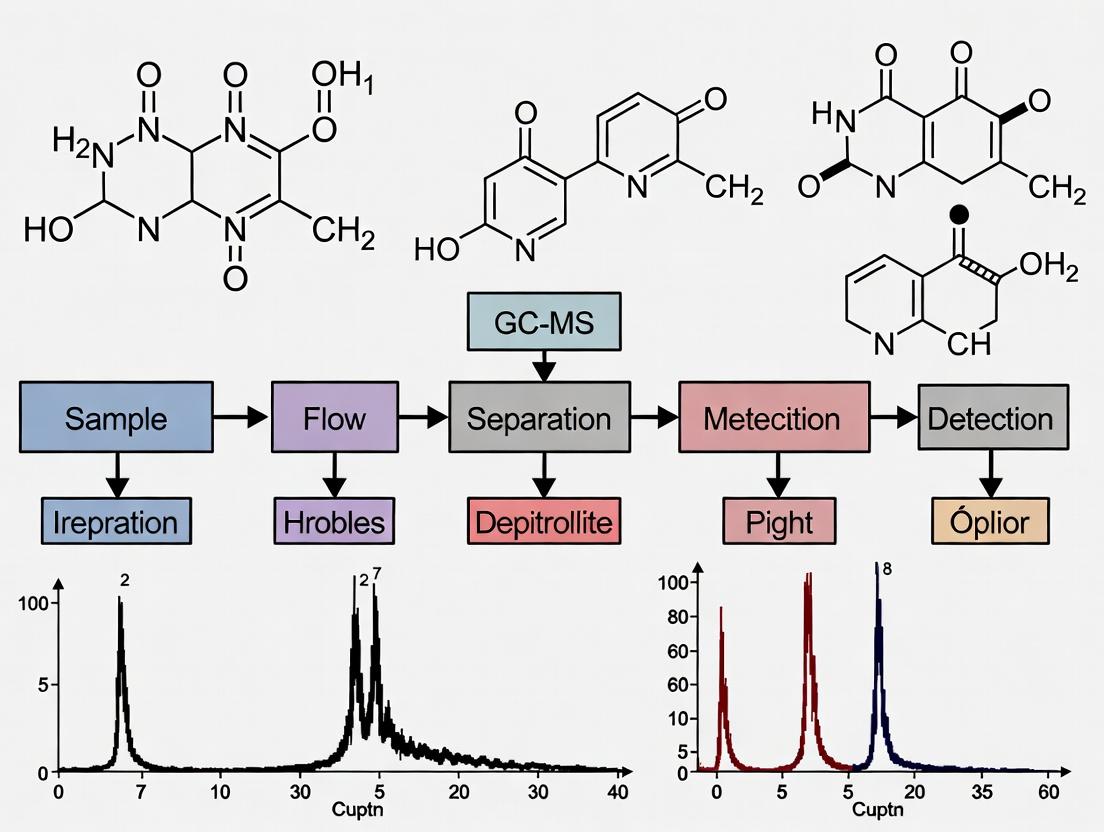
This article provides a targeted guide for researchers and drug development professionals on applying Gas Chromatography-Mass Spectrometry (GC-MS) to plant volatile metabolomics.
Unlocking Plant Secrets: A Comprehensive Guide to GC-MS Metabolomics for Volatile Compound Discovery in Biomedical Research
Abstract
This article provides a targeted guide for researchers and drug development professionals on applying Gas Chromatography-Mass Spectrometry (GC-MS) to plant volatile metabolomics. It covers the foundational role of volatiles in plant biology and their biomedical potential, detailing comprehensive methodological workflows from sample preparation to data acquisition. The guide addresses common analytical challenges and optimization strategies for sensitivity and reproducibility. Finally, it explores methods for compound validation and comparative analysis across plant species or treatments. The synthesis aims to equip scientists with a practical framework for discovering novel bioactive plant metabolites with therapeutic implications.
The Why and What: Foundational Principles of Plant Volatiles and GC-MS Metabolomics
Plant Volatile Organic Compounds (VOCs) are low-molecular-weight lipophilic metabolites with high vapor pressure, enabling them to be released into the atmosphere. Within the framework of Gas Chromatography-Mass Spectrometry (GC-MS) metabolomics, plant VOCs represent a critical analyte class for discovery research. This field is propelled by the need to catalog the plant volatilome, elucidate biosynthetic pathways, and identify compounds with significant ecological functions and biomedical potential. GC-MS metabolomics provides the robust, high-throughput analytical foundation necessary to separate, detect, and identify these often-trace volatile metabolites within complex plant matrices, linking chemical diversity to biological activity.
Chemical Diversity and Biosynthesis
Plant VOCs encompass several major chemical classes, primarily derived from three core metabolic pathways.
Table 1: Major Chemical Classes of Plant VOCs and Their Biosynthetic Origins
| Chemical Class | Example Compounds | Primary Biosynthetic Pathway | Approximate No. of Known Structures* |
|---|---|---|---|
| Terpenoids | Limonene, Linalool, β-Caryophyllene | Mevalonate (MVA) & Methylerythritol Phosphate (MEP) | >1,000 |
| Fatty Acid Derivatives | (Z)-3-Hexenal, Hexenyl acetate | Lipoxygenase (LOX) Pathway | ~200 |
| Phenylpropanoids/ Benzenoids | Eugenol, Methyl salicylate, Benzaldehyde | Shikimate/Phenylpropanoid Pathway | ~300 |
| Amino Acid Derivatives | Indole, Methyl jasmonate | Various (e.g., from L-Tryptophan, Linolenic acid) | ~100 |
| Estimated from current plant volatile databases (e.g., Pherobase, Superscent). |
Key Experimental Protocol: Headspace Solid-Phase Microextraction (HS-SPME) for VOC Capture
Principle: Adsorption of volatiles onto a coated fiber for subsequent thermal desorption in the GC inlet. Detailed Protocol:
- Plant Material: Fresh tissue (e.g., 100 mg leaf) is placed in a sealed vial with a septum cap.
- Equilibration: Sample vial is incubated at a controlled temperature (e.g., 30°C) for 10-15 minutes.
- Extraction: An SPME fiber (common coatings: 50/30 μm DVB/CAR/PDMS for broad range) is exposed to the vial headspace for 30-60 minutes.
- Desorption: The fiber is inserted into the GC-MS injection port (e.g., 250°C) for 2-5 minutes for thermal desorption of analytes.
- GC-MS Analysis: Separated on a non-polar or semi-polar column (e.g., HP-5ms) with electron impact (EI) ionization at 70 eV.
Title: HS-SPME-GC-MS Workflow for Plant VOC Analysis
Ecological Roles of Plant VOCs
VOCs mediate complex intra- and inter-organismal communication.
Table 2: Documented Ecological Functions of Plant VOCs
| Ecological Function | Example VOC(s) | Measured Effect (Quantitative Data) |
|---|---|---|
| Pollinator Attraction | Linalool, Benzaldehyde | Increased pollinator visitation rates by 50-300% in various systems. |
| Herbivore Deterrence/Direct Defense | (E)-β-Ocimene, Methanol | Reduction in herbivore feeding by up to 70-90% in choice assays. |
| Indirect Defense (Parasitoid/ Predator Recruitment) | (E)-β-Farnesene, Methyl salicylate | 2- to 5-fold increase in parasitoid wasp attraction in olfactometer studies. |
| Plant-Plant Communication (Allelopathy/ Priming) | (Z)-3-Hexenyl acetate, Ethylene | Induction of defense genes in neighboring plants within 1-6 hours. |
| Intra-plant Signaling (Systemic Acquired Resistance) | Methyl jasmonate, Methyl salicylate | 10-100 fold increase in internal defense hormone levels post-induction. |
Signaling Pathway: VOC-Induced Systemic Resistance
Title: VOC-Mediated Inter-Plant Defense Signaling
Biomedical Significance and Discovery Pipeline
Plant VOCs are a rich source of pharmacologically active compounds with antimicrobial, anticancer, anti-inflammatory, and neuroactive properties.
Table 3: Selected Plant VOCs with Validated Biomedical Activity
| VOC Compound | Plant Source | Demonstrated Activity | Key In Vitro/In Vivo Findings |
|---|---|---|---|
| Thymol | Thymus vulgaris | Antimicrobial, Anti-inflammatory | MIC of 0.06-0.5% v/v against pathogens; reduces TNF-α in murine models by >40%. |
| Perillyl alcohol | Citrus peels, Lavender | Anticancer | Induces apoptosis in pancreatic cancer cell lines (IC50 ~0.5-1.2 mM); inhibited rat mammary tumor growth by ~70%. |
| (S)-Linalool | Lavandula spp. | Anxiolytic, Sedative | Increased mouse open-arm time in EPM by 30-50% at 25-100 mg/kg; modulates GABA_A receptors. |
| β-Caryophyllene | Cannabis, Clove | Anti-inflammatory (CB2 agonist) | Reduces paw edema in mice by 50-60% at 5 mg/kg; CB2 receptor dependent. |
| 1,8-Cineole (Eucalyptol) | Eucalyptus globulus | Mucolytic, Bronchodilator | Improves lung function in COPD patients by 20-30% in clinical trials. |
Experimental Protocol: Broth Microdilution for VOC Antimicrobial Testing
Principle: Determine the Minimum Inhibitory Concentration (MIC) of volatile compounds in liquid culture. Detailed Protocol:
- VOC Preparation: Prepare a stock solution of the pure VOC compound in a suitable solvent (e.g., DMSO, ethanol). Serial two-fold dilutions are made in the same solvent.
- Inoculum Preparation: Adjust a microbial suspension (e.g., Staphylococcus aureus) to 0.5 McFarland standard (~1.5 x 10^8 CFU/mL), then dilute in Mueller-Hinton Broth to achieve ~5 x 10^5 CFU/mL.
- Microtiter Plate Setup: In a 96-well plate, add 100 μL of broth to all wells. Add 100 μL of the VOC stock to the first well, mix, and serially dilute across the plate. Add 100 μL of the standardized inoculum to all test wells. Include growth control (no VOC) and sterility control (no inoculum).
- Incubation and Reading: Seal plates to minimize volatility and incubate at 37°C for 16-20 hours. The MIC is the lowest VOC concentration that completely inhibits visible growth, measured spectrophotometrically (OD600) or visually.
The Scientist's Toolkit: Key Research Reagent Solutions
Table 4: Essential Materials for Plant VOC Research via GC-MS Metabolomics
| Item | Function & Rationale |
|---|---|
| SPME Fiber Assembly (e.g., 50/30 μm DVB/CAR/PDMS) | For non-destructive, sensitive headspace sampling of a broad molecular weight range of VOCs. |
| GC-MS System with Electron Impact (EI) Ion Source | The gold-standard platform for separating complex volatile mixtures and providing identifiable fragmentation spectra. |
| NIST/ Wiley Mass Spectral Library | Essential database for tentative identification of compounds by matching experimental EI spectra to reference spectra. |
| Internal Standards (e.g., Deuterated Toluene, Tetralin-d12) | Added quantitatively to samples for normalization, correcting for variations in extraction and instrument response. |
| Authentic Chemical Standards | Pure compounds for generating calibration curves (quantification), confirming retention times, and validating identifications. |
| Stable Isotope-Labeled Precursors (e.g., 13C-Glucose, D5-Phenylalanine) | Used in tracer experiments to elucidate VOC biosynthetic pathways via GC-MS analysis of isotopic incorporation. |
| Dynamic Headspace Collection Traps (Tenax TA/GR, Charcoal filters) | For continuous, large-volume collection of VOCs from plant chambers for very trace analysis or behavioral studies. |
| Chiral GC Columns (e.g., Cyclodextrin-based) | Necessary to separate enantiomers of chiral VOCs (e.g., limonene, linalool), which often have distinct biological activities. |
Gas Chromatography-Mass Spectrometry (GC-MS) represents the gold standard analytical platform for volatile and thermally stable metabolomic analysis. Within plant research, its unparalleled separation power, sensitivity, and robust compound identification capabilities make it indispensable for discovering novel volatile metabolites involved in defense signaling, pollinator attraction, and stress responses. This whitepaper details the core technical principles, experimental workflows, and current quantitative data supporting its pivotal role in volatile metabolomics.
Core Technical Principles
GC-MS integrates two complementary techniques. Gas Chromatography (GC) separates complex volatile mixtures based on compound partitioning between a mobile gas phase and a stationary phase within a capillary column. The separated analytes are then introduced into the Mass Spectrometer (MS), where they are ionized, fragmented, and detected based on their mass-to-charge ratio (m/z).
1.1 Ionization: Electron Impact (EI) The predominant ionization method in GC-MS is 70 eV Electron Impact (EI). This high-energy process generates reproducible, library-searchable fragmentation patterns, creating a chemical "fingerprint" essential for identifying unknown metabolites in plant samples.
1.2 Mass Analyzers Time-of-flight (TOF) and quadrupole mass analyzers are most common. Recent advances in high-resolution time-of-flight (HRTOF-MS) provide accurate mass measurements (<5 ppm error), enabling the determination of elemental compositions for novel plant metabolites.
Quantitative Performance Data
The following table summarizes current benchmark performance metrics for modern GC-MS systems in metabolomic applications.
Table 1: Performance Metrics of Modern GC-MS Systems in Metabolomics
| Parameter | Quadrupole GC-MS | GC-TOF-MS | GC-HRTOF-MS |
|---|---|---|---|
| Mass Resolution | Unit (0.5-1 Da) | 5,000 - 10,000 | >25,000 |
| Mass Accuracy | ~0.1 Da | <5 ppm | <2 ppm |
| Dynamic Range | 10^4 - 10^5 | 10^3 - 10^4 | 10^4 - 10^5 |
| Acquisition Rate | Up to 20 Hz | 50 - 200 Hz | 50 - 100 Hz |
| Detection Limit (for typical metabolite) | 0.1 - 1 pg | 0.01 - 0.1 pg | 0.01 - 0.1 pg |
| Key Advantage | Robust, cost-effective | Fast deconvolution of co-eluting peaks | Confident formula assignment for unknowns |
Experimental Protocol for Plant Volatile Metabolomics
3.1 Sample Preparation: Headspace Solid-Phase Microextraction (HS-SPME)
- Principle: A fiber coated with a polymer absorbs volatile organic compounds (VOCs) from the sample headspace.
- Detailed Protocol:
- Plant Material: Homogenize 100 mg of fresh leaf/flower tissue in a 20 mL HS vial with 1 mL of saturated NaCl solution.
- Internal Standard: Add 10 µL of a deuterated internal standard solution (e.g., D8-toluene, 1 ng/µL).
- Incubation: Equilibrate for 10 min at 40°C with agitation (250 rpm).
- Extraction: Expose a 50/30 µm DVB/CAR/PDMS SPME fiber to the headspace for 30 min at 40°C.
- Desorption: Desorb the fiber into the GC injector at 250°C for 5 min in splitless mode.
3.2 GC-MS Analysis
- GC Conditions: Use a mid-polarity column (e.g., DB-35MS, 30m x 0.25mm, 0.25µm). Oven program: 40°C (hold 3 min), ramp at 10°C/min to 280°C (hold 5 min). Helium carrier gas, constant flow 1.2 mL/min.
- MS Conditions: EI source at 70 eV, 230°C. Quadrupole or TOF analyzer. Scan range: m/z 35-550.
3.3 Data Processing & Identification
- Deconvolution: Use software (e.g., AMDIS, ChromaTOF) to resolve co-eluting peaks.
- Library Search: Match spectra against commercial (NIST, Wiley) and specialized plant metabolite libraries (e.g., Golm Metabolome Database). A match factor >800 (out of 1000) is typically required.
- Quantification: Integrate peaks relative to the internal standard. Use calibration curves with authentic standards for absolute quantification.
Visualized Workflows
Diagram Title: GC-MS Volatile Metabolomics Workflow
Diagram Title: Plant Volatile Signaling Pathway & GC-MS Role
The Scientist's Toolkit: Key Research Reagent Solutions
Table 2: Essential Materials for GC-MS Plant Volatile Metabolomics
| Item | Function & Rationale |
|---|---|
| SPME Fibers (50/30 µm DVB/CAR/PDMS) | Adsorbs a broad range of VOCs (C3-C20). Optimal for diverse plant metabolite classes (terpenes, aldehydes, esters). |
| Deuterated Internal Standards (e.g., D8-Toluene, D5-Nonane) | Corrects for instrument variability and sample loss during prep. Critical for accurate quantification. |
| Alkane Standard Mixture (C7-C30) | Used to calculate retention indices (RI) for compound identification, orthogonal to mass spectral matching. |
| Methoxyamine Hydrochloride | Derivatization reagent for carbonyl groups in GC-MS analysis of semi-volatiles or after solvent extraction. |
| N,O-Bis(trimethylsilyl)trifluoroacetamide (BSTFA) | Silylation agent for derivatization of polar, non-volatile metabolites (e.g., sugars, acids) to make them volatile for GC-MS. |
| Quality Control (QC) Pooled Sample | A pooled aliquot of all study samples, injected repeatedly. Monitors instrument stability and data reproducibility. |
| NIST/EPA/NIH Mass Spectral Library | Primary reference database containing EI spectra of >300,000 compounds for preliminary identification. |
| Specialized Plant Metabolite Library (e.g., Golm MD, Adams EO) | Libraries focused on plant-specific metabolites (terpenes, phenolics) for improved identification rates. |
Why GC-MS is Ideal for Volatile Metabolomics: A Synthesis
GC-MS is uniquely suited for plant volatile metabolomics due to:
- Superior Separation: GC routinely resolves hundreds of compounds in a single run, critical for complex plant VOC profiles.
- Robust, Reproducible Identification: Standardized 70 eV EI creates universal, searchable spectra across instruments and labs.
- High Sensitivity: Compatible with non-destructive, pre-concentration techniques like HS-SPME, enabling detection of trace-level plant signaling molecules.
- Quantitative Rigor: Linear dynamic range and stable isotope dilution allow precise quantification essential for monitoring metabolic fluxes.
- Established Repositories: Extensive, curated spectral libraries and retention index databases directly support the discovery of novel plant metabolites by comparison with known entities.
This whitepaper details a structured pipeline for identifying novel bioactive metabolites from plant material, contextualized within GC-MS metabolomics for volatile organic compound (VOC) discovery. The process integrates botany, analytical chemistry, and bioinformatics to translate raw plant material into candidates for drug development.
Plant metabolomics, particularly focused on volatile metabolites, represents a critical frontier in discovering novel bioactive compounds for pharmaceuticals, agrochemicals, and nutraceuticals. Gas Chromatography-Mass Spectrometry (GC-MS) stands as the cornerstone analytical technique for profiling volatile and semi-volatile plant metabolites due to its superior sensitivity, robust quantification, and extensive spectral libraries. This guide outlines the sequential, multi-disciplinary pipeline required to move from specimen collection to the identification of a novel bioactive metabolite, with emphasis on practical protocols and current technological standards.
The Discovery Pipeline: A Stepwise Technical Guide
Step 1: Plant Material Selection & Authentication
Rationale: Targeted selection based on ethnobotanical knowledge or ecological niche increases the probability of discovering novel bioactive chemistries. Accurate taxonomic authentication is non-negotiable for reproducibility.
- Protocol: Voucher specimen collection.
- Collect representative plant material (leaves, flowers, bark) in triplicate.
- Press, dry, and deposit specimens in a recognized herbarium.
- Perform DNA barcoding using the rbcL and matK chloroplast gene regions. Compare sequences to reference databases (e.g., GenBank, BOLD Systems).
- Data: Record GPS coordinates, date, collector, and morphological notes.
Step 2: Metabolite Extraction & Pre-Concentration (for VOCs)
Rationale: Efficient extraction and pre-concentration are vital for detecting low-abundance metabolites.
- Protocol: Headspace Solid-Phase Microextraction (HS-SPME).
- Homogenize 100 mg of fresh frozen plant tissue under liquid nitrogen.
- Transfer to a 20 mL HS vial with a salted solution (e.g., NaCl, 25% w/v) to enhance VOC release.
- Condition a 50/30 μm DVB/CAR/PDMS SPME fiber according to manufacturer specs.
- Insert fiber into vial headspace; incubate at 60°C for 30 min with agitation.
- Desorb the fiber directly into the GC-MS injection port at 250°C for 5 min in splitless mode.
- Alternative: Simultaneous Distillation-Extraction (SDE) for broader volatiles.
Step 3: GC-MS Analysis & Deconvolution
Rationale: High-resolution separation and mass spectral detection form the core analytical dataset.
- Protocol: GC-MS Operational Parameters.
- GC: Capillary column (e.g., DB-5MS, 30m x 0.25mm x 0.25μm). Oven program: 40°C (hold 3 min), ramp at 10°C/min to 280°C (hold 5 min). Helium carrier gas, constant flow 1.2 mL/min.
- MS: Electron Impact (EI) ionization at 70 eV. Ion source temp: 230°C. Scan range: m/z 35-650.
- Data Processing: Use deconvolution software (e.g., AMDIS, ChromaTOF) to separate co-eluting peaks and extract pure mass spectra. Align peaks across all samples in an experiment.
Step 4: Metabolite Annotation & Identification
Rationale: Distinguishing known compounds from potential novel entities.
- Protocol: Hierarchical annotation (as per Metabolomics Standards Initiative levels).
- Level 1 (Confident Identification): Match both retention index (RI) relative to an n-alkane series and mass spectrum (>90% similarity) to an authentic standard analyzed on the same system.
- Level 2 (Putative Annotation): Match mass spectrum (>80% similarity) and RI to a public/commercial library (e.g., NIST, Wiley, Adams).
- Level 3 (Putative Characteristic Class): Match spectral similarity to a compound class without RI match.
- Level 4 (Unknown): Deconvoluted spectra that do not match libraries become candidates for novel structure elucidation.
Table 1: Quantitative Metrics for GC-MS Annotation Confidence
| Confidence Level | Spectral Match (Similarity Index) | Retention Index Match (ΔRI) | Requirement |
|---|---|---|---|
| Level 1: Confident ID | >90% | <10 units | Authentic Standard |
| Level 2: Putative ID | 80-90% | <20 units | Public Library |
| Level 3: Tentative Class | 70-80% | N/A | In-House/Class Library |
| Level 4: Unknown | <70% | N/A | Target for Novel Discovery |
Step 5: Bioactivity Screening & Target Isolation
Rationale: Prioritizing hits with biological activity.
- Protocol: In vitro bioassay-guided fractionation.
- Run a crude extract in a target bioassay (e.g., antimicrobial disk diffusion, enzyme inhibition).
- If active, scale up extraction and fractionate using preparative chromatography (e.g., Flash SiO₂, HPLC).
- Screen all fractions for bioactivity. Iterate fractionation on the active fraction until a pure active compound is isolated.
- Re-analyze the pure compound via GC-MS and NMR for definitive structural characterization (novelty assessment).
Step 6: Structural Elucidation of Novel Metabolites
Rationale: For Level 4 unknowns that show bioactivity, definitive structural analysis is required.
- Protocol: Integrated Spectroscopic Analysis.
- GC-MS: Provides molecular weight and fragmentation pattern.
- Microscale Derivatization: (e.g., MSTFA for silylation) confirms presence of -OH, -COOH groups via mass shift.
- NMR: Isolated compound is analyzed by 1D (¹H, ¹³C) and 2D (COSY, HSQC, HMBC) NMR spectroscopy. This is the gold standard for determining novel planar structures.
- High-Resolution MS (HR-MS): Determines exact mass and molecular formula (e.g., Q-TOF).
The Scientist's Toolkit: Essential Research Reagents & Materials
Table 2: Key Research Reagent Solutions for Plant VOC Metabolomics
| Item | Function/Application | Example/Notes |
|---|---|---|
| DVB/CAR/PDMS SPME Fiber | Adsorbs volatile compounds from headspace for direct thermal desorption into GC. | 50/30 μm thickness is common for broad VOC range. Must be conditioned prior to use. |
| n-Alkane Standard Solution (C7-C40) | Used to calculate Kovats Retention Index (RI) for compound identification. | Injected under identical GC conditions as samples for RI calibration. |
| Derivatization Reagents | Convert non-volatile polar metabolites (e.g., sugars, acids) into volatile derivatives for GC analysis. | MSTFA (N-Methyl-N-(trimethylsilyl)trifluoroacetamide): for silylation of -OH, -COOH. |
| Internal Standards (Deuterated) | Correct for variability in extraction, injection, and ionization. | d4-Succinic acid, d8-Naphthalene added at start of extraction for quantification. |
| NIST Mass Spectral Library | Reference database for EI mass spectrum matching. | Contains >300,000 spectra; essential for putative annotation. |
| Bioassay Kits/Reagents | Functional screening to prioritize bioactive metabolites. | DPPH/ABTS for antioxidant; p-Nitrophenyl derivative for enzyme inhibition. |
| Silica Gel & HPLC Solvents | For bioassay-guided fractionation and isolation of pure compounds. | High-purity solvents (HPLC grade) are critical for clean separations. |
Visualizing the Pipeline
Diagram 1: Plant Bioactive Metabolite Discovery Pipeline
Diagram 2: Hierarchical Metabolite Annotation Decision Tree
This whitepaper is situated within a broader thesis investigating the application of Gas Chromatography-Mass Spectrometry (GC-MS) metabolomics as a primary discovery engine for plant volatile organic compounds (VOCs). The central strategic goal is to move beyond VOC profiling as an endpoint and instead establish robust, mechanistically informed links between dynamic volatile profiles and the underlying plant physiology, stress-adaptive responses, and the translation of these compounds into therapeutic leads. This requires an integrated, multidisciplinary approach combining advanced analytical chemistry, plant molecular biology, and bioactivity screening.
Core Strategic Framework and Data Synthesis
The strategic framework is built on three interconnected pillars, supported by recent quantitative findings.
Table 1: Quantitative Links Between Volatile Profiles, Physiology, and Bioactivity
| Strategic Link | Exemplar Volatile Class/Compound | Quantitative Change (Example) | Correlated Physiological/Stress Event | Therapeutic Bioactivity (In vitro/In vivo) |
|---|---|---|---|---|
| Primary Metabolism & Physiology | Green Leaf Volatiles (C6 aldehydes/alcohols) | 10-50x increase post-mechanical damage | Wounding, membrane disruption, jasmonate signaling | Antimicrobial (MIC: 50-200 µg/mL vs. S. aureus); anti-inflammatory (IC₅₀ COX-2: ~15 µM for (Z)-3-hexenol) |
| Biotic Stress Response | Terpenoids (e.g., (E)-β-caryophyllene) | Up to 100-fold induction upon herbivory | Herbivore attack; mediated by JA/SA cross-talk | Analgesic (mouse model, 10 mg/kg); anxiolytic (elevated plus maze, 1-5 mg/kg) |
| Abiotic Stress Response | Monoterpenes (e.g., α-pinene, limonene) | 5-20x increase under drought/heat | ROS scavenging, membrane stabilization, thermotolerance | Anticancer (cytotoxicity IC₅₀: 20-100 µM in various lines); bronchodilatory |
| Plant-Plant Communication | Methyl salicylate (MeSA) | Nanogram to microgram emission rates | Systemic Acquired Resistance (SAR) signal | Anti-inflammatory, cardioprotective (analogous to aspirin's salicylic acid) |
Table 2: Key Analytical Parameters for GC-MS Metabolomics in VOC Discovery
| Parameter | Recommended Specification | Purpose/Impact on Data |
|---|---|---|
| Extraction/Collection | Headspace-Solid Phase Microextraction (HS-SPME), Dynamic Headspace Trapping | Non-invasive, in-vivo capture of true volatile blend. Fiber coating (e.g., DVB/CAR/PDMS) choice critically affects compound affinity. |
| GC Column | Mid-polarity stationary phase (e.g., 35% phenyl / 65% dimethyl polysiloxane) | Optimal separation of diverse VOC chemical classes (hydrocarbons, oxygenates). |
| Mass Spectrometry | Quadrupole or Time-of-Flight (TOF) with Electron Impact (EI) ionization | Libraries for compound identification. High-resolution TOF enables accurate mass for unknown formula assignment. |
| Data Analysis | Peak deconvolution software (e.g., AMDIS, ChromaTOF), Multivariate stats (PCA, OPLS-DA) | Deconvolutes co-eluting peaks; identifies significant biomarkers differentiating treatments/conditions. |
Detailed Experimental Protocols
Protocol 1: Dynamic Headspace VOC Collection from Stressed Plants
- Materials: Plant growth chamber, dynamic headspace chamber, vacuum pump, flow meters, volatile traps (e.g., Tenax TA or mixed-bed adsorbents), clean air supply.
- Procedure:
- Acclimation: Place potted plant in sealed glass chamber. Purge with hydrocarbon-filtered, humidified air at a constant flow (200-300 mL/min) for 30 min.
- Collection: Connect outlet to volatile trap. Draw headspace air through the adsorbent trap for a defined period (2-4 hrs). Record flow rate precisely.
- Elution: Desorb VOCs from the trap using a certified solvent (e.g., hexane or dichloromethane) or via automated thermal desorption (ATD) unit directly coupled to GC-MS.
- Internal Standard: Spike with a known quantity of deuterated or non-biological volatile standard (e.g., nonyl acetate) prior to collection for quantification.
Protocol 2: GC-MS Metabolomics for VOC Profiling
- Materials: GC-MS system, analytical column, autosampler (for liquid injection or SPME), data acquisition software, NIST/Adams mass spectral libraries.
- Procedure:
- Injection: Use split/splitless injector. SPME fiber desorption time: 2-5 min at 250°C. Liquid injection: 1 µL, split ratio 10:1.
- GC Program: Oven ramp: 40°C (hold 3 min), increase at 5-10°C/min to 250°C (hold 5 min). Carrier gas: Helium, constant flow (1 mL/min).
- MS Detection: EI mode at 70 eV. Scan range: m/z 35-350. Source temperature: 230°C.
- Identification: Match mass spectra (>85% similarity) and linear retention indices (LRIs) against libraries and authentic standards.
Protocol 3: Bioactivity Screening of Identified VOCs
- Materials: Pure volatile compounds (≥95% purity), cell culture lines, enzymatic assay kits, animal behavior models (e.g., for anxiolysis).
- Procedure (Cytotoxicity/Anti-inflammatory):
- Preparation: Dilute volatile in DMSO or culture media with careful consideration of volatility. Use sealed assay plates where necessary.
- Cell Treatment: Treat human cell lines (e.g., cancer lines, macrophages) with a concentration gradient of the VOC (1-200 µM) for 24-48 hrs.
- Assay: Perform MTT/XTT assay for viability. For anti-inflammatory effect, pre-treat cells with VOC, then stimulate with LPS and measure TNF-α/IL-6 via ELISA or nitric oxide via Griess reagent.
Visualization of Pathways and Workflows
Title: Plant Stress to VOC Emission Pathway
Title: Integrated VOC Discovery Workflow
The Scientist's Toolkit: Key Research Reagent Solutions
Table 3: Essential Materials for VOC-Linked Research
| Item/Reagent | Function & Rationale |
|---|---|
| Tenax TA Adsorbent Tubes | Porous polymer for efficient trapping of a wide range of VOCs (C6-C30) during dynamic headspace sampling; high thermal stability for desorption. |
| Mixed-Bed Sorbents (Carbotrap/Carbopack) | Combination of graphitized carbon blacks for broad-spectrum trapping, including very volatile compounds (C2-C5). |
| SPME Fibers (DVB/CAR/PDMS) | Divinylbenzene/Carboxen/Polydimethylsiloxane coated fiber for HS-SPME; balances adsorption capacity for diverse molecular weights. |
| Deuterated Internal Standards (e.g., d₈-Toluene, d₅-Limonene) | Added prior to extraction for accurate, matrix-effect-corrected quantification using Stable Isotope Dilution Assay (SIDA). |
| NIST/Adams/Wiley Mass Spectral Libraries | Commercial databases containing reference EI mass spectra and retention indices for confident compound identification. |
| Pure VOC Analytical Standards | Authentic chemical standards for verifying GC retention times and mass spectra, and for use in bioactivity assays. |
| C18/C8 Reverse-Phase Solid Phase Extraction (SPE) Cartridges | For clean-up and concentration of solvent-eluted VOCs or related non-volatile plant extracts in bioactivity studies. |
| Multivariate Analysis Software (e.g., SIMCA, MetaboAnalyst) | For performing PCA, OPLS-DA, and biomarker analysis to link volatile profiles to experimental treatments. |
From Sample to Spectrum: A Step-by-Step GC-MS Workflow for Plant VOC Analysis
Within GC-MS metabolomics for plant volatile metabolite discovery, sample integrity is the cornerstone of data validity. This technical guide details established and emerging best practices for preparing plant tissue and capturing its volatile organic compound (VOC) profile, focusing on headspace sampling and SPME fiber selection—critical steps that directly impact the biological relevance and reproducibility of research aimed at drug lead discovery.
Plant Tissue Collection & Stabilization
The initial collection phase is paramount to preserve the in vivo metabolic state.
Key Protocols:
- Rapid Quenching: Excise tissue using pre-chilled tools and immediately submerge in liquid nitrogen. For larger organs, use a freeze-clamp or plunge into a slurry of dry ice and an optimal solvent like methanol or acetonitrile (60-80% v/v, chilled to -40°C to -80°C).
- Field Sampling: Use portable liquid nitrogen Dewars or standardized chemical stabilization tubes (e.g., containing 1 mL of 100% methanol at -20°C) for immediate metabolic arrest.
- Homogenization: Perform under continuous cooling (e.g., using a cryo-mill). Add internal standards (e.g., deuterated VOCs like d8-toluene) at this stage for quantification.
Research Reagent Solutions
| Item | Function in Experiment |
|---|---|
| Liquid Nitrogen | Rapidly quenches enzymatic activity to preserve metabolic snapshot. |
| Cryogenic Vials (Pre-labeled) | Secure, traceable storage of frozen tissue. |
| Methanol (HPLC Grade, -80°C) | Extraction solvent; quenches enzymes and extracts metabolites. |
| Deuterated VOC Internal Standards | Allows for robust semi-quantification by correcting for extraction and instrument variability. |
| Inert Ceramic Homogenizers | Enable efficient tissue disruption without adsorbing analytes. |
Headspace Sampling: Static vs. Dynamic
Headspace sampling isolates VOCs from the solid or liquid sample matrix.
Detailed Protocol: Static Headspace-SPME (S-HS-SPME)
- Vial Preparation: Place stabilized, homogenized tissue (typical mass: 50-200 mg) into a headspace vial (10-20 mL).
- Equilibration: Seal vial with a PTFE/silicone septum cap. Incubate in a controlled heating block (e.g., 40-60°C for 10-30 min) with agitation to establish equilibrium between the sample and headspace.
- Fiber Exposure: Introduce and expose the conditioned SPME fiber through the septum for a defined period (15-60 min).
- Desorption: Retract the fiber and immediately insert it into the GC injector port for thermal desorption (typically 230-270°C for 1-5 min in splitless mode).
SPME Fiber Selection: A Data-Driven Approach
Fiber choice is analyte-dependent. The stationary phase coating determines selectivity.
Quantitative Fiber Selection Data
Table 1: Common SPME Fiber Coatings and Their Optimal Applications
| Fiber Coating (Film Thickness) | Key Chemical Characteristics | Best For Plant VOCs | Notes |
|---|---|---|---|
| Polydimethylsiloxane (PDMS) (100 µm) | Non-polar | Hydrocarbons (terpenes like limonene, pinene), esters. | Robust, high capacity. Poor for polar volatiles. |
| Polydimethylsiloxane/Divinylbenzene (PDMS/DVB) (65 µm) | Bipolar (moderately polar) | Alcohols, aldehydes (e.g., hexanal, linalool), ketones, esters. | Versatile for broad-range screening. Can suffer from carryover. |
| Divinylbenzene/Carboxen/Polydimethylsiloxane (DVB/CAR/PDMS) (50/30 µm) | Trimodal (very broad polarity) | Most common for untargeted profiling. C3-C20 range; traps very volatile compounds (acids, sulfur compounds). | "Triple-phase" fiber. Requires strict conditioning and optimization of desorption time. |
| Polyacrylate (PA) (85 µm) | Polar | Phenols, fatty acids, polar alcohols. | Specialized for highly polar analytes. Less common for general plant VOC work. |
| Carboxen/Polydimethylsiloxane (CAR/PDMS) (85 µm) | Microporous carbon/Non-polar | Ultra-light volatiles (C2-C6, e.g., ethylene, ethanol, acetaldehyde). | Excellent for trace gases. Can be difficult to desorb heavier analytes fully. |
Protocol: Fiber Conditioning and Maintenance
- Conditioning: Prior to first use, condition fiber in GC injector port per manufacturer specs (e.g., 270°C for 1 hr for DVB/CAR/PDMS under inert gas flow).
- Blank Runs: Perform a blank desorption after conditioning and between samples to confirm absence of carryover.
- Storage: Store fibers in their original case under inert atmosphere if possible.
Visualized Workflows
Title: Plant VOC Analysis from Sampling to GC-MS Injection
Title: Decision Workflow for SPME Fiber Selection by Analyte
Meticulous sample collection followed by appropriate headspace and SPME fiber selection forms an integrated, non-invasive system for capturing the volatile metabolome. Adherence to these standardized protocols ensures the generation of high-fidelity data, enabling researchers to confidently link VOC profiles to biological function—a critical foundation for discovering novel bioactive compounds in plant-based drug development research.
Within the critical framework of plant volatile metabolomics using Gas Chromatography-Mass Spectrometry (GC-MS), the reliable and comprehensive detection of metabolites hinges on precise chromatographic separation. Plant volatile organic compounds (VOCs) constitute a complex chemical milieu of terpenes, aldehydes, ketones, esters, and alcohols with wide-ranging polarities, volatilities, and concentrations. This technical guide delves into the optimization of three foundational GC parameters—inlet modes, column selection, and temperature programming—to achieve maximal resolution, sensitivity, and reproducibility for plant VOC discovery, directly supporting broader thesis research in metabolomics-driven drug discovery from botanical sources.
Inlet Mode Optimization
The inlet serves as the interface between the sample introduction system and the analytical column. Its configuration critically affects sample transfer, discrimination, and degradation.
2.1 Key Modes & Protocols
Split/Splitless Inlet: The workhorse for liquid injections.
- Protocol for Splitless Mode (High-Sensitivity for Trace Volatiles):
- Inlet temperature: 220–250°C (optimized for thermolabile compounds).
- Purge flow: 20–50 mL/min.
- Purge activation time: 0.5–2.0 min post-injection.
- Inert, deactivated, single-taper liner with wool recommended for plant extracts to minimize activity.
- Injection volume: 1–2 µL using a slow, hot-needle technique.
- Protocol for Splitless Mode (High-Sensitivity for Trace Volatiles):
Cooled Inlet Systems (e.g., PTV): Essential for thermally labile metabolites and large-volume injection (LVI) to enhance sensitivity.
- Protocol for PTV Solvent Venting (LVI for Broad Metabolite Coverage):
- Initial inlet temperature: 40°C (below solvent boiling point).
- Vent flow: 100 mL/min for 0.5 min to evaporate and remove bulk solvent.
- Ballistic ramp (e.g., 10–12°C/sec) to 250–300°C for rapid sample transfer to column.
- Hold at final temperature for column cleaning.
- Protocol for PTV Solvent Venting (LVI for Broad Metabolite Coverage):
On-Column Inlet: Eliminates discrimination and thermal degradation, ideal for high-boiling or unstable compounds.
- Protocol: Requires a retention gap. Inlet tracks the oven temperature program. Must use high-purity, particulate-free samples to prevent column clogging.
2.2 Comparative Data
Table 1: Comparative Analysis of Common GC Inlet Modes for Plant VOC Analysis
| Inlet Mode | Optimal Use Case | Typical Temp. Range | Key Advantage | Primary Limitation |
|---|---|---|---|---|
| Splitless | Targeted analysis of semi/medium volatiles. | 220–250°C | Robust, simple, high sensitivity for trace analytes. | Risk of degradation for thermolabile compounds. |
| PTV (Solvent Vent) | Untargeted profiling of complex plant extracts. | 40–300°C (programmed) | Enables LVI, reduces discrimination, protects labile analytes. | More complex method development. |
| On-Column | Analysis of high-boiling, labile metabolites. | Tracked to oven | No thermal discrimination, best for integrity. | Not suitable for dirty samples; requires precise technique. |
Column Selection Strategy
Column selection dictates the fundamental separation physics of the metabolite mixture.
3.1 Core Parameters
Stationary Phase: The primary determinant of selectivity.
- 5% Phenyl / 95% Dimethylpolysiloxane (e.g., DB-5): The default for general plant VOC profiling. Excellent for hydrocarbons, terpenes.
- Wax/PEG Columns: Essential for separating polar oxygenated VOCs (alcohols, acids, aldehydes) which often co-elute on non-polar phases.
- Mid-Polarity Phases (e.g., 50% Phenyl): Useful for complex mixtures containing both polar and non-polar functionalities.
Dimensions: Length, Internal Diameter (I.D.), and Film Thickness (
d_f).- Length: 30-60 m standard for complex mixtures.
- I.D.: Narrow-bore (0.25 mm) for highest efficiency; wider (0.32 mm) for higher capacity.
- Film Thickness: Thin films (0.25 µm) for high-boiling compounds; thick films (1.0 µm) for highly volatile analytes, providing increased retention and separation.
3.2 Protocol: Column Selection Decision Workflow
- Perform a preliminary analysis of a representative plant extract on a standard mid-polarity column (e.g., 30m x 0.25mm x 0.25µm).
- Assess chromatogram for co-elution in early (volatile) vs. late (heavy) regions.
- If early co-elution persists, switch to a thicker film (e.g., 1.0 µm) or a wax column.
- If late eluters are poorly resolved, switch to a thinner film (e.g., 0.10 µm) or a longer column.
3.3 Comparative Data
Table 2: Guide to GC Column Selection for Plant Metabolite Classes
| Metabolite Class (Examples) | Recommended Stationary Phase | Optimal Film Thickness | Rationale |
|---|---|---|---|
| Monoterpenes (α-pinene, limonene) | 5% Phenyl / 95% Dimethylpolysiloxane | 1.0 – 1.4 µm | Enhanced retention/separation of very volatile compounds. |
| Sesquiterpenes (caryophyllene) | 5% Phenyl / 95% Dimethylpolysiloxane | 0.25 – 0.50 µm | Standard for medium volatility compounds. |
| Oxygenated VOCs (linalool, methyl salicylate) | Polyethylene Glycol (Wax) | 0.25 – 0.50 µm | Selectivity for polar functional groups via H-bonding. |
| Fatty Acid Derivatives (hexenyl acetate) | Mid-Polarity (e.g., 35-50% Phenyl) | 0.25 – 0.50 µm | Balanced separation for mixed functional groups. |
Temperature Programming for Complex Mixtures
A well-designed temperature program is paramount for separating a wide boiling-point range within a reasonable time while maintaining peak shape.
4.1 Protocol: Developing a Multi-Ramp Oven Program
- Initial Oven Temperature: Set 5–10°C below the solvent boiling point for solvent focusing (e.g., 40°C for hexane).
- Initial Hold: 1–3 minutes to focus the analyte band at the column head.
- First Ramp Rate: A moderate ramp (e.g., 5–10°C/min) to separate the bulk of early-eluting, volatile metabolites (monoterpenes).
- Intermediate Hold/Shallow Ramp: A brief isothermal hold or a shallow ramp (1–3°C/min) through a critical region where co-elution is predicted (e.g., sesquiterpene region).
- Final Ramp: A fast ramp (10–15°C/min) to the upper temperature limit of the column to elute any high-boiling compounds and clean the column.
- Final Hold: 2–5 minutes at maximum temperature.
Example Program for Untargeted Plant VOC Analysis:
- Initial Temp: 40°C, hold 2 min.
- Ramp 1: 6°C/min to 160°C, hold 0 min.
- Ramp 2: 2°C/min to 200°C, hold 0 min.
- Ramp 3: 15°C/min to 280°C, hold 3 min.
Integrated Experimental Workflow
The strategic integration of inlet, column, and temperature parameters is depicted in the following workflow.
Diagram Title: GC-MS Workflow for Plant VOC Analysis from Sample to Data
The Scientist's Toolkit: Research Reagent Solutions
Table 3: Essential Research Reagents & Materials for GC-MS Plant Metabolomics
| Item | Function / Purpose | Key Consideration for Plant Volatiles |
|---|---|---|
| Deactivated Splitless Liners (with Wool) | Sample vaporization chamber; wool homogenizes heat and traps non-volatiles. | Critical to prevent degradation of reactive terpenoids and phenolics. Single-taper preferred. |
| High-Purity, Inert Carrier Gas (Helium, Hydrogen) | Mobile phase for chromatography. Hydrogen often provides faster optimal velocities. | Use in-line traps (oxygen, moisture, hydrocarbons) to maintain column performance. |
| Retention Gaps/Guard Columns | Pre-column segment for on-column injection and column protection. | Protects the analytical column from matrix contamination in crude plant extracts. |
| Alkanes Standard Mix (C7-C30) | Determination of Kovats Retention Indices (RI) for metabolite identification. | Essential for cross-referencing with plant metabolite RI libraries. |
| Deuterated Internal Standards (e.g., d8-Toluene, d5-Phenol) | Controls for injection variability, sample preparation, and instrument drift. | Should be chosen to not co-elute with abundant native metabolites. |
| SPME Fibers (e.g., DVB/CAR/PDMS) | For headspace (HS-SPME) sampling of volatile emissions. | Tri-phasic fibers recommended for broad metabolite capture from plant headspace. |
| In-vial Derivatization Reagents (e.g., MSTFA, MOX) | Converts polar, non-volatile metabolites (e.g., sugars, acids) to volatile derivatives. | Required for extending metabolome coverage beyond native volatiles. |
Within the framework of GC-MS metabolomics for plant volatile metabolite discovery, the configuration of the mass spectrometer is paramount. Electron Impact (EI) ionization remains the cornerstone for robust, reproducible compound identification due to its extensive spectral libraries. This technical guide details the core configuration parameters—EI ionization, scan modes, and acquisition settings—optimized for the complex, dynamic chemical profiles of plant volatiles.
Electron Impact (EI) Ionization: Principles & Optimization
EI ionization involves bombarding gas-phase analyte molecules from the GC with high-energy electrons (typically 70 eV), resulting in reproducible, characteristic fragmentation. For plant volatiles, consistent ionization is critical for library matching.
Key Configuration Parameters:
- Electron Energy: Standardized at 70 eV for compatibility with commercial libraries (NIST, Wiley).
- Emission Current: Typically 50–350 µA; higher currents improve sensitivity but can shorten filament life.
- Ion Source Temperature: 200–300°C; prevents condensation of semi-volatile compounds.
- Extraction Lens Voltage: Optimized for efficient ion transfer into the mass analyzer.
Table 1: Optimized EI Source Parameters for Plant Volatile Analysis
| Parameter | Typical Range | Recommended Setting (Plant Volatiles) | Rationale |
|---|---|---|---|
| Electron Energy | 50-70 eV | 70 eV | Ensures library-matchable spectra |
| Emission Current | 50-350 µA | 150 µA | Balanced sensitivity and filament longevity |
| Ion Source Temp | 150-300°C | 230°C | Volatilizes mid-weight terpenoids, prevents condensation |
| Solvent Delay | 0-5 min | 2-3 min | Protects filament and detector from solvent overload |
Protocol: Tuning and Mass Calibration for EI
- Reference Compound Introduction: Introduce perfluorotributylamine (PFTBA) or similar tuning standard via the designated port.
- Autotune Execution: Initiate the instrument's autotune procedure to optimize ion optics voltages (lens voltages, electron multiplier) for defined target masses (e.g., m/z 69, 219, 502 for PFTBA).
- Performance Verification: Confirm mass accuracy (<0.1 amu drift) and resolution (unit mass resolution typically sufficient) meet specifications.
- Spectral Check: Verify the relative abundances of key ions from the tuning standard are within accepted tolerances.
Scan Modes: Full Scan vs. Selected Ion Monitoring (SIM)
The choice of scan mode dictates the breadth and sensitivity of data acquisition.
- Full Scan Acquisition: Records all ions across a specified mass range (e.g., m/z 40-500). Essential for untargeted metabolomics and unknown identification via library search.
- Selected Ion Monitoring (SIM): Monitors specific, pre-defined ions. Offers 10-100x greater sensitivity for targeted analysis of known compounds.
Table 2: Comparison of Scan Modes for Plant Volatile Research
| Characteristic | Full Scan Mode | SIM Mode |
|---|---|---|
| Primary Use | Untargeted profiling, compound discovery | Targeted quantification of known metabolites |
| Sensitivity | Lower (ng-range) | Higher (pg-fg range) |
| Selectivity | Low | High |
| Data Type | Complete spectrum for library matching | Chromatographic peak for quantification |
| Ideal for | Novel volatile discovery (e.g., stress-induced volatiles) | Quantitative analysis of key phytohormones or scent compounds |
Protocol: Setting Up a Scheduled SIM Method
- Identify Target Ions: From standards or prior full-scan runs, determine the primary quantitative ion and 2-3 qualifying ions for each analyte.
- Define Time Windows: Segment the GC run time into windows based on analyte retention times. Group ions measured in the same window to maximize dwell time.
- Set Dwell Times: Allocate 50-200 ms per ion to ensure sufficient data points across the chromatographic peak (>15 points/peak).
- Inter-channel Delay: Set a brief delay (e.g., 5 ms) between monitoring different ions to allow for voltage settling.
Spectral Acquisition Settings
These settings control how mass spectra are collected and recorded, directly impacting data quality.
Table 3: Critical Spectral Acquisition Parameters
| Parameter | Definition | Impact on Data | Recommended Setting |
|---|---|---|---|
| Scan Speed | Spectra recorded per second | Defines chromatographic peak definition. | 2-10 Hz (scans/sec), aim for >15 scans/peak. |
| Mass Range | Lower and upper m/z limit | Must encompass molecular and fragment ions. | m/z 35-550 for most plant volatiles. |
| Threshold | Minimum signal to record | Filters noise. | Set just above baseline noise level. |
| Sampling Rate | How frequently analog signal is digitized | Higher rates improve peak shape fidelity. | Use instrument default (typically sufficient). |
Protocol: Method Development for Untargeted Volatile Profiling
- Pilot Full-Scan Run: Inject a representative plant volatile extract (e.g., SPME or headspace) in full scan mode (m/z 35-550, 5 Hz scan speed).
- Evaluate Chromatography: Ensure peak widths are adequately sampled (>15 data points).
- Assess Spectral Quality: Check library match factors (>800 for confident ID) for known internal standards.
- Optimize and Finalize: Adjust emission current or source temperature if sensitivity is low, then lock in final method.
The Scientist's Toolkit: Research Reagent Solutions
Table 4: Essential Materials for GC-EI-MS Plant Volatile Analysis
| Item | Function/Benefit | Example Product/Brand |
|---|---|---|
| SPME Fiber Assembly | Adsorbs and concentrates volatile compounds from headspace for injection. | Supelco DVB/CAR/PDMS 50/30 µm fiber |
| C7-C40 Saturated Alkanes Mix | Used for calculation of Kovats Retention Indices (RI), critical for compound ID. | Restek 31625 |
| Alkane Standard Solution (C8-C20) | For on-column retention index calibration in real-time. | Sigma-Aldrich 49451-U |
| MSTFA (N-Methyl-N-(trimethylsilyl)trifluoroacetamide) | Derivatization agent for less-volatile metabolites in some metabolomics workflows. | Pierce 48933 |
| PFTBA (Perfluorotributylamine) | Standard for daily mass calibration and tuning of the EI ion source. | Agilent G2933A |
| Quality Control Mix | A defined blend of volatile standards for system performance monitoring. | LECO Metabolomics QC Mix |
| Inert Liner (Gooseneck/Straight) | Minimizes analyte degradation and adsorption in the GC inlet. | Agilent 5190-2295 |
| High-Purity Helium Carrier Gas | 99.9995% purity or higher to maintain column efficiency and reduce system noise. | - |
Workflow & Conceptual Diagrams
Untargeted profiling of plant volatiles using Gas Chromatography-Mass Spectrometry (GC-MS) generates complex, high-dimensional datasets. The chemical diversity of plant volatiles—including terpenes, aldehydes, esters, and ketones—presents unique challenges in data pre-processing. Effective peak picking, deconvolution, and alignment are critical to convert raw chromatographic data into a reliable feature matrix for downstream statistical analysis and biomarker discovery in plant defense, pollination ecology, and drug development from botanical sources.
Core Pre-processing Strategies: A Technical Guide
Peak Picking (Feature Detection)
Peak picking identifies regions of interest in the chromatogram where analyte signals rise above the noise.
Key Algorithmic Approaches:
- Baseline Correction & Noise Estimation: Critical for distinguishing low-abundance volatiles (e.g., stress-induced green leaf volatiles) from instrumental drift.
- Peak Detection Models: Use of first/second derivative or wavelet transforms (e.g., CentWave) to locate peak apices and boundaries.
- Mass Spectrometric Detection: Integration of extracted ion chromatograms (EICs) for specific m/z values enhances sensitivity for co-eluting species.
Experimental Protocol for Parameter Optimization:
- Sample: Analyze a pooled QC sample and a blank.
- Noise Estimation: Calculate the standard deviation of signal intensities in the blank run across a moving window.
- Peak Width Range: Determine by analyzing a homologous series of n-alkanes (C7-C30) in a separate run to model the retention time (RT) vs. peak width relationship.
- Signal-to-Noise (S/N) Threshold: Iteratively adjust (typical range 3-10) using the QC sample to minimize false positives from noise while retaining low-intensity metabolite peaks.
Deconvolution
Deconvolution separates overlapping peaks from co-eluting compounds, a common issue in plant volatile profiles rich in isomers.
Primary Method:
- Model-Based (e.g., Automated Mass Spectral Deconvolution and Identification System - AMDIS): Uses a model peak shape and orthogonal mass spectral information to extract pure component spectra.
- Untargeted (e.g., ChromaTOF's "Tile" or "Peak True" algorithms): Independently parses the data file for all detectable components without prior models.
Detailed Protocol for Model-Based Deconvolution:
- Define the Component Width (expected peak width at half height).
- Set the Adjacent Peak Subtraction parameter (typically 1-3) to control how spectra are purified from overlapping signals.
- Specify the Resolution (Low/Medium/High) which balances sensitivity and specificity.
- Process a representative sample. Manually inspect challenging regions (e.g., a dense cluster of monoterpenes) to validate deconvoluted spectra against the TIC.
Alignment (Retention Time Correction)
Alignment minimizes non-biological RT shifts caused by column aging, temperature fluctuations, or sample matrix effects.
Algorithm Categories:
- Landmark-Based: Uses internal standards (IS) or a reference sample to align peaks.
- Warping-Based: Dynamically warps the time axis of a sample chromatogram to match a reference (e.g., using Correlation Optimized Warping - COW or Dynamic Time Warping - DTW).
Experimental Protocol for Alignment Using Hybrid Approach:
- Spike Internal Standards: Add a homologous series of fatty acid methyl esters (FAMEs) or deuterated compounds at known concentrations to every sample before injection.
- Create Reference: Designate a pooled QC sample or a representative study sample as the reference chromatogram.
- Parameter Calibration:
- Initial RT Tolerance: Set to 2-5% of total run time.
- Warping Segment Length & Slack: Optimize using a subset of QC samples run throughout the sequence. The goal is to align IS peaks with an RT deviation of < 0.1 min.
- Validate: Check alignment quality by plotting RT of key standards across all samples pre- and post-correction.
Table 1: Comparison of Common Peak Picking Algorithm Performance
| Algorithm (Software) | Optimal S/N | Avg. Peak Width (s) | RT Precision (RSD%) | Key Strength for Plant Volatiles |
|---|---|---|---|---|
| CentWave (XCMS) | 6 | 4-20 | 0.8-1.5 | Excellent for narrow, sharp peaks (e.g., simple hydrocarbons). |
| ADAP (MZmine) | 3 | 5-30 | 1.0-2.0 | High sensitivity for trace-level compounds. |
| Vendor (ChromaTOF) | 5 | 3-25 | 0.5-1.0 | Tight integration with instrument data format. |
Table 2: Impact of Deconvolution on Metabolite Identification in a Model Plant Volatile Mix
| Deconvolution Method | # Features Detected | # Correctly Resolved Isomer Pairs (e.g., α/β-Pinene) | % Increase in Pure Spectra (vs. TIC) |
|---|---|---|---|
| None (TIC only) | 42 | 2 out of 5 | 0% (Baseline) |
| Model-Based (AMDIS) | 58 | 5 out of 5 | 65% |
| Untargeted (Peak True) | 71 | 4 out of 5 | 88% |
Workflow Visualization
GC-MS Untargeted Pre-processing Workflow
Strategy Decision Tree for Plant Volatiles
The Scientist's Toolkit: Research Reagent Solutions
Table 3: Essential Materials for GC-MS Plant Volatile Pre-processing Experiments
| Item | Function in Pre-processing | Example Product/Compound |
|---|---|---|
| Alkane Standard Mix | Calibrates retention indices (RI) for peak alignment and compound identification. | C7-C30 n-Alkane solution (e.g., Restek) |
| Deuterated Internal Standards | Corrects for RT shifts and signal variation; used for semi-quantification. | d27-Myristic acid, d5-Toluene |
| Fatty Acid Methyl Esters (FAMEs) | Secondary RT calibration standard for complex plant matrices. | C8-C28 FAME Mix (e.g., Supelco) |
| Pooled Quality Control (QC) Sample | Monitors system stability, optimizes alignment, and detects artifacts. | Aliquoted mixture of all study samples. |
| Silylation Derivatization Agent | For profiling non-volatile metabolites; modifies polar groups for GC analysis. | N,O-Bis(trimethylsilyl)trifluoroacetamide (BSTFA) with 1% TMCS |
| Blank Solvent | Defines system background noise for peak picking threshold setting. | Ultra-pure hexane or methanol. |
This article serves as an in-depth technical guide within the broader thesis on Gas Chromatography-Mass Spectrometry (GC-MS) metabolomics as a cornerstone methodology for discovering bioactive volatile metabolites from medicinal plants. Volatile organic compounds (VOCs) represent a rich source of novel chemical scaffolds with diverse pharmacological activities. Systematic profiling of these compounds accelerates the identification of promising drug leads.
Experimental Protocols for GC-MS Volatile Profiling
1. Sample Collection and Preparation (Headspace Solid-Phase Microextraction - HS-SPME)
- Plant Material: Fresh leaves/flowers (100-200 mg) are collected, immediately flash-frozen in liquid nitrogen, and ground to a fine powder.
- Extraction: Powder is transferred to a 20 mL HS vial. An internal standard (e.g., 10 µL of 0.01% v/v ethyl decanoate in methanol) is added. The vial is sealed with a PTFE/silicone septum cap.
- HS-SPME: A preconditioned divinylbenzene/carboxen/polydimethylsiloxane (DVB/CAR/PDMS) fiber is exposed to the vial headspace.
- Incubation: 10 min at 60°C with constant agitation (250 rpm).
- Absorption: Fiber is exposed for 40 min at 60°C.
- Desorption: The fiber is inserted into the GC injector port for 5 min at 250°C in splitless mode.
2. GC-MS Analysis Parameters
- GC System: Agilent 8890 GC coupled with 5977B MSD.
- Column: HP-5MS UI capillary column (30 m × 0.25 mm i.d., 0.25 µm film thickness).
- Carrier Gas: Helium, constant flow at 1.2 mL/min.
- Oven Program: 40°C (hold 3 min), ramp to 160°C at 5°C/min, then to 280°C at 15°C/min (hold 5 min).
- MS Conditions: Ion source temperature 230°C, quadrupole temperature 150°C, electron ionization at 70 eV, scan range m/z 35-550.
3. Data Processing and Metabolite Identification
- Deconvolution & Alignment: Use AMDIS or MS-DIAL software. Set parameters: minimum match factor 70%, retention index (RI) window ±10.
- Identification: Compounds are identified by:
- Matching mass spectra against NIST 2020 and Wiley 11th libraries (similarity >85%).
- Comparing calculated RI (using C7-C40 alkane series) with literature RI values (tolerance ±20 units).
- Confirmation, where possible, with authentic chemical standards.
Table 1: Major Volatile Compounds and Relative Abundance in Select Medicinal Plants
| Plant Species (Family) | Key Identified Volatile Compound | Chemical Class | Relative Abundance (%) (Mean ± SD) | Reported Pharmacological Activity |
|---|---|---|---|---|
| Ocimum basilicum (Lamiaceae) | Estragole (Methyl chavicol) | Phenylpropanoid | 68.5 ± 3.2 | Antimicrobial, Antioxidant |
| Linalool | Monoterpene alcohol | 15.2 ± 1.8 | Anxiolytic, Sedative | |
| Mentha × piperita (Lamiaceae) | Menthol | Monoterpene alcohol | 42.1 ± 2.5 | Analgesic, Cooling, Antispasmodic |
| Menthone | Monoterpenoid ketone | 28.7 ± 2.1 | Choleretic, Digestive | |
| Zingiber officinale (Zingiberaceae) | α-Zingiberene | Sesquiterpene | 28.3 ± 1.9 | Anti-inflammatory, Anticancer |
| Ar-Curcumene | Sesquiterpene | 12.4 ± 1.2 | Antioxidant, Antimicrobial | |
| Lavandula angustifolia (Lamiaceae) | Linalyl acetate | Ester | 35.6 ± 2.8 | Sedative, Anxiolytic |
| Linalool | Monoterpene alcohol | 29.4 ± 2.0 | See above |
Table 2: Bioactivity Metrics for Lead Volatile Compounds from Recent Studies
| Lead Compound (Source Plant) | Assay Model | Key Target/Pathway | IC50 / EC50 / MIC | Reference Year |
|---|---|---|---|---|
| Thymoquinone (Nigella sativa) | In vitro (MCF-7 cells) | Apoptosis (p53, Caspase-3) | IC50 = 45.2 µM | 2023 |
| β-Caryophyllene (Cannabis sativa, others) | In vivo (Mouse neuropathic pain) | CB2 Receptor agonist | EC50 = 1.3 µM | 2024 |
| Eugenol (Syzygium aromaticum) | In vitro (MRSA biofilm) | Membrane disruption | MIC = 128 µg/mL | 2023 |
| 1,8-Cineole (Eucalyptus globulus) | In silico & in vitro | AChE Inhibition | IC50 = 0.32 mM | 2022 |
Visualizing the Workflow and Bioactivity Pathways
The Scientist's Toolkit: Key Research Reagent Solutions
Table 3: Essential Materials for HS-SPME GC-MS Volatile Profiling
| Item | Function/Benefit | Example Product/Catalog |
|---|---|---|
| DVB/CAR/PDMS SPME Fiber | Tri-phase coating optimized for broad-range volatile capture (C3-C20). Stable for ~100 injections. | Supelco, 57348-U |
| C7-C40 n-Alkane Standard Mix | For calculating Kovats Retention Index (RI), essential for compound identification. | Restek, 31625 |
| Internal Standard (e.g., Ethyl Decanoate) | Added pre-extraction to correct for variability in sample prep and injection. | Sigma-Aldrich, W504509 |
| Low-Bleed GC Inlet Septa | Prevents background contamination that interferes with trace volatile detection. | Agilent, 5183-4757 |
| Deconvolution Software (MS-DIAL) | Free, powerful tool for untargeted peak picking, alignment, and library search. | RIKEN PRIMe |
| Volatile Metabolite Library | Curated mass spectral & RI libraries specific for plant volatiles. | NIST 2020, Adams 4th Ed. |
| Vial with Magnetic Crimp Cap | 20 mL headspace vial with PTFE/silicone septum for inert sample environment. | Thermo Scientific, C4000-63W |
Solving Analytical Challenges: Troubleshooting and Optimizing GC-MS for Reproducible Metabolite Detection
In the pursuit of discovering novel plant volatile metabolites—compounds with profound implications for drug development, agriculture, and fragrance industries—Gas Chromatography-Mass Spectrometry (GC-MS) stands as the cornerstone analytical technique. However, the integrity of metabolomic data is perpetually threatened by four pervasive technical pitfalls: carryover, column bleed, peak tailing, and inlet contamination. Within the context of a broader thesis on advancing plant volatile discovery, this guide provides an in-depth, technical framework for identifying, mitigating, and rectifying these issues to ensure chromatographic fidelity and mass spectral purity.
Core Pitfalls: Mechanisms, Impacts, and Diagnostic Indicators
Carryover
- Mechanism: The unintended retention and subsequent release of analytes from a previous injection into a subsequent run. This is often due to adsorption on active sites (e.g., in the inlet liner, column head, or transfer line) or incomplete elution of highly retained compounds.
- Impact in Metabolomics: Creates false positives, skews quantitative results, and complicates the identification of trace-level metabolites, leading to erroneous biological interpretations.
- Diagnostic: Presence of peaks in a blank solvent run injected immediately after a high-concentration sample.
Column Bleed
- Mechanism: The thermal degradation of the stationary phase, particularly in polyimide-coated and polar-phase columns, at high temperatures or near upper operational limits. This releases siloxane oligomers (e.g., cyclic siloxanes).
- Impact in Metabolomics: Increases baseline noise and elevates detection limits, obscuring low-abundance volatile metabolites. Creates background ions (e.g., m/z 207, 281, 355) that can interfere with spectral deconvolution and library matching.
- Diagnostic: Rising, noisy baseline at high oven temperatures; characteristic ions in background mass spectra.
Peak Tailing
- Mechanism: Caused by secondary interactions of analytes with active sites in the flow path. Common culprits include a dirty or deactivated inlet liner, a contaminated column head, or an improperly installed column. For polar metabolites (e.g., alcohols, acids), tailing arises from insufficient derivatization or interaction with active silanol groups.
- Impact in Metabolomics: Reduces chromatographic resolution, impairs accurate integration and quantification, and lowers signal-to-noise ratios.
- Diagnostic: Asymmetry factor (As) > 1.2 for a well-behaved analyte.
Inlet Contamination
- Mechanism: Accumulation of non-volatile residues from plant matrix (e.g., lipids, chlorophyll derivatives, waxes) or degraded analytes in the inlet liner, sealing ferrule, and bottom of the injector. Aggravated by splitless injections common in trace analysis.
- Impact in Metabolomics: Causes loss of analyte response, adsorption of active metabolites, peak tailing, ghost peaks, and poor reproducibility.
- Diagnostic: Gradual loss of peak areas for sensitive compounds, increased system pressure, and poor peak shapes.
Quantitative Impact Assessment
Table 1: Quantitative Effects of Common GC-MS Pitfalls on Metabolite Data Quality
| Pitfall | Typical Increase in Baseline Noise | Potential Loss of Sensitivity for Trace Metabolites | Impact on Peak Asymmetry Factor (As) | Common Diagnostic Ions (m/z) |
|---|---|---|---|---|
| Carryover | Low | Low-Medium | Minimal | Same as prior sample's analytes |
| Column Bleed | High (exponential with T) | High | Low-Medium | 73, 147, 207, 221, 281, 355 |
| Peak Tailing | Medium | Medium | >1.5 (Severe) | N/A |
| Inlet Contamination | Medium | High | >1.3 | Variable, often broad mass range |
Experimental Protocols for Diagnosis and Mitigation
Protocol 4.1: Systematic Carryover Assessment
- Sequence: Run a high-concentration standard mix of representative plant volatiles (e.g., monoterpenes, sesquiterpenes, green leaf volatiles).
- Blank: Immediately follow with 3 consecutive injections of pure solvent (e.g., hexane or methanol) under identical method conditions.
- Analysis: Overlay chromatograms. Any peak in the first blank > 0.1% of its area in the standard indicates significant carryover.
- Mitigation Action: Increase post-run bake-out time/temperature, replace inlet liner with a deactivated high-tier type, trim column head (0.5-1 m), or implement a more aggressive inlet purging procedure.
Protocol 4.2: Column Bleed Monitoring and Maintenance
- Diagnostic Run: Execute a temperature program from 40°C to the column's maximum temperature (e.g., 320°C) at 10°C/min with no injection (or a solvent blank). Hold the upper temperature for 10-15 minutes.
- Data Processing: Extract Ion Chromatograms (EICs) for m/z 207 and 281. A significant rising baseline in these traces confirms bleed.
- Conditioning: If bleed is moderate, condition the column by baking at the upper temperature limit for 1-2 hours. If severe, install a guard column or replace the analytical column.
- Prevention: Always use a temperature program that stays at least 10-20°C below the column's maximum limit. Use a MS guard column to trap bleed before the detector.
Protocol 4.3: Peak Tailing Troubleshooting Workflow
- Inject a test mixture containing a 1% v/v solution of 1-octanol in decane.
- Calculate the peak asymmetry factor (As) at 10% peak height. As = B/A, where A is the distance from the peak front to the midpoint, and B is the distance from the midpoint to the peak tail.
- If As > 1.2: a. Trim Column: Cut 10-30 cm from the inlet side and reinstall. b. Replace/Deactivate Inlet Liner: Install a deactivated, single-taper liner with glass wool. c. Check Inlet Basics: Ensure proper column installation depth and replace the ferrule. d. Review Derivatization: For polar metabolites, ensure derivatization (e.g., MSTFA for silylation) is complete and anhydrous.
Protocol 4.4: Inlet Liner and Seal Maintenance Schedule
- For Routine Plant Volatile Analysis: Replace the inlet liner every 100-150 injections or at the first sign of peak shape degradation. Use a deactivated, unbaffled liner for splitless work.
- Cleaning: For metal parts (seal, nut), sonicate in HPLC-grade acetone for 15 minutes, then methanol for 15 minutes. Dry under a stream of nitrogen.
- Column Installation: Always trim the column end (5-10 cm) before re-installation after maintenance to remove contamination drawn into the column.
Visualization of Workflows and Relationships
GC-MS Pitfall Diagnosis & Mitigation Workflow
Source-to-Artifact Pathway of GC-MS Pitfalls
The Scientist's Toolkit: Essential Research Reagents & Materials
Table 2: Essential Toolkit for Mitigating GC-MS Pitfalls in Plant Metabolomics
| Item | Function & Rationale | Key Specification/Example |
|---|---|---|
| Deactivated Inlet Liners | Minimizes adsorption and catalytic degradation of sensitive metabolites. Crucial for splitless injection of plant extracts. | Single taper, ultra-inert, with glass wool for homogenization. |
| High-Purity Silylation Reagent | Derivatizes polar functional groups (e.g., -OH, -COOH) in metabolites, reducing tailing and improving volatility. | N-Methyl-N-(trimethylsilyl)trifluoroacetamide (MSTFA) with 1% TMCS. |
| Retention Gap/Guard Column | Pre-column that traps non-volatile matrix contaminants, protecting the analytical column. Extends column life. | Deactivated, 1-5 m of 0.53 mm ID fused silica. |
| Certified Column Bleed Test Mixture | Standard solution for routine monitoring of system performance and peak shape. | Contains alkanes and active compounds (e.g., fatty acid methyl esters, alcohols). |
| Ultra-Inert Ferrule & Column Nut | Prevents leaks and sample decomposition at the high-temperature inlet connection. | Graphite/Vespel composite ferrules. |
| Inlet Septa (High-Temp) | Provides a leak-free seal for the injection needle while maintaining integrity at high inlet temperatures. | Advanced Polymer, rated for >350°C. |
| GC-MS Tuning Calibrant | For regular MS performance verification, ensuring sensitivity and mass accuracy are maintained. | Perfluorotributylamine (PFTBA) or similar. |
| Solvent Traps & Filters | Removes particles, water, and hydrocarbons from carrier and auxiliary gases to prevent contamination. | In-line, replaceable hydrocarbon/oxygen/moisture traps. |
For research focused on the discovery of plant volatile metabolites, where biological insight is derived from subtle chromatographic differences and trace-level identifications, proactive management of carryover, bleed, tailing, and contamination is not merely maintenance—it is a fundamental component of the scientific method. By implementing the diagnostic protocols, maintenance schedules, and quality control measures outlined in this guide, researchers can ensure the generation of robust, reproducible, and high-fidelity data, thereby solidifying the foundation for meaningful discovery in plant metabolomics and downstream drug development pipelines.
Within the rigorous demands of plant volatile metabolomics using Gas Chromatography-Mass Spectrometry (GC-MS), the pursuit of comprehensive metabolite discovery is fundamentally limited by analytical sensitivity and chromatographic resolution. This whitepaper provides an in-depth technical guide focused on optimizing the critical, interconnected parameters of sample introduction and ionization to enhance detection of low-abundance volatile organic compounds (VOCs). Framed within a thesis on discovering novel plant defense signaling molecules, these optimizations are paramount for capturing the full chemical diversity of plant emissions in response to biotic stress.
Optimizing Injection Techniques for Plant VOCs
The injection process is the first critical step where sample discrimination and analyte loss can occur. For complex, thermally labile, or broadly ranging plant VOCs, the choice of technique is decisive.
1.1. Split vs. Splitless Injection: A Quantitative Comparison Selecting the correct injection mode balances sensitivity against peak shape and column loading.
Table 1: Comparative Analysis of GC Injection Modes for Plant Metabolomics
| Parameter | Split Injection | Splitless Injection | Pulsed Splitless |
|---|---|---|---|
| Typical Ratio | 10:1 to 50:1 | 1:1 (split valve closed) | 1:1 (initial pulsed flow) |
| Injection Volume | 0.5 - 1 µL | 1 - 2 µL | 1 - 3 µL |
| Primary Purpose | High-concentration samples; prevents overloading | Trace analysis; maximum sensitivity | Enhanced transfer of volatile/thermally labile analytes |
| Peak Shape for Early Eluters | Good | Can exhibit fronting if not optimized | Excellent, focused band |
| Best For (Plant VOC Context) | Concentrated essential oils, dominant metabolites | Leaf headspace extracts, wound-response volatiles at low ppb/ppt levels | Terpenes, green leaf volatiles (C6 aldehydes/alcohols) |
1.2. Detailed Protocol: Pulsed Splitless Injection for Leaf Volatiles
- Objective: Maximize transfer of a broad range of VOCs from a dynamic headspace trap thermal desorption injection.
- Materials: GC-MS with PTV or standard split/splitless inlet; Tenax-TA thermal desorption tube; fused silica liner with wool.
- Method:
- Inlet Temperature: Set to 250°C.
- Carrier Gas: Helium, constant flow mode (e.g., 1.2 mL/min).
- Pulse Parameters: Activate pulse pressure at time of injection: 25 psi for 1.0 minute.
- Purge Flow: Set splitless purge flow to 20 mL/min at 1.5 minutes post-injection.
- Thermal Desorption: Desorb trap at 250°C for 5 minutes directly into the inlet.
- Rationale: The high initial pulse flow rapidly sweeps the desorbed analyte band from the inlet onto the column, improving efficiency and peak shape for early-eluting, highly volatile compounds like hexanal and (Z)-3-hexenol.
Optimizing GC Flow Rates and Oven Programming
Chromatographic resolution is key to separating co-eluting isomers prevalent in plant terpenoid profiles.
2.1. Carrier Gas Flow Optimization Modern GC-MS systems using vacuum outlet conditions (MS detector) allow for optimal flow calculations.
Table 2: Van Deemter-Based Optimal Flow Rates for Different Column Dimensions
| Column Dimension (ID, Length) | Optimal Linear Velocity (He) | Optimal Flow Rate (Constant Pressure Approx.) | Impact on Resolution & Sensitivity |
|---|---|---|---|
| 0.25 mm x 30 m | ~40 cm/sec | ~1.2 mL/min | Standard; good balance. |
| 0.18 mm x 30 m | ~45 cm/sec | ~0.8 mL/min | Higher resolution, increased sensitivity, lower capacity. |
| 0.32 mm x 30 m | ~35 cm/sec | ~2.0 mL/min | Higher capacity, lower resolution. |
2.2. Detailed Protocol: Ramped Flow for Complex Terpenoid Separation
- Objective: Improve separation of mono- and sesquiterpene isomers in a conifer resin extract.
- Method:
- Initial Conditions: Hold at 1.0 mL/min for 2 minutes post-injection.
- Flow Ramp: Increase flow rate linearly from 1.0 mL/min to 1.8 mL/min at a rate of 0.1 mL/min².
- Oven Program: 40°C (hold 2 min), ramp to 160°C at 6°C/min, then to 280°C at 15°C/min.
- Rationale: The increasing flow rate compensates for the broadening of peaks eluting at higher temperatures, maintaining resolution and significantly reducing later eluting peak widths, thereby enhancing MS detection sensitivity.
Optimizing MS Ion Source Parameters
The ion source is where neutral analytes become ions for detection. Its tuning profoundly impacts signal-to-noise (S/N).
3.1. Electron Ionization (EI) Source Parameter Optimization Table 3: Critical EI Source Parameters and Their Optimization for Metabolomics
| Parameter | Typical Default | Optimization Range & Effect | Recommended Setting for VOCs |
|---|---|---|---|
| Electron Energy | 70 eV | 15-70 eV. Lower energy reduces fragmentation, enhancing molecular ion. | 70 eV (for library matching) or 20 eV for enhanced molecular ion of labile compounds. |
| Source Temperature | 230°C | 200-300°C. Higher temp reduces condensation but may degrade thermolabile analytes. | 250°C for plant volatiles (ensures vaporization of sesquiterpenes). |
| Emmission Current | 50 µA | 10-100 µA. Higher current increases ionization efficiency, but may shorten filament life. | 50 µA (standard). Increase to 75 µA for targeted low-level analytes. |
| Extractor Lens Voltage | Varies by model | Optimizes ion extraction into the quadrupole. | Tune using autotune protocol with standard (e.g., perfluorotributylamine, PFTBA). |
3.2. Detailed Protocol: Source Cleaning and Tuning for Maximum Sensitivity
- Objective: Perform routine maintenance and fine-tuning to restore baseline sensitivity.
- Materials: PFTBA tuning standard, lint-free swabs, sandpaper (fine grit), water, methanol, acetone.
- Method (Source Cleaning):
- Cool and vent the MS system.
- Remove the ion source housing.
- Gently polish all metal surfaces (draw-out plates, lenses) with fine sandpaper.
- Sonicate all source parts in sequential solvents: methanol for 15 min, acetone for 15 min.
- Dry thoroughly with lint-free cloth and nitrogen gas.
- Reassemble and pump down.
- Method (Post-Cleaning Tune):
- Introduce PFTBA via the standard leak valve.
- Execute autotune to establish baseline voltages.
- Manual Check: Ensure the ratio of m/z 69 to m/z 502 is >80% of the m/z 219 abundance, indicating proper ionization efficiency and mass axis calibration.
The Scientist's Toolkit: Key Research Reagent Solutions
Table 4: Essential Materials for GC-MS Plant Volatile Metabolomics
| Item | Function & Rationale |
|---|---|
| Tenax TA Adsorbent Tubes | Porous polymer for efficient trapping and thermal desorption of broad-range VOCs (C6-C30) with minimal water retention. |
| Deactivated Fused Silica Liner (with Wool) | Provides surface for liquid vaporization in splitless injection; wool promotes homogeneous mixing and reduces discrimination. |
| Helium Carrier Gas, 6.0 Grade | High-purity inert mobile phase; essential for consistent retention times and low background. |
| C7-C30 Saturated Alkanes Mix | For calculation of Kovats Retention Indices (RI), a critical parameter for compound identification alongside mass spectra. |
| Perfluorotributylamine (PFTBA) | The standard tuning compound for EI sources, providing ions across a wide mass range for mass calibration and sensitivity verification. |
| Alkylbenzenes or Fatty Acid Methyl Ester (FAME) Mix | Test mixture for evaluating chromatographic performance (resolution, peak symmetry) after column installation or method modification. |
| Internal Standard (e.g., Deuterated d8-Toluene, Tetrachloro-m-xylene) | Added to every sample to correct for injection volume variability, sample losses, and instrumental drift. |
Visualizations
GC-MS Workflow with Optimization Levers for Plant VOCs
Systematic Troubleshooting for GC-MS Sensitivity Issues
In the realm of GC-MS metabolomics for plant volatile metabolite discovery, data complexity is the primary analytical bottleneck. Volatile organic compounds (VOCs) present unique challenges due to their chemical diversity, low abundance, and dynamic emission profiles. The core challenge lies in deconvoluting complex chromatograms where co-elution is ubiquitous, leading to ambiguous peak assignments and a high incidence of false positives. These false identifications can misdirect biological interpretation and invalidate biomarker discovery. This guide provides a current, technical framework for managing this complexity, integrating modern computational and experimental strategies to enhance data fidelity.
The Core Challenge: Co-elution and False Positives in Plant VOC Analysis
Plant volatile metabolomes are characterized by hundreds of compounds from classes such as monoterpenes, sesquiterpenes, green leaf volatiles, and aromatic derivatives. Their GC-MS analysis often results in crowded total ion chromatograms (TICs). Co-elution occurs when two or more compounds have insufficiently resolved retention times, causing merged mass spectra. This leads to:
- Impure Mass Spectra: The resulting spectrum is a composite, impairing library matching.
- Inaccurate Quantification: Peak area/height does not represent a single compound.
- False Positives: Incorrect identifications from spectral similarity searches.
- False Negatives: Low-abundance compounds masked by larger co-eluting peaks.
Strategic Framework: A Multi-Layered Approach
A robust strategy employs orthogonal methods across the analytical workflow.
Pre-Data Acquisition: Chromatographic Optimization
Maximizing chromatographic resolution is the first line of defense.
Experimental Protocol: Comprehensive GC Method Optimization
- Column Selection: Employ a high-resolution GC column (e.g., 60m x 0.25mm ID, 0.25µm film thickness) with a stationary phase tailored to volatiles (e.g., 5% phenyl/95% dimethylpolysiloxane). For highly complex samples, consider a selective-phase column (e.g., wax phase for polar volatiles) for a second-dimensional analysis.
- Temperature Programming: Use optimized, multi-ramp programs. A typical method for plant VOCs: Initial oven temp 40°C (hold 2 min), ramp at 5°C/min to 160°C, then at 10°C/min to 280°C (hold 5 min). Carrier gas (He) flow: constant at 1.0 mL/min.
- Sample Introduction: Use a programmable temperature vaporizer (PTV) inlet in splitless mode for 1 min (for trapping volatiles) or split mode for concentrated samples to prevent overload.
Data Acquisition: Enhanced MS and Spectral Purity
Experimental Protocol: Deconvolution-Friendly MS Acquisition
- Fast Scanning: Use a scan rate sufficient to capture ≥10 data points across a peak (e.g., 5-10 Hz for TOF-MS).
- Spectral Quality: Ensure proper MS tuning and calibration for accurate mass measurement (if using HRAM instruments like Q-TOF or Orbitrap GC-MS).
- Data-Independent Acquisition (DIA): For tandem MS, use techniques like Sequential Windowed Acquisition (SWATH) to collect fragmentation data for all ions, aiding deconvolution.
Post-Acquisition: Computational Deconvolution and Validation
This is the most critical step for managing co-elution.
Algorithmic Deconvolution: Tools like AMDIS (Automated Mass Spectral Deconvolution and Identification System), ChromaTOF's Tile Algorithm, or MS-DIAL use mathematical models to extract pure component spectra from overlapping peaks.
Experimental Protocol: Using AMDIS for Deconvolution
- Parameters: Set appropriate component width, adjacent peak subtraction, and sensitivity thresholds. For plant VOCs, a component width of 12-18 seconds is typical.
- Library: Use a custom, in-house library of authenticated plant volatile standards alongside commercial libraries (NIST, Wiley).
- Validation: Manually inspect deconvoluted spectra for key ions, isotopic patterns, and retention index fit.
Retention Index (RI) Filtering: A powerful filter for false positives.
- Protocol: Analyze a homologous series of n-alkanes (C7-C30) under identical GC conditions to create a retention index calibration curve. Calculate the Linear Retention Index (LRI) for each tentatively identified compound. Compare the experimental LRI to a database LRI (e.g., NIST, Adams' Essential Oils, or in-house database). Accept identifications only when the LRI matches within a defined window (typically ±5-10 index units).
Table 1: Impact of Deconvolution Strategies on Identification Fidelity in Plant VOC Studies
| Strategy Applied | Reported False Positive Rate (%) | Key Metric (e.g., Match Factor/RI Delta) | Reference Technique |
|---|---|---|---|
| Library Search Only | 25-40% | Match Factor > 800 (NIST) | GC-MS, Standard 1D |
| Library Search + AMDIS Deconvolution | 15-25% | Deconvolution Purity > 80% | GC-MS, Standard 1D |
| AMDIS + LRI Filtering (±10 units) | 5-12% | LRI Match within ±10 | GC-MS, RI-Calibrated |
| Two-Dimensional GC (GCxGC-TOFMS) | 3-8% | Peak Capacity > 1000 | Comprehensive 2D GC |
| High-Resolution AM (Q-TOF) + LRI | 2-5% | Mass Accuracy < 2 ppm; LRI ±5 | HRAM GC-MS |
Table 2: Comparison of Common Deconvolution Software for GC-MS Data
| Software | Algorithm Core Strength | Optimal Use Case | Integration with RI |
|---|---|---|---|
| AMDIS (Free) | Model-based, peak shape analysis | Targeted analysis of known compounds in complex mixes | Manual or external script |
| ChromaTOF (Commercial) | Tile-based, high-speed processing | Untargeted discovery in highly complex samples (e.g., GCxGC) | Automated, built-in |
| MS-DIAL (Free) | Alignment-centric, for LC/GC-MS | Large-scale untargeted metabolomics studies | Supported via file import |
| eRah (R Package) | Multivariate, peak clustering | Statistical deconvolution and biomarker discovery | Possible via programming |
Advanced Techniques: Comprehensive Two-Dimensional GC (GCxGC)
GCxGC is the gold standard for resolving co-elutions. It employs two orthogonal columns (e.g., non-polar x polar). Compounds that co-elute on the first dimension are re-separated on the second, dramatically increasing peak capacity.
Diagram: GCxGC-TOFMS Workflow for Plant VOC Discovery
The Scientist's Toolkit: Essential Research Reagents & Materials
Table 3: Key Research Reagent Solutions for Plant VOC GC-MS
| Item | Function & Specification | Example Product/Catalog |
|---|---|---|
| SPME Fiber Assembly | Adsorbs/absorbs volatiles for headspace sampling. Choice of coating is critical. | Supelco DVB/CAR/PDMS, 50/30 µm, for broad-range plant VOCs. |
| n-Alkane Standard Mix | For calculating Linear Retention Indices (LRI), the essential false-positive filter. | Restek C7-C30 Saturated Alkanes Standard, 1000 µg/mL each in hexane. |
| Internal Standard Mix (Deuterated) | Corrects for sample loss and instrument variation during quantification. | Cambridge Isotope d27-Tridecane, d5-Toluene for volatile quantification. |
| Quality Control Pooled Sample | Monitors system stability, reproducibility, and batch-effect correction in untargeted studies. | Homogenized pool of all experimental plant samples, aliquoted and stored at -80°C. |
| Custom In-House VOC Library | Authenticated chemical standards for definitive identification and LRI database creation. | Sigma-Aldrich, e.g., (E)-β-caryophyllene, Linalool, Methyl Salicylate (purity >98%). |
| Retention Gap/Guard Column | Preserves analytical column performance by trapping non-volatile residues. | Agilent Ultimate Guard, 5 m deactivated fused silica. |
Logical Decision Pathway for Compound Verification
Diagram: Decision Tree for Validating GC-MS Metabolite Identifications
Managing complex data in plant volatile metabolomics requires a systematic, multi-parametric approach that extends beyond spectral matching. The integration of optimized chromatography, algorithmic deconvolution, mandatory retention index filtering, and when possible, advanced techniques like GCxGC or HRAM, forms a robust defense against co-elution and false positives. By implementing the protocols and validation frameworks outlined here, researchers can significantly increase the confidence, reproducibility, and biological relevance of their discoveries in plant VOC research.
In plant volatile metabolite discovery using Gas Chromatography-Mass Spectrometry (GC-MS), technical variability from instrument drift, column degradation, and sample preparation inconsistencies can obscure biological signals. This technical whitepaper details a three-pronged framework—employing QC samples, internal standards, and batch correction—to ensure analytical reproducibility and data integrity.
The Role of Quality Control (QC) Samples
QC samples are homogenized pools of all study samples, analyzed at regular intervals throughout the analytical sequence. They monitor system stability and precision.
Protocol: Preparation and Use of QC Samples
- Pooling: Combine equal aliquots (e.g., 10-20 µL) from every biological sample in the study.
- Homogenization: Vortex the pooled sample vigorously for 2 minutes.
- Aliquoting: Dispense the homogenized pool into single-use vials identical to those used for study samples.
- Sequencing: Inject a QC sample at the beginning of the sequence for system conditioning, then after every 4-8 experimental samples, and at the end of the run.
Table 1: Quantitative Metrics for Assessing System Suitability via QC Samples
| Metric | Calculation | Acceptance Criterion (GC-MS Metabolomics) |
|---|---|---|
| Retention Time Shift | Max deviation in QC samples across batch | < 0.1 min |
| Peak Intensity RSD | Relative Standard Deviation (RSD%) for a key metabolite's peak area across all QCs | < 20-30% (Target: <15% for robust features) |
| Total Ion Chromatogram (TIC) Correlation | Pearson's R between successive QC TICs | R > 0.90 |
| Number of Detected Features | Count of peaks in QC samples | CV < 20% across batch |
Internal Standards: Correcting for Technical Variability
Internal standards (IS) are added to every sample at a known concentration to correct for losses during preparation and variability during injection and ionization.
Protocol: Selection and Application of Internal Standards
- Selection: Choose stable isotope-labeled analogs of target analytes (e.g., d₃-Methyl Salicylate, ¹³C₆-Hexanal) or chemically similar compounds not native to the sample (e.g., 2-Octanol for alcohols, Nonadecane for hydrocarbons).
- Spiking: Add a fixed volume of IS solution to each sample, blank, and QC prior to any extraction step to correct for procedural losses.
- Data Normalization: For each metabolite, calculate the response ratio: (Analyte Peak Area) / (Nearest IS or Class-Specific IS Peak Area).
The Scientist's Toolkit: Key Internal Standards for Plant Volatile GC-MS
| Reagent Solution | Function & Rationale |
|---|---|
| Deuterated Volatiles Mix (e.g., d₃-Linalool, d₅-Toluene) | Ideal for isotope dilution mass spectrometry; co-elutes with native analytes, correcting for ionization suppression and instrument drift. |
| Alkane Series Mix (C₇-C₃₀) | Used for precise Retention Index (RI) calculation, enabling metabolite identification across labs and instrument setups. |
| Surrogate Recovery Standard (e.g., 4-Fluorophenol) | Added pre-extraction to monitor and correct for recovery efficiency of specific chemical classes. |
| Injection Internal Standard (e.g., Chloroacetic acid) | Added post-extraction, pre-injection, to correct specifically for volume errors during GC injection. |
Batch Correction Methods for Data Integration
When large sample sets are analyzed in multiple batches, systematic inter-batch differences must be removed statistically.
Protocol: Common Batch Correction Workflow
- Data Preprocessing: Perform peak picking, alignment, and IS normalization.
- Batch Effect Diagnosis: Use Principal Component Analysis (PCA) colored by batch to visualize clustering.
- Correction Algorithm Application:
- QC-Based: Use the
statTargetorMetNormR packages, which employ QC samples and machine learning (e.g., Support Vector Regression) to model and remove drift. - ComBat: Apply the
svaR package's ComBat function, which uses an empirical Bayes framework to adjust for batch effects while preserving biological variance.
- QC-Based: Use the
- Post-Correction Validation: Confirm batch clustering is removed in PCA and that QC sample RSDs are improved.
Table 2: Comparison of Batch Correction Methods
| Method | Core Principle | Pros | Cons | Suitable For |
|---|---|---|---|---|
| QC-RLSC (Quality Control - Robust LOESS Signal Correction) | Fits a LOESS regression to QC intensity trends over time. | Simple, intuitive, effective for temporal drift. | Requires dense QC spacing; less effective for strong inter-batch jumps. | Single-batch runs with clear time-dependent drift. |
| ComBat (Empirical Bayes) | Estimates batch-specific location/scale parameters, then adjusts. | Powerful for strong batch effects; preserves between-group bio-variance. | Assumes normal distribution; may over-correct with small sample sizes. | Multi-batch studies with clear group structure. |
| Total Ion Count (TIC) Normalization | Scales each sample's features to the global TIC or median. | Simple, computationally cheap. | Assumes total metabolite load is constant, often biologically false. | Preliminary correction before advanced methods. |
Integrated Experimental Workflow
Diagram 1: Integrated GC-MS Workflow for Reproducible Plant Volatilomics
Signaling Pathway of Reproducibility Assurance
Diagram 2: Logical Pathway from Challenge to Reproducible Data
In plant volatilomics, rigorous application of QC samples, appropriate internal standards, and validated batch correction algorithms forms an inseparable chain for ensuring data reproducibility. This systematic approach transforms GC-MS from a qualitative tool into a robust, quantitative platform capable of supporting high-stakes biological discovery and biomarker development.
In the pursuit of plant volatile metabolite discovery, researchers are confronted with complex matrices containing hundreds to thousands of compounds with wide concentration ranges and numerous isobaric and structural isomers. Conventional one-dimensional gas chromatography-mass spectrometry (1D GC-MS) often reaches its peak capacity and specificity limits, leading to co-elutions and ambiguous identifications. This technical guide evaluates two advanced solutions—Heart-Cutting Two-Dimensional Gas Chromatography (GC×GC) and tandem mass spectrometry (GC-MS/MS)—detailing their application, protocols, and data for resolving challenging separations in plant research.
Core Technology Comparison and Quantitative Performance
The choice between GC×GC and GC-MS/MS hinges on the specific analytical challenge: maximum separation power versus maximum detection specificity.
Table 1: Comparative Performance Metrics of GC×GC and GC-MS/MS
| Parameter | Heart-Cutting GC×GC (GC×GC) | Tandem MS (GC-MS/MS) |
|---|---|---|
| Primary Advantage | Enhanced peak capacity (˃10x 1D-GC); separation of isomers. | Unmatched selectivity in complex matrices; reduces chemical noise. |
| Typical Peak Capacity | ~1,000 - 2,000 | ~500 (of 1D column), but with MS/MS filtering. |
| Limit of Detection (LOD) | Comparable or slightly better than 1D-GC (2-5x improvement via focusing). | Dramatically improved (10-100x) for targets in dirty samples. |
| Throughput | Moderate (analysis of specific, pre-defined regions). | High (full-scan and MRM in same run). |
| Ideal for | Unknown discovery, isomer separation, volatile profiling. | Targeted quantification of knowns in complex backgrounds. |
| Key Metric: S/N Improvement | 5-20x for co-eluted peaks after 2D separation. | 50-1000x for targeted ions via MRM. |
Detailed Experimental Protocols
Protocol A: Heart-Cutting (GC×GC) for Sesquiterpene Isomer Separation
- Objective: Resolve and identify co-eluting sesquiterpene isomers in a conifer essential oil.
- Sample Prep: 100 mg of essential oil diluted in 1 mL of hexane. Filter through 0.22 µm PTFE syringe filter.
- GC×GC System Setup:
- 1D Column: Rxi-5Sil MS (30 m × 0.25 mm × 0.25 µm).
- 2D Column: Rxi-17Sil MS (2 m × 0.15 mm × 0.15 µm) for orthogonal selectivity.
- Modulator: Dual-stage jet cryogenic modulator. Modulation period (Pₘ): 4 s.
- Oven Program: 40°C (2 min), then 5°C/min to 260°C.
- Transfer Line: 280°C.
- Heart-Cutting Procedure:
- Perform initial 1D-GC-MS run to identify retention time (RT) windows of interest with co-elution (e.g., RT 18.5-19.2 min).
- Using the heart-cutting control software, program 4-6 discrete "cuts" of 0.1-0.15 min width from the 1D column onto the head of the 2D column.
- Each cut is trapped, focused, and then rapidly separated on the 2D column.
- Detection is performed with a high-speed TOF-MS (≥ 100 Hz acquisition).
Protocol B: GC-MS/MS (MRM) for Quantifying Trace Plant Hormones (e.g., Methyl Jasmonate)
- Objective: Quantify pg/mg levels of methyl jasmonate in leaf tissue extract amidst co-eluting interferences.
- Sample Prep: Homogenize 50 mg frozen tissue in liquid N₂. Extract with 1 mL ethyl acetate spiked with 10 ng D₅-methyl jasmonate as internal standard. Derivatize if necessary.
- GC-MS/MS System Setup:
- GC Column: DB-35MS (20 m × 0.18 mm × 0.18 µm) for fast analysis.
- MS/MS: Triple quadrupole (QqQ) operated in Multiple Reaction Monitoring (MRM) mode.
- Oven Program: Fast ramp: 60°C to 300°C at 20°C/min.
- MRM Development:
- Precursor Ion: m/z 224 [M]⁺ (from methyl jasmonate).
- Product Ions: Optimize collision energies (CE) via direct infusion or flow injection analysis.
- Quantifier Ion: m/z 151 (CE: 15 eV)
- Qualifier Ion: m/z 108 (CE: 25 eV)
- MRM Transition: 224 → 151 (dwell time: 20-50 ms). Set optimal retention time window.
Visualizing Workflows and Logical Pathways
Diagram 1: GC×GC Heart-Cutting Method Development Workflow (76 chars)
Diagram 2: Technique Selection Logic for Challenging Separations (78 chars)
The Scientist's Toolkit: Essential Research Reagents & Materials
Table 2: Key Reagents and Materials for Advanced GC Separations
| Item | Function / Application |
|---|---|
| Rxi-5Sil MS / DB-5MS Column | Standard non-polar 1D column; provides boiling point separation. |
| Rxi-17Sil MS / DB-17MS Column | Mid-polarity 2D column; offers orthogonal selectivity for isomer separation in GC×GC. |
| Deactivated Fused Silica Transfer Line | Inert transfer of analytes from GC oven to MS source; critical for active compounds. |
| Cryogenic Modulator (for GC×GC) | Traps, focuses, and reinjects effluent from 1D to 2D column; core of GC×GC system. |
| Derivatization Reagents | MSTFA (N-Methyl-N-(trimethylsilyl)trifluoroacetamide): Silylates -OH, -COOH groups for volatility. |
| Internal Standards (Deuterated) | D₅-Methyl Jasmonate, D₃-Methoxime: Correct for extraction and ionization variability in MS/MS quantification. |
| Solid-Phase Microextraction (SPME) Fiber | DVB/CAR/PDMS coated: For headspace sampling of plant volatiles with minimal solvent. |
| Retention Index Calibration Mix | Alkane series (C8-C30): Essential for confirming compound identity across platforms. |
Confirming Discovery: Validation, Compound ID, and Comparative Metabolomics Strategies
Within the context of GC-MS metabolomics for plant volatile metabolite discovery, establishing the identity of detected compounds is a multi-tiered process. The confidence in metabolite identification ranges from tentative assignments based on spectral similarity to absolute confirmation using authenticated standards. This whitepaper delineates the established confidence levels, detailing the experimental protocols and data required to progress through each stage, ultimately ensuring the robustness of biological interpretations in plant volatile research and downstream drug development.
Confidence Levels in Metabolite Identification
The Metabolomics Standards Initiative (MSI) and IUPAC provide a framework for reporting identification confidence, broadly categorized into four levels. The criteria for plant volatile analysis via GC-MS are summarized below.
Table 1: Metabolite Identification Confidence Levels for GC-MS Plant Volatile Analysis
| Confidence Level | Description | Minimum Required Evidence (GC-MS Context) | Typical Reporting |
|---|---|---|---|
| Level 1: Confirmed Structure | Absolute confirmation. | Match of both retention time/index (RT/RI) and mass spectrum (MS) to an authentic standard analyzed under identical analytical conditions. | Definitive identification. |
| Level 2: Probable Structure | Unequivocal molecular formula or high spectral similarity. | Match of MS to a reference library spectrum and either a) matching of experimental retention index (RI) to literature RI on a comparable stationary phase, or b) orthogonal spectral data (e.g., from a different ionization technique). | Probable identification based on characteristic spectral/retention data. |
| Level 3: Tentative Candidate(s) | Plausible structure proposed from spectral data. | Match of MS to a reference library spectrum without corroborating retention data, or match to a library spectrum of a structurally similar compound. | Tentative identification; annotation of isomer/homologue groups possible. |
| Level 4: Unknown Compound | Unidentified metabolite. | Characteristic spectral features (e.g., molecular ion, fragment patterns) but no reliable database match. Can be quantified by non-specific signals (e.g., peak area). | Differential analysis via non-specific peak metrics (m/z, RT). |
Detailed Experimental Protocols for Ascending Confidence Levels
From Level 4 to Level 3: Spectral Library Matching
- Objective: Annotate an unknown peak with a putative structure.
- Protocol:
- Deconvolution: Use instrument software (e.g., AMDIS, ChromaTOF) to deconvolute raw GC-MS data, separating co-eluting peaks and extracting pure mass spectra.
- Library Search: Search the deconvoluted spectrum against commercial (NIST, Wiley) and/or specialized plant volatile (e.g., NIST Terpenoids, FFNSC) spectral libraries.
- Match Criteria: Use composite similarity metrics (e.g., NIST Match Factor, Reverse Match). A Match Factor >800 (out of 1000) is often considered a good match, but is instrument-dependent. Critical Note: This yields only a tentative Level 3 identification.
From Level 3 to Level 2: Retention Index (RI) Corroboration
- Objective: Increase confidence by adding a chromatographic property orthogonal to MS.
- Protocol:
- RI Calibration: In the same analytical run as the sample, inject a homologous series of n-alkanes (e.g., C7-C30 for standard non-polar columns).
- RI Calculation: Calculate the experimental Kovats Retention Index for the unknown peak using the formula: RI = 100n + 100[(tR(unknown) - tR(n)) / (tR(n+1) - tR(n))], where n and n+1 are the carbon numbers of the alkanes eluting before and after the analyte, respectively.
- RI Comparison: Compare the experimental RI to literature RI values from databases (e.g., NIST Chemistry WebBook, Pherobase) obtained on a GC column with a similar stationary phase (e.g., 5% phenyl polysiloxane). A match within ±5-10 RI units strongly supports a Level 2 identification.
From Level 2 to Level 1: Confirmation with Authentic Standards
- Objective: Achieve absolute confirmation.
- Protocol:
- Standard Acquisition: Obtain an authentic chemical standard of the proposed compound.
- Co-injection Analysis: Analyze the standard both independently and as a spike added directly to the sample matrix.
- Validation Criteria: The unknown peak must show:
- Identical Retention Time: Co-elution with the standard peak (typically RT difference <0.1%).
- Identical Mass Spectrum: Match of the full mass spectrum (including relative fragment abundances).
- Peak Enhancement: In the spiked sample, the intensity of the unknown peak should increase without peak broadening or shoulder formation.
Visualizing the Identification Workflow
Diagram Title: GC-MS Metabolite Identification Confidence Workflow
The Scientist's Toolkit: Key Research Reagents & Materials
Table 2: Essential Reagents and Materials for Confident Volatile Identification
| Item | Function/Application |
|---|---|
| n-Alkane Standard Mix (C7-C30+) | Used for experimental calculation of Kovats Retention Indices (RI) to compare with literature values for Level 2 confidence. |
| Authentic Chemical Standards | Pure compounds for co-elution experiments to achieve Level 1 confirmation. Critical for biomarkers. |
| Deuterated or Carbon-13 Labeled Internal Standards | For quantitative precision and assessing matrix effects during method development and validation. |
| Specialized Spectral Libraries | Databases like NIST Terpenoids, FFNSC (Flavor & Fragrance), or in-house libraries for improved matching of plant volatiles. |
| SPME Fibers / Thermal Desorption Tubes | For headspace sampling of volatile compounds; fiber coating type (PDMS, DVB/CAR/PDMS) dictates metabolite coverage. |
| Retention Index Calibration Software | Tools (e.g., within ChromaTOF, MassHunter, or open-source platforms) to automate RI calculation from alkane runs. |
| Two Different GC Stationary Phases | Using columns of differing polarity (e.g., semi-standard non-polar and a polar wax column) provides orthogonal RI data for difficult separations. |
Leveraging Mass Spectral Libraries (NIST, Wiley) and Retention Index Databases for Annotation
Within the framework of a thesis on GC-MS metabolomics for plant volatile metabolite discovery, the accurate annotation of chromatographic peaks is paramount. This process extends beyond simple mass spectrum matching to include the critical dimension of chromatographic retention behavior. This technical guide details the integrated use of commercial mass spectral libraries (NIST, Wiley) and retention index (RI) databases to achieve confident, tier 2 level annotations as defined by the Metabolomics Standards Initiative.
Core Concepts and Databases
Mass Spectral Libraries
Mass spectral libraries contain reference electron ionization (EI) spectra at a standard 70 eV. The similarity between an unknown spectrum and a library spectrum is typically calculated using algorithms like the Dot Product or Probability-Based Matching.
Table 1: Comparison of Major Commercial Mass Spectral Libraries
| Library Name | Approx. Number of Unique Compounds | Key Features | Common Use in Plant Volatiles |
|---|---|---|---|
| NIST | ~300,000 | Includes RI data for many compounds, robust search algorithms, tandem MS libraries. | Considered the gold standard; extensive coverage of plant metabolites. |
| Wiley | ~650,000 | Very large collection, includes specialized subsets (e.g., flavors, fragrances). | Useful for identifying rare or exotic volatile organic compounds (VOCs). |
| Fiehn | ~1,000 | Curated for metabolomics, includes retention time data for specific methods. | Limited size but highly relevant for common metabolites. |
| In-house | Variable | Custom-built from authentic standards analyzed on local instrumentation. | Essential for validating identifications and adding novel compounds. |
Retention Index Systems
A Retention Index (RI) normalizes retention times across different systems. The most common system for volatiles is the Kovats Index, using a homologous series of n-alkanes (C8-C40). The RI of an unknown compound is calculated by logarithmic interpolation between the retention times of the alkanes eluting immediately before and after it.
Integrated Annotation Protocol
Experimental Workflow for Plant Volatile Analysis
Detailed Protocol:
- Sample Preparation: 100 mg of fresh plant tissue (e.g., leaf, petal) is placed in a 20 mL headspace vial. Internal standard (e.g., 10 µL of 0.01% v/v ethyl decanoate in hexane) is added.
- HS-SPME Extraction: Incubate sample at 40°C for 10 min. Extract volatiles using a 50/30 µm DVB/CAR/PDMS fiber exposed for 30 min at 40°C with agitation.
- GC-MS Analysis:
- Column: Mid-polarity stationary phase (e.g., DB-35ms, 30m x 0.25mm x 0.25µm).
- Oven Program: 40°C (hold 3 min), ramp at 6°C/min to 250°C (hold 5 min).
- Injection: Splitless mode at 250°C, fiber desorption time: 5 min.
- Carrier Gas: Helium, constant flow 1.0 mL/min.
- MS: EI at 70 eV, scan range m/z 35-350.
- n-Alkane Standard Run: Analyze a standard mixture of C8-C30 n-alkanes under identical chromatographic conditions.
- Data Processing: Deconvolute peaks using AMDIS or similar software. Export deconvoluted spectra and retention times for annotation.
The Annotation Process
- Spectral Match: Search the unknown spectrum against NIST/Wiley libraries. Accept preliminary matches with a high similarity index (e.g., >800 on a 0-1000 scale for NIST).
- RI Calculation: Calculate the experimental RI of the unknown using the alkane standard chromatogram.
- RI Verification: Compare the experimental RI against a reference RI database (e.g., NIST, Pherobase, or in-house DB) for the tentative compound identified by spectral match. Apply a tolerance window (typically ±5-20 RI units, depending on database and column similarity).
- Confidence Level Assignment:
- Tentative Annotation (Tier 3): Spectral match only.
- Confident Annotation (Tier 2): Spectral match and experimental RI matches literature RI on a comparable stationary phase.
- Confirmed Identification (Tier 1): Requires co-elution with authentic standard analyzed under identical conditions.
Table 2: Impact of Combined Spectral and RI Matching on Annotation Confidence
| Compound (Tentative) | Spectral Match (NIST) | Exp. RI (DB-35ms) | Reference RI (DB-5) | Reference RI (Polar Column) | Annotation Decision & Rationale |
|---|---|---|---|---|---|
| α-Pinene | 920 | 935 | 939 | 1012 | Confident (Tier 2). Excellent spectral match and Exp. RI matches apolar column ref. (ΔRI=4). |
| Linalool | 905 | 1102 | 1098 | 1552 | Confident (Tier 2). Good spectral match and Exp. RI matches apolar column ref. (ΔRI=4). |
| Methyl Salicylate | 890 | 1195 | 1192 | 1785 | Confident (Tier 2). Good spectral match and Exp. RI matches apolar column ref. (ΔRI=3). |
| Geraniol | 875 | 1255 | 1252 | 1855 | Confident (Tier 2). Good spectral match and Exp. RI matches apolar column ref. (ΔRI=3). |
| Unknown | 830 (to Compound X) | 950 | 1200 (for Compound X) | N/A | Rejected. Spectral match is poor-to-fair, and RI mismatch is large (ΔRI=250). Likely a different compound. |
The Scientist's Toolkit: Research Reagent Solutions
Table 3: Essential Materials for GC-MS Volatile Annotation
| Item | Function & Specification |
|---|---|
| SPME Fiber Assembly (50/30 µm DVB/CAR/PDMS) | Adsorbs a broad range of volatile compounds from headspace; most versatile for plant VOCs. |
| n-Alkane Standard Mixture (C8-C30 in hexane) | Provides retention anchors for Kovats RI calculation. Must be analyzed on the same method as samples. |
| Internal Standard Solution (e.g., Ethyl Decanoate, 0.01% v/v) | Added to each sample to monitor and correct for injection and extraction variability. |
| GC-MS Column (DB-35ms or equivalent) | Mid-polarity column provides a balanced separation for complex volatile mixtures. |
| Quality Control Mix (e.g., alkane/alcohol/ester blend) | Analyzed daily to monitor system performance, retention time stability, and sensitivity. |
| Authentic Chemical Standards | Pure compounds for spiking experiments and creating in-house spectral/RI libraries (Tier 1 confirmation). |
| Deconvolution Software (e.g., AMDIS, ChromaTOF) | Separates co-eluting peaks to produce "clean" mass spectra for library searching. |
| RI Database Access (e.g., NIST Webbook, Pherobase) | Source of reference RI values for verification on common stationary phases. |
Visualizing the Workflow and Data Integration
GC-MS Annotation & Verification Workflow
MSI Tiered Annotation Decision Tree
Within the framework of a GC-MS metabolomics thesis focused on plant volatile metabolite discovery, the unequivocal identification and accurate quantitation of compounds are paramount. This technical guide details the core validation methodologies employing authentic chemical standards: co-injection experiments for qualitative confirmation and dose-response curves for quantitative analysis. These procedures are critical for transforming spectral data into reliable biological insights, particularly in applications like drug development from plant sources.
Co-injection Experiments for Qualitative Validation
Co-injection, or spiking, is the definitive test for confirming the identity of a putative metabolite by comparing the chromatographic behavior of the sample with and without the added authentic standard.
Detailed Experimental Protocol
Objective: To confirm the identity of a tentatively identified volatile compound (e.g., (E)-β-caryophyllene) in a plant sample extract.
Materials:
- GC-MS system with a non-polar or semi-polar capillary column (e.g., DB-5ms, 30m x 0.25mm x 0.25µm).
- Sample: Concentrated volatile organic compound (VOC) extract from plant tissue (obtained via SPME or solvent extraction).
- Authentic Standard: Pure analytical standard of the suspected compound.
- Appropriate solvent (e.g., hexane, methanol) for dilution.
- Derivatization agent (if applicable, e.g., MSTFA for non-volatile metabolites).
Procedure:
- Initial Run: Inject the sample extract (e.g., 1 µL) and acquire the full-scan GC-MS data. Note the retention time (RT) and mass spectrum of the target peak.
- Standard Solution Preparation: Prepare a dilute solution of the authentic standard in solvent at a concentration expected to give a similar signal intensity to the suspected peak in the sample.
- Spiked Sample Preparation: Mix an aliquot of the sample extract with an equal volume of the standard solution.
- Co-injection Run: Inject the same volume of the spiked mixture under identical chromatographic conditions (same oven program, carrier gas flow, etc.).
- Data Analysis:
- Compare the chromatograms of the sample alone and the spiked sample.
- A positive identification is confirmed if the peak area/intensity of the target compound increases without peak broadening or shoulder formation.
- The mass spectrum of the amplified peak must remain identical to both the original sample peak and the pure standard.
Data Presentation
Table 1: Representative Data from a Co-injection Experiment for (E)-β-Caryophyllene Validation
| Sample | Retention Time (min) | Peak Area (Target Ion) | Peak Shape (Width at ½ height) | Spectral Match (NIST Library / Pure Std) |
|---|---|---|---|---|
| Plant Extract Alone | 14.72 | 245,000 | 2.1 s | 92% (Tentative) |
| Authentic Standard Alone | 14.71 | 280,000 | 2.0 s | 99% (Reference) |
| Co-injection (Spiked) | 14.71 | 525,000 | 2.1 s | 99% |
Dose-Response for Quantitative Analysis
Once identity is confirmed, quantitation requires constructing a calibration curve relating instrumental response to analyte concentration.
Detailed Experimental Protocol: Internal Standard Calibration
Objective: To quantify the absolute amount of a validated volatile metabolite in a plant sample.
Materials:
- All materials from Section 1.1.
- Internal Standard (IS): A chemically similar, non-endogenous compound (e.g., deuterated analog or homologous compound not found in the sample). Example: d3-Linalool for monoterpene quantitation.
- Volumetric flasks and precision pipettes.
Procedure:
- IS Addition: Add a fixed, known amount of Internal Standard to every sample and calibration standard prior to any extraction or injection to correct for losses and instrumental variability.
- Calibration Standard Series: Prepare a dilution series of the authentic target analyte (e.g., 0.1, 1, 10, 50, 100 µg/mL) in solvent. Each level must contain the same concentration of IS.
- Sample Preparation: Spike the plant sample extract with the same concentration of IS as the calibration series.
- GC-MS Analysis: Inject all calibration standards and samples. Operate in Selected Ion Monitoring (SIM) mode for highest sensitivity and selectivity, monitoring a primary quantifier ion and qualifier ions for both the analyte and IS.
- Calibration Curve Construction:
- Calculate the Response Ratio (RR) = (Area of Analyte Peak / Area of IS Peak) for each standard.
- Plot RR against the known concentration of the analyte.
- Perform linear regression (y = mx + c) and assess linearity (R² > 0.99 is typical).
- Quantitation: Calculate the RR for the sample, and use the regression equation to back-calculate the analyte concentration, factoring in any sample dilution or weight/volume.
Data Presentation
Table 2: Calibration Curve Data for Quantitation of (E)-β-Caryophyllene via Internal Standard Method
| Std Concentration (µg/mL) | Area (Analyte) | Area (IS: d14-Tetradecane) | Response Ratio (Analyte/IS) |
|---|---|---|---|
| 0.5 | 5,250 | 100,500 | 0.0522 |
| 2 | 22,800 | 102,300 | 0.2229 |
| 10 | 115,500 | 101,800 | 1.1346 |
| 50 | 545,000 | 99,700 | 5.4664 |
| 100 | 1,120,000 | 101,000 | 11.0891 |
| Regression Equation: | y = 0.1107x - 0.0456 | ||
| Linearity (R²): | 0.9998 | ||
| Plant Sample X: | RR = 3.210 | Calculated Conc. = 29.4 µg/mL |
The Scientist's Toolkit
Table 3: Essential Research Reagent Solutions for GC-MS Metabolomics Validation
| Item | Function / Purpose | Example(s) |
|---|---|---|
| Authentic Chemical Standards | Unambiguous qualitative identification and quantitative calibration. | Commercial pure compounds (e.g., Sigma-Aldrich), deuterated/synthetic analogs. |
| Deuterated Internal Standards (IS) | Correct for analyte loss during preparation and instrumental drift; essential for robust quantitation. | d3-Methyl salicylate, d5-Indole, isotope-labeled fatty acids. |
| Retention Index Markers | Aid in compound identification by providing a standardized, system-independent retention parameter. | n-Alkane series (C7-C30 for semi-polar columns). |
| Derivatization Reagents | Increase volatility and thermal stability of polar, non-volatile metabolites (e.g., sugars, acids) for GC-MS analysis. | MSTFA (N-Methyl-N-(trimethylsilyl)trifluoroacetamide), MOX (Methoxylamine hydrochloride). |
| High-Purity Solvents | Sample extraction, dilution, and standard preparation without introducing interfering contaminants. | GC-MS grade hexane, methanol, chloroform. |
| Quality Control (QC) Samples | Monitor system stability, reproducibility, and data quality over a batch sequence. | Pooled sample extract injected at regular intervals. |
Visualizing the Workflow and Relationships
Title: Validation Workflow for Plant Metabolite Identification and Quantitation
Title: Co-injection Experiment Process for Identity Confirmation
Title: Dose-Response Quantitation via Internal Standard Method
This technical guide details the design of comparative experiments for analyzing volatile organic compound (VOC) profiles within the broader framework of a thesis on GC-MS metabolomics for plant volatile metabolite discovery. In plant research, VOCs serve as key mediators of ecological interactions, stress responses, and phenotypic traits. Robust comparative experimental design is paramount for distinguishing biologically significant variation from analytical noise, enabling discoveries in chemical ecology, plant defense mechanisms, and the identification of novel bioactive compounds with potential applications in agronomy and pharmaceutical development.
Foundational Experimental Design Principles
The core of a valid comparative experiment lies in its structure, which must account for multiple sources of variance.
Key Design Considerations
- Hypothesis-Driven Comparisons: Clearly define primary comparisons (e.g., mutant vs. wild-type, herbivore-induced vs. control, species A vs. species B).
- Replication: Biological replication (multiple independent biological units per group) is non-negotiable for statistical inference. Technical replication (multiple analyses of the same sample) assesses instrumental noise.
- Randomization: Randomize the order of sample collection, preparation, and GC-MS injection to avoid batch effects and time-dependent drift.
- Blocking: If the entire experiment cannot be run simultaneously, process samples in randomized blocks (e.g., by day) to control for confounding variables.
- Control Groups: Include appropriate controls (e.g., untreated plants, empty chamber collections, solvent blanks) for background subtraction and normalization.
Detailed Experimental Protocols for VOC Profiling
Plant Material and Treatment Protocol
Objective: To generate biologically relevant VOC samples for comparative analysis.
- Plant Cultivation: Grow plants under strictly controlled environmental conditions (light, humidity, temperature, photoperiod). Use standardized soil or growth medium.
- Treatment Application: For stress induction (e.g., herbivory, pathogen elicitors), apply treatment to a standardized leaf or plant part at a defined developmental stage. Include mock-treated controls.
- Headspace VOC Collection:
- Enclose the treated plant/tissue in an inert chamber (e.g., glass, Teflon bag).
- Purge with charcoal-filtered, humidified air at a constant flow rate (e.g., 200 mL/min).
- Trap VOCs onto adsorbent traps (e.g., Tenax TA, Carbotrap) for a defined period (e.g., 2-24 hours).
- Seal traps with PTFE caps and store at -20°C until analysis.
- Replication: A minimum of n=6-10 independent biological replicates per treatment group is recommended for robust statistical power.
Thermal Desorption-GC-MS Analysis Protocol
Objective: To acquire high-fidelity chromatographic and mass spectrometric data from VOC traps.
- Thermal Desorption: Load traps into a thermal desorption unit (TDU). Desorb VOCs at 250°C for 10 min onto a cooled injection system (CIS) trap held at -30°C (using liquid nitrogen).
- GC-MS Parameters:
- CIS Injection: Rapidly heat CIS to 250°C in splitless mode to inject onto the column.
- Column: Mid-polarity column (e.g., DB-624, 60m x 0.25mm i.d., 1.4µm film).
- Oven Program: 40°C (hold 2 min), ramp at 6°C/min to 240°C (hold 5 min).
- Carrier Gas: Helium, constant flow (1.2 mL/min).
- MS: Electron Impact (EI) ionization at 70 eV. Scan range: m/z 35-350. Solvent delay: 2 min.
- Quality Control: Run system blanks (empty/conditioned traps) and a standard alkane mixture (C7-C30) regularly to monitor background and calculate retention indices (RI).
Data Pre-processing and Alignment Protocol
Objective: To convert raw GC-MS files into a aligned data matrix suitable for statistical analysis.
- Peak Picking & Deconvolution: Use specialized software (e.g., AMDIS, ChromaTOF, MS-DIAL) to extract peaks, deconvolute overlapping spectra, and tentatively identify compounds by matching spectra to libraries (NIST, Wiley) and RI.
- Data Matrix Construction: Create a matrix where rows are samples, columns are aligned VOC features (defined by RI and m/z), and values are peak area (or height). Include identified compound names where confidence is high (Match Factor >800, RI match within ±10 units).
- Normalization: Apply internal standard normalization (if a known amount of internal standard was added prior to collection) or total ion current (TIC) normalization to correct for minor variations in sample loading and instrument sensitivity.
Statistical Analysis Workflow for Comparative VOC Profiling
The statistical pipeline progresses from unsupervised to supervised methods, with validation at each stage.
Diagram Title: Statistical Analysis Workflow for Comparative VOC Data
Key Statistical Methods and Application
Univariate Analysis
Used to test the differential abundance of each individual VOC feature between pre-defined groups.
- Application: For two-group comparisons (e.g., treated vs. control), use Student's t-test (if assumptions of normality and homoscedasticity are met) or the non-parametric Mann-Whitney U test. For multiple groups (e.g., several genotypes), use one-way ANOVA followed by post-hoc tests (e.g., Tukey's HSD).
- Critical Step: Apply False Discovery Rate (FDR) correction (e.g., Benjamini-Hochberg procedure) to the resulting p-values to account for multiple testing across hundreds of VOC features.
Multivariate Analysis
Principal Component Analysis (PCA): An unsupervised method to reduce dimensionality and visualize overall sample grouping, trends, and outliers. Partial Least Squares-Discriminant Analysis (PLS-DA): A supervised method that maximizes separation between known classes. Variable Importance in Projection (VIP) scores are used to rank compounds most responsible for the class discrimination. Validation via permutation testing (e.g., 200-1000 permutations) is essential to avoid overfitting.
Table 1: Summary of Key Statistical Tests for VOC Profile Comparison
| Test | Type | Primary Use | Key Output | Essential Consideration |
|---|---|---|---|---|
| t-test / Mann-Whitney U | Univariate | Compare 2 groups | p-value, fold-change | Apply FDR correction; check test assumptions. |
| One-way ANOVA | Univariate | Compare >2 groups | p-value, F-statistic | Requires post-hoc testing; check for normality. |
| Kruskal-Wallis | Univariate | Non-parametric ANOVA | p-value | Use for non-normal data. |
| Principal Component Analysis (PCA) | Multivariate | Exploratory, unsupervised | Scores plot (grouping), Loadings plot (VIP-like) | Identifies outliers and major trends. |
| PLS-DA | Multivariate | Supervised classification | VIP scores, Scores plot | Must be validated with permutation tests. |
| Hierarchical Clustering Analysis (HCA) | Multivariate | Unsupervised grouping | Dendrogram, heatmap | Useful for visualizing patterns in large datasets. |
The Scientist's Toolkit: Research Reagent Solutions
Table 2: Essential Materials for Plant VOC Profiling Experiments
| Item | Function / Purpose | Example Product/Chemical |
|---|---|---|
| Adsorbent Traps | Collection and concentration of VOCs from headspace. | Tenax TA, Carbotrap B/C, dual-bed traps (Tenax/Carbopack) |
| Internal Standards | Correction for variability in sample prep and instrument response. Use deuterated or non-biological analogs. | Deuterated Toluene (Toluene-d8), 4-Fluorotoluene, Nonane-d20 |
| Alkane Standard Mix | Calculation of Linear Retention Index (LRI) for compound identification. | C7-C30 n-Alkane solution in hexane |
| Sorbent Tubes | Cleaning/purification of carrier and purge air streams. | Charcoal, molecular sieve filters |
| Inert Sampling Bags/Chambers | Contain plant material during headspace sampling without emitting or adsorbing VOCs. | Tedlar bags, glass chambers with PTFE fittings |
| Deconvolution & Alignment Software | Processing of raw GC-MS data into a aligned peak table. | AMDIS (free), ChromaTOF (commercial), MS-DIAL (free) |
| Statistical Software | Execution of univariate and multivariate analyses. | R (with metabolomics, ropls packages), SIMCA (commercial), MetaboAnalyst (web-based) |
| Metabolite Databases | Spectral matching for tentative identification. | NIST Mass Spectral Library, Wiley Registry, Golm Metabolome Database |
Pathway Mapping of VOC Biosynthesis
Understanding the biosynthetic origin of differentially accumulated VOCs is crucial for biological interpretation. Key pathways are interconnected.
Diagram Title: Core Biosynthetic Pathways for Plant VOCs
Interpreting and Reporting Results
The final step involves integrating statistical output with biological knowledge.
- Biomarker Selection: Combine statistical criteria (e.g., VIP > 1.0, FDR-adjusted p < 0.05, fold-change > 2) to shortlist robust candidate biomarker VOCs.
- Biological Validation: Where possible, confirm the identity of key biomarkers using authentic chemical standards (matching RI and mass spectrum). Consider follow-up experiments (e.g., gene expression of biosynthetic enzymes, external application of the VOC) to establish causality.
- Reporting: Clearly document all steps of the experimental design, pre-processing parameters, statistical models, and validation procedures to ensure reproducibility. Present results using a combination of summary tables, validated multivariate model scores plots, and pathway diagrams contextualizing the differential VOCs.
Within the broader thesis on employing GC-MS metabolomics for plant volatile metabolite discovery, a critical frontier is multi-omics integration. Isolated volatile organic compound (VOC) profiles provide a metabolic snapshot but lack explanatory power for underlying regulatory mechanisms. Correlating these profiles with transcriptomic (RNA-seq) or genomic (WGS, resequencing) data bridges this gap, enabling the elucidation of biosynthetic pathways, transcription factor networks, and the genetic basis of volatile emission. This technical guide outlines methodologies and frameworks for effective integration to derive actionable biological insights.
Foundational Concepts and Data Structures
Successful integration requires an understanding of the data types and their relationships.
Table 1: Core Omics Data Types in Plant Volatile Research
| Data Type | Technology | Typical Output | Relevance to Volatile Pathways |
|---|---|---|---|
| Volatilome | Headspace GC-MS | Peak areas, compound IDs (tentative/confirmed), mass spectra | End-point phenotype; quantitative profile of terpenes, aldehydes, esters, etc. |
| Transcriptome | RNA-Seq | Gene expression matrix (counts/FPKM/TPM) | Expression levels of biosynthetic genes (e.g., TPS, AOC, BSMT) and regulators. |
| Genome | WGS, Resequencing | Variant calls (SNPs, Indels), genome assembly, annotations | Identification of gene presence/absence, allelic variants, and structural variations in pathway genes. |
Experimental Design & Workflow
A robust integrated study follows a coherent sample strategy and analytical pipeline.
Diagram Title: Multi-omics experimental workflow for plant volatiles
Detailed Methodological Protocols
Protocol 1: Synchronized Multi-Omics Sample Preparation
Objective: To generate matched volatilome, transcriptome, and genome data from the same biological source.
- Plant Material: Grow plants under controlled conditions. Apply biotic/abiotic elicitors if needed.
- Non-Destructive Headspace Sampling: Enclose tissue (leaf, flower) in a volatiles collection chamber (e.g., glass vessel with Teflon lid). Use StableFlex SPME fibers (e.g., DVB/CAR/PDMS) for a defined adsorption period (e.g., 30 min).
- Immediate Flash-Freezing: Immediately after VOC sampling, submerge the same tissue piece in liquid nitrogen. Pulverize to a fine powder using a cryogenic mill.
- Aliquot Splitting: Divide the homogenized powder into two aliquots in pre-chilled tubes.
- Aliquot A: For RNA extraction (using Qiagen RNeasy with on-column DNase).
- Aliquot B: For gDNA extraction (using CTAB or commercial kits for WGS-quality DNA).
- Storage: Store RNA at -80°C, DNA at -20°C, and SPME fibers at 4°C (analyze within 24h).
Protocol 2: Integrative Correlation Analysis (Transcript-Volatile)
Objective: To identify candidate genes driving volatile emission patterns.
- Data Processing:
- GC-MS: Process raw files (e.g., using MS-DIAL, XCMS). Normalize peak areas by internal standard and tissue weight. Create a matrix:
Samples x VOC Peaks. - RNA-Seq: Process raw reads (Trimmomatic), align (HISAT2/STAR), quantify (featureCounts). Normalize using DESeq2 (variance stabilizing) or TPM. Create a matrix:
Samples x Gene Expression.
- GC-MS: Process raw files (e.g., using MS-DIAL, XCMS). Normalize peak areas by internal standard and tissue weight. Create a matrix:
- Pairwise Correlation: For each VOC (
v) and each gene (g), calculate a correlation coefficient (Pearson/Spearman) across all matched samples.cor(v, g) = ρ - Statistical Thresholding: Apply False Discovery Rate (FDR, Benjamini-Hochberg) correction to all p-values. Retain gene-VOC pairs with
|ρ| > 0.85andFDR < 0.05. - Network Construction: Use significant pairs to build a bipartite network. Analyze in Cytoscape. Identify hub genes connected to multiple related VOCs.
- Validation: Select top hub genes for functional validation (e.g., qRT-PCR under stress, transgenic overexpression/knockdown).
Table 2: Example Correlation Results (Hypothetical Data)
| VOC (Compound Class) | Correlated Gene Locus | Correlation (ρ) | FDR Adjusted p-value | Putative Gene Function |
|---|---|---|---|---|
| (E)-β-Ocimene (Terpene) | TPS12 | 0.92 | 1.2e-05 | Terpene synthase |
| Methyl Salicylate (Benzenoid) | BSMT1 | 0.89 | 3.5e-04 | Salicylic acid carboxyl methyltransferase |
| Linalool (Terpene) | TPS5 | 0.87 | 8.7e-04 | Terpene synthase (linalool synthase) |
| 2-Phenylethanol (Phenylpropanoid) | AADC1 | 0.85 | 0.002 | Aromatic amino acid decarboxylase |
Protocol 3: Genomic Variant Analysis for Volatile Trait Loci
Objective: To associate genomic variations with quantitative volatile emission phenotypes in a population.
- Population Sequencing: Perform whole-genome resequencing (30x coverage) on a mapping population (F2, RILs) or diversity panel.
- Variant Calling: Use GATK best practices pipeline (BWA-MEM, MarkDuplicates, HaplotypeCaller) to call SNPs and Indels.
- Phenotyping: Quantify key volatile traits (e.g., total terpene emission) via GC-MS for all individuals.
- Genome-Wide Association Study (GWAS): Use a mixed linear model (e.g., in GEMMA or GAPIT) to test for associations between each genetic variant and the volatile trait. Correct for population structure.
- Candidate Gene Identification: Identify genes within linkage disequilibrium blocks of significant SNPs. Cross-reference with transcriptomic correlation results.
Diagram Title: Genomic variant to pathway analysis workflow
The Scientist's Toolkit: Research Reagent Solutions
Table 3: Essential Materials for Integrated Volatile Omics Studies
| Item | Function & Rationale |
|---|---|
| StableFlex SPME Fiber Assembly (DVB/CAR/PDMS) | The triple-phase coating optimally adsorbs a broad range of VOCs (C3-C20) during headspace sampling, crucial for untargeted profiling. |
| Internal Standard Mix (e.g., deuterated toluene, nonyl acetate) | Added at sample collection, these correct for technical variation in SPME absorption, desorption, and MS ionization during GC-MS. |
| RNAstable Tubes or RNAlater | Stabilizes RNA at room temperature post-harvest, preventing degradation between field sampling and flash-freezing, preserving transcriptomic state. |
| NEBNext Ultra II Directional RNA Library Prep Kit | High-efficiency library preparation for RNA-seq, essential for generating strand-specific transcriptome data from limited plant RNA. |
| KAPA HyperPrep Kit (PCR-free) | For constructing whole-genome sequencing libraries without amplification bias, critical for accurate SNP calling in genomic studies. |
| Bioinformatics Pipelines (Snakemake/Nextflow) | Workflow managers to reproducibly and scalably execute integrated analysis pipelines (QC, alignment, quantification, correlation). |
Pathway Mapping and Visualization
Integrated data culminates in the reconstruction of regulatory and metabolic networks.
Diagram Title: Transcriptional regulation of terpene volatile pathway
The integration of GC-MS-derived volatile profiles with transcriptomic and genomic data transforms observational metabolomics into a mechanistic discovery engine. The protocols outlined—from synchronized sampling to statistical correlation and association genetics—provide a rigorous framework for pinpointing the genetic regulators and catalytic genes governing volatile emission. This integrated approach, situated within a comprehensive plant volatilomics thesis, is indispensable for advancing applications in plant defense research, fragrance development, and crop improvement.
Conclusion
GC-MS metabolomics stands as an indispensable, robust platform for dissecting the complex volatile signatures of plants, directly serving the discovery pipeline for novel biomedical compounds. Mastering the foundational principles ensures targeted experimental design, while a rigorous, optimized methodology is critical for generating high-fidelity, reproducible data. Proactive troubleshooting maintains analytical integrity, and thorough validation transforms spectral features into confidently identified biological entities. The future of the field lies in integrating these GC-MS workflows with other omics technologies and advanced computational models to predict bioactivity, accelerating the translation of plant volatiles from ecological mediators into validated leads for drug development, nutraceuticals, and precision agriculture. For researchers, a systematic approach across all four intents—from exploration to validation—is key to unlocking the full therapeutic potential encoded in the plant volatilome.