Untargeted Metabolomics: A Comprehensive Guide to Global Metabolic Profiling in Disease Research and Drug Discovery
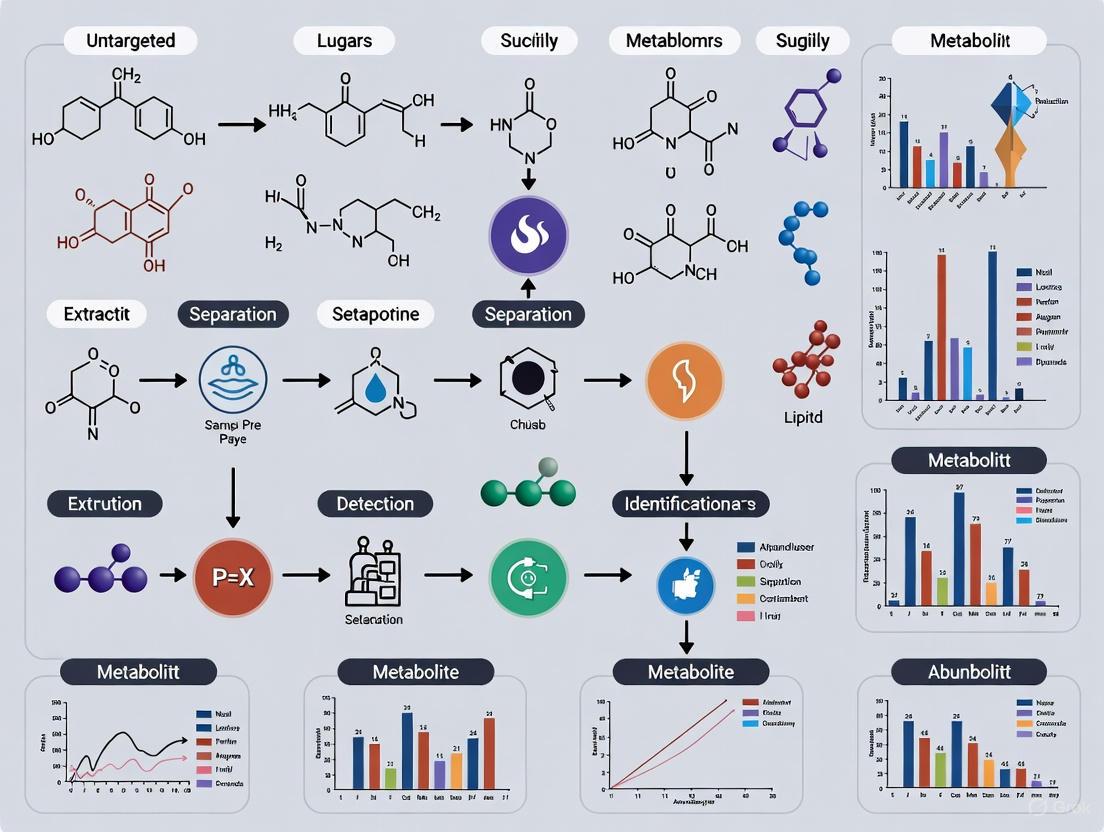
Untargeted metabolomics provides an unbiased, comprehensive analysis of the complete set of small-molecule metabolites in a biological system, offering a direct snapshot of biochemical activity and physiological status.
Untargeted Metabolomics: A Comprehensive Guide to Global Metabolic Profiling in Disease Research and Drug Discovery
Abstract
Untargeted metabolomics provides an unbiased, comprehensive analysis of the complete set of small-molecule metabolites in a biological system, offering a direct snapshot of biochemical activity and physiological status. This article explores the foundational principles, advanced methodologies, and practical applications of untargeted metabolomics for researchers, scientists, and drug development professionals. It covers the complete workflow from experimental design and data acquisition to bioinformatics analysis and biological interpretation, highlighting its transformative role in biomarker discovery, understanding disease mechanisms, and advancing precision medicine. The content also addresses key challenges in metabolite identification and data validation while comparing untargeted approaches with targeted strategies to guide appropriate experimental design.
The Foundations of Untargeted Metabolomics: An Unbiased Lens on Biological Systems
Untargeted metabolomics is a systematic, unbiased approach for comprehensively profiling the complete set of small-molecule metabolites within a biological system. Unlike targeted methods that focus on predefined compounds, untargeted metabolomics aims to detect and measure both known and novel metabolites without prior assumptions, providing a holistic view of the metabolic state [1]. This methodology has emerged as a pivotal tool in modern biosciences, enabling researchers to capture the holistic metabolic state of samples derived from cell cultures, clinical specimens, food matrices, or environmental sources [2]. By combining high-resolution mass spectrometry with complementary analytical techniques, untargeted metabolomics provides an unprecedented window into dynamic biochemical pathways, allowing scientists to discover novel biomarkers, elucidate complex disease mechanisms, and accelerate drug and nutritional research [2].
The fundamental value of untargeted metabolomics lies in its ability to reveal the functional outcome of physiological processes and environmental influences. As the most downstream product of the omics cascade, metabolites offer the most immediate reflection of cellular activity and phenotype. The metabolome represents the final response of a biological system to genetic, environmental, or therapeutic interventions, making its comprehensive profiling particularly valuable for understanding complex biological mechanisms [3]. This approach is especially effective for exploratory studies such as early-stage biomarker discovery, drug mechanism research, and evaluating the metabolic effects of diet or environmental exposures [1].
Core Principles and Technological Foundations
Analytical Platforms and Technologies
Untargeted metabolomics relies primarily on advanced separation and detection technologies to achieve broad coverage of diverse metabolite classes. The field is dominated by several complementary analytical platforms, each with distinct strengths and applications:
Liquid Chromatography-Mass Spectrometry (LC-MS): Serves as the workhorse for broad-spectrum profiling due to its versatility in detecting metabolites across diverse molecular weights and polarities. LC-MS offers superior sensitivity for detecting both abundant compounds and rare, low-abundance metabolites with precision [3]. Modern high-resolution mass spectrometers now routinely achieve parts-per-billion sensitivity, enabling detection of low-abundance metabolites that were once beyond reach [2].
Gas Chromatography-Mass Spectrometry (GC-MS): Preferred for volatile metabolites in environmental or nutritional studies, offering excellent separation efficiency and reproducibility [2]. This technology is particularly valuable for analyzing volatile organic compounds and metabolites that can be readily derivatized for gas chromatographic separation.
Capillary Electrophoresis-Mass Spectrometry (CE-MS): Excels at polar compound detection, providing complementary coverage to LC-MS-based methods [2]. This technique is especially useful for analyzing highly polar ionic metabolites that may not be well-retained in reversed-phase liquid chromatography.
Nuclear Magnetic Resonance (NMR) Spectroscopy: Facilitates non-destructive analysis of complex mixtures and provides structural information without extensive sample preparation [2]. While generally less sensitive than mass spectrometry-based approaches, NMR offers excellent quantitative capabilities and can identify novel compounds without reference standards.
Table 1: Key Analytical Technologies in Untargeted Metabolomics
| Technology | Key Applications | Strengths | Limitations |
|---|---|---|---|
| LC-MS | Broad-spectrum metabolic profiling | Excellent coverage and sensitivity; handles diverse compound classes | Matrix effects; requires method optimization |
| GC-MS | Volatile compounds, metabolic profiling | High separation efficiency; robust compound identification | Requires derivatization for many metabolites |
| CE-MS | Polar ionic metabolites | Excellent for polar compounds; minimal sample requirements | Limited compatibility with non-polar metabolites |
| NMR | Structural elucidation, absolute quantification | Non-destructive; provides structural information; quantitative | Lower sensitivity compared to MS techniques |
Metabolite Coverage and Chemical Diversity
Untargeted metabolomics platforms detect an extensive range of biochemical compounds spanning multiple chemical classes and pathways. Leading commercial platforms can identify thousands of metabolites, with coverage continuously expanding through technological advancements and database improvements. Metabolon's reference library, for instance, contains over 5,400 annotated metabolites across 70 major biochemical pathways, providing comprehensive representation of diverse biological phenotypes [3]. Other providers like MetwareBio offer databases encompassing over 280,000 curated compounds, combining in-house, public, and AI-augmented entries to ensure high-confidence metabolite identification [1].
The detectable metabolite classes include amino acids and their derivatives, carbohydrates, organic acids, nucleotides, lipids, amines, alcohols, ketones, aldehydes, steroids, bile acids, vitamins, and various secondary metabolites [1]. These compounds span critical pathways such as energy metabolism, amino acid metabolism, nucleotide biosynthesis, lipid metabolism, and redox balance, enabling comprehensive insights into cellular function and systemic metabolic regulation [1].
Table 2: Major Metabolite Classes Detectable in Untargeted Metabolomics
| Metabolite Class | Representative Compounds | Biological Significance |
|---|---|---|
| Amino acids and derivatives | Glycine, L-threonine, L-arginine | Protein synthesis; energy metabolism; signaling |
| Lipids | O-acetylcarnitine, γ-linolenic acid, lysophosphatidylcholine | Membrane structure; energy storage; signaling |
| Organic acids and derivatives | 3-hydroxybutyric acid, adipic acid, hippuric acid | Energy metabolism; detoxification; microbial co-metabolism |
| Nucleotides and derivatives | Adenine, guanine, 2'-Deoxycytidine | Genetic information; energy transfer; signaling |
| Carbohydrates and derivatives | D-glucose, glucosamine, D-fructose 6-phosphate | Energy source; structural components; glycosylation |
| Benzenoids and derivatives | Benzoic acid, 3,4-dimethoxyphenylacetic acid | Plant secondary metabolites; microbial metabolites |
| Coenzymes and vitamins | Folic acid, pantothenic acid, vitamin D3 | Enzyme cofactors; antioxidants; regulatory molecules |
| Bile acids | Glycocholic acid, deoxycholic acid, taurolithocholic acid | Lipid digestion; signaling molecules; microbiota interactions |
Experimental Workflow and Methodologies
The untargeted metabolomics workflow comprises multiple interconnected stages, each requiring careful optimization to ensure data quality and biological relevance. The entire process involves complex processing, analysis, and interpretation tasks where visualization plays a crucial role at every stage for data inspection, evaluation, and sharing capabilities [4].
Figure 1: Untargeted Metabolomics Workflow
Sample Preparation and Metabolite Extraction
The initial phase of sample preparation is critical for maintaining metabolic integrity and ensuring analytical reproducibility. Sample-specific extraction protocols tailored to the physicochemical characteristics of each sample type maximize metabolite recovery and signal consistency for diverse matrices including tissues, biofluids, environmental samples, and cell cultures [1]. Key considerations include:
Sample Collection and Quenching: Rapid quenching of metabolic activity is essential to preserve the in vivo metabolic state. This typically involves flash-freezing in liquid nitrogen or using specialized quenching solutions for cell cultures.
Metabolite Extraction: Multi-solvent systems (e.g., methanol, acetonitrile, chloroform, water) are employed to extract metabolites with diverse physicochemical properties. The choice of extraction method significantly impacts metabolite coverage and should be optimized for specific sample types.
Quality Control Implementation: A standardized, multi-point quality control system includes over 10 indicators—such as blanks, solvents, pooled QCs, internal standards, and reference samples—to ensure data accuracy, reproducibility, and batch comparability throughout the workflow [1].
Recommended sample requirements vary by sample type. For liquid samples like plasma or serum, 100μL is recommended, with a minimum of 20μL, while biological replication should exceed 30 for human studies and 6 for animal studies [1]. Proper sample randomization and inclusion of quality control samples throughout the analytical sequence are essential for identifying and correcting technical variations.
Analytical Detection and Separation
Chromatographic separation coupled with high-resolution mass spectrometry forms the core of untargeted metabolomics detection. Utilizing multiple chromatographic separation mechanisms significantly enhances metabolite coverage:
Reversed-Phase Chromatography (T3 columns): Effective for separating medium to non-polar metabolites including lipids, bile acids, and steroids.
Hydrophilic Interaction Liquid Chromatography (HILIC): Ideal for polar metabolites such as amino acids, carbohydrates, nucleotides, and organic acids.
Liquid Chromatography-Mass Spectrometry (LC-MS) Parameters: Advanced LC-MS platforms utilize ultra-high-performance liquid chromatography (UHPLC) with sub-2μm particle columns to achieve superior separation efficiency, coupled with high-resolution mass spectrometers capable of accurate mass measurements with errors <5 ppm.
Mass spectrometry detection typically employs both positive and negative ionization modes to maximize metabolite coverage. Data-independent acquisition (DIA) methods like SWATH-MS, as well as data-dependent acquisition (DDA), are commonly used to fragment multiple ions simultaneously, generating comprehensive MS/MS spectral data for confident metabolite identification [4].
Data Processing and Metabolite Identification
Following data acquisition, raw spectral data undergoes extensive processing to extract meaningful biological information. This complex process involves multiple computational steps where visualization provides core components of data inspection, evaluation, and sharing capabilities [4].
Figure 2: Data Processing Pipeline
The data processing workflow includes several key steps:
Peak Detection and Deconvolution: Algorithmic identification of mass spectral features from raw data, distinguishing true metabolite signals from chemical noise and accounting for in-source fragments, adducts, and isotopes [3].
Retention Time Alignment: Correction of retention time shifts across multiple samples to ensure consistent feature matching, addressing the challenging cross-sample alignment of features affected by retention time and mass shifts [4].
Metabolite Annotation and Identification: Confidence levels in metabolite identification follow the Metabolomics Standards Initiative guidelines, ranging from Level 1 (highest confidence, confirmed with reference standard) to Level 5 (lowest confidence) [3]. Leading platforms employ a chemocentric approach, prioritizing true metabolite identification over significant ion feature changes, enhancing statistical robustness [3].
Quality Assessment: Rigorous quality evaluation covers total ion current inspection, PCA, correlation analysis, and CV distribution, among other metrics [1]. This includes assessing potential matrix effects and experimental data quality affirmation throughout the processing steps [4].
Essential Research Reagents and Materials
Successful untargeted metabolomics requires carefully selected reagents and materials to ensure analytical robustness. The following table details key research reagent solutions essential for experimental workflows:
Table 3: Essential Research Reagents and Materials for Untargeted Metabolomics
| Reagent/Material | Function | Application Notes |
|---|---|---|
| Sample Extraction Solvents (methanol, acetonitrile, chloroform) | Protein precipitation and metabolite extraction | Multi-solvent systems maximize coverage of diverse metabolite classes; pre-cooled solvents enhance metabolite stability |
| Internal Standards (isotopically labeled compounds) | Quality control and quantification correction | Correct for technical variability; should cover multiple chemical classes; added prior to extraction |
| Quality Control Materials (pooled QC samples, solvent blanks, reference standards) | Monitoring analytical performance | Pooled QCs from all samples assess system stability; blanks identify contamination; reference standards validate identifications |
| Chromatography Columns (T3 reversed-phase, HILIC) | Metabolite separation | Column chemistry selection dramatically impacts metabolite coverage; dedicated columns for different metabolite classes recommended |
| Mobile Phase Additives (formic acid, ammonium acetate, ammonium hydroxide) | Modifying separation and ionization | Acidic additives enhance positive ionization; basic additives enhance negative ionization; volatile buffers compatible with MS |
| Mass Spectrometry Calibrants | Instrument calibration | Ensure mass accuracy; infused continuously or periodically during analysis depending on instrument platform |
Data Analysis and Bioinformatics
Statistical Analysis and Visualization Approaches
Untargeted metabolomics generates complex, high-dimensional datasets requiring sophisticated statistical approaches and visualization strategies for meaningful interpretation. Data visualization is a crucial step at every stage of the metabolomics workflow, where it provides core components of data inspection, evaluation, and sharing capabilities [4].
The statistical framework typically includes:
Multivariate Analysis: Principal Component Analysis (PCA) and Partial Least Squares-Discriminant Analysis (PLS-DA) are routinely employed to identify patterns, trends, and group separations within the metabolic data. These approaches help reduce data dimensionality while preserving metabolic variance structure.
Univariate Statistics: T-tests, ANOVA, and fold-change calculations identify significantly altered metabolites between experimental conditions. Volcano plots visually represent both statistical significance and magnitude of change, giving a snapshot view of treatment impacts and affected metabolites [4] [1].
Cluster Analysis and Heatmaps: Hierarchical clustering and heatmap visualizations organize metabolites and samples based on similarity, revealing coherent metabolic patterns and subgroups within the data [4].
Advanced visual analytics approaches have become increasingly important for untargeted metabolomics. Information visualization (InfoVis) research focuses on how to best understand, explore, and analyze data to generate knowledge through interactive and exploratory visualizations [4]. These visual analysis models represent sensemaking as a non-linear, often circular process involving data, models, visualizations, and knowledge, all connected by user-driven interaction [4].
Pathway and Functional Interpretation
Biological interpretation represents the ultimate goal of untargeted metabolomics, transforming spectral data into physiological insights. Pathway analysis tools map identified metabolites onto known biochemical pathways, revealing functionally coordinated metabolic changes:
Pathway Enrichment Analysis: Statistical approaches (e.g., Fisher's exact test, hypergeometric test) identify biochemical pathways significantly enriched with altered metabolites, prioritizing biologically relevant systems.
Metabolic Network Visualization: Network-based representations illustrate relationships between metabolites and pathways, highlighting key regulatory nodes and biochemical connections [4].
Integration with Multi-Omics Data: Combining metabolomic data with transcriptomic, proteomic, and genomic datasets provides systems-level insights into regulatory mechanisms and biological processes [1] [3].
Leading bioinformatics platforms, such as Metabolon's Integrated Bioinformatics Platform, combine multivariate analysis tools with data enrichment features like pathway mapping and specialized analytical lenses, enabling researchers to seamlessly transition between different analytical views and biological interpretations [3].
Applications in Biomedical Research and Drug Development
Untargeted metabolomics has become an indispensable tool across diverse research domains, with particularly significant impact in drug research and development. It greatly facilitates the entire drug development pipeline from understanding disease mechanisms and identifying drug targets to predicting drug response and enabling personalized treatment [5].
Key applications include:
Disease Mechanism Elucidation and Biomarker Discovery: By profiling global metabolic changes in patient samples, researchers can uncover metabolic signatures associated with cancer, metabolic disorders, neurodegenerative diseases, and other pathological conditions. This approach supports early diagnosis, patient stratification, and therapeutic monitoring in clinical and translational research [1].
Pharmacology and Drug Response Studies: Untargeted metabolomics enables comprehensive evaluation of drug-induced metabolic changes, helping assess drug efficacy, toxicity, and off-target effects by capturing metabolic shifts in blood, tissue, or urine samples [1]. This approach is widely used in preclinical studies to support drug mechanism elucidation and safety evaluation [1].
Microbial Metabolism and Host-Microbiome Interaction: This approach provides a powerful tool for studying microbial metabolism and host-microbiome interactions, allowing researchers to track microbial-derived metabolites, analyze gut microbial activity, and explore how microbiota influence host physiology [1].
The market growth for untargeted metabolomics reflects its expanding applications, with the market size estimated at USD 494.50 million in 2024 and expected to reach USD 540.40 million in 2025, at a CAGR of 10.42% to reach USD 1,093.34 million by 2032 [2]. This growth is driven by increasing adoption across academic and government research, pharmaceutical and biotechnology development, as well as food and beverage quality control [2].
Future Perspectives and Concluding Remarks
Untargeted metabolomics continues to evolve rapidly, with several emerging trends shaping its future development. Algorithmic innovations have kept pace with analytical advancements, with machine learning frameworks now embedded into data processing pipelines to automate peak detection, deconvolution, and compound annotation [2]. These software advancements have dramatically increased throughput and reproducibility, allowing research teams to focus on biological interpretation rather than manual curation [2].
The integration of artificial intelligence and machine learning has transformed raw spectral data into actionable insights, reducing the time from sample acquisition to meaningful interpretation [2]. Concurrently, cloud-native infrastructures and FAIR data principles (Findable, Accessible, Interoperable, Reusable) have fostered a collaborative ethos, enabling secure, cross-institutional sharing of high-dimensional datasets without compromising privacy or intellectual property [2].
As untargeted metabolomics converges with precision medicine initiatives and environmental monitoring, these transformative shifts underscore a broader trend toward integrated, systems-level exploration of metabolic networks [2]. The approach continues to redefine our understanding of biochemical systems, providing an essential toolkit for decoding the complex metabolic underpinnings of health, disease, and therapeutic intervention.
In conclusion, untargeted metabolomics represents a powerful paradigm for comprehensive biochemical phenotyping, enabling researchers to move beyond targeted hypothesis testing to exploratory discovery of novel metabolic pathways and biomarkers. As technological capabilities continue to advance and computational methods become increasingly sophisticated, untargeted metabolomics is poised to remain at the forefront of systems biology and personalized medicine initiatives, providing unprecedented insights into the metabolic basis of biological function and dysfunction.
Untargeted metabolomics represents a groundbreaking approach in molecular biology, offering an unparalleled exploration of the metabolome—the complete set of metabolites within a biological sample [6]. Unlike targeted metabolomics, which focuses on pre-selected metabolites, untargeted metabolomics embraces a holistic strategy, aiming to capture as many small molecules as possible without bias toward specific compounds or pathways [6] [7]. This comprehensive scope allows researchers to gain deeper insights into the complex biochemical activities within cells, reflecting the cumulative effects of genetic, environmental, and lifestyle factors on an organism [6].
The fundamental advantage of this approach lies in its ability to uncover novel metabolites and unexpected metabolic shifts that might otherwise remain undetected in targeted analyses [6]. By providing a snapshot of the biochemical phenotype, untargeted metabolomics offers a unique window into the metabolic dynamics underpinning diverse biological processes, from disease mechanisms to therapeutic interventions [6]. The exploitation of untargeted metabolomics implies no prior decision about the metabolites or pathways to be studied, thus allowing screening of metabolic phenomena and bringing an objective perspective to biological discovery [7].
Core Advantages in Metabolic Discovery
Comprehensive Metabolome Coverage
The primary advantage of untargeted metabolomics is its capacity for extensive metabolome coverage without predetermined constraints. While targeted approaches focus on specific compounds, potentially overlooking significant metabolic changes, untargeted analysis captures a broader spectrum of the metabolome [6]. This inclusivity is essential for discovering unknown metabolites that could play critical roles in health and disease [6]. In practice, a single untargeted experiment can simultaneously analyze hundreds to thousands of metabolites, as demonstrated in a recent CHO cell study that identified 563 cellular and 386 supernatant metabolites [7].
Discovery of Unexpected Metabolic Shifts
Untargeted metabolomics facilitates the identification of unexpected metabolic shifts due to disease, environmental exposure, or therapeutic interventions [6]. Such discoveries can lead to new hypotheses and research directions, driving innovation in fields like drug discovery and personalized medicine [6]. For instance, in bioprocessing applications, untargeted approaches have revealed metabolic reprogramming events that correlate with higher productivity, including the shift from lactate production to consumption and the identification of unexpected metabolites like citraconate and 5-aminovaleric acid [7].
Table: Key Advantages of Untargeted Metabolomics for Novel Discovery
| Advantage | Technical Basis | Impact on Research |
|---|---|---|
| Unbiased Metabolic Profiling | No pre-selection of metabolites or pathways [7] | Enables discovery of previously unknown metabolic alterations [6] |
| Comprehensive Coverage | Detection of hundreds to thousands of metabolites simultaneously [7] | Provides holistic view of metabolic networks and interactions [6] |
| Novel Metabolite Discovery | Ability to detect unannotated spectral features [6] | Identifies new biomarkers and metabolic pathway components [6] |
| Unexpected Shift Detection | Data-driven analysis without hypothesis constraints [7] | Reveals unanticipated metabolic adaptations to stimuli [6] |
Experimental Framework and Methodologies
Untargeted Metabolomics Workflow
The following diagram illustrates the comprehensive workflow for untargeted metabolomics, from sample preparation to data interpretation:
Sample Preparation Protocols
Proper sample preparation is critical for maintaining metabolic integrity and ensuring comprehensive metabolite detection. The following protocol outlines key steps:
- Rapid Quenching: Immediate termination of metabolic activity using liquid nitrogen or cold methanol (-40°C) to preserve metabolic profiles [7].
- Metabolite Extraction: Utilization of dual-phase extraction systems (e.g., methanol/chloroform/water) to recover both hydrophilic and lipophilic metabolites [7].
- Protein Precipitation: Removal of proteins by cold organic solvents or filtration to prevent interference during analysis [7].
- Sample Normalization: Adjustment based on cell count or protein content to ensure comparability across samples [7].
LC-MS/MS Analytical Parameters
Liquid chromatography coupled with tandem mass spectrometry (LC-MS/MS) serves as the cornerstone analytical platform for untargeted metabolomics. The following parameters are critical for optimal performance:
Table: LC-MS/MS Parameters for Untargeted Metabolomics
| Parameter | Settings | Purpose |
|---|---|---|
| Chromatography | Reversed-phase (C18) or HILIC columns | Separation of diverse metabolite classes |
| Gradient | 10-20 minute organic solvent gradient | Optimal separation of metabolites |
| Mass Analyzer | High-resolution (Orbitrap or Q-TOF) | Accurate mass measurement for elemental composition |
| Mass Range | m/z 50-1500 | Broad coverage of small molecules |
| Fragmentation | Data-dependent acquisition (DDA) | Structural elucidation via MS/MS spectra |
| Collision Energy | Stepped (e.g., 20, 40, 60 eV) | Comprehensive fragmentation patterns |
Data Processing and Visualization Strategies
From Raw Data to Biological Insights
The transformation of raw spectral data into biological knowledge requires sophisticated computational approaches and visualization strategies:
Key Visualization Techniques for Data Exploration
Effective data visualization is crucial at every stage of the untargeted metabolomics workflow, providing core components of data inspection, evaluation, and sharing capabilities [4]. The following visualization strategies have emerged as particularly valuable:
- Principal Component Analysis (PCA) Scores Plots: Provide overview of sample groupings and outliers, highlighting overall metabolic differences between experimental conditions [4] [7].
- Volcano Plots: Combine statistical significance (p-values) with magnitude of change (fold-change) to highlight metabolites most affected by experimental conditions [4].
- Cluster Heatmaps: Visualize patterns in metabolite abundance across sample groups, revealing co-regulated metabolites and sample clusters [4].
- Pathway Maps: Display metabolites within their biochemical context, highlighting affected pathways and network relationships [4].
- Interactive Spectral Viewers: Allow exploration of raw MS/MS spectra for structural elucidation and annotation validation [4].
Advanced Integration with Mechanistic Modeling
Data-Driven Modeling Approaches
The integration of untargeted metabolomics with mechanistic modeling represents a cutting-edge approach for extracting maximal biological insight from complex metabolic data. Recent advances have demonstrated the power of combining these methodologies:
Application Case Study: CHO Cell Bioprocessing
A recent study exemplifies the power of combining untargeted metabolomics with mechanistic modeling [7]. Researchers analyzed LC/MS/MS metabolomics data (563 cellular and 386 supernatant metabolites) to determine key metabolites involved in productivity improvement in CHO cell cultures [7]. The approach yielded significant insights:
Table: Key Discoveries from CHO Cell Metabolomics Study
| Discovery Category | Specific Findings | Impact |
|---|---|---|
| Network Expansion | Original network: 127 reactions → Expanded network: 370 reactions [7] | Significantly enhanced coverage of metabolic capabilities |
| Novel Metabolites | Identification of citraconate and 5-aminovaleric acid [7] | Revealed previously unknown metabolic players in productivity |
| Pathway Analysis | 300 metabolic pathways identified; 25 associated with production [7] | Provided mechanistic understanding of productivity drivers |
| Key Metabolites | 21 key metabolites significant for productivity improvement [7] | Offered targets for rational process optimization |
The mechanistic modeling approach using elementary flux modes (EFM)-based column generation successfully identified and simulated the underlying metabolic pathways, paving the way for rational process optimization supported by mechanistic understanding [7]. This methodology demonstrates how untargeted metabolomics can move beyond simple biomarker discovery to provide genuine mechanistic insights into complex biological systems.
Essential Research Reagents and Materials
Successful untargeted metabolomics studies require carefully selected reagents and materials to ensure comprehensive metabolite coverage and analytical robustness.
Table: Essential Research Reagent Solutions for Untargeted Metabolomics
| Reagent/Material | Function | Application Notes |
|---|---|---|
| Cold Methanol (-40°C) | Metabolic quenching and extraction [7] | Preserves labile metabolites and enzymatic activity |
| Dual-Phase Extraction Solvents | Simultaneous recovery of hydrophilic and lipophilic metabolites [7] | Chloroform:methanol:water systems provide broad coverage |
| UPLC/MS-Grade Solvents | Mobile phase for high-resolution separation | Minimizes background interference and ion suppression |
| HILIC & Reversed-Phase Columns | Chromatographic separation of diverse metabolites | Complementary selectivity for comprehensive coverage |
| Mass Spectrometry Calibrants | Instrument calibration for mass accuracy | Essential for confident metabolite identification |
| Stable Isotope-Labeled Standards | Quality control and semi-quantitation | Corrects for matrix effects and analytical variability |
| Chemical Derivatization Reagents | Enhancement of detection for certain metabolite classes | Improves sensitivity for amines, organic acids, etc. |
| Database Subscription Services | Metabolite annotation and identification | Critical for structural elucidation (e.g., HMDB, MassBank) |
Untargeted metabolomics provides an unparalleled platform for discovering novel metabolites and unexpected metabolic shifts that underlie biological processes and disease states [6]. By embracing a comprehensive, unbiased approach to metabolic profiling, researchers can uncover previously overlooked metabolic alterations and identify new biomarkers and therapeutic targets [6]. The integration of advanced computational approaches, particularly mechanistic modeling and sophisticated visualization strategies, enhances our ability to extract meaningful biological insights from complex metabolomics datasets [4] [7]. As the field continues to evolve with improvements in analytical technologies, computational methods, and database resources, untargeted metabolomics is poised to remain at the forefront of biological discovery, systems biology, and precision medicine initiatives [6].
The Metabolome as a Direct Signature of Phenotype and Biochemical Activity
Metabolites, defined as the biochemical end products of cellular regulatory processes, constitute the metabolome of a biological system and provide a functional readout of its phenotypic state [8] [9]. Unlike other omics layers, the metabolome represents the ultimate response to genetic, environmental, and pathophysiological influences, capturing the dynamic biochemical activity within cells, tissues, or whole organisms at a specific point in time [8] [10]. The quantitative measurement of this dynamic, multiparametric metabolic response—a discipline known as metabonomics—offers a direct signature of phenotype by revealing the functional outcome of complex biological networks [10]. In the context of untargeted metabolomics for global metabolic profile discovery, researchers can simultaneously profile thousands of small molecules without predefined targets, thereby uncovering novel biomarkers and mechanistic insights into disease processes, drug responses, and physiological adaptations [11] [9] [12].
Analytical Foundations of Untargeted Metabolomics
Core Technologies and Instrumentation
Untargeted metabolomics relies on advanced analytical platforms to achieve comprehensive coverage of the metabolome, which exhibits vast chemical diversity and concentration ranges. The two primary technologies employed are Mass Spectrometry (MS) and Nuclear Magnetic Resonance (NMR) spectroscopy, each with distinct advantages and applications [10] [2].
Liquid Chromatography-Mass Spectrometry (LC-MS) has emerged as the predominant platform due to its high sensitivity, broad dynamic range, and capability to detect thousands of metabolite features in a single analysis [11] [12]. A typical LC-MS workflow for untargeted metabolomics involves:
- Metabolite Separation: Ultra-performance liquid chromatography (UPLC) with reverse-phase C18 columns provides high-resolution separation of metabolites prior to mass analysis [12].
- Mass Analysis: High-resolution mass spectrometers, particularly quadrupole time-of-flight (Q-TOF) and Orbitrap instruments, enable accurate mass measurement with precision sufficient for putative compound identification [12] [2].
- Ionization Techniques: Electrospray ionization (ESI) is most commonly employed, with both positive and negative ion modes necessary to capture the broadest possible metabolome coverage [12].
Nuclear Magnetic Resonance (NMR) Spectroscopy offers complementary advantages, including non-destructive analysis, minimal sample preparation, and absolute quantification capabilities without requiring internal standards [10]. NMR is particularly valuable for large-scale epidemiologic studies due to its high reproducibility and ability to detect a wide variety of metabolites from dietary, gut microbial, and host metabolism sources in a single analytical sweep [10].
Table 1: Comparison of Primary Analytical Platforms for Untargeted Metabolomics
| Platform | Sensitivity | Coverage | Quantification | Throughput | Key Applications |
|---|---|---|---|---|---|
| LC-MS | High (pM-fM) | Broad (>10,000 features) | Relative (requires standards) | Medium-High | Biomarker discovery, pathway analysis, drug metabolism |
| GC-MS | High (pM-fM) | Volatile/semi-volatile compounds | Relative (requires derivation) | Medium | Metabolic disorders, toxicology, plant metabolomics |
| NMR | Low (μM-mM) | Limited (~100-200 compounds) | Absolute | High | Epidemiologic studies, in vivo metabolism, structural ID |
| CE-MS | High (pM-fM) | Polar/ionic compounds | Relative | Medium | Polar metabolome, energy metabolism, clinical diagnostics |
Experimental Workflow and Sample Preparation
Robust sample preparation is critical for meaningful untargeted metabolomics results. Variations in collection, handling, and storage can introduce artefacts that overshadow biological variation [10]. The following protocol for plasma metabolomics exemplifies the stringent requirements for sample integrity:
Plasma Sample Preparation Protocol [12]:
- Collection: Collect blood in EDTA tubes after 10-12 hours of fasting, followed by centrifugation at 2,000 × g for 15 minutes at 4°C to separate plasma.
- Storage: Aliquot plasma (100-200 μL) into sterile tubes and store immediately at -80°C to minimize degradation.
- Metabolite Extraction: Thaw samples on ice and mix 100 μL plasma with 700 μL of cold extraction solvent (methanol:acetonitrile:water, 4:2:1, v/v/v) containing internal standards.
- Precipitation: Vortex for 1 minute, incubate at -20°C for 2 hours, then centrifuge at 25,000 × g at 4°C for 15 minutes.
- Preparation for Analysis: Transfer 600 μL of supernatant to a new tube, dry using a vacuum concentrator, and reconstitute in 180 μL of methanol:water (1:1, v/v).
- Clearance: Vortex for 10 minutes, then centrifuge at 25,000 × g at 4°C for 15 minutes to remove insoluble debris before LC-MS analysis.
For urine-based studies, 24-hour collections are preferred as they provide time-averaged metabolic patterns, though spot or overnight collections are acceptable when 24-hour collection is infeasible [10]. Strict standardization of operating procedures and comprehensive metadata recording are essential throughout the process [10].
Diagram 1: Untargeted metabolomics workflow from sample to biological insight.
Data Processing and Bioinformatics Pipeline
From Raw Data to Metabolic Features
The transformation of raw instrumental data into biologically interpretable information requires sophisticated bioinformatic pipelines. LC-MS-based untargeted metabolomics generates thousands of peaks, each with a unique m/z value and retention time, creating substantial computational challenges [11]. The primary steps include:
- Peak Detection and Alignment: Nonlinear retention-time alignment algorithms correct for experimental drift without requiring internal standards. The XCMS software package implements such algorithms to identify dysregulated metabolite features between sample groups [11].
- Feature Matrix Creation: Peak intensities are aligned across all samples to create a data matrix where rows represent samples and columns represent metabolite features [11].
- Meta-Analysis for Complex Study Designs: Tools like metaXCMS enable second-order analysis across multiple sample groups (e.g., "healthy" vs. "active disease" vs. "inactive disease") to prioritize interesting metabolite features prior to structural identification [11].
Statistical Analysis and Biomarker Discovery
Multivariate statistical modeling is essential for effective data visualization and biomarker discovery while controlling for false positive associations [10]. Both unsupervised and supervised methods are employed:
- Unsupervised Methods: Principal Component Analysis (PCA) provides initial data overview and identifies inherent clustering patterns and outliers.
- Supervised Methods: Partial Least Squares-Discriminant Analysis (PLS-DA) and Orthogonal PLS-DA (OPLS-DA) maximize separation between predefined sample classes and identify features most responsible for differentiation.
Metabolome-wide association studies (MWA) share similarities with genome-wide association studies, enabling discovery of novel associations while generating complex data arrays requiring specialized statistical approaches to manage false discovery rates [10].
Advanced Applications in Phenotype Decoding
Distinguishing Disease Subtypes through Metabolic Signatures
Untargeted metabolomics has demonstrated remarkable utility in distinguishing pathologically similar conditions with different etiologies. A recent study of hypercholesterolemia subtypes exemplifies this application:
Experimental Design [12]:
- Cohorts: Familial hypercholesterolemia (FH) with LDL-C ≥190 mg/dL and confirmed pathogenic variants; non-genetic hypercholesterolemia (HC) with LDL-C 130-159 mg/dL without FH variants; healthy controls with LDL-C <100 mg/dL.
- Analytical Platform: UPLC-Q-TOF/MS with both positive and negative ion modes.
- Statistical Analysis: Univariate and multivariate analyses followed by pathway enrichment using KEGG database.
Key Findings [12]:
- FH Signature: Distinct alterations in bile acid biosynthesis and steroid metabolism, with significant downregulation of cholic acid and elevation of 17α-hydroxyprogesterone.
- HC Signature: Characterized by increased uric acid and choline levels, with dysregulation in oleic acid and linoleic acid metabolism.
- Shared Metabolic Disturbances: Both groups showed alterations in sphinganine, D-α-hydroxyglutaric acid, and pyridoxamine, suggesting common pathways of cholesterol pathology.
Table 2: Key Metabolic Biomarkers Differentiating Hypercholesterolemia Subtypes
| Metabolite | Chemical Class | FH vs. Control | HC vs. Control | Proposed Biological Significance |
|---|---|---|---|---|
| 17α-Hydroxyprogesterone | Steroid hormone | Significantly upregulated | Unchanged | Potential FH-specific biomarker |
| Cholic Acid | Bile acid | Significantly downregulated | Unchanged | Impaired bile acid synthesis in FH |
| Uric Acid | Purine metabolite | Unchanged | Significantly upregulated | Gout risk indicator in HC |
| Choline | Quaternary ammonium | Unchanged | Significantly upregulated | Altered phospholipid metabolism in HC |
| Sphinganine | Sphingolipid | Dysregulated | Dysregulated | Common sphingolipid pathway disruption |
| Linoleic Acid | Fatty acid | Unchanged | Dysregulated | Oxidative stress and inflammation link |
Metabolomics Activity Screening (MAS) for Phenotype Modulation
Metabolomics activity screening integrates metabolomics data with pathway and systems biology information to identify endogenous metabolites that can actively modulate phenotypes [9]. This approach has revealed metabolites that influence diverse biological processes:
- Stem Cell Differentiation: Metabolic oxidation regulates embryonic stem cell differentiation through α-ketoglutarate and other TCA cycle intermediates [9].
- Oligodendrocyte Maturation: A metabolomics-guided approach discovered a metabolite that enhances oligodendrocyte maturation, with potential applications for remyelination therapies [9].
- Immune Function: Metabolites including L-arginine modulate T cell metabolism and enhance anti-tumor activity [9].
- Chronic Pain: Altered sphingolipids, including sphingosine-1-phosphate, have been implicated in chronic pain of neuropathic origin [9].
Diagram 2: Metabolomics Activity Screening (MAS) workflow for phenotype modulation.
The Scientist's Toolkit: Essential Research Reagents and Materials
Successful untargeted metabolomics requires carefully selected reagents and materials to ensure reproducibility and accuracy. The following table details essential components for a typical untargeted metabolomics workflow:
Table 3: Essential Research Reagents and Materials for Untargeted Metabolomics
| Category | Specific Items | Function & Application | Technical Considerations |
|---|---|---|---|
| Sample Collection | EDTA tubes, citrate tubes, sterile Eppendorf tubes | Biofluid collection and preservation; prevents coagulation and metabolic degradation | Maintain samples at 4°C during processing; avoid repeated freeze-thaw cycles [10] |
| Extraction Solvents | Methanol, acetonitrile, water (HPLC grade), chloroform | Metabolite extraction and protein precipitation | Use cold solvents (4°C or -20°C); methanol:acetonitrile:water (4:2:1) shown effective for plasma [12] |
| Internal Standards | Stable isotope-labeled compounds | Quality control, normalization, and quantification | Use standards not endogenous to sample; add at beginning of extraction for process monitoring [11] |
| Chromatography | UPLC BEH C18 columns, guard columns | High-resolution separation of metabolites prior to MS detection | Column temperature stability (±0.5°C) critical for retention time reproducibility [12] |
| Mass Spectrometry | Formic acid, ammonium formate | Mobile phase modifiers for improved ionization | 0.1% formic acid for positive mode; 10mM ammonium formate for negative mode [12] |
| Data Processing | Reference spectral libraries (HMDB, mzCloud) | Metabolite identification and annotation | Use multiple databases (HMDB, KEGG, LipidMaps) for comprehensive coverage [12] |
Future Perspectives and Concluding Remarks
The field of untargeted metabolomics continues to evolve rapidly, driven by technological advancements and growing recognition of its value in phenotype characterization. Several trends are shaping its future development:
- Technological Convergence: Integration of artificial intelligence and machine learning with mass spectrometry data processing is transforming raw spectral data into actionable biological insights, reducing interpretation time and enhancing discovery potential [2].
- Multi-Omic Integration: Combining metabolomic data with genomic, transcriptomic, and proteomic datasets provides systems-level understanding of biological processes and disease mechanisms [9] [10].
- Epidemiologic Scale Applications: Metabolic phenotyping is now being applied to large-scale population studies, enabling metabolome-wide association studies that capture information on dietary, xenobiotic, lifestyle, and genetic influences on health [10].
- Market and Infrastructure Growth: The untargeted metabolomics market is projected to grow from USD 494.50 million in 2024 to USD 1,093.34 million by 2032, reflecting increased adoption across academic, pharmaceutical, and clinical diagnostics sectors [2].
The metabolome indeed provides a direct signature of phenotype and biochemical activity, serving as the closest omics layer to functional outcomes. As untargeted metabolomics methodologies continue to mature and integrate with other technologies, they offer unprecedented opportunities to decode complex biological systems, discover novel biomarkers, and identify metabolic modulators of phenotype with significant potential for therapeutic intervention.
Untargeted metabolomics aims to provide a comprehensive, global analysis of all small-molecule metabolites within a biological system, offering a direct functional readout of cellular activity and physiological status [13] [11]. This field is a cornerstone of systems biology, enabling discoveries in disease mechanism elucidation, biomarker identification, and drug development [5]. The complexity and vast dynamic range of the metabolome mean that no single analytical technology can capture its entirety. Consequently, modern metabolomics relies on a synergistic, multi-platform approach. Nuclear Magnetic Resonance (NMR) spectroscopy, Liquid Chromatography-Mass Spectrometry (LC-MS), and Gas Chromatography-Mass Spectrometry (GC-MS) constitute the three core technological platforms that provide complementary and comprehensive metabolomic coverage [14] [15] [16]. This technical guide details these platforms within the context of global metabolic profiling for discovery research, providing methodologies, comparisons, and practical resources for scientists.
Platform Comparison and Capabilities
The selection of an analytical platform is dictated by the specific research question, given the distinct advantages and limitations of each technology. The following table provides a summarized comparison of these core platforms.
Table 1: Core Analytical Platforms in Untargeted Metabolomics
| Feature | NMR | LC-MS | GC-MS |
|---|---|---|---|
| Analytical Principle | Detection of nuclei in a magnetic field | Chromatographic separation followed by mass-based detection | Chromatographic separation of volatilized metabolites followed by mass-based detection |
| Metabolite Coverage | Limited to tens to hundreds of metabolites; strong for sugars, amines, organic acids [14] [16] | Very broad; thousands of features; suitable for semi-polar and non-volatile compounds (e.g., lipids, secondary metabolites) [13] [17] | Broad for volatile or volatilizable compounds; hundreds of metabolites; strong for organic acids, amino acids, sugars, fatty acids [15] |
| Sensitivity | Low (μM range) [16] | High (pM-nM range) [13] | High (pM-nM range) |
| Sample Preparation | Minimal; often non-destructive; can use intact biofluids [14] [16] | Moderate to complex; requires metabolite extraction and protein precipitation [13] [18] | Complex; often requires derivatization to increase volatility [15] |
| Quantitation | Highly reproducible and absolute with a single internal standard or without [14] [16] | Relative quantitation is common; absolute quantitation requires specific internal standards [13] [17] | Excellent for absolute quantitation with internal standards; highly standardized [15] |
| Key Strengths | Non-destructive, highly reproducible, provides structural information, identifies novel metabolites, excellent for isotope flux studies [14] [16] | High sensitivity, broad metabolome coverage, can analyze labile compounds, no need for derivatization [13] [17] | Highly robust, reproducible, powerful spectral libraries for confident identification, considered a "gold standard" [15] |
| Primary Limitations | Low sensitivity, limited metabolite coverage due to spectral overlap [14] [16] | Ion suppression effects, requires method optimization (column, mobile phase), compound identification can be challenging [13] [4] | Limited to volatile/derivatizable metabolites, analysis time can be long, derivatization artifacts possible [15] |
Detailed Platform Methodologies
Nuclear Magnetic Resonance (NMR) Spectroscopy
NMR spectroscopy is a highly reproducible and quantitative platform that excels in providing definitive structural elucidation of metabolites without the need for destruction or extensive preparation of the sample [14] [16].
Experimental Protocol for Biofluid Analysis (e.g., Serum, Urine):
- Sample Preparation: For biofluids like serum or plasma, a key step is the removal of macromolecules. This is efficiently achieved by ultrafiltration using molecular weight cut-off filters. This step minimizes signal broadening caused by protein binding, which can interfere with metabolites like TSP or DSS, making them unreliable as internal standards in intact biofluids [14]. The filtered sample is then mixed with a deuterated solvent (e.g., D₂O) for signal locking and a known concentration of a chemical shift reference, such as 3-(trimethylsilyl)-propionic acid-d4 sodium salt (TSP-d4) or DSS-d6, in a buffered solution to maintain consistent pH [14] [16].
- Data Acquisition: Standard one-dimensional (1D) ( ^1H ) NMR spectra are acquired using a pulse sequence with water suppression (e.g., presaturation) to reduce the intense water signal. For complex mixtures, two-dimensional (2D) experiments like ( ^1H )-( ^1H ) COSY (Correlation Spectroscopy) or ( ^1H )-( ^13C ) HSQC (Heteronuclear Single Quantum Coherence) may be employed to resolve overlapping peaks and assist in metabolite identification [14].
- Data Processing and Quantification: The free induction decay (FID) is subjected to Fourier transformation, phase correction, and baseline correction. Absolute quantification is performed by integrating the area of a target metabolite's resonance and comparing it to the integral of the internal standard's resonance (e.g., TSP), whose concentration is known. The concentration is calculated using the formula: ( C{met} = (I{met} / I{std}) \times (N{std} / N{met}) \times C{std} ), where ( C ) is concentration, ( I ) is the integral, and ( N ) is the number of protons contributing to the signal [16].
Liquid Chromatography-Mass Spectrometry (LC-MS)
LC-MS is the workhorse of modern untargeted metabolomics due to its high sensitivity and expansive coverage of the metabolome. It couples the separation power of liquid chromatography with the detection power of mass spectrometry [13] [17].
Experimental Protocol for Global Profiling:
- Sample Collection and Metabolite Extraction: Rapid quenching of metabolism is critical for cell and tissue samples, typically using liquid nitrogen or cold methanol. A biphasic liquid-liquid extraction system, such as methanol-chloroform-water, is widely employed to simultaneously extract polar and non-polar metabolites [13]. For example, a common method uses a methanol:chloroform ratio of 2:1, followed by the addition of water to induce phase separation. Polar metabolites partition into the methanol-water phase, while lipids partition into the chloroform phase. Internal standards (e.g., stable isotope-labeled compounds) are added at the beginning of extraction to correct for technical variability [13] [18].
- LC-MS Analysis: Reversed-phase chromatography (e.g., C18 column) with a water-acetonitrile gradient containing 0.1% formic acid is standard for separating semi-polar metabolites. Mass spectrometry detection is typically performed using high-resolution mass analyzers (e.g., Q-TOF, Orbitrap) in both positive and negative electrospray ionization (ESI) modes to maximize metabolite coverage [13] [17]. Data-Dependent Acquisition (DDA) or Data-Independent Acquisition (DIA) methods are used to collect MS/MS fragmentation data for compound identification.
- Data Processing: Raw data processing involves peak detection, retention time alignment, and feature quantification using software tools like XCMS, MS-DIAL, MZmine, or integrated platforms like MetaboAnalystR 4.0 [11] [17]. This workflow converts raw data into a feature table of m/z, retention time, and intensity. Compound identification is achieved by matching accurate mass and MS/MS spectra against reference databases such as HMDB, MassBank, or GNPS [17].
Gas Chromatography-Mass Spectrometry (GC-MS)
GC-MS is a highly robust and standardized platform renowned for its excellent reproducibility and the availability of extensive, curated mass spectral libraries, making it a "gold standard" for identifying specific classes of metabolites [15].
Experimental Protocol for Primary Metabolite Profiling:
- Sample Derivatization: To make metabolites volatile, a two-step derivatization process is essential. First, methoximation is performed using methoxyamine hydrochloride in pyridine to protect carbonyl groups (e.g., in sugars). This is followed by silylation with a reagent like N-Methyl-N-(trimethylsilyl)trifluoroacetamide (MSTFA), which replaces active hydrogens in functional groups (-OH, -COOH, -NH) with a trimethylsilyl (TMS) group [15].
- GC-MS Analysis: The derivatized sample is injected into a GC system equipped with a non-polar capillary column (e.g., DB-5MS). Metabolites are separated based on their volatility and interaction with the stationary phase as the oven temperature is ramped. The eluents are then ionized by electron impact (EI) at 70 eV, which produces rich, reproducible fragment patterns, and detected by a mass spectrometer [15].
- Data Processing and Identification: The acquired chromatograms are processed using AMDIS (Automated Mass Spectral Deconvolution and Identification System) or similar software for peak deconvolution. Deconvoluted mass spectra are then searched against commercial libraries (e.g., NIST, FiehnLib) that contain both mass spectra and retention index information, enabling a high level of confidence in metabolite identification [15].
The Untargeted Metabolomics Workflow
The following diagram illustrates the generalized logical workflow for an untargeted metabolomics study, integrating the three core platforms.
Untargeted Metabolomics Workflow
Essential Research Reagents and Materials
Successful execution of a metabolomics study depends on the use of specific, high-quality reagents and materials. The following table lists key items essential for the workflows described.
Table 2: Essential Research Reagents and Materials for Metabolomics
| Reagent/Material | Function/Brief Explanation | Example Use Case |
|---|---|---|
| Deuterated Solvents (e.g., D₂O) | Provides a signal lock for NMR spectrometers and replaces exchangeable protons to avoid signal interference [16]. | NMR sample preparation for biofluids and tissue extracts. |
| Internal Standards (e.g., TSP-d4, DSS-d6) | Chemical shift reference and quantitation standard in NMR spectroscopy [14]. | Absolute quantitation of metabolites in an NMR sample. |
| Stable Isotope-Labeled Internal Standards (e.g., ¹³C-Phenylalanine) | Accounts for variability during sample preparation and analysis in MS; used for absolute quantitation [13] [18]. | Added at the beginning of metabolite extraction for LC-MS/GC-MS to correct for losses and ion suppression. |
| Methanol, Chloroform, Water | Forms a biphasic solvent system for comprehensive extraction of both polar and non-polar metabolites [13]. | Liquid-liquid extraction from cells or tissues (e.g., Folch or Bligh & Dyer method). |
| Derivatization Reagents (e.g., MSTFA, Methoxyamine) | Increases volatility and thermal stability of metabolites for GC-MS analysis [15]. | Two-step derivatization of polar metabolites (organic acids, sugars, amino acids) prior to GC-MS injection. |
| Protein Precipitation Solvents (e.g., Acetonitrile, Methanol) | Removes proteins from biofluids to prevent column fouling and ion suppression in LC-MS [13] [18]. | Preparation of plasma or serum samples for untargeted LC-MS profiling. |
The triumvirate of NMR, LC-MS, and GC-MS provides a powerful, complementary toolkit for comprehensive coverage of the metabolome in untargeted discovery research. NMR offers unparalleled quantitative robustness and structural elucidation, LC-MS delivers extensive coverage and high sensitivity, and GC-MS provides highly reproducible analyte identification. The convergence of data from these platforms, supported by robust experimental protocols and advanced bioinformatics tools, enables researchers to construct a deep and holistic understanding of metabolic phenotypes, thereby accelerating discovery in basic research and drug development.
Untargeted metabolomics is a powerful, hypothesis-free approach that measures the complete set of small-molecule metabolites in a biological sample, providing a comprehensive view of metabolic status. This methodology has emerged as a crucial tool in systems biology, capturing the functional outcome of complex cellular processes by analyzing metabolites with molecular masses typically under 1500 Da [19]. As the final downstream product of cellular regulation and response, the metabolome offers a unique window into phenotypic expression that closely reflects the functional state of biological systems, often more directly than genomics, transcriptomics, or proteomics [20]. The position of metabolomics at the end of the 'omics cascade enables researchers to observe the integrated response of organisms to genetic variation, environmental challenges, disease processes, and therapeutic interventions [21] [19].
The fundamental strength of untargeted metabolomics lies in its ability to simultaneously detect both known and novel metabolites without prior selection, making it exceptionally valuable for discovery-driven research [22]. By employing high-resolution analytical platforms—primarily liquid or gas chromatography coupled with mass spectrometry (LC-MS/GC-MS)—this approach can detect thousands of metabolite signals from minimal sample volumes, enabling researchers to identify novel biomarkers and uncover unexpected metabolic changes [1]. This capability positions untargeted metabolomics as an essential technology for bridging basic scientific discovery with translational medical applications, from early-stage biomarker identification to elucidating mechanisms of drug action [21] [19].
Analytical Frameworks and Workflows
Core Technical Workflow
The untargeted metabolomics workflow follows a structured, multi-stage process designed to transform raw biological samples into biologically interpretable data. This workflow encompasses experimental design, sample preparation, data acquisition, processing, statistical analysis, metabolite identification, and biological interpretation [22]. Each stage requires specific technical considerations and quality control measures to ensure generated data accurately reflects the biological system under investigation rather than technical artifacts.
A standardized workflow is critical for obtaining reliable and reproducible results. The process begins with careful experimental design that defines sample size, control groups, and experimental conditions to ensure adequate statistical power while minimizing variability [22] [20]. Next, sample collection and preparation must be optimized for specific sample types (tissues, biofluids, cells) using appropriate extraction solvents like methanol or acetonitrile to isolate metabolites while preserving their structural integrity [22]. Consistency at this stage is vital to reduce technical noise and ensure data reflects true biological differences. Data acquisition then utilizes advanced analytical techniques, with LC-MS being particularly valued for its sensitivity and ability to analyze polar and semi-polar metabolites, while GC-MS excels for volatile compounds and NMR provides detailed structural information [22].
The subsequent data processing stage transforms spectral data into analyzable formats through peak identification, alignment across samples, and normalization to adjust for systematic biases [22]. Statistical analysis employs both univariate methods (t-tests, ANOVA) to identify individual metabolite changes and multivariate approaches (PCA, PLS-DA) to explore data structure and classify sample groups [22]. Finally, metabolite identification matches spectral data against curated databases (mzCloud, METLIN, HMDB), while biological interpretation maps identified metabolites to pathways using resources like KEGG to understand their functional roles [22].
Statistical Approaches and Data Visualization
Robust statistical analysis is particularly crucial for untargeted metabolomics due to the high-dimensional nature of the data, where the number of metabolite variables often exceeds sample numbers. Comparative studies have revealed that statistical method performance depends on dataset characteristics, with sparse multivariate methods like Sparse Partial Least Squares (SPLS) and Least Absolute Shrinkage and Selection Operator (LASSO) demonstrating superior performance in scenarios where metabolite numbers are large or sample sizes are limited [23]. These approaches excel at variable selection and maintain favorable operating characteristics by effectively handling the intercorrelations common in metabolomic data [23].
In contrast, traditional univariate methods with multiplicity correction (e.g., FDR) show limitations with increasing sample sizes due to their susceptibility to identifying false positive associations through correlation with true positive metabolites [23]. The choice between continuous and binary outcomes also influences statistical performance, with binary outcomes presenting greater analytical challenges, particularly in smaller sample sizes [23].
Effective data visualization represents another critical component throughout the analytical workflow, serving as a bridge between complex data and biological interpretation. Visualizations facilitate data inspection, evaluation, and sharing at every stage, from assessing data quality to presenting final results [4]. Modern visualization strategies incorporate interactivity, allowing researchers to explore data from multiple perspectives without manually regenerating plots. These approaches extend human cognitive abilities by translating complex data into accessible visual channels through scatter plots, cluster heatmaps, and network visualizations [4]. The field of information visualization (InfoVis) specifically studies how to optimize these processes for knowledge generation through interactive visualizations tailored to domain-specific goals [4].
Key Research Applications
Biomarker Discovery and Disease Mechanism Elucidation
Untargeted metabolomics has revolutionized biomarker discovery by enabling comprehensive profiling of metabolic alterations associated with disease states. This approach identifies metabolite signatures that serve as early indicators of pathological dysfunction prior to clinical disease manifestation [19]. The proximity of metabolites to phenotypic expression makes them particularly valuable for predicting diagnosis, prognosis, and treatment monitoring across diverse conditions [19]. Successful applications span cancer, metabolic disorders, neurodegenerative diseases, and cardiovascular conditions, where metabolomic profiling has revealed previously unrecognized biochemical pathways involved in disease pathogenesis [21] [19].
In cancer research, untargeted metabolomics has uncovered metabolic reprogramming in tumor cells, including alterations in energy metabolism, nucleotide biosynthesis, and lipid metabolism that support rapid proliferation [19]. These findings provide both diagnostic biomarkers and potential therapeutic targets for intervention. Similarly, in metabolic disorders like diabetes and obesity, metabolomic studies have identified specific metabolite patterns associated with disease risk and progression, offering insights into underlying mechanisms beyond traditional clinical markers [21] [23]. The ability to profile thousands of metabolites simultaneously from minimal sample volumes makes untargeted approaches particularly valuable for rare diseases or conditions where conventional biomarkers lack sufficient sensitivity or specificity [1].
Drug Development and Pharmacology
In pharmaceutical research, untargeted metabolomics provides powerful approaches for evaluating drug efficacy, toxicity, and mechanisms of action. By capturing global metabolic shifts in response to drug exposure, researchers can identify both intended and off-target effects, supporting more comprehensive safety and efficacy profiling [1]. This application spans preclinical development through clinical trials, where metabolomic analysis of blood, tissue, or urine samples reveals how drug interventions alter metabolic pathways in living systems [1] [19].
A key advantage in pharmacology is the ability to identify metabolic signatures that predict individual variation in drug response, advancing the goals of personalized medicine [21]. Untargeted approaches can uncover novel metabolite-drug interactions that might be missed in targeted analyses, potentially explaining unexpected efficacy or toxicity profiles [19]. The technology also facilitates drug repositioning by revealing similarities between metabolic effects of established drugs and new chemical entities, potentially identifying new therapeutic applications for existing compounds [19]. Furthermore, the ability to monitor metabolic changes over time provides dynamic information about treatment response, enabling earlier assessment of therapeutic effectiveness than conventional endpoints [19].
Nutritional Science and Environmental Health
Untargeted metabolomics has emerged as a transformative tool in nutritional science, where it helps decipher the complex relationships between diet, metabolism, and health outcomes. By profiling metabolic responses to dietary interventions, researchers can identify biomarkers of nutrient intake, assess bioefficacy of nutritional compounds, and understand individual variation in response to specific dietary patterns [1]. This application extends to animal health and nutrition, where metabolomic analysis of serum, tissue, feces, and milk enables monitoring of growth, immunity, and overall health status to optimize feeding strategies and improve welfare [1].
In environmental health, untargeted metabolomics detects metabolic dysregulation in organisms exposed to pollutants, providing sensitive indicators of environmental stress and toxicity mechanisms [22]. Studies applying GC-MS to aquatic organisms exposed to industrial contaminants have revealed altered fatty acid profiles and other metabolic stress markers that serve as early warning systems for environmental contamination [22]. This approach offers insights into the biochemical pathways affected by environmental exposures, helping establish causal relationships between contaminants and biological effects while identifying potential intervention points to mitigate adverse health outcomes [22].
Table 1: Research Applications of Untargeted Metabolomics
| Research Area | Key Applications | Sample Types | Representative Findings |
|---|---|---|---|
| Disease Biomarker Discovery | Early diagnosis, patient stratification, prognostic assessment | Plasma, serum, tissue, urine | Identification of metabolic signatures for cancer, diabetes, neurodegenerative diseases [19] |
| Drug Development | Mechanism of action, toxicity assessment, treatment response | Biofluids, cell cultures, tissues | Comprehensive evaluation of drug-induced metabolic changes [1] |
| Nutritional Science | Dietary biomarker discovery, nutrient bioefficacy, metabolic phenotype | Serum, feces, urine | Metabolic signatures of healthy diets and specific nutrients [22] |
| Environmental Health | Toxicity mechanism, exposure assessment, ecological monitoring | Aquatic organisms, soil, water | Altered fatty acid profiles in pollutant-exposed organisms [22] |
| Microbiome Research | Host-microbe interactions, microbial metabolism, therapeutic monitoring | Feces, gut content, biofluids | Microbial-derived metabolites influencing host physiology [1] |
Translational Pathways and Clinical Implementation
From Discovery to Clinical Applications
The translation of untargeted metabolomics discoveries into clinically applicable tools faces several challenges that must be systematically addressed. While metabolomics studies have produced significant breakthroughs in biomarker discovery and pathway characterization, the implementation of these research outcomes into clinical tests and user-friendly interfaces has been hindered by multiple factors [21]. These include the need for robust validation of candidate biomarkers, standardization of analytical protocols across laboratories, and demonstration of clinical utility beyond established diagnostic markers [21] [20]. Successful translation requires moving from initial discovery in controlled research settings to validation in larger, more diverse patient populations, ultimately leading to clinically implemented tests that inform medical decision-making.
The evolution of other omics fields provides instructive models for metabolomics translation. Genomics has achieved the most substantial translational success, with nearly 75,000 genetic tests reportedly available by 2017, particularly in prenatal testing and hereditary cancer risk assessment [21]. In contrast, proteomics and transcriptomics have seen more limited clinical implementation, with only one proteomic assay and five transcriptomics assays translated into clinical settings as of 2018 [21]. This disparity highlights both the maturity of genomics and the additional complexities involved in translating dynamic molecular measures like metabolites that fluctuate in response to numerous environmental and physiological factors [21].
Implementation Challenges and Solutions
Several specific challenges impede the translational progress of untargeted metabolomics. Analytical variability stemming from different instrumentation, protocols, and data processing methods can limit reproducibility across sites [20]. Biological interpretation of complex metabolomic data remains difficult due to incomplete knowledge of metabolic pathways and the influence of multiple confounding factors on metabolite levels [20]. Additionally, the correlational nature of many untargeted discoveries requires extensive follow-up studies to establish causal relationships and mechanistic insights [21] [19].
Addressing these challenges requires coordinated efforts across multiple domains. Standardization of experimental procedures, particularly for cell culture metabolomics where external variables can be better controlled, provides a foundation for reproducible results [20]. Implementation of rigorous quality control systems incorporating blanks, solvents, pooled quality controls, and internal standards ensures data accuracy and batch comparability [1]. For biological interpretation, integration with other omics data (genomics, proteomics, transcriptomics) through systems biology approaches provides more comprehensive insights into the regulatory networks underlying observed metabolic changes [21] [19]. Finally, developing clear reporting standards and validation frameworks similar to those established for genomics (e.g., Institute of Medicine guidelines for omics-based tests) will strengthen the evidence required for clinical adoption [21].
Table 2: Essential Research Reagents and Platforms for Untargeted Metabolomics
| Reagent/Platform Category | Specific Examples | Function/Purpose | Application Context |
|---|---|---|---|
| Chromatography Systems | Liquid Chromatography (LC), Gas Chromatography (GC) | Separation of complex metabolite mixtures | LC for polar/semi-polar metabolites; GC for volatile compounds [22] |
| Mass Spectrometry Platforms | Orbitrap, Q-TOF, Triple Quadrupole | Metabolite detection and quantification | High-resolution accurate mass (HRAM) instruments for precise identification [22] |
| Metabolite Databases | mzCloud, METLIN, HMDB, NIST | Metabolite identification and annotation | Spectral matching for compound identification [22] |
| Extraction Solvents | Methanol, Acetonitrile, Chloroform | Metabolite isolation from biological samples | Solvent systems tailored to sample type and metabolite classes [22] |
| Pathway Analysis Resources | KEGG, MetaCyc, MetaboAnalyst | Biological interpretation and pathway mapping | Contextualizing metabolites within biochemical pathways [22] |
| Quality Control Materials | Internal standards, pooled QC samples, reference materials | Monitoring analytical performance and reproducibility | Ensuring data quality throughout workflow [1] |
Future Directions and Emerging Applications
Technological Advancements and Integration Opportunities
The future trajectory of untargeted metabolomics points toward several promising technological developments that will expand its applications across biological research. Mass spectrometry imaging (MSI) technologies now enable simultaneous visualization of spatial distribution for small metabolite molecules within tissues, providing unprecedented insights into metabolic heterogeneity in pathological conditions like cancer [19]. Single-cell metabolomics has become increasingly feasible with sensitivity improvements in instrumentation, allowing researchers to investigate metabolic variation at cellular resolution and uncover previously masked heterogeneity in cell populations [20]. Additionally, advancements in computational tools and artificial intelligence are enhancing metabolite identification, particularly for novel compounds not present in existing databases [1] [22].
Integration with other omics technologies represents another significant direction, creating multi-dimensional datasets that offer more comprehensive views of biological systems. Combining metabolomics with genomics helps connect genetic variation to metabolic phenotypes, while integration with proteomics and transcriptomics reveals how molecular regulatory networks translate into functional metabolic outcomes [21] [19]. Such integrated approaches are particularly valuable for elucidating complex disease mechanisms and identifying therapeutic targets within disrupted biochemical pathways [19]. The growing emphasis on personalized medicine and nutrition further drives the need for metabolic phenotyping that can account for individual variation in response to treatments, diets, and environmental exposures [21].
Expanding Translational Impact
The translational potential of untargeted metabolomics continues to expand beyond traditional clinical applications into diverse fields including agriculture, environmental science, and biotechnology. In agricultural research, untargeted metabolomics approaches have been applied to characterize cereals and derived products, uncovering metabolic profiles linked to drought resistance and nutritional quality that can guide crop improvement strategies [22]. In environmental science, metabolic profiling of organisms exposed to pollutants provides sensitive indicators of ecosystem health and reveals mechanisms of toxicity [22]. Microbiome research represents another growing application, where untargeted metabolomics helps decipher metabolic interactions between hosts and their microbial communities, elucidating how gut microbiota influence host physiology and contribute to health and disease [1].
Despite these promising developments, maximizing the translational impact of untargeted metabolomics requires addressing ongoing challenges in standardization, data interpretation, and clinical validation. Development of certified reference materials, interlaboratory proficiency testing, and standardized reporting frameworks will enhance reproducibility and reliability [20]. Improved bioinformatics tools that incorporate evolving knowledge of metabolic pathways will facilitate more accurate biological interpretation [4] [22]. Furthermore, demonstrating clinical utility through prospective validation studies and health economic analyses will be essential for widespread adoption in healthcare settings [21]. As these advancements converge, untargeted metabolomics is poised to increasingly bridge the gap between basic scientific discovery and practical applications that benefit human health, agriculture, and environmental monitoring.
Methodology and Applications: From Sample to Biological Insight
Untargeted metabolomics is a powerful profiling method for comprehensively analyzing small molecules in biological systems, providing unique insight into biochemical phenotypes in health and disease [24]. Within the context of global metabolic profile discovery research, a rigorous and standardized workflow is paramount to ensure the acquisition of high-quality, reproducible data that can yield biologically meaningful results [25] [26]. This in-depth technical guide details the core components of a robust untargeted metabolomics workflow, from initial experimental design and sample preparation to sophisticated quality control (QC) strategies, providing researchers and drug development professionals with a framework for reliable metabolic phenotyping.
Experimental Design in Untargeted Metabolomics
The foundation of any successful untargeted metabolomics study is a carefully considered experimental design. This pre-analytical phase encompasses all planned and systematic activities implemented to provide confidence that the subsequent analytical process will fulfill predetermined quality requirements, a process defined as Quality Assurance (QA) [25].
Key Considerations for Design
A formal Design of Experiment (DoE) should account for several critical factors:
- Sample Randomization: The order of sample analysis must be randomized to avoid confounding technical variation (e.g., instrument drift) with biological variation.
- Blinding: Where possible, analysts should be blinded to sample group identifiers during data acquisition and preprocessing to prevent bias.
- Replication: Incorporating both technical replicates (repeat analysis of the same sample) and biological replicates (multiple specimens from the same group) is essential for assessing analytical precision and biological variance.
- Sample Size: The number of biological replicates per group must be justified based on power calculations, where feasible, to ensure the study is capable of detecting metabolomic effects of interest.
Integrating Quality Control Samples
The experimental run order must strategically include various types of quality control samples, which are critical for Quality Control (QC) processes that measure and report data quality after acquisition [25]. These include:
- Pooled QC Samples: Created by combining a small aliquot of every biological sample in the study, these are used to condition the analytical platform, monitor system stability throughout the run, and perform intra-study reproducibility measurements [25].
- System Suitability Samples: Solutions containing a small number of authentic chemical standards, analyzed at the beginning of the batch to confirm the analytical platform is "fit-for-purpose" before precious biological samples are injected [25].
- Blank Samples: Solvent blanks are analyzed to assess and identify contamination from solvents, sample handling, and the analytical system itself [25].
- Standard Reference Materials: Commercially available or inter-laboratory standard samples can be applied for inter-study and inter-laboratory assessment of data quality [25].
Sample Preparation Protocols
Effective sample preparation is critical to extract a wide range of metabolites while minimizing bias. The protocol below is adapted for biofluids like plasma, urine, and cerebral spinal fluid but can be modified for tissues or cells [24].
Metabolite Extraction from Biofluids
The goal of this protocol is to efficiently extract hydrophilic polar metabolites from the sample matrix [24].
- Pre-chill Equipment: Pre-chill a micro-centrifuge to 4°C.
- Aliquot Samples: Pipette a measured volume of biofluid (e.g., 50 µL of plasma) into a pre-labeled microcentrifuge tube.
- Add Internal Standards: Add the appropriate volume of Internal Standard Extraction Solution (see Table 1) to each sample. This corrects for variability during sample preparation and analysis and allows for QC monitoring [24].
- Precipitate Proteins: Add a large volume of cold Extraction Solvent (e.g., 200 µL of acetonitrile:methanol:formic acid [74.9:24.9:0.2, v/v/v]) to each sample to precipitate proteins and extract metabolites [24].
- Vortex and Centrifuge: Vortex samples thoroughly for 30-60 seconds, then centrifuge at high speed (e.g., >14,000 rpm) for 10 minutes at 4°C to pellet insoluble material.
- Recover Supernatant: Carefully transfer the supernatant (containing the metabolites) to a new LC-MS vial.
- Storage: Store the prepared vials at -80°C until LC-MS analysis, preferably analyzing them within a month.
Table 1: Research Reagent Solutions for Sample Preparation
| Item | Function | Example Composition / Notes |
|---|---|---|
| Extraction Solvent | Protein precipitation and metabolite extraction | Acetonitrile:methanol:formic acid (74.9:24.9:0.2, v/v/v) [24] |
| Internal Standard (IS) Stock Solution | Preparation of concentrated stock for spiking | Individual stable isotope-labeled metabolites (e.g., l-Phenylalanine-d8, l-Valine-d8) at 1000 µg/mL in water:methanol [24] |
| Internal Standard Extraction Solution | Monitors system stability and corrects for variability | Extraction solvent spiked with IS stocks at defined concentrations (e.g., 0.1 µg/mL l-Phenylalanine-d8 and 0.2 µg/mL l-Valine-d8) [24] |
| LC Mobile Phase A | Aqueous mobile phase for HILIC chromatography | 10 mM ammonium formate with 0.1% formic acid in LC/MS-grade water [24] |
| LC Mobile Phase B | Organic mobile phase for HILIC chromatography | 0.1% formic acid in LC/MS-grade acetonitrile [24] |
Analytical Platform Setup and QC Strategies
Liquid chromatography coupled to high-resolution mass spectrometry (LC-HRMS) is the most widely used platform for untargeted metabolomics due to its high sensitivity and broad metabolite coverage [26] [24]. Hydrophilic interaction liquid chromatography (HILIC) is often applied to separate polar metabolites relevant to central energy pathways [24].
System Suitability Testing
Before analyzing any biological samples, system performance must be verified [25].
- Procedure: A solution containing a small number (e.g., five to ten) of authentic chemical standards, dissolved in a compatible solvent, is analyzed.
- Assessment Parameters: The data is automatically assessed for pre-defined acceptance criteria, which may include:
- m/z error: < 5 ppm compared to theoretical mass.
- Retention time error: < 2% compared to the defined retention time.
- Peak area: Within a predefined acceptable range (e.g., ± 10%).
- Peak shape: Symmetrical with no evidence of splitting [25].
- Corrective Action: If criteria are not met, corrective maintenance is performed before proceeding.
The Analytical Sequence and In-Run QC
The analytical batch should be designed with QC fully integrated, as visualized in the workflow below.
Figure 1: Analytical batch sequence with integrated quality control steps.
During the main run, Pooled QC samples are analyzed at regular intervals (e.g., every 4-8 experimental samples) [25]. The data from these QCs are used to:
- Condition the Analytical Platform: The initial injections of pooled QC help equilibrate the system.
- Monitor Stability: The stable detection of internal standards and endogenous metabolites in the QCs across the batch indicates system stability.
- Assess Data Quality: High reproducibility (low coefficient of variation) of metabolites in the pooled QCs is a key metric of data quality.
- Correct Data: Mathematical models can be applied to the QC data to correct for systematic drift in the signal across the batch [25].
Data Processing and Statistical Analysis
The raw data files generated by LC-HRMS are complex and require specialized processing before statistical analysis [26] [24].
Data Preprocessing Workflow
The initial steps convert raw instrument data into a data matrix suitable for statistical analysis.
Figure 2: Data preprocessing workflow for untargeted metabolomics.
This preprocessing involves noise reduction, peak detection, chromatographic alignment, and normalization to remove technical variation, often performed by software like XCMS, MZmine, or Compound Discoverer [26] [24]. Following preprocessing, data quality is assessed using the pooled QC samples. Features (metabolite signals) with a high coefficient of variation (e.g., >20-30%) in the QCs are typically removed as they are considered unreliable for statistical inference [26].
Statistical Analysis and Compound Identification
Statistical analysis aims to uncover significant differences in metabolite abundance between experimental groups. The choice of method depends on the data structure and study goals.
Table 2: Common Statistical Methods for Untargeted Metabolomics
| Method Type | Method | Description | Best Use Case |
|---|---|---|---|
| Univariate | t-test / ANOVA | Analyzes one metabolite at a time; uses False Discovery Rate (FDR) for multiple test correction [27] [23]. | Initial screening; smaller, targeted datasets. |
| Multivariate (Unsupervised) | Principal Component Analysis (PCA) | Reduces data dimensionality to visualize natural clustering and identify outliers [27] [28]. | Exploratory data analysis; quality assessment. |
| Multivariate (Supervised) | Partial Least Squares - Discriminant Analysis (PLS-DA) | Maximizes separation between pre-defined groups; useful for biomarker discovery [28]. | Classifying groups and finding discriminating features. |
| Sparse Multivariate | Sparse PLS (SPLS) / LASSO | Performs variable selection simultaneously with model fitting, improving interpretability [23]. | High-dimensional data (many metabolites); ideal for biomarker selection. |
For features that are statistically significant, compound identification is the next critical step. The Metabolomics Standards Initiative (MSI) outlines four levels of identification [26]:
- Identified compound: Confirmed using an authentic standard analyzed under identical conditions.
- Putatively annotated compound: Matched to a chemical structure based on spectral similarity to a library.
- Putatively characterized compound class: Characterized only as belonging to a chemical class.
- Unknown compound: Remains unidentified.
Identification is typically performed by searching acquired high-resolution accurate mass (HRAM) and MS/MS fragmentation spectra against databases such as HMDB, METLIN, and mzCloud [27] [26].
Data Visualization and Interpretation
Effective visualization is crucial for interpreting complex metabolomics data and communicating findings [28].
- Volcano Plots: Display the results of univariate analysis by plotting statistical significance (-log10(p-value)) against the magnitude of change (fold-change), helping prioritize metabolites with both large and significant changes [28].
- PCA and PLS-DA Scores Plots: Visualize the clustering of samples based on their overall metabolic profiles, revealing patterns, trends, and outliers [28].
- Heatmaps: Use color intensity to represent metabolite abundance across samples and groups, often combined with hierarchical clustering to group metabolites and samples with similar profiles [28].
The final step involves biological interpretation. Identified metabolites are mapped onto known metabolic pathways using databases like KEGG and MetaCyc. Pathway enrichment analysis can then determine which biochemical pathways are significantly perturbed in the experimental condition, providing a systems-level understanding of the underlying biology [26] [28].
Untargeted metabolomics provides a global molecular profiling technology for discovering metabolic signatures in biological systems. [29] The primary challenge in this field is the vast complexity and dynamic range of the metabolome, which encompasses over 217,000 compounds with diverse chemical properties. [30] No single analytical technique can comprehensively capture this complexity, necessitating advanced separation strategies. Liquid chromatography-mass spectrometry (LC-MS) has evolved as an indispensable analytical technique in biological metabolite research due to its high accuracy, sensitivity, and time efficiency. [31] The integration of novel ultra-high-pressure techniques with highly efficient columns has further enhanced LC-MS, enabling the study of complex and less abundant bio-transformed metabolites. [31]
The convergence of advanced LC separation techniques with multi-platform integration represents a paradigm shift in untargeted metabolomics for global metabolic profile discovery. This approach addresses fundamental limitations in metabolite coverage and annotation confidence that plague single-platform methods. [30] By leveraging the complementary strengths of multiple separation and detection technologies, researchers can achieve unprecedented insights into metabolic pathways, disease mechanisms, and biochemical responses in diverse biological systems. This technical guide explores the current state and practical implementation of these advanced methodologies within the context of metabolic research for drug development and clinical applications.
Advanced Liquid Chromatography Techniques
Evolution of LC-MS Technology
The development of LC-MS has profoundly impacted biological and analytical sciences, ushering in a new era of advanced analytical methodologies. [31] The historical development of LC-MS is marked by several groundbreaking innovations. The integration was first conceptualized in the mid-20th century, with the first commercial LC-MS system introduced in the 1970s. [31] This early system utilized quadrupole mass spectrometers and marked the beginning of a new era for analytical techniques. Throughout the 1980s and 1990s, technology evolved significantly with the introduction of new ionization techniques, particularly electrospray ionization (ESI) and atmospheric pressure chemical ionization (APCI), which dramatically enhanced sensitivity and expanded the range of detectable analytes. [31]
Recent advancements have focused on increasing sensitivity and resolution through improved ion optics, mass analyzers, and detectors. Modern LC-MS systems can now detect analytes at picogram and femtogram levels, facilitating trace molecule identification in complex matrices. [31] Key developments in mass analyzers include ion traps (ITs), quadrupoles (Q), Orbitrap, and time-of-flight (TOF) instruments, as well as hybrid systems such as triple quadrupole (QQQ), quadrupole TOF (Q-TOF), ion trap-Orbitrap (IT-Orbitrap), and quadrupole-Orbitrap (Q-Orbitrap) that offer high resolution, enhanced sensitivity, and superior mass accuracy across wide dynamic ranges. [31]
Two-Dimensional Liquid Chromatography (LC×LC)
A cutting-edge advancement in separation science is two-dimensional liquid chromatography coupled with mass spectrometry (LC×LC-MS). This technique offers unparalleled selectivity and sensitivity for analyzing complex samples, particularly beneficial for food and natural product analysis. [32] LC×LC-MS employs two independent separation mechanisms, significantly increasing peak capacity and resolution compared to conventional one-dimensional LC.
Successful implementations include reversed-phase × reversed-phase and hydrophilic interaction liquid chromatography (HILIC) × reversed-phase approaches. [32] The incorporation of focusing modulation strategies enables precise separations and accurate quantification of target compounds. A critical technical consideration is the use of microLC in the first-dimension separation to achieve reliable and consistent retention times. [32] Method validation studies have demonstrated satisfactory limits of detection (LODs), limits of quantification (LOQs), along with high intraday and interday precision and recovery values, confirming the technique's robustness for qualitative and quantitative evaluation of complex samples. [32]
Ultra-High-Performance Liquid Chromatography (UHPLC)
Ultra-high-performance liquid chromatography-mass spectrometry (UHPLC-MS) represents another significant advancement, offering substantially reduced analysis times (2–5 minutes per sample) while maintaining high resolution. [31] This dramatic improvement in throughput makes UHPLC-MS particularly valuable for high-throughput screening, combinatorial synthesis monitoring, and real-time metabolic studies in continuous drug development pipelines. The ability to operate in 24/7 routine workflows enhances research reliability while accelerating drug development cycles. [31]
Table 1: Advanced LC-MS Instrumentation and Performance Characteristics
| Technology | Key Characteristics | Analysis Time | Applications |
|---|---|---|---|
| LC×LC-MS | Two independent separation mechanisms; focusing modulation | Varies | Complex food samples; natural products; minor bioactive components |
| UHPLC-MS | Ultra-high-pressure systems; sub-2μm particles | 2-5 minutes per sample | High-throughput screening; combinatorial synthesis monitoring |
| HILIC-MS | Hydrophilic interaction mechanism; polar stationary phases | Varies | Polar metabolites; complementary to RPLC |
| RP-LC-MS | Reversed-phase mechanism; hydrophobic interactions | 30-60 minutes | Broad metabolite coverage; standard metabolomics workflow |
Multi-Platform Integration Strategies
Theoretical Foundation for Multi-Platform Approaches
The fundamental rationale for multi-platform integration in untargeted metabolomics stems from the inherent limitations of individual analytical techniques. Most single-platform methods typically identify a few hundred metabolites at best, representing only a fraction of the complete metabolome. [30] A multiplatform approach addresses this coverage gap by combining complementary analytical techniques that detect different chemical classes of metabolites with minimal overlap. [30]
The core principle of multi-platform metabolomics is that individual analytical techniques have unique strengths and limitations regarding sensitivity, specificity, and the classes of compounds they can effectively detect. Nuclear magnetic resonance (NMR) spectroscopy, for instance, is highly reproducible, non-destructive, readily quantifiable, and requires minimal sample preparation. However, it suffers from relatively poor sensitivity (≥ 1 μM) compared to MS methods. [30] In contrast, mass spectrometry offers higher sensitivity (nM), resolution (~10³–10⁴), and dynamic range (~10³–10⁴), but only detects metabolites that are readily ionized and requires chromatography for compound separation. [30] Gas chromatography-mass spectrometry (GC-MS) provides excellent separation efficiency but requires volatile or chemically derivatized samples. [30]
Implementation Frameworks
Implementing a successful multi-platform strategy requires careful consideration of experimental design, sample preparation, and data integration. Two primary frameworks exist for multi-platform analysis: parallel and sequential. The parallel approach employs existing sample preparation protocols simultaneously but requires duplicate sets of biological samples, which may not be practical or possible. [30] More importantly, this method characterizes the metabolome of distinct sample sets, potentially introducing higher biological variance. The sequential approach efficiently uses each sample but decreases throughput due to extended analysis time. [30]
A critical advancement in multi-platform implementation is the optimization of combined sample preparation protocols that maintain compatibility across multiple analytical techniques while using identical biological samples. [30] This approach achieves the true benefits of multi-platform analysis by eliminating technical variance between samples. Key considerations include balancing extraction efficiency across diverse chemical classes, maintaining metabolite stability, and minimizing degradation or transformation during processing.
Multi-Platform Metabolomics Workflow
Technical Considerations for Platform Selection
Choosing appropriate analytical platforms requires understanding their complementary capabilities. For untargeted metabolomics, the most common multi-platform combination includes LC-MS, GC-MS, and NMR spectroscopy. [30] LC-MS is particularly well-suited for detecting a broad spectrum of nonvolatile hydrophobic and hydrophilic metabolites, [31] while GC-MS excels in separating volatile compounds and those that can be made volatile through derivatization. NMR provides structural elucidation capabilities and absolute quantification without the need for compound-specific calibration. [30]
Recent studies have demonstrated the power of this integrated approach. In one investigation of metabolic syndrome, researchers implemented a multiplatform metabolomics and lipidomics untargeted strategy that characterized 476 metabolites and lipids, representing 16% of the detected serum metabolome/lipidome. [33] This comprehensive coverage enabled the identification of a stable metabolic signature comprising 26 metabolites with potential for clinical translation, highlighting the practical value of multi-platform integration for biomarker discovery.
Table 2: Comparison of Major Analytical Platforms in Untargeted Metabolomics
| Platform | Sensitivity | Coverage Strengths | Quantitation | Sample Throughput |
|---|---|---|---|---|
| LC-MS | nM range | Broad spectrum of nonvolatile hydrophobic and hydrophilic metabolites | Relative; requires internal standards | Medium (30-60 min/sample) |
| GC-MS | nM-pM range | Volatile compounds; amino acids; organic acids; sugars | Relative; requires internal standards | Medium to High |
| NMR | ≥ 1 μM | Universal detector; structure elucidation | Absolute;无需 calibration | High |
| DI-MS | nM range | High-throughput screening; minimal separation | Relative; requires internal standards | Very High |
Experimental Protocols and Methodologies
Sample Preparation for Multi-Platform Analysis
Sample preparation is arguably the most critical step in multiplatform metabolomics, as it directly impacts the quality and comprehensiveness of metabolite detection. [30] An optimized protocol must balance the requirements of multiple analytical techniques while maintaining metabolite stability and representation. The core challenge lies in extracting a chemically diverse range of metabolites with varying polarities, molecular sizes, and concentrations from complex biological matrices.
A standardized protocol for plasma/serum samples involves protein precipitation using cold organic solvents (typically methanol or acetonitrile, often in combination with water) at specific ratios. [30] For a comprehensive multiplatform analysis, a sequential extraction approach may be employed, where samples are first processed for NMR analysis (requiring minimal preparation), followed by LC-MS and GC-MS analyses. For LC-MS and GC-MS, additional steps may include metabolite fractionation, derivatization (specifically for GC-MS), and concentration normalization. [30] Quality control measures should include pooled quality control samples (QC), blank injections, and internal standards spanning multiple chemical classes to monitor technical variability throughout the analytical sequence.
LC-MS Analytical Conditions for Untargeted Metabolomics
A robust LC-MS method for untargeted metabolomics employs reversed-phase chromatography with a gradient elution to separate metabolites across a wide polarity range. A typical method uses a C18 column (2.1 × 100 mm, 1.7-1.8 μm) maintained at 40-50°C with a flow rate of 0.3-0.4 mL/min. The mobile phase consists of water (A) and acetonitrile or methanol (B), both containing 0.1% formic acid or ammonium formate/acetate to enhance ionization. [31] The gradient program typically starts at 1-5% B, increasing to 95-99% B over 15-30 minutes, followed by re-equilibration.
Mass spectrometric detection is performed using high-resolution instruments such as Q-TOF or Orbitrap systems, operating in both positive and negative electrospray ionization modes to maximize metabolite coverage. [31] Data acquisition employs full-scan mode at a resolution of ≥ 30,000 (FWHM) across a mass range of m/z 50-1000, with automatic data-dependent MS/MS fragmentation on the most abundant ions. [31] Instrument calibration is maintained using reference standards, and continuous mass accuracy is verified through lock mass infusion.
Data Processing and Statistical Analysis
The analysis of large data sets from disparate analytical techniques presents unique computational challenges. [30] While the general data processing workflow is similar across platforms, few software packages can comprehensively process multiple data types simultaneously. [30] The typical workflow includes raw data conversion, peak detection and alignment, metabolite annotation, and statistical analysis.
For multi-platform data integration, specialized statistical approaches are required. Traditional univariate methods include fold change analysis, t-tests, and ANOVA, while multivariate methods include principal component analysis (PCA) and partial least squares-discriminant analysis (PLS-DA). [34] However, these standard methods face limitations with multiplatform data due to fundamental differences in data structure between platforms. Instead, multiblock statistical methods such as multiblock PCA (MB-PCA) allow for direct incorporation of multiplatform data into a single model, understanding the contribution from each analytical technique. [30]
Advanced computational methods like the "Connect the Dots" (CTD) algorithm have been developed specifically for interpreting complex metabolomic patterns. CTD assigns statistical significance to sets of metabolites based on their connectedness in disease-specific metabolite "co-perturbation" networks derived from patient data. [29] This method identifies subsets of perturbed metabolites that are highly connected within a network, providing a quantitative framework for diagnosing metabolic disorders based on multi-metabolite perturbation patterns. [29]
Multi-Platform Data Analysis Pipeline
Applications in Metabolic Research and Drug Development
Disease Biomarker Discovery
Advanced separation and multi-platform approaches have demonstrated significant utility in disease biomarker discovery. In type 2 diabetes (T2D) research, untargeted metabolomic profiling using reverse phase ultra-performance liquid chromatography and mass spectrometry (RP/UPLC-MS/MS) revealed 280 differentially expressed metabolites between individuals with and without T2D. [35] These metabolites predominantly belonged to lipid (51%), amino acid (21%), xenobiotics (13%), carbohydrate (4%), and nucleotide (4%) super pathways. [35] At the sub-pathway level, alterations were observed in glycolysis, free fatty acid metabolism, bile metabolism, and branched chain amino acid catabolism in T2D individuals. [35]
This research led to the development of a 10-metabolite biomarker panel including glucose, gluconate, mannose, mannonate, 1,5-anhydroglucitol, fructose, fructosyl-lysine, 1-carboxylethylleucine, metformin, and methyl-glucopyranoside that predicted T2D with an area under the curve (AUC) of 0.924 and a predicted accuracy of 89.3%. [35] The panel was successfully validated in a replication cohort with similar AUC (0.935), demonstrating the robustness of metabolomic signatures derived from advanced separation techniques. [35]
Clinical Diagnosis of Inborn Errors of Metabolism
In clinical diagnostics, untargeted metabolomics has emerged as a powerful tool for screening inborn errors of metabolism (IEMs). The CTD method has been successfully applied to diagnose 16 different IEMs, including adenylosuccinase deficiency, argininemia, argininosuccinic aciduria, and maple syrup urine disease. [29] This approach uses disease-specific metabolite co-perturbation networks learned from prior profiling data to interpret multi-metabolite perturbation patterns observed in individual patients.
The methodology involves learning Gaussian graphical network models from both disease and control samples, then pruning edges found in both networks to create a disease-specific network representing the probability of metabolite co-perturbation in the disease state. [29] When applied to 539 plasma samples, CTD-based network-quantified measures accurately reproduced diagnosis, demonstrating how automated interpretation of perturbation patterns can improve the speed and confidence of clinical diagnostic decisions. [29] This approach is particularly valuable for interpreting variants of uncertain significance uncovered by exome sequencing, providing functional evidence to support pathogenicity assessments. [29]
Geographical Authentication and Food Analysis
Beyond clinical applications, advanced separation techniques have found utility in food authentication and natural products research. In geographical authentication studies, untargeted metabolomics profiling using high-resolution Orbitrap mass spectrometry has been employed to authenticate traditional food products like pempek based on their metabolic fingerprints. [36] Similarly, comprehensive two-dimensional liquid chromatography coupled to mass spectrometry (LC×LC-MS) has proven invaluable for analyzing complex food and natural product samples, enabling detection and discovery of minor bioactive components. [32]
These techniques offer enhanced separation capabilities that enable precise separations and accurate identification and quantification of target compounds in complex matrices. The incorporation of microLC in the first-dimension separation improves reliability of retention times and contributes to overall method stability. [32] Validation studies demonstrate satisfactory limits of detection and quantification, along with high precision and recovery values, confirming suitability for qualitative and quantitative evaluation of natural products. [32]
Essential Research Reagent Solutions
Successful implementation of advanced separation techniques requires carefully selected reagents and materials. The following table details key research reagent solutions essential for untargeted metabolomics studies.
Table 3: Essential Research Reagents and Materials for Untargeted Metabolomics
| Reagent/Material | Function | Technical Specifications | Application Notes |
|---|---|---|---|
| Chromatography Columns | Compound separation | C18, HILIC, phenyl-based phases; 1.7-1.8μm particle size; 2.1×100mm dimensions | Column chemistry selection depends on target metabolite classes |
| Mass Spectrometry Reference Standards | Mass accuracy calibration | ESI-L Low Concentration Tuning Mix, caffeine, MRFA, ultramark; lock mass compounds | Critical for maintaining mass accuracy < 5 ppm in HRMS |
| Internal Standards | Quantitation normalization | Stable isotope-labeled compounds (13C, 15N, 2H); multiple chemical classes | Should cover various metabolite classes; added prior to extraction |
| Mobile Phase Additives | Chromatographic separation; ionization enhancement | Formic acid (0.1%), ammonium formate/acetate (5-10mM) | Influence ionization efficiency and chromatographic behavior |
| Metabolite Extraction Solvents | Protein precipitation; metabolite extraction | Methanol, acetonitrile, water; typically in specific ratios (e.g., 2:2:1) | Cold solvents preserve labile metabolites; combination improves coverage |
| Derivatization Reagents | Volatilization for GC-MS | MSTFA, MOX, BSTFA; alkylation/chromatography reagents | Essential for GC-MS analysis of non-volatile metabolites |
| Quality Control Materials | Monitoring technical variability | Pooled QC samples; NIST SRM 1950; commercial quality controls | Interspersed throughout analytical sequence; assess system stability |
Advanced separation techniques centered on liquid chromatography and multi-platform integration represent the forefront of untargeted metabolomics for global metabolic profile discovery. The continuous improvement of LC-MS instrumentation, coupled with strategic integration of complementary analytical platforms, has dramatically expanded our capacity to characterize complex metabolomes. These technological advances have enabled researchers to overcome traditional limitations in metabolite coverage, annotation confidence, and quantitative accuracy.
The practical implementation of these approaches requires careful consideration of experimental design, sample preparation protocols, and advanced computational methods for data integration. When properly executed, multi-platform metabolomics provides unprecedented insights into metabolic pathways, disease mechanisms, and biochemical responses. As these methodologies continue to evolve, they will undoubtedly play an increasingly central role in drug development, clinical diagnostics, and functional genomics, enabling deeper understanding of metabolic regulation in health and disease.
High-Resolution Mass Spectrometry (HRMS) has emerged as a cornerstone analytical technology in untargeted metabolomics, enabling the unbiased profiling of complex biological samples for global metabolic discovery research [37] [38]. This technique provides the exceptional mass accuracy and resolution necessary to distinguish thousands of metabolic features within a single sample, enabling researchers to discover novel biomarkers, elucidate metabolic pathways, and understand system-level responses to disease, drug treatments, or other perturbations [39] [40]. The fundamental advantage of HRMS lies in its ability to measure mass-to-charge ratios (m/z) with accuracy typically below 5 parts per million (ppm), allowing for confident formula assignment and compound identification [37] [40]. When coupled with advanced separation techniques like liquid chromatography (LC) and various data acquisition modes, HRMS provides an unparalleled platform for comprehensively characterizing the metabolome, which encompasses diverse chemical species with molecular weights generally below 1500 Da [40]. For researchers in pharmaceutical development and other discovery sciences, understanding HRMS instrumentation and data acquisition strategies is paramount for designing studies that maximize metabolite coverage, reproducibility, and biological insight.
Core Instrumentation and Technical Principles
High-Resolution Mass Analyzers
The exceptional capabilities of HRMS in metabolomics stem from advanced mass analyzer technologies, primarily Orbitrap and quadrupole time-of-flight (Q-TOF) instruments [37] [40]. Orbitrap mass analyzers operate by trapping ions in an electrostatic field where they oscillate around a central electrode; the frequency of these oscillations is measured and converted to m/z values through Fourier transformation, providing high mass accuracy (<5 ppm) and resolution (up to 500,000 FWHM) [37]. Q-TOF instruments separate ions based on their time-of-flight through a field-free drift tube, with lighter ions reaching the detector faster than heavier ones, achieving mass accuracy below 5 ppm and resolution capabilities of 40,000-80,000 FWHM [40]. Both technologies enable the precise mass measurements necessary to distinguish between metabolites with subtle mass differences (e.g., glucuronide vs. sulfate conjugates) and to generate molecular formulae candidates for unknown compounds [38].
Chromatographic Separation Techniques
Effective chromatographic separation prior to mass spectrometry is crucial for reducing sample complexity and enhancing metabolite detection [38]. Several separation techniques are employed in HRMS-based metabolomics:
Reversed-Phase Liquid Chromatography (RPLC): The most widely used separation method, employing hydrophobic stationary phases (typically C18 columns) and aqueous-organic mobile phases [41] [38]. RPLC excellently separates medium to non-polar metabolites including lipids, flavonoids, and many secondary metabolites, providing high reproducibility across laboratories [38].
Hydrophilic Interaction Liquid Chromatography (HILIC): This technique complements RPLC by retaining and separating polar metabolites that elute quickly or not at all in RPLC, such as organic acids, sugars, and amino acids [41] [38]. HILIC uses polar stationary phases and organic-rich mobile phases, effectively addressing a significant gap in metabolome coverage.
Gas Chromatography (GC): Primarily used for volatile compounds or those made volatile through derivatization [42] [38]. GC-HRMS offers high resolution and sensitivity for thermally stable metabolites but requires more extensive sample preparation, making it less suitable for high-throughput applications compared to LC techniques [38].
The coupling of these separation techniques with HRMS significantly reduces ion suppression, improves detection sensitivity, and provides additional compound identification parameters through chromatographic retention times [40] [38].
Electrospray Ionization (ESI) represents the predominant ionization technique in LC-HRMS metabolomics due to its "soft" ionization characteristics that generate ions without significant fragmentation [40]. In ESI, a high voltage is applied to a liquid to generate an aerosol containing ions derived from analyte molecules, which are then desolvated into the gas phase [40]. This technique efficiently ionizes a broad range of metabolites and can produce multiply charged species, effectively extending the mass range of instruments to include larger molecules [40]. ESI can be operated in both positive and negative ionization modes to capture different subsets of the metabolome, with many studies acquiring data in both modes for comprehensive coverage [41].
Data Acquisition Modes in HRMS
Comparative Analysis of Acquisition Modes
The strategy for acquiring mass spectrometry data significantly impacts the depth and quality of metabolomic data. Three primary acquisition modes are employed in untargeted HRMS metabolomics, each with distinct advantages and limitations as demonstrated in comparative studies [43].
Table 1: Comparison of HRMS Data Acquisition Modes in Untargeted Metabolomics
| Acquisition Mode | Mechanism | Metabolite Coverage | Reproducibility (CV%) | MS/MS Quality | Primary Applications |
|---|---|---|---|---|---|
| Data-Dependent Acquisition (DDA) | Selects most abundant precursors for fragmentation based on intensity threshold [37] | ~18% fewer features than DIA [43] | 17% across measurements [43] | High-quality MS/MS but biased toward abundant ions [37] | General untargeted screening, biomarker discovery |
| Data-Independent Acquisition (DIA) | Fragments all ions in predefined m/z windows regardless of intensity [43] | Highest feature detection (avg. 1036 features) [43] | 10% across measurements (superior reproducibility) [43] | Good consistency, deconvolution required for complex spectra [43] | Comprehensive metabolome profiling, quantitative studies |
| Targeted DDA with Inclusion Lists | Combines full-scan with targeted MS/MS of pre-identified ions of interest [44] | Enhanced coverage of differential metabolites [44] | Improved stability for low-abundance metabolites [44] | High-quality MS/MS for metabolites of biological interest [44] | Hypothesis-driven studies, validation of biomarkers |
Technical Workflows for Data Acquisition
Data-Dependent Acquisition (DDA), also known as Information-Dependent Acquisition (IDA), operates through a cyclic process where the instrument first performs an accurate mass scan of all precursor ions, identifies the most abundant species (typically top 10-20), and sequentially subjects each to collision-induced dissociation to collect product ion spectra [37]. This entire cycle occurs rapidly (approximately 1 second) throughout the chromatographic separation, generating MS/MS spectra for the most intense ions at each time point [37]. While DDA provides high-quality MS/MS spectra, it suffers from stochastic sampling where low-abundance ions in complex samples may never trigger MS/MS acquisition, creating gaps in metabolite identification [43].
Data-Independent Acquisition (DIA) addresses this limitation by systematically fragmenting all ions within sequential isolation windows (typically 10-25 Da) covering the entire mass range of interest [43]. Rather than selecting individual precursors based on intensity, DIA collects composite MS/MS spectra containing fragments from all co-eluting ions within each window. Although this creates more complex spectra requiring computational deconvolution, DIA provides more comprehensive and reproducible metabolite detection, with demonstrated superiority in detecting low-abundance metabolites and maintaining consistent compound identification across measurements (61% overlap between days compared to 43% for DDA) [43].
Emerging Hybrid Approaches such as targeted DDA based on inclusion lists of differential and pre-identified ions (dpDDA) combine the benefits of full-scan data with targeted acquisition of biologically relevant features [44]. This approach first obtains MS1 datasets for statistical analysis and metabolite pre-identification, then performs targeted DDA of quality control samples based on an inclusion list of significant ions, resulting in higher characteristic ion coverage and better quality MS/MS spectra compared to conventional methods [44].
Experimental Design and Methodologies
Sample Preparation Protocols
Proper sample preparation is critical for generating high-quality untargeted metabolomics data. The objective is to comprehensively extract metabolites while removing proteins and other interfering compounds [38]. A standardized protocol for liquid samples (plasma, serum, urine) or tissue extracts involves:
Protein Precipitation: Add 300 μL of ice-cold methanol or acetonitrile to 100 μL of sample, vortex vigorously for 30-60 seconds, and incubate at -20°C for 30 minutes to enhance protein precipitation [38]. Centrifuge at 14,000 × g for 15 minutes at 4°C to pellet proteins, then transfer the supernatant to a new tube [41] [38].
Extraction Efficiency: For comprehensive metabolite coverage, implement a dual extraction approach using both methanol-water (for polar metabolites) and chloroform-methanol (for lipids and non-polar metabolites) [38]. Combine 500 μL of ice-cold methanol with 200 μL of sample, vortex, add 500 μL of chloroform, vortex again, then add 200 μL of water with additional vortexing [38]. Centrifuge at 14,000 × g for 15 minutes to achieve phase separation, collecting both aqueous and organic layers for analysis [38].
Sample Concentration and Reconstitution: Evaporate extracts to dryness under a gentle nitrogen stream and reconstitute in an appropriate solvent compatible with the chosen chromatographic method (typically 100 μL of initial mobile phase composition) [40]. Include internal standards at this stage to monitor analytical performance and correct for instrument variability [40].
Quality Control (QC) Preparation: Create a pooled QC sample by combining equal aliquots from all experimental samples [41]. Analyze QC samples throughout the acquisition sequence to monitor instrument stability, perform signal correction, and evaluate technical variability [41].
Liquid Chromatography HRMS Method
A robust LC-HRMS method for untargeted metabolomics requires optimization of both chromatographic separation and mass spectrometric parameters:
Chromatographic Conditions for RPLC:
- Column: C18 stationary phase (e.g., 100 × 2.1 mm, 1.7-2.6 μm particle size) [43] [41]
- Mobile Phase: A: 0.1% formic acid in water; B: 0.1% formic acid in acetonitrile or acetonitrile:methanol (1:1) [43] [40]
- Gradient: 0-1 min: 1-5% B, 1-15 min: 5-95% B, 15-18 min: 95% B, 18-25 min: re-equilibration at initial conditions [41] [40]
- Flow Rate: 0.3-0.5 mL/min [41]
- Column Temperature: 40-50°C [41]
- Injection Volume: 1-10 μL (depending on sample concentration and detector sensitivity) [41]
Mass Spectrometer Parameters for Orbitrap-based Instruments:
- Resolution: 70,000-140,000 for MS1, 17,500-35,000 for MS/MS [43]
- Scan Range: m/z 50-1500 [40]
- Spray Voltage: 3.5 kV (positive mode), 3.0 kV (negative mode) [41]
- Sheath Gas: 40-50 arbitrary units, Aux Gas: 10-15 arbitrary units [41]
- Capillary Temperature: 320°C [41]
- Normalized Collision Energy: 20-40 eV for stepped HCD fragmentation [43]
System Suitability Testing
Prior to sample analysis, implement a system suitability test (SST) to verify instrumental performance [43]. A recommended approach utilizes a mixture of 14 eicosanoid standards at concentrations from 0.01-10 ng/mL to evaluate sensitivity, linearity, and retention time stability [43]. Monitor key parameters including peak intensity, mass accuracy (<5 ppm), retention time drift (<0.2 min), and chromatographic peak shape throughout the sequence to ensure data quality [43].
Essential Research Reagents and Materials
Table 2: Essential Research Reagents for HRMS Untargeted Metabolomics
| Reagent/Material | Specification | Function in Workflow | Technical Considerations |
|---|---|---|---|
| Chromatography Columns | C18 (e.g., 100 × 2.1 mm, 1.7-2.6 μm) [43] [41] | Separation of medium to non-polar metabolites | Core-shell particles provide excellent efficiency; maintain at consistent temperature [43] |
| HILIC Columns | Polar stationary phase (e.g., 125 × 3 mm, 3 μm) [41] | Separation of polar metabolites | Complementary to RPLC; requires high organic starting conditions [41] [38] |
| Mass Calibration Solution | Vendor-specific calibration mixture | Instrument mass accuracy calibration | Perform before analysis and monitor drift; essential for <5 ppm mass accuracy [41] |
| Extraction Solvents | LC-MS grade methanol, acetonitrile, chloroform [41] [38] | Metabolite extraction and protein precipitation | Use high-purity solvents to reduce background interference; pre-chill for better protein precipitation [38] |
| Mobile Phase Additives | Formic acid, ammonium formate, ammonium acetate [41] [40] | Enhance ionization and chromatographic separation | Concentration typically 0.1% for acids, 2-10 mM for buffers; consistent use critical for reproducibility [41] [40] |
| Internal Standards | Stable isotope-labeled metabolites [40] | Monitor analytical performance and correct variability | Select compounds not endogenous to samples; cover range of chemical classes and retention times [40] |
| System Suitability Standards | Eicosanoid mix or similar [43] | Verify sensitivity and system performance prior to sample analysis | Use at decreasing concentrations (10-0.01 ng/mL) to establish detection limits [43] |
Data Processing and Annotation Strategies
The tremendous volume of data generated by HRMS requires sophisticated computational approaches for meaningful biological interpretation. Modern data processing workflows incorporate multiple software tools and algorithms to convert raw instrument data into annotated metabolites and pathway information [34] [40].
The initial processing steps involve peak detection and alignment using software such as XCMS, MZmine, or MS-DIAL to extract chromatographic features (defined by m/z and retention time) across all samples in the experiment [40] [45]. Following feature detection, global network optimization approaches like NetID substantially improve annotation coverage and accuracy by connecting peaks based on mass differences reflecting adduct formation, fragmentation, isotopes, or feasible biochemical transformations [45]. This method applies integer linear programming optimization to generate a consistent network linking most observed ion peaks, enhancing assignment accuracy even for peaks lacking MS/MS spectra [45].
For metabolite identification, confidence levels follow established guidelines: Level 1 (confirmed with authentic standard using retention time and MS/MS), Level 2 (putatively annotated based on MS/MS spectral similarity to libraries), Level 3 (putatively characterized based on physicochemical properties), and Level 4 (unknown compounds) [34]. Advanced platforms like MetaboAnalyst provide comprehensive solutions for statistical analysis, metabolic pathway analysis, and functional interpretation, supporting over 120 species for pathway-based contextualization of results [34].
Functional analysis of untargeted metabolomics data has been revolutionized by approaches like mummichog and GSEA that bypass the need for complete metabolite identification by leveraging collective feature behavior within known metabolic pathways [34]. This strategy recognizes that approximate annotation at the individual compound level can accurately identify functional activity at the pathway level based on non-random, coordinated patterns across multiple features associated with the same biological pathway [34].
Untargeted metabolomics by liquid chromatography-mass spectrometry (LC-MS) serves as a powerful approach for global metabolic profile discovery, enabling the hypothesis-free investigation of biological systems. The initial and most critical phase of this analytical pipeline is the computational processing of raw instrument data into a structured feature table, a process encompassing peak detection, alignment, and feature extraction. This transformation from raw spectral data to quantifiable biological insights presents substantial bioinformatic challenges that can profoundly influence downstream statistical analyses and biological interpretations. Within the context of discovery research, the accuracy, comprehensiveness, and reproducibility of this processing workflow directly determine the reliability of the resulting metabolic phenotypes and the potential for novel biomarker identification.
Core Computational Phases in Metabolomics Data Processing
The journey from raw LC-MS data to biological insight involves multiple, interconnected bioinformatic phases, each with distinct challenges and methodological solutions.
Peak Detection: Distinguishing Signal from Noise
The initial peak detection phase aims to identify genuine chromatographic peaks corresponding to ions of biological origin while filtering out instrumental noise and artifacts. Conventional algorithms have historically prioritized sensitivity, often at the cost of selectivity, resulting in feature lists where an estimated 95% of detected peaks may be artifacts rather than true chemical analytes [46]. These artifacts arise from various sources, including chromatographic baseline deviations, spectral noise, and chemical interference.
Advanced software solutions are addressing this challenge through innovative computational strategies. MassCube employs a signal-clustering strategy coupled with Gaussian filter-assisted edge detection, achieving 96.4% accuracy in benchmark tests using synthetic data. This approach constructs mass traces and segments features without imposing strict requirements on peak shape or scan number, enabling 100% signal coverage while minimizing false positives [47]. Similarly, PeakDetective introduces a semi-supervised deep learning framework that combines an unsupervised autoencoder for dimensionality reduction with an active learning classifier trained on fewer than 100 user-annotated peaks. This method rapidly adapts to specific LC-MS methods and sample types, significantly improving the distinction between true peaks and artifacts [46].
Table 1: Comparison of Peak Detection Algorithms and Their Performance Characteristics
| Software | Algorithmic Approach | Key Innovation | Reported Performance |
|---|---|---|---|
| MassCube [47] | Signal clustering + Gaussian filter-assisted edge detection | Balanced sensitivity-robustness trade-off; 100% signal coverage | 96.4% accuracy on synthetic data; 8-24x faster than MS-DIAL, MZmine3, XCMS |
| PeakDetective [46] | Semi-supervised deep learning with autoencoder + active learning | Dataset-specific training with <100 labeled peaks | Greater accuracy vs. conventional approaches; more statistically significant metabolites in SARS-CoV-2 data |
| CentWave (in XCMS) [46] | Wavelet-based peak detection | Local maxima search in chromatographic space | Historically favored sensitivity; high artifact density (up to 95%) |
Feature Alignment: Overcoming Analytical Variability
In studies involving multiple batches or comparative analyses across datasets, feature alignment becomes essential to ensure that the same metabolic feature is consistently identified across all samples. The primary challenges include retention time (RT) drift and minor mass-to-charge (m/z) shifts that occur between analytical batches due to chromatographic column aging, temperature fluctuations, and instrument calibration differences [48].
The GromovMatcher algorithm represents a significant advancement in this domain by employing an optimal transport framework to match features across datasets. This method utilizes not only similarity in m/z and RT but also preservation of correlation patterns between features across samples. The underlying assumption is that if two features match between datasets, the correlations between them and other matched features should be similar in both datasets. GromovMatcher estimates non-linear RT drift through weighted spline regression and filters matches that deviate significantly from this estimate [48].
For large-scale studies, a batchwise processing strategy with inter-batch feature alignment has proven effective. This approach involves processing batches separately and subsequently aligning feature lists by matching identical features based on similarity in precursor m/z and RT. When applied to a platelet lipidomics study of 1,057 patients with coronary artery disease measured in 22 batches, this strategy significantly increased lipidome coverage, with the number of annotated features leveling off after 7-8 batches [49].
Feature Extraction and Quantification: From Peaks to Data Matrix
Following alignment, feature extraction transforms detected peaks into a quantitative data matrix suitable for statistical analysis. This process involves peak integration (calculating area under the curve), adduct and isotope annotation, and compound identification.
MassCube exemplifies modern approaches through its comprehensive workflow that encompasses adduct grouping and in-source fragment detection, addressing a significant limitation of earlier platforms [47]. The software further supports compound annotation through both identity search and fuzzy search algorithms, including integration of Flash Entropy Search for advanced MS/MS matching.
For spatial metabolomics applications, quantitative accuracy presents particular challenges. A novel workflow utilizing uniformly ¹³C-labeled yeast extracts as internal standards enables pixel-wise normalization for matrix-assisted laser desorption ionization mass spectrometry imaging (MALDI-MSI), overcoming limitations related to matrix effects and adduct formation. This approach allows relative quantification of over 200 metabolic features and has revealed previously undetectable remote metabolic reprogramming in a mouse stroke model [50].
Experimental Protocols for Metabolomics Data Processing
Protocol 1: Deep Learning-Based Peak Curation with PeakDetective
Principle: Leverage semi-supervised deep learning to discriminate between true chromatographic peaks and artifacts with minimal manual annotation [46].
- Step 1: Input Preparation: Provide raw LC-MS data in .mzML format and a peak list from any detection algorithm (e.g., XCMS, MS-DIAL).
- Step 2: EIC Extraction: Generate extracted ion chromatograms (EICs) for each feature using a one-minute window around the reported retention time, sampled to 60 data points.
- Step 3: Data Preprocessing: Calculate peak areas, normalize each EIC vector to sum to one, and optionally apply dynamic time warping for retention time alignment if drifts exceed 0.1 seconds.
- Step 4: Feature Compression: Process the EIC matrix through an autoencoding convolutional neural network to compress each EIC into a 5-dimensional latent representation.
- Step 5: Active Learning Classification: Train a feed-forward neural network classifier through 5-10 rounds of active learning. In each round, label 10 peaks for which the model shows lowest classification confidence.
- Step 6: Artifact-Aware Integration: Classify each EIC as true peak or artifact. Recalculate peak areas using mean peak boundaries from non-artifact samples.
Protocol 2: Cross-Dataset Alignment with GromovMatcher
Principle: Align features across different datasets using the Gromov-Wasserstein optimal transport framework to match features based on m/z, RT, and correlation structure [48].
- Step 1: Data Standardization: Format feature tables from different studies to include m/z, RT, and intensity values across samples.
- Step 2: Distance Matrix Computation: Calculate distance matrices between all features within each dataset based on their intensity profiles across samples.
- Step 3: Gromov-Wasserstein Optimization: Apply the GromovMatcher algorithm to find the matching matrix that minimizes the discrepancy between distance matrices of the two datasets, subject to m/z and RT constraints.
- Step 4: Retention Time Drift Estimation: Perform weighted spline regression on matched features to model non-linear RT drift between datasets.
- Step 5: Match Filtering: Filter the initial matching matrix by removing pairs that show significant deviation from the estimated RT drift (GMT version).
- Step 6: Meta-Analysis Ready Output: Generate a consolidated feature table with consistent identifiers across datasets for downstream statistical analysis.
Visualizing Metabolomics Data Processing Workflows
Figure 1: Comprehensive Workflow for Metabolomics Data Processing. The pipeline progresses from raw data through core bioinformatics phases, with specialized tools (MassCube, PeakDetective, GromovMatcher) enhancing key steps. Dashed lines indicate tool application points.
The Scientist's Toolkit: Essential Research Reagents and Computational Solutions
Table 2: Key Research Reagent Solutions and Computational Resources for Metabolomics Processing
| Tool/Resource | Type | Primary Function | Application Context |
|---|---|---|---|
| U-¹³C Labeled Yeast Extract [50] | Biochemical Standard | Provides isotopically labeled internal standards for pixel-wise normalization in spatial metabolomics | Enables quantification of >200 metabolic features in MALDI-MSI; corrects for matrix effects |
| Phree Phospholipid Removal Tubes [51] | Sample Preparation | Solid-phase extraction for selective removal of phospholipids | Reduces ion suppression and matrix effects in plasma/serum analysis |
| Methanol (LC/MS Grade) [51] | Solvent | Protein precipitation and metabolite extraction | Provides broad metabolite coverage with outstanding accuracy; preferred for plasma metabolomics |
| MassCube [47] | Software Platform | End-to-end MS data processing from raw files to statistical analysis | Open-source Python framework with comprehensive reporting; superior isomer detection and speed |
| PeakDetective [46] | Software Package | Semi-supervised classification of chromatographic peaks | Python package for dataset-specific artifact removal with minimal training data |
| GromovMatcher [48] | Computational Algorithm | Alignment of features across different metabolomics datasets | Optimal transport-based matching for meta-analysis; incorporates correlation structure |
The evolving landscape of bioinformatics processing for untargeted metabolomics reflects a concerted movement toward more accurate, efficient, and biologically insightful methodologies. Current innovations in peak detection, exemplified by deep learning and advanced signal processing, directly address the critical challenge of artifact contamination that has long compromised data quality. Simultaneously, sophisticated alignment algorithms that leverage correlation structure and optimal transport theory enable more reliable integration of datasets across batches and studies, expanding the potential for meta-analysis in global metabolic discovery research. As these computational frameworks continue to mature alongside experimental standardization, they strengthen the foundation for robust biomarker discovery and mechanistic investigation across diverse fields including pharmaceutical development, clinical diagnostics, and systems biology. The integration of these advanced processing tools into accessible platforms promises to further democratize high-quality metabolomics analysis, enabling researchers to extract deeper biological insights from complex metabolic datasets.
Untargeted metabolomics has emerged as a powerful functional genomics tool for comprehensively identifying and quantifying metabolites in biological systems, capturing dynamic changes that provide a snapshot of the functional state of an organism [26] [52]. This approach systematically analyzes low-molecular-weight metabolites (<1,500 Da)—including amino acids, sugars, fatty acids, lipids, and steroids—to identify metabolic fingerprints corresponding to specific biological phenotypes [26]. The core strength of untargeted metabolomics lies in its "phenotype-proximal" nature; unlike the relatively static data from genomics or transcriptomics, the metabolome dynamically reflects the body's real-time response to genetic, environmental, and pathological influences [53] [52]. This positions metabolomics as an indispensable approach for discovering novel biomarkers, understanding disease mechanisms, and advancing personalized medicine strategies across various conditions including cancer, neurological diseases, diabetes, and coronary heart disease [52].
The transformation of raw spectral data into biological knowledge follows a structured pipeline that integrates advanced analytical chemistry techniques with sophisticated bioinformatics. Mass spectrometry (MS), particularly when coupled with liquid chromatography (LC-MS) or gas chromatography (GC-MS), has become the predominant platform for untargeted metabolomics due to its high sensitivity, broad metabolite coverage, and ability to reliably identify metabolites [26] [52]. The subsequent statistical analysis and pathway mapping techniques convert complex spectral information into actionable biological insights, enabling researchers to uncover metabolic reprogramming patterns characteristic of specific disease states [53]. This technical guide details the core methodologies for statistical analysis and pathway mapping within the context of global metabolic profile discovery, providing researchers with a comprehensive framework for transforming raw data into knowledge.
Experimental Design and Data Acquisition
Sample Preparation and Analytical Platforms
Robust experimental design begins with appropriate sample collection, preparation, and analytical profiling. For serum and plasma metabolomics, morning fasting blood samples are typically collected using standardized protocols, followed by centrifugation to separate the biofluid fraction [53] [54]. Proteins are then precipitated using cold organic solvents such as methanol and acetonitrile mixtures, after which samples are centrifuged to remove insoluble debris [55]. The resulting supernatant contains the metabolite fraction, which is dried using a vacuum concentrator and reconstituted in appropriate solvents prior to LC-MS analysis [55]. Throughout this process, maintaining sample integrity at -80°C and implementing quality control measures—including preparation of pooled QC samples and blanks—is crucial for monitoring system stability and background interference [53].
For untargeted metabolomic profiling, ultra-performance liquid chromatography coupled to high-resolution mass spectrometry (UPLC-HRMS) has become the gold standard [55] [54]. The Waters UPLC I-Class Plus system with Q Exactive Orbitrap or TripleTOF 5600+ mass spectrometers provide the sensitivity, resolution, and mass accuracy needed for comprehensive metabolite detection [55] [54]. Chromatographic separation typically employs reversed-phase columns (e.g., Waters ACQUITY UPLC BEH C18) with gradient elution using mobile phases containing acid modifiers or volatile salts to enhance ionization [55]. Mass spectral data is acquired in both positive and negative ionization modes to maximize metabolite coverage, using full scan ranges (e.g., 70-1,050 m/z) with information-dependent acquisition (IDA) to trigger MS/MS fragmentation of top-ranking precursor ions [54]. This dual data acquisition strategy enables both metabolite quantification and structural identification.
Data Preprocessing and Quality Control
The conversion of raw instrument data (.wiff, .raw files) into a feature table represents the first critical computational step. Format conversion tools like MSConvert transform proprietary formats into open standards (mzML, mzXML) compatible with downstream processing [54]. Subsequent peak detection, retention time alignment, and feature quantification are performed by platforms such as XCMS, MZmine, or MetaboAnalyst's LC-MS Spectral Processing module [26] [34] [54]. These algorithms identify chromatographic peaks, group them across samples, and integrate peak areas to create a data matrix where rows represent samples and columns represent metabolite features (defined by m/z and retention time pairs).
Quality control procedures are essential for ensuring data reliability. Table 1 summarizes the key QC metrics and their acceptance criteria. Features with high coefficient of variation (>30%) in pooled QC samples or significant detection in blank samples should be filtered out, as they typically represent analytical noise or contaminants [53] [56]. Missing value imputation strategies must be carefully selected based on the nature of the missingness; left-censored missing not at random (MNAR) values (e.g., abundances below detection limit) may be imputed with a percentage of the minimum value, while missing completely at random (MCAR) values can be addressed using k-nearest neighbors (kNN) or random forest algorithms [57].
Table 1: Quality Control Metrics in Untargeted Metabolomics
| QC Metric | Assessment Method | Acceptance Criteria |
|---|---|---|
| System Stability | CV of QC samples | <30% for metabolite features [53] |
| Background Contamination | Blank sample analysis | Features ≥3× blank intensity in 90% samples [56] |
| Retention Time Stability | CV of internal standards | <10% deviation [53] |
| Signal Drift | QC sample correlation | R² > 0.9 in sequence [26] |
| Mass Accuracy | Deviation from theoretical | <5 ppm for high-resolution MS [53] |
Statistical Analysis and Interpretation
Data Normalization and Transformation
Following quality control, data normalization removes unwanted technical variance while preserving biological signal. Common normalization techniques include total ion current (TIC), probabilistic quotient normalization (PQN), and sample amount normalization (e.g., based on protein concentration) [56] [57]. Data transformation methods such as log transformation and Pareto scaling help address heteroscedasticity and make the data more suitable for parametric statistical tests [56] [57]. The combination of TIC normalization and auto-scaling has been shown to effectively improve clustering resolution, revealing distinct separations between biological groups [56].
Univariate and Multivariate Statistical Analysis
Untargeted metabolomics employs both univariate and multivariate statistical approaches to identify differentially abundant metabolites. Univariate methods include fold change analysis, Student's t-test (or its non-parametric alternatives), and false discovery rate (FDR) correction for multiple testing [34] [54]. Volcano plots effectively visualize the relationship between statistical significance (-log10(p-value)) and biological relevance (log2(fold change)), allowing researchers to identify metabolites that are both statistically significant and substantially altered between experimental conditions [57].
Multivariate methods model the complex, high-dimensional nature of metabolomics data. Principal Component Analysis (PCA), an unsupervised method, reduces data dimensionality to reveal inherent sample clustering and identify potential outliers [34] [56]. Supervised methods like Partial Least Squares-Discriminant Analysis (PLS-DA) and Orthogonal PLS-DA (OPLS-DA) maximize separation between predefined sample classes while facilitating the identification of discriminative features through Variable Importance in Projection (VIP) scores [55] [54]. The following diagram illustrates the core statistical workflow in untargeted metabolomics:
Diagram 1: Statistical Analysis Workflow in Untargeted Metabolomics
Biomarker Discovery and Validation
Differentially expressed metabolites identified through univariate and multivariate analyses represent potential biomarker candidates. Random Forest (RF) classification further evaluates feature importance through mean decrease accuracy, identifying metabolites that robustly distinguish sample groups [54]. Binary logistic regression (BLR) models can determine optimal biomarker combinations, while receiver operating characteristic (ROC) curve analysis quantifies diagnostic performance through area under the curve (AUC) values [54]. For instance, in generalized ligamentous laxity research, hexadecanamide was identified as a specific biomarker with an AUC of 0.907, demonstrating high diagnostic accuracy [54]. Similarly, studies of hypercholesterolemia have identified 17α-hydroxyprogesterone and cholic acid as potential biomarkers for familial hypercholesterolemia, while uric acid and choline showed specificity for non-genetic hypercholesterolemia [55].
Pathway Mapping and Functional Analysis
Metabolic Pathway Databases and Enrichment Analysis
Pathway analysis transforms lists of significant metabolites into functional insights by identifying biologically meaningful patterns. The Kyoto Encyclopedia of Genes and Genomes (KEGG) database serves as the most comprehensive resource for pathway mapping, containing manually curated metabolic pathways that integrate chemical, genomic, and systemic functional information [58]. KEGG pathways follow specific naming conventions with 2-4 letter prefixes and 5-number codes representing different pathway types, with 'map' prefixes indicating reference pathways [58].
Enrichment analysis identifies metabolic pathways that are statistically overrepresented in a list of differential metabolites compared to what would be expected by chance. The analysis employs the hypergeometric distribution test, where N represents all metabolites annotated to the KEGG database, n is the differential metabolites annotated to KEGG, M represents all metabolites in a specific pathway, and m is the differential metabolites in that pathway [58]. Pathways with q-value < 0.05 (FDR-corrected p-value) are considered significantly enriched [58]. Table 2 presents common metabolic pathways frequently identified in metabolomic studies of human diseases, along with their associated conditions.
Table 2: Frequently Altered Metabolic Pathways in Human Diseases
| Metabolic Pathway | Key Metabolites | Associated Diseases | Analytical Platform |
|---|---|---|---|
| Bile Acid Biosynthesis | Cholic acid, lithocholic acid | Familial hypercholesterolemia [55] | UPLC-Q-TOF/MS |
| Linoleic Acid Metabolism | Linoleic acid, α-linolenic acid | Generalized ligamentous laxity [54] | UPLC-HRMS |
| Tricarboxylic Acid (TCA) Cycle | Citrate, isocitrate, succinate | Bladder cancer [26] | LC-MS/GC-MS |
| Glycerophospholipid Metabolism | Phosphatidylcholines, ethanolamines | Alzheimer's disease [26] | LC-MS/NMR |
| Amino Acid Metabolism | Tryptophan, glycine, serine | Liver cancer, diabetes [26] | LC-MS |
Pathway Visualization and Interpretation
Interactive pathway diagrams from KEGG or WikiPathways enable direct visualization of metabolite alterations within their biological context [58] [59]. In these maps, rectangular boxes typically represent enzymes, while circles represent metabolites [58]. Color coding indicates direction and magnitude of change—red for upregulation, green for downregulation, and blue for mixed regulation patterns [58]. Modern bioinformatics platforms like MetaboAnalyst and Metabolon's Integrated Bioinformatics Platform provide interactive pathway exploration features, allowing researchers to toggle different elements and visualize relationships between pathways and diseases using Sankey diagrams [34] [59].
The following diagram illustrates the pathway mapping process from differential metabolites to biological interpretation:
Diagram 2: Pathway Mapping and Functional Analysis Workflow
Advanced Integration Methods
Advanced functional analysis extends beyond individual metabolite identification through approaches like mummichog and Gene Set Enrichment Analysis (GSEA), which leverage collective changes in metabolite patterns to infer pathway-level activity without requiring complete metabolite identification [34]. Joint pathway analysis integrates metabolomic data with transcriptomic or proteomic datasets, providing a more comprehensive view of multi-layer regulatory mechanisms [34]. For example, integrating LC-MS metabolomics with ICP-OES ionomics revealed regulatory mechanisms of the metabolite-ion network in hoof deformation studies [54]. Mendelian Randomization approaches further enhance causal inference by leveraging genetic variants to assess potential causal relationships between metabolites and disease outcomes [34].
Successful untargeted metabolomics requires both wet-laboratory reagents and computational tools. Table 3 catalogs essential solutions for conducting comprehensive metabolomic studies, from sample preparation to data interpretation.
Table 3: Essential Research Reagents and Computational Tools for Untargeted Metabolomics
| Category | Item | Function/Application |
|---|---|---|
| Sample Preparation | Methanol:Acetonitrile:Water (4:2:1) | Protein precipitation and metabolite extraction [55] |
| Ammonium formate/Formic acid | Mobile phase modifiers for LC-MS positive/negative mode [55] | |
| C18/Amide columns | Reversed-phase/HILIC chromatography for complementary coverage [54] | |
| Analytical Standards | NIST SRM 1950 | Standard reference material for plasma metabolomics QC [57] |
| Internal standard mixture (IS) | Instrument performance monitoring and retention time alignment [55] | |
| Data Processing | XCMS/MZmine | Open-source platforms for peak picking and alignment [26] [54] |
| MetaboAnalyst 6.0 | Web-based platform for comprehensive statistical analysis [34] | |
| ClusterApp | Web application for Principal Coordinate Analysis (PCoA) [56] | |
| Pathway Analysis | KEGG PATHWAY | Manually curated metabolic pathways for functional annotation [58] |
| HMDB/METLIN | Metabolite databases for compound identification [53] | |
| GNPS library | Tandem MS library for metabolite annotation [53] |
The transformation of raw spectral data into biological knowledge requires methodical application of statistical analysis and pathway mapping techniques. From rigorous quality control and appropriate normalization through advanced multivariate statistics and functional interpretation, each step in the untargeted metabolomics workflow contributes to the validity and biological relevance of the findings. The integration of these computational approaches with mass spectrometry-based analytical platforms enables researchers to move beyond simple metabolite lists toward mechanistic understanding of metabolic reprogramming in health and disease.
As the field advances, emerging methodologies including multi-omics integration, causal analysis via metabolomics-based genome-wide association studies (mGWAS), and artificial intelligence-driven pattern recognition promise to further enhance the depth and translational impact of metabolomic discoveries [34] [52]. By adhering to the standardized workflows and best practices outlined in this technical guide, researchers can effectively leverage untargeted metabolomics to uncover novel biomarkers, elucidate disease mechanisms, and contribute to the advancement of precision medicine.
Drug toxicity remains a primary reason for the failure of drug candidates, accounting for approximately one-third of all attritions in pharmaceutical development pipelines [60]. The average cost of developing a profitable drug is estimated to exceed US $1.7 billion, creating tremendous pressure to identify toxicity issues earlier in the discovery process [60]. As metabolic and pharmacokinetic issues have been addressed through scientific advances, toxicity challenges have become increasingly prominent, necessitating more sophisticated screening approaches [60]. Untargeted metabolomics has emerged as a powerful platform for obtaining global metabolic profiles that can reveal both mechanisms of drug action and unexpected toxicological outcomes, providing a comprehensive framework for understanding drug effects on biological systems.
The fundamental contexts of drug toxicity can be systematically categorized into several distinct types, each with different implications for drug discovery [60]. On-target toxicity occurs when the drug interacts with its intended target but produces undesirable effects in addition to the therapeutic benefit. Off-target toxicity results from interaction with unintended biological targets, while bioactivation involves metabolic conversion of drugs into reactive species that can cause cellular damage [60]. Additionally, idiosyncratic reactions present particularly challenging problems as they are rare, unpredictable, and often not detected until post-marketing surveillance [60]. Understanding these categories is essential for developing effective screening strategies.
Mechanisms of Drug Toxicity: A Metabolic Perspective
Systematic Classification of Toxicity Mechanisms
Table 1: Contexts and Examples of Drug Toxicity
| Toxicity Type | Description | Clinical Example |
|---|---|---|
| On-Target (Mechanism-Based) | Toxicity results from interaction with the intended pharmacological target | Statins causing myopathy through HMG-CoA reductase inhibition |
| Off-Target | Toxicity arises from interaction with unintended secondary targets | Terfenadine binding to hERG channels causing arrhythmias |
| Bioactivation | Parent compound metabolized to reactive intermediates that cause damage | Acetaminophen hepatotoxicity via NAPQI formation |
| Hypersensitivity & Immunological | Drug or metabolites act as haptens triggering immune responses | Penicillin-induced allergic reactions |
| Idiosyncratic | Rare, unpredictable reactions not detected in standard toxicology studies | Halothane hepatitis |
The Idiosyncratic Toxicity Challenge
Idiosyncratic drug reactions represent one of the most problematic areas in drug safety assessment, occurring at incidences of approximately 1 in 10,000 to 1 in 100,000 individuals [60]. These reactions are characterized by their unpredictability, delayed onset, and frequent association with immune-mediated symptoms such as fever, rash, and eosinophilia [60]. Several competing theories attempt to explain these rare events, including the hapten hypothesis where reactive metabolites modify proteins and trigger immune responses, the inflammagen model where underlying inflammation sensitizes individuals, and the danger hypothesis where tissue damage provides signals that initiate immunological reactions [60]. The metabolic perspective offered by untargeted metabolomics provides a promising approach to understanding these complex reactions by capturing global metabolic changes that might predispose individuals to adverse events.
Untargeted Metabolomics in Investigative Toxicology
Technological Foundations
Untargeted metabolomics represents a systematic approach to detecting and quantifying the full spectrum of small-molecule metabolites in biological systems without prior assumptions about which compounds are relevant [1]. This methodology employs high-resolution analytical platforms, typically mass spectrometry (MS) combined with liquid chromatography (LC) or gas chromatography (GC), to deliver a comprehensive view of metabolic changes triggered by drug treatments [26] [1]. The key advantage of untargeted metabolomics lies in its ability to capture both expected and unexpected metabolic alterations, making it particularly valuable for identifying novel toxicity mechanisms and biomarkers.
The analytical workflow encompasses several critical stages beginning with careful sample preparation, followed by metabolite extraction optimized for different sample types, high-resolution LC-MS/MS detection, and comprehensive data analysis [1]. Advanced platforms can detect over 10,000 metabolite signals from small sample volumes, providing unprecedented coverage of the metabolome [1]. This extensive coverage includes amino acids, carbohydrates, organic acids, nucleotides, lipids, amines, alcohols, ketones, aldehydes, steroids, bile acids, vitamins, and various secondary metabolites spanning critical pathways such as energy metabolism, amino acid metabolism, nucleotide biosynthesis, and lipid metabolism [1].
Experimental Workflow for Toxicity Screening
Diagram: Untargeted Metabolomics Workflow for Toxicity Screening
The experimental workflow begins with sample preparation tailored to the specific biological matrix (tissues, biofluids, cells) [1]. For cellular systems, this may involve implementing advanced models such as three-dimensional human hepatocyte spheroids, stem cell-derived hepatocytes, or organ-on-chip technologies that better recapitulate human physiology [61]. Metabolite extraction follows, using protocols optimized for different sample types to maximize metabolite recovery and signal consistency [1].
The core analytical phase involves LC-MS/MS detection using multiple chromatographic columns (typically T3 and HILIC) with high-resolution mass spectrometry to achieve broad-spectrum metabolic profiling [1]. Data preprocessing includes critical steps such as noise reduction, retention time correction, peak detection and integration, and chromatographic alignment using specialized software tools like XCMS, MAVEN, or MZmine3 [26]. Statistical analysis employs both univariate (fold change, t-tests, ANOVA) and multivariate methods (PCA, PLS-DA) to identify significant metabolic alterations [34]. Finally, pathway analysis places these changes in biological context through enrichment analysis and topological assessment of affected metabolic pathways [34].
Advanced Screening Technologies and Models
Innovative Toxicology Platforms
Table 2: Advanced Models for Toxicity Screening
| Model System | Application in Toxicology | Key Advantages |
|---|---|---|
| Stem Cell-Derived Hepatocytes | Drug-induced liver injury (DILI) prediction | Human relevance, metabolic competence |
| 3D Hepatocyte Spheroids | Chronic toxicity assessment | Maintained phenotype, longevity |
| Organ-on-Chip Systems | Multi-organ toxicity interactions | Microphysiological environment, inter-tissue communication |
| Primary Human Hepatocyte Co-cultures | Metabolic activation and toxicity | Physiological cell-cell interactions |
| HepaRG Cells | Enzyme induction and toxicity studies | Stable phenotype, high metabolic capacity |
The field of investigative toxicology has evolved dramatically from descriptive observations to mechanistic understanding, enabled by technological advances that provide insights into toxicity mechanisms [61]. Medium-throughput screening assays using human cell models help evaluate species relevance and translatability to humans, supporting better prediction of safety events and mitigation of side effects [61]. Organ-on-chip platforms specifically enable the definition of temporal pharmacokinetic-pharmacodynamic relationships, offering significant advantages over static in vitro systems [61].
Table 3: Key Research Reagents and Platforms for Metabolomics in Drug Discovery
| Resource Category | Specific Tools | Function and Application |
|---|---|---|
| Analytical Instruments | High-resolution LC-MS/MS, GC-MS, NMR | Comprehensive metabolite detection and quantification |
| Chromatography Columns | T3, HILIC | Separation of diverse metabolite classes by polarity |
| Data Processing Software | XCMS, MZmine, MetaboAnalyst | Peak detection, alignment, and statistical analysis |
| Metabolite Databases | HMDB, Metlin, In-house libraries | Metabolite identification and annotation |
| Pathway Analysis Tools | MetaboAnalyst, Mummichog | Biological interpretation of metabolic changes |
| Quality Control Materials | Pooled QC samples, Internal standards | Ensuring data accuracy and reproducibility |
Data Analysis and Interpretation Strategies
Bioinformatics Workflow
The analysis of untargeted metabolomics data requires specialized bioinformatics tools following a specific workflow [26]. After raw data acquisition from mass spectrometry or NMR platforms, preprocessing steps include noise reduction, retention time correction, peak detection and integration, and chromatographic alignment [26]. Quality control is paramount, with QC samples used to balance analytical platform bias and correct for signal noise [26]. Data normalization reduces systematic technical variation, followed by compound identification through comparison to authentic standards or public databases [26].
The Metabolomics Standards Initiative (MSI) has established criteria for reporting metabolite annotation and identification, including four different levels: identified metabolites (level 1), presumptively annotated compounds (level 2), presumptively characterized compound classes (level 3), and unknown compounds (level 4) [26]. These standards enable effective sharing and reuse of metabolomics data across the research community.
Metabolic Pathway Analysis
Diagram: Metabolic Pathways in Drug Toxicity
MetaboAnalyst provides comprehensive support for pathway analysis, including metabolic pathway analysis that integrates enrichment analysis and topological assessment for over 120 species [34]. The platform also supports joint pathway analysis by uploading both gene lists and metabolite lists for common model organisms, enabling integrated multi-omics approaches [34]. Functional analysis of untargeted metabolomics data can be performed using algorithms like mummichog or GSEA that leverage collective metabolic behaviors to infer pathway activity without requiring complete metabolite identification [34].
Common metabolic pathways frequently implicated in drug toxicity include mitochondrial function (TCA cycle, fatty acid oxidation), glutathione metabolism, lipid metabolism, amino acid metabolism, and nucleotide metabolism [26]. In various disease states and toxicity models, specific pathway alterations have been observed: bladder cancer shows significant changes in TCA cycle metabolites and fatty acid metabolism; liver cancer demonstrates abnormalities in amino acid metabolism, bile acid metabolism, choline metabolism, and glycolysis; while diabetes exhibits disruptions in acylcarnitine metabolism, palmitic acid metabolism, and cholesterol metabolism [26].
Integration with Other Omics and Future Perspectives
The integration of untargeted metabolomics with other omics technologies represents the future of comprehensive toxicity assessment. Multi-omics integration algorithms enable correlation of metabolic changes with transcriptional and proteomic alterations, providing systems-level insights into toxicological mechanisms [26]. This integrated approach enhances biological interpretation and facilitates the development of sophisticated systems toxicology models that can better predict human responses [61].
Machine learning and big data approaches are increasingly being applied to drug toxicity evaluation, leveraging large-scale biological and chemical data to build predictive models [61]. Quantitative systems toxicology modeling represents a particularly promising approach, using mathematical models to simulate drug effects and potential toxicities across different biological scales [61]. As these technologies continue to evolve, untargeted metabolomics will play an increasingly central role in transforming drug discovery from a reactive to a proactive discipline, where potential toxicity mechanisms are identified and addressed earlier in the development process.
The untargeted metabolomics market reflects this growing importance, with the field expected to grow from USD 494.50 million in 2024 to USD 1,093.34 million by 2032, representing a compound annual growth rate of 10.42% [2]. This growth is driven by technological advancements in instrument sensitivity, data handling capabilities, and the integration of artificial intelligence and machine learning to transform raw spectral data into actionable insights [2]. As these tools become more accessible and sophisticated, they will continue to revolutionize how we understand and screen for drug toxicity in the pharmaceutical industry.
Biomarker Discovery for Early Disease Detection and Patient Stratification
Untargeted metabolomics has emerged as a powerful analytical approach for discovering novel biomarkers that enable early disease detection and precise patient stratification. This technology provides a comprehensive profile of small molecule metabolites, representing the ultimate downstream product of biological processes and offering a unique "phenotype-proximal" perspective on health and disease states [53]. Unlike genomics or transcriptomics, the metabolome captures the body's real-time response to pathological stimuli, reflecting both genetic predispositions and environmental influences [12] [53]. The application of untargeted metabolomics is particularly valuable for distinguishing diseases with similar clinical presentations but different underlying mechanisms, facilitating personalized medicine approaches through enhanced disease classification and targeted therapeutic strategies [12].
The analytical workflow typically employs high-resolution platforms such as liquid chromatography coupled with quadrupole time-of-flight mass spectrometry (LC-Q-TOF/MS) or nuclear magnetic resonance (NMR) spectroscopy, which provide broad metabolite coverage and high sensitivity [12] [62]. These technologies enable researchers to detect thousands of metabolites simultaneously from minimal biological samples, creating metabolic signatures that can serve as diagnostic, prognostic, or predictive biomarkers across various disease areas, including cardiovascular disorders, autoimmune conditions, and cancer [12] [53] [62].
Key Analytical Workflows and Experimental Designs
Core Experimental Methodology
The untargeted metabolomics workflow comprises several critical stages, each requiring rigorous optimization and validation. Sample preparation begins with proper collection and handling of biological specimens (typically plasma, serum, or urine), followed by metabolite extraction using appropriate solvent systems. For instance, in familial hypercholesterolemia research, plasma samples are processed using a methanol:acetonitrile:water (4:2:1, v/v/v) extraction solvent containing internal standards to ensure optimal metabolite recovery [12]. Protein precipitation is achieved through incubation at -20°C for 2 hours followed by centrifugation at 25,000 × g at 4°C for 15 minutes [12].
Chromatographic separation is most commonly performed using ultra-performance liquid chromatography (UPLC) with reversed-phase columns, such as the Waters ACQUITY UPLC BEH C18 column (1.7 μm, 2.1 mm × 100 mm) maintained at 45°C [12]. Mobile phase selection depends on the ionization mode: 0.1% formic acid (A) and acetonitrile (B) for positive ion mode, and 10 mM ammonium formate (A) and acetonitrile (B) for negative ion mode [12]. A gradient elution program typically runs from 2% to 98% mobile phase B over 9 minutes, maintaining 98% B for 3 minutes before re-equilibration [12].
Mass spectrometric analysis employs high-resolution instruments such as Q Exactive Orbitrap or similar Q-TOF systems, with full scan ranges from 70 to 1,050 m/z and resolutions of 70,000 for full MS scans [12]. Data-dependent acquisition selects the top 3 precursor ions per cycle for MS/MS fragmentation using stepped normalized collision energies (20, 40, and 60 eV) to enhance structural characterization [12]. Electrospray ionization parameters are optimized with sheath gas flow rates of 40, auxiliary gas flow rates of 10, and spray voltages of 3.80 kV (positive mode) or 3.20 kV (negative mode) [12].
Data Processing and Statistical Analysis
Raw mass spectrometry data undergoes preprocessing using software platforms such as Compound Discoverer, including peak picking, alignment, and normalization [12]. Metabolite identification employs a tiered confidence approach: Level 1 uses authentic standards; Level 2 relies on spectral library matching (cosine similarity >0.8); and Level 3 employs accurate mass matching (<5 ppm) against databases like HMDB, METLIN, and LipidMaps [53]. Missing values are typically imputed using k-nearest neighbors algorithms (k = 10% group size) with Euclidean distance metrics to preserve biological patterns [53].
Multivariate statistical analysis begins with unsupervised principal component analysis (PCA) to assess overall data structure and identify outliers [53]. This is followed by supervised methods such as partial least squares-discriminant analysis (PLS-DA) to maximize separation between pre-defined sample groups. PLS-DA models are validated using 5-fold cross-validation to optimize latent variables and avoid overfitting, with performance evaluated via the Q² metric [53]. For classification tasks, machine learning approaches such as supervised Kohonen networks (SKN), support vector machines (SVM), and random forests (RF) have demonstrated particular utility in handling high-dimensional metabolomics data [62].
Differential metabolite screening combines statistical significance (p-value < 0.05) with fold-change thresholds (typically >1.5 or <0.67) to identify candidate biomarkers. Visualization of these results often employs volcano plots, which display statistical significance (-log₁₀ p-value) against fold-change (log₂) for all detected metabolites, enabling rapid identification of the most promising biomarker candidates [28] [4].
Pathway and Enrichment Analysis
Biological interpretation of metabolomics data requires pathway analysis to identify metabolic processes significantly altered in disease states. The Kyoto Encyclopedia of Genes and Genomes (KEGG) database is commonly used for metabolite annotation and pathway mapping [12] [53]. Enrichment analysis determines which metabolic pathways contain more differential metabolites than expected by chance, with significance typically set at p-value < 0.05 after multiple testing correction [12]. Gene Set Enrichment Analysis (GSEA) can further evaluate cumulative effects of subtle metabolite changes across predefined gene sets or pathways [53].
Case Studies in Disease Stratification and Early Detection
Distinguishing Genetic and Non-Genital Hypercholesterolemia
A 2025 study demonstrated the utility of untargeted metabolomics for differentiating familial hypercholesterolemia (FH) from non-genetic hypercholesterolemia (HC) in the Saudi population, where FH prevalence is elevated due to high consanguinity rates [12]. The research employed UPLC-Q-TOF/MS analysis of plasma samples from FH patients (LDL-C ≥190 mg/dL with pathogenic genetic variants), HC patients (LDL-C 130-159 mg/dL without genetic variants), and healthy controls (LDL-C <100 mg/dL) [12].
Table 1: Key Biomarkers for Hypercholesterolemia Differentiation
| Biomarker | Direction in FH | Direction in HC | Biological Significance |
|---|---|---|---|
| 17α-hydroxyprogesterone | Significantly elevated | Not significant | Disturbed steroid metabolism in genetic disorder |
| Cholic acid | Significantly downregulated | Not significant | Impaired bile acid biosynthesis |
| Uric acid | Not significant | Elevated | Distinct metabolic signature in non-genetic form |
| Choline | Not significant | Elevated | Differential lipid metabolism |
| Sphinganine | Dysregulated | Dysregulated | Common pathway affected in both conditions |
| D-α-hydroxyglutaric acid | Dysregulated | Dysregulated | Shared metabolic disturbance |
| Pyridoxamine | Dysregulated | Dysregulated | Common vitamin B6 metabolism alteration |
Multivariate analysis revealed clear separation between groups, with pathway enrichment identifying distinct alterations in bile acid biosynthesis and steroid metabolism pathways specifically in FH patients [12]. The study identified 17α-hydroxyprogesterone and cholic acid as potential FH-specific biomarkers, while uric acid and choline served as HC-specific markers, providing a metabolic signature for precise diagnosis and personalized interventions [12].
Obstetric Antiphospholipid Syndrome vs. Undifferentiated Connective Tissue Disease
Another 2025 investigation addressed the diagnostic challenge of differentiating obstetric antiphospholipid syndrome (OAPS) from undifferentiated connective tissue disease (UCTD) using LC-MS-based metabolomics [53]. This study analyzed serum profiles from 40 OAPS patients, 30 OAPS+UCTD patients, 27 UCTD patients, and 30 healthy controls, detecting 1,227 metabolites across positive and negative ionization modes [53].
Table 2: Differential Metabolites in Autoimmune Conditions
| Comparison | Ionization Mode | Upregulated Metabolites | Downregulated Metabolites | Key Biomarkers |
|---|---|---|---|---|
| OAPS vs OAPS+UCTD | Negative | 9 metabolites | 1 metabolite | 17(S)-HpDHA (largest fold-change) |
| OAPS vs OAPS+UCTD | Positive | 17 metabolites | 8 metabolites | 4-methyl-5-thiazoleethanol |
| OAPS vs UCTD | Negative | 14 metabolites | 4 metabolites | 3-hydroxybenzoic acid |
| OAPS vs UCTD | Positive | 30 metabolites | 32 metabolites | 4-methyl-5-thiazoleethanol |
| OAPS+UCTD vs UCTD | Negative | 15 metabolites | 15 metabolites | Chlortetracycline (up), 6α-prostaglandin I1 (down) |
| OAPS+UCTD vs UCTD | Positive | 29 metabolites | 64 metabolites | Senecionine (up), SM 9:1/16:4 (down) |
The PLS-DA modeling demonstrated superior group discrimination in positive ion mode, with enrichment analysis revealing distinct metabolic pathways associated with different groups, suggesting divergent underlying metabolic mechanisms [53]. These findings provided a theoretical framework for "metabolism-immunity-vascular" interactions in these autoimmune conditions and identified robust candidate biomarkers for improved differential diagnosis [53].
Early Breast Cancer Detection
A 2025 study employed NMR-based untargeted metabolomics combined with artificial intelligence for early breast cancer detection, analyzing blood plasma metabolite profiles from patients and controls [62]. The research utilized supervised Kohonen networks (SKN) for classification, which effectively preserved topological structure while incorporating labeled information for more accurate predictions [62].
The optimized metabolome extraction used methanol for protein precipitation and contaminant removal, with 26 experiments conducted using central composite design (CCD) to model nonlinear responses [62]. The SKN model successfully discriminated between patients and controls, different cancer stages, individuals with/without family history, and different BMI categories, with external validation achieving 94.4% sensitivity, 88.9% specificity, and 91.7% accuracy [62].
Key metabolites identified included glutamine, pyruvate, succinate, and citrate, which are commonly altered in cancers [62]. Glutamine levels increase to support rapid cell proliferation and nucleotide synthesis, while elevated pyruvate reflects enhanced glycolysis (Warburg effect) [62]. Succinate and citrate alterations indicate mitochondrial dysfunction and disrupted TCA cycle flux in cancer cells [62]. These metabolic signatures offer potential for early detection before anatomical changes become apparent [62].
Visualization and Data Interpretation Strategies
Effective visualization is crucial for interpreting complex metabolomics data and communicating findings. Standard approaches include:
- Volcano plots: Display statistical significance against fold-change to identify metabolites with both large magnitude changes and high statistical significance [28] [4]
- PLS-DA scores plots: Visualize group separation and identify potential outliers in the model [28] [53]
- Heatmaps: Display abundance patterns of significant metabolites across sample groups, often combined with hierarchical clustering [28] [53]
- Pathway maps: Illustrate metabolic pathways with significant metabolites highlighted to visualize biological context [28]
- Network diagrams: Show relationships between metabolites and their connectivity in metabolic networks [63] [64]
When creating biological network figures, several principles enhance clarity: first determine the figure purpose and assess network characteristics; consider alternative layouts beyond node-link diagrams; ensure spatial arrangements don't create unintended interpretations; and provide readable labels and captions [63]. For accessibility, maintain sufficient contrast between text and background colors (minimum 4.5:1 for large text, 7:1 for standard text) [65].
The following pathway diagram illustrates a simplified metabolic network showing key pathways frequently altered in disease states, created using Graphviz with the specified color palette:
Metabolic Pathways in Disease Stratification
The experimental workflow for untargeted metabolomics studies follows a structured process from study design through biological interpretation:
Untargeted Metabolomics Workflow
Essential Research Reagents and Materials
Successful untargeted metabolomics studies require carefully selected reagents and materials optimized for metabolite extraction, separation, and detection. The following table details key research solutions used in the cited studies:
Table 3: Essential Research Reagent Solutions for Untargeted Metabolomics
| Reagent/Material | Specification | Function | Example Use Case |
|---|---|---|---|
| Methanol | HPLC grade, ≥99.9% purity | Protein precipitation, metabolite extraction | Primary solvent for plasma metabolite extraction [12] [62] |
| Acetonitrile | HPLC grade, ≥99.9% purity | Organic modifier in extraction | Component of extraction solvent (methanol:acetonitrile:water, 4:2:1) [12] |
| Formic Acid | LC-MS grade, ≥98% purity | Mobile phase additive | 0.1% in water for positive ion mode LC-MS [12] |
| Ammonium Formate | LC-MS grade, ≥99.0% purity | Mobile phase buffer | 10 mM in water for negative ion mode LC-MS [12] |
| Deuterated Solvents | D₂O, CD₃OD, 99.8% D | NMR spectroscopy | Lock solvent for NMR metabolic profiling [62] |
| Internal Standards | Stable isotope-labeled compounds | Quality control, quantification | Added prior to extraction to monitor recovery and instrument performance [12] |
| UPLC Columns | C18 stationary phase, 1.7μm particles | Metabolite separation | Waters ACQUITY UPLC BEH C18 (2.1×100mm) for reversed-phase chromatography [12] |
| Solid Phase Extraction | C18 or polymer-based cartridges | Sample clean-up | Remove interfering compounds prior to analysis [62] |
Untargeted metabolomics has established itself as an indispensable technology for biomarker discovery that enables early disease detection and precise patient stratification. The case studies presented demonstrate how metabolic signatures can distinguish between clinically similar conditions with different underlying mechanisms, inform therapeutic strategies, and provide insights into disease pathophysiology. As analytical technologies continue to advance and computational methods become more sophisticated, the application of untargeted metabolomics in clinical research and precision medicine will continue to expand. The integration of machine learning approaches with comprehensive metabolic profiling offers particular promise for developing robust biomarker panels that can transform disease diagnosis, monitoring, and treatment selection across diverse therapeutic areas.
Precision medicine represents a transformative approach in healthcare, moving away from traditional "one-size-fits-all" models to instead tailor disease prevention and treatment to individual patient variations in genes, environments, and lifestyles [66]. The core goal is to target the right treatments to the right patients at the right time [66]. In the context of metabolic diseases, which are biologically complex and heterogeneous, this approach is particularly powerful. Obesity, for instance, is no longer viewed simply through a weight-centric lens but rather as a disease requiring individualized, phenotype- and complication-oriented therapeutic strategies [67]. Untargeted metabolomics has emerged as a pivotal technology for enabling this shift, as it provides a comprehensive profiling of small molecules that reflect both genetic and environmental influences on an individual's physiology [12]. This technical guide explores how personalized metabolic phenotyping, driven by untargeted metabolomics, is revolutionizing treatment customization for researchers and drug development professionals.
Precision Metabolic Phenotyping: Frameworks and Analytical Foundations
Phenotype-Guided Therapeutic Frameworks
The modern management of complex metabolic diseases relies on a phenotype-guided framework for pharmacologic therapy across the lifespan [67]. This framework organizes treatment strategies based on specific obesity phenotypes, complication profiles, and individual patient factors, as summarized in Table 1.
Table 1: Phenotype-Guided Therapeutic Framework for Precision Obesity Medicine
| Phenotype/Complication | Recommended Pharmacotherapy | Key Clinical Benefits |
|---|---|---|
| Established Atherosclerotic Cardiovascular Disease (ASCVD) | Semaglutide (GLP-1 RA) | Significant reduction in major adverse cardiovascular events [67] |
| High Cardiometabolic Risk without Overt Disease | Tirzepatide (GIP/GLP-1 RA) | Cardio-metabolic benefits independent of glycemia or weight loss [67] |
| Heart Failure with Preserved Ejection Fraction (HFpEF) | Semaglutide, Tirzepatide | Improves symptoms and function, independent of glycemia or weight loss [67] |
| Chronic Kidney Disease (CKD) | GLP-1 RAs, GIP/GLP-1 RAs | Decreases albuminuria and eGFR decline [67] |
| Metabolic Dysfunction-Associated Steatotic Liver Disease (MASLD) | GLP-1 RAs, GIP/GLP-1 RAs | Marked histological improvements [67] |
| Binge & Emotional Eating Behaviors | GLP-1 RAs, Naltrexone/Bupropion | Effective against behavioral eating patterns [67] |
| Sarcopenic Obesity (Older Adults) | Liraglutide with resistance training & protein intake | Preserves lean mass alongside weight loss [67] |
Untargeted Metabolomics for Global Metabolic Profiling
Untargeted metabolomics is a powerful approach for understanding larger biological questions by comprehensively analyzing metabolites on a global level without bias [68]. This methodology aims to measure and compare as many metabolites as possible between sample groups to identify distinct metabolic signatures and biomarkers [68] [12]. The workflow relies on high-resolution analytical platforms, primarily mass spectrometry (MS) and nuclear magnetic resonance (NMR) spectroscopy, each with distinct advantages [26].
Table 2: Core Analytical Platforms for Untargeted Metabolomics
| Platform | Key Strengths | Common Applications | Limitations |
|---|---|---|---|
| LC-MS (Liquid Chromatography-Mass Spectrometry) | High sensitivity and broad metabolite coverage; reliable identification when coupled with chromatographic separation [12] [26]. | Detection of moderately polar to highly polar compounds: lipids, organic acids, polyphenols, terpenes [26]. | High instrument cost; requires sample separation/purification [26]. |
| GC-MS (Gas Chromatography-Mass Spectrometry) | High resolution for volatile compounds; well-established libraries [26]. | Analysis of amino acids, organic acids, sugars, fatty acids (often requires derivatization) [26]. | Limited to volatile or derivatizable compounds [26]. |
| NMR (Nuclear Magnetic Resonance) | Non-destructive; highly reproducible; requires minimal sample preparation; provides rich structural information [26]. | Mixture analysis, metabolomic fingerprinting, intact tissue analysis via HRMAS [26] [69]. | Lower sensitivity compared to MS; lower concentration metabolites may be masked [26]. |
The relationship between the core objective of precision medicine and the enabling technologies can be visualized as an integrated workflow, from data generation to clinical application.
The Critical Role of Bioinformatics and Data Standards
The vast datasets generated by untargeted metabolomics require sophisticated bioinformatics processing and strict adherence to data standards to ensure reliability and reproducibility. The Metabolomics Standards Initiative (MSI) was established to define minimum reporting standards for all stages of metabolomics analysis [70] [26]. These guidelines are crucial for effective data sharing and reuse, though compliance in public repositories has been variable, highlighting the need for continued emphasis on robust data practices [70]. Furthermore, artificial intelligence (AI) and machine learning (ML) have emerged as transformative tools, enabling the integration of multi-omics data and electronic health records (EHRs) to uncover hidden patterns and predict disease progression [71]. The process for preparing EHR data for AI analysis involves critical steps like data collection, cleaning, normalization, and preservation to ensure high-quality input for algorithms [71].
Experimental Protocols in Untargeted Metargeted Metabolomics
Detailed Methodology: A Case Study in Hypercholesterolemia
To illustrate a complete untargeted metabolomics workflow, the following protocol is adapted from a recent study differentiating familial hypercholesterolemia (FH) from non-genetic hypercholesterolemia (HC) in a Saudi population using UPLC-Q-TOF/MS [12].
1. Sample Collection and Preparation:
- Collection: Collect blood (e.g., 3 mL into EDTA tubes) after a 10-12 hour fast [12].
- Plasma Separation: Centrifuge blood at 2,000 × g for 15 minutes at 4°C. Aliquot the supernatant (100-200 μL) and store at -80°C until analysis [12].
- Metabolite Extraction: Mix 100 μL of plasma with 700 μL of cold extraction solvent (e.g., Methanol:Acetonitrile:Water, 4:2:1 v/v/v containing internal standards). Vortex for 1 minute and incubate at -20°C for 2 hours. Centrifuge at 25,000 × g at 4°C for 15 minutes. Collect 600 μL of the supernatant, dry in a vacuum concentrator, and reconstitute the dried extract in 180 μL of reconstitution solvent (e.g., Methanol:Water, 1:1 v/v). Vortex and centrifuge again before transferring the supernatant for LC-MS analysis [12].
2. Liquid Chromatography-Mass Spectrometry (LC-MS) Workflow:
- Chromatography:
- System: Ultra-performance liquid chromatography (UPLC) system [12].
- Column: C18 column (e.g., Waters ACQUITY UPLC BEH C18, 1.7 μm, 2.1 mm × 100 mm) maintained at 45°C [12].
- Mobile Phase:
- Gradient: Begin at 2% B, increase linearly to 98% B over 1-9 minutes, hold until 12 minutes, return to 2% B at 12.1 minutes, and equilibrate until 15 minutes [12].
- Flow Rate: 0.35 mL/min [12].
- Injection Volume: 5 μL [12].
- Mass Spectrometry:
- System: Quadrupole time-of-flight (Q-TOF) or Orbitrap high-resolution mass spectrometer [12].
- Ionization: Electrospray Ionization (ESI) with spray voltages of 3.80 kV (positive) and 3.20 kV (negative) [12].
- Full Scan Settings: Resolution: 70,000; Scan Range: 70-1,050 m/z [12].
- Data-Dependent MS/MS: Select top 3 precursor ions per cycle; stepped normalized collision energy (e.g., 20, 40, 60 eV) [12].
3. Data Processing and Metabolite Identification:
- Peak Processing: Use software (e.g., Compound Discoverer, XCMS, MZmine) for peak picking, alignment, and integration [12] [26].
- Metabolite Annotation: Search processed data against metabolic databases (e.g., HMDB, KEGG, LipidMaps, mzCloud) using accurate mass and MS/MS spectra [12] [26].
- Reporting: Adhere to MSI guidelines for reporting metabolite identification levels (Level 1-4) to ensure scientific rigor [26].
The entire experimental journey, from the patient to raw data, involves a tightly controlled sequence of laboratory procedures.
The Scientist's Toolkit: Essential Reagents and Materials
Table 3: Key Research Reagent Solutions for Untargeted Metabolomics
| Item | Function / Application |
|---|---|
| UPLC System coupled to Q-TOF Mass Spectrometer | High-resolution separation and accurate mass detection for broad, untargeted metabolite profiling [12]. |
| C18 UPLC Column (e.g., 1.7 μm, 2.1 mm x 100 mm) | Chromatographic separation of complex metabolite mixtures from biological samples [12]. |
| Mass Spectrometry Grade Solvents (Acetonitrile, Methanol, Water) | Used in mobile phase and metabolite extraction to minimize background noise and ion suppression [12]. |
| Compound Discoverer / XCMS / MZmine Software | Bioinformatics platforms for raw data processing, including peak detection, alignment, and statistical analysis [12] [26]. |
| Public Metabolite Databases (HMDB, KEGG, LipidMaps) | Reference libraries for metabolite identification based on mass and fragmentation patterns [12] [26]. |
| Internal Standards (e.g., stable isotope-labeled compounds) | Added during extraction to monitor and correct for technical variability in sample preparation and instrument analysis [12]. |
The integration of personalized metabolic phenotyping via untargeted metabolomics with phenotype-guided treatment frameworks is fundamentally advancing precision medicine. This approach moves beyond generic classifications to uncover the unique metabolic disruptions inherent in different disease sub-types, as demonstrated by the distinct biomarkers identified for familial and non-genetic hypercholesterolemia [12]. The subsequent matching of advanced pharmacotherapies—such as GLP-1 receptor agonists and dual GIP/GLP-1 agonists—to specific patient phenotypes and complications enables a new era of personalized metabolic care [67]. For researchers and drug developers, the ongoing standardization of metabolomic data [70] [26], coupled with the power of AI-driven data integration [71], promises to further accelerate the discovery of biomarkers and the creation of increasingly refined, effective, and personalized therapeutic interventions.
Overcoming Challenges: Strategies for Confident Metabolite Identification
In untargeted metabolomics, which aims to comprehensively measure the small molecules in a biological system, the transition from raw mass spectrometry data to confidently identified metabolites represents the most significant analytical challenge [72]. This metabolite identification bottleneck inherently limits the biological insights that can be derived from global metabolic profiling, a core component of discovery research in areas such as drug development, biomarker discovery, and systems biology [73]. While technological advances allow researchers to detect thousands of metabolic features, a substantial fraction of these signals originate from metabolites that are not represented in standard spectral libraries [74] [75]. Overcoming this challenge requires a multi-faceted approach involving sophisticated computational workflows, expanded chemical databases, and rigorous confidence scoring systems to distinguish correct annotations from incorrect ones [74] [73]. This guide examines the current solutions and methodologies designed to address this critical bottleneck, enabling researchers to move from mere feature detection toward confident structural annotation of both known and unknown metabolites.
The Confidence Framework in Metabolite Annotation
The Metabolomics Standards Initiative (MSI) Framework
The metabolomics community has established a confidence framework for metabolite identification through the Metabolomics Standards Initiative (MSI) [26]. This framework provides a critical structure for reporting metabolite annotations, ensuring clarity and reproducibility across studies.
Table: Metabolomics Standards Initiative (MSI) Identification Levels
| Confidence Level | Identification Type | Required Evidence | Typical Reporting in Studies |
|---|---|---|---|
| Level 1 | Identified Metabolite | Matching to authentic standard using two or more orthogonal properties (e.g., RT, MS/MS) on same platform [73] [76] | ~20% of studies perform Level 1 validation [73] |
| Level 2 | Putatively Annotated Compound | MS/MS spectral similarity to library or accurate mass with diagnostic evidence [26] [76] | Common in untargeted studies; ~578 compounds in urine study [76] |
| Level 3 | Putative Characteristic Class | Chemical class information from spectral properties [26] | 28% organic acid derivatives, 16% heterocyclics, 16% lipids in urine [76] |
| Level 4 | Unknown Compound | Distinguished only by m/z and RT data [26] | Can represent >50% of detected features in complex samples |
Advanced Confidence Scoring Systems
Beyond the MSI framework, advanced computational workflows have been developed to provide quantitative confidence scores for metabolite annotations. The COSMIC (Confidence Of Small Molecule IdentifiCations) workflow introduces a machine learning-based confidence score that combines kernel density P-value estimation with a support vector machine (SVM) with enforced directionality of features [74]. This system integrates multiple lines of evidence including:
- CSI:FingerID score calibration with E-value estimation [74]
- Score differences between top candidate and runner-up structures [74]
- Total peak intensity explained by the fragmentation tree [74]
- Cardinality of molecular fingerprints [74]
In evaluations, COSMIC achieved an Area Under the Curve (AUC) of 0.82 in Receiver Operating Characteristic (ROC) analysis, significantly outperforming standalone in silico tools (AUC 0.40-0.55) [74]. When applied to repository-scale data from 17,400 metabolomics experiments, COSMIC generated 1,715 high-confidence structural annotations that were absent from spectral libraries [74].
Spectral and Structural Databases
The landscape of databases for metabolite annotation is diverse, encompassing both experimental spectral libraries and in silico structural databases. The utility of these resources varies significantly based on their content and evidence level.
Table: Key Database Resources for Metabolite Identification
| Database Name | Type | Key Features | Coverage/Statistics |
|---|---|---|---|
| Human Metabolome Database (HMDB) [73] [75] | Metabolite Structure | Contains both experimental and predicted spectra [73] | Version 4.0 (2018-12-18) [75] |
| METLIN [73] | Tandem MS Library | Experimental spectra from reference standards [73] | 860,000 reference standards (GEN2) [73] |
| MassBank [76] | Spectral Library | Open-access repository of MS/MS spectra [76] | 1,102 authentic standards in HILIC library [76] |
| PubChem [74] [75] | Chemical Structure | Large database of chemical structures and properties [74] | Used as proxy for decoys in confidence scoring [74] |
| NIST Hybrid Search [76] | Spectral/In Silico | Combines experimental library matching with in silico fragmentation [76] | Used to classify unknowns via ClassyFire ontology [76] |
| KEGG [75] | Metabolic Pathway | Knowledge-based metabolic reaction networks [75] | Foundation for knowledge-guided annotation propagation [75] |
In Silico Structure Database Generation
For annotating metabolites absent from existing libraries, computational approaches generate hypothetical compound structures through:
- Combinatorial generation of molecular structures within biochemical constraints [74]
- Modification of existing metabolite structures using known biochemical reaction rules [75] [74]
- Machine learning-based structure generation using deep learning architectures [74]
The KGMN approach, for instance, generated 34,858 unknown metabolites from known metabolites in KEGG, linking them through 52,137 edges and 1,504 biotransformation types [75]. These included 405 "known-unknowns" (present in HMDB but not spectral libraries) and 34,453 "unknown-unknowns" (completely novel to databases) [75].
Experimental Protocols for Confident Metabolite Identification
Liquid Chromatography-Mass Spectrometry Data Acquisition
Robust metabolite identification begins with optimized LC-MS/MS data acquisition. The following protocol details a comprehensive approach for untargeted metabolomics:
Sample Preparation:
- For lipidomics: Extract urine samples with methanol and methyl tert-butyl ether containing lipid standards for phase separation [76]. This protocol effectively extracts main lipid classes including phosphatidylcholines (PC), sphingomyelins (SM), phosphatidylethanolamines (PE), lysophosphatidylcholines (LPC), ceramides (Cer), cholesteryl esters (CholE), and triacylglycerols (TG) [76].
- For polar metabolites: Use the polar phase from lipid extraction, perform cleanup with 50% acetonitrile, and reconstitute in 80:20 acetonitrile:water with internal standards [76].
LC-MS/MS Analysis for Lipidomics (CSH-Q Exactive HF):
- Chromatography: Waters Acquity UPLC CSH C18 column (100 × 2.1 mm; 1.7 μm) at 65°C with 0.6 mL/min flow rate [76].
- Mobile Phase: Positive mode: (A) acetonitrile:water (60:40) with 10 mM ammonium formate and 0.1% formic acid; (B) 2-propanol:acetonitrile (90:10) with 10 mM ammonium formate and 0.1% formic acid [76].
- Gradient: 0 min 15% B; 0-2 min 30% B; 2-2.5 min 48% B; 2.5-11 min 82% B; 11-11.5 min 99% B; 11.5-12 min 99% B; 12-12.1 min 15% B; 12.1-15 min 15% B [76].
- Mass Spectrometry: Q Exactive HF; Positive ESI; Mass range: 120-1200 m/z; Resolution: 60,000 (MS1), 15,000 (MS2); Data-dependent acquisition: TopN=4; Stepped NCE: 20, 30, 40 [76].
LC-MS/MS Analysis for Polar Metabolites (HILIC-Q Exactive HF):
- Chromatography: Waters Acquity UPLC BEH Amide column (150 × 2.1 mm; 1.7 μm) at 45°C with 0.4 mL/min flow rate [76].
- Mobile Phase: (A) water with 10 mM ammonium formate and 0.125% formic acid; (B) acetonitrile:water (95:5) with 10 mM ammonium formate and 0.125% formic acid [76].
- Gradient: 0 min 100% B; 0-2 min 100% B; 2-7.7 min 70% B; 7.7-9.5 min 40% B; 9.5-10.25 min 30% B; 10.25-12.75 min 100% B; 12.75-17 min 100% B [76].
- Mass Spectrometry: Q Exactive HF; Positive ESI; Mass range: 60-900 m/z; Resolution: 60,000 (MS1), 15,000 (MS2); Data-dependent acquisition with same fragmentation parameters as lipidomics [76].
Data Processing and Annotation Workflow
Data Preprocessing:
- Use MS-DIAL software for peak picking, alignment, and deconvolution [76].
- Parameters: 0.1 min retention time tolerance, 0.0001 Da precursor mass tolerance, 0.05 Da MS/MS spectral matching tolerance [76].
Multi-level Annotation Strategy:
- Level 1 Identification: Match against in-house library of authentic standards with precursor mass, retention time, and MS/MS spectrum [76].
- Level 2 Annotation: Search public spectral libraries (MassBank, GNPS) using precursor accurate mass and MS/MS similarity [76].
- Level 3 Annotation: Apply in silico fragmentation tools (CSI:FingerID, CFM-ID, MetFrag) for putative structural characterization [76].
- Unknown Exploration: Use network-based approaches (KGMN, COSMIC) to propagate annotations from knowns to unknowns [74] [75].
Advanced Computational Workflows for Unknown Metabolite Annotation
Knowledge-Guided Multi-Layer Network (KGMN)
The KGMN approach represents a significant advancement for annotating unknown metabolites by integrating multiple layers of information [75]:
KGMN Multi-Layer Network Architecture
KGMN integrates three complementary networks:
- Knowledge-based Metabolic Reaction Network (KMRN): Contains 34,858 unknown metabolites generated from known metabolites using in silico enzymatic reaction rules (52,137 edges, 1,504 biotransformation types) [75].
- Knowledge-guided MS2 Similarity Network: Connects metabolites using four constraints: MS1 m/z, retention time, MS/MS similarity, and metabolic biotransformation relationships [75].
- Global Peak Correlation Network: Identifies different ion forms (adducts, isotopes, in-source fragments) through chromatographic co-elution correlation [75].
In application, KGMN annotated ~100-300 putative unknowns per dataset, with >80% corroboration by in silico MS/MS tools [75]. The approach successfully validated five metabolites absent from common MS/MS libraries through repository mining and chemical standard synthesis [75].
Repository-Scale Annotation with COSMIC
The COSMIC workflow addresses the annotation bottleneck at the repository scale through:
COSMIC Confidence Scoring Workflow
Key innovations in COSMIC include:
- Structure-disjoint evaluation to prevent overoptimistic performance estimates [74]
- Use of PubChem as decoy database for false discovery rate estimation [74]
- Enforced directionality of features in SVM to prevent overfitting [74]
- Separate classifiers for instances with single versus multiple candidates [74]
When applied to 20,080 LC-MS/MS datasets, COSMIC annotated 1,715 molecular structures with high confidence that were absent from spectral libraries, demonstrating the potential to flip the traditional metabolomics workflow by focusing hypothesis generation on confidently annotated compounds rather than limiting analysis to library-matched features [74].
The Scientist's Toolkit: Essential Research Reagents and Materials
Table: Key Research Reagent Solutions for Metabolite Identification
| Reagent/Material | Function in Workflow | Application Example | Critical Parameters |
|---|---|---|---|
| Lipid Standard Mixture(Avanti Polar Lipids) [76] | Quality control and quantification of lipid classes | Extraction recovery calculation for PC, SM, PE, LPC, Cer, CholE, TG [76] | Coverage of major lipid classes; stable isotope-labeled internal standards |
| HILIC MS/MS Library(Authentic Standards) [76] | Level 1 identification of polar metabolites | Retention time and MS/MS matching for 1,102 compounds [76] | 0.1 min RT tolerance; 0.0001 Da mass tolerance; platform-specific |
| CSH C18 Column(Waters Acquity) [76] | Chromatographic separation of lipids | Lipidomics profiling with high resolution and reproducibility [76] | 100 × 2.1 mm; 1.7 μm; stable at 65°C |
| BEH Amide Column(Waters Acquity) [76] | HILIC separation of polar metabolites | Retention of hydrophilic compounds with MS-compatible buffers [76] | 150 × 2.1 mm; 1.7 μm; stable at 45°C |
| Ammonium Formate/Formic Acid | Mobile phase additives | Ion pairing and sensitivity enhancement in ESI-MS [76] | 10 mM ammonium formate; 0.1-0.125% formic acid |
| In Silico Fragmentation Tools(CSI:FingerID, CFM-ID) [74] [76] | Prediction of MS/MS spectra for structural elucidation | Annotation of unknowns without reference standards [74] | Integration with structure databases; accuracy for compound classes |
The metabolite identification bottleneck in untargeted metabolomics is being addressed through integrated solutions that combine experimental rigor, database expansion, and computational innovation. The frameworks and workflows described here—from the standardized confidence levels of MSI to the advanced network-based approaches of KGMN and machine learning scoring of COSMIC—provide researchers with a systematic pathway to transform unknown metabolic features into confidently annotated structures. As these technologies mature and are more widely adopted, the field moves closer to the goal of comprehensive metabolome characterization, enabling deeper biological insights from global metabolic profiling studies in drug development and biomedical research. The continued development and integration of these approaches promises to illuminate the "dark matter" of metabolomics, revealing new metabolic pathways and biomarkers that have previously remained hidden due to identification limitations.
Untargeted liquid chromatography-high resolution mass spectrometry (LC-MS) metabolomics aims to identify and quantitate the vast array of small molecules in biological systems, generating thousands of ion peaks per sample [45]. However, a critical bottleneck persists: the majority of detected peaks remain unidentified, severely limiting biological interpretation. Current estimates suggest that mass spectrometry phenomena (adducts, fragments, isotopes) and biochemical transformations account for at least half of all LC-MS features, yet a significant number of unknown peaks resist annotation with existing methods [45]. This annotation gap represents a fundamental challenge in metabolomics, constraining metabolite discovery and pathway elucidation in research ranging from basic science to drug development.
The field has responded with increasingly sophisticated computational strategies. Traditional approaches typically annotate peaks individually or in small subnetworks, failing to leverage the full informational context of all measured features [45]. Network-based methods have emerged as powerful alternatives by exploiting peak-peak relationships to increase annotation scope and accuracy. These approaches recognize that ions are interconnected through either mass spectrometry phenomena (co-eluting adducts, isotopes) or biochemical relationships (metabolic transformations), creating networks that can be mined computationally [77]. Within this computational landscape, global network optimization represents a paradigm shift—considering all peak annotations simultaneously rather than sequentially to achieve globally consistent results.
NetID: A Global Network Optimization Framework
Core Algorithm and Theoretical Foundation
NetID introduces a novel computational strategy that applies integer linear programming to the metabolomics annotation problem. This approach, previously successful in fields from production planning to systems biology, ensures convergence to a globally optimal solution while maintaining computational efficiency for large networks [45]. The algorithm transforms the annotation challenge into an optimization problem where the goal is to maximize the total network score—representing the consistency of all peak assignments—under constraints that enforce annotation consistency across the entire network.
The fundamental innovation of NetID lies in its global consideration of all candidate annotations for all peaks simultaneously. Where conventional methods assess peaks individually, NetID evaluates how each potential annotation affects the consistency of all connected peaks, thereby utilizing the complete informational context of the experiment [45]. This global perspective enables the algorithm to resolve ambiguous cases where multiple contradictory formulae might match a single peak's measured mass, by identifying the set of annotations that produces the most chemically and biologically consistent network overall.
Table 1: NetID Algorithm Components and Functions
| Component | Function | Implementation in NetID |
|---|---|---|
| Node Annotation | Assigns candidate molecular formulae to observed peaks | Matches measured m/z to databases (e.g., HMDB) within 10 ppm mass tolerance |
| Edge Extension | Connects nodes based on chemical relationships | Uses 25 biochemical and 59 abiotic mass differences to propose connections |
| Scoring System | Evaluates annotation plausibility | Incorporates mass precision, RT match, MS/MS similarity, and chemical likelihood |
| Optimization | Resolves conflicting annotations | Applies integer linear programming to select globally consistent annotation set |
The NetID Workflow: From Raw Peaks to Annotated Network
The NetID workflow comprises three methodical phases that transform raw LC-MS data into a comprehensively annotated metabolic network [45]:
Phase 1: Candidate Annotation The process initiates with a peak table containing m/z, retention time (RT), intensity, and (when available) MS/MS spectra. Each peak becomes a node in the emerging network. Nodes are first matched against selected metabolomic databases (e.g., HMDB, PubChem), with peaks matching database entries within 10 ppm mass tolerance designated as seed nodes with candidate seed formulae. From these seeds, the algorithm extends edges to connect nodes based on mass differences corresponding to gain or loss of specific chemical moieties. These connections represent either biochemical transformations (e.g., oxidation/reduction via 2H difference) or abiotic mass spectrometry phenomena (e.g., sodium adduct formation via Na-H difference). A critical distinction is that abiotic edges only connect co-eluting peaks, while biochemical edges may connect metabolites with different retention times [45].
Phase 2: Scoring Candidate Annotations Each candidate node and edge annotation receives a quality score based on multiple evidence types. Node annotations are scored on precision of m/z match, retention time agreement with standards when available, and MS/MS spectral match quality. Additional points are awarded for matches to known metabolites in established databases, while penalties apply to formulae with unlikely elemental ratios or ring/double bond equivalents [45]. Edge scoring differs between biochemical and abiotic types: biochemical edges earn positive scores for MS/MS spectral similarity between connected nodes, while abiotic edges are evaluated based on co-elution precision, connection type specificity, and expected natural abundance patterns for isotope peaks.
Phase 3: Global Network Optimization The final phase resolves all conflicting candidate annotations through integer linear programming. The optimization maximizes the total network score subject to constraints that each node and edge must have exactly one annotation, and all annotations must be mutually consistent (e.g., peaks connected by an H₂ edge must have molecular formulae differing by two hydrogen atoms) [45]. This global consistency check eliminates biologically implausible annotations that might appear valid when considered in isolation but contradict evidence from connected peaks.
Diagram 1: The NetID workflow transforms raw LC-MS data into an annotated network through candidate generation, scoring, and global optimization.
Experimental Protocols and Implementation
Mass Difference Networks: Biochemical and Abiotic Transformations
The foundation of NetID's network construction lies in its comprehensive catalog of mass differences representing both biochemical transformations and abiotic mass spectrometry artifacts. The algorithm employs 25 biochemical atom differences reflecting common metabolic modifications (e.g., oxidations, methylations, conjugations) and 59 abiotic atom differences covering adduct formations, in-source fragmentation, and isotopic distributions [45]. This extensive transformation library enables the algorithm to propose chemically meaningful connections between detected peaks.
Implementation requires careful parameterization based on instrument capabilities. For high-resolution mass spectrometers (e.g., Orbitrap, Q-TOF), a mass tolerance of 10 ppm is typically employed for database matching and mass difference calculations [45]. Retention time tolerance for abiotic edges (connecting co-eluting peaks) should be established empirically based on chromatographic performance, typically ranging from 0.1 to 0.3 minutes depending on LC method and peak width. For biochemical edges, which may connect metabolites with different retention times, wider RT windows can be applied while still respecting reasonable chromatographic behavior.
Table 2: Key Mass Difference Categories in NetID Implementation
| Category | Example Transformations | Mass Differences (Da) | Chromatographic Behavior |
|---|---|---|---|
| Biochemical Edges | Oxidation/Reduction (H₂) | 2.016 | May have different RT |
| Methylation (CH₂) | 14.016 | May have different RT | |
| Hydroxylation (O) | 15.995 | May have different RT | |
| Abiotic Edges | Sodium adduct (Na-H) | 21.982 | Co-eluting |
| Potassium adduct (K-H) | 37.955 | Co-eluting | |
| ¹³C isotope | 1.003 | Co-eluting | |
| Water loss (H₂O) | 18.011 | Co-eluting |
Annotation Scoring and Optimization Parameters
The scoring system quantitatively evaluates the plausibility of each candidate annotation. For node annotations, the primary scoring components include:
- Mass accuracy score: Based on the deviation between measured and theoretical m/z (typically using a Gaussian scoring function centered on 0 ppm error)
- Retention time score: When authentic standards are available, matches are scored based on RT agreement
- MS/MS similarity score: For peaks with fragmentation data, spectral similarity to databases is quantified using metrics like cosine similarity
- Chemical plausibility penalty: Formulae with unlikely elemental ratios (e.g., H/C > 3, N/O > 1) or unrealistic ring/double bond equivalents receive penalties
For edge annotations, scoring incorporates:
- Biochemical edges: Positive scores for MS/MS spectral similarity between connected nodes
- Abiotic edges: Scores based on co-elution precision and expected patterns (e.g., isotopic abundances should match natural abundance ratios)
The integer linear programming optimization then maximizes the sum of all node and edge scores subject to consistency constraints. This optimization can be performed using solvers like CPLEX or Gurobi, with typical runtimes ranging from minutes to hours on a standard personal computer depending on network size [45].
Advanced Network Strategies in Metabolomics
Knowledge Networks versus Experimental Networks
NetID operates within a broader ecosystem of network-based approaches in metabolomics, which generally fall into two categories: knowledge networks and experimental networks [77]. Knowledge networks (or metabolic graphs) are derived from prior biological knowledge, representing known biochemical reactions, pathway relationships, and enzymatic transformations. These include genome-scale metabolic networks (GSMNs) that compile all known metabolic capabilities of an organism based on genomic annotation [77]. In contrast, experimental networks are generated directly from metabolomics data itself, based on measured relationships between detected features. These include correlation networks (based on abundance co-variance across samples), mass difference networks (like those used in NetID), and fragmentation similarity networks [77].
The integration of both network types represents the cutting edge of computational metabolomics. Knowledge networks provide biological context and help interpret experimental findings within established biochemical frameworks, while experimental networks can reveal novel relationships and help fill gaps in existing knowledge bases [77]. This synergistic approach is particularly valuable for discovering previously uncharacterized metabolites and mapping their positions within metabolic pathways.
Diagram 2: Metabolomics networks are categorized as knowledge-based or experimental, with integration providing the most comprehensive insights.
Annotation Confidence Framework
The Metabolomics Standards Initiative (MSI) has established a framework for reporting metabolite identification confidence with four distinct levels [26] [3]. NetID and similar computational approaches must be understood within this context:
- Level 1 (Identified Compounds): Highest confidence, requiring matching to authentic standard using two orthogonal properties (e.g., mass and retention time)
- Level 2 (Putatively Annotated Compounds): Characteristic structural evidence (e.g., spectral similarity to library) without reference standard
- Level 3 (Putatively Characterized Compound Classes): Matches to chemical class based on diagnostic fragmentation or property
- Level 4 (Unknown Compounds): Unidentified metabolites that may be differentiated by retention time or m/z only
NetID primarily generates Level 2 annotations, though its network-based approach provides additional evidence that can support stronger claims about metabolite identity. The global optimization framework increases confidence in these annotations by ensuring consistency across multiple connected peaks, reducing the risk of false positives that might occur with individual peak annotations.
Table 3: Key Research Reagents and Computational Tools for Network-Based Metabolomics
| Resource Type | Specific Examples | Function/Purpose |
|---|---|---|
| Reference Databases | HMDB, PubChem, KEGG, ChemSpider | Molecular formula and structure databases for candidate annotation |
| Spectral Libraries | METLIN, GNPS, MassBank, NIST | MS/MS reference spectra for fragmentation pattern matching |
| Software Platforms | NetID, GNPS, SIRIUS, MS-DIAL | Data processing, network analysis, and metabolite annotation |
| Separation Techniques | Liquid Chromatography (LC), Gas Chromatography (GC), Capillary Electrophoresis (CE) | Metabolic separation prior to MS analysis |
| Mass Spectrometry | High-Resolution MS (Orbitrap, TOF), Ion Mobility | Accurate mass measurement and structural characterization |
| Bioinformatics Tools | XCMS, MZmine3, MAVEN | Peak detection, alignment, and quantitative analysis |
Successful implementation of global network optimization requires both experimental and computational resources. For sample preparation, appropriate extraction solvents (e.g., methanol:water:chloroform mixtures) must comprehensively cover metabolite classes of interest while maintaining compatibility with subsequent LC-MS analysis [26]. Quality control samples, including pooled quality control (QC) samples and process blanks, are essential for evaluating analytical performance and identifying background signals [26].
Chromatographic separation typically employs reversed-phase liquid chromatography for broad metabolite coverage, with HILIC chromatography providing complementary coverage of polar metabolites [26]. High-resolution mass spectrometry with mass accuracy < 5 ppm is critical for confident formula assignment, while tandem MS capabilities enable fragmentation data collection for structural elucidation [45] [26].
Computationally, access to comprehensive metabolite databases is essential, with the Human Metabolome Database (HMDB) particularly valuable for human and mammalian studies [45]. For network analysis and visualization, specialized software like Cytoscape may be integrated with custom NetID implementations. The NetID algorithm itself is available through GitHub repositories, providing a foundation for implementation and customization [78].
Applications and Validation in Biological Research
NetID has demonstrated its utility in practical metabolomics studies, substantially improving annotation coverage and accuracy. When applied to yeast and mouse liver datasets, the approach generated chemically informative peak-peak relationships even for features lacking MS/MS spectra, enabling the identification of five previously unrecognized metabolites: various thiamine derivatives and N-glucosyl-taurine [45]. Follow-up isotope tracer studies confirmed active metabolic flux through these newly identified compounds, validating their biological relevance.
The practical impact of global network optimization extends beyond individual metabolite discovery. By providing a more comprehensive annotation of the metabolome, these approaches enable researchers to move beyond studying isolated metabolites to investigating entire metabolic modules and pathways. This systems-level perspective is particularly valuable for understanding complex phenotypic responses in areas like drug mechanism elucidation, toxicology studies, and disease biomarker discovery [79].
In pharmaceutical contexts, untargeted metabolomics with advanced annotation capabilities plays an increasingly important role in drug discovery and development, accounting for approximately 37.7% of metabolomics service applications [79]. The ability to comprehensively map drug-induced metabolic perturbations provides insights into both efficacy and toxicity mechanisms, while the discovery of metabolic biomarkers can support patient stratification and treatment monitoring in precision medicine initiatives.
Future Directions and Concluding Perspectives
The field of computational metabolomics continues to evolve rapidly, with several emerging trends likely to shape future development. Multi-omics integration represents a particularly promising direction, combining metabolomic networks with complementary genomic, transcriptomic, and proteomic data to build more comprehensive models of cellular physiology [26] [77]. Artificial intelligence and machine learning approaches are being increasingly incorporated into metabolomics pipelines, with neural networks showing promise for automated metabolite identification from large-scale datasets [79].
Methodologically, we anticipate continued refinement of global optimization strategies, potentially incorporating additional constraints from isotopic labeling experiments, ion mobility data, and chemical reasoning. The expanding coverage of metabolite databases and spectral libraries will further enhance annotation capabilities, while community efforts to standardize reporting and data sharing will facilitate more robust validation of computational approaches [77].
For researchers implementing these methodologies, successful application of global network optimization requires attention to both analytical and computational best practices. High-quality LC-MS data with minimal technical variation provides the essential foundation, while appropriate parameterization of mass and retention time tolerances ensures biologically meaningful network connections. Validation through orthogonal approaches—such as isotope tracing, authentic standard comparison, or complementary analytical techniques—remains crucial for confirming novel metabolite identifications.
Global network optimization approaches like NetID represent a significant advancement in untargeted metabolomics, transforming how we extract biological insights from complex LC-MS datasets. By moving beyond individual peak annotation to consider the complete metabolic network, these methods substantially improve both the coverage and accuracy of metabolite identification. As these computational strategies continue to mature alongside analytical technologies, they promise to further illuminate the intricate metabolic networks underlying health, disease, and therapeutic intervention.
Untargeted metabolomics, the comprehensive analysis of small molecules in biological systems, provides a powerful lens for global metabolic profile discovery. However, its utility in research and drug development is entirely contingent on the reproducibility and comparability of the generated data. Quality assurance (QA) and quality control (QC) practices are the key tenets that facilitate study and data quality, strengthening the field and accelerating its success [80]. The inherent sensitivity of the metabolome to variables from sample handling to instrumentation introduces significant technical noise, making it difficult to determine if observed differences are biologically real or technically derived [81]. This guide details the established frameworks and practical methodologies essential for ensuring data integrity in untargeted metabolomics.
Established QC Frameworks and Best Practices
Community-driven initiatives have been pivotal in systematizing QC for untargeted metabolomics. The Metabolomics Quality Assurance and Quality Control Consortium (mQACC) focuses on identifying, cataloguing, harmonizing, and disseminating best practices [80]. A primary output of such consortia is the development of a "living guidance" document that evolves with the field, promoting the harmonization and widespread adoption of essential QA/QC activities for techniques like liquid chromatography-mass spectrometry (LC-MS) [80].
A critical review of the literature, particularly in NMR-based metabolomics, has revealed significant shortcomings in the reporting of experimental details necessary for evaluating scientific rigor and reproducibility [82]. This underscores the need for standardized reporting across fundamental aspects of the research workflow. The following table summarizes the core reporting categories and their importance for reproducibility:
Table: Essential Reporting Categories for Reproducible Metabolomics Studies
| Reporting Category | Key Elements for Reporting | Impact on Reproducibility |
|---|---|---|
| Study Design | Clearly stated hypothesis, sample size justification, biological vs. analytical replicates [82] | Provides context for interpretation; underpowered studies yield unreliable results |
| Sample Preparation | Detailed protocols for collection, storage, extraction, and randomization [82] | Minimizes pre-analytical variation, a major source of bias |
| Data Acquisition | Instrument parameters, data acquisition methods, QC sample analysis [82] | Allows for precise replication of analytical conditions |
| Data Processing & Analysis | Software used, preprocessing steps, normalization, and statistical methods [82] | Ensures computational transparency and re-analyzability |
| Data Accessibility | Public repository deposition of raw and processed data [82] | Enables independent validation and meta-analysis |
Engagement with these community-established frameworks is not merely a procedural exercise. It is fundamental for generating well-executed studies that enhance the long-term value of metabolomics data, propelling progress in basic research and drug discovery [82].
The QC Workflow: From Sample to Data
A robust QC framework is operationalized through a multi-stage process, with specific activities embedded at each step to monitor and correct for non-biological variation.
The Seven Stages of Quality Control
The mQACC Best Practices Working Group has prioritized seven principal QC stages, which have received extensive community input and discussion [80]. These stages form a comprehensive workflow for ensuring data quality throughout a metabolomics study.
Experimental Protocols for Key QC Experiments
Protocol for Pooled QC Sample Preparation and Use
Pooled QC (PQC) samples are a cornerstone of the QC workflow, serving as a normalization tool and a quality monitor throughout the data acquisition sequence [80] [83].
- Preparation: Create a PQC sample by combining a small, equal aliquot of every individual sample in the study. This creates a homogeneous sample that is representative of the entire study population.
- Analysis Sequence: Inject the PQC sample repeatedly throughout the acquisition sequence. A common pattern is to inject PQC samples at the beginning of the run to condition the system, after every 5-10 experimental samples, and at the end of the sequence.
- Data Utilization: The data from the PQC injections are used to:
- Monitor Instrument Performance: Track signal intensity and retention time drift over the entire batch [83].
- Assess Data Quality: Calculate the relative standard deviation (RSD%) of metabolite peaks in the PQC samples. Metabolites with an RSD% below a predetermined threshold (e.g., 20-30%) are considered stable and reliable for downstream statistical analysis.
- Correct for Batch Effects: The data from PQC samples can be used in post-acquisition correction strategies to remove non-biological variation, improving data comparability even without long-term QC data [84].
Protocol for Post-Acquisition Normalization and Correction
Post-acquisition normalization is a critical data processing step to correct for technical variance that remains after rigorous experimental QC [81].
- Objective: To correct for non-biological variation (e.g., sample dilution, instrument drift, batch effects) to ensure that comparisons across samples reflect true biological differences.
- Methods: Several methods exist, and the choice depends on the study design and data characteristics.
- Internal Standard-Based Normalization: Use pre-added internal standards to correct for variations in sample preparation and instrument response. Advanced methods like Isotopic Ratio Outlier Analysis (IROA) use a uniformly labeled biological matrix as a universal internal standard for precise normalization [81].
- Probabilistic Quotient Normalization: Normalizes spectra based on the most probable dilution factor, assuming that the majority of metabolites are unchanged.
- Quality Control-Based Robust Least Squares Signal Correction: Uses the data from PQC samples to model and correct for systematic drift across the batch [84].
- Impact: Proper normalization reduces instrumental and technical variation, improves statistical power by reducing false positives/negatives, and enhances the comparability of data across different studies and laboratories [81].
Statistical Analysis for Robust Biomarker Discovery
The high-dimensionality of untargeted metabolomics data, where the number of metabolite features often far exceeds the number of study subjects, demands sophisticated statistical approaches to avoid false discoveries [23].
Comparative Performance of Statistical Methods
A quantitative comparison of statistical methods has evaluated traditional and machine-learning approaches across various data settings. The optimal choice of method depends on the sample size (N) and the number of metabolites (M) [23].
Table: Comparison of Statistical Methods for Analyzing Metabolomics Data
| Statistical Method | Type | Best Performing Scenario | Key Considerations |
|---|---|---|---|
| False Discovery Rate (FDR) | Univariate | Small sample sizes (N < 200) with binary outcomes [23] | High false positive rate in large samples due to metabolite intercorrelations [23] |
| Bonferroni Correction | Univariate | Small-scale, targeted metabolomics (< 200 metabolites) [23] | Overly conservative for high-dimensional data, leading to loss of power [23] |
| LASSO | Sparse Multivariate | Large sample sizes (N > 1000); continuous and binary outcomes [23] | Performs variable selection; robust power when M > N [23] |
| Sparse PLS (SPLS) | Sparse Multivariate | Large sample sizes (N > 1000); high-dimensional data (M ~2000) [23] | High selectivity, low spurious relationships in non-targeted data [23] |
| Random Forest | Multivariate | -- | Good performance but limited variable selection capability in this context [23] |
The findings indicate that with an increasing number of study subjects, univariate methods result in a higher false discovery rate because they select metabolites correlated with "true positives." In contrast, sparse multivariate methods (e.g., LASSO, SPLS) exhibit more robust statistical power and consistency, especially in nontargeted datasets where the number of metabolites is large [23].
Workflow for Biomarker Discovery and Validation
A hybrid statistical and machine learning workflow can be effectively applied to discover and validate candidate biomarkers, as demonstrated in a study on preclinical Alzheimer's disease [83].
The Scientist's Toolkit: Essential Reagents and Materials
The following table details key research reagent solutions essential for implementing a robust QC framework in untargeted metabolomics.
Table: Essential Research Reagents for Metabolomics Quality Control
| Reagent / Material | Function | Application in QC Framework |
|---|---|---|
| Pooled QC (PQC) Sample | A homogeneous quality control sample made from a pool of all study samples [83] | Monitors instrument stability, assesses data quality (RSD%), and enables batch-effect correction [80] [83] |
| Stable Isotope-Labeled Internal Standards | Chemically identical but heavier versions of metabolites used for quantification [81] | Corrects for sample loss, ion suppression, and instrumental drift; enables absolute quantification [81] |
| Solvent Blanks | Pure solvent used for sample reconstitution | Identifies background contamination and carryover from the LC-MS system |
| Standard Reference Materials | Certified materials with known metabolite concentrations (e.g., NIST SRM) | Assesses analytical accuracy and method validation for targeted assays |
| IROA Kit | A patented system using 13C-labeled biological matrix [81] | Provides a universal internal standard for precise normalization, distinguishing biological signals from noise [81] |
Implementing a comprehensive quality control framework is non-negotiable for ensuring the reproducibility and batch comparability of untargeted metabolomics data. This involves adhering to community-driven best practices across the entire workflow—from meticulous study design and standardized sample preparation to rigorous data acquisition and sophisticated statistical analysis. By integrating experimental controls like pooled QC samples and internal standards with post-acquisition normalization and appropriate multivariate statistical methods, researchers can confidently generate high-quality, reliable data. This rigorous approach is foundational for realizing the potential of untargeted metabolomics in global metabolic profile discovery, robust biomarker identification, and accelerated drug development.
Untargeted metabolomics, the comprehensive analysis of small molecules in biological systems, generates immense data complexity that presents significant computational challenges. Modern high-resolution mass spectrometry can produce datasets containing tens to hundreds of thousands of molecular features from a single experiment [85]. This data deluge exceeds traditional analytical capabilities, creating a critical bottleneck in global metabolic profile discovery research. The physicochemical diversity of metabolites—with molecular weights under 1 kDa and varying properties—further complicates their isolation, separation, detection, and identification [86]. This complexity is compounded by the influence of multiple factors on the metabolome, including genetic variation, pharmacological interventions, diet, gut microbiota, lifestyle, and environmental exposures [86].
The emerging field of pharmacometabolomics leverages pre-treatment metabolome data to interpret post-treatment metabolic changes, offering insights into drug efficacy, metabolism, pharmacokinetics, and adverse drug reactions [86]. This approach demonstrates how metabolomics bridges the gap between genotype and phenotype, capturing functional readouts of biological processes. However, extracting meaningful biological insights from untargeted metabolomics data requires sophisticated bioinformatics tools and artificial intelligence approaches that can handle the volume, variety, and veracity of metabolic data while addressing analytical noise and annotation limitations [87].
Established Bioinformatics Platforms for Metabolomic Analysis
Several comprehensive bioinformatics platforms have been developed specifically to address the computational challenges in untargeted metabolomics. These tools provide end-to-end solutions covering the entire workflow from raw data processing to statistical analysis and functional interpretation. The table below summarizes the key platforms and their primary applications in metabolomic research.
Table 1: Bioinformatics Platforms for Metabolomics Data Analysis
| Platform Name | Primary Functionality | Key Features | Recent Updates (2025) |
|---|---|---|---|
| MetaboAnalyst | Comprehensive metabolomics data analysis and interpretation | Statistical analysis, pathway analysis, functional interpretation, integration with other omics data | Enhanced joint pathway analysis; Added support for partial correlation in Pattern Search; Improved LC-MS and MS/MS result integration [34] |
| MSOne | AI-powered metabolomics platform | End-to-end workflow support, noise reduction, high-precision detection | Vendor-agnostic platform; Up to 80% noise reduction; Customizable workflows [88] |
| ReviveMed | AI platform for metabolite analysis at scale | Large-scale metabolite measurement, knowledge graphs, digital twins | Generative AI models for metabolomics; Digital twins of patients; Metabolic foundation models [87] |
| Galaxy | Open-source platform for integrative omics analysis | Community-supported workflows, data integration, reproducible analysis | Flexible workflow design; Strong community support; Compatibility with various data formats [89] |
These platforms employ diverse computational strategies to manage data complexity. MetaboAnalyst offers both traditional univariate methods (fold change, t-tests, ANOVA) and advanced multivariate statistics (PCA, PLS-DA, OPLS-DA), along with machine learning approaches including random forests and support vector machines [34]. The platform has recently enhanced its support for dose-response analysis, network analysis, and causal analysis through metabolomics-based genome-wide association studies (mGWAS) and Mendelian randomization [34]. For functional interpretation, MetaboAnalyst provides pathway analysis for over 120 species and metabolite set enrichment analysis using libraries containing approximately 13,000 biologically meaningful metabolite sets [34].
AI-Powered Solutions for Data Processing and Interpretation
Artificial intelligence has emerged as a transformative technology for addressing the most persistent challenges in untargeted metabolomics. AI algorithms, particularly machine learning and deep learning models, enable researchers to extract subtle patterns from complex metabolomic data that would be undetectable through conventional statistical approaches.
Machine Learning Applications in Metabolomics
Machine learning approaches bring significant advantages to multiple stages of the metabolomics workflow. Supervised learning algorithms, including support vector machines and random forests, excel at classifying samples based on their metabolic profiles and identifying potential biomarkers [34]. These techniques are particularly valuable for distinguishing between disease states, predicting treatment responses, and identifying metabolic signatures associated with specific phenotypes. For example, ReviveMed has demonstrated that AI-assisted metabolomic analysis can identify previously unknown biomarker signatures, such as the early-stage pancreatic cancer signature discovered from 1,200 patients in under three hours—a task that would traditionally take months [87].
Unsupervised learning methods, including self-organizing maps and k-means clustering, enable exploratory data analysis without pre-existing labels, helping researchers discover natural groupings within their data and identify novel metabolic patterns [34]. The integration of AI with existing analytical platforms has shown remarkable improvements in analytical performance, with some studies reporting over 30% improvement in the accuracy of metabolomic studies when using AI-driven approaches [89].
Advanced AI Architectures for Metabolic Data
More sophisticated AI architectures are increasingly being applied to metabolomics challenges. ReviveMed has developed extensive knowledge graphs incorporating millions of interactions between proteins and metabolites, transforming previously incomprehensible "hair ball" networks into functionally interpretable models of metabolic regulation [87]. These networks enable the identification of disease-specific metabolic dysregulations that were previously obscured by data complexity.
Generative AI models represent the cutting edge of AI applications in metabolomics. ReviveMed has recently created generative models trained on 20,000 patient blood samples, enabling the generation of digital twins for in silico experiments and patient stratification [87]. These models help researchers understand how diseases and treatments alter patient metabolites, potentially accelerating the identification of patient subgroups that would benefit from specific therapeutic interventions.
Experimental Protocols for Untargeted Metabolomics
Analytical Techniques and Separation Technologies
Robust experimental protocols are essential for generating high-quality metabolomic data. The two primary analytical techniques in untargeted metabolomics are mass spectrometry (MS) and nuclear magnetic resonance (NMR) spectroscopy, each with distinct strengths and limitations [86]. MS offers superior sensitivity and coverage, while NMR provides unparalleled structural information and quantitative robustness. Separation technologies coupled with MS have evolved to address the challenge of metabolite diversity, with recent advancements in anion-exchange chromatography (AEC) demonstrating particular utility for analyzing highly polar and ionic metabolites [90].
Table 2: Separation Techniques in Untargeted Metabolomics
| Separation Technique | Analytical Advantages | Optimal Application | Metabolite Coverage |
|---|---|---|---|
| Anion-Exchange Chromatography (AEC) | Selective for polar/ionic compounds; Minimal sample preparation; Robust and sensitive | Primary and secondary metabolic pathways; Glycolysis; TCA cycle; Pentose phosphate pathway | Hundreds of metabolites with comprehensive coverage of key pathways [90] |
| Liquid Chromatography (LC) | Broad applicability; High compatibility with biological samples; Versatile stationary phases | Diverse metabolite classes; Lipids; Semi-polar compounds | Wide range with versatility for different metabolite classes [86] |
| Gas Chromatography (GC) | High resolution; Excellent for volatile compounds; Reproducible | Volatile metabolites; Fatty acids; Organic acids after derivatization | Targeted coverage of volatile compounds and derivatives [86] |
| Ion Mobility Spectrometry (IMS) | Additional separation dimension; Structural information through collision cross-section | Isomeric separation; Complex mixture analysis; Structural elucidation | Enhanced separation of isobaric and isomeric compounds [86] |
| Capillary Electrophoresis (CE) | High efficiency for charged molecules; Minimal sample requirements | Polar ionic metabolites; Energy metabolism intermediates; Charge-based separation | Selective for charged metabolites [86] |
The AEC-MS/MS protocol represents a significant advancement for analyzing highly polar and ionic metabolites, addressing a longstanding analytical gap in metabolomics [90]. This method uses an inline electrolytic ion suppressor to quantitatively neutralize OH- ions in the eluent stream after chromatographic separation, creating a neutral pH aqueous eluent with a simplified matrix optimal for negative ion MS analysis [90]. The minimal sample preparation requirement and comprehensive coverage of central metabolic pathways make this approach particularly valuable for functional metabolomics studies.
Enrichment Analysis Methods Comparison
Enrichment analysis is a critical step for functional interpretation of untargeted metabolomics data, helping researchers identify biologically meaningful patterns in complex datasets. A recent comparative study evaluated three popular enrichment methods—Metabolite Set Enrichment Analysis (MSEA), Mummichog, and Over Representation Analysis (ORA)—using data from Hep-G2 cells treated with 11 compounds having five different mechanisms of action [85].
Table 3: Comparison of Enrichment Analysis Methods for Untargeted Metabolomics
| Method | Underlying Approach | Consistency Performance | Correctness Performance | Recommended Use |
|---|---|---|---|---|
| Mummichog | Leverages pathway topology and network context; Predicts functional activity directly from spectral features | Highest consistency among methods tested | Best correctness performance | First choice for in vitro untargeted metabolomics, especially for toxicological and pharmacological testing [85] |
| Metabolite Set Enrichment Analysis (MSEA) | Statistical enrichment of predefined metabolite sets; Requires metabolite identification | Moderate similarity with Mummichog | Lower than Mummichog | Suitable when comprehensive metabolite identification is available [85] |
| Over Representation Analysis (ORA) | Tests for over-representation of identified metabolites in predefined sets | Lowest similarity with other methods | Lower than Mummichog | Useful for preliminary analysis but limited by dependency on metabolite identification [85] |
The study found low to moderate similarity between different enrichment methods, with the highest similarity observed between MSEA and Mummichog [85]. Overall, Mummichog demonstrated superior performance for in vitro untargeted metabolomics data, outperforming both MSEA and ORA in terms of both consistency and correctness [85]. This advantage likely stems from Mummichog's ability to predict functional activity directly from spectral features based on collective pathway information, bypassing the need for complete metabolite identification, which often represents a major bottleneck in untargeted workflows.
Workflow Visualization and Data Interpretation Strategies
Integrated Untargeted Metabolomics Workflow
The following diagram illustrates the comprehensive workflow for untargeted metabolomics, integrating experimental and computational components from sample preparation through biological interpretation:
Untargeted Metabolomics Workflow
This integrated workflow highlights the connection between experimental processes and computational analysis, emphasizing how AI-powered solutions bridge the gap between complex raw data and meaningful biological insights. The workflow also acknowledges the multiple factors that influence metabolic profiles and must be considered during data interpretation.
Data Visualization Strategies
Effective data visualization is crucial for interpreting complex metabolomic data and communicating findings. Different visualization strategies serve distinct purposes throughout the analytical workflow, from quality control to final presentation. The field of untargeted metabolomics has developed specialized visualization approaches to address the unique challenges of metabolic data.
Principal Component Analysis (PCA) plots represent one of the most widely used visualization tools, providing a dimensional reduction that reveals inherent clustering patterns in samples and identifying potential outliers [34]. Recent advancements have enhanced PCA visualizations with statistical support; MetaboAnalyst now provides p-values for pairwise PCA plots to help assess patterns with respect to discrete or continuous responses [34]. Heatmaps coupled with hierarchical clustering enable visualization of complex metabolite patterns across sample groups, revealing coordinated changes in metabolic pathways [34]. For quality assessment, newer diagnostic graphics for missing values and RSD distributions help researchers evaluate data integrity and processing effectiveness [34].
Visualization strategies continue to evolve with the integration of AI approaches. Enrichment networks provide interactive exploration of pathway analysis results, while interactive Upset diagrams facilitate visualization of meta-analysis results across multiple studies [34]. These advanced visualization techniques help researchers identify robust biomarkers and consistent functional signatures across independent studies, addressing key challenges in reproducibility and validation.
Essential Research Reagents and Materials
Successful untargeted metabolomics studies require carefully selected reagents and materials optimized for metabolite preservation, extraction, and analysis. The following table details key research solutions used in modern metabolomics workflows.
Table 4: Essential Research Reagent Solutions for Untargeted Metabolomics
| Reagent/Material | Function | Application Notes | Quality Considerations |
|---|---|---|---|
| Methanol (LC-MS grade) | Protein precipitation; Metabolite extraction | Optimal for quenching metabolism and extracting diverse metabolites | High purity essential to minimize background interference in MS analysis [90] |
| Anion-exchange columns | Chromatographic separation of polar metabolites | Specifically designed for highly polar and ionic compounds | Requires compatibility with electrolytic ion suppression for AEC-MS [90] |
| Internal standards | Quality control; Quantitation normalization | Stable isotope-labeled compounds for retention time and intensity normalization | Should cover diverse chemical classes and retention times [86] |
| Electrolytic ion suppressor | Neutralization of eluent post-separation | Enables direct coupling of AEC with MS by removing counter ions | Critical for creating neutral pH aqueous eluent optimal for MS [90] |
| Quality control pools | System performance monitoring | Pooled sample aliquots injected throughout analytical sequence | Assesses instrument stability, retention time alignment, and intensity drift [85] |
| Spectral libraries | Metabolite identification and annotation | Reference fragmentation patterns for compound annotation | Comprehensive databases improve annotation accuracy and coverage [34] |
These research reagents and materials form the foundation of robust metabolomics studies. Proper selection and quality control of these components significantly impact data quality, reproducibility, and biological validity. The integration of high-quality wet-lab materials with sophisticated computational tools creates an optimized pipeline for global metabolic profile discovery.
The field of untargeted metabolomics has reached an inflection point where bioinformatics tools and AI-powered solutions are transforming data complexity from an insurmountable challenge into a source of biological insight. Platforms like MetaboAnalyst, MSOne, and ReviveMed provide researchers with sophisticated analytical capabilities that continue to evolve through method enhancements and AI integration. The convergence of advanced separation technologies like AEC-MS/MS, robust enrichment methods like Mummichog, and innovative AI approaches including knowledge graphs and generative models creates an unprecedented capacity to decipher the complex language of metabolism. As these tools become more accessible and integrated into research workflows, they promise to accelerate discoveries in basic metabolism, disease mechanisms, and therapeutic development, ultimately advancing global metabolic profile discovery research and its applications in precision medicine.
Untargeted metabolomics is a powerful discovery strategy for identifying small molecules (approximately ≤2000 Da) from highly complex biological mixtures, where many or most chemical species are unknown before the experiment begins [40]. Unlike targeted approaches that focus on predefined metabolites, untargeted metabolomics aims to comprehensively profile the metabolome, presenting the significant challenge of determining the chemical identities of detected features [40] [75]. The core bottleneck in liquid chromatography-mass spectrometry (LC-MS)-based untargeted metabolomics has shifted from metabolite detection to metabolite identification, driving the development of standardized confidence frameworks [75] [91]. These frameworks systematically categorize identification certainty, providing researchers with a common language for reporting and interpreting results across diverse applications from biomedical research to environmental science [40].
The fundamental challenge in metabolite annotation stems from the vast structural diversity of small molecules, which lack common building blocks like those in nucleic acids or proteins [40]. Confident identification of unknown molecules typically requires correlating fragmentation data with retention time and other orthogonal evidence [40] [75]. This technical guide examines the established confidence levels for metabolite annotation, detailing the experimental and computational methodologies required at each tier, with emphasis on their application in global metabolic profiling for drug development and basic research.
The Confidence Level Framework
The metabolomics community has established a tiered system for reporting metabolite identification confidence. This framework ranges from putative identifications based solely on mass measurements to confirmed structures verified with chemical standards. The table below summarizes the key criteria and required evidence for each confidence level.
Table 1: Metabolite Annotation Confidence Levels and Required Evidence
| Confidence Level | Primary Evidence | Supporting Evidence | Typical Annotation Tools/Methods | Reported As |
|---|---|---|---|---|
| Level 1: Confirmed Structure | Matching MS/MS spectrum and RT to authentic standard analyzed in same laboratory | Consistent with biological context | Reference standard comparison | Identified compound |
| Level 2: Probable Structure | MS/MS spectral match to reference library (public or commercial) | Library score, fragmentation consistency | GNPS, MS-FINDER, Sirius | Probable structure |
| Level 3: Putative Annotation | MS1 m/z match to database compound (± 1-10 ppm) | Chemical class, predicted RT | HMDB, PubChem, mzCloud | Putative compound class |
| Level 4: Unknown Feature | MS1 and/or MS/MS data | Retention time, mass defect | LC-MS/MS peak finding | Molecular formula or feature ID |
Level 1 (Confirmed Structure) represents the highest confidence, requiring matching both retention time and MS/MS spectrum to an authentic chemical standard analyzed under identical analytical conditions [75]. Level 2 (Probable Structure) provides high confidence in the molecular structure through MS/MS spectral matching to reference libraries, though without orthogonal retention time confirmation [75] [91]. Level 3 (Putative Annotation) typically relies on precise mass measurement (often within 1-10 ppm error) to suggest possible molecular formulas or compound classes, while Level 4 encompasses unknown compounds that remain characterized only by their chromatographic and mass spectral properties without database matches [75].
Experimental and Computational Methodologies
Level 1 Confirmation: The Role of Authentic Standards
Achieving Level 1 confirmation requires experimental verification using authentic chemical standards. The recommended protocol involves parallel analysis of the biological sample and the reference standard using the same LC-MS/MS system and conditions [40]. Basic Protocol 2 for LC-MS/MS data collection specifies that "analytes should be dissolved in solvent A [typically 0.1% formic acid in H₂O], and the concentration should be high enough to be easily detected but not so high as to overload the column or the mass spectrometer," generally in the range of 1–10 micromolar [40]. Chromatographic separation should use identical columns, mobile phases, and gradient conditions for both samples and standards, with retention time matching typically requiring alignment within a narrow window (e.g., ± 0.1 minutes) [40]. MS/MS spectrum matching should demonstrate consistent fragment ions with comparable relative abundances, with spectral similarity scores (e.g., dot product) exceeding 0.8-0.9 providing greater confidence [75].
Level 2 Annotation: Leveraging Tandem Mass Spectrometry
Level 2 annotations rely on matching experimental MS/MS spectra to reference spectra in databases. The protocol involves data-dependent acquisition (DDA) or data-independent acquisition (DIA) methods to collect fragmentation data [40]. For DDA, the instrument is programmed to select the most intense ions for fragmentation during each cycle, typically with dynamic exclusion to ensure coverage of lower-abundance ions [40]. The Global Natural Products Social Molecular Networking (GNPS) platform serves as a key resource for Level 2 annotations, providing public spectral libraries and analysis tools [92] [75]. The critical parameters for confident Level 2 annotation include precursor mass accuracy (typically < 10 ppm), fragment mass accuracy (< 0.02 Da), and spectral similarity scoring [75]. Reverse metabolomics approaches can extend Level 2 annotations by using MS/MS spectra as search terms to query public data repositories, discovering phenotype-relevant information through metadata associations [92].
Level 3 Annotation: Precise Mass and Prediction Tools
Level 3 annotations utilize precise mass measurements to suggest possible identities without MS/MS confirmation. Ultra-high-resolution mass spectrometers (e.g., Q-TOF instruments) provide mass accuracy down to less than 0.001 Da, enabling distinction between potential molecular formulas [40]. Retention time prediction tools can strengthen Level 3 annotations by providing orthogonal evidence, with quantitative structure-retention relationship (QSRR) models predicting elution order based on chemical structure [75]. In silico fragmentation tools such as MS-FINDER, CFM-ID, and Sirius can generate theoretical spectra for candidate structures, though these predictions require careful interpretation [75]. The KGMN (knowledge-guided multi-layer network) approach integrates MS1 m/z, predicted retention times, and metabolic reaction networks to propagate annotations from known seed metabolites to unknown features, significantly expanding annotation coverage [75].
Advanced Networking Approaches for Unknown Annotation
Network-based strategies have emerged as powerful approaches for annotating unknown metabolites lacking reference standards [75] [91]. These methods leverage both data-driven relationships and biochemical knowledge to infer structures.
Table 2: Network-Based Approaches for Metabolite Annotation
| Approach | Network Type | Key Components | Applications | Tools/Platforms |
|---|---|---|---|---|
| Molecular Networking | Data-driven (MS/MS similarity) | Cosine similarity, fragment ions | Compound families, analogs | GNPS, MolNetEnhancer |
| Knowledge-Guided Multi-Layer Network (KGMN) | Hybrid (data + knowledge) | Metabolic reaction network, MS2 similarity, peak correlation | Known-to-unknown annotation propagation | KGMN |
| Two-Layer Interactive Networking | Hybrid (data + knowledge) | GNN-predicted reaction relationships, interactive topology | High-coverage recursive annotation | MetDNA3 |
| Reverse Metabolomics | Repository mining | MASST, ReDU, public data reuse | Biological context discovery | GNPS/MassIVE |
The KGMN approach integrates three-layer networks: (1) knowledge-based metabolic reaction network (KMRN) containing known metabolites and reactions from databases like KEGG, plus in silico generated unknown metabolites; (2) knowledge-guided MS/MS similarity network that connects experimental features using MS1 m/z, retention time, MS/MS similarity, and metabolic biotransformation constraints; and (3) global peak correlation network that annotates different ion forms (adducts, isotopes) through chromatographic co-elution [75]. This multi-constraint approach creates more explicable structural relationships between nodes compared to networks based solely on MS/MS similarity [75].
The recently developed two-layer interactive networking topology further advances annotation coverage and efficiency [91]. This approach establishes direct mapping between experimental features and a comprehensively curated metabolic reaction network containing 765,755 metabolites and 2,437,884 potential reaction pairs [91]. By pre-mapping experimental data onto the knowledge network through sequential MS1 matching, reaction relationship mapping, and MS2 similarity constraints, this method enables recursive annotation propagation with 10-fold improved computational efficiency compared to previous approaches [91].
Workflow for Metabolite Annotation Confidence Levels
Validation and Statistical Considerations
Analytical Validation Techniques
Robust validation is essential for confirming metabolite annotations, particularly for novel discoveries. Reverse metabolomics provides a powerful validation framework by examining repository-scale data for biological consistency [92]. This approach involves four parts: (1) obtaining MS/MS spectra of interest; (2) using the Mass Spectrometry Search Tool (MASST) to find matching files in public databases; (3) linking files with metadata using the ReDU framework; and (4) validating observations through independent experiments [92]. Repository mining can reveal whether putative unknown metabolites recur in similar sample types, providing ecological or biological plausibility [75]. For definitive confirmation, chemical synthesis of proposed structures followed by comparative analysis establishes unambiguous Level 1 identification [75]. This approach validated five metabolites absent from common MS/MS libraries through synthesis of chemical standards [75].
Statistical and Data Quality Considerations
Statistical preprocessing significantly impacts annotation quality, particularly for large-scale metabolomic studies. Missing value imputation requires careful consideration of the missingness mechanism: missing completely at random (MCAR), missing at random (MAR), or missing not at random (MNAR) [57]. k-nearest neighbors (kNN) imputation performs well for MCAR and MAR scenarios, while MNAR values (e.g., concentrations below detection limits) may require imputation with a percentage of the minimum observed value [57]. Data normalization should address both analytical variation (batch effects, signal drift) and biological variation (sample amount differences) [57]. Quality control (QC) samples, typically pooled from all biological samples or obtained from reference materials (e.g., NIST SRM 1950), enable monitoring of technical variability and support normalization procedures [57]. These statistical best practices ensure that annotation efforts build upon reliable quantitative data.
Table 3: The Scientist's Toolkit for Metabolite Annotation
| Category | Tool/Resource | Primary Function | Annotation Level | Key Features |
|---|---|---|---|---|
| Spectral Libraries | GNPS | MS/MS spectral matching | Level 2 | Crowdsourced library, molecular networking |
| MassBank | Reference MS/MS spectra | Level 2 | Public repository of mass spectra | |
| NIST Tandem MS | Commercial spectral library | Level 2 | Curated high-quality spectra | |
| Computational Tools | MS-FINDER | In silico fragmentation | Level 2-3 | Structure prediction, formula calculation |
| Sirius | Molecular formula identification | Level 3 | Isotope pattern analysis, CSI:FingerID | |
| CFM-ID | MS/MS spectrum prediction | Level 2-3 | Competitive fragmentation modeling | |
| Networking Platforms | MetDNA3 | Recursive annotation | Level 2-3 | Two-layer interactive networking |
| KGMN | Multi-layer network annotation | Level 2-3 | Knowledge-guided propagation | |
| Data Repositories | Metabolights | Public data repository | All levels | EMBL-EBI supported repository |
| Metabolomics Workbench | Data repository and analysis | All levels | NIH-supported platform | |
| GNPS/MassIVE | MS data repository | All levels | Integrated with analysis tools | |
| Experimental Resources | Authentic Standards | Retention time verification | Level 1 | Commercial suppliers, in-house synthesis |
| QC Materials (NIST SRM) | Data quality assurance | All levels | Standard reference materials |
The integration of multiple tools and resources significantly enhances annotation confidence. For example, the KGMN approach leverages both experimental data and biochemical knowledge to enable global metabolite annotation from knowns to unknowns [75]. Similarly, reverse metabolomics utilizes the growing public data repositories (currently containing approximately 2 million LC-MS/MS runs and roughly 2 billion MS/MS spectra) to discover biological associations for molecules of interest [92]. MassQL (Mass Spectrometry Query Language) provides a powerful approach for mining these repositories, enabling researchers to search for specific fragmentation patterns, mass differences, or isotopic distributions across thousands of datasets [92]. As these tools and resources continue to evolve, they collectively advance our ability to decipher the "dark matter" of the metabolome - those metabolites that remain uncharacterized despite being routinely detected in untargeted studies [75].
The structured framework for annotation confidence levels provides metabolomics researchers with a systematic approach for reporting and interpreting metabolite identifications. As untargeted metabolomics evolves into a big data science, integrating multiple annotation strategies - including library matching, computational prediction, network propagation, and repository mining - offers the most promising path for advancing from putative identifications to confirmed structures [92] [75] [91]. The development of knowledge-guided multi-layer networks and interactive networking topologies significantly enhances annotation coverage and efficiency, enabling the discovery of previously uncharacterized endogenous metabolites [75] [91]. For drug development professionals and research scientists, understanding these confidence levels and methodologies is crucial for appropriate biological interpretation and hypothesis generation. As public data repositories continue to expand and analytical technologies advance, the metabolomics community moves closer to comprehensive metabolome characterization, unlocking deeper insights into biological systems and disease mechanisms.
In untargeted metabolomics, the goal of discovering a global metabolic profile is fundamentally linked to the technical precision of the data. Technical variations, particularly in retention time (RT) and signal intensity, can obscure true biological signals, making their correction a critical first step in any analytical workflow. This guide details advanced methodologies for RT alignment and signal correction to ensure data integrity and reliability in large cohort studies.
The Core Challenge: Technical Variation in LC-MS Data
Liquid chromatography-mass spectrometry (LC-MS) is a cornerstone of untargeted metabolomics, but it is susceptible to technical variations. Retention time (RT) shifts occur across multiple samples due to factors like matrix effects, column aging, and instrument performance fluctuations [93]. Simultaneously, signal intensity variations can arise from sample preparation inconsistencies and instrument drift, confounding quantitative comparisons [94].
The process of matching the same analyte across multiple LC-MS runs is known as correspondence. High-resolution mass spectrometers can limit mass-to-charge (m/z) shifts to less than 10 ppm, placing the primary burden of accurate correspondence on RT alignment [93]. Failure to properly align RTs can lead to misidentification of metabolites, reduced feature detection sensitivity, and ultimately, a loss of biological insight.
Advanced Retention Time Alignment Strategies
Limitations of Traditional Methods
Traditional computational methods for RT alignment fall into two main categories, each with significant limitations:
- Warping Function Methods: Tools like XCMS and MZmine 2 correct RT shifts using a linear or non-linear warping function. A major pitfall of this approach is its inability to correct for non-monotonic RT shifts because the warping function itself is monotonic [93].
- Direct Matching Methods: Tools like RTAlign and Peakmatch attempt correspondence based on signal similarity without a warping function. However, their performance is often inferior to warping-based tools due to the inherent uncertainty of MS signals [93].
Deep Learning for Enhanced Alignment: The DeepRTAlign Workflow
To overcome these limitations, deep learning-based tools like DeepRTAlign have been developed. They combine a coarse alignment with a deep neural network (DNN) to handle both monotonic and non-monotonic shifts simultaneously, demonstrating improved accuracy and sensitivity on various proteomic and metabolomic datasets [93].
The following workflow illustrates the integrated process of retention time alignment and subsequent data correction, which will be detailed in the following sections:
Experimental Protocol for DeepRTAlign
DeepRTAlign operates in two parts: a training phase (for the DNN model) and an application phase. The key experimental steps in the training workflow are [93]:
- Precursor Detection and Feature Extraction: Use a tool like XICFinder to process raw MS files. The tool detects isotope patterns in each spectrum and merges subsequent patterns into a feature, using a mass tolerance of 10 ppm.
- Coarse Alignment:
- Linearly scale the RT in all samples to a common range.
- For each m/z, select the feature with the highest intensity per sample.
- Divide all samples (except an anchor sample) into pieces by a user-defined RT window (e.g., 1 minute).
- Compare features in each piece to the anchor sample (mass tolerance: 0.01 Da) and calculate the average RT shift for the piece.
- Apply the average RT shift to all features within that piece.
- Binning and Filtering: Group all features based on m/z using parameters
bin_width(default 0.03) andbin_precision(default 2). Optionally, filter to keep only the highest intensity feature in each m/z window per sample. - Input Vector Construction: For a feature pair, construct a 5X8 input vector using the RT and m/z of the target feature and two adjacent features, including both original and difference values, normalized by base vectors ([5, 0.03] for differences and [80, 1500] for original values).
- Deep Neural Network (DNN) Training: The DNN model contains three hidden layers with 5,000 neurons each. It is trained as a classifier to determine if two features should be aligned.
- Training Data: 400,000 feature-feature pairs (200,000 positive from the same peptides, 200,000 negative from different peptides) are used from a dataset like HCC-T.
- Hyperparameters: Binary cross-entropy (BCELoss) as the loss function, sigmoid activation, Adam optimizer with an initial learning rate of 0.001 (multiplied by 0.1 every 100 epochs), a batch size of 500, and 400 epochs.
Comparison of RT Alignment Tools
The table below summarizes the capabilities of different types of alignment tools.
Table 1: Comparison of Retention Time Alignment Methodologies
| Method Category | Example Tools | Key Principle | Strengths | Limitations |
|---|---|---|---|---|
| Warping Function | XCMS [93], MZmine 2 [93], OpenMS [93] | Corrects shifts using a linear/non-linear function | Established, widely used algorithms | Struggles with non-monotonic RT shifts [93] |
| Direct Matching | RTAlign [93], Peakmatch [93] | Matches features directly based on signal similarity | Does not assume a monotonic shift | Lower accuracy due to MS signal uncertainty [93] |
| Deep Learning | DeepRTAlign [93] | Combines coarse alignment with a DNN classifier | Handles both monotonic and non-monotonic shifts; high accuracy [93] | Requires computational resources and training data |
Signal Correction for Quantitative Accuracy
After precise RT alignment, the focus shifts to correcting signal intensity variations through data processing (DP). The goal is to process semi-quantitative peak area data to best resemble true absolute concentrations [94].
A Framework for Data Processing
A comprehensive DP workflow involves multiple steps, each designed to address specific sources of technical noise. The optimal sequence of these steps can significantly impact the outcome of downstream statistical analyses.
Key Data Processing Methods and Protocols
Normalization
Normalization corrects for systematic biases between samples, such as variations in sample concentration or instrument response.
- Cross-Contribution Compensating Multiple Standard Normalization (CCMN): This method uses one or multiple internal standards (ISs) to estimate and remove unwanted systematic variation. Metabolite abundances are normalized proportionally to the known quantity of the IS, while preserving biological information [94].
- Protocol: The
normalize_input_data_byqcfunction from the R package Metabox 2.0 (which implements the method from the CRMN package) can be used. A known amount of IS (e.g., heptanoic methyl ester for milk studies, anthranilic acid C13 for urine studies) must be added to all samples prior to preparation [94].
- Protocol: The
Data Transformation
Transformation aims to stabilize variance and make the data distribution more symmetrical, which is crucial for many statistical tests.
Table 2: Common Data Transformation Methods in Metabolomics
| Transformation | Formula | Key Characteristics | Handling of Zeros/Negatives |
|---|---|---|---|
| Logarithm (log10/log2) | log(X) | Reduces right-skewness effectively | Cannot handle zero or negative values [94] |
| Generalized Log (glog) | glog(X) | Stabilizes variance across the data range | Can handle zero and negative values [94] |
| Square Root (sqrt) | sqrt(X) | Moderate variance stabilization | Can handle zero values [94] |
| Cube Root (cube) | cube(X) | Mild variance stabilization | Can handle zero and negative values [94] |
A study evaluating DP methods found that for a well-controlled experiment, CCMN normalization followed by square root transformation produced data most similar to absolute quantified concentrations [94].
Data Scaling
Scaling adjusts the importance of each metabolite based on its variability, making features more comparable during multivariate analysis.
- UV Scaling (Unit Variance / Z-score): This method standardizes each metabolite to have a mean of 0 and a standard deviation of 1. The transformation function is ( X_{\text{new}} = (X - \mu) / \sigma ), where ( \mu ) is the mean and ( \sigma ) is the standard deviation. It gives all variables equal importance but can amplify measurement errors [95].
- Pareto Scaling: A compromise between no scaling and UV scaling. It is performed by dividing mean-centered data by the square root of the standard deviation ( \sigma )). It reduces the relative importance of large values while keeping data structure partially intact [95].
The Scientist's Toolkit: Essential Reagents and Materials
Table 3: Essential Research Reagents and Solutions for Metabolomics
| Item | Function | Example/Specification |
|---|---|---|
| Internal Standards (IS) | Normalization for technical variation; quality control [94] | Heptanoic methyl ester (for milk FAs), Anthranilic acid C13 (for urine KP metabolites) [94] |
| Chromatography Column | Separation of complex metabolite mixtures | Waters ACQUITY UPLC BEH C18 column (1.7 µm, 2.1 mm x 100 mm) [12] |
| Extraction Solvent | Metabolite extraction from biological matrix | Methanol:Acetonitrile:Water (4:2:1, v/v/v) with internal standard [12] |
| Mobile Phase Additives | Enable ionization in positive/negative MS modes | 0.1% Formic Acid (for +ion mode), 10 mM Ammonium Formate (for -ion mode) [12] |
| Quality Control (QC) Sample | Monitoring instrument stability and performance | Pooled sample from a mixture of all study samples [94] |
Accurate retention time alignment and rigorous signal correction are not merely preliminary steps but the foundation of credible untargeted metabolomics. The integration of advanced computational approaches like deep learning for alignment with a systematic, evaluated data processing pipeline for signal correction is paramount. By meticulously addressing these sources of technical variation, researchers can ensure that the resulting global metabolic profiles truly reflect the underlying biology, enabling robust biomarker discovery and reliable scientific insights.
Validation and Strategic Implementation: Ensuring Research Impact
Metabolomics, the comprehensive analysis of small molecule metabolites, has emerged as a powerful tool for understanding biological systems by providing a direct readout of cellular activity and physiological status. The field is primarily dominated by two distinct methodological approaches: untargeted and targeted metabolomics [96]. Untargeted metabolomics represents a hypothesis-generating approach that aims to globally profile all detectable metabolites in a sample, including unknown compounds, without prior selection [6] [97]. This comprehensive snapshot of the metabolome enables researchers to discover novel biomarkers and uncover unexpected metabolic pathways. In contrast, targeted metabolomics operates as a hypothesis-driven approach focused on precisely quantifying a predefined set of chemically characterized and biochemically annotated metabolites [98]. This method leverages existing knowledge of metabolic pathways to validate specific biochemical changes with high precision and accuracy.
The fundamental distinction between these approaches lies in their scope and application. While untargeted metabolomics casts a wide net to capture global metabolic changes, targeted metabolomics employs a focused strategy to deliver quantitative data on specific metabolites of interest [99]. This strategic comparison will explore the technical specifications, experimental workflows, and applications of each approach to guide researchers in selecting the appropriate methodology for their study design within the context of global metabolic profile discovery research.
Core Comparative Analysis: Technical Specifications and Performance
The choice between untargeted and targeted metabolomics significantly impacts experimental design, analytical capabilities, and interpretive outcomes. The table below summarizes the fundamental characteristics of each approach:
| Parameter | Untargeted Metabolomics | Targeted Metabolomics |
|---|---|---|
| Philosophy | Hypothesis-generating, discovery-oriented [96] [97] | Hypothesis-driven, validation-focused [96] [98] |
| Scope | Comprehensive analysis of all detectable metabolites (known & unknown) [96] [6] | Analysis of a predefined set of characterized metabolites [96] [98] |
| Quantification | Relative quantification (semi-quantitative) [96] [99] | Absolute quantification using internal standards [96] [98] |
| Typical Metabolites Measured | Thousands of compounds [96] | Typically ~20 metabolites in most protocols [96] [99] |
| Sensitivity | 86% sensitivity compared to targeted for known IEMs [100] | Higher precision for targeted analytes [96] |
| Identification Level | Qualitative identification with chemical annotation [96] | Quantitative measurement of biochemically annotated metabolites [98] |
| Key Strengths | Unbiased coverage, novel biomarker discovery, pathway elucidation [96] [6] | High precision, reduced false positives, absolute concentration data [96] [98] |
| Primary Limitations | Unknown metabolite identification challenges, complex data processing, bias toward high-abundance metabolites [96] [99] | Limited to known metabolites, risk of missing relevant pathways [96] [101] |
Analytical Performance and Diagnostic Utility
Clinical validation studies demonstrate that untargeted metabolomics performs with a sensitivity of 86% (95% CI: 78-91) compared to targeted metabolomics for detecting 51 diagnostic metabolites associated with inborn errors of metabolism (IEMs) [100]. This performance varies across disorder categories, with untargeted methods successfully detecting most key metabolites in organic acid disorders, amino acid metabolism disorders, and fatty acid oxidation disorders, though some clinically relevant discrepancies have been observed [100]. For instance, untargeted platforms failed to detect homogentisic acid in alkaptonuria patients and showed variable performance in detecting specific metabolites like isovalerylglycine in isovaleric acidemia and orotic acid in OTC deficiency carriers [100].
Targeted metabolomics excels in quantitative precision through the use of isotope-labeled internal standards, which correct for analytical variations and matrix effects [98]. This approach provides absolute quantification of metabolite concentrations, enabling precise comparison across samples and time points [96]. The incorporation of multiple reaction monitoring (MRM) in LC-MS-based targeted metabolomics allows for specific detection of predefined metabolites with high sensitivity and reproducibility [98].
Methodological Workflows: From Sample to Insight
The experimental workflows for untargeted and targeted metabolomics differ significantly in their sample preparation, analytical techniques, and data processing requirements. The diagram below illustrates the core decision-making process for selecting the appropriate metabolomic approach based on research objectives:
Untargeted Metabolomics Workflow
Untargeted metabolomics employs global metabolite extraction procedures designed to capture the broadest possible range of metabolites [96]. Samples are typically analyzed using high-resolution analytical platforms such as Fourier Transform Ion Cyclotron Resonance Mass Spectrometry (FT-ICR-MS), which provides extreme mass resolution and accuracy, enabling precise identification and differentiation of metabolites within complex biological samples [102]. Liquid chromatography-mass spectrometry (LC-MS) and gas chromatography-mass spectrometry (GC-MS) are also commonly employed, often in combination to expand metabolome coverage [96].
The data processing workflow for untargeted metabolomics involves multiple steps, including peak detection, alignment, and normalization, followed by multivariate statistical analysis such as principal component analysis (PCA) to identify patterns and significant features [96]. The massive datasets generated require advanced computational tools and algorithms for peak assignment, normalization, isotopic pattern recognition, and molecular formula determination [102]. MetaboDirect, a specialized analytical pipeline designed for processing FT-ICR-MS data, facilitates data exploration and visualization while generating biochemical transformation networks based on mass differences [102].
Targeted Metabolomics Workflow
Targeted metabolomics utilizes specific extraction procedures optimized for the physical-chemical properties of the target compounds [100] [98]. A critical component is the incorporation of isotope-labeled internal standards, which enable absolute quantification and correct for ion suppression effects and sample-to-sample variation [98]. LC-MS-based targeted metabolomics typically employs multiple reaction monitoring (MRM) on triple quadrupole instruments, where specific precursor-product ion transitions are monitored for each metabolite [98].
The targeted workflow involves optimizing chromatographic separation to resolve isomers and isobaric compounds, with hydrophilic interaction liquid chromatography (HILIC) used for polar metabolites and reversed-phase chromatography for non-polar compounds [98]. Data analysis focuses on quantifying predefined metabolites against calibration curves constructed using internal standards, providing concentration values rather than relative intensities [98]. This approach generates more manageable datasets with clearer biochemical interpretation pathways but lacks the discovery potential of untargeted methods.
Advanced Applications and Integrated Approaches
Functional Genomics and Disease Mechanism Studies
Untargeted metabolomics has demonstrated significant utility in functional genomics and disease mechanism studies, particularly for characterizing variants of unknown significance (VUS) identified through whole exome sequencing [100]. By providing comprehensive metabolic profiles, untargeted approaches can validate the functional impact of genetic variants, as demonstrated in a case where GUM analysis revealed increased levels of N-acetylputrescine in a patient with a VUS in the ODC1 gene, supporting the hypothesis of gain-of-function and identifying a novel biomarker for ODC1 deficiency [100].
In disease mechanism studies, untargeted metabolomics has revealed metabolic reprogramming in various pathologies. For example, in gastric cancer research, untargeted approaches have identified dysregulated pathways including glutathione metabolism and cysteine and methionine metabolism, providing insights into the metabolic vulnerabilities of tumors [103]. Similarly, untargeted metabolomics has been instrumental in elucidating the metabolic underpinnings of cardiometabolic diseases, cancer, diabetes, and neurological disorders [6] [104].
Machine Learning Integration
The integration of machine learning with metabolomics has emerged as a powerful strategy for analyzing complex metabolomic data and developing predictive models. Advanced ML techniques, such as deep learning and network analysis, can reveal hidden patterns, relationships, and metabolic pathways within large datasets [104]. In gastric cancer research, machine learning analysis of targeted metabolomics data identified a 10-metabolite diagnostic model that achieved a sensitivity of 0.905, significantly outperforming conventional protein markers [103]. Similarly, ML-derived prognostic models have demonstrated superior performance compared to traditional clinical parameters, enabling better risk stratification and personalized treatment approaches [103].
Hybrid and Semi-Targeted Approaches
To overcome the limitations of both targeted and untargeted methods, researchers have developed hybrid approaches that leverage the strengths of both techniques [96] [99]. One such strategy involves using untargeted metabolomics for initial biomarker discovery, followed by targeted validation of promising candidates [99]. This sequential approach was successfully applied in hyperuricemia research, where untargeted screening identified novel candidate biomarkers that were subsequently verified using targeted quantification [99].
Semi-targeted or widely-targeted metabolomics represents another integrative approach that involves measuring a larger predefined list of targets (typically hundreds of metabolites) without specific hypotheses [99]. This methodology combines data-dependent acquisition (DDA) from high-resolution mass spectrometers with multiple reaction monitoring (MRM) from triple quadrupole instruments, balancing comprehensive coverage with quantitative precision [99]. Semi-targeted approaches have provided valuable insights in various contexts, including identifying metabolites associated with increased risk of pancreatic cancer [99].
The Scientist's Toolkit: Essential Research Reagents and Materials
Successful metabolomics studies require carefully selected reagents and materials optimized for each approach. The following table details essential components of the metabolomics research toolkit:
| Tool/Reagent | Function | Application |
|---|---|---|
| FT-ICR-MS | Provides extreme mass resolution and accuracy for untargeted analysis; enables precise identification of thousands of compounds [102] | Untargeted metabolomics |
| LC-MS/MS with MRM | Enables specific detection and quantification of predefined metabolites with high sensitivity [98] | Targeted metabolomics |
| Isotope-Labeled Internal Standards | Correct for matrix effects and ion suppression; enable absolute quantification of metabolites [98] | Targeted metabolomics |
| HILIC Chromatography | Separates polar metabolites that are poorly retained in reversed-phase systems [98] | Both approaches |
| MetaboDirect | Analytical pipeline for processing FT-ICR-MS data; facilitates exploration and visualization [102] | Untargeted metabolomics |
| Solid-Phase Extraction (SPE) | Sample clean-up to remove interfering matrix components; reduces ion suppression [102] | Both approaches |
| Trapped Ion Mobility Spectrometry (TIMS) | Separates isomeric compounds based on collisional cross-section; coupled with FT-ICR-MS [102] | Untargeted metabolomics |
| LASSO Regression | Machine learning algorithm for feature selection; identifies essential metabolites for diagnostic models [103] | Data analysis |
The choice between untargeted and targeted metabolomics should be guided by the specific research objectives, with untargeted approaches excelling in discovery contexts where novel biomarker identification and pathway elucidation are priorities, and targeted methods providing superior quantitative precision for hypothesis testing and validation studies [96] [97]. The evolving landscape of metabolomics increasingly favors integrated approaches that combine the comprehensive coverage of untargeted methods with the quantitative rigor of targeted analysis [96] [99].
Future directions in metabolomics research include the expanded integration of machine learning algorithms for data analysis and pattern recognition [104] [103], the development of more comprehensive metabolite databases to improve identification [102] [101], and the implementation of standardized protocols to enhance inter-laboratory reproducibility [104] [101]. As these advancements mature, metabolomics will continue to strengthen its position as a cornerstone of functional genomics, systems biology, and precision medicine initiatives, providing unique insights into the metabolic basis of health and disease.
The transition from discovering metabolic findings in research to deploying clinically applicable biomarkers represents a critical pathway in modern precision medicine. Metabolomics, defined as the quantitative profiling of endogenous metabolites within biofluids and tissues, has emerged as a powerful tool for characterizing the metabolic phenotype of diseases [105]. Small-molecule metabolites serve as crucial links between genotype and phenotype, providing a unique metabolic readout that offers a snapshot of health and disease status [19]. These metabolites, typically under 1500 Da in size, include diverse classes such as amino acids, lipids, organic acids, carbohydrates, and nucleotides that represent the downstream products of cellular processes [106] [105].
In the context of glioblastoma and other complex diseases, metabolic reprogramming has been recognized as a hallmark of pathology [105]. The "Warburg effect," which describes the alteration in use and synthesis of crucial metabolites like glucose and fatty acids by tumor cells, exemplifies how metabolic pathways become dysregulated in disease states [105]. As the most aggressive and lethal primary brain malignancy, glioblastoma presents with notable metabolic reprogramming that offers opportunities for biomarker discovery [107] [105]. The validation of metabolites as clinical biomarkers requires rigorous pathways to establish reliability, reproducibility, and clinical utility, moving beyond initial discovery findings to applications that can impact patient diagnosis, prognosis, and treatment monitoring.
Biomarker Discovery Phase
Untargeted Metabolomics Approaches
The biomarker discovery pipeline begins with untargeted metabolomics, a comprehensive approach that enables data-driven exploration of the entire metabolome without prior hypothesis about specific metabolites [107]. This methodology aims to capture as many metabolites as possible from biological samples, resulting in the identification of both known and novel metabolites [19]. Untargeted approaches are particularly valuable in the initial phases of biomarker discovery because they can reveal previously unknown metabolic information and unexpected relationships between metabolic pathways and disease states [19].
High-resolution mass spectrometry platforms have become indispensable tools for untargeted metabolomics. Ultra-performance liquid chromatography coupled with quadrupole time-of-flight mass spectrometry (UPLC-Q-TOF/MS) provides particularly broad metabolite coverage with high sensitivity [12]. The analytical process typically involves sophisticated separation techniques including liquid chromatography (LC), gas chromatography (GC), or capillary electrophoresis (CE) coupled with mass spectrometry detection [106] [26]. Each platform offers complementary advantages; for instance, LC-MS is suitable for moderately polar to polar compounds, while GC-MS requires chemical derivatization to analyze non-volatile metabolites but provides excellent separation efficiency [26].
Key Analytical Technologies
The technological foundation of metabolomics relies primarily on two analytical platforms: mass spectrometry (MS) and nuclear magnetic resonance (NMR) spectroscopy [26]. Each platform presents distinct advantages and limitations that researchers must consider when designing biomarker discovery studies. MS-based metabolomics, often preceded by chromatographic separation, detects metabolites based on their mass-to-charge ratio (m/z) and relative abundance [26]. This approach offers high sensitivity, capable of detecting metabolites at low concentrations, and enables reliable metabolite identification, especially when combined with separation methods [26]. The main disadvantages include the high instrument costs and requirements for sample preparation prior to analysis [26].
NMR spectroscopy, in contrast, operates on the principle of energy absorption and re-emission by atomic nuclei in response to variations in an external magnetic field [26]. This technique provides non-destructive analysis with high reproducibility and does not require extensive sample preparation [26]. NMR's strengths include the ability to provide detailed structural information quickly and to analyze intact tissue samples through high-resolution magic angle spinning (HR-MAS) NMR spectroscopy [26]. However, NMR has lower sensitivity compared to MS, meaning that lower concentration metabolites may be undetectable when masked by larger peaks [26].
Table 1: Comparison of Major Analytical Platforms in Metabolomics
| Platform | Key Advantages | Limitations | Common Applications |
|---|---|---|---|
| LC-MS | High sensitivity; broad metabolite coverage; suitable for non-volatile compounds | High instrument cost; requires sample preparation; matrix effects | Targeted and untargeted analysis of complex biological samples |
| GC-MS | High separation efficiency; well-established libraries; quantitative accuracy | Requires derivatization for non-volatile compounds; limited to volatile analytes | Analysis of volatile compounds, organic acids, sugars, amino acids |
| NMR | Non-destructive; highly reproducible; minimal sample preparation; provides structural information | Lower sensitivity; limited dynamic range; higher sample requirement | Metabolic fingerprinting; structural elucidation; intact tissue analysis |
| CE-MS | High separation efficiency; minimal sample volumes; complementary selectivity | Lower robustness; limited sensitivity for some classes | Ionogenic metabolites; polar compounds; complementary to LC-MS |
Experimental Workflow for Discovery
The experimental workflow for biomarker discovery follows a systematic process from sample collection to data acquisition. A recent study on hypercholesterolemia provides an illustrative example of a robust discovery protocol [12]. The process begins with sample collection, typically using EDTA plasma tubes after 10-12 hours of fasting to minimize dietary influences on the metabolome [12]. For plasma separation, blood is centrifuged at 2,000 × g for 15 minutes at 4°C, with the supernatant aliquoted and stored at -80°C until analysis [12].
Metabolite extraction employs solvent-based methods to precipitate proteins and extract small molecules. A common protocol involves mixing 100 μL of plasma with 700 μL of extraction solvent (methanol:acetonitrile:water, 4:2:1, v/v/v) containing internal standards [12]. The mixture is vortexed, incubated at -20°C for 2 hours, then centrifuged at 25,000 × g at 4°C for 15 minutes [12]. The supernatant is transferred, dried using a vacuum concentrator, and reconstituted in 180 μL of methanol:water (1:1, v/v) prior to analysis [12].
Liquid chromatography-mass spectrometry analysis typically utilizes reversed-phase chromatography with C18 columns maintained at 45°C [12]. Mobile phase conditions are optimized for both positive and negative ionization modes, with gradient elution programs designed to separate metabolites across a wide polarity range [12]. Mass spectrometric detection employs full scan and data-dependent MS/MS acquisition, with resolution settings of 70,000 for full MS and 17,500 for MS/MS to enable accurate metabolite identification [12].
Data Processing and Analysis
Bioinformatics Workflow
The processing and analysis of raw metabolomics data represents a critical phase in biomarker discovery, requiring specialized bioinformatics tools and statistical approaches. The workflow begins with preprocessing raw spectral data through dedicated software platforms such as XCMS, MAVEN, or MZmine3 [26]. This initial step encompasses noise reduction, retention time correction, peak detection and integration, and chromatographic alignment to convert raw instrument data into a structured feature table [26].
Quality control (QC) procedures are essential throughout the data processing pipeline to ensure analytical robustness. QC samples are used to monitor platform performance, balance analytical bias, and correct for technical noise in the signal [26]. Features with excessive variance in QC samples are typically removed from subsequent analysis to enhance data quality [26]. Data normalization follows, addressing systematic biases and technical variations that could lead to misinterpretation of biological effects [26]. Normalization strategies may include probabilistic quotient normalization, total area normalization, or internal standard-based approaches to make samples comparable across analytical batches.
Metabolite identification represents a crucial step that determines the biological interpretability of the data. Identification typically involves comparing mass spectrometry peak data against authentic standard libraries when available [26]. In the absence of in-house libraries, public databases including the Human Metabolome Database (HMDB), MetLin, mzCloud, and ChemSpider provide reference spectra for metabolite annotation [26] [12]. The Metabolomics Standards Initiative (MSI) has established reporting standards that define four levels of metabolite identification confidence: identified metabolites (level 1), presumptively annotated compounds (level 2), presumptively characterized compound classes (level 3), and unknown compounds (level 4) [26].
Statistical Analysis and Biomarker Selection
Statistical analysis in untargeted metabolomics employs both univariate and multivariate approaches to identify differentially abundant metabolites that serve as biomarker candidates. Univariate statistics including t-tests, ANOVA, and fold-change calculations provide initial assessment of individual metabolite changes between experimental groups [12]. However, due to the high dimensionality of metabolomics data and the multiple comparisons problem, false discovery rate (FDR) corrections such as the Benjamini-Hochberg procedure are essential to control type I errors.
Multivariate statistical methods are particularly valuable for capturing the complex relationships within metabolomics datasets. Principal component analysis (PCA), an unsupervised method, provides an overview of data structure and identifies potential outliers [12]. Partial least squares-discriminant analysis (PLS-DA) and orthogonal projections to latent structures (OPLS-DA) represent supervised approaches that maximize separation between predefined sample classes while facilitating the identification of metabolites responsible for class discrimination [12]. Variable importance in projection (VIP) scores from these models help prioritize metabolites with the strongest contribution to group separation.
Machine learning approaches are increasingly integrated into biomarker discovery pipelines to enhance metabolite identification and selection [107]. These algorithms can handle complex, non-linear relationships in metabolomics data and improve the prediction accuracy of metabolic phenotypes. The integration of machine learning with traditional statistical methods strengthens the selection of robust biomarker candidates for subsequent validation.
Table 2: Essential Bioinformatics Tools for Metabolomics Data Analysis
| Tool Category | Software/Database | Primary Function | Key Features |
|---|---|---|---|
| Raw Data Processing | XCMS, MZmine3, MAVEN | Peak detection, alignment, retention time correction | Open-source; handles multiple formats; comprehensive feature detection |
| Metabolite Identification | HMDB, MetLin, mzCloud, KEGG | Metabolite annotation and pathway mapping | Extensive spectral libraries; pathway information; mass search capabilities |
| Statistical Analysis | MetaboAnalyst, SIMCA-P | Univariate and multivariate statistical analysis | User-friendly interface; comprehensive statistical tools; visualization capabilities |
| Pathway Analysis | KEGG, Reactome, IMPaLA | Metabolic pathway mapping and enrichment analysis | Pathway visualization; over-representation analysis; multi-omics integration |
| Data Repository | MetaboLights, Metabolomics Workbench | Public data deposition and sharing | Standards-compliant; curated databases; data sharing |
Validation Pathways
Technical Validation
The transition from biomarker discovery to clinical application requires rigorous validation to establish analytical and clinical validity. Technical validation focuses on assessing the performance characteristics of the analytical method for quantifying candidate biomarkers. This process includes evaluating key parameters such as precision, accuracy, sensitivity, specificity, linearity, and stability under defined experimental conditions [106].
Targeted metabolomics approaches typically replace untargeted methods during the validation phase, focusing on specific biomarker candidates with higher sensitivity, specificity, and quantitative accuracy [19]. Liquid chromatography coupled with tandem mass spectrometry (LC-MS/MS) using multiple reaction monitoring (MRM) represents the gold standard for targeted quantification due to its exceptional sensitivity and specificity [106]. Method validation follows established guidelines such as those from the Food and Drug Administration (FDA) or European Medicines Agency (EMA), which define acceptance criteria for precision (typically <15% CV), accuracy (85-115% of true value), and other performance metrics [106].
Stability testing constitutes another critical component of technical validation, assessing biomarker integrity under various storage conditions (-80°C, -20°C, 4°C), freeze-thaw cycles, and potential degradation during sample processing [106]. The establishment of reference ranges in relevant control populations provides context for interpreting biomarker levels in disease states and helps define clinically relevant thresholds.
Biological Validation
Biological validation aims to confirm the association between candidate biomarkers and the disease phenotype across independent patient cohorts. This phase requires larger sample sizes than the initial discovery phase to ensure adequate statistical power and representativeness of the target population [107]. Cohort selection must consider potential confounding factors including age, sex, comorbidities, medications, and lifestyle factors that might influence metabolite levels independent of the disease state [107].
In glioblastoma research, biological validation has confirmed several metabolic alterations including changes in α/β-glucose, lactate, choline, and 2-hydroxyglutarate in tumor tissues compared to non-tumor controls [107]. Additionally, metabolites such as fumarate, tyrosine, leucine, citric acid, isocitric acid, shikimate, and GABA have shown differential expression in blood and cerebrospinal fluid (CSF) of glioblastoma patients [107]. The validation of these findings across multiple independent cohorts strengthens the evidence for their biological relevance and potential clinical utility.
Biological validation also encompasses understanding the functional role of candidate biomarkers in disease mechanisms. For instance, in hypercholesterolemia research, validation studies have confirmed distinct alterations in bile acid biosynthesis and steroid metabolism pathways in familial hypercholesterolemia compared to non-genetic forms [12]. Specifically, cholic acid was significantly downregulated while 17α-hydroxyprogesterone was elevated in the genetic form, whereas non-genetic hypercholesterolemia was characterized by increased uric acid and choline levels [12]. These validated metabolic differences provide insights into underlying disease mechanisms while supporting differential diagnosis.
Clinical Validation
Clinical validation establishes the ability of biomarkers to predict clinically relevant endpoints and demonstrate utility in real-world settings. This process involves evaluating biomarkers against established clinical standards and assessing their impact on patient management outcomes [107]. For glioblastoma, which currently lacks FDA-approved biomarkers despite advances in imaging techniques, clinical validation represents a particularly critical unmet need [105].
Key aspects of clinical validation include determining diagnostic sensitivity and specificity, prognostic value, and potential for monitoring treatment response [19]. For example, in glioblastoma, higher lactic acid levels detected in CSF have been associated with shorter overall survival in malignant gliomas, suggesting potential prognostic utility [105]. Similarly, TCA cycle metabolites including citric and isocitric acid were elevated in glioblastomas compared to lower-grade gliomas, indicating potential diagnostic applications [105].
The pathway to clinical validation also requires addressing challenges associated with biomarker availability, tumor heterogeneity, interpatient variability, standardization, and reproducibility [107]. Multi-center studies with standardized protocols are essential to demonstrate generalizability across different populations and healthcare settings. The successful clinical validation of metabolomic biomarkers ultimately requires demonstrating improvement in patient outcomes or clinical decision-making compared to current standards of care.
Translational Applications
Clinical Implementation
The successful validation of metabolomic biomarkers enables their translation into clinical applications across multiple domains including diagnosis, prognosis, therapeutic monitoring, and personalized treatment strategies. In diagnostic applications, metabolic biomarkers can improve early detection, differential diagnosis, and disease stratification beyond conventional methods [19]. For instance, in neuro-oncology, where magnetic resonance imaging (MRI) remains the gold standard for glioblastoma diagnosis, metabolic biomarkers from blood or CSF could enhance the distinction between tumor-like brain lesions and true malignancies or between recurrent tumors and treatment-related effects such as radionecrosis [105].
Prognostic applications leverage metabolic biomarkers to predict disease course and patient outcomes. The association between higher lactic acid levels in CSF and shorter overall survival in malignant gliomas exemplifies how metabolomic signatures can inform prognostic stratification [105]. Similarly, the identification of distinct metabolic subclasses of glioblastoma—energetic, anabolic, and phospholipid catabolism—with demonstrated prognostic relevance highlights the potential for metabolomics to refine patient classification beyond conventional histopathological or genomic approaches [105].
Therapeutic monitoring represents another promising application, where metabolic biomarkers can track treatment response, detect resistance mechanisms, and guide therapy adjustments. Metabolomics offers particular advantages for monitoring treatment effects due to the rapid response of metabolites to physiological perturbations, providing nearly real-time feedback on therapeutic efficacy [19]. Additionally, metabolic profiling can identify novel therapeutic targets by revealing pathway vulnerabilities in specific disease subtypes, facilitating the development of targeted interventions [107] [19].
Multi-Omics Integration
The integration of metabolomics with other omics technologies—genomics, transcriptomics, and proteomics—creates a powerful framework for comprehensive biological understanding and enhanced biomarker performance [107] [26]. Multi-omics integration addresses the inherent limitations of individual omics approaches by capturing complementary information across different biological layers [26]. While genomics may have limited impact on functional outcomes and proteomics cannot dynamically analyze metabolic functions, metabolomics provides a direct readout of biochemical activity that closely reflects phenotypic states [19].
In glioblastoma research, multi-omics approaches have revealed connections between genetic alterations and metabolic consequences. For example, mutations in genes encoding metabolic enzymes such as isocitrate dehydrogenase (IDH) create distinct metabolic phenotypes that influence disease progression and treatment response [105]. The integration of metabolomic data with genomic classifications has potential to refine glioblastoma subclassification and identify subtype-specific therapeutic vulnerabilities [105].
Advanced bioinformatics tools and statistical methods enable the integration of multi-omics datasets to construct comprehensive network models of disease biology. These integrated analyses can identify master regulatory nodes that coordinate changes across multiple biological levels, potentially revealing higher-value therapeutic targets than those apparent from single-omics approaches [26]. The resulting systems-level understanding enhances the biological context for metabolic biomarkers and strengthens their validation as clinically useful tools.
Table 3: Applications of Validated Metabolomic Biomarkers in Clinical Practice
| Application Area | Clinical Purpose | Example Metabolites | Potential Impact |
|---|---|---|---|
| Diagnosis | Early detection; Differential diagnosis | Lactate, choline, 2-hydroxyglutarate in glioblastoma [107] | Improved accuracy; Earlier intervention; Non-invasive alternatives |
| Prognosis | Risk stratification; Outcome prediction | CSF lactic acid in malignant gliomas [105] | Personalized management; Resource allocation; Clinical trial enrichment |
| Therapy Monitoring | Treatment response; Toxicity assessment | Changes in glucose, lactate, choline during therapy [107] | Real-time feedback; Therapy adjustment; Reduced adverse effects |
| Therapeutic Targeting | Novel target identification; Drug development | Bile acid biosynthesis in hypercholesterolemia [12] | Pathway-specific interventions; Personalized medicine; Combination therapies |
| Disease Subtyping | Molecular classification; Heterogeneity mapping | Energetic, anabolic, phospholipid subtypes in GBM [105] | Precision oncology; Mechanism-based classification; Tailored therapies |
The Scientist's Toolkit
Essential Research Reagents and Materials
The experimental workflow in metabolomics biomarker validation requires specialized reagents and materials designed to maintain sample integrity and ensure analytical reproducibility. The following table summarizes key solutions and their functions in the validation pipeline:
Table 4: Essential Research Reagent Solutions for Metabolomic Biomarker Validation
| Reagent/Material | Specifications | Function in Workflow | Technical Considerations |
|---|---|---|---|
| EDTA Blood Collection Tubes | K2EDTA or K3EDTA; 3-5 mL draw volume | Anticoagulation for plasma separation; preserves metabolite stability | Invert 8-10 times after collection; process within 30-60 minutes [12] |
| Metabolite Extraction Solvent | Methanol:Acetonitrile:Water (4:2:1, v/v/v) with internal standards | Protein precipitation; metabolite extraction; normalization control | Include isotopically-labeled internal standards for quantification [12] |
| UPLC Mobile Phase | Positive mode: 0.1% formic acid (A), acetonitrile (B); Negative mode: 10 mM ammonium formate (A), acetonitrile (B) | Chromatographic separation; ionization enhancement | MS-grade solvents; fresh preparation; pH adjustment for reproducibility [12] |
| Quality Control Pool | Pooled representative samples from all experimental groups | System suitability testing; signal correction; batch effect monitoring | Inject regularly throughout sequence (every 4-8 samples) [26] |
| Stable Isotope Standards | 13C, 15N, or 2H-labeled analogs of target metabolites | Quantitative calibration; recovery calculation; ion suppression monitoring | Cover multiple chemical classes; use at physiologically relevant concentrations |
Analytical Instrumentation
The validation of metabolomic biomarkers relies on sophisticated analytical instrumentation capable of precise quantification with high sensitivity and specificity. Liquid chromatography systems for targeted validation typically employ ultra-performance liquid chromatography (UPLC) technology with reversed-phase C18 columns (1.7 μm, 2.1 × 100 mm) maintained at 45°C for optimal separation efficiency and reproducibility [12]. The analytical column selection depends on the chemical properties of the target biomarkers, with HILIC chromatography often complementing reversed-phase methods for polar metabolite separation.
Mass spectrometry detection during validation phases predominantly utilizes triple quadrupole instruments operating in multiple reaction monitoring (MRM) mode for superior quantification performance, though high-resolution accurate mass (HRAM) instruments like Q-Exactive Orbitrap systems are increasingly employed for their ability to simultaneously target known metabolites while monitoring untargeted features [12]. Mass spectrometric parameters including electrospray ionization settings, collision energies, and mass resolution are optimized for each biomarker panel to maximize sensitivity and specificity.
Bioinformatics and Data Analysis Tools
The validation pipeline incorporates specialized bioinformatics tools for data processing, statistical analysis, and interpretation. Commercial software packages such as Compound Discoverer, Skyline, and MultiQuant provide targeted processing capabilities for quantification data [12]. These tools facilitate peak integration, quality assessment, and calculation of precision metrics including intra- and inter-day coefficients of variation.
Statistical analysis packages including MetaboAnalyst, SIMCA-P, and R-based solutions support univariate and multivariate analyses to establish biomarker performance characteristics [26]. These platforms enable receiver operating characteristic (ROC) curve analysis to determine diagnostic accuracy, calculation of sensitivity and specificity, and establishment of clinical thresholds. For pathway analysis and biological interpretation, tools such as IMPaLA and MetScape facilitate mapping of validated biomarkers to metabolic pathways and biological processes, strengthening the mechanistic rationale for their clinical utility [26].
In the landscape of systems biology, metabolomics occupies a unique functional position, capturing the dynamic metabolic responses of biological systems to genetic, proteomic, and environmental influences [108] [109]. As the field progresses toward more holistic biological understanding, integrating metabolomic data with genomic and proteomic profiles has emerged as a critical approach for elucidating complex biochemical regulation processes, including cellular metabolism, epigenetics, and post-translational modifications [108]. This integration is particularly valuable for global metabolic profile discovery in untargeted metabolomics, where the goal is to generate comprehensive hypotheses about metabolic pathways and their regulators.
The metabolome represents the most downstream product of the biological system and offers a functional readout of cellular activity that is highly responsive to both environmental stimuli and biological regulatory mechanisms [108] [109]. However, metabolomics alone often provides insufficient context to fully characterize complex biological systems or disease pathologies. Multi-omics integration addresses this limitation by enabling researchers to identify latent biological relationships that only become evident through holistic analyses spanning multiple biochemical domains [108]. This technical guide examines current methodologies, tools, and experimental approaches for effectively correlating metabolite profiles with genomic and proteomic data within the context of global metabolic discovery research.
Methodological Frameworks for Multi-Omics Data Integration
Pathway- and Ontology-Based Integration
Pathway-based integration represents one of the most established approaches for correlating metabolites with genomic and proteomic data. This method leverages existing biochemical domain knowledge from curated databases to interpret multi-omic measurements within the context of predefined metabolic pathways and biological processes [108]. Tools such as IMPALA, iPEAP, and MetaboAnalyst support this approach by performing pathway enrichment and overrepresentation analyses that identify biochemical pathways significantly affected across multiple omic layers [108].
The strength of this approach lies in its direct connection to established biological knowledge, facilitating intuitive interpretation of results. For example, detecting coordinated changes in a metabolic enzyme (proteomics), its gene expression (genomics), and its metabolic products (metabolomics) within the same pathway strongly implies biological relevance. However, this method is inherently limited by the completeness and accuracy of underlying pathway databases and may miss novel relationships outside predefined pathways [108].
Biological Network-Based Integration
Network-based methods construct interconnected graphs representing complex relationships between cellular components, including genes, proteins, and metabolites. These networks integrate multiple omic datasets to identify altered graph neighborhoods without relying exclusively on predefined pathway definitions [108]. Tools such as SAMNetWeb, pwOmics, and Metscape implement this approach by calculating, analyzing, and visualizing biological networks that contextualize gene-to-metabolite relationships within metabolic processes [108].
A key advantage of network-based approaches is their ability to reveal novel interactions and pathway structures that may not be present in curated databases. For instance, MetaMapR leverages the KEGG and PubChem databases to integrate biochemical reaction information with molecular structural and mass spectral similarity, enabling the identification of pathway-independent relationships even for molecules with unknown biological function [108]. These methods are particularly valuable for untargeted metabolomics where many detected metabolites may not be fully characterized.
Empirical Correlation Analysis
Correlation-based approaches identify statistical relationships between features across different omic datasets, making them particularly valuable when biochemical domain knowledge is limited. These methods can integrate biological data with clinical outcomes or other meta-data, revealing coordinated changes across molecular layers [108]. The R package mixOmics implements multiple correlation techniques, including regularized sparse principal component analysis (sPCA), canonical correlation analysis (rCCA), and sparse PLS discriminant analysis (sPLS-DA) for analyzing relationships between two high-dimensional datasets [108].
Weighted Gene Correlation Network Analysis (WGCNA) extends simple correlation analysis by incorporating measures of graph topology and has been widely used to analyze gene co-expression networks and relate them to proteomic and metabolomic data [108]. Other tools like DiffCorr focus specifically on differences in correlation patterns between experimental conditions, potentially revealing condition-specific biological mechanisms [108]. The recently developed R package Grinn implements a Neo4j graph database to provide a dynamic interface for rapidly integrating gene, protein, and metabolite data using both biological-network-based and correlation-based approaches [108].
Computational Tools and Workflows
The integration of metabolomic, genomic, and proteomic data requires specialized computational tools that can handle the statistical and computational challenges inherent in analyzing high-dimensional, heterogeneous datasets. The table below summarizes key software tools categorized by their primary integration methodology.
Table 1: Computational Tools for Multi-Omics Data Integration
| Tool Name | Integration Method | Supported Data Types | Implementation | Complexity |
|---|---|---|---|---|
| IMPALA | Pathway enrichment | Genomics, Proteomics, Metabolomics | Web-based | Low |
| iPEAP | Pathway enrichment | Transcriptomics, Proteomics, Metabolomics, GWAS | Java desktop | Moderate |
| MetaboAnalyst | Pathway enrichment & multivariate statistics | Transcriptomics, Metabolomics | Web-based | Low |
| SAMNetWeb | Biological network | Transcriptomics, Proteomics | Web-based | Moderate |
| pwOmics | Biological network | Transcriptomics, Proteomics | R package | High |
| MetaMapR | Biochemical reaction & correlation networks | Metabolomics, Mass spectral | R with UI | Low |
| Metscape | Metabolic pathways & correlation networks | Gene expression, Metabolite data | Cytoscape plugin | Moderate |
| Grinn | Graph database & correlation | Genomics, Proteomics, Metabolomics | R package | High |
| mixOmics | Multivariate correlation | Any omic data | R package | High |
| WGCNA | Correlation network topology | Any omic data | R package | High |
| DiffCorr | Differential correlation | Any omic data | R package | High |
Integrated Multi-Omics Workflow
The following diagram illustrates a generalized computational workflow for integrating metabolites with genomic and proteomic profiles, incorporating elements from multiple methodological approaches:
This workflow emphasizes the sequential nature of multi-omics data integration, beginning with critical preprocessing steps to address technical variability, followed by parallel analytical approaches that converge through statistical and knowledge-based integration methods. The final stage involves experimental validation of computational findings to establish biological relevance.
Experimental Design and Protocols
Sample Preparation and Data Generation
Effective multi-omics integration begins with careful experimental design and sample preparation. For studies aiming to correlate metabolites with genomic and proteomic profiles, sample matching is critical – all omic measurements should ideally come from the same biological sample or closely matched replicates [110]. The following protocol outlines a standardized approach for generating multi-omic data from biological samples:
Sample Collection and Fractionation: Collect biological samples (tissue, blood, urine, or cell cultures) under controlled conditions. For blood samples, use EDTA or heparin tubes placed immediately on ice. Process samples within 30 minutes of collection, separating plasma/serum for metabolomic and proteomic analyses and preserving cell pellets for genomic analyses [109] [111].
Metabolite Extraction: For untargeted metabolomics, use a methanol:water:chloroform (2:1:1) extraction protocol. Add 1mL of extraction solvent to 100μL of sample, vortex vigorously for 60 seconds, and incubate at -20°C for 1 hour. Centrifuge at 14,000×g for 15 minutes at 4°C and collect the supernatant for analysis [109].
Genomic DNA/RNA Extraction: Extract genomic material using silica-column based kits with DNase/RNase treatment as appropriate. Assess quality using spectrophotometry (A260/A280 ratio >1.8) and fragment analysis (RIN >7 for RNA) [110].
Protein Extraction and Digestion: Lyse cells or tissues in RIPA buffer containing protease inhibitors. Quantify protein concentration using BCA assay. For proteomic analysis, digest proteins with trypsin (1:50 enzyme-to-substrate ratio) overnight at 37°C [111].
Analytical Technologies and Platforms
The quality of multi-omics integration depends heavily on the analytical technologies used for each molecular domain. The table below summarizes the essential technologies and their specific applications in metabolomic, genomic, and proteomic profiling:
Table 2: Analytical Platforms for Multi-Omics Profiling
| Omics Domain | Primary Technologies | Key Metrics | Throughput | Applications in Integration |
|---|---|---|---|---|
| Metabolomics | LC-MS, GC-MS, NMR | Sensitivity, Mass Accuracy, Retention Time Stability | Medium-High | Broad metabolite coverage, Unknown identification |
| Genomics | Microarrays, NGS, WGS | Read Depth, Coverage, Mapping Quality | High | Variant calling, Expression quantification |
| Proteomics | LC-MS/MS, Affinity Arrays, Aptamer-based | Sequence Coverage, Detection Limit, Reproducibility | Medium | Protein quantification, Post-translational modifications |
Liquid chromatography-mass spectrometry (LC-MS) has become the predominant platform for untargeted metabolomics due to its high sensitivity, broad coverage of metabolite classes, and ability to analyze compounds without derivatization [109]. For proteomics, affinity-based proteomic techniques such as the SOMAscan platform enable measurement of thousands of circulating proteins simultaneously, as demonstrated in large-scale population studies correlating protein and metabolite levels [111].
Protein-Metabolite Association Studies
Recent advances in large-scale population studies have enabled systematic approaches to identify relationships between circulating proteins and metabolites. The following protocol, adapted from Benson et al., outlines a comprehensive workflow for protein-metabolite association studies [111]:
Cohort Selection: Recruit large, well-phenotyped cohorts with available plasma samples and genetic data. The study by Benson et al. utilized 3,626 individuals from three cohorts (Jackson Heart Study, MESA, and HERITAGE Family Study) [111].
Multi-Omic Profiling: Perform simultaneous metabolomic and proteomic profiling of the same plasma samples. Use LC-MS for metabolomics (quantifying 365 metabolites) and aptamer-based proteomics (measuring 1,302 proteins) [111].
Correlation Analysis: Calculate Pearson correlation coefficients for every pairwise protein-metabolite combination using age- and sex-adjusted, log-normalized, and standardized protein and metabolite levels. Apply false discovery rate (FDR) correction for multiple testing (q-value ≤ 0.05) [111].
Enrichment Analysis: Perform metabolite class enrichment analysis analogous to Gene Set Enrichment Analysis (GSEA) to identify proteins significantly associated with specific metabolite classes (e.g., lipids, amino acids) [111].
Mendelian Randomization: Leverage genetic data to perform Mendelian randomization analyses identifying putative causal relationships between circulating proteins and metabolite levels [111].
Experimental Validation: Validate top protein-to-metabolite associations in appropriate model systems. Benson et al. used knockout mouse models of key protein regulators followed by plasma metabolomics to confirm causal relationships [111].
This integrated approach identified 171,800 significant protein-metabolite correlations in human plasma, including both established relationships (e.g., thyroxine binding globulin and thyroxine) and thousands of novel associations, providing a rich resource for understanding human metabolism and disease [111].
The Scientist's Toolkit: Essential Research Reagents and Materials
Successful integration of metabolomic with genomic and proteomic data requires specialized reagents and materials throughout the experimental workflow. The following table details essential solutions and their specific functions:
Table 3: Essential Research Reagents for Multi-Omics Integration
| Reagent/Material | Function | Application Examples | Technical Considerations |
|---|---|---|---|
| Methanol:Water:Chloroform (2:1:1) | Metabolite extraction | Comprehensive polar and non-polar metabolite extraction from biofluids and tissues | Maintain 4°C during extraction; process quickly to prevent degradation |
| Trypsin (Sequencing Grade) | Protein digestion | Proteomic sample preparation for LC-MS/MS analysis | Use 1:50 enzyme-to-substrate ratio; digest overnight at 37°C |
| DNase/RNase Protection Reagents | Nucleic acid preservation | Maintain integrity of genomic material during sample processing | Add immediately after collection; store samples at -80°C long-term |
| Stable Isotope-Labeled Internal Standards | Metabolite quantification | Normalization of MS-based metabolomic data | Use mixture covering multiple metabolite classes; add at beginning of extraction |
| Proteinase K | Nucleic acid purification | Remove contaminating proteins from genomic samples | Incubate at 56°C for 30 minutes; inactivate at 95°C for 10 minutes |
| RIPA Lysis Buffer | Protein extraction | Comprehensive protein extraction from cells and tissues | Supplement with fresh protease and phosphatase inhibitors |
| Silica-Based Purification Columns | Nucleic acid isolation | Clean-up of genomic DNA and RNA for sequencing | Ethanol wash steps critical for removing contaminants |
| LC-MS Grade Solvents | Chromatographic separation | High-performance liquid chromatography for metabolomics/proteomics | Low UV absorbance; minimal chemical contaminants |
Analytical Pathways for Biological Interpretation
The interpretation of integrated multi-omics data requires visualization techniques that can represent complex relationships across molecular layers. The following diagram illustrates the primary analytical pathways for biological interpretation of correlated metabolites, genes, and proteins:
Each analytical pathway offers distinct advantages for biological interpretation. Principal Component Analysis provides unsupervised pattern discovery useful for identifying novel disease subtypes; Functional Enrichment Analysis leverages existing biological knowledge to generate mechanistic hypotheses; Network-Based Analysis maps relationships between molecular entities across omic layers; and Correlation Pattern Analysis identifies statistical associations that may represent novel biomarker candidates [108] [110] [112].
Applications in Translational Medicine and Biomarker Discovery
The integration of metabolomic with genomic and proteomic profiles has significant applications in translational medicine, particularly for biomarker discovery and patient stratification. In cancer research, metabolic biomarkers have shown consistent growth in publications between 2015 and 2023, with a significant surge from 2023 to 2024, reflecting increasing recognition of their value in early detection and prognostic assessment [113].
Multi-omics integration supports several key objectives in translational medicine:
Disease-Associated Molecular Pattern Detection: Integrated analyses can identify complex molecular patterns across omic layers that distinguish disease states from healthy controls. For example, alterations in lipid metabolism detected through metabolomics can be correlated with genetic variants and protein expression changes to provide a more comprehensive view of metabolic dysregulation in cancer [113] [111].
Patient Subtype Identification: Multi-omics data enable molecular subtyping of diseases based on coordinated patterns across biological layers. These subtypes often show differential clinical outcomes and treatment responses, supporting personalized therapeutic approaches [110].
Diagnosis and Prognosis: Integrated metabolite, protein, and gene markers can improve diagnostic accuracy and prognostic prediction compared to single-omic biomarkers. For instance, the combination of carbohydrate and lipid metabolites with associated proteins and genetic variants has shown promise for early detection of head and neck cancer [113].
Drug Response Prediction: Multi-omics profiling can identify patterns predictive of treatment response, enabling better patient selection for specific therapies. Understanding the coordinated changes across molecular layers in response to treatment also provides insights into mechanisms of action and resistance [110].
Integrating metabolomic with genomic and proteomic profiles represents a powerful approach for global metabolic profile discovery in untargeted metabolomics research. The methodological frameworks, computational tools, and experimental protocols outlined in this technical guide provide a foundation for designing and implementing multi-omics integration studies. As the field advances, several emerging trends are likely to shape future research directions:
The increasing availability of large-scale multi-omics datasets from population studies and disease cohorts will enable more comprehensive mapping of molecular relationships across biological layers [113] [111]. Additionally, improvements in computational methods for handling high-dimensional data and modeling complex biological networks will enhance our ability to extract biologically meaningful insights from integrated datasets [108] [110]. There is also growing recognition of the need for standardized protocols and data sharing practices to facilitate reproducibility and meta-analyses across studies [110].
Ultimately, the systematic integration of metabolites with genomic and proteomic profiles will continue to advance our understanding of complex biological systems and disease mechanisms, supporting the development of novel biomarkers and therapeutic strategies in precision medicine.
Untargeted metabolomics has emerged as a cornerstone technology for global metabolic profile discovery, enabling the comprehensive analysis of small molecules in biological systems. This field is experiencing rapid market adoption driven by its proven utility in biomarker discovery, disease mechanism elucidation, and drug development. The validation of this technology stems from its ability to generate hypothesis-free insights into metabolic pathways and their alterations in various physiological and pathological states. As noted in recent scientific literature, "Untargeted metabolomics is a powerful, hypothesis-free approach that measures all small molecules—or metabolites—present in a biological sample, such as blood, urine, or tissue, without prior knowledge of their identity" [22]. This capability positions untargeted metabolomics as an indispensable tool for researchers and drug development professionals seeking to understand complex biological systems.
The growth of this field is underpinned by continuous technological advancements in analytical platforms, data processing algorithms, and bioinformatics tools. The integration of high-resolution mass spectrometry with sophisticated computational workflows has significantly enhanced our ability to detect and identify novel metabolites, thereby expanding the scope of metabolic pathway discovery [4] [40]. This technical evolution, coupled with increasing adoption across diverse research domains, signals strong validation of untargeted metabolomics as a transformative approach for understanding global metabolic profiles and their implications in health and disease.
Current Market Adoption and Validation Signals
The adoption of untargeted metabolomics in research and drug development is demonstrated by its widespread application across diverse fields and the growing validation of its findings in high-impact studies. The technology has transitioned from a specialized analytical technique to a mainstream tool for metabolic discovery, with clear signals confirming its value and utility.
Table 1: Key Validation Signals in Untargeted Metabolomics Adoption
| Validation Signal | Evidence | Impact on Field |
|---|---|---|
| Biomarker Discovery | Identification of 17α-hydroxyprogesterone and cholic acid as potential biomarkers for familial hypercholesterolemia [12] | Enables precise disease stratification and personalized interventions |
| Cross-Domain Application | Successful utilization in health research, agriculture, and environmental science [22] | Demonstrates methodological robustness and broad utility |
| Methodological Standardization | Establishment of consolidated protocols for experimental design, data collection, and analysis [40] | Enhances reproducibility and accelerates adoption |
| Tool Development | Proliferation of specialized software for data processing, statistical analysis, and visualization [4] [114] | Lowers entry barriers and supports sophisticated analyses |
The validation of untargeted metabolomics is further reinforced by its ability to distinguish between clinically similar conditions through distinct metabolic signatures. A 2025 study demonstrated this capability by differentiating familial hypercholesterolemia (FH) from non-genetic hypercholesterolemia (HC) through specific metabolic alterations: "Metabolic profiling revealed distinct alterations in bile acid biosynthesis and steroid metabolism pathways in FH. Cholic acid was significantly downregulated, while 17α-hydroxyprogesterone (17α-OHP) was significantly elevated in FH. In contrast, HC was characterized by increased uric acid and choline levels" [12]. This precision in metabolic phenotyping provides tangible value for diagnostic development and personalized treatment strategies.
The growing investment in untargeted metabolomics infrastructure and services represents another strong validation signal. Specialized service providers now offer comprehensive metabolomics platforms, indicating sustained market demand and commercial viability [22]. This ecosystem development supports broader access to sophisticated metabolomic capabilities, further driving adoption across academic, pharmaceutical, and clinical research settings.
Technological Foundations and Workflows
The market growth of untargeted metabolomics is supported by robust technological foundations and standardized workflows that ensure data quality and interpretability. The core workflow encompasses multiple well-defined stages from experimental design through biological interpretation, each with specific methodological considerations and quality control checkpoints.
Analytical Platforms and Data Acquisition
The analytical core of untargeted metabolomics relies primarily on separation techniques coupled with mass spectrometry or nuclear magnetic resonance spectroscopy. Liquid Chromatography-Mass Spectrometry (LC-MS) has emerged as the dominant platform due to its sensitivity, versatility, and ability to analyze a broad range of metabolites [40] [22]. The typical LC-MS workflow involves: "Chromatographic separation was carried out using a Waters ACQUITY UPLC BEH C18 column (1.7 μm, 2.1 mm × 100 mm, Waters, USA), with the column temperature maintained at 45°C. The mobile phase was prepared based on the ionization mode" [12]. This standardized approach ensures separation efficiency and analytical reproducibility across laboratories.
Ultra-performance liquid chromatography coupled with quadrupole time-of-flight mass spectrometry (UPLC-Q-TOF/MS) provides high-resolution accurate mass (HRAM) measurements essential for distinguishing closely related compounds and enabling confident metabolite identification [12]. The mass spectrometric analysis typically employs "full scan and tandem MS (MS/MS). The scan range was set from 70 to 1,050 m/z, with a resolution of 70,000 for full MS scans" [12], ensuring comprehensive metabolite detection and structural information acquisition.
Data Processing and Statistical Analysis
Following data acquisition, raw spectral data undergoes extensive processing to extract meaningful biological information. This critical phase transforms instrument data into analyzable metabolite features, requiring specialized software tools and statistical approaches.
Data Processing Workflow: The initial processing stage includes peak detection, alignment, and normalization using software such as XCMS or Compound Discoverer [22]. These tools perform "correcting baselines and reducing noise, followed by identifying peaks that represent metabolites and aligning them across samples to account for slight variations in retention times. Normalization is then applied to adjust for systematic biases, often using stable endogenous metabolites like creatinine or the total spectral area" [22]. This preprocessing ensures data quality and comparability across samples.
Statistical Analysis Framework: Statistical analysis in untargeted metabolomics employs both univariate and multivariate techniques to identify significant metabolic changes:
Univariate Analysis: Includes fold-change analysis, Student's t-test, and ANOVA to assess individual metabolite differences between experimental groups [115]. The volcano plot combines fold change and statistical significance, where "the x-axis is log2(FC). For paired analysis, the x-axis is number of significant counts. The y-axis is -log10(p.value)" [115].
Multivariate Analysis: Techniques such as Principal Component Analysis (PCA) and Partial Least Squares-Discriminant Analysis (PLS-DA) "explore data structure and detect outliers, and classify samples into groups like diseased versus healthy" [22]. Sparse PLS-DA (sPLS-DA) extends this approach by effectively reducing "the number of variables (metabolites) in high-dimensional metabolomics data to produce robust and easy-to-interpret models" [115].
Table 2: Core Analytical Techniques in Untargeted Metabolomics
| Technique Category | Specific Methods | Primary Applications |
|---|---|---|
| Separation Science | UPLC/HPLC, GC | Metabolite separation based on chemical properties |
| Mass Spectrometry | Q-TOF, Orbitrap, Quadrupole | High-resolution metabolite detection and quantification |
| Statistical Analysis | PCA, PLS-DA, sPLS-DA | Pattern recognition, classification, and feature selection |
| Data Integration | Gaussian graphical modeling, Network analysis | Identifying metabolic relationships and pathways |
Advanced Data Interpretation and Visualization
The interpretation of untargeted metabolomics data has evolved beyond basic statistical analysis to incorporate sophisticated visualization and network-based approaches that enhance biological insight. These advanced methodologies enable researchers to extract meaningful patterns from complex datasets and contextualize findings within metabolic pathways.
Data Visualization Strategies
Effective visualization is crucial for interpreting untargeted metabolomics data, serving as a bridge between raw data and biological insight. As highlighted in recent literature, "Data visualization is a crucial step at every stage of the metabolomics workflow, where it provides core components of data inspection, evaluation, and sharing capabilities" [4]. The field leverages specialized visualization approaches tailored to different analytical needs:
Exploratory Visualization: Heatmaps, correlation matrices, and scatter plots (e.g., volcano plots) provide overviews of data structure and highlight significant features [115]. These visualizations "render insights more tangible, with a shared understanding of visualizations allowing scientists to rapidly build consensus understanding on the main insights from data" [4].
Network Visualization: Correlation-based networks and metabolic pathway maps illustrate relationships between metabolites and their biochemical context. Tools such as Cytoscape enable "constructing metabolic interaction networks. Researchers can import metabolomics data, map metabolite relationships, and visualize metabolic pathways to better understand biochemical interactions" [114].
The choice of visualization strategy depends on the specific analysis stage and research question. As noted in recent reviews, "For several computational analysis stages within the untargeted metabolomics workflow, we provide an overview of commonly used visual strategies with practical examples" [4], emphasizing the tailored application of visualization techniques throughout the analytical pipeline.
Network Analysis and Pathway Integration
Network-based approaches have become increasingly important for interpreting untargeted metabolomics data, particularly for identifying relationships between both known and unknown metabolites. These data-driven methods complement knowledge-based pathway mapping and enable novel biological insights.
Correlation-Based Networks: Tools such as CorrelationCalculator and Filigree support the construction of partial correlation-based networks from experimental metabolomics data. CorrelationCalculator "supports the construction of a single interaction network of metabolites based on expression data, while Filigree allows building a differential network utilizing data from two groups of samples, followed by network clustering and enrichment analysis" [116]. These approaches leverage regularized estimation techniques like the debiased sparse partial correlation (DSPC) algorithm to "discover the connectivity among large numbers of metabolites using fewer samples" [116], addressing a key challenge in metabolomics studies where the number of features often exceeds sample size.
Pathway Analysis and Enrichment: Biological interpretation typically involves mapping identified metabolites to established pathways using databases such as KEGG or MetaCyc [22]. This process "helps identify the most significant pathways" [116] and contextualizes metabolic findings within known biochemistry. In practice, "pathway enrichment analysis using the KEGG database" [12] reveals pathway-level alterations that might not be apparent when considering individual metabolites alone.
Essential Research Tools and Reagents
The successful implementation of untargeted metabolomics workflows relies on a comprehensive suite of specialized reagents, analytical platforms, and bioinformatics tools. This infrastructure represents both a barrier to entry and a significant market opportunity for technology providers.
Table 3: Essential Research Toolkit for Untargeted Metabolomics
| Category | Specific Tools/Reagents | Function and Application |
|---|---|---|
| Sample Preparation | Methanol, acetonitrile, water mixtures (4:2:1 v/v/v) [12] | Metabolite extraction while preserving integrity |
| Chromatography | UPLC systems with C18 columns (e.g., Waters ACQUITY UPLC BEH C18) [12] | High-resolution separation of complex metabolite mixtures |
| Mass Spectrometry | Q-TOF, Orbitrap instruments with ESI sources [40] [12] | High-accuracy mass detection and structural characterization |
| Data Processing | XCMS, Compound Discoverer, MZmine [40] [22] | Peak detection, alignment, and data normalization |
| Statistical Analysis | MetaboAnalyst, R packages (ggplot2, pheatmap) [115] [114] | Univariate and multivariate statistical analysis |
| Pathway Analysis | Cytoscape, PathVisio, KEGG, HMDB [116] [114] | Metabolic pathway mapping and biological interpretation |
The integration of these tools into cohesive workflows has been facilitated by the development of standardized protocols and commercial service providers. For example, sample preparation typically follows established procedures: "For metabolite extraction, 100 μL of plasma was mixed with 700 μL of extraction solvent containing an internal standard (Methanol: Acetonitrile: Water, 4:2:1, v/v/v). The mixture was vortexed for 1 min and incubated at −20°C for 2 h, then centrifuged at 25,000 × g at 4°C for 15 min" [12]. Such standardization ensures reproducibility and comparability across studies, further driving technology adoption.
The software ecosystem for untargeted metabolomics has matured significantly, with both commercial and open-source options available for each analysis stage. R remains a cornerstone for statistical analysis and visualization, offering "powerful visualization packages such as ggplot2, pheatmap, and heatmap.2, which facilitate the creation of heatmaps, scatter plots, and line charts to depict variations and trends in metabolomics data" [114]. This diverse toolset enables researchers to select appropriate solutions for their specific analytical needs and expertise levels.
Future Directions and Growth Opportunities
The untargeted metabolomics field continues to evolve rapidly, with several emerging trends and technological innovations poised to drive future growth and expand applications in metabolic discovery research. These developments address current limitations while opening new possibilities for scientific and clinical advancement.
Multi-Omics Integration: The integration of metabolomics data with other omics layers (genomics, transcriptomics, proteomics) represents a significant frontier for advancing systems biology. This approach "helps build a systems-level understanding of the biology" [22] by connecting metabolic phenotypes with their molecular determinants. The development of computational methods for effective data integration remains an active research area with substantial potential for enhancing biological insight.
Computational and Analytical Innovations: Several technical areas show particular promise for advancing untargeted metabolomics capabilities:
Improved Metabolite Identification: Enhanced databases, machine learning approaches, and collaborative annotation efforts address the critical challenge of metabolite identification, where "many unknown metabolites present in untargeted LC-MS studies" [116] complicate biological interpretation.
Advanced Network Analysis: Data-driven network construction techniques help overcome limitations of pathway databases, particularly for "secondary metabolism and lipid metabolism [which] are poorly represented in existing pathway databases" [116]. Tools such as Filigree that enable differential network analysis represent important methodological advances.
Standardization and Reproducibility: Continued development of standardized protocols, quality control measures, and data sharing standards will enhance reproducibility and facilitate meta-analyses across studies [40] [22].
The market growth trajectory for untargeted metabolomics remains strong, driven by increasing research applications, expanding clinical utility, and ongoing technological innovation. As the field matures, further validation through clinical applications and drug development successes will solidify its position as an essential technology for global metabolic profile discovery and precision medicine initiatives.
Untargeted metabolomics has emerged as a powerful analytical strategy that provides an unbiased, comprehensive view of the complete set of small-molecule metabolites in a biological system. Unlike targeted approaches that focus on predefined compounds, untargeted metabolomics takes a global perspective, detecting both known and novel metabolites without prior assumptions, making it particularly valuable for exploratory studies in pharmaceutical research [1]. This methodology uses high-resolution analytical platforms—typically liquid chromatography coupled with mass spectrometry (LC/MS)—to deliver a systems-level view of metabolic changes triggered by therapeutic interventions, disease progression, or genetic variations [24] [1].
The application of untargeted metabolomics in pharmaceutical research and clinical settings has accelerated discoveries across multiple domains, including drug mechanism elucidation, toxicity assessment, biomarker discovery, and understanding host-microbiome interactions. By capturing global biochemical phenotypes, researchers can gain unique insights into health and disease states that complement information obtained from genomics and proteomics [24]. This review presents key case studies demonstrating successful applications of untargeted metabolomics, detailed experimental protocols, and emerging trends that are shaping modern drug development and clinical translation.
Fundamental Workflows and Technical Considerations
Core Analytical Workflow
The standard untargeted metabolomics workflow encompasses multiple critical stages, from sample preparation to biological interpretation. The process begins with careful sample collection and preparation, followed by optimized metabolite extraction protocols tailored to specific sample types [1]. Extracted metabolites are then subjected to high-resolution LC-MS/MS analysis, capturing a broad spectrum of compounds across multiple chemical classes [1]. Data analysis involves peak detection, alignment, metabolite annotation, statistical analysis, and pathway interpretation, ultimately delivering comprehensive and actionable biological insights [1].
A significant technical challenge in untargeted metabolomics is processing data from large-scale studies. Conventional informatics tools face limitations when scaling to thousands of samples. Innovative workflows have been developed to address this challenge, such as first evaluating a reference sample created by pooling aliquots from the cohort to capture chemical complexity, then processing this with conventional software, and finally extracting biologically relevant features from the entire cohort's raw data based on accurate m/z values and retention times [117]. This approach maintains analytical depth while enabling population-scale studies.
Key Technical Requirements
Successful untargeted metabolomics studies require careful attention to multiple technical parameters. Chromatographic separation is typically achieved using complementary techniques: reversed-phase (RP) chromatography for lipophilic compounds and hydrophilic interaction liquid chromatography (HILIC) for polar metabolites [117] [24]. Mass spectrometry employs high-resolution accurate mass instruments (e.g., Orbitrap, Q-TOF) to provide the mass accuracy and resolution necessary for compound identification [24].
Quality control represents another critical component, with rigorous multi-point systems incorporating blanks, solvents, pooled quality controls (QCs), internal standards, and reference samples to ensure data accuracy, reproducibility, and batch comparability throughout the workflow [117] [1]. Metabolite identification is supported by matching accurate mass and MS/MS fragmentation data to reference libraries, with advanced studies incorporating retention time prediction and manual curation to remove noise peaks and incorrect identifications [117].
Essential Research Reagent Solutions
Table 1: Key Research Reagents and Materials for Untargeted Metabolomics
| Reagent/Material | Function | Application Notes |
|---|---|---|
| Internal Standards (e.g., l-Phenylalanine-d8, l-Valine-d8) [24] | Quality control; monitors extraction efficiency and instrument performance | Isotope-labeled compounds; used to correct for technical variability |
| Extraction Solvent (Acetonitrile:methanol:formic acid) [24] | Protein precipitation and metabolite extraction | Optimized for polar metabolite recovery; preserves labile compounds |
| SPLASHTM Lipidomix [117] | Internal standard for lipid analysis | Deuterium-labeled lipid mix designed for human plasma analysis |
| LC Mobile Phase A (0.1% formic acid, 10 mM ammonium formate) [24] | Aqueous mobile phase for HILIC chromatography | Enhances ionization and provides buffering capacity |
| LC Mobile Phase B (0.1% formic acid in acetonitrile) [24] | Organic mobile phase for HILIC chromatography | Maintains stable ionization conditions during gradient |
| Solid-Phase Extraction (SPE) Plates [117] | Simultaneous preparation of multiple samples | Enables high-throughput processing; separates polar and lipid metabolites |
Case Study: Discovering Pharmaceutical Fate and Biochemical Effects
Integrated Workflow for Xenobiotic Metabolism Discovery
A groundbreaking study demonstrated an integrative method to simultaneously discover extensive xenobiotic-related data and endogenous metabolic responses from routine untargeted metabolomics datasets [118]. This approach, termed "untargeted toxicokinetics," assembled a computational workflow to discover and analyze pharmaceutical-related measurements from untargeted UHPLC-MS datasets derived from in vivo (rat plasma and cardiac tissue, human plasma) and in vitro (human cardiomyocytes) studies [118].
The workflow applied three intensity-based filters to refine datasets toward putative xenobiotic-related features: (1) retention of features present in at least 80% of xenobiotic-exposed biological samples, (2) removal of features present in more than 50% of control samples, and (3) retention of features with ≥10-fold median intensity in exposed versus control samples [118]. This filtering strategy was based on the principle that while xenobiotic-related features should theoretically be present in all exposed samples and absent in controls, leniency was incorporated to account for technical limitations like low concentrations of some analytes, system carry-over, or co-eluting peaks [118].
Application to Cardiotoxin Mechanism Elucidation
The workflow was applied to investigate the metabolic perturbations induced in rats exposed to sunitinib, a cardiotoxic anticancer drug [118]. Researchers discovered extensive biotransformation maps of the pharmaceutical, temporally-changing relative systemic exposure, and direct associations between endogenous biochemical responses and internal drug exposure [118]. This integrated analysis revealed that sunitinib and its metabolites accumulated in cardiac tissue, the site of toxicity, and these measurements were directly correlated with perturbations in endogenous metabolic pathways linked to cardiac dysfunction [118].
The study demonstrated the ability to characterize the metabolic competencies of in vitro models by applying the same workflow to sunitinib-exposed human induced pluripotent stem cell-derived cardiomyocytes (hiPSC-CMs) [118]. The approach successfully revealed exposures of humans to several pharmaceuticals and characterized their metabolic fate, highlighting the translational potential of this methodology [118].
Quantitative Findings from Pharmaceutical Case Studies
Table 2: Quantitative Results from Untargeted Metabolomics Pharmaceutical Studies
| Study Parameter | Findings | Research Implications |
|---|---|---|
| Metabolite Coverage | Detection of >10,000 metabolite signals per sample [1] | Comprehensive coverage enables novel biomarker discovery |
| Biotransformation Products | Discovery of extensive biotransformation maps for sunitinib and KU60648 [118] | Reveals complete metabolic fate of pharmaceuticals |
| Database Size | Curated database of >280,000 metabolites [1] | Enhances annotation confidence and novel compound identification |
| Temporal Resolution | Changing relative systemic exposure over time [118] | Enables pharmacokinetic modeling from untargeted data |
| Sample Volume | Minimum 20μL for liquid biofluids [1] | Makes studies feasible with limited clinical material |
| Biological Replication | Human: >30; Animal: >6 [1] | Provides statistical power for robust biomarker identification |
Advanced Applications in Clinical and Pharmaceutical Settings
Biomarker Discovery and Precision Medicine
Untargeted metabolomics plays a crucial role in exploring disease mechanisms and identifying potential biomarkers for clinical applications. By profiling global metabolic changes in patient samples, researchers can uncover metabolic signatures associated with cancer, metabolic disorders, neurodegenerative diseases, and other conditions [1]. This approach supports early diagnosis, patient stratification, and therapeutic monitoring in clinical and translational research, aligning with the goals of precision medicine to identify subgroups within populations for whom prevention, diagnosis, and treatment strategies can be uniquely tailored [117].
Large-scale population studies have demonstrated the power of untargeted metabolomics for clinical applications. In one investigation of over 2,000 human plasma samples, researchers focused analysis on 360 identified compounds while also profiling more than 3,000 unknown features [117]. After applying batch correction approaches, the data revealed distinct metabolic profiles associated with the geographic location of participants, highlighting how untargeted metabolomics can uncover environmental and lifestyle influences on metabolism [117].
Drug Safety Assessment and Toxicology
In pharmaceutical safety assessment, untargeted metabolomics enables comprehensive evaluation of drug-induced metabolic changes, helping researchers assess drug efficacy, toxicity, and off-target effects by capturing metabolic shifts in blood, tissue, or urine samples [1]. This approach is widely used in preclinical studies to support drug mechanism elucidation and safety evaluation, with the potential to characterize organ-specific toxicity through metabolic profiling of target tissues [118].
The integration of untargeted exposure and response measurements into a single assay represents a significant advancement for toxicology assessment [118]. By simultaneously measuring the xenobiotic, its biotransformation products, and endogenous metabolic responses, researchers can associate internal relative dose directly with biochemical effects, providing a more comprehensive understanding of toxicological mechanisms [118].
Technical Advancements and Visualization Strategies
The field of untargeted metabolomics continues to evolve with advancements in computational tools and visualization strategies that assist researchers with complex data processing, analysis, and interpretation tasks [4]. Effective data visualization has become increasingly important given the sizeable and abstract nature of LC-MS/MS metabolomics datasets, which require numerous processing steps and interconnected analyses to gain insights into the biochemistry of studied samples [4].
Modern visualization approaches include interactive tools for data exploration, spectral interpretation, and pathway mapping, enabling researchers to validate processing steps and conclusions at each stage of analysis [4]. These visual strategies combine statistical and visual approaches to generate data overviews, navigate complex datasets, and gain specific insights that might be missed through automated processing alone [4].
Untargeted metabolomics has established itself as an indispensable technology in pharmaceutical research and clinical applications, enabling comprehensive profiling of metabolic changes associated with drug exposure, disease states, and therapeutic interventions. The case studies presented demonstrate how this approach provides unique insights into drug fate and mechanism of action, facilitates biomarker discovery, and enhances safety assessment. As computational workflows advance and metabolite databases expand, untargeted metabolomics will play an increasingly central role in drug development pipelines and clinical translation, ultimately contributing to more effective and personalized therapeutic strategies. The integration of untargeted metabolomics with other omics technologies represents a promising frontier for systems pharmacology, offering unprecedented opportunities to understand complex biological responses to pharmaceutical interventions.
Untargeted metabolomics has emerged as a powerful approach for global metabolic profile discovery, providing a comprehensive snapshot of the metabolome by simultaneously measuring thousands of small molecules in biological samples without prior bias [3] [119]. This methodology captures the net result of genetic-environmental interactions, offering a direct readout of physiological status and a powerful window into biological systems [120] [103]. However, the complexity and volume of data generated by high-resolution mass spectrometry (HRMS) present significant computational challenges that traditional bioinformatics tools struggle to address efficiently [119]. The advent of artificial intelligence (AI) and machine learning (ML) has revolutionized this landscape, enabling researchers to extract meaningful biological insights from complex metabolomic datasets with unprecedented accuracy and efficiency [119] [121].
The integration of AI/ML technologies has become increasingly crucial as metabolomics studies scale to include larger cohorts and multiple analytical platforms. These advanced computational approaches now facilitate everything from initial data processing to biological interpretation, fundamentally transforming how researchers approach metabolomic data analysis [121]. This technical guide explores the current state of AI and ML applications within untargeted metabolomics, focusing on their role in enhancing data interpretation for global metabolic profiling research, with particular emphasis on workflow integration, algorithmic advancements, and practical implementation strategies for research scientists and drug development professionals.
The Untargeted Metabolomics Workflow and AI/ML Integration Points
The standard untargeted metabolomics workflow comprises multiple sequential steps, each presenting distinct computational challenges that AI and ML approaches are uniquely positioned to address [119]. Understanding this workflow is essential for identifying optimal integration points for advanced computational techniques.
Core Workflow Stages
The untargeted metabolomics process begins with sample preparation, where metabolites are extracted from biological matrices using protocols designed to maximize the breadth of measurable small molecules [119]. Subsequent data acquisition typically employs liquid or gas chromatography coupled with high-resolution mass spectrometry (LC/GC-HRMS), often using complementary methods such as hydrophilic interaction liquid chromatography (HILIC) for polar compounds and reverse-phase (RP) chromatography for neutral and non-polar compounds to maximize metabolite coverage [3] [119]. Data acquisition can occur in MS1 mode for semi-quantification or MS/MS mode to generate fragmentation data for compound identification [119].
The resulting raw data then undergoes extensive data processing, including peak picking, alignment, and normalization, to transform raw spectral data into a manageable feature table [120] [119]. This is followed by statistical analysis and feature selection to identify metabolites associated with biological outcomes, and finally metabolite identification and annotation to enable biological interpretation [119]. Throughout this workflow, AI and ML tools enhance processing efficiency, improve accuracy, and enable the discovery of complex patterns that might otherwise remain obscured.
Workflow Visualization
The following diagram illustrates the untargeted metabolomics workflow with key AI/ML integration points:
Machine Learning Algorithms for Metabolomic Data Analysis
Core Machine Learning Methodologies
Multiple machine learning algorithms have been successfully adapted to address the unique challenges of metabolomics data analysis. Each algorithm offers distinct advantages depending on the specific analytical task, data structure, and research objectives [121].
Table 1: Core Machine Learning Algorithms in Metabolomics
| Algorithm | Primary Applications | Advantages | Limitations |
|---|---|---|---|
| Random Forest (RF) | Classification, Feature selection, Biomarker discovery [103] | Handles nonlinear relationships, Robust to outliers, Provides feature importance metrics [121] | Prone to overfitting with noisy data, Limited performance with >10,000 features [121] |
| Support Vector Machine (SVM) | Classification, Regression [120] | Effective in high-dimensional spaces, Memory efficient, Versatile through kernel functions [121] | Poor interpretability, Sensitive to hyperparameters, Requires feature scaling [121] |
| Artificial Neural Networks (ANN) | Pattern recognition, Peak detection, Non-linear modeling [121] | Excellent for complex patterns, Adaptive learning, Handles diverse data types [121] | "Black box" nature, Extensive data requirements, Computationally intensive [121] |
| Partial Least Squares (PLS) | Dimensionality reduction, Multivariate regression [120] | Handles collinear data, Integrates well with other methods, Good interpretability [121] | Limited to linear relationships, Requires careful validation [121] |
Algorithm Selection Framework
The choice of ML algorithm depends on multiple factors, including dataset dimensionality, sample size, analytical objectives, and interpretability requirements. For classification tasks with limited samples, Random Forest often provides robust performance with inherent feature ranking capabilities [103]. For high-dimensional data with complex nonlinear relationships, Support Vector Machines with appropriate kernel functions may yield superior results [121]. When modeling complex hierarchical patterns in large datasets, Artificial Neural Networks and Deep Learning approaches offer the greatest flexibility, though at the cost of interpretability [121].
Recent advancements have seen the development of specialized neural network architectures for metabolomics, including convolutional neural networks (CNNs) for spectral pattern recognition and autoencoders for dimensionality reduction and anomaly detection [121]. The field is also witnessing growing interest in ensemble methods that combine multiple algorithms to leverage their complementary strengths while mitigating individual limitations [103].
AI/ML Applications Across the Analytical Workflow
Data Processing and Quality Enhancement
The initial stages of metabolomic data analysis benefit significantly from AI/ML implementation. Peak picking algorithms enhanced with machine learning can distinguish true metabolite signals from noise with greater accuracy, particularly for low-abundance compounds that are crucial in exposomics research [119]. ML approaches also excel at data normalization, correcting for technical variation and batch effects through methods that automatically identify and adjust for systematic biases [121].
Missing value imputation represents another area where ML algorithms demonstrate superior performance compared to traditional statistical methods. Techniques such as k-nearest neighbors (KNN) imputation and random forest-based imputation can accurately estimate missing values based on patterns observed in complete datasets, preserving statistical power and reducing bias [121]. These approaches are particularly valuable in large-scale metabolomic studies where missing data inevitably occurs due to analytical variability or metabolite concentrations falling below detection limits.
Feature Selection and Biomarker Discovery
Feature selection represents one of the most successful applications of ML in metabolomics, enabling researchers to identify the most biologically relevant metabolites from thousands of detected features [119]. Regularization methods such as LASSO (Least Absolute Shrinkage and Selection Operator) regression automatically select informative features while penalizing redundant or irrelevant variables, creating sparse, interpretable models ideal for biomarker development [103].
In a landmark study applying ML to gastric cancer diagnostics, researchers used LASSO regression to identify a 10-metabolite panel from 147 initially detected metabolites, then trained a Random Forest classifier that achieved exceptional diagnostic performance (AUROC: 0.967, sensitivity: 0.905) [103]. This model significantly outperformed conventional protein markers (CA19-9, CA72-4, CEA), particularly for early-stage detection, demonstrating the power of ML-driven feature selection in clinical applications.
Metabolite Identification and Annotation
Metabolite identification remains one of the most persistent challenges in untargeted metabolomics, with typically less than 20% of detected peaks confidently annotated in non-targeted studies [121]. AI and ML approaches are revolutionizing this domain through competitive fragmentation modeling (CFM), which uses probabilistic generative models to predict MS/MS fragmentation patterns and compare them to experimental spectra [122].
Recent innovations include the development of knowledge graph systems that structure mass spectrometry data, metabolite information, and their relationships into connected networks [123]. Tools such as MetaboT leverage large language models (LLMs) to enable natural language querying of these knowledge graphs, allowing researchers to retrieve structured metabolomics data without specialized computational expertise [123]. This approach has demonstrated 83.67% accuracy in retrieving correct metabolite information compared to 8.16% for standard LLMs without domain-specific optimization [123].
Experimental Protocols and Implementation Frameworks
ML-Enhanced Diagnostic Model Development
The development of ML-based diagnostic models follows a structured protocol that ensures robustness and clinical relevance:
Cohort Selection: Recruit well-characterized participant cohorts with appropriate sample sizes. The gastric cancer study, for example, utilized 702 participants (389 GC patients, 313 non-GC controls) across multiple centers to ensure population diversity and reduce sampling bias [103].
Sample Preparation and Metabolite Profiling: Collect plasma samples and perform targeted or untargeted metabolomic analysis using LC-MS/MS. The referenced study employed a targeted approach measuring 147 metabolites including amino acids, organic acids, nucleotides, and carbohydrates [103].
Data Preprocessing: Apply quality control filters, normalize data, and impute missing values using appropriate algorithms (k-nearest neighbors, random forest imputation).
Feature Selection: Implement LASSO regression or similar regularization techniques to identify the most discriminative metabolites while reducing dimensionality.
Model Training: Partition data into training (typically ~70%) and validation sets, then train selected ML algorithms (Random Forest, SVM, etc.) using the identified feature set.
Model Validation: Evaluate model performance on independent test sets using metrics including AUROC, sensitivity, specificity, and precision. External validation with completely separate cohorts provides the strongest evidence of generalizability [103].
AI-Driven Knowledge Graph Query System
For metabolite identification and data retrieval, the following protocol implements AI-enhanced knowledge graph querying:
System Architecture: Implement a multi-agent AI system using frameworks such as LangChain and LangGraph to integrate LLMs with external tools and information sources [123].
Query Processing: Design specialized AI agents to handle different query aspects: an Entry Agent to determine question context, a Validator Agent to verify knowledge graph relevance, and a Knowledge Graph Agent to extract necessary details such as URIs or taxonomies [123].
SPARQL Generation: Convert natural language queries into structured SPARQL queries using the knowledge graph ontology, then execute against the metabolomics knowledge graph.
Result Validation: Curate domain-specific questions with known answers to benchmark system performance and optimize agent interactions [123].
Research Reagents and Computational Tools
Table 2: Essential Research Resources for AI-Enhanced Metabolomics
| Resource Category | Specific Tools/Platforms | Primary Function | Application Context |
|---|---|---|---|
| Statistical Analysis Platforms | MetaboAnalyst [34] | Comprehensive statistical analysis and visualization | Pathway analysis, biomarker analysis, dose-response modeling |
| Metabolite Databases | HMDB, METLIN, LMSD, NIST [121] | Metabolite reference spectra and annotations | Metabolite identification, spectral matching, compound verification |
| Spectral Processing Tools | CFM-ID [122] | Metabolite identification from MS/MS spectra | Fragmentation prediction, compound annotation |
| AI-Driven Query Systems | MetaboT [123] | Natural language querying of metabolomics knowledge graphs | Data retrieval, hypothesis generation, literature mining |
| Programming Environments | Scikit-learn, TPOT, KNIME [121] | ML algorithm implementation and automation | Predictive modeling, feature selection, data preprocessing |
Advanced Applications and Future Directions
Multi-Omics Integration and Systems Biology
AI and ML technologies are enabling unprecedented integration of metabolomic data with other omic layers, including genomics, transcriptomics, and proteomics [119]. Mendelian Randomization approaches combined with metabolome-wide association studies (MWAS) allow researchers to distinguish causal relationships from mere correlations, identifying metabolites that directly influence disease pathogenesis rather than simply reflecting disease states [34]. These integrated analyses provide more comprehensive biological insights than any single omic approach could deliver independently.
Tools such as MetaboAnalyst now incorporate functionality for joint pathway analysis, allowing simultaneous analysis of gene and metabolite lists to identify perturbed biological pathways that might remain undetected when examining either data type in isolation [34]. The platform supports more than 120 species, enabling comparative metabolomics across model organisms and facilitating translational research [34].
Exposomics and Environmental Chemical Mixtures
The emerging field of exposomics leverages untargeted HRMS strategies to simultaneously capture endogenous metabolites and exogenous chemicals resulting from environmental exposures, diet, lifestyle, and pharmaceuticals [119]. This approach recognizes that most diseases involve complex interactions between genetic predisposition and environmental factors throughout the lifespan.
AI and ML are particularly valuable in exposomics because environmental chemicals often appear at concentrations orders of magnitude lower than typical endogenous metabolites, exhibit transient presence, and occur in complex mixtures [119]. Advanced ML algorithms can detect these subtle signals amidst substantial background noise and identify mixture effects that underlie phenotypic changes in health and disease states.
Clinical Translation and Precision Medicine
The clinical implementation of ML-driven metabolomics is advancing rapidly, particularly in disease diagnostics and prognostic stratification. Beyond the previously mentioned gastric cancer diagnostic model, researchers have developed ML-based prognostic models that effectively stratify patients into different risk categories to guide personalized treatment strategies [103]. These approaches demonstrate superior performance to traditional clinical parameter-based models, highlighting their potential to enhance precision medicine initiatives.
Future developments will likely focus on real-time clinical decision support systems that integrate metabolomic profiles with electronic health records, medical imaging, and other patient data to provide comprehensive diagnostic and therapeutic guidance. The continuing evolution of AI and ML methodologies promises to further accelerate this translation from basic research to clinical practice.
AI and machine learning have fundamentally transformed the landscape of untargeted metabolomics, enabling researchers to extract meaningful biological insights from increasingly complex datasets. These technologies have enhanced every stage of the analytical workflow, from initial data processing to biological interpretation and clinical translation. As the field continues to evolve, the integration of more sophisticated AI approaches, including deep learning and natural language processing, promises to further accelerate discoveries in global metabolic profiling research.
For research scientists and drug development professionals, mastering these emerging technologies is becoming essential for maintaining competitive advantage in metabolomics research. The tools and methodologies outlined in this technical guide provide a foundation for implementing AI and ML approaches within untargeted metabolomics workflows, ultimately enabling more comprehensive understanding of metabolic systems in health and disease.
Conclusion
Untargeted metabolomics has emerged as a powerful discovery platform that provides unprecedented insights into global metabolic regulation, disease mechanisms, and therapeutic interventions. By integrating advanced analytical technologies with sophisticated bioinformatics and network-based annotation strategies, researchers can overcome traditional challenges in metabolite identification and validation. The continued expansion of metabolite databases, coupled with AI-driven analytical tools and multi-omics integration, is accelerating the translation of untargeted metabolomics findings into clinically actionable knowledge. As the field advances toward greater automation, standardization, and quantitative precision, untargeted metabolomics is poised to play an increasingly vital role in personalized medicine, drug development, and systems biology, ultimately enabling more predictive and preventive healthcare strategies based on comprehensive metabolic phenotyping.
References
- 1. Untargeted Metabolomics Services | LC‑MS ... [https://www.metwarebio.com/untargeted-metabolomics/]
- 2. Untargeted Metabolomics Market Size & Share 2025-2032 [https://www.360iresearch.com/library/intelligence/untargeted-metabolomics]
- 3. Untargeted Metabolomics [https://www.metabolon.com/services/untargeted-metabolomics/]
- 4. Effective data visualization strategies in untargeted ... [https://pmc.ncbi.nlm.nih.gov/articles/PMC11610048/]
- 5. Metabolomics in drug research and development [https://www.sciencedirect.com/science/article/pii/S2211383523001661]
- 6. Understanding Untargeted Metabolomics and Its Significance [https://www.evotec.com/sciencepool/understanding-untargeted-metabolomics-and-its-significance]
- 7. Novel Data‐Driven Mechanistic Modeling of Untargeted ... [https://pmc.ncbi.nlm.nih.gov/articles/PMC12232168/]
- 8. Metabolomics--the link between genotypes and phenotypes - PubMed [https://pubmed.ncbi.nlm.nih.gov/11860207/]
- 9. Metabolomics activity screening for identifying metabolites that modulate phenotype | Nature Biotechnology [https://www.nature.com/articles/nbt.4101]
- 10. Metabolic phenotyping in epidemiology and metabolome-wide association studies - PMC [https://pmc.ncbi.nlm.nih.gov/articles/PMC4048926/]
- 11. Meta-Analysis of Untargeted Metabolomic Data [https://pmc.ncbi.nlm.nih.gov/articles/PMC3683249/]
- 12. Untargeted metabolomics reveals distinct biomarkers and ... [https://pmc.ncbi.nlm.nih.gov/articles/PMC12511148/]
- 13. Mass-spectrometry based metabolomics - PubMed Central - NIH [https://pmc.ncbi.nlm.nih.gov/articles/PMC12105183/]
- 14. Quantitative NMR Methods in Metabolomics - PMC [https://pmc.ncbi.nlm.nih.gov/articles/PMC9992124/]
- 15. Metabolomics by Gas Chromatography-Mass Spectrometry [https://pmc.ncbi.nlm.nih.gov/articles/PMC4829120/]
- 16. Quantitative metabolomics using NMR [https://www.sciencedirect.com/science/article/abs/pii/S0165993607002622]
- 17. MetaboAnalystR 4.0: a unified LC-MS workflow for global ... [https://www.nature.com/articles/s41467-024-48009-6]
- 18. LC-MS-Based Global Metabolic Profiles of Alternative ... [https://pmc.ncbi.nlm.nih.gov/articles/PMC11767270/]
- 19. Small molecule metabolites: discovery of biomarkers and ... [https://www.nature.com/articles/s41392-023-01399-3]
- 20. Experimental design and reporting standards for ... [https://pmc.ncbi.nlm.nih.gov/articles/PMC11107723/]
- 21. Translational Metabolomics: Current Challenges and ... [https://pmc.ncbi.nlm.nih.gov/articles/PMC6631405/]
- 22. Untargeted Metabolomics Analysis Workflows [https://www.metwarebio.com/untargeted-metabolomics-analysis-workflow/]
- 23. Quantitative Comparison of Statistical Methods for ... [https://pmc.ncbi.nlm.nih.gov/articles/PMC9227835/]
- 24. A Protocol for Untargeted Metabolomic Analysis: From Sample ... [https://pmc.ncbi.nlm.nih.gov/articles/PMC9284939/]
- 25. Guidelines and considerations for the use of system suitability and quality control samples in mass spectrometry assays applied in untargeted clinical metabolomic studies | Metabolomics [https://link.springer.com/article/10.1007/s11306-018-1367-3]
- 26. Guide to Metabolomics Analysis: A Bioinformatics Workflow [https://pmc.ncbi.nlm.nih.gov/articles/PMC9032224/]
- 27. Untargeted Metabolomics Workflows [https://www.thermofisher.com/us/en/home/industrial/mass-spectrometry/mass-spectrometry-learning-center/mass-spectrometry-applications-area/metabolomics-mass-spectrometry/metabolomics-workflows/untargeted-metabolomics-workflows.html]
- 28. Visualizing Metabolomics Data: Graphical Insights [https://metabolomics.creative-proteomics.com/resource/visualizing-metabolomics-data-graphical-insights.htm]
- 29. Clinical diagnosis of metabolic disorders using untargeted ... [https://www.nature.com/articles/s41598-022-10415-5]
- 30. Multiplatform Untargeted Metabolomics - PMC - PubMed Central [https://pmc.ncbi.nlm.nih.gov/articles/PMC10948111/]
- 31. Recent Advances in Liquid Chromatography–Mass ... [https://pmc.ncbi.nlm.nih.gov/articles/PMC12204688/]
- 32. Advanced LC×LC–MS Technique for Food Analysis [https://www.chromatographyonline.com/view/advanced-lc-lc-ms-technique-for-food-analysis-insight-into-natural-products]
- 33. Multiplatform metabolomics for an integrative exploration of ... [https://www.sciencedirect.com/science/article/pii/S2352396421002334]
- 34. MetaboAnalyst [https://www.metaboanalyst.ca/]
- 35. Untargeted metabolomic profiling reveals molecular ... - PubMed [https://pubmed.ncbi.nlm.nih.gov/38444015/]
- 36. Untargeted metabolomics profiling for the geographical ... [https://www.sciencedirect.com/science/article/pii/S2772753X25000309]
- 37. What is untargeted high resolution mass spectrometry [https://myadlm.org/science-and-research/scientific-shorts/2020/what-is-untargeted-high-resolution-mass-spectrometry]
- 38. Mass spectrometry-based metabolomic as a powerful tool to ... [https://cmjournal.biomedcentral.com/articles/10.1186/s13020-025-01112-2]
- 39. Applications in Food Analysis and Biomarker Discovery [https://pubmed.ncbi.nlm.nih.gov/39874461/]
- 40. Design and Analysis of Untargeted Metabolomics ... [https://pmc.ncbi.nlm.nih.gov/articles/PMC12517316/]
- 41. Untargeted metabolomics by high resolution mass ... [https://www.nature.com/articles/s41598-019-39235-w]
- 42. Untargeted Metabolomics 2.0 [https://metabolomicscentre.ca/services/untargeted-metabolomics/]
- 43. mass spectrometry based- untargeted metabolomics ... [https://www.sciencedirect.com/science/article/pii/S2001037025002090]
- 44. Improving the Data Quality of Untargeted Metabolomics ... [https://pubmed.ncbi.nlm.nih.gov/37594469/]
- 45. Metabolite discovery through global annotation ... [https://pmc.ncbi.nlm.nih.gov/articles/PMC8733904/]
- 46. PeakDetective: A Semisupervised Deep Learning-Based ... [https://pmc.ncbi.nlm.nih.gov/articles/PMC12282670/]
- 47. MassCube improves accuracy for metabolomics data ... [https://www.nature.com/articles/s41467-025-60640-5]
- 48. Peer review in Optimal transport for automatic alignment of ... [https://elifesciences.org/articles/91597/peer-reviews]
- 49. Batchwise data analysis with inter-batch feature alignment ... [https://www.sciencedirect.com/science/article/pii/S0731708525004297]
- 50. Spatial quantitative metabolomics enables identification of ... [https://www.nature.com/articles/s42255-025-01340-8]
- 51. Comparison between 5 extractions methods in either plasma ... [https://cmbl.biomedcentral.com/articles/10.1186/s11658-023-00452-x]
- 52. Metabolomics: Analytical Insights into Disease Mechanisms and Biomarker Discovery | Medical Research Archives [https://esmed.org/MRA/mra/article/view/6549]
- 53. Frontiers | Untargeted metabolomics reveals the metabolic characteristics and biomarkers of obstetric antiphospholipid syndrome and undifferentiated connective tissue disease [https://www.frontiersin.org/journals/molecular-biosciences/articles/10.3389/fmolb.2025.1632244/full]
- 54. Frontiers | Clinical metabolomics reveals potential diagnostic biomarkers in serum samples from patients with generalized ligamentous laxity [https://www.frontiersin.org/journals/molecular-biosciences/articles/10.3389/fmolb.2025.1554936/full]
- 55. Frontiers | Untargeted metabolomics reveals distinct biomarkers and metabolic alterations in familial and non-genetic hypercholesterolemia in Saudi patients [https://www.frontiersin.org/journals/medicine/articles/10.3389/fmed.2025.1670282/full]
- 56. ClusterApp to visualize, organize, and navigate ... [https://pmc.ncbi.nlm.nih.gov/articles/PMC11870400/]
- 57. Best practices and tools in R and Python for statistical ... [https://www.nature.com/articles/s41467-025-63751-1]
- 58. Beginner for KEGG Pathway Analysis: The Complete Guide [https://www.metwarebio.com/kegg-pathway-analysis-complete-guide/]
- 59. Pathway Analysis [https://www.metabolon.com/bioinformatics/pathway-analysis/]
- 60. Mechanisms of Drug Toxicity and Relevance to ... [https://pmc.ncbi.nlm.nih.gov/articles/PMC4707670/]
- 61. The evolving role of investigative toxicology in ... [https://www.nature.com/articles/s41573-022-00633-x]
- 62. Artificial intelligence-driven untargeted metabolomics and ... [https://www.sciencedirect.com/science/article/abs/pii/S0026265X2502908X]
- 63. Ten simple rules to create biological network figures for ... [https://pmc.ncbi.nlm.nih.gov/articles/PMC6762067/]
- 64. An introduction to and survey of biological network ... [https://www.sciencedirect.com/science/article/pii/S0097849324002504]
- 65. Text has enhanced contrast | ACT Rule | WAI [https://www.w3.org/WAI/standards-guidelines/act/rules/09o5cg/]
- 66. Precision Medicine [https://www.fda.gov/medical-devices/in-vitro-diagnostics/precision-medicine]
- 67. Precision obesity medicine: A phenotype-guided ... [https://pubmed.ncbi.nlm.nih.gov/41212412/]
- 68. Metabolomics Workflows | Thermo Fisher Scientific - US [https://www.thermofisher.com/us/en/home/industrial/mass-spectrometry/mass-spectrometry-learning-center/mass-spectrometry-applications-area/metabolomics-mass-spectrometry/metabolomics-workflows.html]
- 69. Workflow Automation - Mestrelab Research Analytical ... [https://mestrelab.com/workflow-automation]
- 70. Compliance with minimum information guidelines in public ... [https://www.nature.com/articles/sdata2017137]
- 71. Unlocking precision medicine: clinical applications of ... [https://pmc.ncbi.nlm.nih.gov/articles/PMC11804102/]
- 72. From mass to metabolite in human untargeted metabolomics [https://www.sciencedirect.com/science/article/abs/pii/S0165993618301894]
- 73. Ensuring Fact-Based Metabolite Identification in Liquid ... [https://pmc.ncbi.nlm.nih.gov/articles/PMC9979140/]
- 74. High-confidence structural annotation of metabolites ... [https://www.nature.com/articles/s41587-021-01045-9]
- 75. Metabolite annotation from knowns to unknowns through ... [https://www.nature.com/articles/s41467-022-34537-6]
- 76. Structure Annotation of All Mass Spectra in Untargeted ... [https://pmc.ncbi.nlm.nih.gov/articles/PMC11426395/]
- 77. Networks and Graphs Discovery in Metabolomics Data ... [https://www.frontiersin.org/journals/molecular-biosciences/articles/10.3389/fmolb.2022.841373/full]
- 78. LiChenPU/NetID: A global network optimization approach ... [https://github.com/LiChenPU/NetID]
- 79. Metabolomics Services Market Size and Trends – 2025-2032 [https://www.coherentmarketinsights.com/market-insight/metabolomics-market-180]
- 80. Establishing a framework for best practices for quality ... [https://pubmed.ncbi.nlm.nih.gov/38345679/]
- 81. How Metabolomics Normalization Boosts Study ... [https://www.iroatech.com/blog/how-metabolomics-normalization-enhances-reproducibility-in-studies/]
- 82. Securing the Future of NMR Metabolomics Reproducibility [https://pmc.ncbi.nlm.nih.gov/articles/PMC12489887/]
- 83. Comparative Evaluation of MS-based Metabolomics ... [https://www.nature.com/articles/s41598-018-27031-x]
- 84. Improving metabolomics data comparability without long ... [https://www.sciencedirect.com/science/article/pii/S000326702501147X]
- 85. Comparison of popular enrichment methods for untargeted ... [https://pubmed.ncbi.nlm.nih.gov/40715905/]
- 86. Metabolomics and Pharmacometabolomics: Advancing ... [https://www.mdpi.com/2218-1989/15/11/750]
- 87. MIT spinout maps the body's metabolites to uncover ... [https://news.mit.edu/2025/mit-spinout-maps-body-metabolites-uncovering-hidden-disease-drivers-0219]
- 88. Introducing MSOne: AI-powered metabolomics platform [https://www.linkedin.com/posts/clarity-bio-systems_msone-activity-7389208495616827392-zSBg]
- 89. Real-Time Metabolomic Insights: The Role of AI in Multi- ... [https://www.laboratoriosrubio.com/en/real-time-metabolomic-insights-the-role-of-ai-in-multi-omics/]
- 90. Metabolomics using anion-exchange chromatography ... [https://pubmed.ncbi.nlm.nih.gov/40847241/]
- 91. Knowledge and data-driven two-layer networking for ... [https://www.nature.com/articles/s41467-025-63536-6]
- 92. A guide to reverse metabolomics – a framework for big ... [https://pmc.ncbi.nlm.nih.gov/articles/PMC12353464/]
- 93. DeepRTAlign: toward accurate retention time alignment for ... [https://www.nature.com/articles/s41467-023-43909-5]
- 94. Data processing solutions to render metabolomics more ... [https://pmc.ncbi.nlm.nih.gov/articles/PMC10941642/]
- 95. Advanced Techniques in Metabolomics Data Processing [https://www.metwarebio.com/advanced-metabolomics-data-processing-techniques/]
- 96. Targeted vs Untargeted Metabolomics [https://www.metabolon.com/blog/targeted-vs-untargeted-metabolomics/]
- 97. - Global Metabolomics or Study ... Design Untargeted Targeted [https://www.vanderbilt.edu/cit/global-untargeted-targeted-metabolomics/]
- 98. Targeted Metabolomics - PMC - PubMed Central - NIH [https://pmc.ncbi.nlm.nih.gov/articles/PMC3334318/]
- 99. Targeted vs Untargeted vs Widely-targeted Metabolomics [https://www.metwarebio.com/targeted-vs-untargeted-metabolomics/]
- 100. Clinical Validation of Targeted and Untargeted Testing... Metabolomics [https://pmc.ncbi.nlm.nih.gov/articles/PMC7287104/]
- 101. Challenges in Targeted Metabolomics [https://www.news-medical.net/life-sciences/Challenges-in-Targeted-Metabolomics.aspx]
- 102. Advancing Untargeted Metabolomics Through FT‐ICR‐MS [https://pmc.ncbi.nlm.nih.gov/articles/PMC12451246/]
- 103. Metabolomic machine learning predictor for diagnosis and ... [https://www.nature.com/articles/s41467-024-46043-y]
- 104. Integration of metabolomics and machine learning for ... [https://pubmed.ncbi.nlm.nih.gov/40414052/]
- 105. From Biomarker Discovery to Clinical Applications of ... [https://www.mdpi.com/2218-1989/15/5/295]
- 106. Metabolomics for Clinical Biomarker Discovery and ... [https://pmc.ncbi.nlm.nih.gov/articles/PMC11124072/]
- 107. From Biomarker Discovery to Clinical Applications of ... [https://pubmed.ncbi.nlm.nih.gov/40422872/]
- 108. Genomic, Proteomic, and Metabolomic Data Integration ... [https://pmc.ncbi.nlm.nih.gov/articles/PMC4562606/]
- 109. Metabolomics: Insights for Disease Mechanisms & ... [https://esmed.org/metabolomics-insights-for-disease-mechanisms-biomarkers/]
- 110. A guide to multi-omics data collection and integration for ... [https://pmc.ncbi.nlm.nih.gov/articles/PMC9747357/]
- 111. Protein-Metabolite Association Studies Identify Novel ... [https://pmc.ncbi.nlm.nih.gov/articles/PMC11118091/]
- 112. MULTIDIMENSIONAL VISUALIZATION FOR MULTI-OMICS ... [https://revistaft.com.br/multidimensional-visualization-for-multi-omics-data-analysis/]
- 113. Global research dynamics in metabolic biomarkers and cancer [https://pmc.ncbi.nlm.nih.gov/articles/PMC12589725/]
- 114. What Software Is Used for Metabolomics and ... [https://www.mtoz-biolabs.com/what-software-is-used-for-metabolomics-and-bioinformatics-visualization.html]
- 115. Statistical Analysis [https://www.metaboanalyst.ca/resources/vignettes/Statistical_Analysis_Module.html]
- 116. Tools for Data-Driven Network Analysis of Metabolomics ... [https://pmc.ncbi.nlm.nih.gov/articles/PMC11785453/]
- 117. An Untargeted Metabolomics Workflow that Scales to ... [https://pmc.ncbi.nlm.nih.gov/articles/PMC11018270/]
- 118. Simultaneously discovering the fate and biochemical ... [https://www.nature.com/articles/s41467-023-40333-7]
- 119. AI/ML-driven advances in untargeted metabolomics and exposomics for biomedical applications - PMC [https://pmc.ncbi.nlm.nih.gov/articles/PMC9354369/]
- 120. Applications of machine learning in metabolomics: Disease ... [https://www.frontiersin.org/journals/genetics/articles/10.3389/fgene.2022.1017340/full]
- 121. Machine Learning Applications for Mass Spectrometry-Based ... [https://pmc.ncbi.nlm.nih.gov/articles/PMC7345470/]
- 122. Web Servers and Data Analysis [https://metabolomicscentre.ca/software-databases/software-data-analysis/]
- 123. [2510.01724] MetaboT: AI-based agent for natural language-based interaction with metabolomics knowledge graphs [https://arxiv.org/abs/2510.01724]